How to Explain Technical 
Topics to Non-Technical 
Readers 
Leslie O’Flahavan, E-WRITE 
@LeslieO 
First American 
September 17, 2014
Thanks for the opportunity to present 
this webinar! 
© E-WRITE 2014 2
Webinar overview 
1. How an expert technical reader differs 
from a non-expert non-technical reader 
2. What to do when you can’t meet 
technical and non-technical readers’ 
needs in the same document 
3. Four techniques for helping non-technical 
readers: headings, analogies, 
paraphrasing, and definitions 
© E-WRITE 2014 3
What is technical writing, 
anyway?
Is this technical writing? 
Black Truffle and Bone 
Marrow Sauce 
INGREDIENTS: 
1 tablespoon diced raw bacon fat 
2 tablespoons minced shallots 
½ teaspoon minced garlic 
1 teaspoon chopped fresh thyme 
½ cup diced winter black truffle 
1 tablespoon butter 
1 cup chicken stock 
ÂĽ cup veal demi glace 
1 cup diced raw bone marrow, soaked in 
milk for 24 hours 
6 grams Texturas Xantana 
ÂĽ teaspoon squid ink 
½ teaspoon truffle oil 
I’m Chef 
Jason 
Wilson 
METHOD: 
Heat the butter in a sauté pan over 
medium heat. Sweat the bacon fat, 
shallots, garlic, thyme, and truffles 
until the shallots are soft. Add the 
chicken stock and veal demi glace 
and bring to a simmer. Add the bone 
marrow and simmer for 1 minute, or 
just until the bone marrow is heated 
through, but not yet rendering its fat. 
Immediately transfer the liquid to a 
blender. Blend on high and sprinkle 
in the Xantana a pinch at a time. 
Incorporate the squid ink and truffle 
oil. 
© E-WRITE 2014 5
The Society for Technical Communication 
defines technical writing as any form of 
communication that: 
• communicates about technical or 
specialized topics 
• communicates through technology 
• provides instructions about how to do 
something 
© E-WRITE 2014 6
Part 1: How an expert 
technical reader differs from a 
non-expert non-technical 
reader
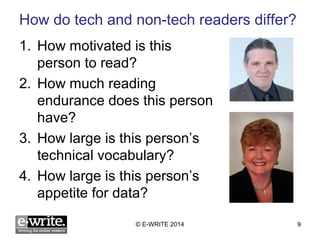
A tale of two readers 
Nathan the non-expert Ellen the expert 
© E-WRITE 2014 8
How do tech and non-tech readers differ? 
1. How motivated is this 
person to read? 
2. How much reading 
endurance does this person 
have? 
3. How large is this person’s 
technical vocabulary? 
4. How large is this person’s 
appetite for data? 
© E-WRITE 2014 9
Part 2: What to do when you 
can’t meet technical and non-technical 
readers’ needs in the 
same document
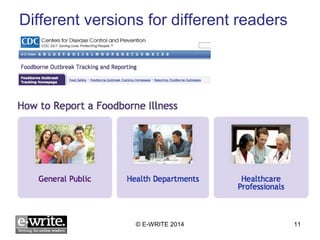
Different versions for different readers 
© E-WRITE 2014 11
For the non-technical reader 
© E-WRITE 2014 12
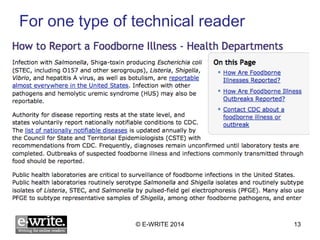
For one type of technical reader 
© E-WRITE 2014 13
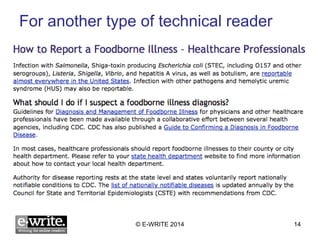
For another type of technical reader 
© E-WRITE 2014 14
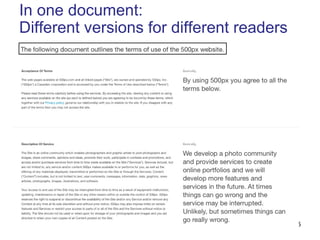
In one document: 
Different versions for different readers 
© E-WRITE 2014 15
Part 3: Techniques for helping 
non-technical readers: headings, 
analogies, paraphrasing, and 
definitions
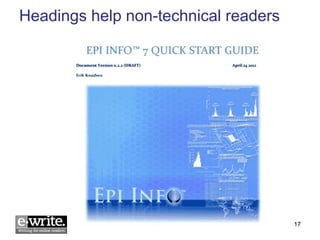
Headings help non-technical readers 
© E-WRITE 2014 17
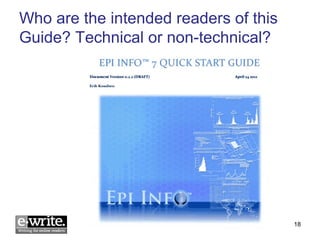
Who are the intended readers of this 
Guide? Technical or non-technical? 
© E-WRITE 2014 18
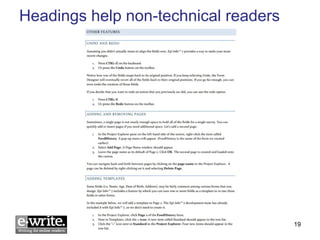
Headings help non-technical readers 
© E-WRITE 2014 19
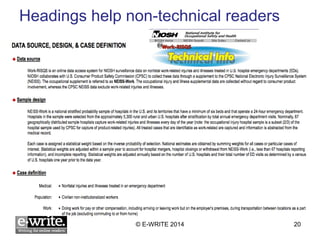
Headings help non-technical readers 
© E-WRITE 2014 20
Use analogies, paraphrasing, and definitions 
The Remrak Coefficient 
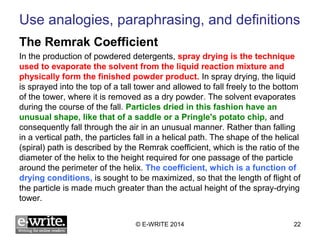
In the production of powdered detergents, spray drying is the technique 
used to evaporate the solvent from the liquid reaction mixture and 
physically form the finished powder product. In spray drying, the liquid is 
sprayed into the top of a tall tower and allowed to fall freely to the bottom of 
the tower, where it is removed as a dry powder. The solvent evaporates 
during the course of the fall. Particles dried in this fashion have an unusual 
shape, like that of a saddle or a Pringle's potato chip, and consequently fall 
through the air in an unusual manner. Rather than falling in a vertical path, 
the particles fall in a helical path. The shape of the helical (spiral) path is 
described by the Remrak coefficient, which is the ratio of the diameter of 
the helix to the height required for one passage of the particle around the 
perimeter of the helix. The coefficient, which is a function of drying 
conditions, is sought to be maximized, so that the length of flight of the 
particle is made much greater than the actual height of the spray-drying 
tower. 
© E-WRITE 2014 21
Use analogies, paraphrasing, and definitions 
The Remrak Coefficient 
In the production of powdered detergents, spray drying is the technique 
used to evaporate the solvent from the liquid reaction mixture and 
physically form the finished powder product. In spray drying, the liquid 
is sprayed into the top of a tall tower and allowed to fall freely to the bottom 
of the tower, where it is removed as a dry powder. The solvent evaporates 
during the course of the fall. Particles dried in this fashion have an 
unusual shape, like that of a saddle or a Pringle's potato chip, and 
consequently fall through the air in an unusual manner. Rather than falling 
in a vertical path, the particles fall in a helical path. The shape of the helical 
(spiral) path is described by the Remrak coefficient, which is the ratio of the 
diameter of the helix to the height required for one passage of the particle 
around the perimeter of the helix. The coefficient, which is a function of 
drying conditions, is sought to be maximized, so that the length of flight of 
the particle is made much greater than the actual height of the spray-drying 
tower. 
© E-WRITE 2014 22
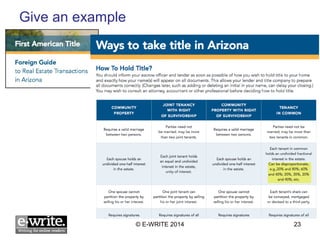
Give an example 
© E-WRITE 2014 23
© E-WRITE 2014 24
Writing for technical and non-technical 
readers? Consider the layer cake… 
© E-WRITE 2014 25
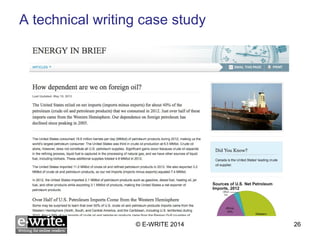
A technical writing case study 
© E-WRITE 2014 26
Plain language resources at CFPB 
27
Questions? Comments? 
© E-WRITE 2014 28
Let’s stay in touch… 
Leslie O’Flahavan, E-WRITE 
Leslie@ewriteonline.com 
301-989-9583 
www.ewriteonline.com 
@LeslieO 
© E-WRITE 2014 29

E write how-to-explain-technical-topics-to-non-technical-readers-first_american_17sept2014

  • 1.
    How to ExplainTechnical Topics to Non-Technical Readers Leslie O’Flahavan, E-WRITE @LeslieO First American September 17, 2014
  • 2.
    Thanks for theopportunity to present this webinar! © E-WRITE 2014 2
  • 3.
    Webinar overview 1.How an expert technical reader differs from a non-expert non-technical reader 2. What to do when you can’t meet technical and non-technical readers’ needs in the same document 3. Four techniques for helping non-technical readers: headings, analogies, paraphrasing, and definitions © E-WRITE 2014 3
  • 4.
    What is technicalwriting, anyway?
  • 5.
    Is this technicalwriting? Black Truffle and Bone Marrow Sauce INGREDIENTS: 1 tablespoon diced raw bacon fat 2 tablespoons minced shallots ½ teaspoon minced garlic 1 teaspoon chopped fresh thyme ½ cup diced winter black truffle 1 tablespoon butter 1 cup chicken stock ¼ cup veal demi glace 1 cup diced raw bone marrow, soaked in milk for 24 hours 6 grams Texturas Xantana ¼ teaspoon squid ink ½ teaspoon truffle oil I’m Chef Jason Wilson METHOD: Heat the butter in a sauté pan over medium heat. Sweat the bacon fat, shallots, garlic, thyme, and truffles until the shallots are soft. Add the chicken stock and veal demi glace and bring to a simmer. Add the bone marrow and simmer for 1 minute, or just until the bone marrow is heated through, but not yet rendering its fat. Immediately transfer the liquid to a blender. Blend on high and sprinkle in the Xantana a pinch at a time. Incorporate the squid ink and truffle oil. © E-WRITE 2014 5
  • 6.
    The Society forTechnical Communication defines technical writing as any form of communication that: • communicates about technical or specialized topics • communicates through technology • provides instructions about how to do something © E-WRITE 2014 6
  • 7.
    Part 1: Howan expert technical reader differs from a non-expert non-technical reader
  • 8.
    A tale oftwo readers Nathan the non-expert Ellen the expert © E-WRITE 2014 8
  • 9.
    How do techand non-tech readers differ? 1. How motivated is this person to read? 2. How much reading endurance does this person have? 3. How large is this person’s technical vocabulary? 4. How large is this person’s appetite for data? © E-WRITE 2014 9
  • 10.
    Part 2: Whatto do when you can’t meet technical and non-technical readers’ needs in the same document
  • 11.
    Different versions fordifferent readers © E-WRITE 2014 11
  • 12.
    For the non-technicalreader © E-WRITE 2014 12
  • 13.
    For one typeof technical reader © E-WRITE 2014 13
  • 14.
    For another typeof technical reader © E-WRITE 2014 14
  • 15.
    In one document: Different versions for different readers © E-WRITE 2014 15
  • 16.
    Part 3: Techniquesfor helping non-technical readers: headings, analogies, paraphrasing, and definitions
  • 17.
    Headings help non-technicalreaders © E-WRITE 2014 17
  • 18.
    Who are theintended readers of this Guide? Technical or non-technical? © E-WRITE 2014 18
  • 19.
    Headings help non-technicalreaders © E-WRITE 2014 19
  • 20.
    Headings help non-technicalreaders © E-WRITE 2014 20
  • 21.
    Use analogies, paraphrasing,and definitions The Remrak Coefficient In the production of powdered detergents, spray drying is the technique used to evaporate the solvent from the liquid reaction mixture and physically form the finished powder product. In spray drying, the liquid is sprayed into the top of a tall tower and allowed to fall freely to the bottom of the tower, where it is removed as a dry powder. The solvent evaporates during the course of the fall. Particles dried in this fashion have an unusual shape, like that of a saddle or a Pringle's potato chip, and consequently fall through the air in an unusual manner. Rather than falling in a vertical path, the particles fall in a helical path. The shape of the helical (spiral) path is described by the Remrak coefficient, which is the ratio of the diameter of the helix to the height required for one passage of the particle around the perimeter of the helix. The coefficient, which is a function of drying conditions, is sought to be maximized, so that the length of flight of the particle is made much greater than the actual height of the spray-drying tower. © E-WRITE 2014 21
  • 22.
    Use analogies, paraphrasing,and definitions The Remrak Coefficient In the production of powdered detergents, spray drying is the technique used to evaporate the solvent from the liquid reaction mixture and physically form the finished powder product. In spray drying, the liquid is sprayed into the top of a tall tower and allowed to fall freely to the bottom of the tower, where it is removed as a dry powder. The solvent evaporates during the course of the fall. Particles dried in this fashion have an unusual shape, like that of a saddle or a Pringle's potato chip, and consequently fall through the air in an unusual manner. Rather than falling in a vertical path, the particles fall in a helical path. The shape of the helical (spiral) path is described by the Remrak coefficient, which is the ratio of the diameter of the helix to the height required for one passage of the particle around the perimeter of the helix. The coefficient, which is a function of drying conditions, is sought to be maximized, so that the length of flight of the particle is made much greater than the actual height of the spray-drying tower. © E-WRITE 2014 22
  • 23.
    Give an example © E-WRITE 2014 23
  • 24.
  • 25.
    Writing for technicaland non-technical readers? Consider the layer cake… © E-WRITE 2014 25
  • 26.
    A technical writingcase study © E-WRITE 2014 26
  • 27.
  • 28.
  • 29.
    Let’s stay intouch… Leslie O’Flahavan, E-WRITE Leslie@ewriteonline.com 301-989-9583 www.ewriteonline.com @LeslieO © E-WRITE 2014 29

Editor's Notes

  • #3 http://ewriteonline.com/ http://ewriteonline.com/category/writing-matters/
  • #16 http://500px.com/terms
  • #18 EPI INFO™ 7 QUICK START GUIDE https://docs.google.com/file/d/0B1mGcf7b92K6R2dSQm54UTZHQ1U/edit?pli=1
  • #19 EPI INFO™ 7 QUICK START GUIDE https://docs.google.com/file/d/0B1mGcf7b92K6R2dSQm54UTZHQ1U/edit?pli=1
  • #20 EPI INFO™ 7 QUICK START GUIDE – Page 21 https://docs.google.com/file/d/0B1mGcf7b92K6R2dSQm54UTZHQ1U/edit?pli=1
  • #21 http://www2a.cdc.gov/risqs/wrtechinfo.htm#DataSource
  • #22 http://www.cnr.uidaho.edu/srprojects/Writing/concepts.htm
  • #23 http://www.cnr.uidaho.edu/srprojects/Writing/concepts.htm
  • #24 http://www.firstam.com/assets/title/az/documents/state/guides/foreign-transactions-guide.pdf
  • #26 Image source: http://commons.wikimedia.org/wiki/File:Birthday_cake,_Downpatrick,_April_2010_%2802%29.JPG
  • #27 http://www.eia.gov/energy_in_brief/article/foreign_oil_dependence.cfm
  • #28 http://www.consumerfinance.gov/ http://www.consumerfinance.gov/blog/prepaid-cards-help-design-a-new-disclosure/