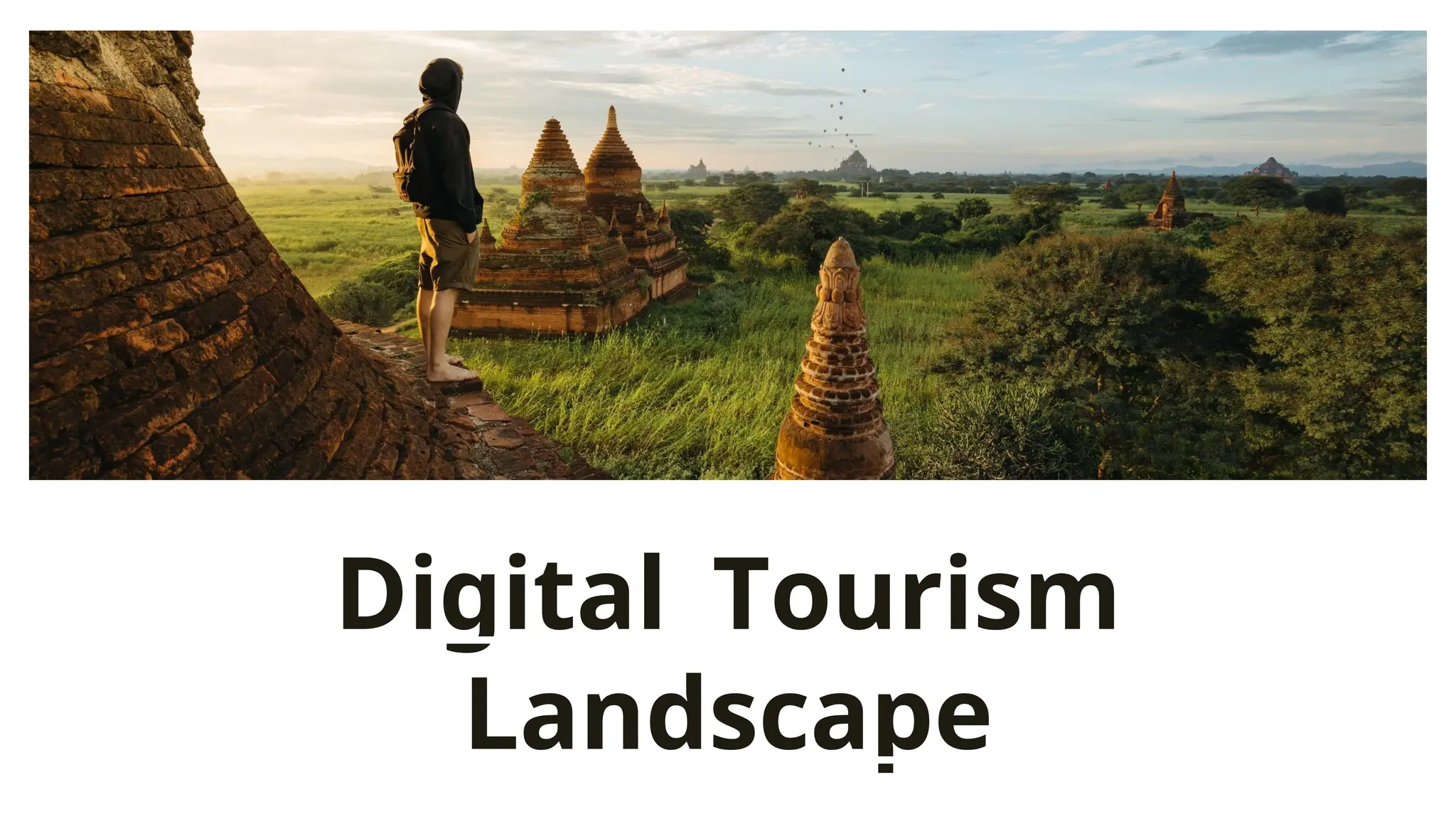
Digital Tourism
Landscape
The Digital Technology Environment
• The digital technological environment refers to the online tools and platforms that shape the
tourism industry
• Here you research about destinations, book flights and hotels, connect with other travelers, and
share your experiences.
• This includes websites, mobile apps, social media, virtual reality experiences, and more
Components of the Digital Technological Environment
• Travel websites: Provide information on destinations, attractions, accommodation, and travel
deals
• Mobile apps: Offer on-the-go access to booking, navigation, translation, and local
recommendations
• Social media: Connects travelers with each other, allows for reviews and recommendations, and
creates a sense of community
• Virtual reality (VR): Creates immersive experiences that allow travelers to virtually explore
destinations before they visit
• Online booking platforms: Simplify the process of booking flights (KAYAK), hotels, and
activities
The Rise of Digital Communities
• Digital communities are online groups formed around shared interests,
including travel
• These communities provide a platform for travelers to:
1. Share travel tips and recommendations.
2. Ask questions and get advice from other travelers.
3. Connect with people who share their travel interests.
4. Find travel companions.
Types of Digital Travel Communities
• Travel forums: Online message boards where travelers can discuss destinations, ask questions,
and share experiences (Trip Adviser Travel Forum, Rick Steves Travel Forum)
• Social media groups: Dedicated groups on platforms like Facebook or Instagram for travelers
with specific interests.
• Travel blogs and vlogs: Online journals where travel writers and videographers share their stories
and tips (Travelblog.org, Nas Daily)
Technology Adaptation in Tourism
• Technology adaptation refers to how destinations and businesses in the tourism industry
adopt and integrate new digital technologies
• Examples of technology adaptation include:
1. Self-service check-in kiosks at airports (Bandaranaike
International Airport, Heathrow Airport )
2. Smart hotels with features like voice-controlled assistants and keyless entry (Alibaba
FlyZoo Hotel)
3. Augmented reality (AR) experiences that overlay digital information onto the real world
(England Originals app created by Hex Digital – This is available at England's Historic Cities)
4. Online reputation management by hotels and destinations to address traveler reviews
and feedback
Benefits of Technology Adaptation for Tourists
• Increased convenience: Online booking, mobile navigation, and self-service options make
travel more streamlined
• Personalized experiences: Travelers can customize their trips based on their interests and
preferences
• Access to information: Real-time updates, reviews, and recommendations are readily available
• Enhanced experiences: AR/VR and other technologies can create more immersive and
interactive experiences
Benefits of Technology Adaptation for Tourists
Challenges of Technology Adaptation
• The digital divide: Not everyone has access to technology or the skills to use it effectively
• Privacy concerns: Travelers may be wary of sharing personal data online
• Over-reliance on technology: Dependence on apps and devices can
detract from the experience of actually being in a new place
Who is the Digital Tourist?
• The digital tourist is a modern traveler who actively uses technology to
plan, research, and book trips
• Characteristics of the digital tourist include:
1. Tech-savvy: Comfortable using smartphones, apps, and online
platforms
2. Independent: Prefers to research and plan trips independently
3. Social: Shares travel experiences and connects with others online
4. Value-seeker: Looks for deals and discounts online
The Future of Digital Tourism
• Artificial intelligence (AI) powered travel assistants that personalize trip itineraries and
recommendations (Trip Planner AI, Wonderplan)
• Blockchain technology to secure travel transactions and enhance data privacy (Bahamas, Jamaica,
and Nigeria (Fully and more than 100 countries partially)
• The continued rise of AR/VR for even more
immersive travel experiences
• Hyper-personalized travel experiences based on individual preferences and biometrics
TRAVEL INTERMEDIARIES AND
INFORMATION
TECHNOLOGY
CHARITH PRABUDDHA
INTRODUCTION TO TRAVEL INTERMEDIARIES
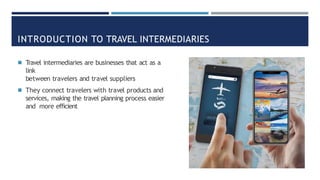
â—ľ Travel intermediaries are businesses that act as a
link
between travelers and travel suppliers
â—ľ They connect travelers with travel products and
services, making the travel planning process easier
and more efficient
TYPES OF TRAVEL INTERMEDIARIES
â—ľ Travel agencies: Businesses with brick-and-mortar (Customers can visit onsite) and Online travel consultants
who provide personalized service
â—ľ Tour operators: Companies that create and package vacation experiences, including flights, accommodation,
and activities
â—ľ Destination management organizations (DMOs): Local companies that provide logistical support for
tour operators and individual travelers in a specific destination (SLTDA, SLTPB, SLCB, Provincial councils T
ourism
ministry
, Urban councils)
TRADITIONAL TRAVEL RETAILERS:TRAVEL AGENCIES
â—ľ Travel agencies are traditional intermediaries with physical locations where travel consultants assist clients
in
person.
â—ľ Services offered by travel agencies:
1. Consultation and personalized advice.
2. Booking flights, hotels, and other travel products.
3. Creating customized itineraries.
4. Assisting with travel documents and visas.
5. Providing customer support throughout the travel journey.
DIGITAL TRAVEL DISTRIBUTION SYSTEMS (GDS)
â—ľ Global Distribution Systems (GDS) are complex computer networks that connect travel suppliers (airlines,
hotels) with travel intermediaries
â—ľ GDS allow intermediaries to access real-time inventory and pricing for flights, hotels, and other travel
products
â—ľ GDS acts as a central hub for travel information, allowing intermediaries to:
1. Search for and compare travel options from different suppliers
2. Make reservations and issue tickets in real-time
3. Manage bookings and receive updates from suppliers
â—ľ Examples: Amadeus, Sabre, Galileo,Worldspan, Apollo, and Pegasus
BENEFITS OF GDS FOR TRAVEL INTERMEDIARIES
â—ľ Efficiency: Saves time and effort by centralizing access to travel inventory
â—ľ Wider product selection: Provides access to a vast range of travel options from various
suppliers
â—ľ Real-time information: Ensures access to current pricing and availability
â—ľ Streamlined booking process: Allows for quick and efficient booking and ticketing
The Internet and the Tourist
The Digital Traveler
» The digital traveler is a modern traveler who actively uses the internet to plan,
research, and book trips.
» Characteristics of the digital traveler include:
1. Tech-savvy: Comfortable using smartphones, apps, and online platforms.
2. Independent: Prefers to research and plan trips independently.
3. Social: Shares travel experiences and connects with others online.
4. Value-seeker: Looks for deals and discounts online.
BEST FOR You
O R G A N I C S C O M P A N Y
18
Internet Applications in Travel
» The internet offers a variety of applications that have revolutionized travel
planning:
• Researching destinations: Find information on attractions, accommodation,
transportation, and local culture (TripAdvisor, Google Travel)
• Booking travel: Secure flights, hotels, car rentals, and activities online
(Kayak, Expedia, Booking.com)
• Connecting with others: Share experiences on social media, join travel
forums, and find
travel companions (Facebook Groups, Meetup)
• Creating itineraries: Organize your trip schedule and logistics (Google Trips,
Trip Planner AI)
• Sharing travel photos and videos: Document your experiences and inspire
others (Tiktok, Instagram, Facebook)
• Accessing real-time information: Get weather updates, currency exchange
rates, and public transportation schedules (Google Maps, XE Currency, Weather Pro)
BEST FOR You
O R G A N I C S C O M P A N Y
19
Types of Travel Websites
» There are many different types of travel websites catering to various needs:
• Travel search engines: Aggregate deals and compare prices for flights, hotels,
and car rentals
(Kayak, Skyscanner)
• Destination websites: Provide official tourism information, attractions,
events, and local recommendations (Sigiriya -https://sigiriyafortress.com/, New
York City - https://www.nyctourism.com/)
• Travel blogs and vlogs: Offer personal travel stories, tips, and inspiration
from travel writers
and videographers (Nas Daily, Luke Damant)
• Travel forums and communities: Allow travelers to connect, ask
questions, and share experiences(TripAdvisor)
• Online booking platforms: Simplify the process of booking flights, hotels,
and activities
directly with suppliers (Expedia, Booking.com)
BEST FOR You
O R G A N I C S C O M P A N Y
20
Intelligent Assistance and Online Recommending
» Intelligent assistance and online recommending systems are making travel planning even more personalized and
efficient.
» Examples of these technologies include:
• Chatbots: Virtual assistants that can answer travel-related questions, suggest itineraries, and even book
flights or hotels (KLM Royal Dutch Airlines' chatbot)
• Recommendation engines: Analyze user data (past trips, interests, preferences) to suggest
personalized destinations, activities, and accommodations (TripAdvisor)
• Location-based services: Use GPS technology to recommend nearby restaurants, attractions,
and events based on your current location (Google Maps)
BEST FOR You
O R G A N I C S C O M P A N Y
21
Benefits of Intelligent Assistance and Online Recommending
» Save time and effort: Streamline the research and planning process
» Discover hidden gems: Get personalized recommendations you might not
have found
on your own
» Make informed decisions: Access to a wider range of information and
expert advice
» Reduce travel stress: Take the guesswork out of planning and ensure you
don't miss out on must-see attractions
BEST FOR You
O R G A N I C S C O M P A N Y
22
Challenges of Intelligent Assistance and Online Recommending
• Privacy concerns: These systems rely on user data, and some travelers might be hesitant
to share personal information
• Filter bubble effect: Algorithms might recommend similar experiences based on past
behavior, limiting exposure to new and different things
• Over-reliance on technology: Travelers might become too dependent on
recommendations and miss out on the joy of spontaneous exploration
BEST FOR You
O R G A N I C S C O M P A N Y
23
The Future of the Internet and Travel
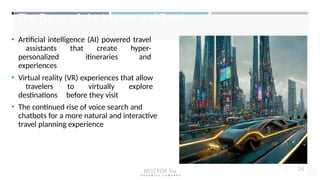
• Artificial intelligence (AI) powered travel
assistants that create hyper-
personalized itineraries and
experiences
• Virtual reality (VR) experiences that allow
travelers to virtually explore
destinations before they visit
• The continued rise of voice search and
chatbots for a more natural and interactive
travel planning experience
BEST FOR You
O R G A N I C S C O M P A N Y
24

E-tourism presentation......revision.pptx

  • 1.
  • 2.
    The Digital TechnologyEnvironment • The digital technological environment refers to the online tools and platforms that shape the tourism industry • Here you research about destinations, book flights and hotels, connect with other travelers, and share your experiences. • This includes websites, mobile apps, social media, virtual reality experiences, and more
  • 3.
    Components of theDigital Technological Environment • Travel websites: Provide information on destinations, attractions, accommodation, and travel deals • Mobile apps: Offer on-the-go access to booking, navigation, translation, and local recommendations • Social media: Connects travelers with each other, allows for reviews and recommendations, and creates a sense of community • Virtual reality (VR): Creates immersive experiences that allow travelers to virtually explore destinations before they visit • Online booking platforms: Simplify the process of booking flights (KAYAK), hotels, and activities
  • 4.
    The Rise ofDigital Communities • Digital communities are online groups formed around shared interests, including travel • These communities provide a platform for travelers to: 1. Share travel tips and recommendations. 2. Ask questions and get advice from other travelers. 3. Connect with people who share their travel interests. 4. Find travel companions.
  • 5.
    Types of DigitalTravel Communities • Travel forums: Online message boards where travelers can discuss destinations, ask questions, and share experiences (Trip Adviser Travel Forum, Rick Steves Travel Forum) • Social media groups: Dedicated groups on platforms like Facebook or Instagram for travelers with specific interests. • Travel blogs and vlogs: Online journals where travel writers and videographers share their stories and tips (Travelblog.org, Nas Daily)
  • 6.
    Technology Adaptation inTourism • Technology adaptation refers to how destinations and businesses in the tourism industry adopt and integrate new digital technologies • Examples of technology adaptation include: 1. Self-service check-in kiosks at airports (Bandaranaike International Airport, Heathrow Airport ) 2. Smart hotels with features like voice-controlled assistants and keyless entry (Alibaba FlyZoo Hotel) 3. Augmented reality (AR) experiences that overlay digital information onto the real world (England Originals app created by Hex Digital – This is available at England's Historic Cities) 4. Online reputation management by hotels and destinations to address traveler reviews and feedback
  • 7.
    Benefits of TechnologyAdaptation for Tourists • Increased convenience: Online booking, mobile navigation, and self-service options make travel more streamlined • Personalized experiences: Travelers can customize their trips based on their interests and preferences • Access to information: Real-time updates, reviews, and recommendations are readily available • Enhanced experiences: AR/VR and other technologies can create more immersive and interactive experiences Benefits of Technology Adaptation for Tourists
  • 8.
    Challenges of TechnologyAdaptation • The digital divide: Not everyone has access to technology or the skills to use it effectively • Privacy concerns: Travelers may be wary of sharing personal data online • Over-reliance on technology: Dependence on apps and devices can detract from the experience of actually being in a new place
  • 9.
    Who is theDigital Tourist? • The digital tourist is a modern traveler who actively uses technology to plan, research, and book trips • Characteristics of the digital tourist include: 1. Tech-savvy: Comfortable using smartphones, apps, and online platforms 2. Independent: Prefers to research and plan trips independently 3. Social: Shares travel experiences and connects with others online 4. Value-seeker: Looks for deals and discounts online
  • 10.
    The Future ofDigital Tourism • Artificial intelligence (AI) powered travel assistants that personalize trip itineraries and recommendations (Trip Planner AI, Wonderplan) • Blockchain technology to secure travel transactions and enhance data privacy (Bahamas, Jamaica, and Nigeria (Fully and more than 100 countries partially) • The continued rise of AR/VR for even more immersive travel experiences • Hyper-personalized travel experiences based on individual preferences and biometrics
  • 11.
  • 12.
    INTRODUCTION TO TRAVELINTERMEDIARIES â—ľ Travel intermediaries are businesses that act as a link between travelers and travel suppliers â—ľ They connect travelers with travel products and services, making the travel planning process easier and more efficient
  • 13.
    TYPES OF TRAVELINTERMEDIARIES â—ľ Travel agencies: Businesses with brick-and-mortar (Customers can visit onsite) and Online travel consultants who provide personalized service â—ľ Tour operators: Companies that create and package vacation experiences, including flights, accommodation, and activities â—ľ Destination management organizations (DMOs): Local companies that provide logistical support for tour operators and individual travelers in a specific destination (SLTDA, SLTPB, SLCB, Provincial councils T ourism ministry , Urban councils)
  • 14.
    TRADITIONAL TRAVEL RETAILERS:TRAVELAGENCIES â—ľ Travel agencies are traditional intermediaries with physical locations where travel consultants assist clients in person. â—ľ Services offered by travel agencies: 1. Consultation and personalized advice. 2. Booking flights, hotels, and other travel products. 3. Creating customized itineraries. 4. Assisting with travel documents and visas. 5. Providing customer support throughout the travel journey.
  • 15.
    DIGITAL TRAVEL DISTRIBUTIONSYSTEMS (GDS) â—ľ Global Distribution Systems (GDS) are complex computer networks that connect travel suppliers (airlines, hotels) with travel intermediaries â—ľ GDS allow intermediaries to access real-time inventory and pricing for flights, hotels, and other travel products â—ľ GDS acts as a central hub for travel information, allowing intermediaries to: 1. Search for and compare travel options from different suppliers 2. Make reservations and issue tickets in real-time 3. Manage bookings and receive updates from suppliers â—ľ Examples: Amadeus, Sabre, Galileo,Worldspan, Apollo, and Pegasus
  • 16.
    BENEFITS OF GDSFOR TRAVEL INTERMEDIARIES â—ľ Efficiency: Saves time and effort by centralizing access to travel inventory â—ľ Wider product selection: Provides access to a vast range of travel options from various suppliers â—ľ Real-time information: Ensures access to current pricing and availability â—ľ Streamlined booking process: Allows for quick and efficient booking and ticketing
  • 17.
    The Internet andthe Tourist
  • 18.
    The Digital Traveler »The digital traveler is a modern traveler who actively uses the internet to plan, research, and book trips. » Characteristics of the digital traveler include: 1. Tech-savvy: Comfortable using smartphones, apps, and online platforms. 2. Independent: Prefers to research and plan trips independently. 3. Social: Shares travel experiences and connects with others online. 4. Value-seeker: Looks for deals and discounts online. BEST FOR You O R G A N I C S C O M P A N Y 18
  • 19.
    Internet Applications inTravel » The internet offers a variety of applications that have revolutionized travel planning: • Researching destinations: Find information on attractions, accommodation, transportation, and local culture (TripAdvisor, Google Travel) • Booking travel: Secure flights, hotels, car rentals, and activities online (Kayak, Expedia, Booking.com) • Connecting with others: Share experiences on social media, join travel forums, and find travel companions (Facebook Groups, Meetup) • Creating itineraries: Organize your trip schedule and logistics (Google Trips, Trip Planner AI) • Sharing travel photos and videos: Document your experiences and inspire others (Tiktok, Instagram, Facebook) • Accessing real-time information: Get weather updates, currency exchange rates, and public transportation schedules (Google Maps, XE Currency, Weather Pro) BEST FOR You O R G A N I C S C O M P A N Y 19
  • 20.
    Types of TravelWebsites » There are many different types of travel websites catering to various needs: • Travel search engines: Aggregate deals and compare prices for flights, hotels, and car rentals (Kayak, Skyscanner) • Destination websites: Provide official tourism information, attractions, events, and local recommendations (Sigiriya -https://sigiriyafortress.com/, New York City - https://www.nyctourism.com/) • Travel blogs and vlogs: Offer personal travel stories, tips, and inspiration from travel writers and videographers (Nas Daily, Luke Damant) • Travel forums and communities: Allow travelers to connect, ask questions, and share experiences(TripAdvisor) • Online booking platforms: Simplify the process of booking flights, hotels, and activities directly with suppliers (Expedia, Booking.com) BEST FOR You O R G A N I C S C O M P A N Y 20
  • 21.
    Intelligent Assistance andOnline Recommending » Intelligent assistance and online recommending systems are making travel planning even more personalized and efficient. » Examples of these technologies include: • Chatbots: Virtual assistants that can answer travel-related questions, suggest itineraries, and even book flights or hotels (KLM Royal Dutch Airlines' chatbot) • Recommendation engines: Analyze user data (past trips, interests, preferences) to suggest personalized destinations, activities, and accommodations (TripAdvisor) • Location-based services: Use GPS technology to recommend nearby restaurants, attractions, and events based on your current location (Google Maps) BEST FOR You O R G A N I C S C O M P A N Y 21
  • 22.
    Benefits of IntelligentAssistance and Online Recommending » Save time and effort: Streamline the research and planning process » Discover hidden gems: Get personalized recommendations you might not have found on your own » Make informed decisions: Access to a wider range of information and expert advice » Reduce travel stress: Take the guesswork out of planning and ensure you don't miss out on must-see attractions BEST FOR You O R G A N I C S C O M P A N Y 22
  • 23.
    Challenges of IntelligentAssistance and Online Recommending • Privacy concerns: These systems rely on user data, and some travelers might be hesitant to share personal information • Filter bubble effect: Algorithms might recommend similar experiences based on past behavior, limiting exposure to new and different things • Over-reliance on technology: Travelers might become too dependent on recommendations and miss out on the joy of spontaneous exploration BEST FOR You O R G A N I C S C O M P A N Y 23
  • 24.
    The Future ofthe Internet and Travel • Artificial intelligence (AI) powered travel assistants that create hyper- personalized itineraries and experiences • Virtual reality (VR) experiences that allow travelers to virtually explore destinations before they visit • The continued rise of voice search and chatbots for a more natural and interactive travel planning experience BEST FOR You O R G A N I C S C O M P A N Y 24