Software Development Life Cycle
Isuri Rajapaksha
Learning Outcome
 Gain a comprehensive understanding of the Software
Development Life Cycle (SDLC)
 Understand the objectives, activities, and deliverables
associated with each phase of the SDLC.
Content
 Introduction
 Phases of SDLC
 Planning Phase
 Analysis Phase
 Designing Phase
 Development Phase
 Testing Phase
 Deployment Phase
 Conclusions
 References
 Thank You & Questions??
Introduction
 The Software Development Life Cycle (SDLC)
is a structured and systematic approach to the
development, maintenance, and management
of software applications.
 Aimed at ensuring the successful delivery of
high-quality software products.
 Ensures efficient development, high-quality
products, and customer satisfaction.
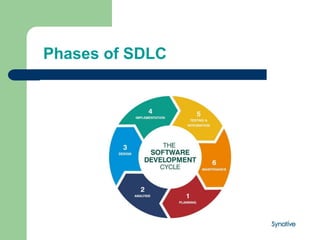
Phases of SDLC
Planning Phase
 Define project scope, objectives, timelines, and
resources.
 Requirement gathering: Engage with
stakeholders to Identify and document project
requirements, including
-Functional
-Non-functional,
-Technical specifications.
Planning Phase(cont.)
 Feasibility study: Assess the technical,
financial, and operational feasibility of the
project to determine its viability.
 Project planning: Develop a comprehensive
project plan outlining tasks, milestones,
schedules, and resource allocations.
Analysis Phase
 Understand end-user requirements and system
functionalities.
– Requirement analysis: Analyze and refine the
gathered. Requirements.
– Creating system specifications: Document detailed
system requirements..
– Prototyping: Develop prototypes to visualize and
validate the proposed solution with stakeholders.
Design Phase
– Architectural design: Define the overall structure
and components of the software system.
– Database design: Design the database schema,
tables, relationships etc.
– UI/UX design: Design the user interface and user
experience to ensure usability, accessibility.
– Algorithm design:To implement the system's
functionality efficiently.
 Build the software based on the design
specifications.
– Coding:
– Unit testing
– Integration testing
Development Phase
Testing Phase
Ensure the software meets quality standards and is
free of defects.
– Functional testing: Verify that the software meets the
specified requirements
– Security testing:data breaches, unauthorized access, and
system vulnerabilities.
– User acceptance testing: Involve end-users to validate
the software's usability, functionality, and compliance with
their needs.
Colour - Good
 Release the software for production use.
– Installation: Deploy the software to production
environments
– Data migration: Transfer data from existing systems
or sources to the new software solution
– User training: Provide training and support to end-
users.
Maintenance Phase
 Provide ongoing support, updates, and
enhancements.
– Bug fixing: Identify, prioritize, and resolve software
defects and issues
– Feature enhancements: Implement new features,
functionalities, or improvements
– Performance optimization: Optimize the software's
performance, efficiency, and reliability.
Conclusion
 The SDLC is the backbone of effective
software development, providing a structured
approach from planning to maintenance.
 By following SDLC principles, we ensure that
our projects are delivered efficiently, meeting
the needs of our clients while driving innovation
in technology solutions.
Reference
 Amazon Web Services. (n.d.). What is SDLC?
Retrieved from
https://aws.amazon.com/what-is/sdlc/#:~:text=
The%20software%20development%20lifecycle
%20(SDLC,expectations%20during%20produc
tion%20and%20beyond
.
Thank You & Questions??

software development life cycle presentation.ppt

  • 1.
    Software Development LifeCycle Isuri Rajapaksha
  • 2.
    Learning Outcome  Gaina comprehensive understanding of the Software Development Life Cycle (SDLC)  Understand the objectives, activities, and deliverables associated with each phase of the SDLC.
  • 3.
    Content  Introduction  Phasesof SDLC  Planning Phase  Analysis Phase  Designing Phase  Development Phase  Testing Phase  Deployment Phase  Conclusions  References  Thank You & Questions??
  • 4.
    Introduction  The SoftwareDevelopment Life Cycle (SDLC) is a structured and systematic approach to the development, maintenance, and management of software applications.  Aimed at ensuring the successful delivery of high-quality software products.  Ensures efficient development, high-quality products, and customer satisfaction.
  • 5.
  • 6.
    Planning Phase  Defineproject scope, objectives, timelines, and resources.  Requirement gathering: Engage with stakeholders to Identify and document project requirements, including -Functional -Non-functional, -Technical specifications.
  • 7.
    Planning Phase(cont.)  Feasibilitystudy: Assess the technical, financial, and operational feasibility of the project to determine its viability.  Project planning: Develop a comprehensive project plan outlining tasks, milestones, schedules, and resource allocations.
  • 8.
    Analysis Phase  Understandend-user requirements and system functionalities. – Requirement analysis: Analyze and refine the gathered. Requirements. – Creating system specifications: Document detailed system requirements.. – Prototyping: Develop prototypes to visualize and validate the proposed solution with stakeholders.
  • 9.
    Design Phase – Architecturaldesign: Define the overall structure and components of the software system. – Database design: Design the database schema, tables, relationships etc. – UI/UX design: Design the user interface and user experience to ensure usability, accessibility. – Algorithm design:To implement the system's functionality efficiently.
  • 10.
     Build thesoftware based on the design specifications. – Coding: – Unit testing – Integration testing Development Phase
  • 11.
    Testing Phase Ensure thesoftware meets quality standards and is free of defects. – Functional testing: Verify that the software meets the specified requirements – Security testing:data breaches, unauthorized access, and system vulnerabilities. – User acceptance testing: Involve end-users to validate the software's usability, functionality, and compliance with their needs.
  • 12.
    Colour - Good Release the software for production use. – Installation: Deploy the software to production environments – Data migration: Transfer data from existing systems or sources to the new software solution – User training: Provide training and support to end- users.
  • 13.
    Maintenance Phase  Provideongoing support, updates, and enhancements. – Bug fixing: Identify, prioritize, and resolve software defects and issues – Feature enhancements: Implement new features, functionalities, or improvements – Performance optimization: Optimize the software's performance, efficiency, and reliability.
  • 14.
    Conclusion  The SDLCis the backbone of effective software development, providing a structured approach from planning to maintenance.  By following SDLC principles, we ensure that our projects are delivered efficiently, meeting the needs of our clients while driving innovation in technology solutions.
  • 15.
    Reference  Amazon WebServices. (n.d.). What is SDLC? Retrieved from https://aws.amazon.com/what-is/sdlc/#:~:text= The%20software%20development%20lifecycle %20(SDLC,expectations%20during%20produc tion%20and%20beyond .
  • 16.
    Thank You &Questions??