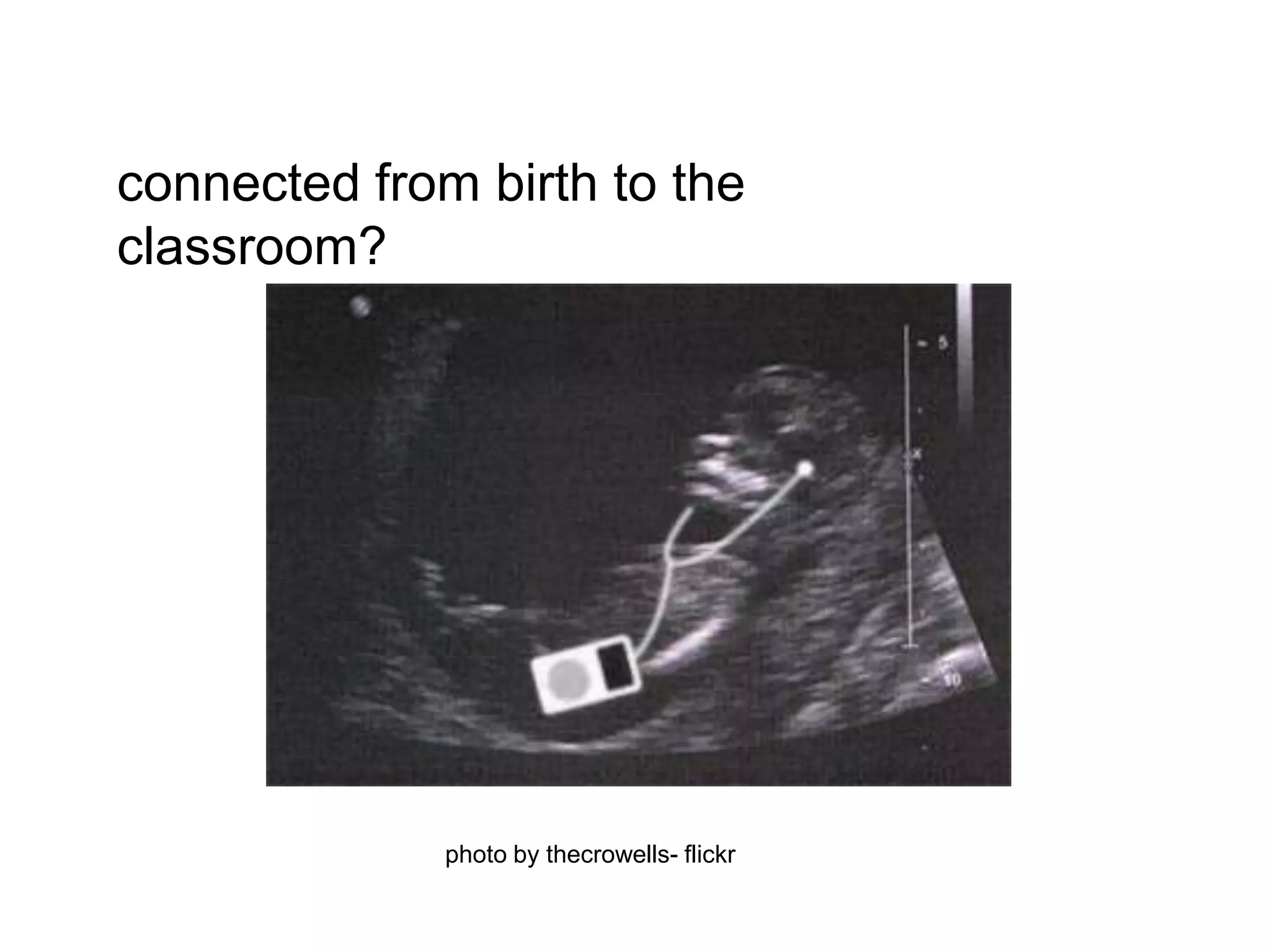
connected from birth to the classroom?photo by thecrowells- flickr
photo by swimparallel - flickrmobile technology and social networking sites withinAs educational institutions advocate for more access to schools across the country, we have to ask:
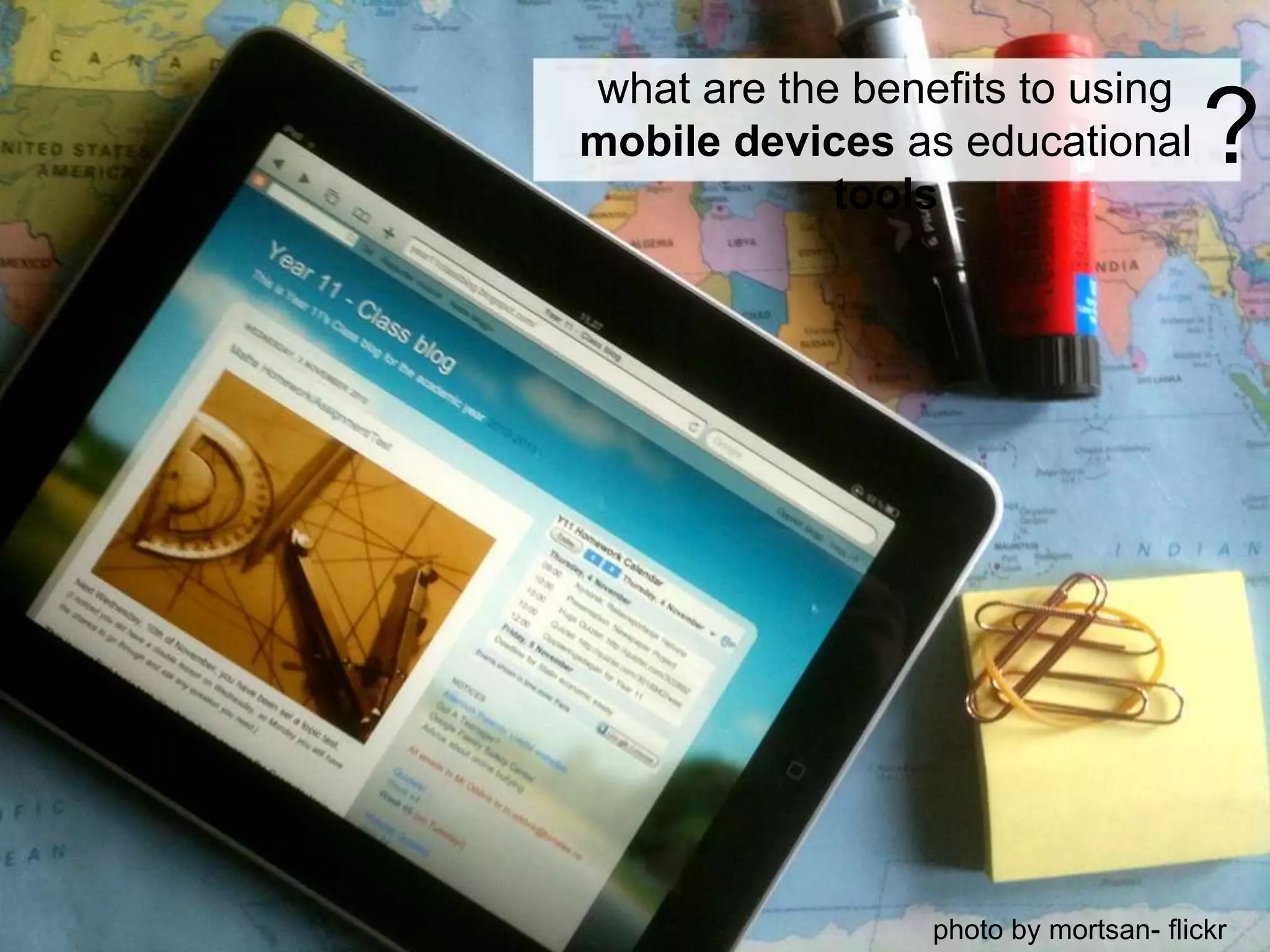
?what are the benefits to usingmobile devices as educational toolsphoto by mortsan- flickr
The Toronto District School Board recently voted to lift the ban on mobile use in classrooms and has begun initiatives to incorporate cellular devices as a vital learning tool within its schools. A lot of parents disagree with the school’s decision.photo by quinn.anya- Flickr
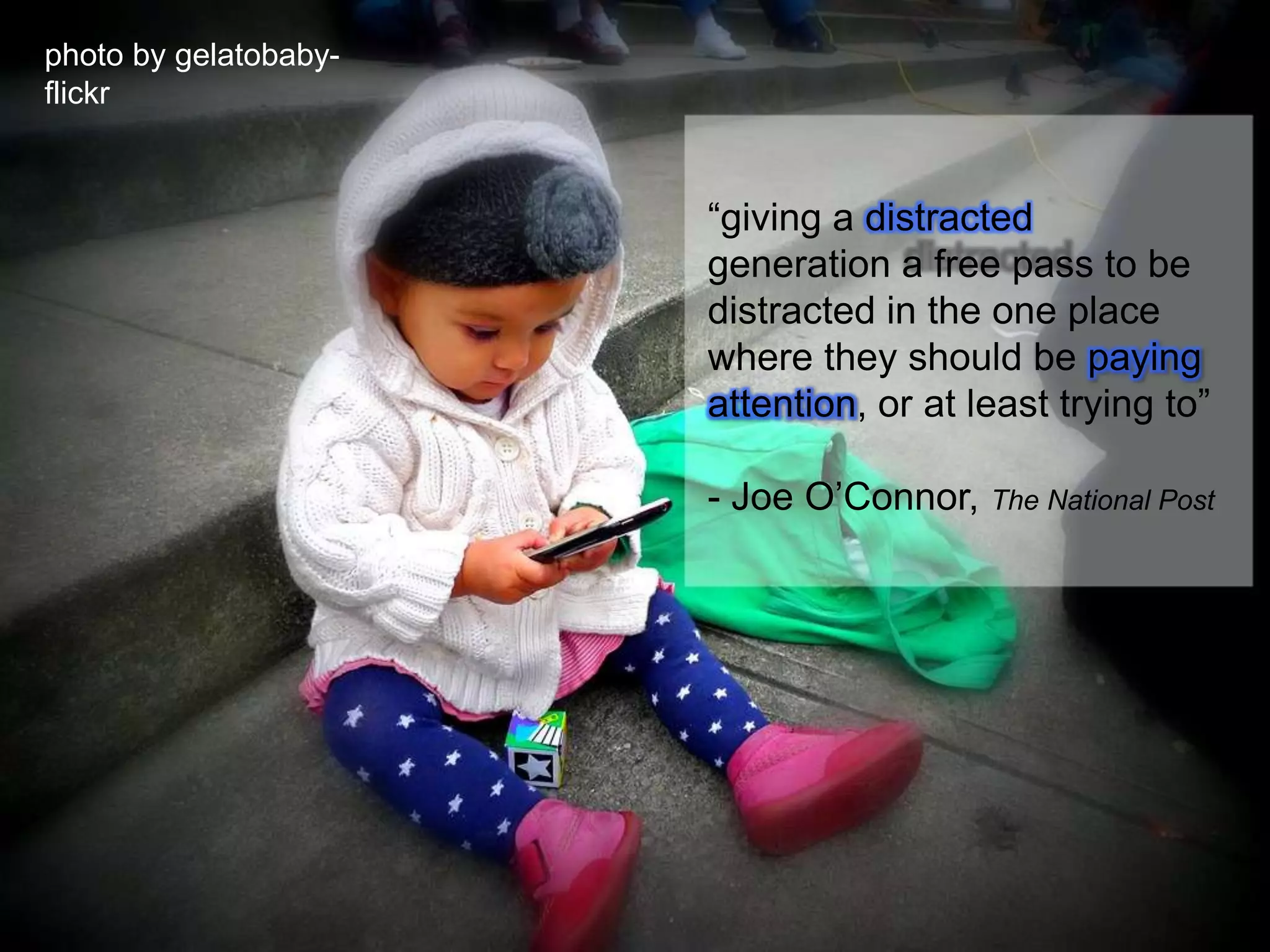
photo by gelatobaby- flickr“giving a distracted generation a free pass to be distracted in the one place where they should be paying attention, or at least trying to”- Joe O’Connor, The National Post
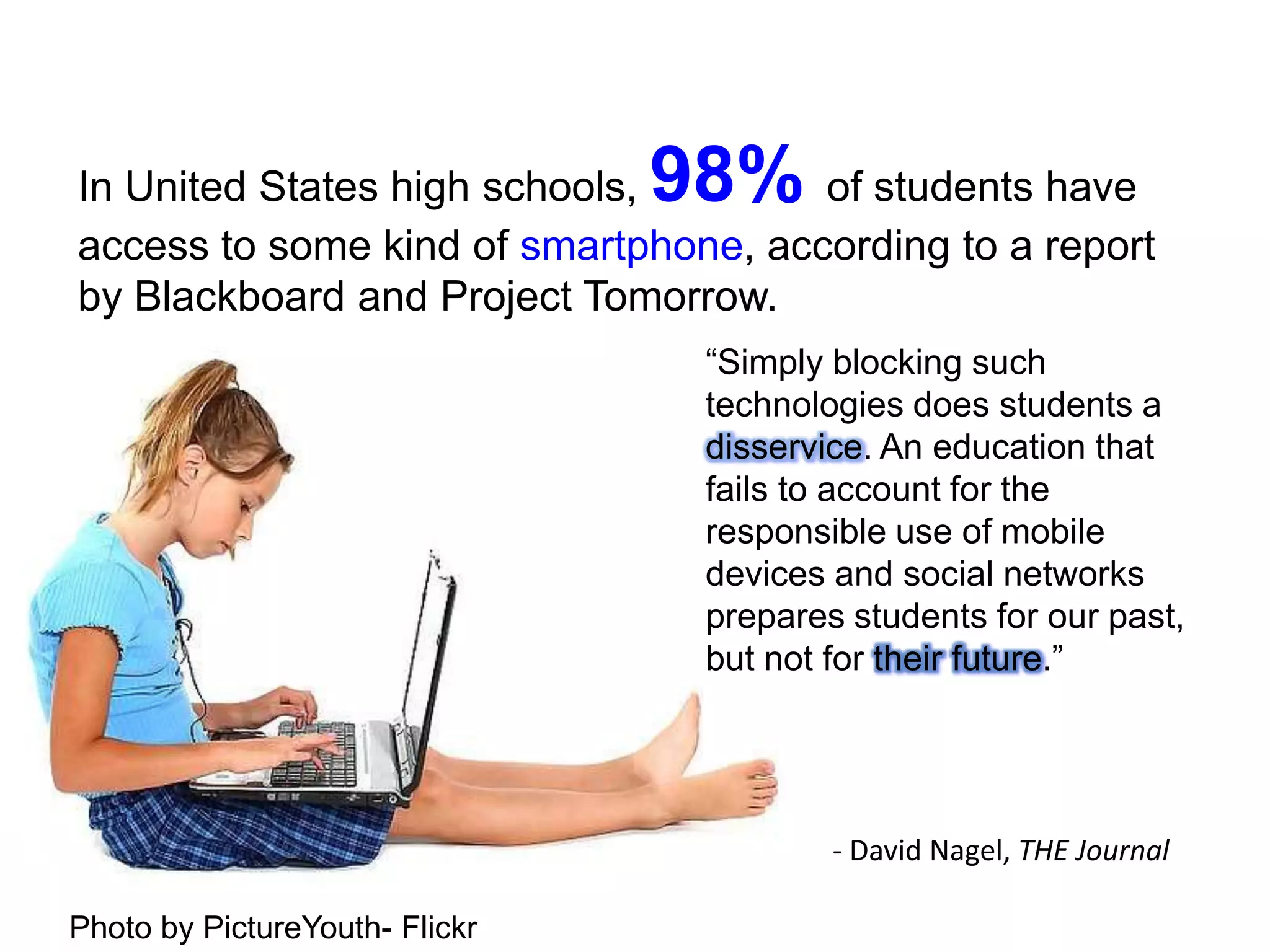
In United States high schools, 98% of students have access to some kind of smartphone, according to a report by Blackboard and Project Tomorrow.“Simply blocking such technologies does students a disservice. An education that fails to account for the responsible use of mobile devices and social networks prepares students for our past, but not for their future.”		- David Nagel, THE JournalPhoto by PictureYouth- Flickr
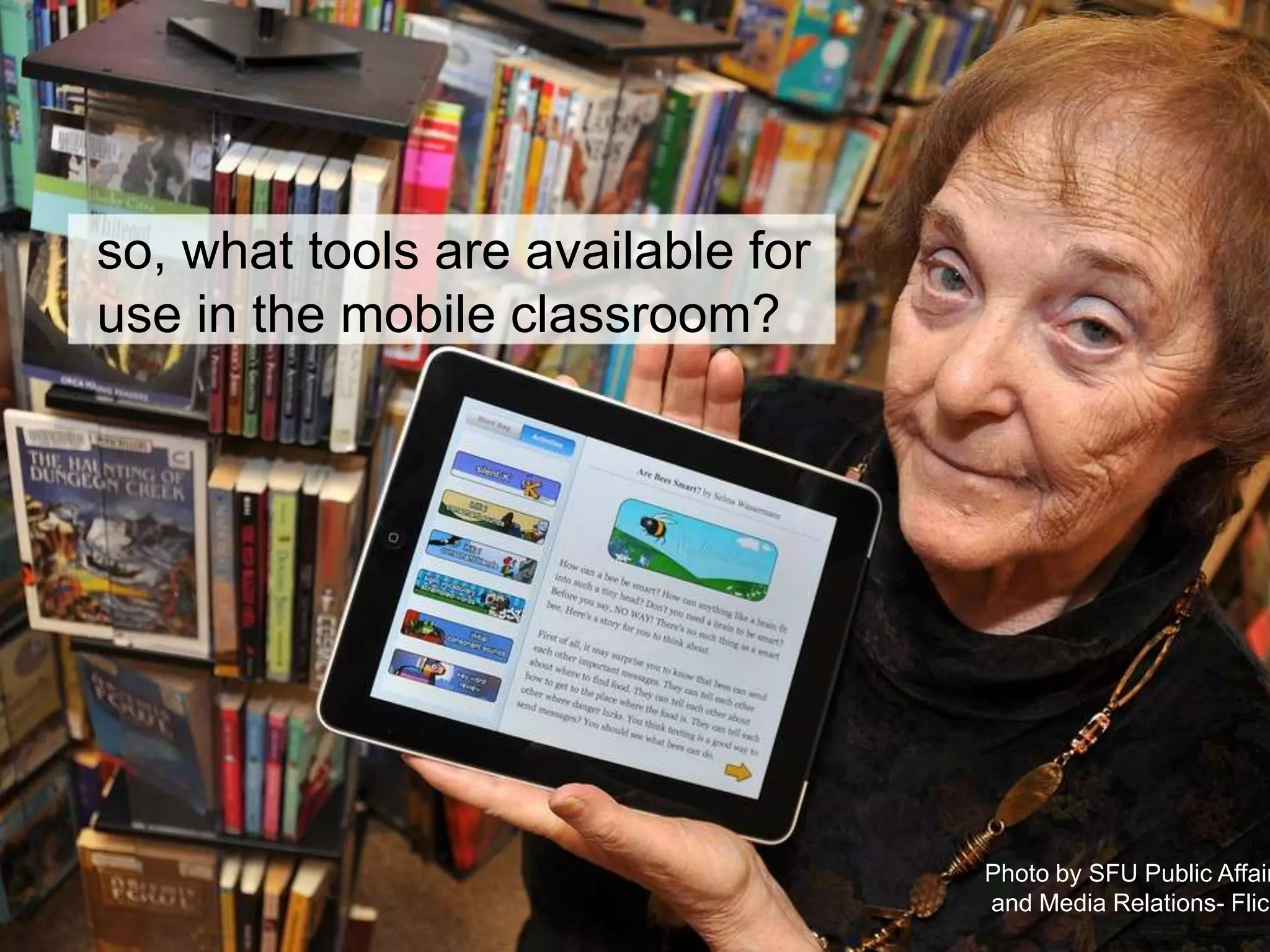
so, what tools are available for use in the mobile classroom?Photo by SFU Public Affairs and Media Relations- Flickr
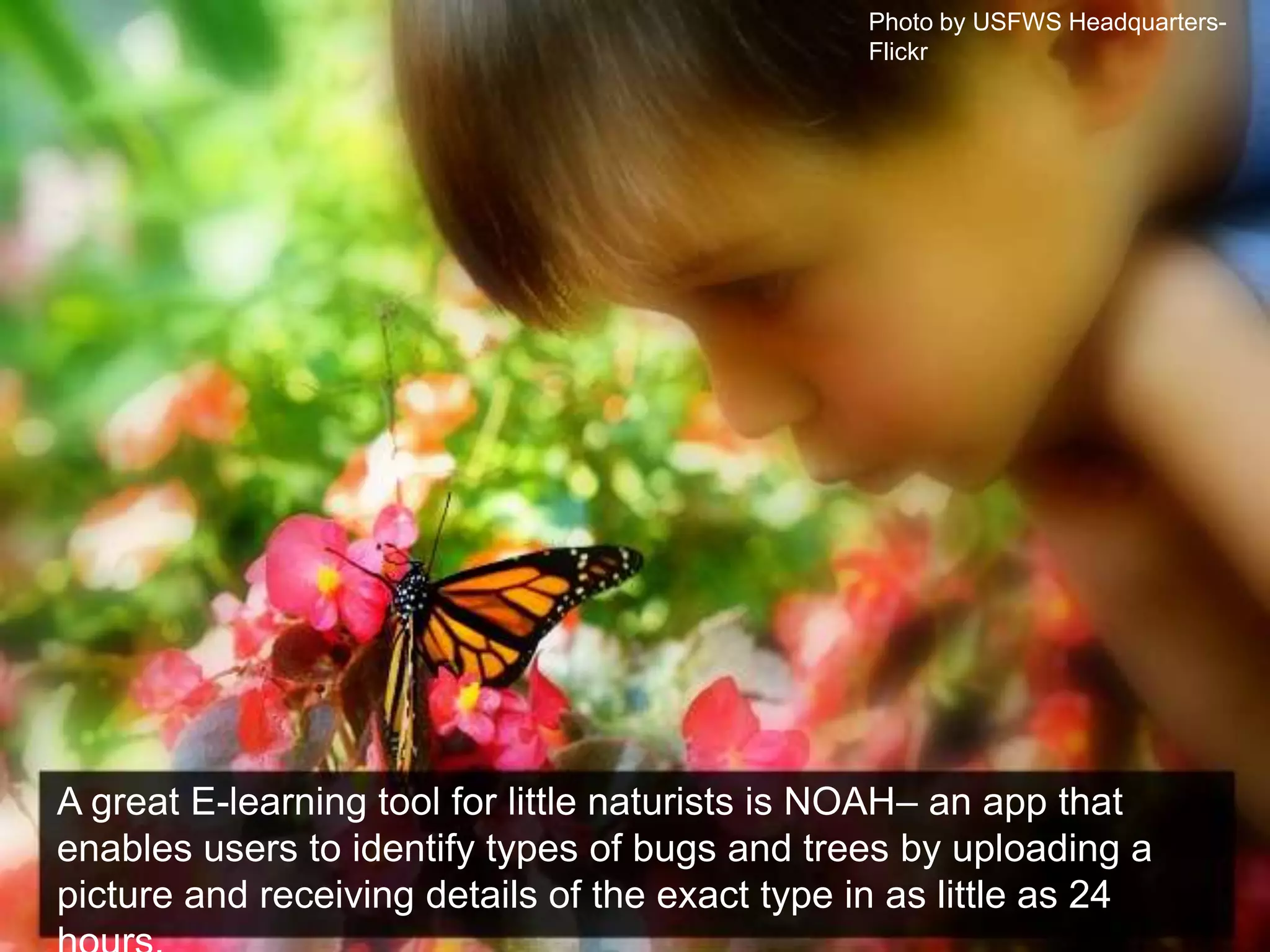
Photo by USFWS Headquarters- FlickrA great E-learning tool for little naturists is NOAH– an app that enables users to identify types of bugs and trees by uploading a picture and receiving details of the exact type in as little as 24 hours.
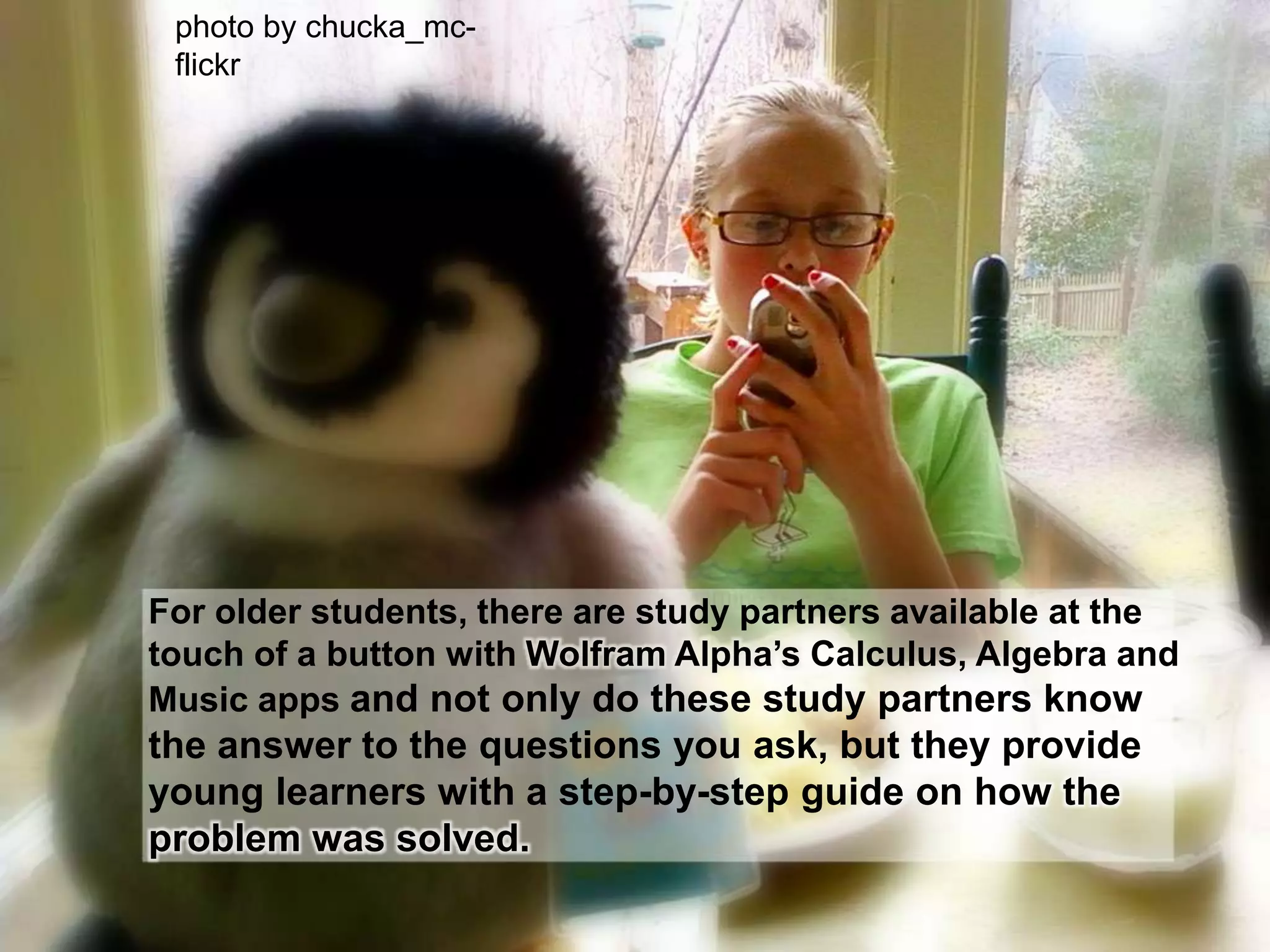
photo by chucka_mc- flickrFor older students, there are study partners available at the touch of a button with Wolfram Alpha’s Calculus, Algebra and Music apps and not only do these study partners know the answer to the questions you ask, but they provide young learners with a step-by-step guide on how the problem was solved.
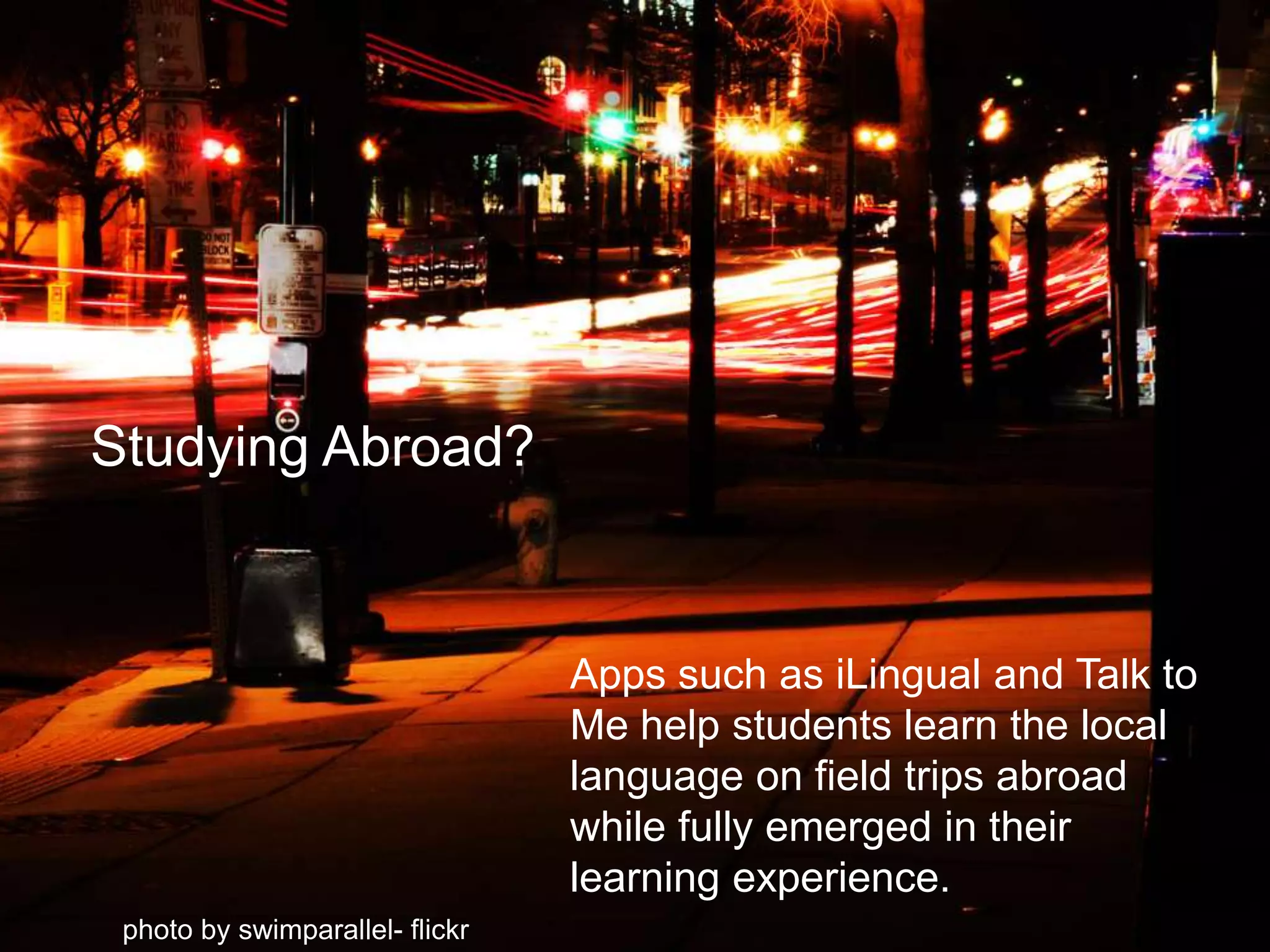
Studying Abroad?Apps such as iLingual and Talk to Me help students learn the local language on field trips abroad while fully emerged in their learning experience.photo by swimparallel- flickr
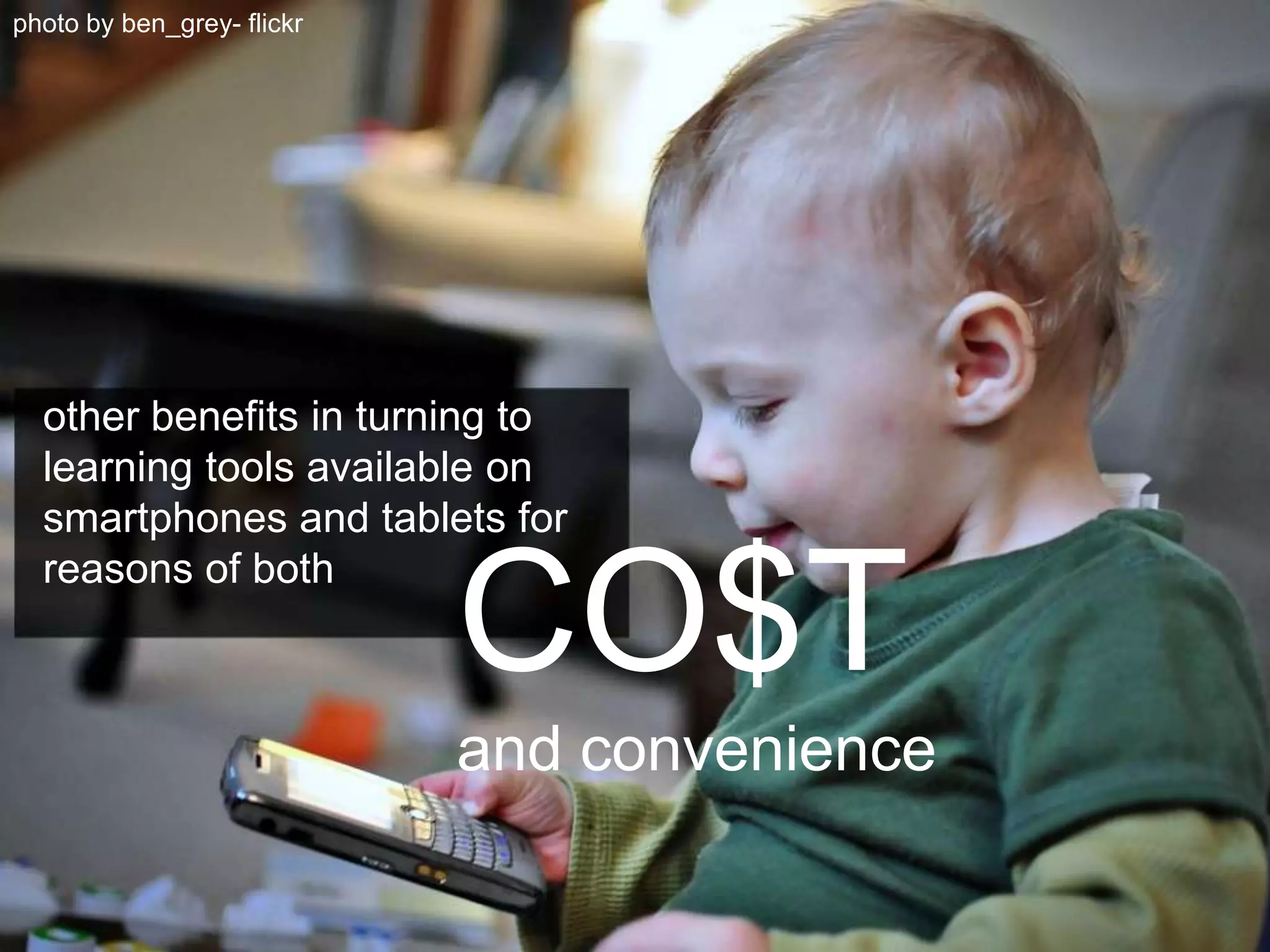
photo by ben_grey- flickrother benefits in turning to learning tools available on smartphones and tablets for  reasons of bothCO$T and convenience
photo by hello turkey toe- flickr“Do you ever leave the house without your phone?”“The beauty of a mobile phone is that 							it’s always there.”how convenient!
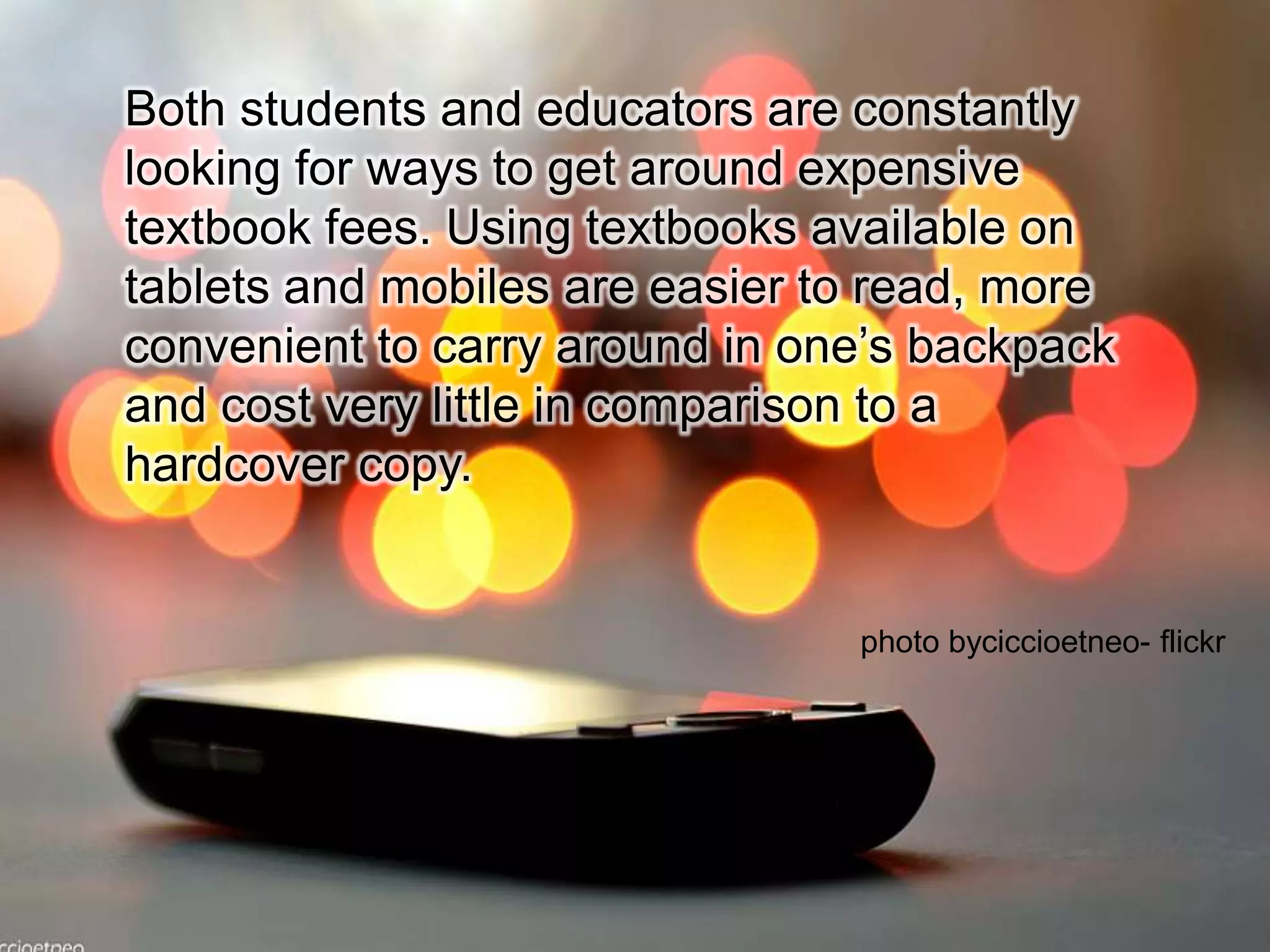
Both students and educators are constantly looking for ways to get around expensive textbook fees. Using textbooks available on tablets and mobiles are easier to read, more convenient to carry around in one’s backpack and cost very little in comparison to a hardcover copy.photo byciccioetneo- flickr
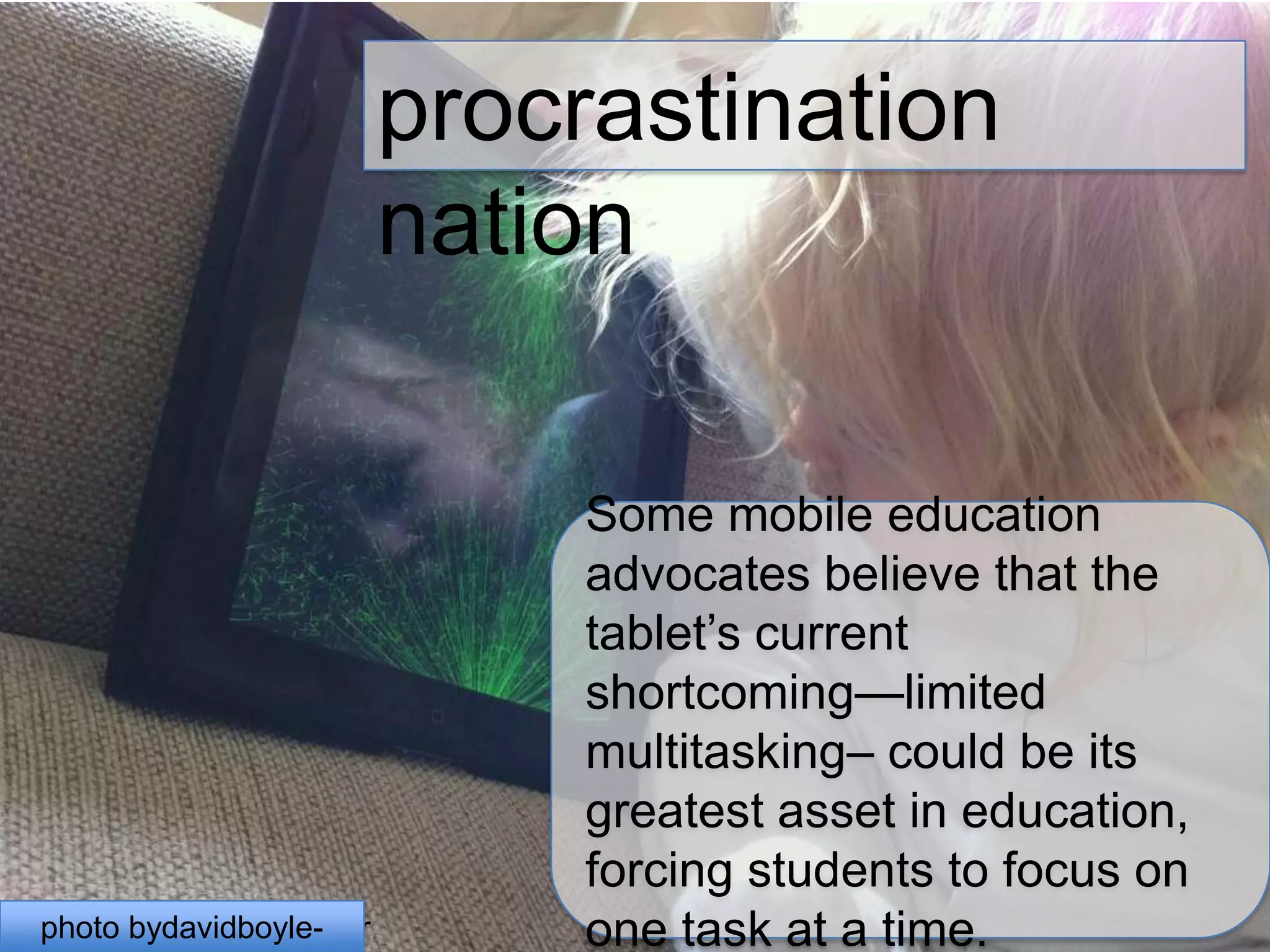
procrastination nationSome mobile education advocates believe that the tablet’s current shortcoming—limited multitasking– could be its greatest asset in education, forcing students to focus on one task at a time.photo bydavidboyle- flickrphoto bydavidboyle- flickr
“a tried-and-true platform to let conversations flourish”#twitteris another example of a cost-efficient tool formobile learning as it keeps the conversationcontinuing outside of the classroom, fuelling moreclass involvement than ever before.photo by VinothChandar- flickr
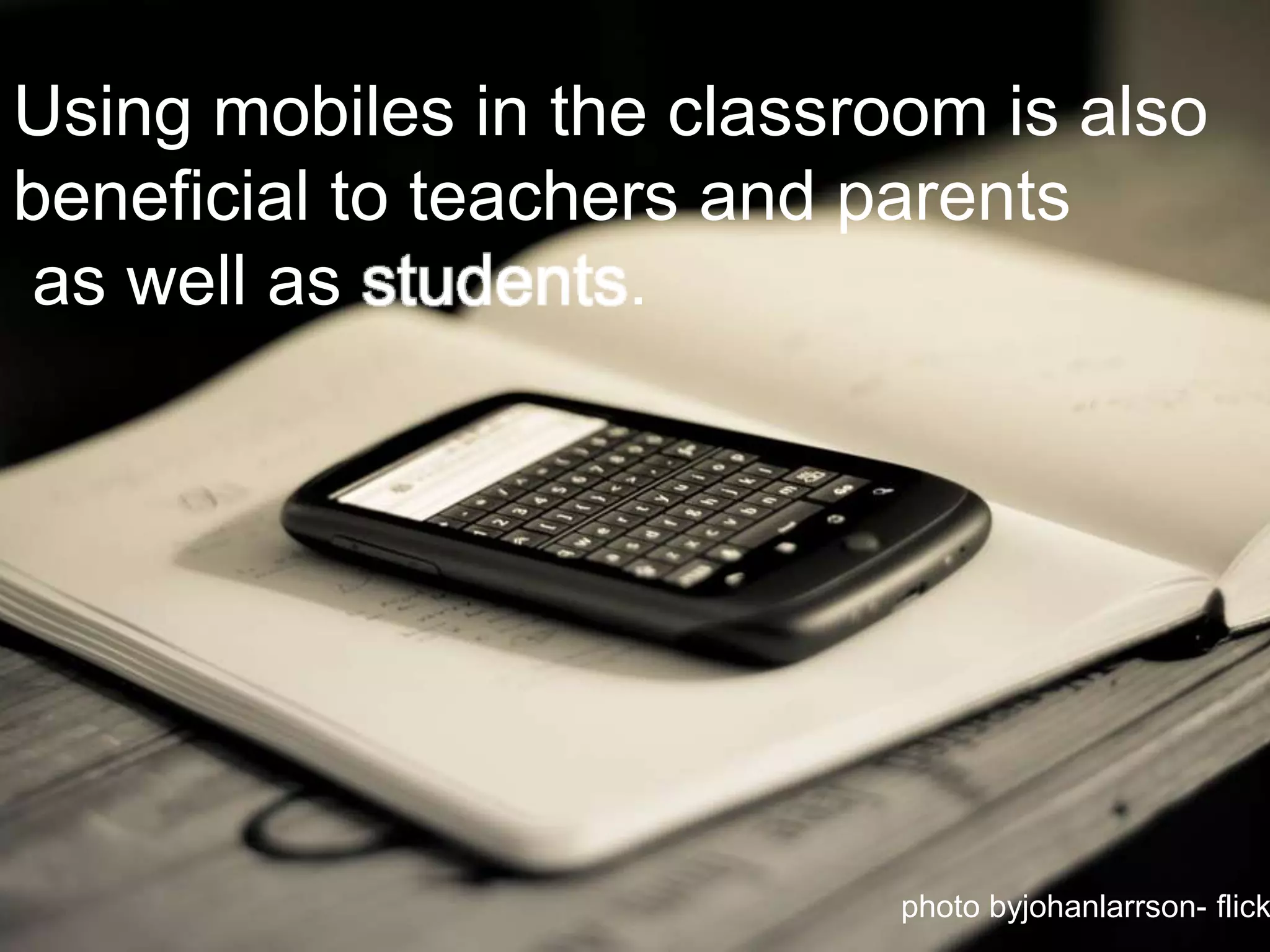
Using mobiles in the classroom is also beneficial to teachers and parents as well as students. photo byjohanlarrson- flickr
Attendance for iPhone is an app created for Teachers that allows them to easily take attendance in their classrooms by taking a photo of a student and uploading it to theirclass list.Parents can also track their child’s grades and keep more up to date on their learning progression through apps such as SchoolCircuit and myGradeBook.photo by pink sherbet- flickr
photo by esparta- flickrwhat do you think about mobility in the classroom? useful or useless?tweet your thoughts @candaceberes
Sources used: the new york times online, mashable.com, nationalpost.ca, nassp.org, thejournal.comphoto by seyedmotafazamani- flickrslideshow presentation by: Candace Beres

e learning

  • 1.
    connected from birthto the classroom?photo by thecrowells- flickr
  • 2.
    photo by swimparallel- flickrmobile technology and social networking sites withinAs educational institutions advocate for more access to schools across the country, we have to ask:
  • 3.
    ?what are thebenefits to usingmobile devices as educational toolsphoto by mortsan- flickr
  • 4.
    The Toronto DistrictSchool Board recently voted to lift the ban on mobile use in classrooms and has begun initiatives to incorporate cellular devices as a vital learning tool within its schools. A lot of parents disagree with the school’s decision.photo by quinn.anya- Flickr
  • 5.
    photo by gelatobaby-flickr“giving a distracted generation a free pass to be distracted in the one place where they should be paying attention, or at least trying to”- Joe O’Connor, The National Post
  • 6.
    In United Stateshigh schools, 98% of students have access to some kind of smartphone, according to a report by Blackboard and Project Tomorrow.“Simply blocking such technologies does students a disservice. An education that fails to account for the responsible use of mobile devices and social networks prepares students for our past, but not for their future.” - David Nagel, THE JournalPhoto by PictureYouth- Flickr
  • 7.
    so, what toolsare available for use in the mobile classroom?Photo by SFU Public Affairs and Media Relations- Flickr
  • 8.
    Photo by USFWSHeadquarters- FlickrA great E-learning tool for little naturists is NOAH– an app that enables users to identify types of bugs and trees by uploading a picture and receiving details of the exact type in as little as 24 hours.
  • 9.
    photo by chucka_mc-flickrFor older students, there are study partners available at the touch of a button with Wolfram Alpha’s Calculus, Algebra and Music apps and not only do these study partners know the answer to the questions you ask, but they provide young learners with a step-by-step guide on how the problem was solved.
  • 10.
    Studying Abroad?Apps suchas iLingual and Talk to Me help students learn the local language on field trips abroad while fully emerged in their learning experience.photo by swimparallel- flickr
  • 11.
    photo by ben_grey-flickrother benefits in turning to learning tools available on smartphones and tablets for reasons of bothCO$T and convenience
  • 12.
    photo by helloturkey toe- flickr“Do you ever leave the house without your phone?”“The beauty of a mobile phone is that it’s always there.”how convenient!
  • 13.
    Both students andeducators are constantly looking for ways to get around expensive textbook fees. Using textbooks available on tablets and mobiles are easier to read, more convenient to carry around in one’s backpack and cost very little in comparison to a hardcover copy.photo byciccioetneo- flickr
  • 14.
    procrastination nationSome mobileeducation advocates believe that the tablet’s current shortcoming—limited multitasking– could be its greatest asset in education, forcing students to focus on one task at a time.photo bydavidboyle- flickrphoto bydavidboyle- flickr
  • 15.
    “a tried-and-true platformto let conversations flourish”#twitteris another example of a cost-efficient tool formobile learning as it keeps the conversationcontinuing outside of the classroom, fuelling moreclass involvement than ever before.photo by VinothChandar- flickr
  • 16.
    Using mobiles inthe classroom is also beneficial to teachers and parents as well as students. photo byjohanlarrson- flickr
  • 17.
    Attendance for iPhoneis an app created for Teachers that allows them to easily take attendance in their classrooms by taking a photo of a student and uploading it to theirclass list.Parents can also track their child’s grades and keep more up to date on their learning progression through apps such as SchoolCircuit and myGradeBook.photo by pink sherbet- flickr
  • 18.
    photo by esparta-flickrwhat do you think about mobility in the classroom? useful or useless?tweet your thoughts @candaceberes
  • 19.
    Sources used: thenew york times online, mashable.com, nationalpost.ca, nassp.org, thejournal.comphoto by seyedmotafazamani- flickrslideshow presentation by: Candace Beres