Download to read offline

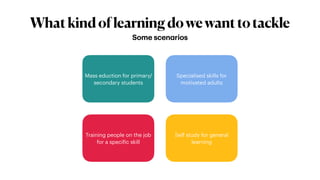
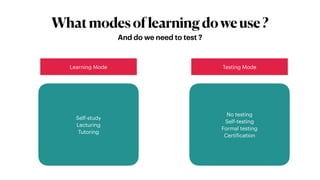


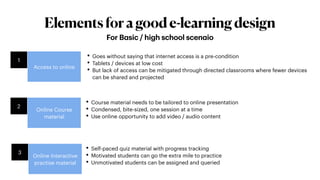
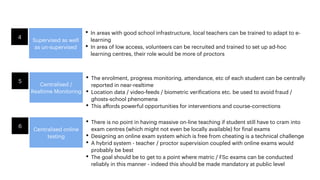


This document discusses e-learning versus traditional learning and proposes elements for an effective e-learning design for basic and high school education in scenarios with low student motivation and access issues. It suggests that e-learning can work if courses are structured, include online content and practice material, and provide centralized monitoring and testing. Specifically, it recommends tailored online courses, interactive practice quizzes, shared access to devices, both supervised and unsupervised learning, real-time monitoring of student progress, and online exams to replace in-person testing. The goal is to design hybrid digital and human-supported systems that use technology to supplement trained local teachers and proctors.


