Mahatma Gandhi Institute of
Technical Education and
Research Centre, Navsari
Subject: Effective Technical Communication
Subject Code: 3130004
Dynamics of Communication
Prepared by: Tanvi Patel
Assistant Professor
Computer Department
Outline
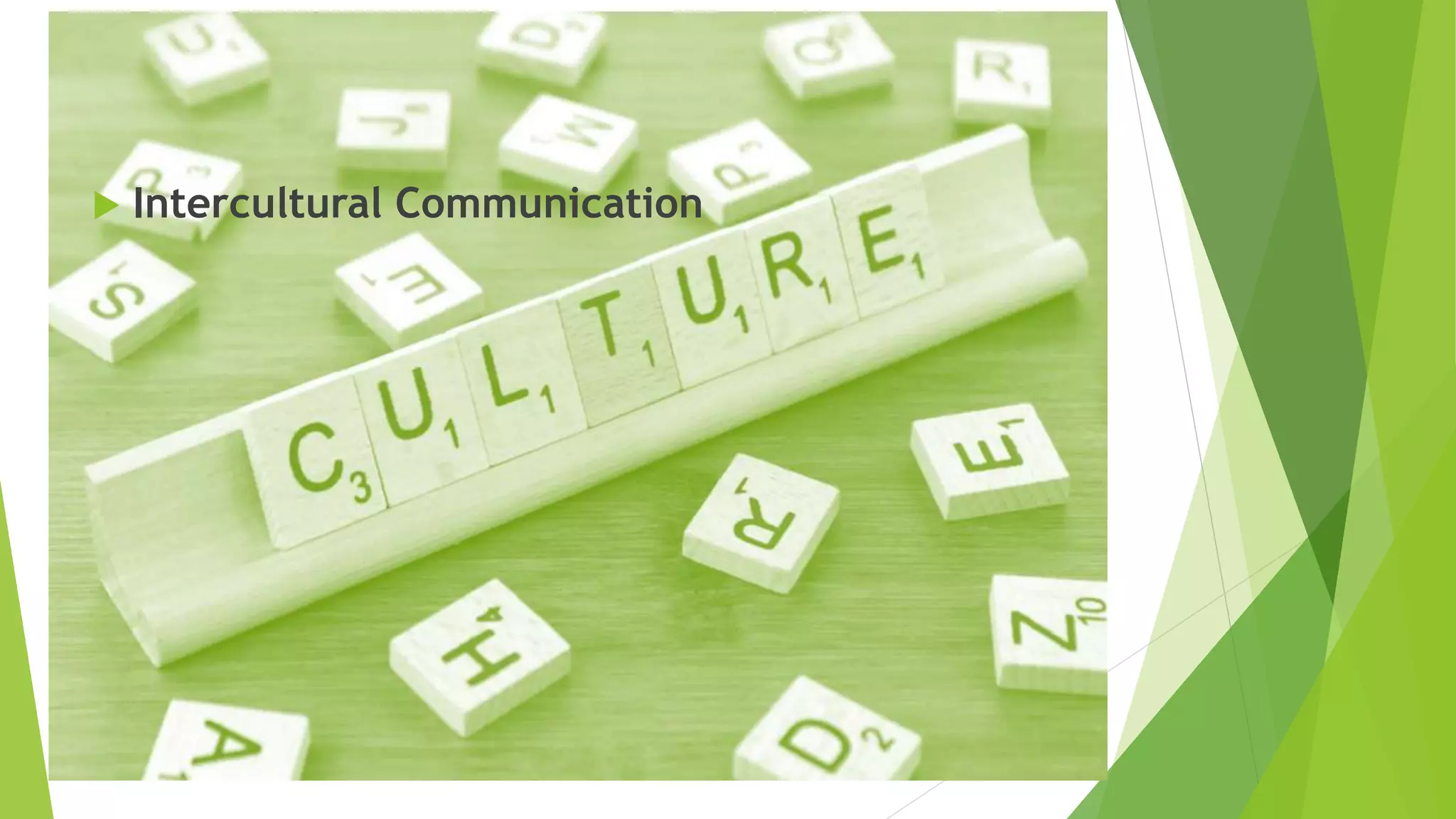
 Intercultural Communication
Culture Understanding
 Understanding culture is critical for educators because our individual cultural
orientation is present in every interaction. ... Culture is a combination of
thoughts, feelings, attitudes, beliefs, values, and behavior patterns that are
shared by racial, ethnic, religious, or social groups of people.
 To understand peoples behaviour.
 To prevent misunderstanding.
 To respect the difference between cultures.
 To communicate the right message to the right people.
Continue…
 It is helpful if you can think
about culture in the following
five ways:
I. Culture is learned.
II. Culture is shared.
III. Culture is dynamic.
IV. Culture is systemic.
V. Culture is symbolic.
Interact with people who come from
diverse cultures
 This is one of the ideal ways of learning and understanding other people’s
cultures. One way of achieving this is going for international camps.
 The advantage of attending these camps is that you meet people from
different countries. Not only do you learn about their culture, but you also
teach them your culture.
 Having a one on one interaction with people helps you hear their stories first
hand. Take this opportunity to ask questions you may have about the culture,
and teach them everything they want to know. This way, you learn from each
other.
Benefits
 In today’s ever-changing world, people world over are fast realizing the
importance of learning, understanding, and appreciating diverse cultures.
 Why is this necessary? Because It plays a major role in developing
communities that excel in problem-solving and enhancing varying conditions.
1) You get to understand world better: Different cultures helps you embrace and
appreciate people that are different from you. Further, the more you interact
with other from different cultures, the more you respect and value them.
 For example: Going for summer camps or holidays are a great way of
exposing your children to diverse cultures and practices. Whether they
will interact with other children from different countries or regions, they
will learn something new during camp.
Continue…
2) Minimize Stereotypes: When your children learn about people and
their different cultures, they’ll be less likely to classify them
depending on stereotypes (particular category of people).
Remember, everybody is different and what one person does
shouldn’t be used to define an entire community.
3) Helps Prevent and overcome ethnic and racial divisions: Ethnic (i.e
cultural group) and racial divisions (national or tribal) can hurt
society. For instance, it could lead to a lack of opportunities,
misunderstandings, and in the worst cases, violence.
Continue…
4) Enhance Effective Communication: Language is a critical part of human
communication. However, it’s not the only contributing factor to effective
communication. Culture enhances communication in varying ways. For
instance, culture can influence speaking tendencies such as; figurative
language, speed, and presentation. Culture also contributes to the way
people depict their gestures and body language.
Continue….
5) Creates opportunity to meet new people: There are different ways of meeting
new people. For instance, participate in different celebrations, attend camp,
visit people from diverse cultures, and celebrate special days. This enables
students, especially, to meet, interact with, and make new friends. This is an
ideal way of expanding a student’s social circle and creating room for them to
learn about different cultures.
Continue…
6) Exposure to new experiences: Children can get exposed through; sampling
new foods, participating in different cultural celebrations and listening to
stories. Further, engaging in different activities such as art or even learning
how to play a new musical instrument. Exposure to new things helps children
to explore the world better.
What is Intercultural Communication?
 Intercultural communication is the verbal and nonverbal interaction
between people from different cultural backgrounds.
 Basically, 'inter-' is a prefix that means 'between' and cultural means…from a
culture, so intercultural communication is the communication between
cultures.
 Example: Sometimes, it is used to describe a single person trying to interact
in a foreign environment but more often, it is a two-way street, where people
from both cultures are trying to improve their communication.
Example of Intercultural communication
Example
 In other words, it's the
process of communicating
with people from another
culture. Intercultural
communication is about
much more than just
language, since so much
of communication is
nonverbal.
Importance of Intercultural
Communications
 Peoples style of communication is the outcome of the culture in which
they have brought up.
 Verbal aspects include different languages used by different
languages, used by different communities and non verbal aspects
encompass the volume with which one speaks, the way the emotions
are expressed, etc.
 In viable business surroundings, intercultural communication helps the
employees and organizations to stand distinct and create their own
value in the market.
Continue…
 Intercultural communication skills help to achieve thoughtful
discussions and help with developing business contracts and deals.
 People who possess such skills are able to boost free flow of
communication with the people of differing background and culture
and have more fruitful formal relations.
 Intercultural communication plays a significant role in a persons
intercultural potentials, or influence the peoples potential to get with
the other culture.
Thank You

Dynamics of Communication

  • 1.
    Mahatma Gandhi Instituteof Technical Education and Research Centre, Navsari Subject: Effective Technical Communication Subject Code: 3130004 Dynamics of Communication Prepared by: Tanvi Patel Assistant Professor Computer Department
  • 2.
  • 3.
    Culture Understanding  Understandingculture is critical for educators because our individual cultural orientation is present in every interaction. ... Culture is a combination of thoughts, feelings, attitudes, beliefs, values, and behavior patterns that are shared by racial, ethnic, religious, or social groups of people.  To understand peoples behaviour.  To prevent misunderstanding.  To respect the difference between cultures.  To communicate the right message to the right people.
  • 4.
    Continue…  It ishelpful if you can think about culture in the following five ways: I. Culture is learned. II. Culture is shared. III. Culture is dynamic. IV. Culture is systemic. V. Culture is symbolic.
  • 5.
    Interact with peoplewho come from diverse cultures  This is one of the ideal ways of learning and understanding other people’s cultures. One way of achieving this is going for international camps.  The advantage of attending these camps is that you meet people from different countries. Not only do you learn about their culture, but you also teach them your culture.  Having a one on one interaction with people helps you hear their stories first hand. Take this opportunity to ask questions you may have about the culture, and teach them everything they want to know. This way, you learn from each other.
  • 6.
    Benefits  In today’sever-changing world, people world over are fast realizing the importance of learning, understanding, and appreciating diverse cultures.  Why is this necessary? Because It plays a major role in developing communities that excel in problem-solving and enhancing varying conditions. 1) You get to understand world better: Different cultures helps you embrace and appreciate people that are different from you. Further, the more you interact with other from different cultures, the more you respect and value them.  For example: Going for summer camps or holidays are a great way of exposing your children to diverse cultures and practices. Whether they will interact with other children from different countries or regions, they will learn something new during camp.
  • 7.
    Continue… 2) Minimize Stereotypes:When your children learn about people and their different cultures, they’ll be less likely to classify them depending on stereotypes (particular category of people). Remember, everybody is different and what one person does shouldn’t be used to define an entire community. 3) Helps Prevent and overcome ethnic and racial divisions: Ethnic (i.e cultural group) and racial divisions (national or tribal) can hurt society. For instance, it could lead to a lack of opportunities, misunderstandings, and in the worst cases, violence.
  • 8.
    Continue… 4) Enhance EffectiveCommunication: Language is a critical part of human communication. However, it’s not the only contributing factor to effective communication. Culture enhances communication in varying ways. For instance, culture can influence speaking tendencies such as; figurative language, speed, and presentation. Culture also contributes to the way people depict their gestures and body language.
  • 9.
    Continue…. 5) Creates opportunityto meet new people: There are different ways of meeting new people. For instance, participate in different celebrations, attend camp, visit people from diverse cultures, and celebrate special days. This enables students, especially, to meet, interact with, and make new friends. This is an ideal way of expanding a student’s social circle and creating room for them to learn about different cultures.
  • 10.
    Continue… 6) Exposure tonew experiences: Children can get exposed through; sampling new foods, participating in different cultural celebrations and listening to stories. Further, engaging in different activities such as art or even learning how to play a new musical instrument. Exposure to new things helps children to explore the world better.
  • 11.
    What is InterculturalCommunication?  Intercultural communication is the verbal and nonverbal interaction between people from different cultural backgrounds.  Basically, 'inter-' is a prefix that means 'between' and cultural means…from a culture, so intercultural communication is the communication between cultures.  Example: Sometimes, it is used to describe a single person trying to interact in a foreign environment but more often, it is a two-way street, where people from both cultures are trying to improve their communication.
  • 12.
  • 13.
    Example  In otherwords, it's the process of communicating with people from another culture. Intercultural communication is about much more than just language, since so much of communication is nonverbal.
  • 14.
    Importance of Intercultural Communications Peoples style of communication is the outcome of the culture in which they have brought up.  Verbal aspects include different languages used by different languages, used by different communities and non verbal aspects encompass the volume with which one speaks, the way the emotions are expressed, etc.  In viable business surroundings, intercultural communication helps the employees and organizations to stand distinct and create their own value in the market.
  • 15.
    Continue…  Intercultural communicationskills help to achieve thoughtful discussions and help with developing business contracts and deals.  People who possess such skills are able to boost free flow of communication with the people of differing background and culture and have more fruitful formal relations.  Intercultural communication plays a significant role in a persons intercultural potentials, or influence the peoples potential to get with the other culture.
  • 16.