A Road To No Where
DRUGS
Presented by (MCA 5th)
Kanchan
Aradhana
DRUGS
A Road To No Where
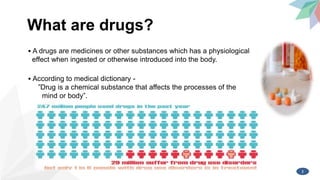
 A drugs are medicines or other substances which has a physiological
effect when ingested or otherwise introduced into the body.
 According to medical dictionary -
”Drug is a chemical substance that affects the processes of the
mind or body”.
What are drugs?
1
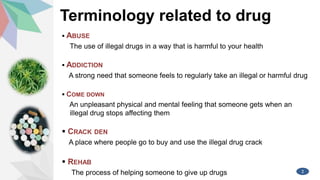
Terminology related to drug
 ABUSE
The use of illegal drugs in a way that is harmful to your health
 ADDICTION
A strong need that someone feels to regularly take an illegal or harmful drug
 COME DOWN
An unpleasant physical and mental feeling that someone gets when an
illegal drug stops affecting them
 CRACK DEN
A place where people go to buy and use the illegal drug crack
 REHAB
The process of helping someone to give up drugs 2
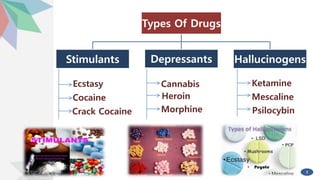
Types Of Drugs
Stimulants Depressants Hallucinogens
Ecstasy
Cocaine
Crack Cocaine Psilocybin
Mescaline
Ketamine
Morphine
Heroin
Cannabis
3
Effect of drugs on body
 Heart attack and high blood pressure
 Causes lung infection and coughing
 Vomiting and stomach ache
 Kidney failure and liver diseases
 Injecting (shooting up) drugs can hurt
your veins
4
Survey Reports On Drugs
According to the reports of WHO:
 It is estimated that 1 in 20 adults, or a quarter of a billion
people between the ages of 15 and 64 years, used at
least one drug in 2014.
 With an estimated 207,400 drug-related deaths in
2014, corresponding to 43.5 deaths per million people
aged 15-64.
 In some sub regions, however, particularly North
America and Western and Central Europe, drugs use
have increased.
5
6
Statistical Report on Drugs
 India has witnessed a five-time
(455%) increase in drug hauls over
3 years, from 2011 to 2013.
 Officials have seized 105,173 tones
of illegal drugs over this period.
 At least 24,426 people committed
suicide due to drug use in the last 10
years across India
 Mizoram, Punjab and Manipur are
among the states where people are
most vulnerable to drug abuse.
States Drug cases
Punjab 10,220
Uttar Pradesh 6,755
Maharashtra 1,903
Tamil Nadu 1,402
Rajasthan 1,115
Jammu & Kashmir 411
Gujarat 68
As per the state wise NCRB report of 2012
7
Banned drugs in world
but not in India
Among the long list of banned medicine
outside, India are commonly used
drugs like
D-Cold
Lomofen (anti-diarrheal)
 Syspride, (acidity and constipation)
 Nimesulide (painkiller)
 Buclizine (appetite stimulant) 8
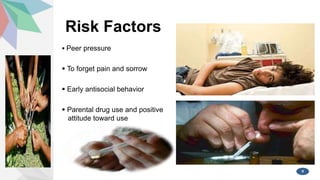
Risk Factors
 Peer pressure
 To forget pain and sorrow
 Early antisocial behavior
 Parental drug use and positive
attitude toward use
9
Protective Factors
 Knowledge about risks associated with
substance use
 Negative attitude towards substance use
 Positive relationships with adults
 Healthy coping strategies to deal with stress
 Involvement in alternative activities
 Sense of well being and self confidence
10
Laws Against Drugs In India
 Narcotic Drugs and Psychotropic Substances Act, 1985
Provide adequate penalties for drug trafficking.
 NDPS Amendments, 1989
 NDPS Amendments, 2001
 NDPS Amendments, 2014
 Drugs and Cosmetics Act, 1940
Regulates the import, manufacture and distribution of drugs in India.
 The Drugs (Amendment) Act, 1955 .
The Drugs and Cosmetics (Amendment) Act, 1982
 The Drugs and Cosmetics (Amendment) Act 1995.
11
How To Create Awareness
About Drugs Among Teens?
 Distribute brochures, posters and other
materials around campus.
 Team up with clubs that promotes healthy
decisions and behavior
 Go virtual, tap into social networks
 Make headlines
 Be on lookout for opportunities to insert
important messages 12
Conclusion
 No single factor can predict whether a person will become addicted to drugs.
 The more risk factors a person has, the greater the chance for drug addiction.
 Drug addiction is treatable and can be successfully managed.
 Teachers, parents, and health care providers have crucial roles in educating
young people and preventing drug use and addiction.
Now, let us all decide today that we will never use any drug and we will all
stand together to fight against this problem.
13
References
 National Survey of Drug Use and Health _ National Institute on Drug Abuse (NIDA)
 India’s Soaring Drug Problem_ 455% Rise In Seizures _ IndiaSpend
 World_Drug_Report_2015_web
 World_Drug_Report_2016_web
 idpc-briefing-paper-drug-policy-in-india
 National Survey of Drug Use and Health _ National Institute on Drug Abuse (NIDA)
 mha.nic.in/ncb_desig_empow
14
Drug

Drug

  • 1.
    A Road ToNo Where DRUGS Presented by (MCA 5th) Kanchan Aradhana DRUGS A Road To No Where
  • 2.
     A drugsare medicines or other substances which has a physiological effect when ingested or otherwise introduced into the body.  According to medical dictionary - ”Drug is a chemical substance that affects the processes of the mind or body”. What are drugs? 1
  • 3.
    Terminology related todrug  ABUSE The use of illegal drugs in a way that is harmful to your health  ADDICTION A strong need that someone feels to regularly take an illegal or harmful drug  COME DOWN An unpleasant physical and mental feeling that someone gets when an illegal drug stops affecting them  CRACK DEN A place where people go to buy and use the illegal drug crack  REHAB The process of helping someone to give up drugs 2
  • 4.
    Types Of Drugs StimulantsDepressants Hallucinogens Ecstasy Cocaine Crack Cocaine Psilocybin Mescaline Ketamine Morphine Heroin Cannabis 3
  • 5.
    Effect of drugson body  Heart attack and high blood pressure  Causes lung infection and coughing  Vomiting and stomach ache  Kidney failure and liver diseases  Injecting (shooting up) drugs can hurt your veins 4
  • 6.
    Survey Reports OnDrugs According to the reports of WHO:  It is estimated that 1 in 20 adults, or a quarter of a billion people between the ages of 15 and 64 years, used at least one drug in 2014.  With an estimated 207,400 drug-related deaths in 2014, corresponding to 43.5 deaths per million people aged 15-64.  In some sub regions, however, particularly North America and Western and Central Europe, drugs use have increased. 5
  • 7.
  • 8.
    Statistical Report onDrugs  India has witnessed a five-time (455%) increase in drug hauls over 3 years, from 2011 to 2013.  Officials have seized 105,173 tones of illegal drugs over this period.  At least 24,426 people committed suicide due to drug use in the last 10 years across India  Mizoram, Punjab and Manipur are among the states where people are most vulnerable to drug abuse. States Drug cases Punjab 10,220 Uttar Pradesh 6,755 Maharashtra 1,903 Tamil Nadu 1,402 Rajasthan 1,115 Jammu & Kashmir 411 Gujarat 68 As per the state wise NCRB report of 2012 7
  • 9.
    Banned drugs inworld but not in India Among the long list of banned medicine outside, India are commonly used drugs like D-Cold Lomofen (anti-diarrheal)  Syspride, (acidity and constipation)  Nimesulide (painkiller)  Buclizine (appetite stimulant) 8
  • 10.
    Risk Factors  Peerpressure  To forget pain and sorrow  Early antisocial behavior  Parental drug use and positive attitude toward use 9
  • 11.
    Protective Factors  Knowledgeabout risks associated with substance use  Negative attitude towards substance use  Positive relationships with adults  Healthy coping strategies to deal with stress  Involvement in alternative activities  Sense of well being and self confidence 10
  • 12.
    Laws Against DrugsIn India  Narcotic Drugs and Psychotropic Substances Act, 1985 Provide adequate penalties for drug trafficking.  NDPS Amendments, 1989  NDPS Amendments, 2001  NDPS Amendments, 2014  Drugs and Cosmetics Act, 1940 Regulates the import, manufacture and distribution of drugs in India.  The Drugs (Amendment) Act, 1955 . The Drugs and Cosmetics (Amendment) Act, 1982  The Drugs and Cosmetics (Amendment) Act 1995. 11
  • 13.
    How To CreateAwareness About Drugs Among Teens?  Distribute brochures, posters and other materials around campus.  Team up with clubs that promotes healthy decisions and behavior  Go virtual, tap into social networks  Make headlines  Be on lookout for opportunities to insert important messages 12
  • 14.
    Conclusion  No singlefactor can predict whether a person will become addicted to drugs.  The more risk factors a person has, the greater the chance for drug addiction.  Drug addiction is treatable and can be successfully managed.  Teachers, parents, and health care providers have crucial roles in educating young people and preventing drug use and addiction. Now, let us all decide today that we will never use any drug and we will all stand together to fight against this problem. 13
  • 15.
    References  National Surveyof Drug Use and Health _ National Institute on Drug Abuse (NIDA)  India’s Soaring Drug Problem_ 455% Rise In Seizures _ IndiaSpend  World_Drug_Report_2015_web  World_Drug_Report_2016_web  idpc-briefing-paper-drug-policy-in-india  National Survey of Drug Use and Health _ National Institute on Drug Abuse (NIDA)  mha.nic.in/ncb_desig_empow 14