PRESENTATION OVERVIEW
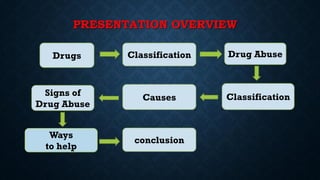
Drugs Classification Drug Abuse
Signs of
Drug Abuse
Causes Classification
conclusion
Ways
to help
WHAT IS A DRUG?
• A drug is something that affects your body. Drug pass
through the body and interferes with brain’s
neurotransmitters.
• Drug have been our part of our culture since the middle
of last century.
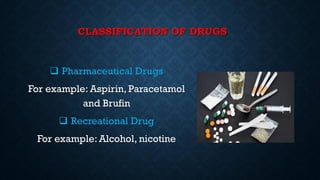
CLASSIFICATION OF DRUGS
 Pharmaceutical Drugs
For example: Aspirin, Paracetamol
and Brufin
 Recreational Drug
For example: Alcohol, nicotine
WHAT IS DRUG ABUSE?
• Drug abuse, also known as Drug addiction is defined as
chronic, relapsing brain disease that is characterized by
compulsive drug seeking and use, despite its harmful
consequences.
• The initial decision of drug taking is voluntary but
repeated uses leads to its addiction.
Classification of addictive drugs
Narcotic Analgesics
Stimulants
Depressants
Cannabis
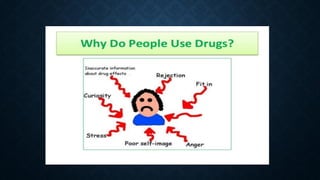
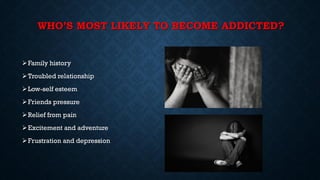
WHO’S MOST LIKELY TO BECOME ADDICTED?
Family history
Troubled relationship
Low-self esteem
Friends pressure
Relief from pain
Excitement and adventure
Frustration and depression
SIGNS OF DRUG ABUSE
Physical signs
• Red and glazed eyes
• Pupils larger or smaller than usual
• Repeated health complaints
• Changes in appetite and sleep pattern
• Sudden weight loss or weight gain
• Unusual smell on breath
Behavioral signs
• Poor work
• Decline in performance
• Unexplained anxiety
• Lack of motivation
• Secretive behaviour
• Accident or trouble prune
SIGNS OF DRUG ABUSE
Emotional Signs
• Personality Change
• Sudden mood changes
• Irresponsible behaviour
• Irritability
• Poor judgement
Family Dynamics
• Starting arguments
• Negative Attitude
• Breaking Rules
• Withdrawing from family
• Secretiveness
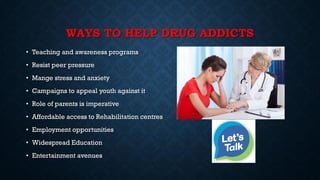
WAYS TO HELP DRUG ADDICTS
• Teaching and awareness programs
• Resist peer pressure
• Mange stress and anxiety
• Campaigns to appeal youth against it
• Role of parents is imperative
• Affordable access to Rehabilitation centres
• Employment opportunities
• Widespread Education
• Entertainment avenues
CONCLUSION
• No part of the world is free from the curse of drug trafficking.
• It has affected millions of people including the youth.
• Government should set targets to reduce the drug-abuse levels.
• At our individual level we should contribute effectively in eradicating this
problem.
• Prevention programs that involve the family, schools, communities, and the media
are effective in reducing drug abuse.
• It is necessary, to help youth and the general public to understand the risks of
drug abuse.

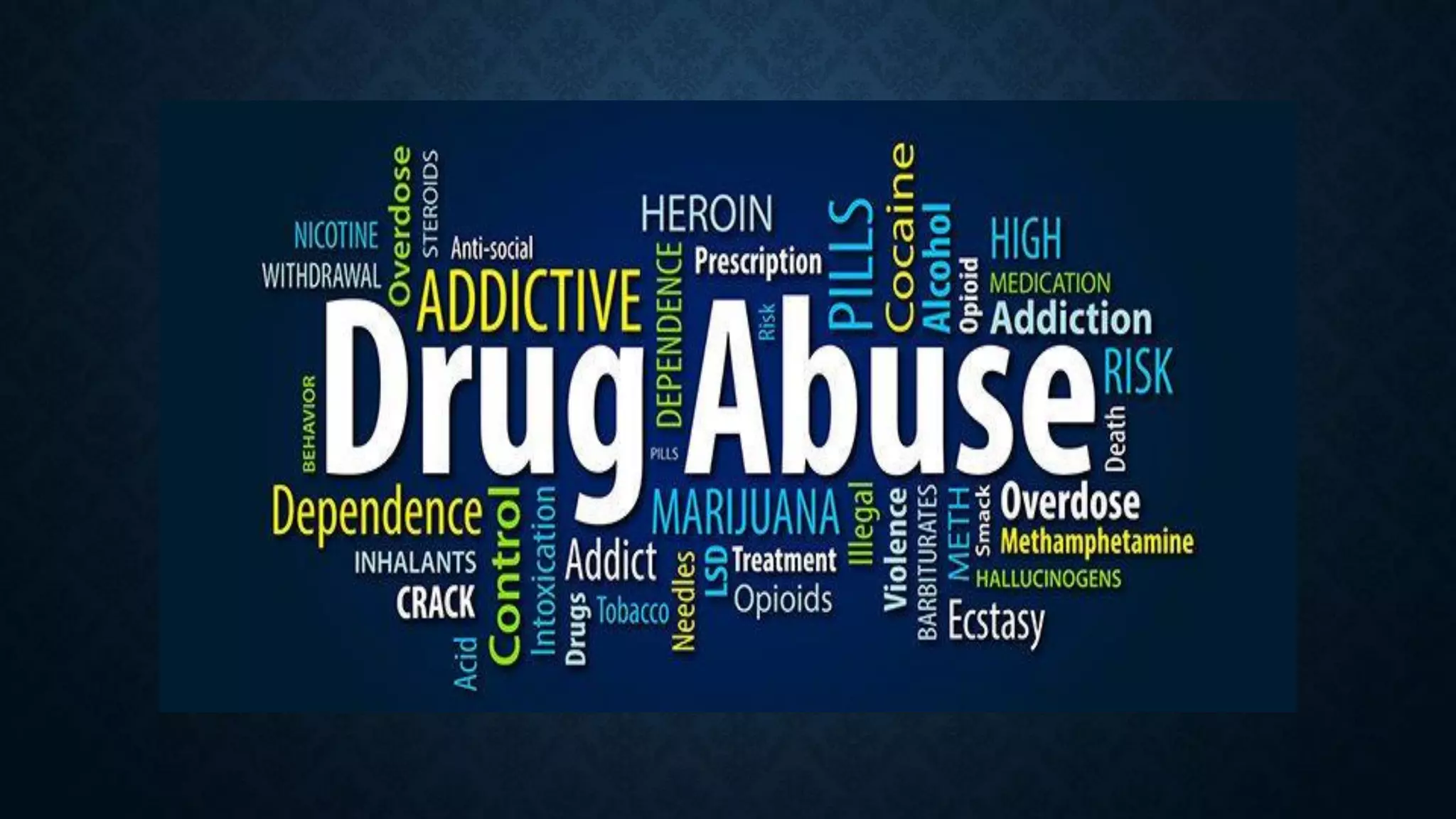
Drug Abuse

  • 2.
    PRESENTATION OVERVIEW Drugs ClassificationDrug Abuse Signs of Drug Abuse Causes Classification conclusion Ways to help
  • 3.
    WHAT IS ADRUG? • A drug is something that affects your body. Drug pass through the body and interferes with brain’s neurotransmitters. • Drug have been our part of our culture since the middle of last century.
  • 4.
    CLASSIFICATION OF DRUGS Pharmaceutical Drugs For example: Aspirin, Paracetamol and Brufin  Recreational Drug For example: Alcohol, nicotine
  • 5.
    WHAT IS DRUGABUSE? • Drug abuse, also known as Drug addiction is defined as chronic, relapsing brain disease that is characterized by compulsive drug seeking and use, despite its harmful consequences. • The initial decision of drug taking is voluntary but repeated uses leads to its addiction.
  • 6.
    Classification of addictivedrugs Narcotic Analgesics Stimulants Depressants Cannabis
  • 8.
    WHO’S MOST LIKELYTO BECOME ADDICTED? Family history Troubled relationship Low-self esteem Friends pressure Relief from pain Excitement and adventure Frustration and depression
  • 9.
    SIGNS OF DRUGABUSE Physical signs • Red and glazed eyes • Pupils larger or smaller than usual • Repeated health complaints • Changes in appetite and sleep pattern • Sudden weight loss or weight gain • Unusual smell on breath Behavioral signs • Poor work • Decline in performance • Unexplained anxiety • Lack of motivation • Secretive behaviour • Accident or trouble prune
  • 10.
    SIGNS OF DRUGABUSE Emotional Signs • Personality Change • Sudden mood changes • Irresponsible behaviour • Irritability • Poor judgement Family Dynamics • Starting arguments • Negative Attitude • Breaking Rules • Withdrawing from family • Secretiveness
  • 11.
    WAYS TO HELPDRUG ADDICTS • Teaching and awareness programs • Resist peer pressure • Mange stress and anxiety • Campaigns to appeal youth against it • Role of parents is imperative • Affordable access to Rehabilitation centres • Employment opportunities • Widespread Education • Entertainment avenues
  • 12.
    CONCLUSION • No partof the world is free from the curse of drug trafficking. • It has affected millions of people including the youth. • Government should set targets to reduce the drug-abuse levels. • At our individual level we should contribute effectively in eradicating this problem. • Prevention programs that involve the family, schools, communities, and the media are effective in reducing drug abuse. • It is necessary, to help youth and the general public to understand the risks of drug abuse.