
# 
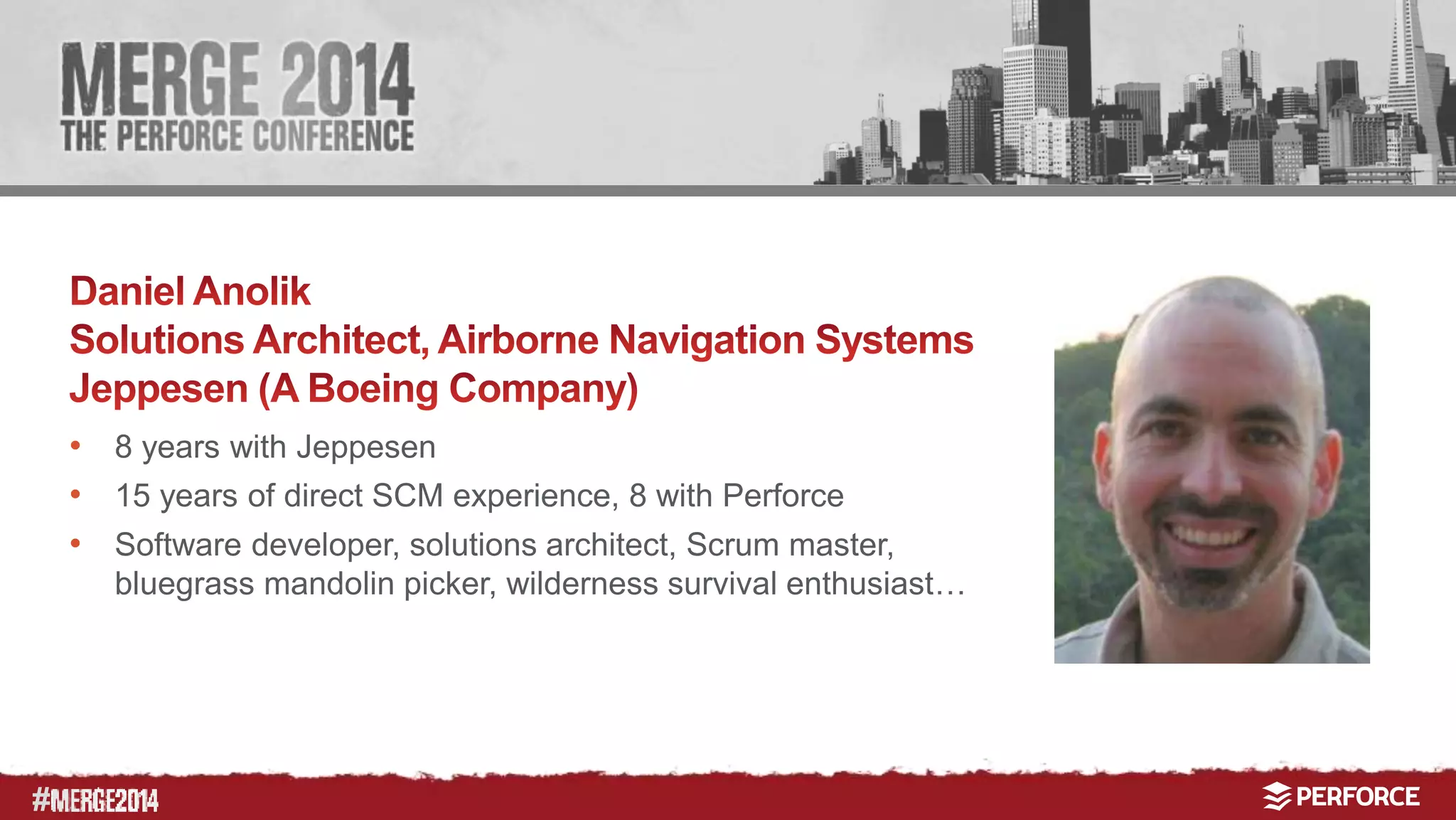
Daniel Anolik 
Solutions Architect, Boeing/Jeppesen
# 
• 8 years with Jeppesen 
• 15 years of direct SCM experience, 8 with Perforce 
• Software developer, solutions architect, Scrum master, 
bluegrass mandolin picker, wilderness survival enthusiast…
# 
• 8 years with Jeppesen 
• 15 years of direct SCM experience, 8 with Perforce 
• Software developer, solutions architect, Scrum master, 
bluegrass mandolin picker, wilderness survival enthusiast, 
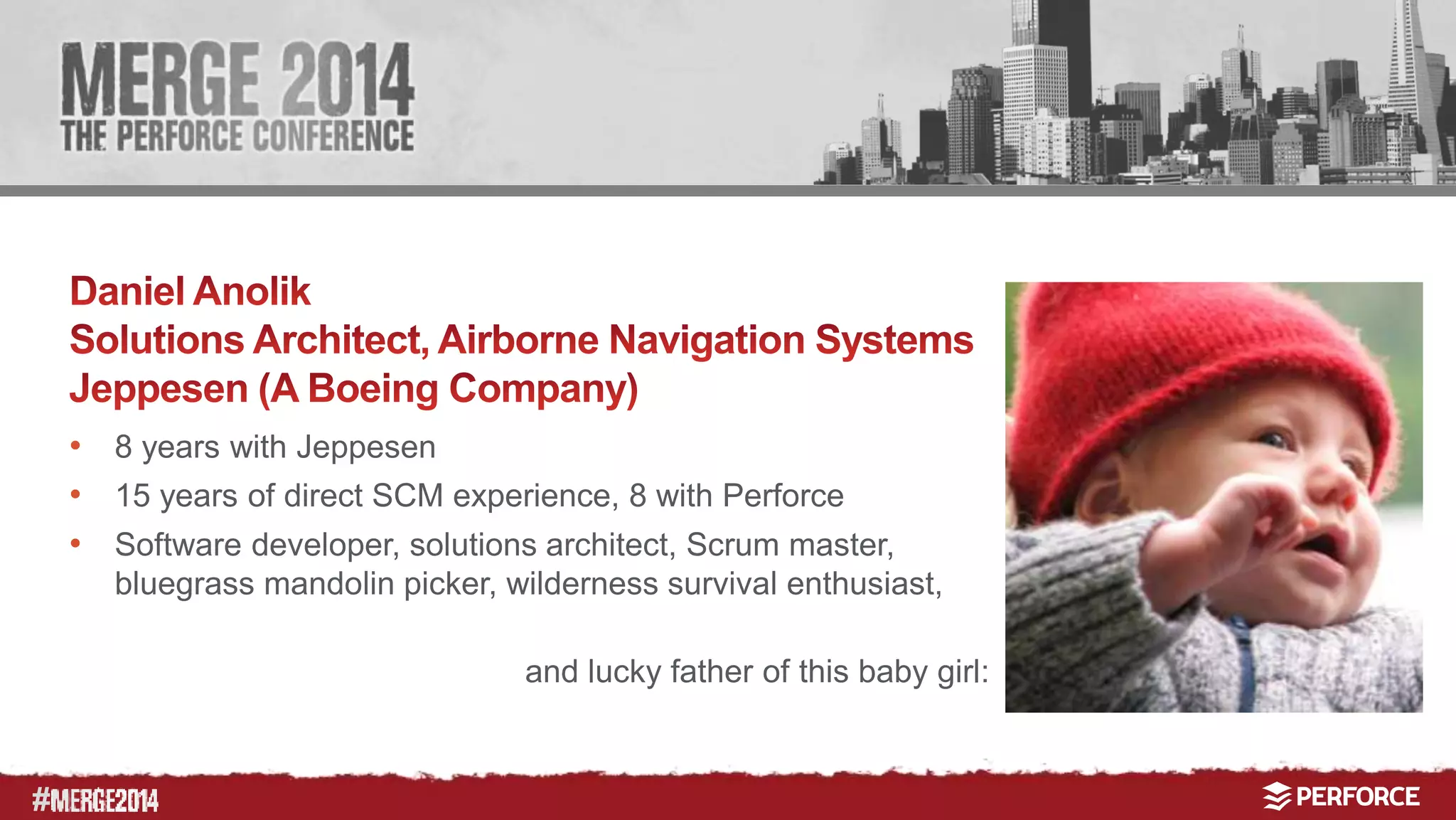
and lucky father of this baby girl:
# 
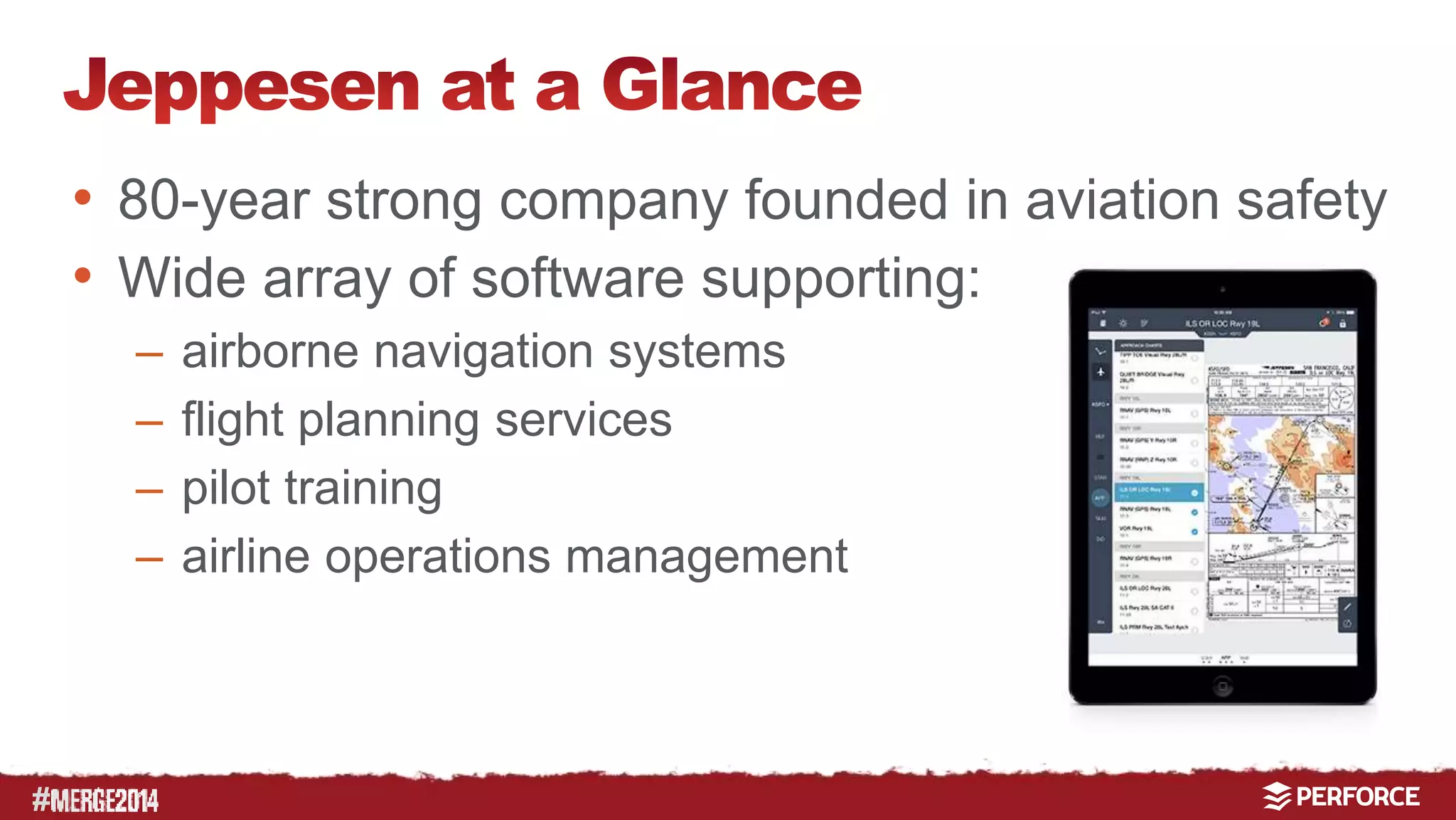
• 80-year strong company founded in aviation safety 
• Wide array of software supporting: 
– airborne navigation systems 
– flight planning services 
– pilot training 
– airline operations management
# 
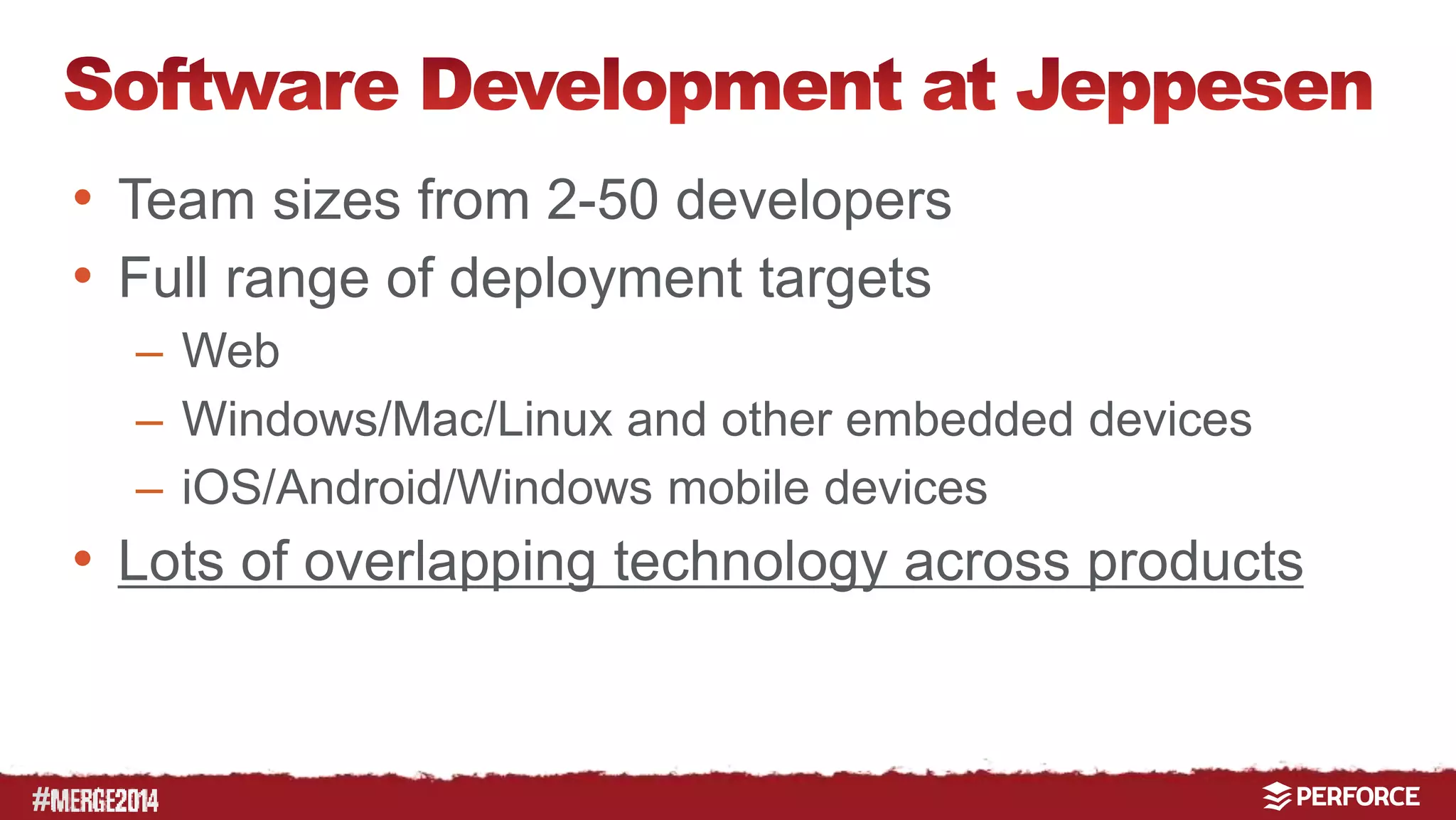
• Team sizes from 2-50 developers 
• Full range of deployment targets 
– Web 
– Windows/Mac/Linux and other embedded devices 
– iOS/Android/Windows mobile devices 
• Lots of overlapping technology across products
# 
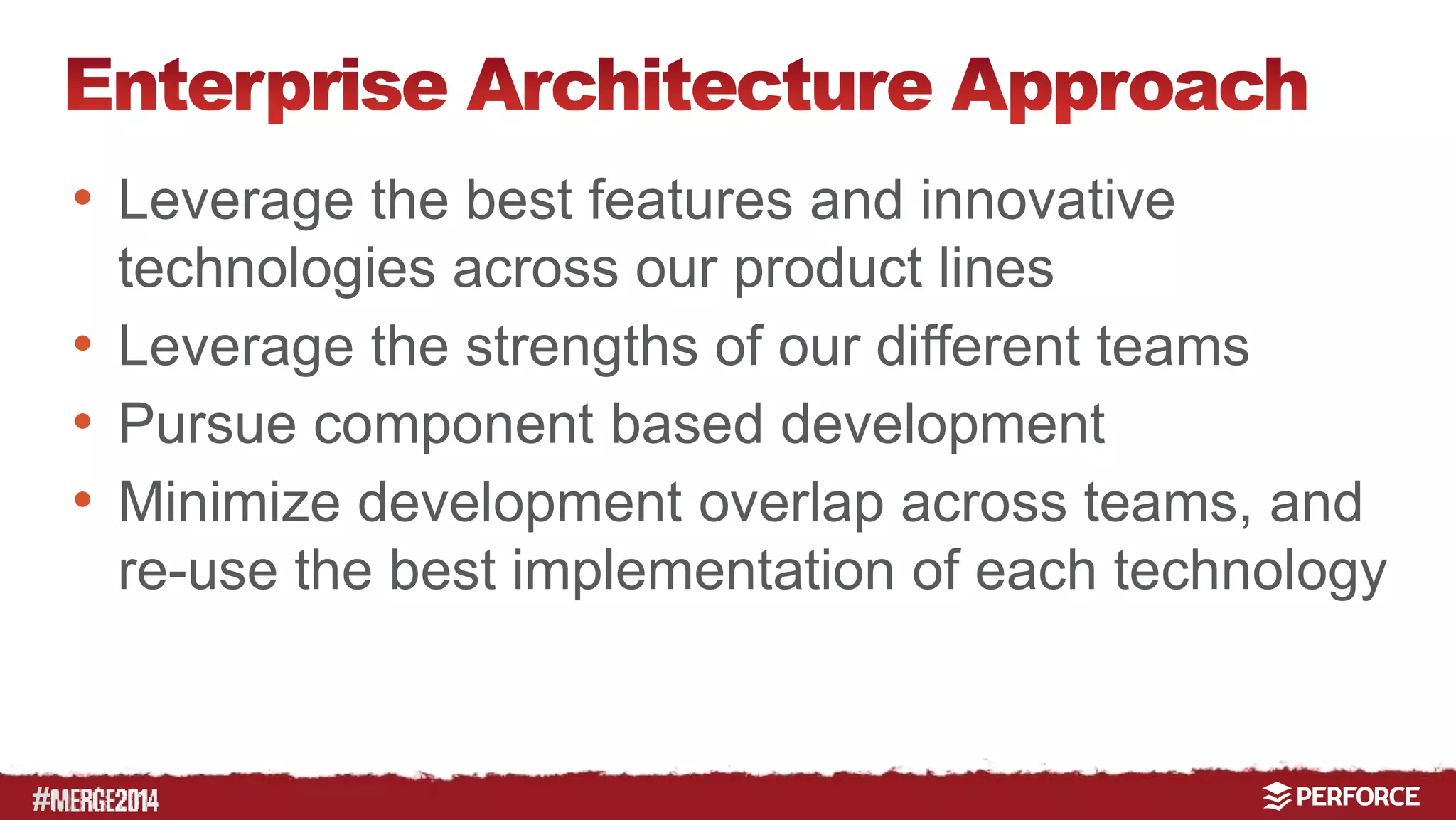
• Leverage the best features and innovative 
technologies across our product lines 
• Leverage the strengths of our different teams 
• Pursue component based development 
• Minimize development overlap across teams, and 
re-use the best implementation of each technology
# 
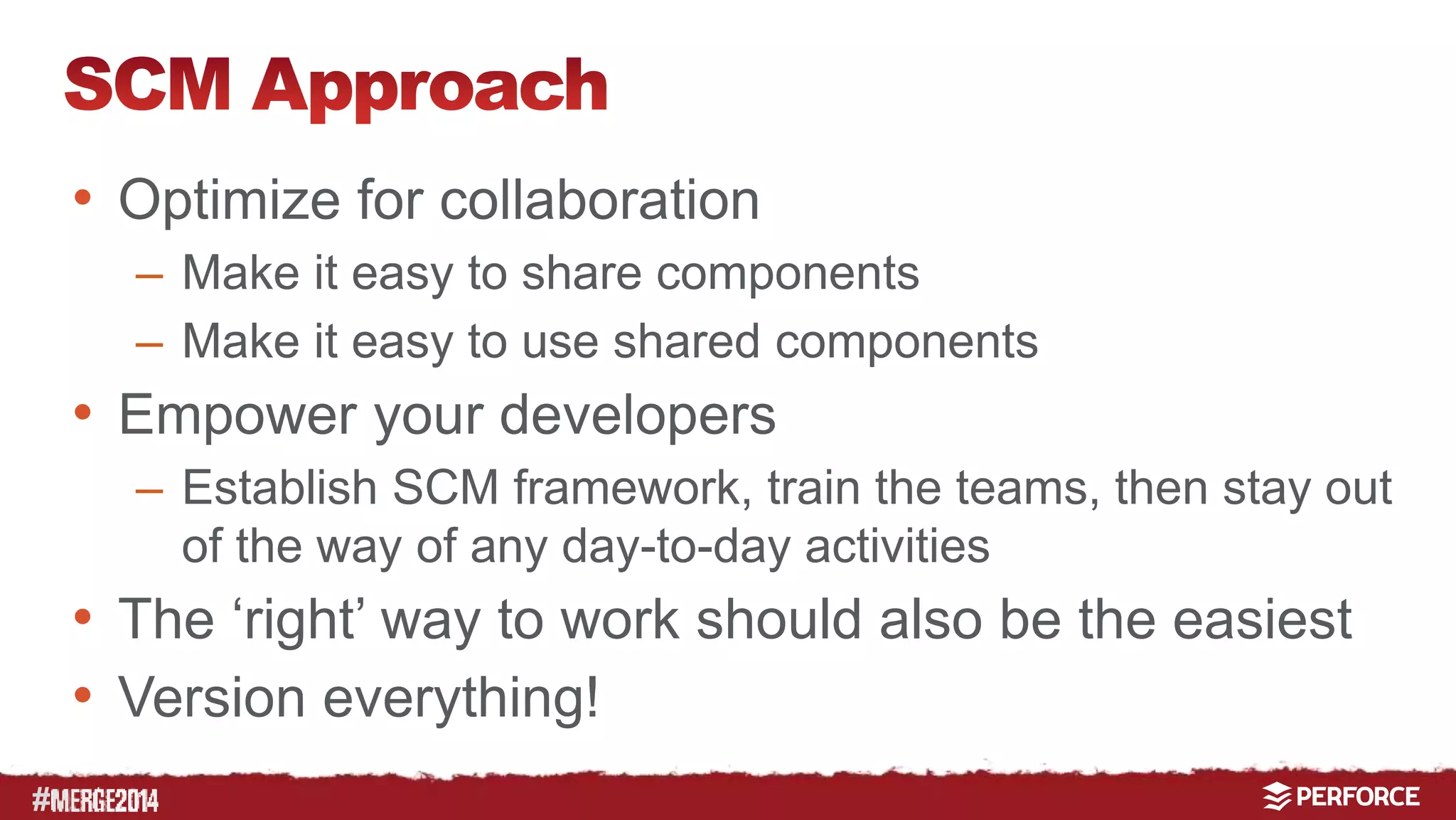
• Optimize for collaboration 
– Make it easy to share components 
– Make it easy to use shared components 
• Empower your developers 
– Establish SCM framework, train the teams, then stay out 
of the way of any day-to-day activities 
• The ‘right’ way to work should also be the easiest 
• Version everything!
# 
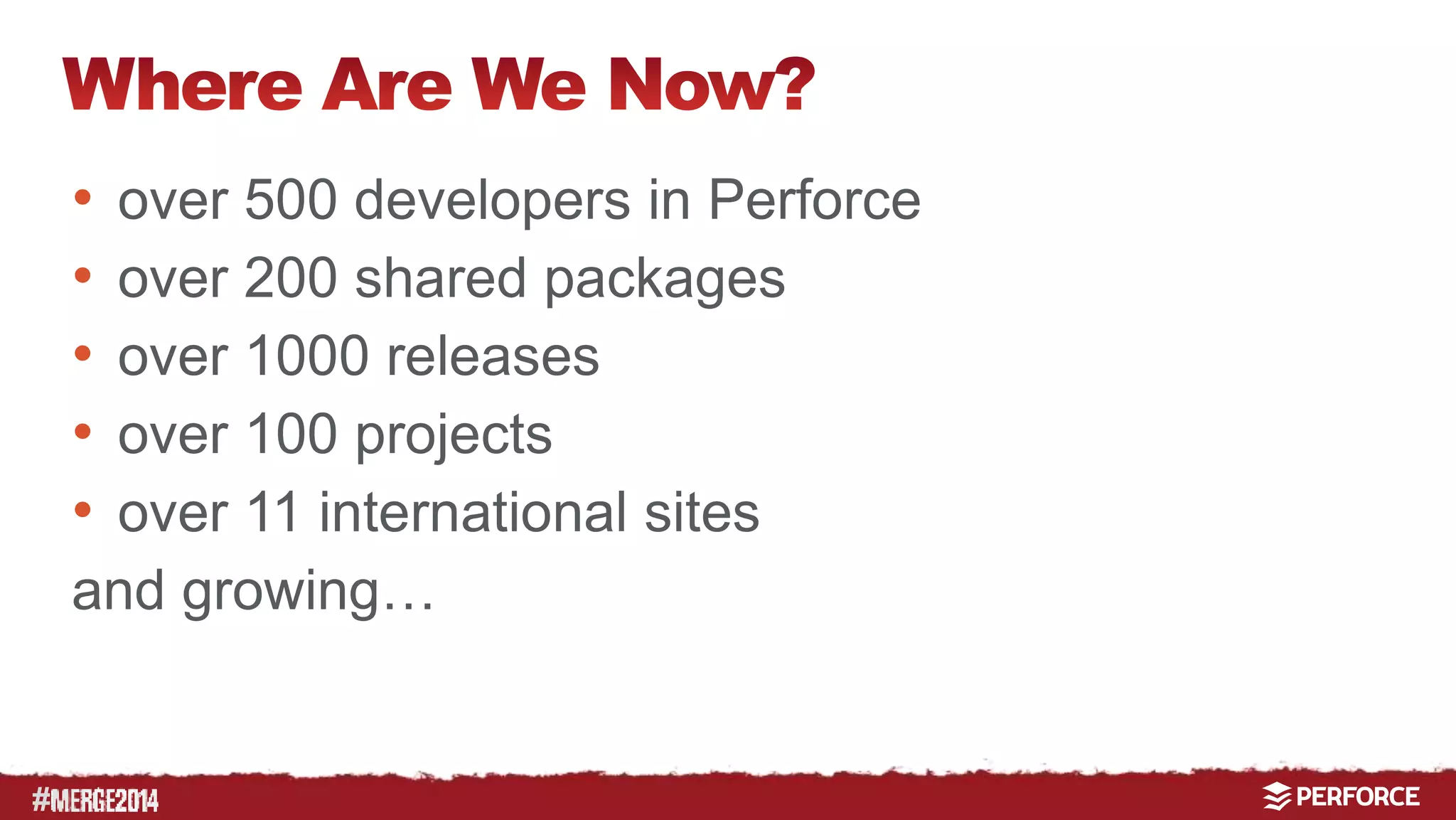
• over 500 developers in Perforce 
• over 200 shared packages 
• over 1000 releases 
• over 100 projects 
• over 11 international sites 
and growing…
#
# 
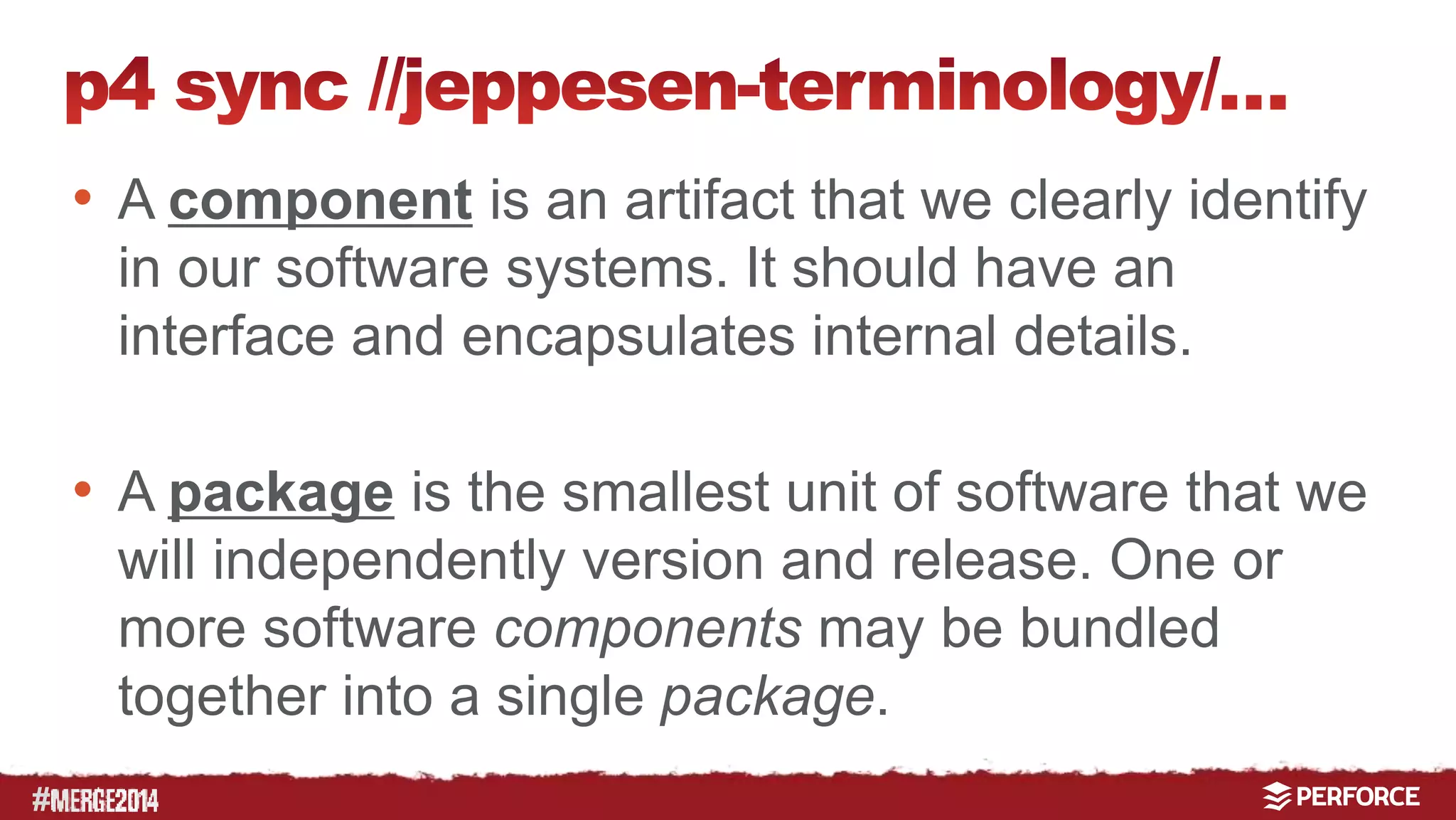
• A component is an artifact that we clearly identify 
in our software systems. It should have an 
interface and encapsulates internal details. 
• A package is the smallest unit of software that we 
will independently version and release. One or 
more software components may be bundled 
together into a single package.
# 
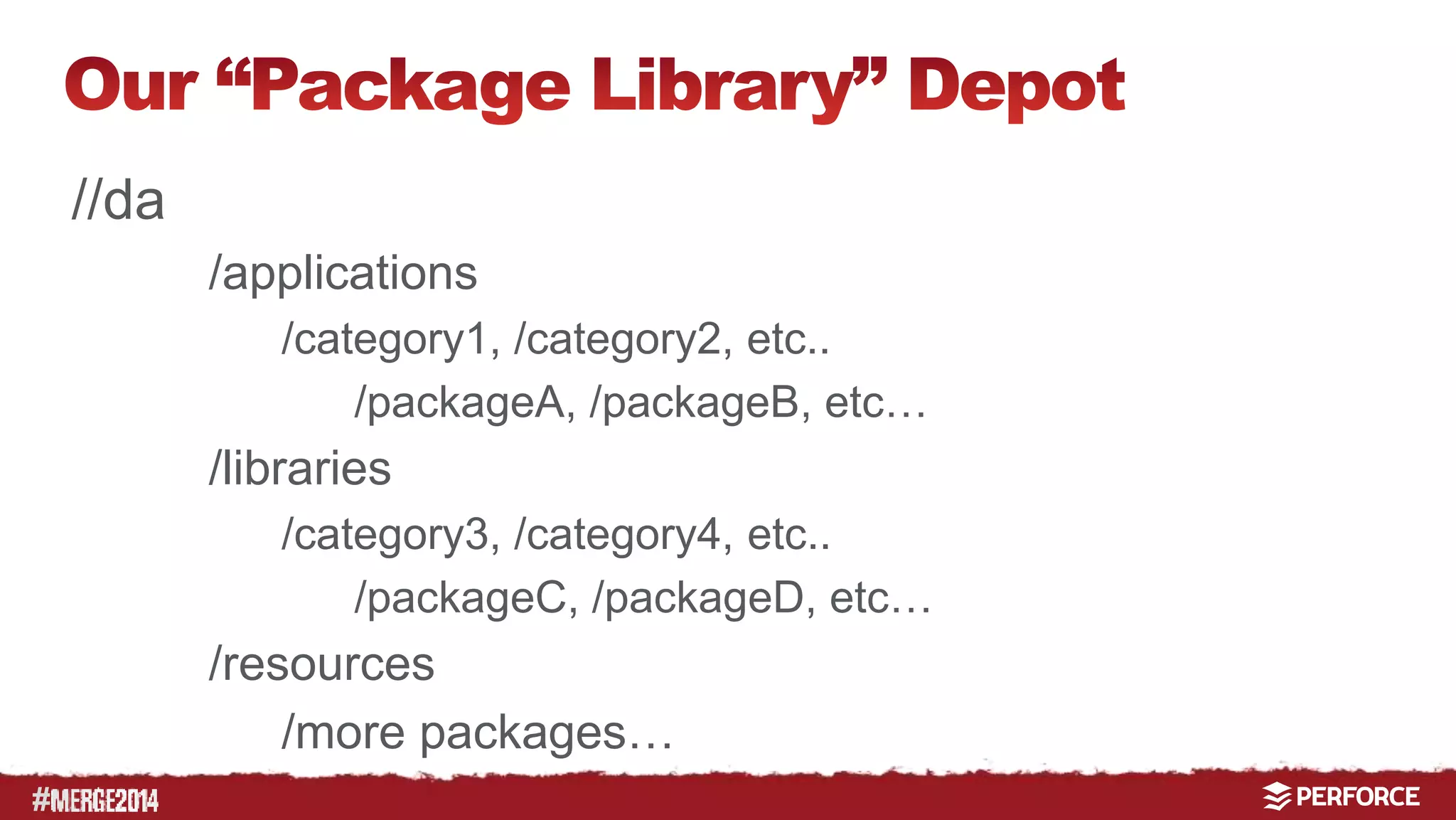
//da 
/applications 
/category1, /category2, etc.. 
/packageA, /packageB, etc… 
/libraries 
/category3, /category4, etc.. 
/packageC, /packageD, etc… 
/resources 
/more packages…
# 
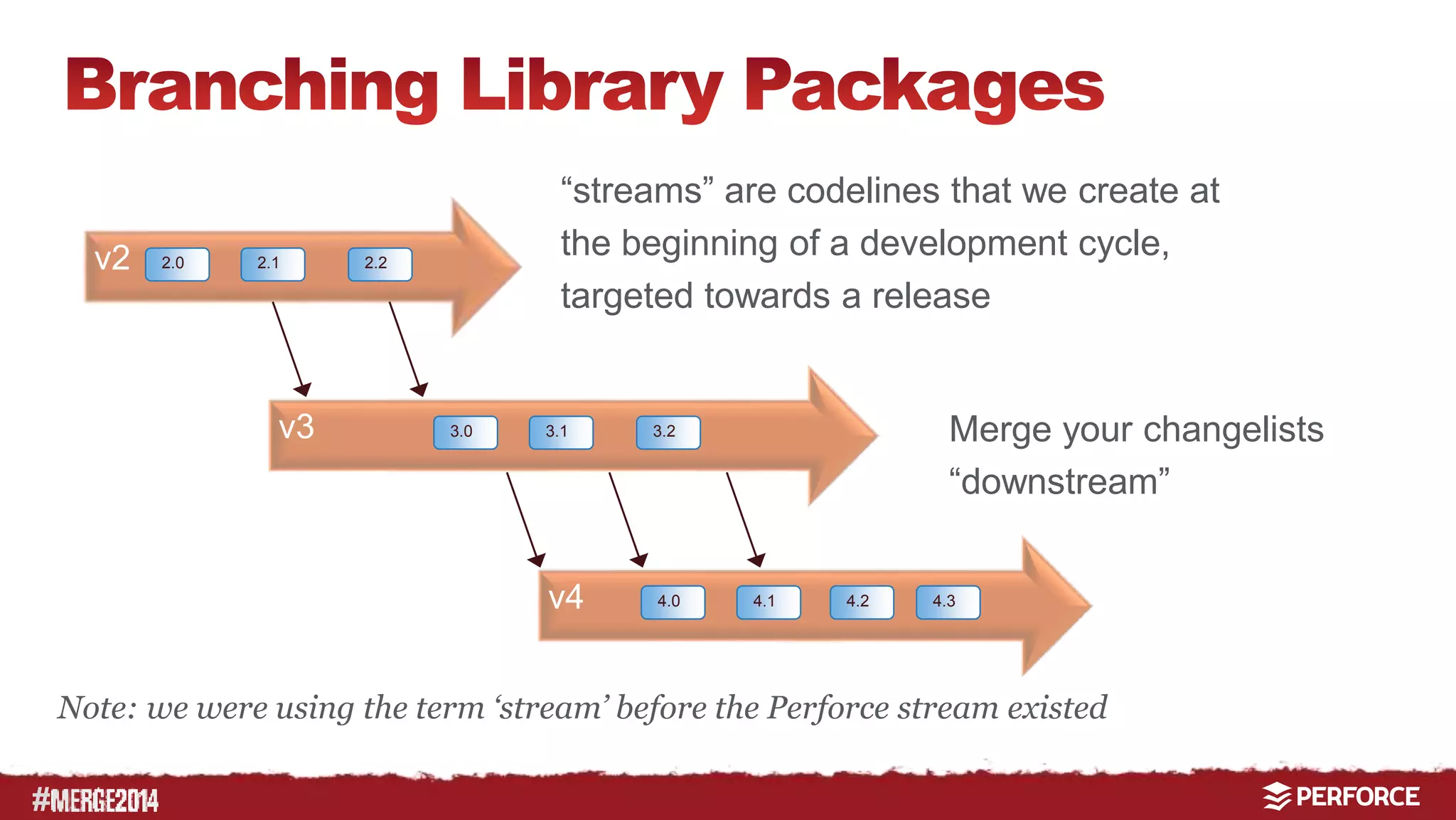
v2 
v3 
“streams” are codelines that we create at 
the beginning of a development cycle, 
targeted towards a release 
v4 
2.0 2.1 2.2 
3.0 3.1 3.2 
Merge your changelists 
“downstream” 
4.0 4.1 4.2 4.3 
Note: we were using the term ‘stream’ before the Perforce stream existed
# 
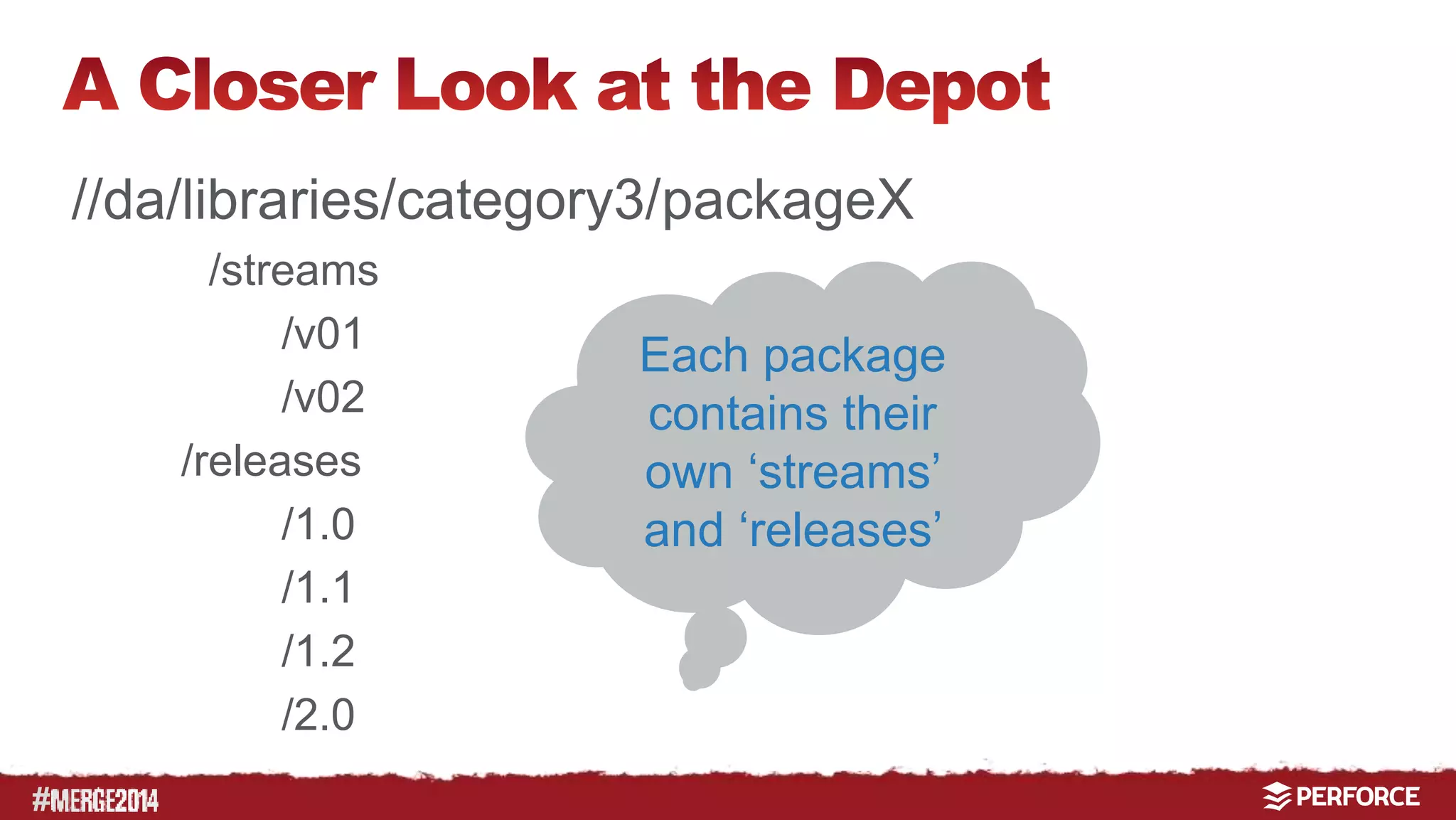
//da/libraries/category3/packageX 
/streams 
/v01 
/v02 
/releases 
/1.0 
/1.1 
/1.2 
/2.0 
Each package 
contains their 
own ‘streams’ 
and ‘releases’
# 
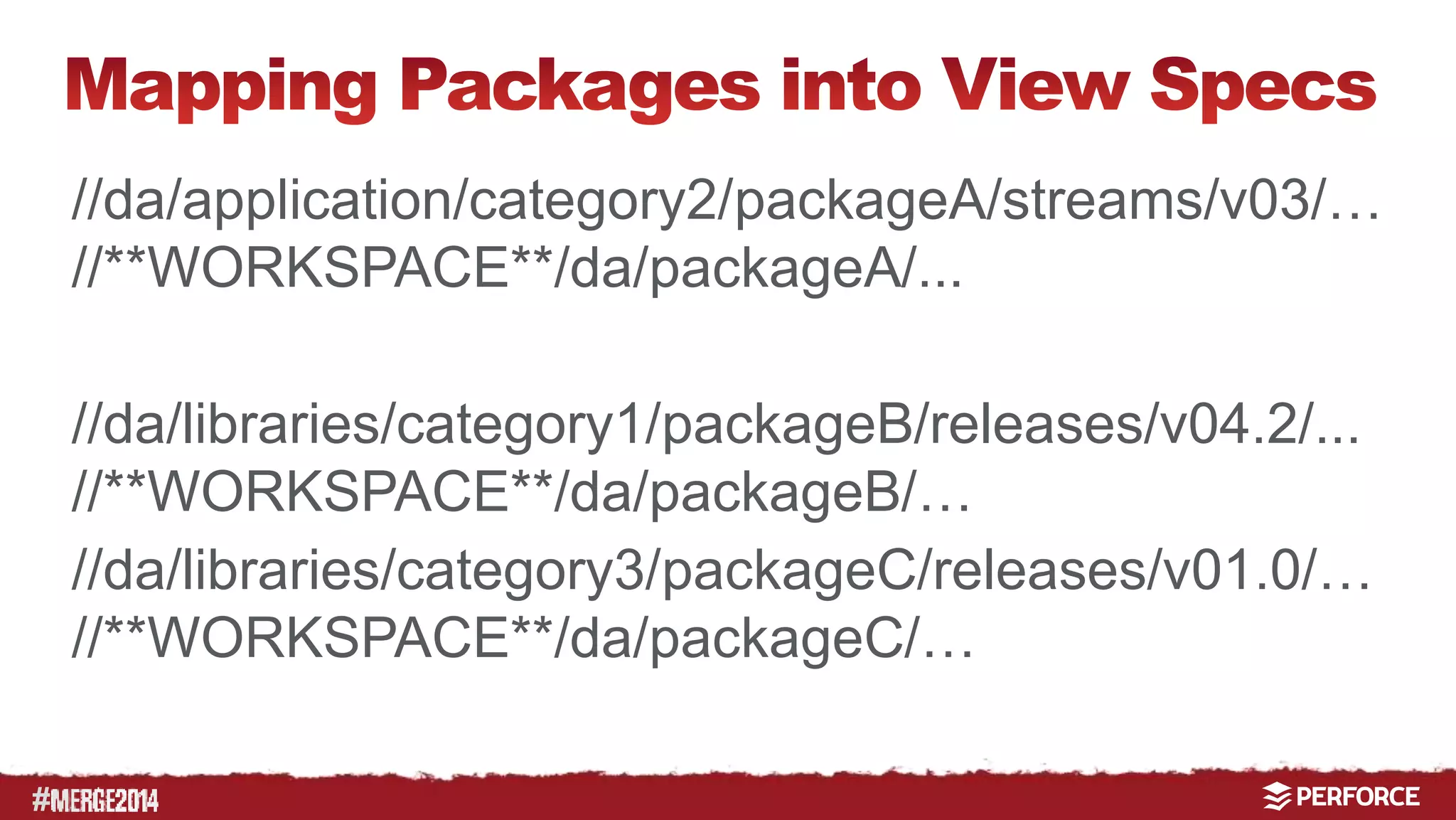
//da/application/category2/packageA/streams/v03/… 
//**WORKSPACE**/da/packageA/... 
//da/libraries/category1/packageB/releases/v04.2/... 
//**WORKSPACE**/da/packageB/… 
//da/libraries/category3/packageC/releases/v01.0/… 
//**WORKSPACE**/da/packageC/…
# 
• Right.
# 
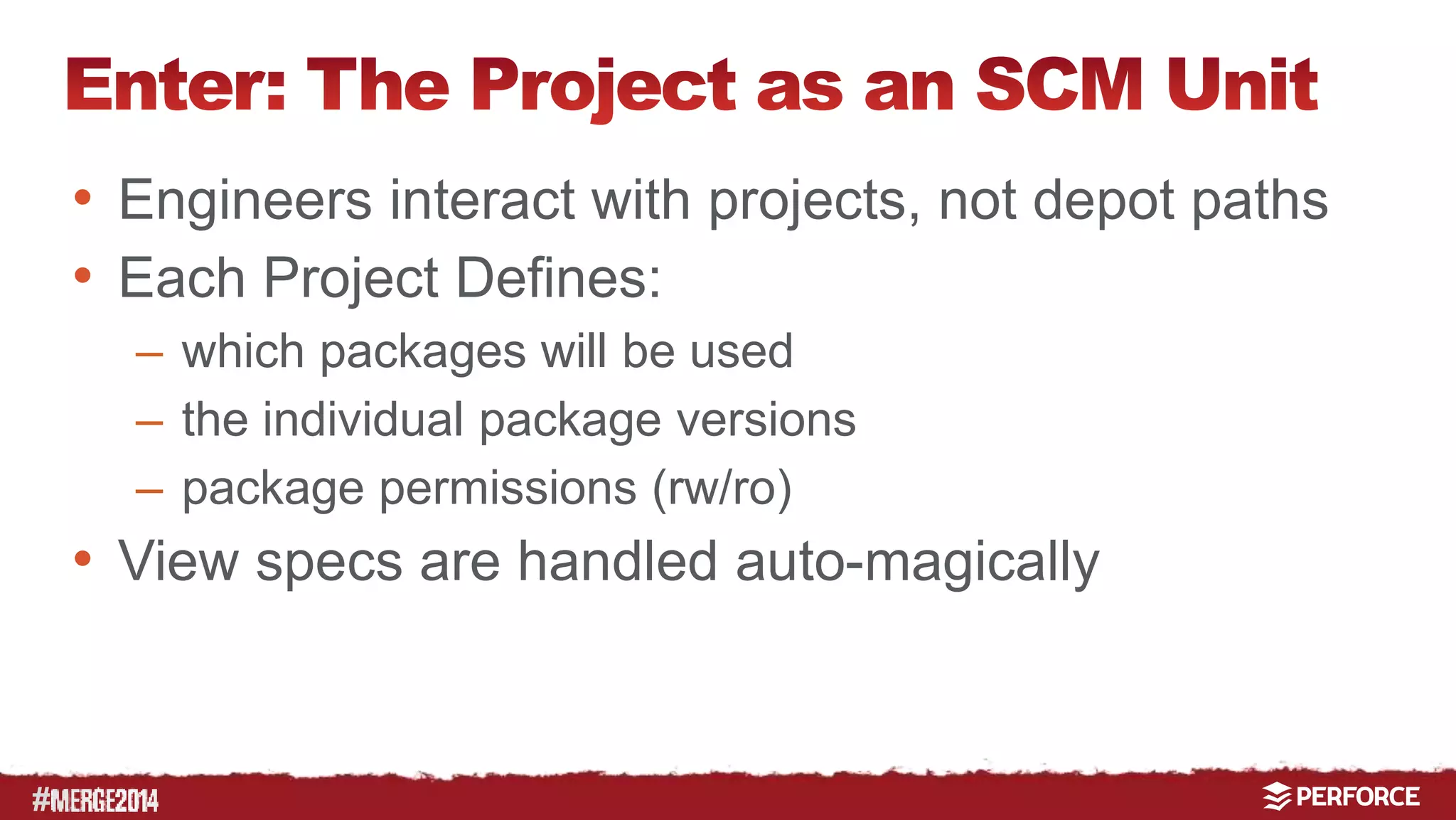
• Engineers interact with projects, not depot paths 
• Each Project Defines: 
– which packages will be used 
– the individual package versions 
– package permissions (rw/ro) 
• View specs are handled auto-magically
# 
• Project specifications: 
– are simple text files 
– live within the application packages they define 
– just another versioned object in Perforce 
– define the project name, status and current view spec
# 
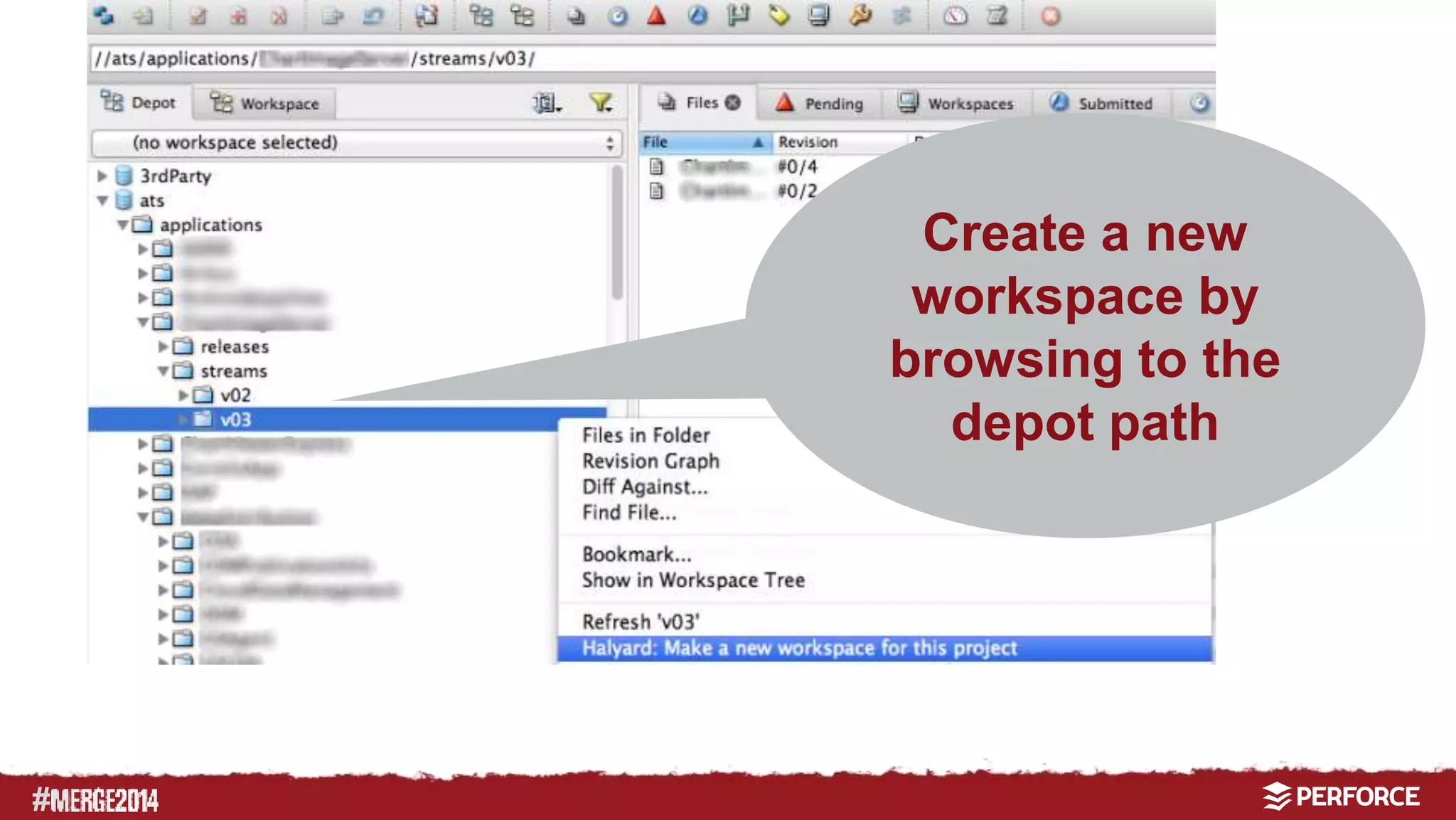
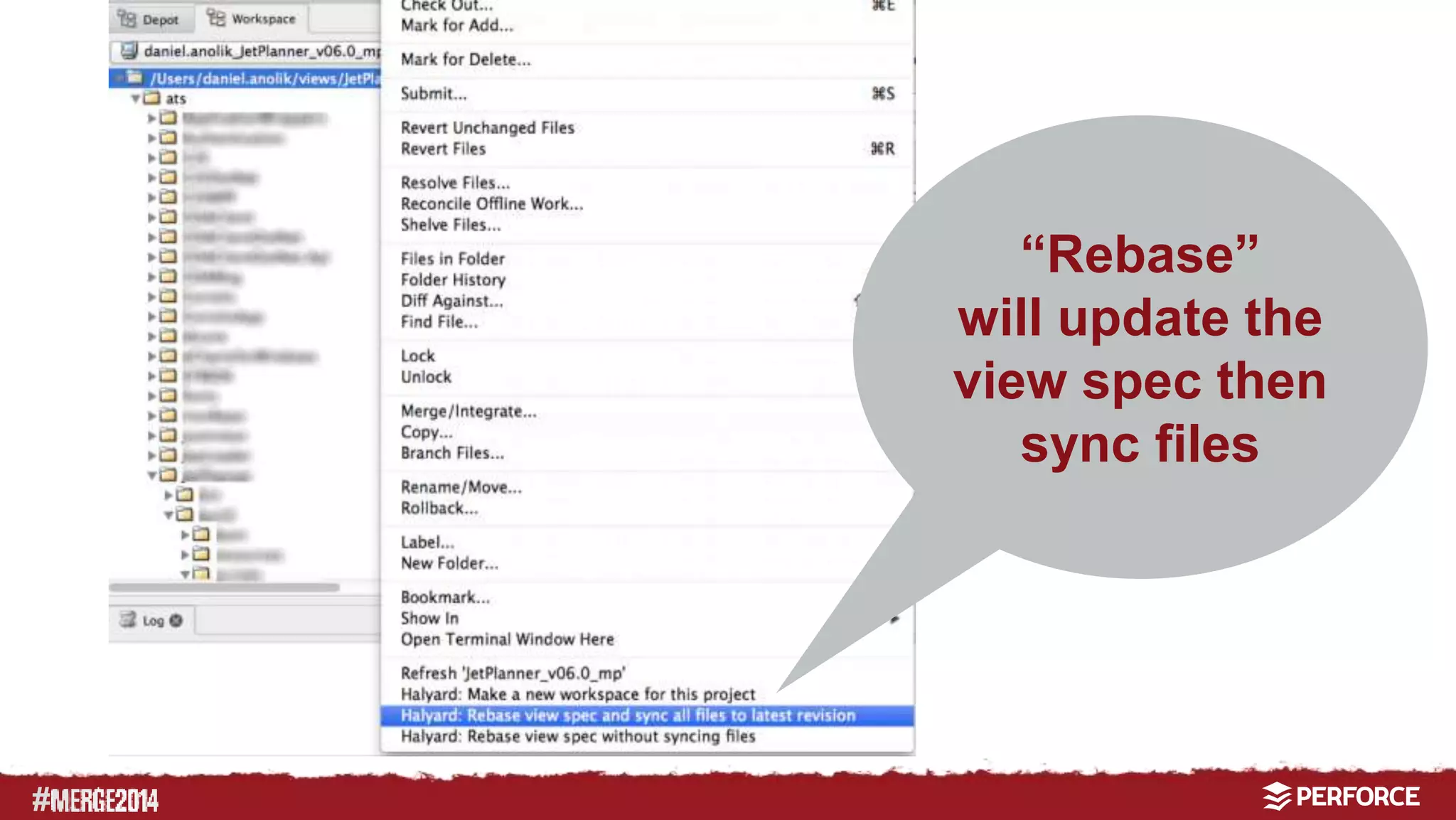
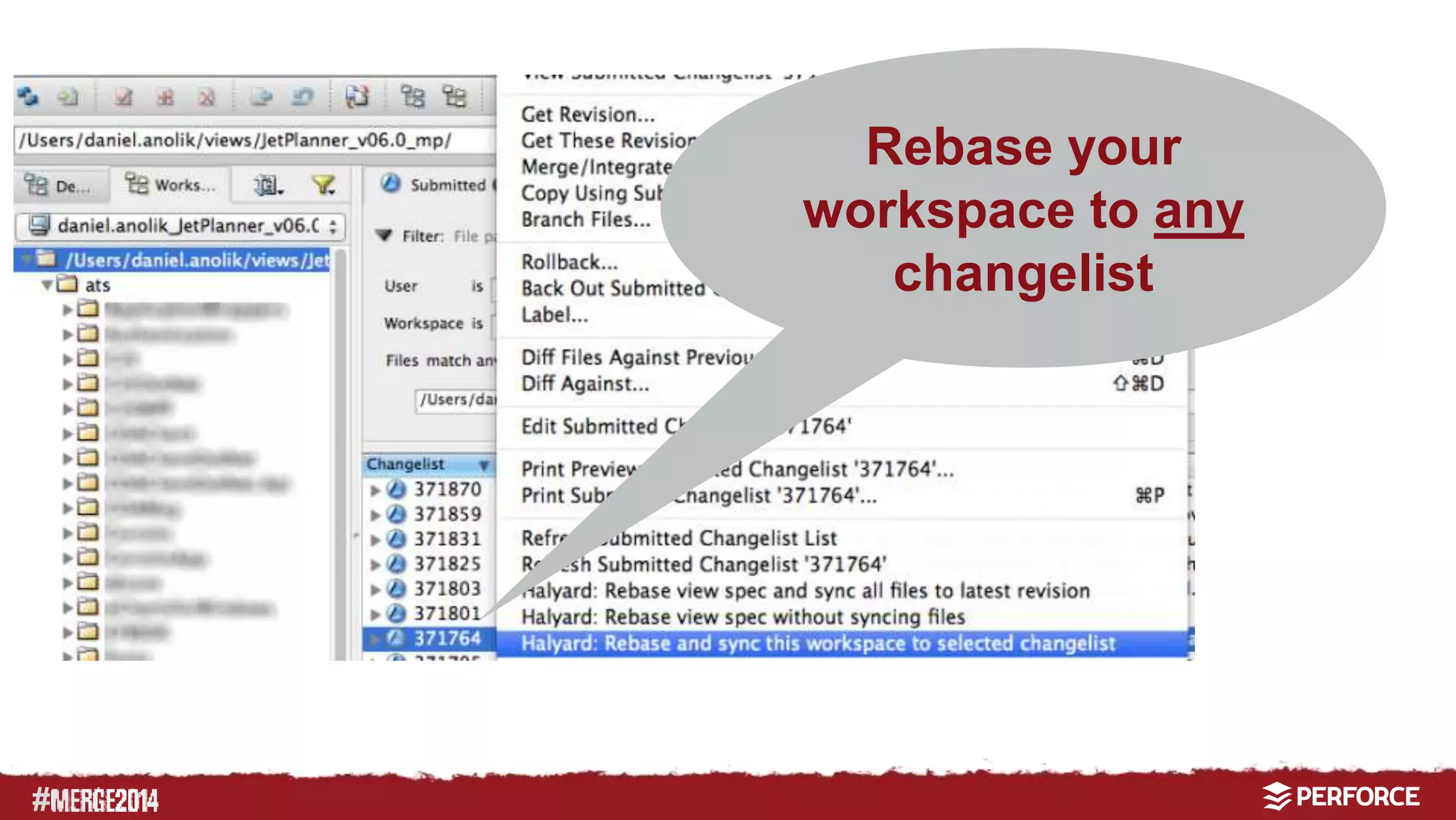
• Front end utility for creating, updating and 
removing workspaces 
• Abstraction layer for working with projects 
• Manages view specs 
• Automates naming conventions and other policies
# 
• Client is written in Ruby. 
– Currently running on Linux, OSX, HPUX and Windows 
– Uses p4ruby API for all client/server interaction 
• No server processes needed outside of P4D 
• Triggers used to update global project indexes 
automatically 
• P4V ‘Custom Tools’ extensions used to provide 
easy GUI integration
#
# 
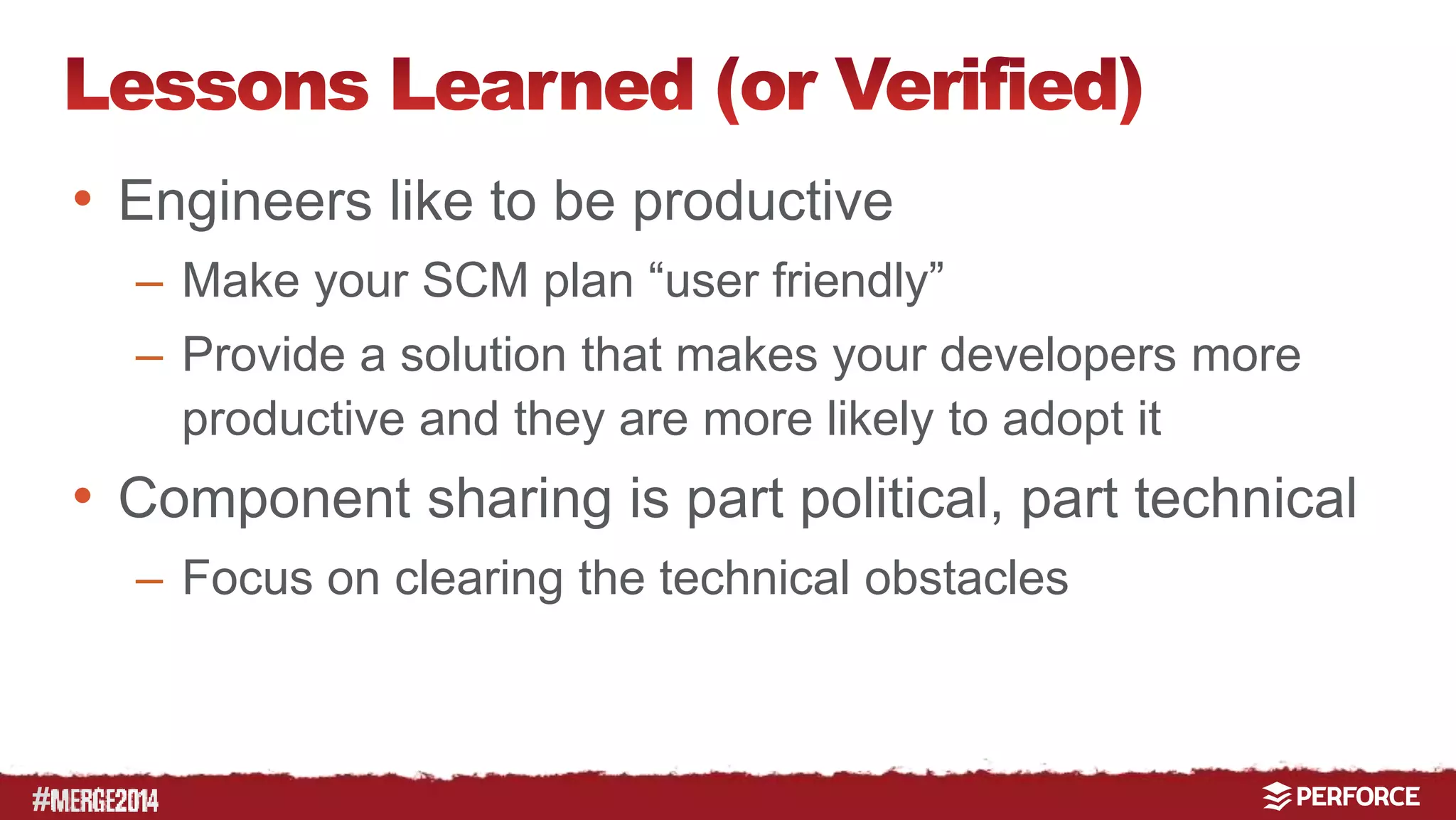
• Component sharing is part political, part technical 
– Focus on clearing the technical obstacles 
• Engineers like to be productive 
– Provide a solution that make your developers more 
productive and they are likely to adopt it
# 
• Apply open source models internally 
– Share more code within your company 
– Welcome contributions to your code from other teams 
• Identify ‘stewards’ of shared packages 
– Help ensure that contributions still meet the design 
goals of the shared package
#
# 
Daniel Anolik 
daniel.anolik@jeppesen.com
Driving Innovation with Component-based Development at Boeing

Driving Innovation with Component-based Development at Boeing

  • 1.
    # Daniel Anolik Solutions Architect, Boeing/Jeppesen
  • 2.
    # • 8years with Jeppesen • 15 years of direct SCM experience, 8 with Perforce • Software developer, solutions architect, Scrum master, bluegrass mandolin picker, wilderness survival enthusiast…
  • 3.
    # • 8years with Jeppesen • 15 years of direct SCM experience, 8 with Perforce • Software developer, solutions architect, Scrum master, bluegrass mandolin picker, wilderness survival enthusiast, and lucky father of this baby girl:
  • 4.
    # • 80-yearstrong company founded in aviation safety • Wide array of software supporting: – airborne navigation systems – flight planning services – pilot training – airline operations management
  • 5.
    # • Teamsizes from 2-50 developers • Full range of deployment targets – Web – Windows/Mac/Linux and other embedded devices – iOS/Android/Windows mobile devices • Lots of overlapping technology across products
  • 6.
    # • Leveragethe best features and innovative technologies across our product lines • Leverage the strengths of our different teams • Pursue component based development • Minimize development overlap across teams, and re-use the best implementation of each technology
  • 7.
    # • Optimizefor collaboration – Make it easy to share components – Make it easy to use shared components • Empower your developers – Establish SCM framework, train the teams, then stay out of the way of any day-to-day activities • The ‘right’ way to work should also be the easiest • Version everything!
  • 8.
    # • over500 developers in Perforce • over 200 shared packages • over 1000 releases • over 100 projects • over 11 international sites and growing…
  • 9.
  • 10.
    # • Acomponent is an artifact that we clearly identify in our software systems. It should have an interface and encapsulates internal details. • A package is the smallest unit of software that we will independently version and release. One or more software components may be bundled together into a single package.
  • 11.
    # //da /applications /category1, /category2, etc.. /packageA, /packageB, etc… /libraries /category3, /category4, etc.. /packageC, /packageD, etc… /resources /more packages…
  • 12.
    # v2 v3 “streams” are codelines that we create at the beginning of a development cycle, targeted towards a release v4 2.0 2.1 2.2 3.0 3.1 3.2 Merge your changelists “downstream” 4.0 4.1 4.2 4.3 Note: we were using the term ‘stream’ before the Perforce stream existed
  • 13.
    # //da/libraries/category3/packageX /streams /v01 /v02 /releases /1.0 /1.1 /1.2 /2.0 Each package contains their own ‘streams’ and ‘releases’
  • 14.
    # //da/application/category2/packageA/streams/v03/… //**WORKSPACE**/da/packageA/... //da/libraries/category1/packageB/releases/v04.2/... //**WORKSPACE**/da/packageB/… //da/libraries/category3/packageC/releases/v01.0/… //**WORKSPACE**/da/packageC/…
  • 15.
  • 16.
    # • Engineersinteract with projects, not depot paths • Each Project Defines: – which packages will be used – the individual package versions – package permissions (rw/ro) • View specs are handled auto-magically
  • 17.
    # • Projectspecifications: – are simple text files – live within the application packages they define – just another versioned object in Perforce – define the project name, status and current view spec
  • 18.
    # • Frontend utility for creating, updating and removing workspaces • Abstraction layer for working with projects • Manages view specs • Automates naming conventions and other policies
  • 19.
    # • Clientis written in Ruby. – Currently running on Linux, OSX, HPUX and Windows – Uses p4ruby API for all client/server interaction • No server processes needed outside of P4D • Triggers used to update global project indexes automatically • P4V ‘Custom Tools’ extensions used to provide easy GUI integration
  • 20.
  • 21.
    # • Componentsharing is part political, part technical – Focus on clearing the technical obstacles • Engineers like to be productive – Provide a solution that make your developers more productive and they are likely to adopt it
  • 22.
    # • Applyopen source models internally – Share more code within your company – Welcome contributions to your code from other teams • Identify ‘stewards’ of shared packages – Help ensure that contributions still meet the design goals of the shared package
  • 23.
  • 24.
    # Daniel Anolik daniel.anolik@jeppesen.com