Architect Plans
 If you had to draw the table you are sitting at
on a sheet of A4 paper, how would you do it?
 You would make it smaller? How much
smaller?
 We have to make it proportionally smaller?
Why?
 We have to reduce it by a scale factor? What
does that mean?
Scale factors
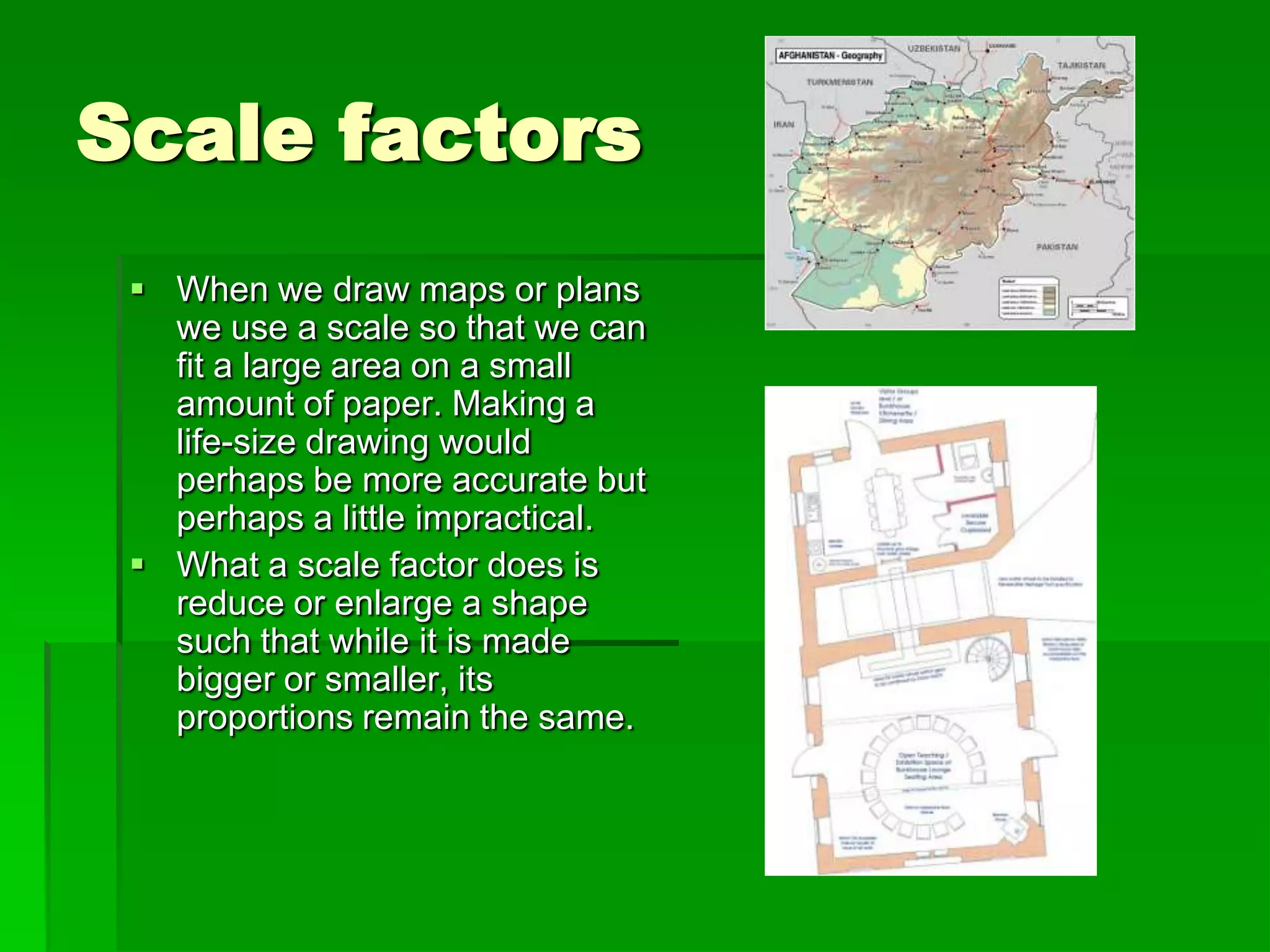
 When we draw maps or plans
we use a scale so that we can
fit a large area on a small
amount of paper. Making a
life-size drawing would
perhaps be more accurate but
perhaps a little impractical.
 What a scale factor does is
reduce or enlarge a shape
such that while it is made
bigger or smaller, its
proportions remain the same.
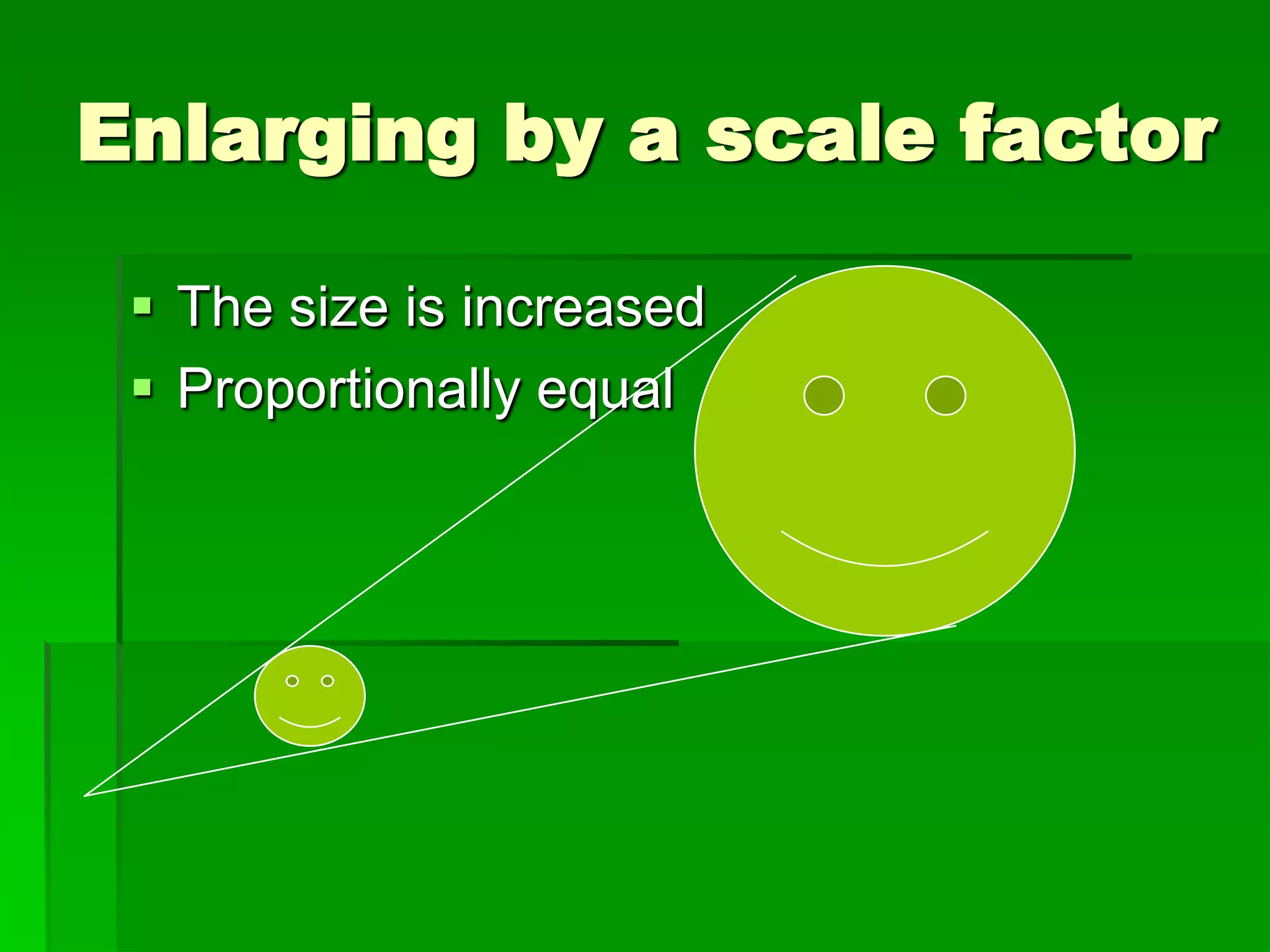
Enlarging by a scale factor
 The size is increased
 Proportionally equal
Drawing to Scale
 When architects draw up plans they use a scale, for example 1:20
 This means that 1cm on the drawing represents 20cm in real life
 Why do they do this?
 Drawing to scale is easy!
 If using a scale of 1:100 that means that 1cm on the drawing would
represent 100cm (1m) in real life
 If I therefore wanted to draw my bed, for example, and the bed was
200cm x 150cm (2m x 1.5m) then how big would I draw the bed on
my plans?
 That’s right – I would draw it 2cm by 1.5 cm
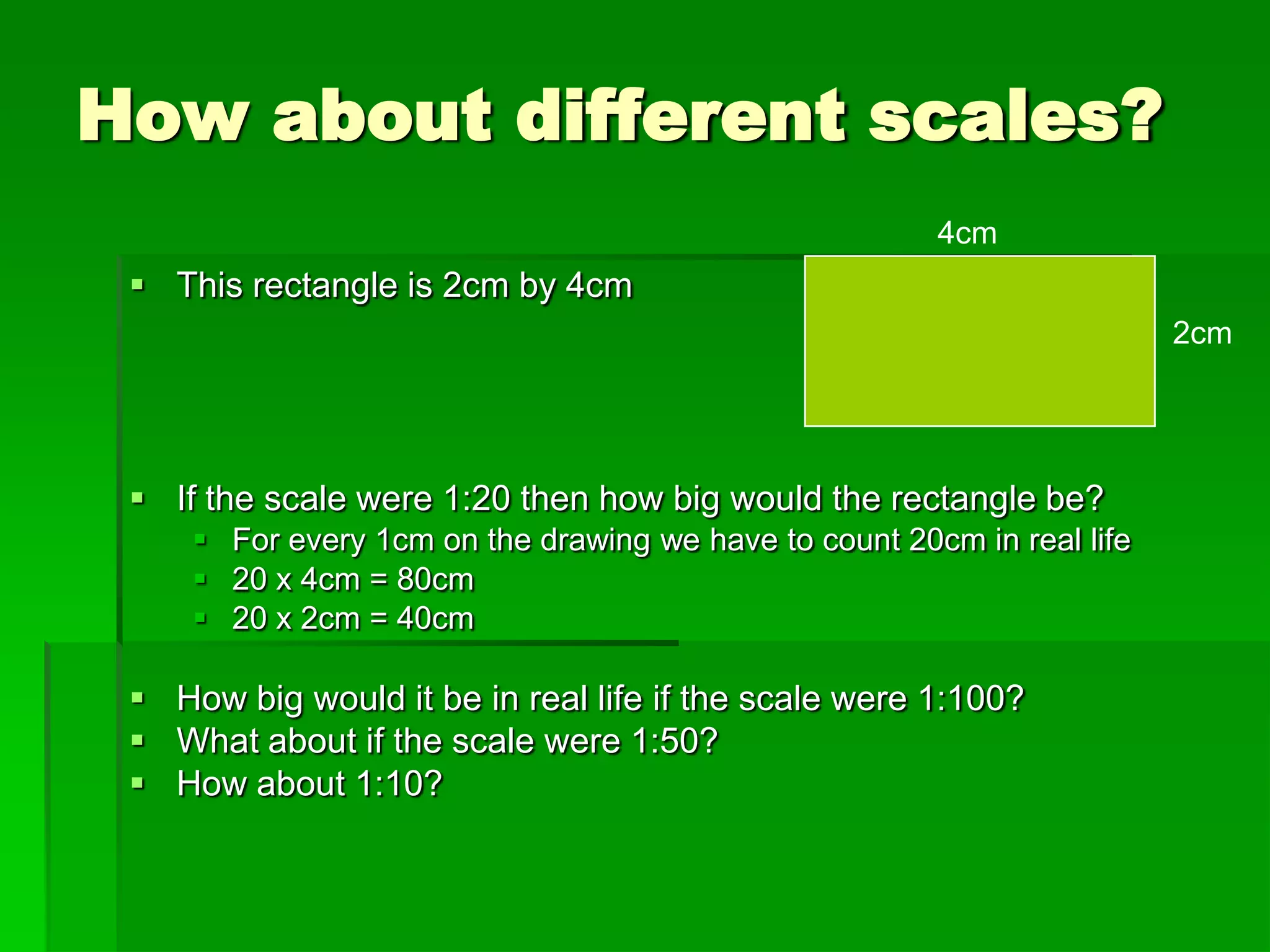
How about different scales?
 This rectangle is 2cm by 4cm
 If the scale were 1:20 then how big would the rectangle be?
 For every 1cm on the drawing we have to count 20cm in real life
 20 x 4cm = 80cm
 20 x 2cm = 40cm
 How big would it be in real life if the scale were 1:100?
 What about if the scale were 1:50?
 How about 1:10?
2cm
4cm
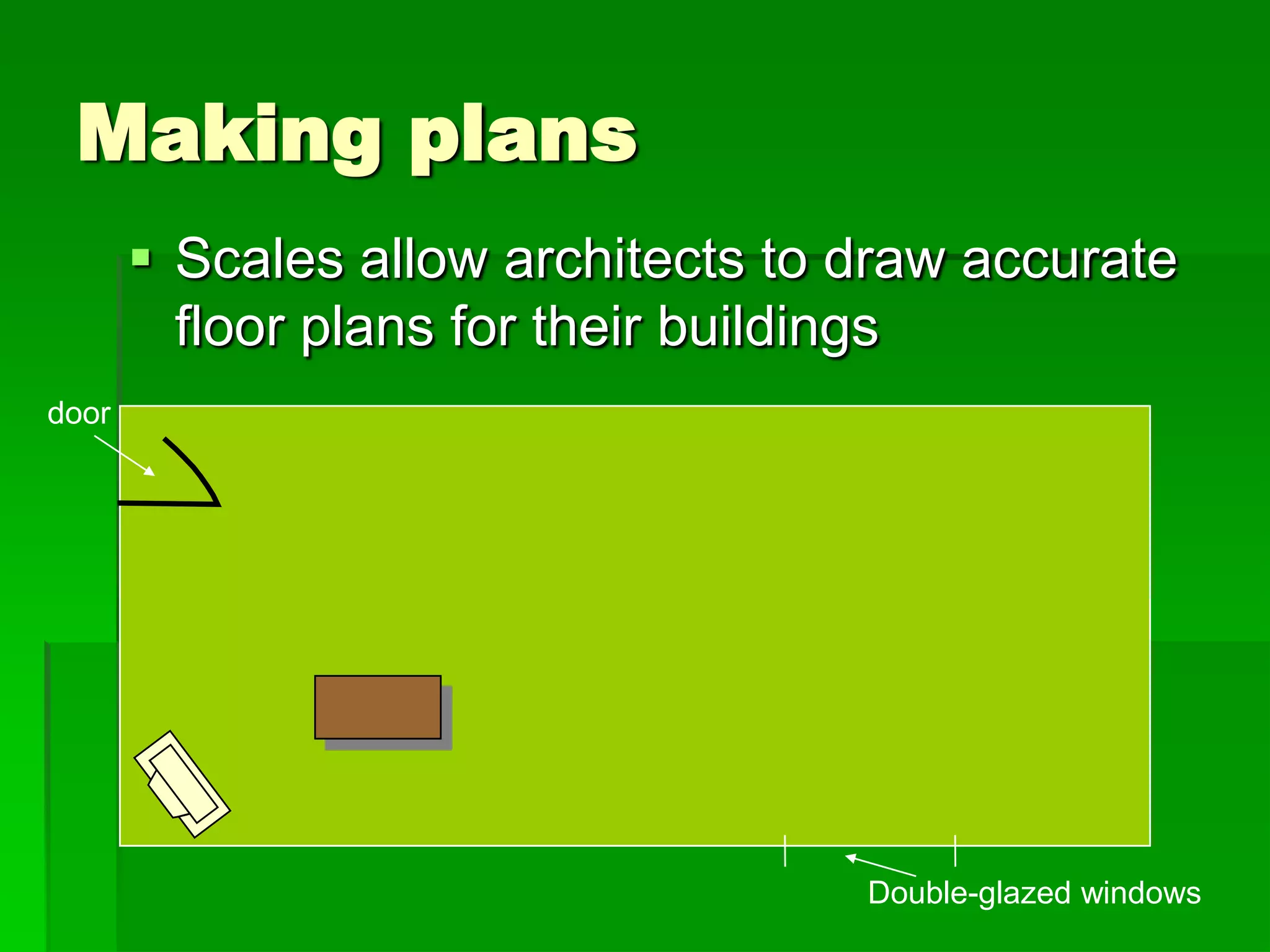
Making plans
 Scales allow architects to draw accurate
floor plans for their buildings
Double-glazed windows
door

Drawing to-scale2519

  • 1.
    Architect Plans  Ifyou had to draw the table you are sitting at on a sheet of A4 paper, how would you do it?  You would make it smaller? How much smaller?  We have to make it proportionally smaller? Why?  We have to reduce it by a scale factor? What does that mean?
  • 2.
    Scale factors  Whenwe draw maps or plans we use a scale so that we can fit a large area on a small amount of paper. Making a life-size drawing would perhaps be more accurate but perhaps a little impractical.  What a scale factor does is reduce or enlarge a shape such that while it is made bigger or smaller, its proportions remain the same.
  • 3.
    Enlarging by ascale factor  The size is increased  Proportionally equal
  • 4.
    Drawing to Scale When architects draw up plans they use a scale, for example 1:20  This means that 1cm on the drawing represents 20cm in real life  Why do they do this?  Drawing to scale is easy!  If using a scale of 1:100 that means that 1cm on the drawing would represent 100cm (1m) in real life  If I therefore wanted to draw my bed, for example, and the bed was 200cm x 150cm (2m x 1.5m) then how big would I draw the bed on my plans?  That’s right – I would draw it 2cm by 1.5 cm
  • 5.
    How about differentscales?  This rectangle is 2cm by 4cm  If the scale were 1:20 then how big would the rectangle be?  For every 1cm on the drawing we have to count 20cm in real life  20 x 4cm = 80cm  20 x 2cm = 40cm  How big would it be in real life if the scale were 1:100?  What about if the scale were 1:50?  How about 1:10? 2cm 4cm
  • 6.
    Making plans  Scalesallow architects to draw accurate floor plans for their buildings Double-glazed windows door