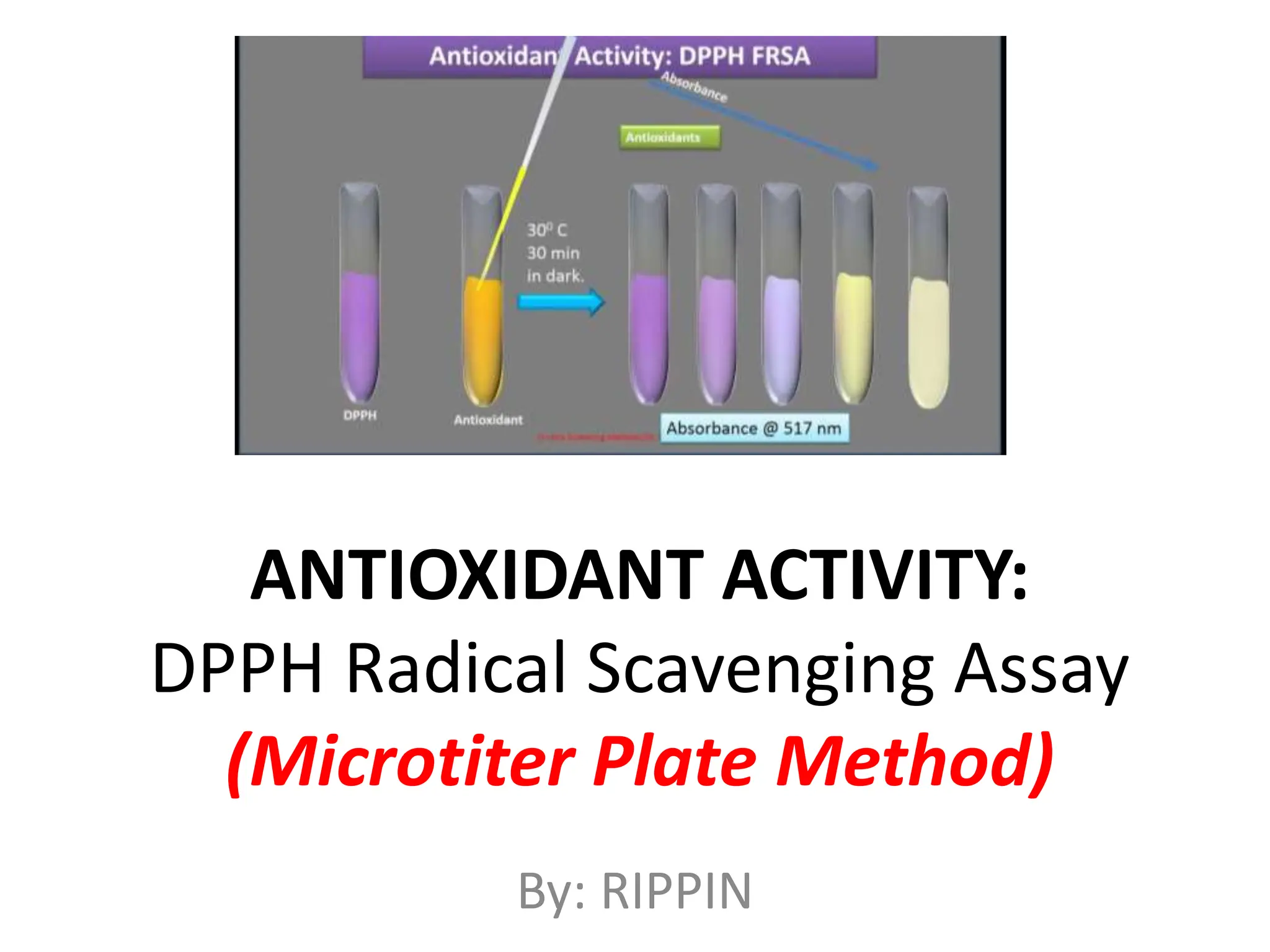
ANTIOXIDANT ACTIVITY:
DPPH Radical Scavenging Assay
(Microtiter Plate Method)
By: RIPPIN
Free Radicals
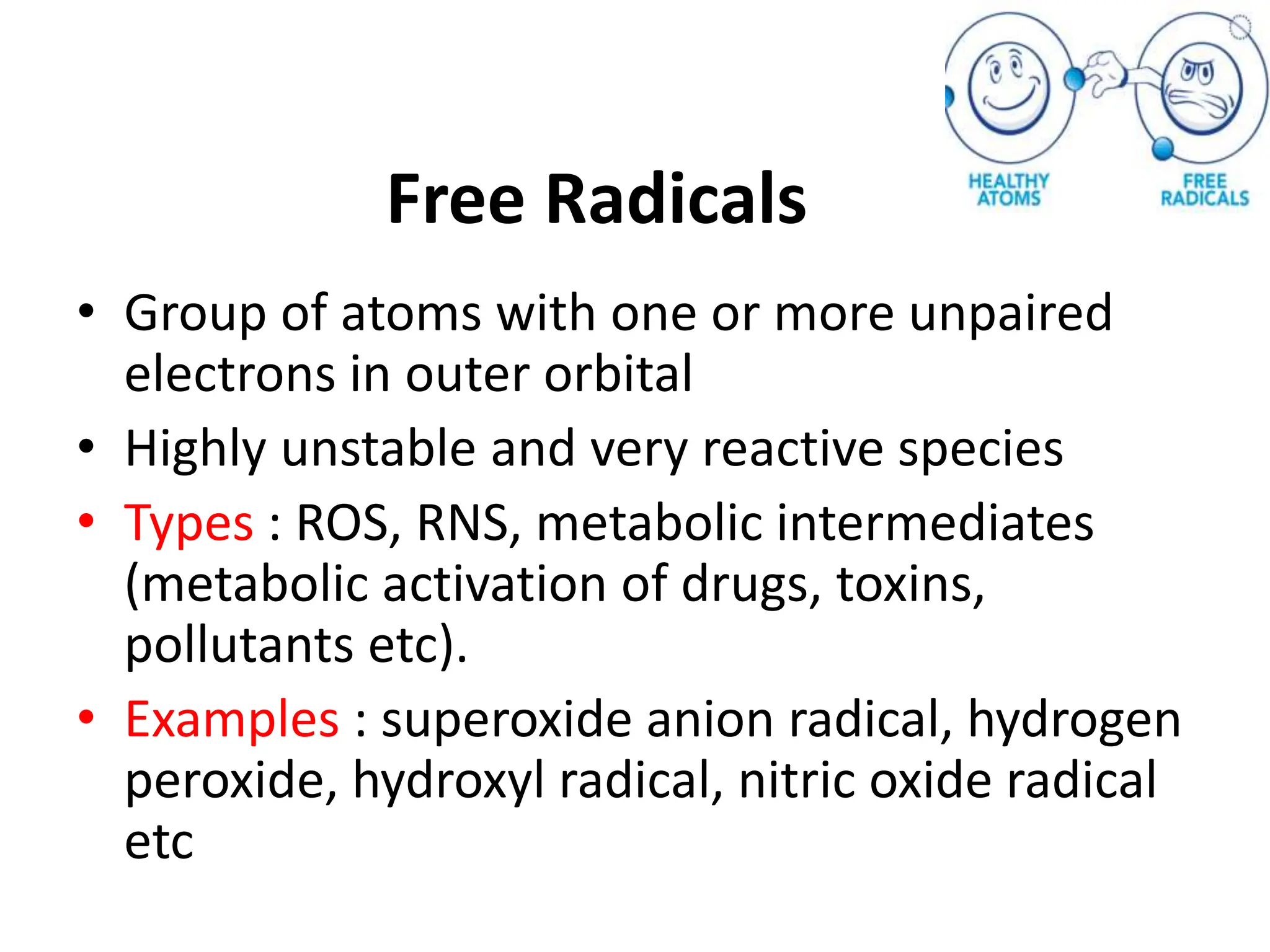
• Group of atoms with one or more unpaired
electrons in outer orbital
• Highly unstable and very reactive species
• Types : ROS, RNS, metabolic intermediates
(metabolic activation of drugs, toxins,
pollutants etc).
• Examples : superoxide anion radical, hydrogen
peroxide, hydroxyl radical, nitric oxide radical
etc
Harmful effects of Free Radicals
React with biomolecules
Enzymes Nucleic acids
Carbohydrates
Cellular Disturbances
Tissue Injury
DISEASES
ANTIOXIDANTS
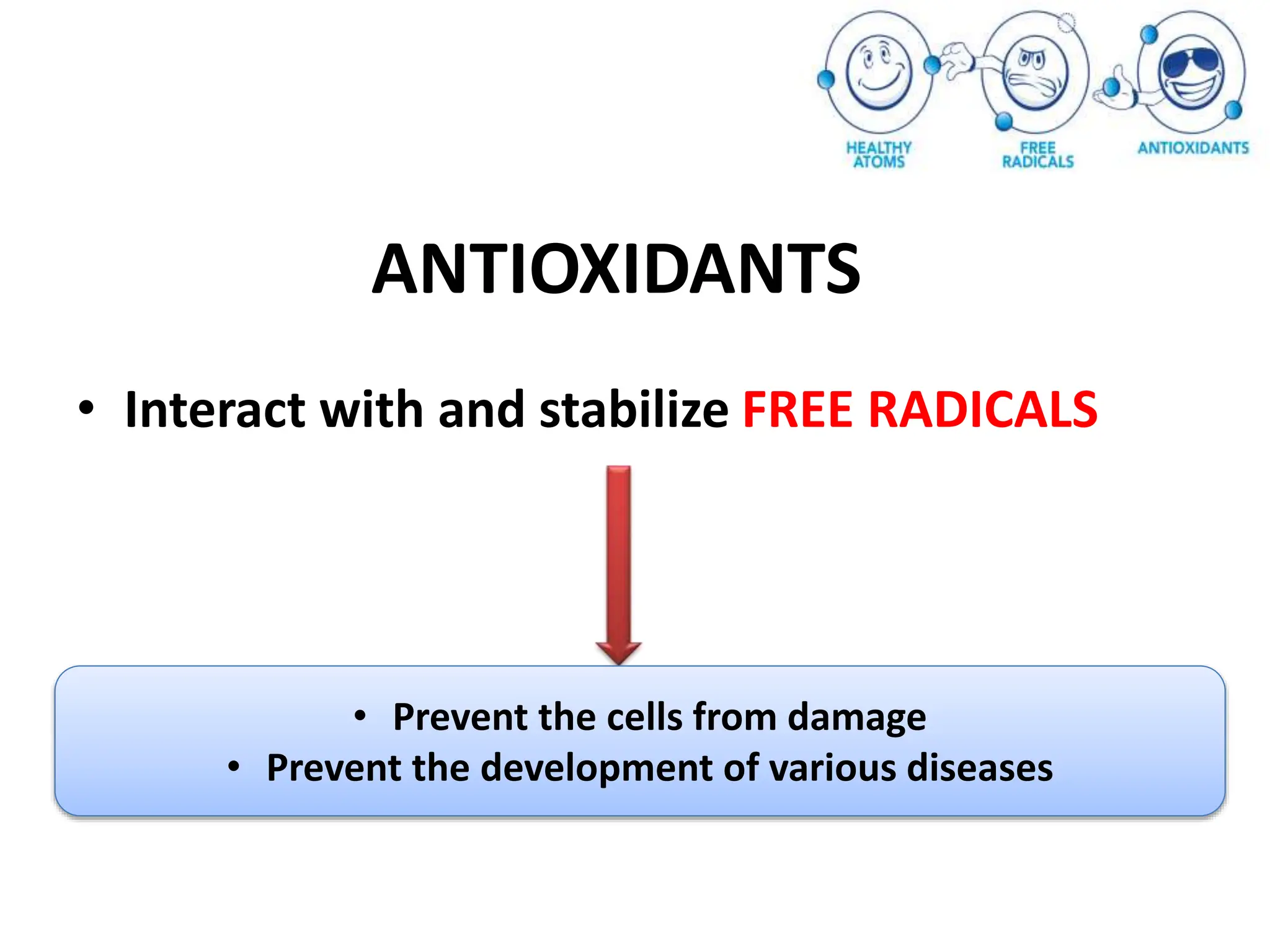
• Interact with and stabilize FREE RADICALS
• Prevent the cells from damage
• Prevent the development of various diseases
Determination of Anti- oxidative potential of
Antioxidants in samples
(Plant Extracts)
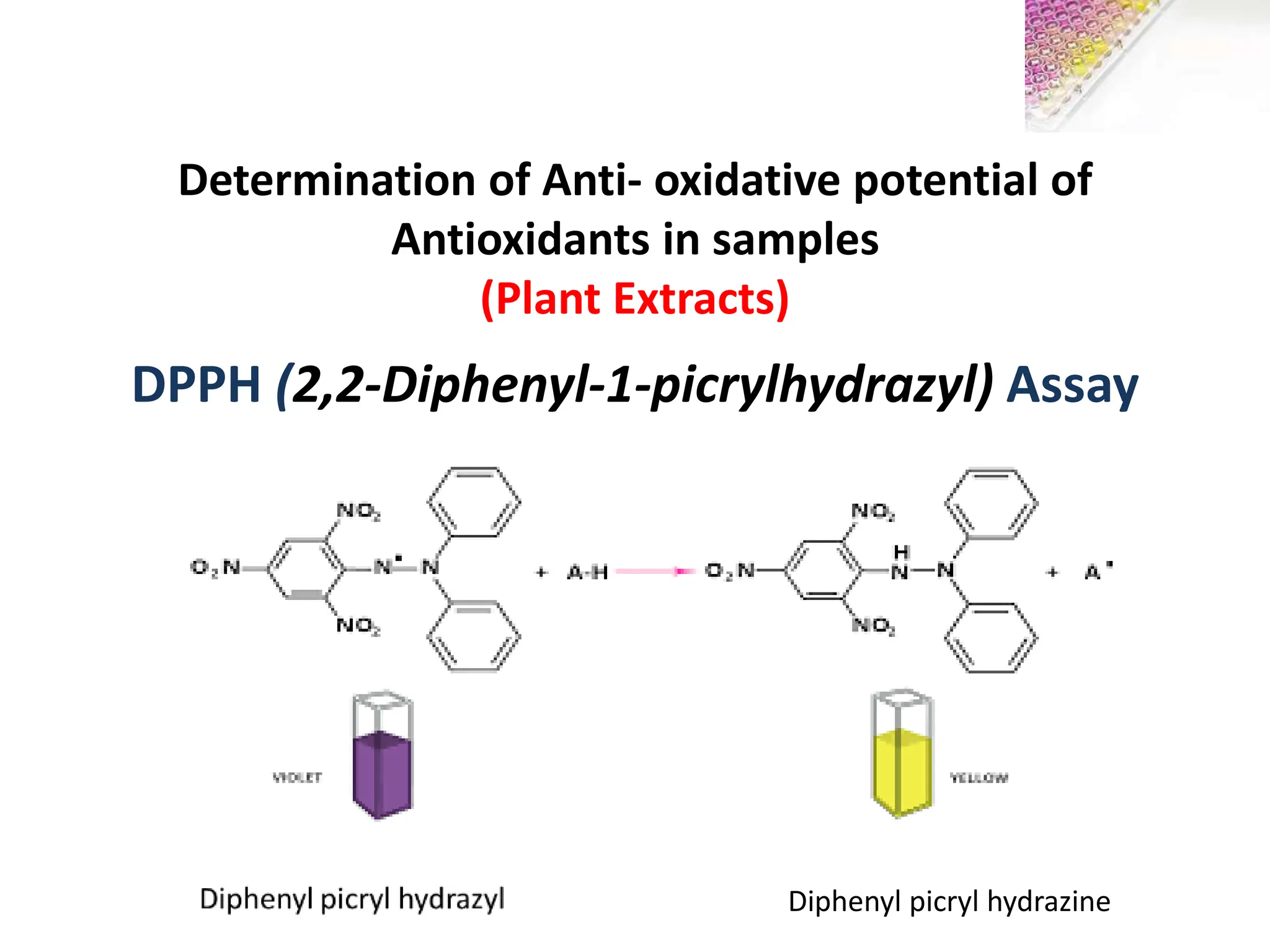
DPPH (2,2-Diphenyl-1-picrylhydrazyl) Assay
Diphenyl picryl hydrazine
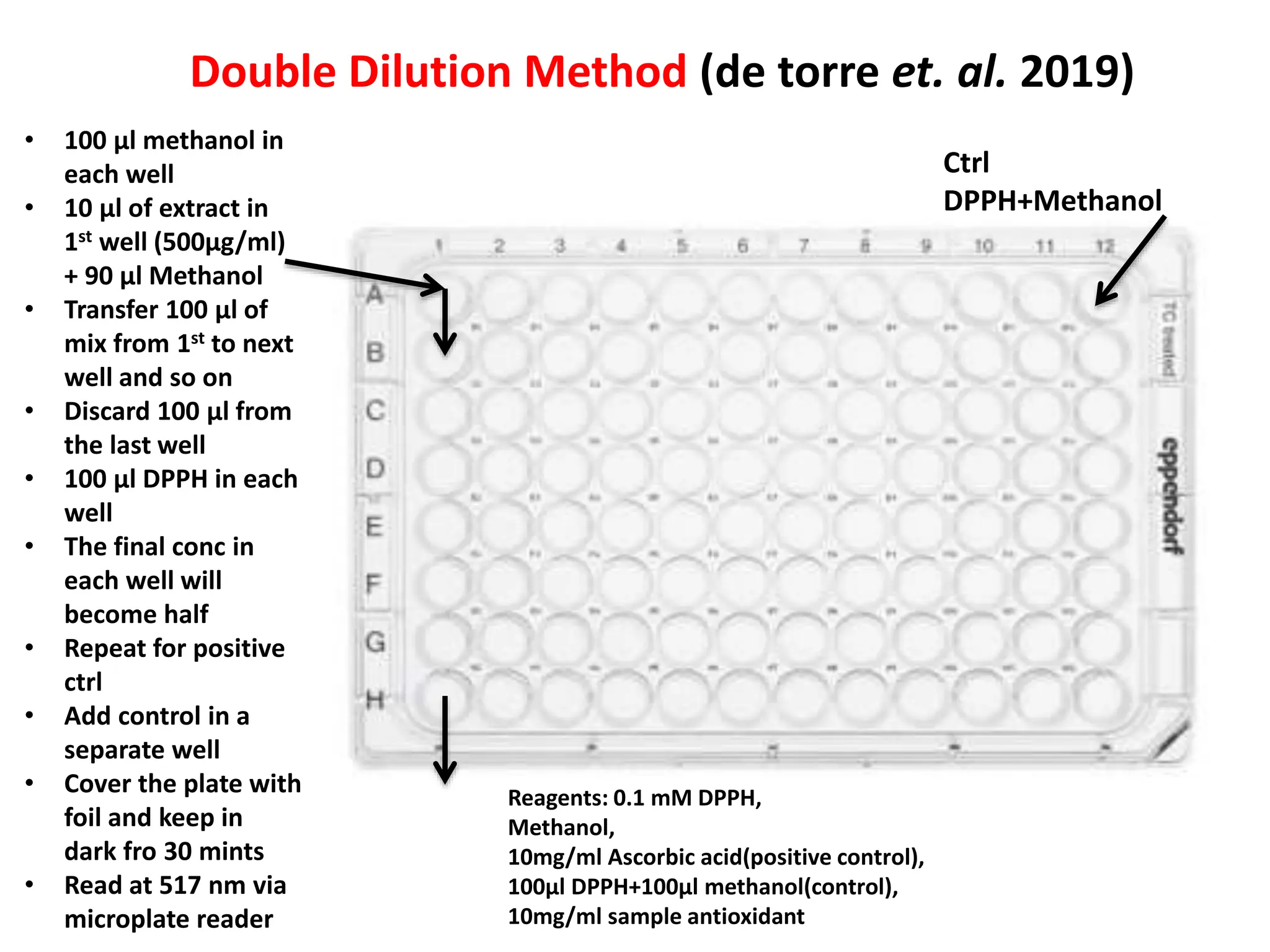
Double Dilution Method (de torre et. al. 2019)
Reagents: 0.1 mM DPPH,
Methanol,
10mg/ml Ascorbic acid(positive control),
100µl DPPH+100µl methanol(control),
10mg/ml sample antioxidant
• 100 µl methanol in
each well
• 10 µl of extract in
1st well (500µg/ml)
+ 90 µl Methanol
• Transfer 100 µl of
mix from 1st to next
well and so on
• Discard 100 µl from
the last well
• 100 µl DPPH in each
well
• The final conc in
each well will
become half
• Repeat for positive
ctrl
• Add control in a
separate well
• Cover the plate with
foil and keep in
dark fro 30 mints
• Read at 517 nm via
microplate reader
Ctrl
DPPH+Methanol
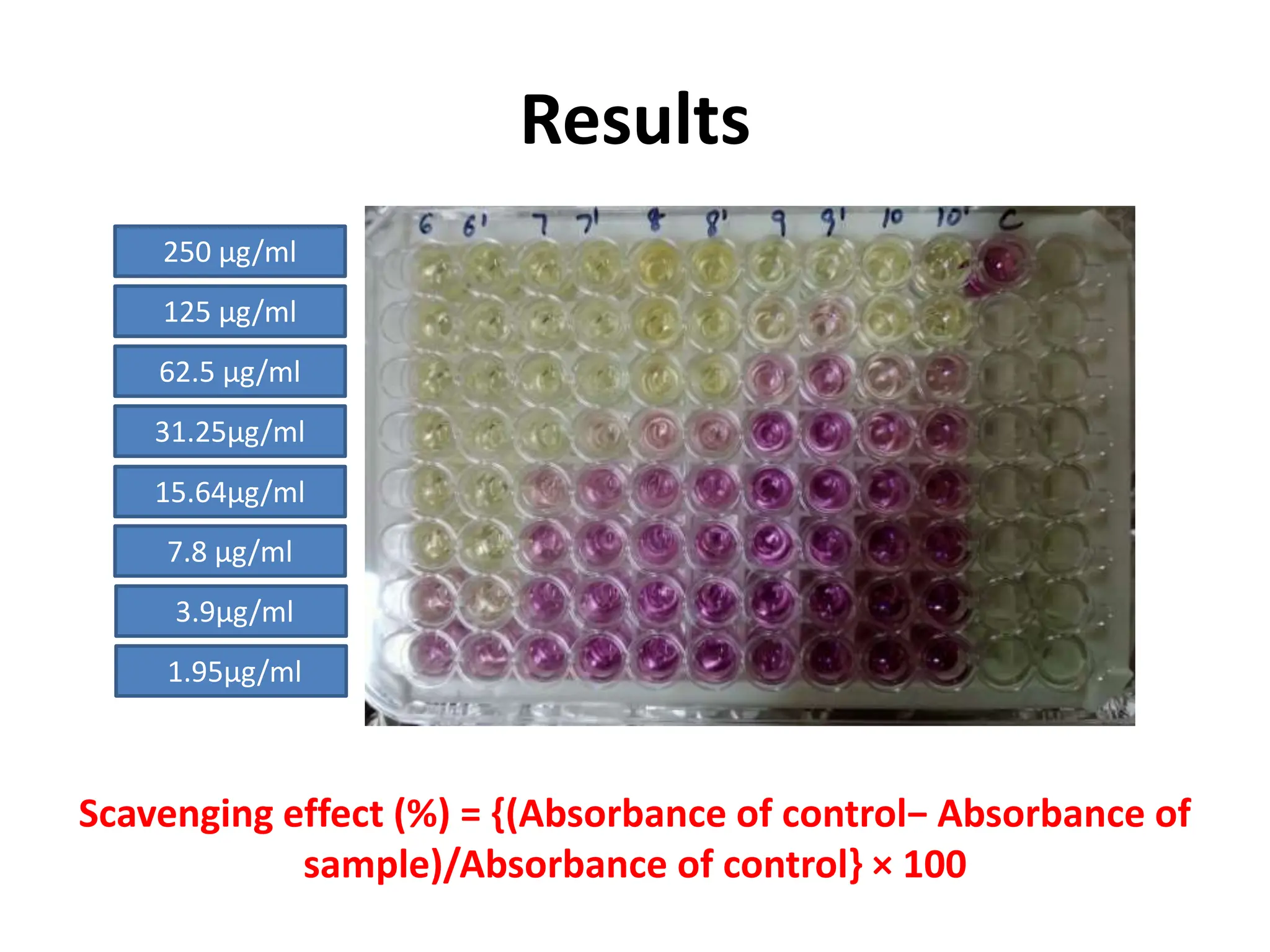
Results
250 µg/ml
15.64µg/ml
7.8 µg/ml
3.9µg/ml
1.95µg/ml
125 µg/ml
62.5 µg/ml
31.25µg/ml
Scavenging effect (%) = {(Absorbance of control− Absorbance of
sample)/Absorbance of control} × 100
IC50 Value
• IC50 (half maximal inhibitory concentration)
the concentration of the antioxidant which
reduces DPPH to half i.e. 50 %.
• Lower the IC50 value, higher is the antioxidant
capacity of the antioxidant.
Thank you

DPPH radical scavenging assay via micrototre plate method.pptx

  • 1.
    ANTIOXIDANT ACTIVITY: DPPH RadicalScavenging Assay (Microtiter Plate Method) By: RIPPIN
  • 2.
    Free Radicals • Groupof atoms with one or more unpaired electrons in outer orbital • Highly unstable and very reactive species • Types : ROS, RNS, metabolic intermediates (metabolic activation of drugs, toxins, pollutants etc). • Examples : superoxide anion radical, hydrogen peroxide, hydroxyl radical, nitric oxide radical etc
  • 3.
    Harmful effects ofFree Radicals React with biomolecules Enzymes Nucleic acids Carbohydrates Cellular Disturbances Tissue Injury DISEASES
  • 4.
    ANTIOXIDANTS • Interact withand stabilize FREE RADICALS • Prevent the cells from damage • Prevent the development of various diseases
  • 5.
    Determination of Anti-oxidative potential of Antioxidants in samples (Plant Extracts) DPPH (2,2-Diphenyl-1-picrylhydrazyl) Assay Diphenyl picryl hydrazine
  • 6.
    Double Dilution Method(de torre et. al. 2019) Reagents: 0.1 mM DPPH, Methanol, 10mg/ml Ascorbic acid(positive control), 100µl DPPH+100µl methanol(control), 10mg/ml sample antioxidant • 100 µl methanol in each well • 10 µl of extract in 1st well (500µg/ml) + 90 µl Methanol • Transfer 100 µl of mix from 1st to next well and so on • Discard 100 µl from the last well • 100 µl DPPH in each well • The final conc in each well will become half • Repeat for positive ctrl • Add control in a separate well • Cover the plate with foil and keep in dark fro 30 mints • Read at 517 nm via microplate reader Ctrl DPPH+Methanol
  • 7.
    Results 250 µg/ml 15.64µg/ml 7.8 µg/ml 3.9µg/ml 1.95µg/ml 125µg/ml 62.5 µg/ml 31.25µg/ml Scavenging effect (%) = {(Absorbance of control− Absorbance of sample)/Absorbance of control} × 100
  • 8.
    IC50 Value • IC50(half maximal inhibitory concentration) the concentration of the antioxidant which reduces DPPH to half i.e. 50 %. • Lower the IC50 value, higher is the antioxidant capacity of the antioxidant.
  • 9.