David Watson
Managing Director
Hosted Accountants Ltd
Three Topics
How secure is your
system?
What are you storing
and for how long?
What to do when
things go wrong?
What is Appropriate
Security?
• An appropriate measure is one that is proportionate to the
risks it safeguards against. You can take into account the state
of technological development and the cost of implementing
the measure.
• Regulation 5(1A) says these measures must at least:
• “(a) ensure that personal data can be accessed only by
authorised personnel for legally authorised purposes;
• (b) protect personal data stored or transmitted against
accidental or unlawful destruction, accidental loss or alteration,
and unauthorised or unlawful storage, processing, access or
disclosure; and
• (c) ensure the implementation of a security policy with respect
to the processing of personal data.”
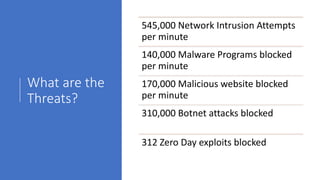
What are the
Threats?
545,000 Network Intrusion Attempts
per minute
140,000 Malware Programs blocked
per minute
170,000 Malicious website blocked
per minute
310,000 Botnet attacks blocked
312 Zero Day exploits blocked
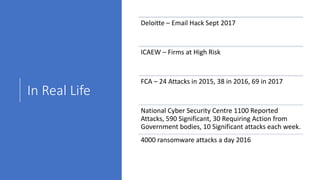
In Real Life
Deloitte – Email Hack Sept 2017
ICAEW – Firms at High Risk
FCA – 24 Attacks in 2015, 38 in 2016, 69 in 2017
National Cyber Security Centre 1100 Reported
Attacks, 590 Significant, 30 Requiring Action from
Government bodies, 10 Significant attacks each week.
4000 ransomware attacks a day 2016
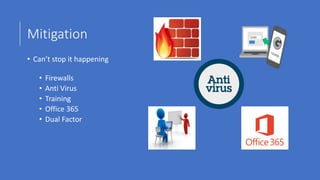
Mitigation
• Can’t stop it happening
• Firewalls
• Anti Virus
• Training
• Office 365
• Dual Factor
GDPR Retention and Processing
• Give Data Proper Respect
• What are you storing and what are you processing?
• What best practice “Privacy Policy” looks like
How long
should I keep
data?
• This is the fifth data protection principle. In
practice, it means that you will need to:
• review the length of time you keep personal
data;
• consider the purpose or purposes you hold the
information for in deciding whether (and for
how long) to retain it;
• securely delete information that is no longer
needed for this purpose or these purposes; and
• update, archive or securely delete information if
it goes out of date.
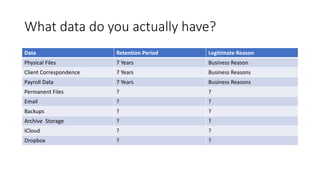
What data do you actually have?
Data Retention Period Legitimate Reason
Physical Files 7 Years Business Reason
Client Correspondence 7 Years Business Reasons
Payroll Data 7 Years Business Reasons
Permanent Files ? ?
Email ? ?
Backups ? ?
Archive Storage ? ?
ICloud ? ?
Dropbox ? ?
What should
you be
collecting?
• In practice, the second data protection principle
means that you must:
• Be clear from the outset about why you are
collecting personal data and what you intend to
do with it;
• Comply with the Act’s fair processing
requirements – including the duty to give
privacy notices to individuals when collecting
their personal data;
• Ensure that if you wish to use or disclose the
personal data for any purpose that is additional
to or different from the originally specified
purpose, the new use or disclosure is fair.
Summary
Retention and
Processing
• Collect the minimum you need to do your job
• Don’t use data for other purposes
• Tell clients as soon as you can what you are
collecting and why
• Deal with the legacy of data that you have
physical and electronic
• Only keep what you need and or have consent
for
The Anatomy
of a Hack
On Average 99 Days before
detected
3,301,824,415 Usernames
and Passwords stolen in 2016
Costs of Data breaches is
increasing up 29% from 2013
Short Term / Long Term
Impacts
Phase 1. The
break in
• Phishing Emails
• Password Laziness
• Password spraying
• Ignored software
updates
• Software Vulnerability
• Theft
• Merging Networks
• Malware
• Server
Misconfigurations
• Watering holes
• Blagging
Phase 2. The
inside man
• Starts with a network
scan
• Then target
• Employees with
Higher Access than
they need
• Out of Date
systems
• Companies with no
security procedures
• 24 – 48 Hours to full
control
• User accounts with
Admin
• Software running
under Admin
Account
• Same Account used
across the firm
• Local accounts
setup to solve a
problem then not
removed
Phase 3. The
Long Con
• Assume Breach
• Sudden Download of
terabytes of Data
• Large numbers of files
being moved
• Simultaneous logins
from different IPs
• Multiple Failed login
attempts
• Backdoor
• Smash and Grab
• Living off the land
• Advanced Persistent
Threat
It is going to
happen, what
are you going
to do?
• There are four important elements to any
breach plan
• Containment and Recovery
• Assessment of ongoing risk
• Notification of Breach
• Evaluation and Response
Containment
& Recovery
Who is going to take the lead?
Who needs to be made aware?
What might need to be done?
How do you recover?
How do you limit the damage?
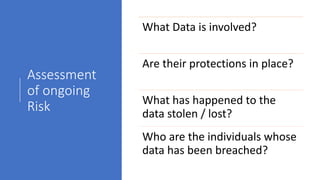
Assessment
of ongoing
Risk
What Data is involved?
Are their protections in place?
What has happened to the
data stolen / lost?
Who are the individuals whose
data has been breached?
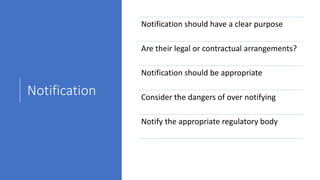
Notification
Notification should have a clear purpose
Are their legal or contractual arrangements?
Notification should be appropriate
Consider the dangers of over notifying
Notify the appropriate regulatory body
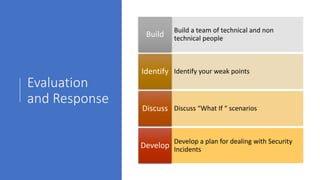
Evaluation
and Response
Build a team of technical and non
technical peopleBuild
Identify your weak pointsIdentify
Discuss “What If “ scenariosDiscuss
Develop a plan for dealing with Security
IncidentsDevelop
Questions?
David Watson
Managing Director
Hosted Accountants

Don't panic - cyber security for the faint hearted

  • 1.
  • 2.
    Three Topics How secureis your system? What are you storing and for how long? What to do when things go wrong?
  • 3.
    What is Appropriate Security? •An appropriate measure is one that is proportionate to the risks it safeguards against. You can take into account the state of technological development and the cost of implementing the measure. • Regulation 5(1A) says these measures must at least: • “(a) ensure that personal data can be accessed only by authorised personnel for legally authorised purposes; • (b) protect personal data stored or transmitted against accidental or unlawful destruction, accidental loss or alteration, and unauthorised or unlawful storage, processing, access or disclosure; and • (c) ensure the implementation of a security policy with respect to the processing of personal data.”
  • 5.
    What are the Threats? 545,000Network Intrusion Attempts per minute 140,000 Malware Programs blocked per minute 170,000 Malicious website blocked per minute 310,000 Botnet attacks blocked 312 Zero Day exploits blocked
  • 8.
    In Real Life Deloitte– Email Hack Sept 2017 ICAEW – Firms at High Risk FCA – 24 Attacks in 2015, 38 in 2016, 69 in 2017 National Cyber Security Centre 1100 Reported Attacks, 590 Significant, 30 Requiring Action from Government bodies, 10 Significant attacks each week. 4000 ransomware attacks a day 2016
  • 9.
    Mitigation • Can’t stopit happening • Firewalls • Anti Virus • Training • Office 365 • Dual Factor
  • 10.
    GDPR Retention andProcessing • Give Data Proper Respect • What are you storing and what are you processing? • What best practice “Privacy Policy” looks like
  • 11.
    How long should Ikeep data? • This is the fifth data protection principle. In practice, it means that you will need to: • review the length of time you keep personal data; • consider the purpose or purposes you hold the information for in deciding whether (and for how long) to retain it; • securely delete information that is no longer needed for this purpose or these purposes; and • update, archive or securely delete information if it goes out of date.
  • 12.
    What data doyou actually have? Data Retention Period Legitimate Reason Physical Files 7 Years Business Reason Client Correspondence 7 Years Business Reasons Payroll Data 7 Years Business Reasons Permanent Files ? ? Email ? ? Backups ? ? Archive Storage ? ? ICloud ? ? Dropbox ? ?
  • 13.
    What should you be collecting? •In practice, the second data protection principle means that you must: • Be clear from the outset about why you are collecting personal data and what you intend to do with it; • Comply with the Act’s fair processing requirements – including the duty to give privacy notices to individuals when collecting their personal data; • Ensure that if you wish to use or disclose the personal data for any purpose that is additional to or different from the originally specified purpose, the new use or disclosure is fair.
  • 14.
    Summary Retention and Processing • Collectthe minimum you need to do your job • Don’t use data for other purposes • Tell clients as soon as you can what you are collecting and why • Deal with the legacy of data that you have physical and electronic • Only keep what you need and or have consent for
  • 15.
    The Anatomy of aHack On Average 99 Days before detected 3,301,824,415 Usernames and Passwords stolen in 2016 Costs of Data breaches is increasing up 29% from 2013 Short Term / Long Term Impacts
  • 16.
    Phase 1. The breakin • Phishing Emails • Password Laziness • Password spraying • Ignored software updates • Software Vulnerability • Theft • Merging Networks • Malware • Server Misconfigurations • Watering holes • Blagging
  • 17.
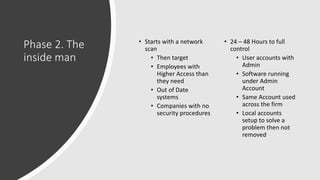
    Phase 2. The insideman • Starts with a network scan • Then target • Employees with Higher Access than they need • Out of Date systems • Companies with no security procedures • 24 – 48 Hours to full control • User accounts with Admin • Software running under Admin Account • Same Account used across the firm • Local accounts setup to solve a problem then not removed
  • 18.
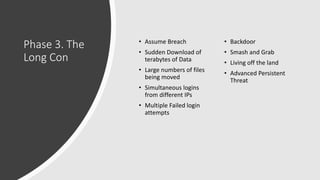
    Phase 3. The LongCon • Assume Breach • Sudden Download of terabytes of Data • Large numbers of files being moved • Simultaneous logins from different IPs • Multiple Failed login attempts • Backdoor • Smash and Grab • Living off the land • Advanced Persistent Threat
  • 19.
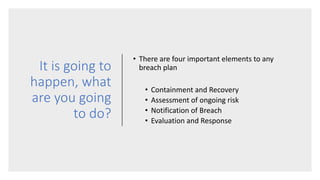
    It is goingto happen, what are you going to do? • There are four important elements to any breach plan • Containment and Recovery • Assessment of ongoing risk • Notification of Breach • Evaluation and Response
  • 20.
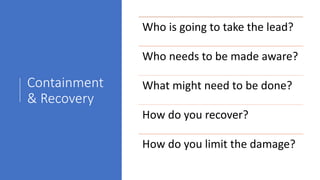
    Containment & Recovery Who isgoing to take the lead? Who needs to be made aware? What might need to be done? How do you recover? How do you limit the damage?
  • 21.
    Assessment of ongoing Risk What Datais involved? Are their protections in place? What has happened to the data stolen / lost? Who are the individuals whose data has been breached?
  • 22.
    Notification Notification should havea clear purpose Are their legal or contractual arrangements? Notification should be appropriate Consider the dangers of over notifying Notify the appropriate regulatory body
  • 23.
    Evaluation and Response Build ateam of technical and non technical peopleBuild Identify your weak pointsIdentify Discuss “What If “ scenariosDiscuss Develop a plan for dealing with Security IncidentsDevelop
  • 24.