CATTLE FEEDINGDo we want to feed cattle?What kind of  cattle feeding ?Business Planning steps?
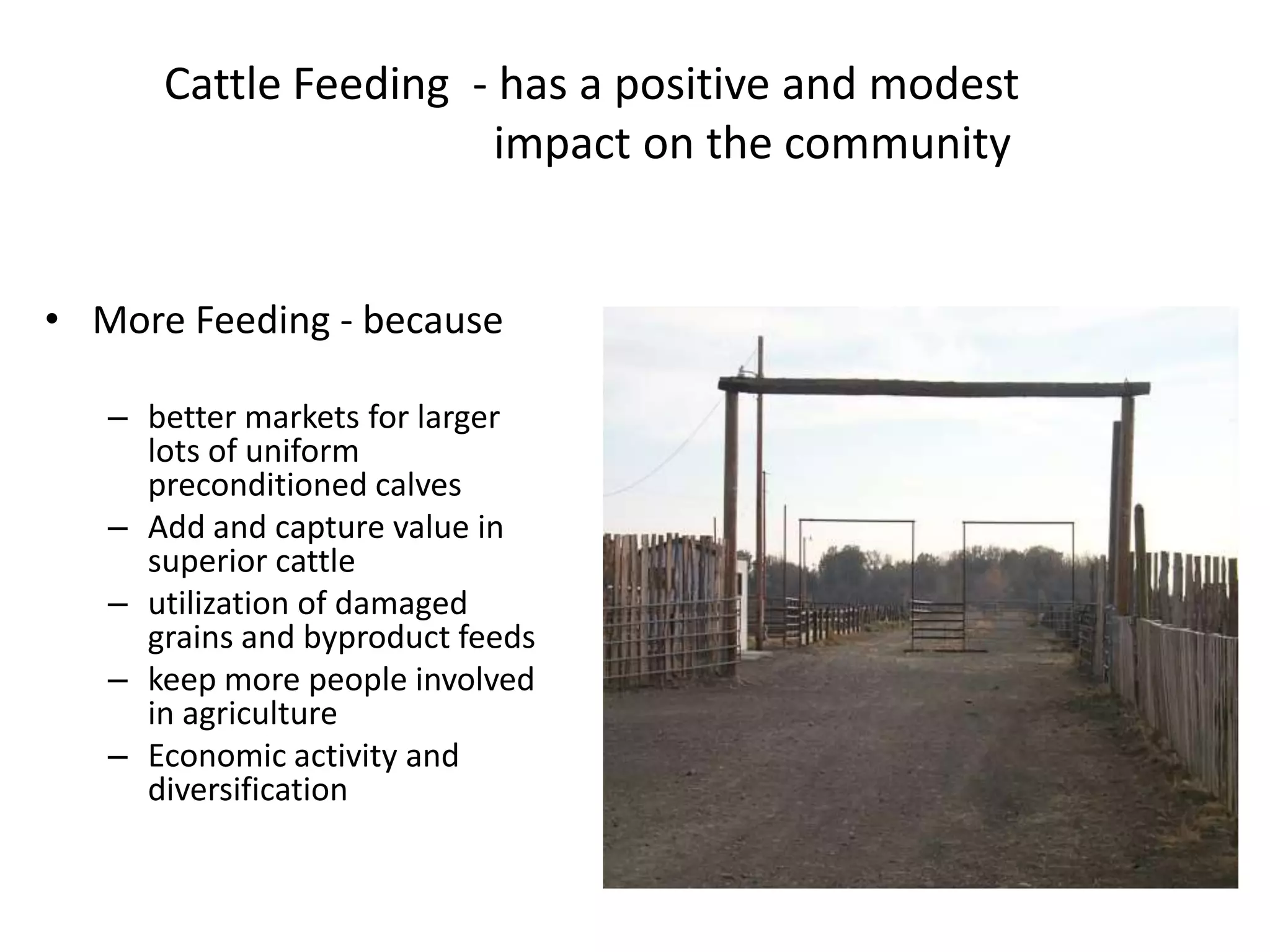
Cattle Feeding  - has a positive and modest 			   impact on the communityMore Feeding - because better markets for larger lots of uniform preconditioned calvesAdd and capture value in superior cattleutilization of damaged grains and byproduct feedskeep more people involved in agricultureEconomic activity and diversification
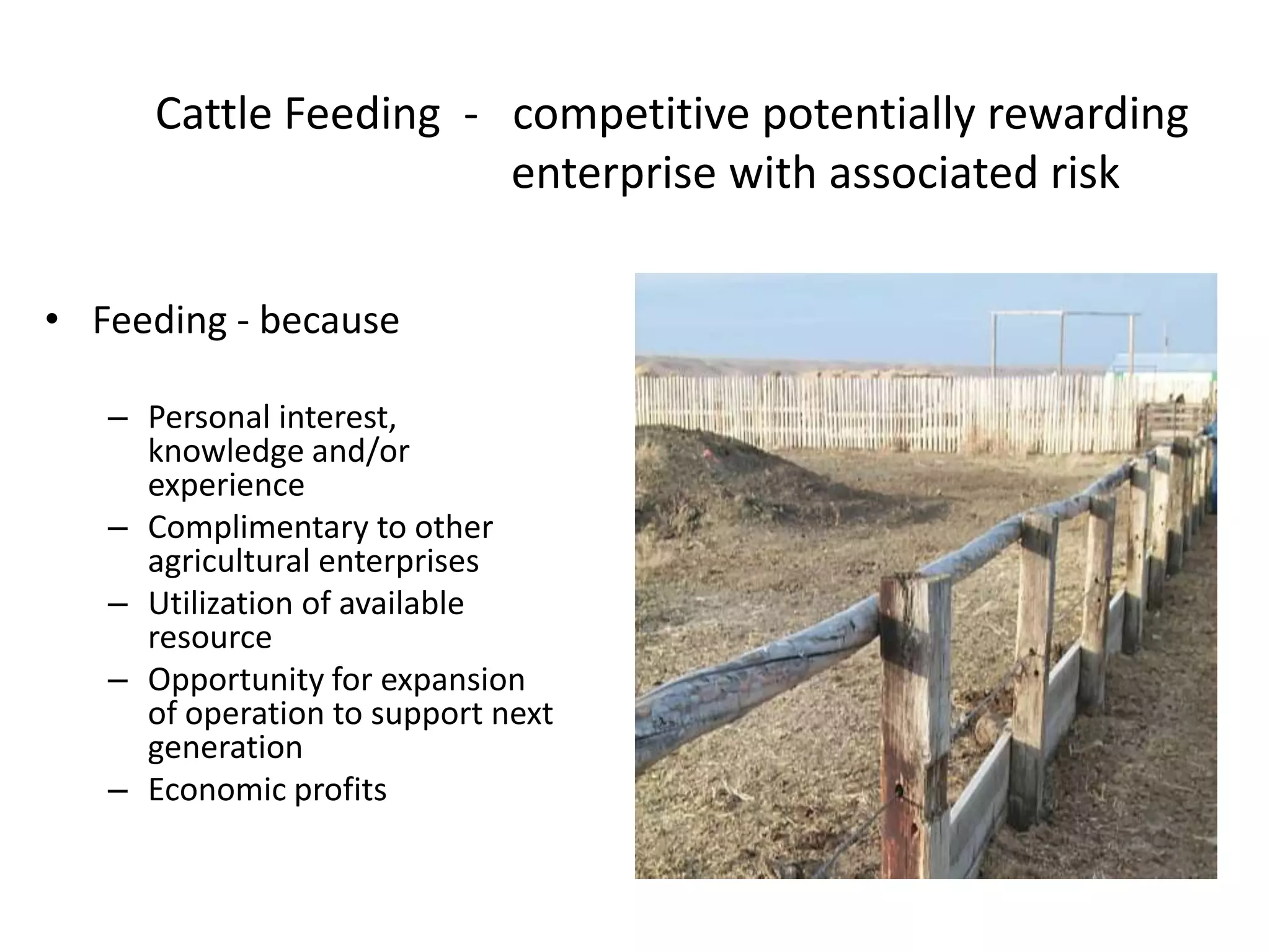
Cattle Feeding  -   competitive potentially rewarding 		   enterprise with associated riskFeeding - because Personal interest, knowledge and/or experienceComplimentary to other agricultural enterprisesUtilization of available resourceOpportunity for expansion of operation to support next generationEconomic profits
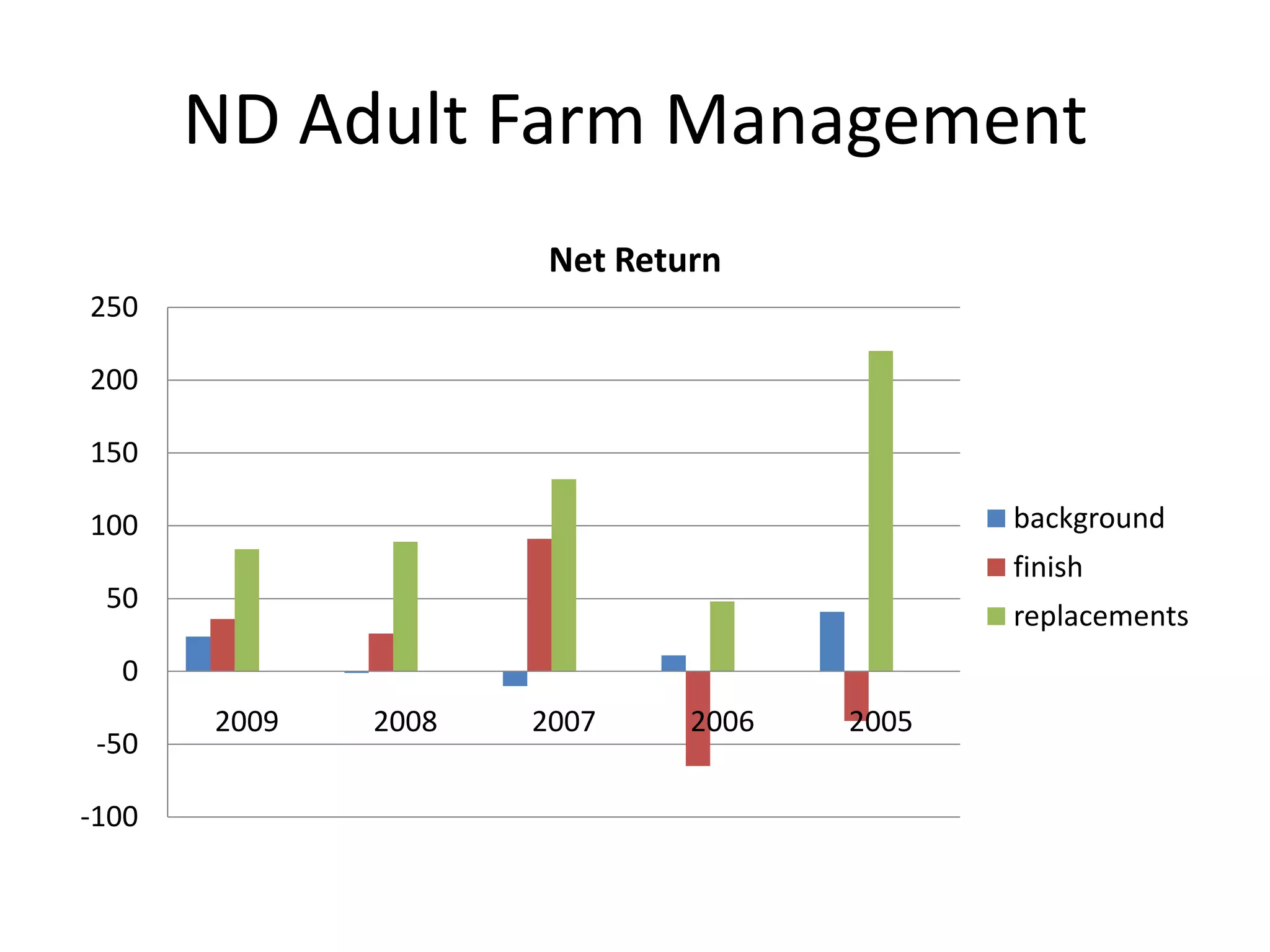
ND Adult Farm Management
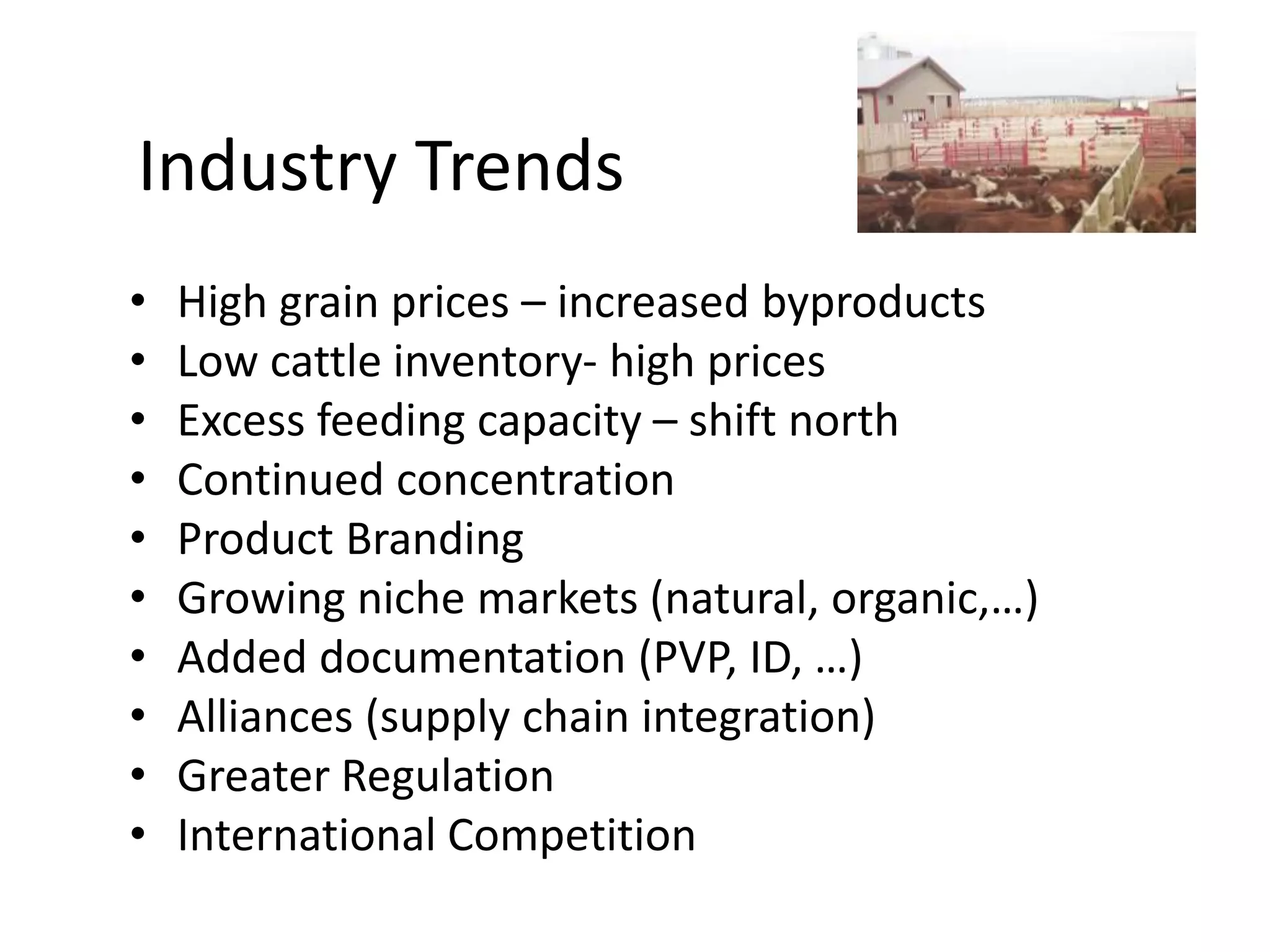
Industry TrendsHigh grain prices – increased byproductsLow cattle inventory- high pricesExcess feeding capacity – shift northContinued concentrationProduct BrandingGrowing niche markets (natural, organic,…)Added documentation (PVP, ID, …) Alliances (supply chain integration)Greater RegulationInternational Competition
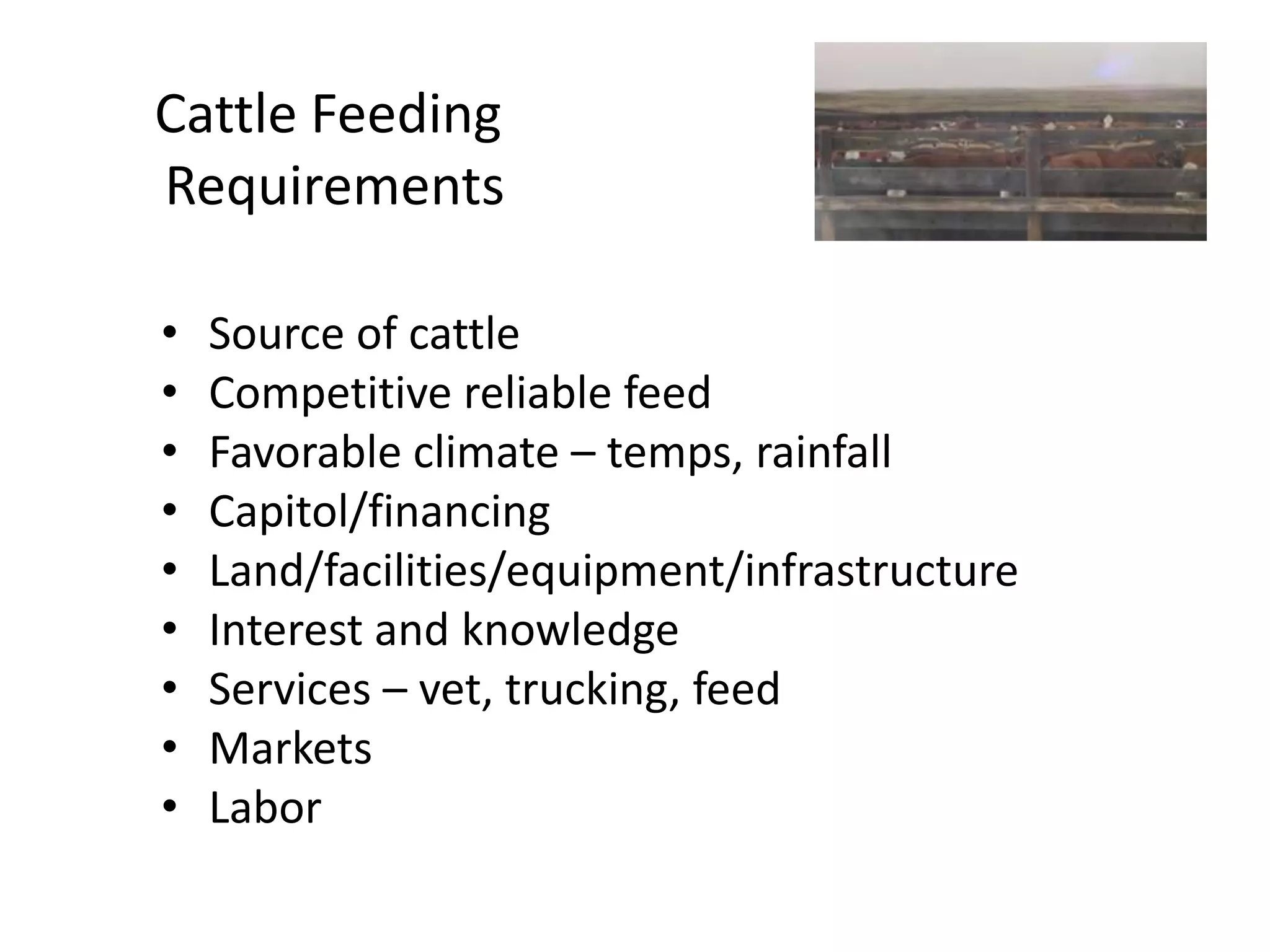
Cattle Feeding RequirementsSource of cattleCompetitive reliable feedFavorable climate – temps, rainfallCapitol/financingLand/facilities/equipment/infrastructureInterest and knowledgeServices – vet, trucking, feedMarketsLabor
Important Business ConceptsCompetitive advantageExamplesLand best suited to corn and alfalfa crops best marketed through finish feedlotFeed base in range country supports custom heifer developmentLow cost land reclamation forage  and proximity to DDGS supports custom cattle winteringEconomy of scaleOverheadEquipmentFacilitiesMarketingPurchasingExamplesJBS Five Rivers               960,000 feeding capacity             13 locations
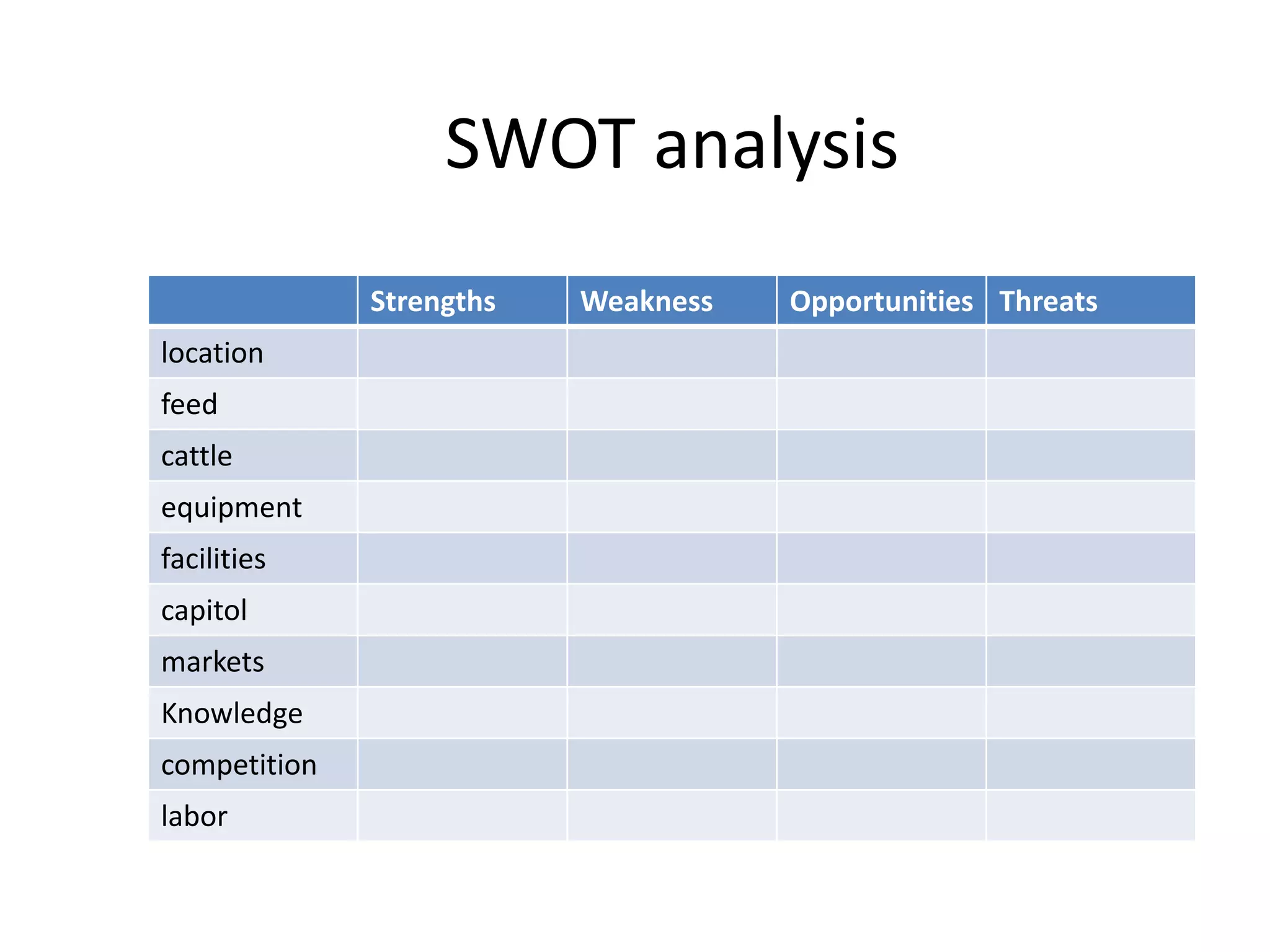
SWOT analysis
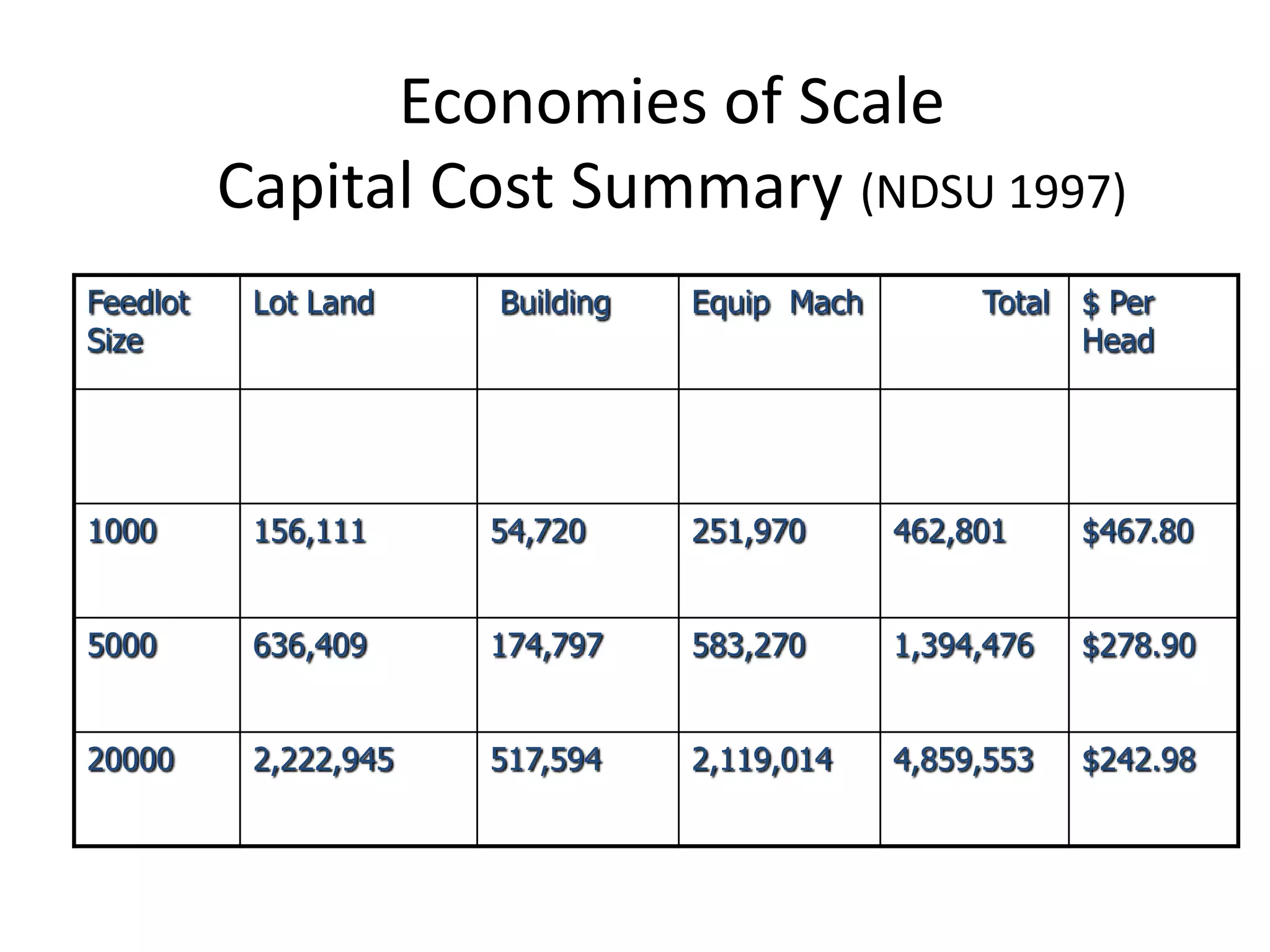
Economies of ScaleCapital Cost Summary (NDSU 1997)
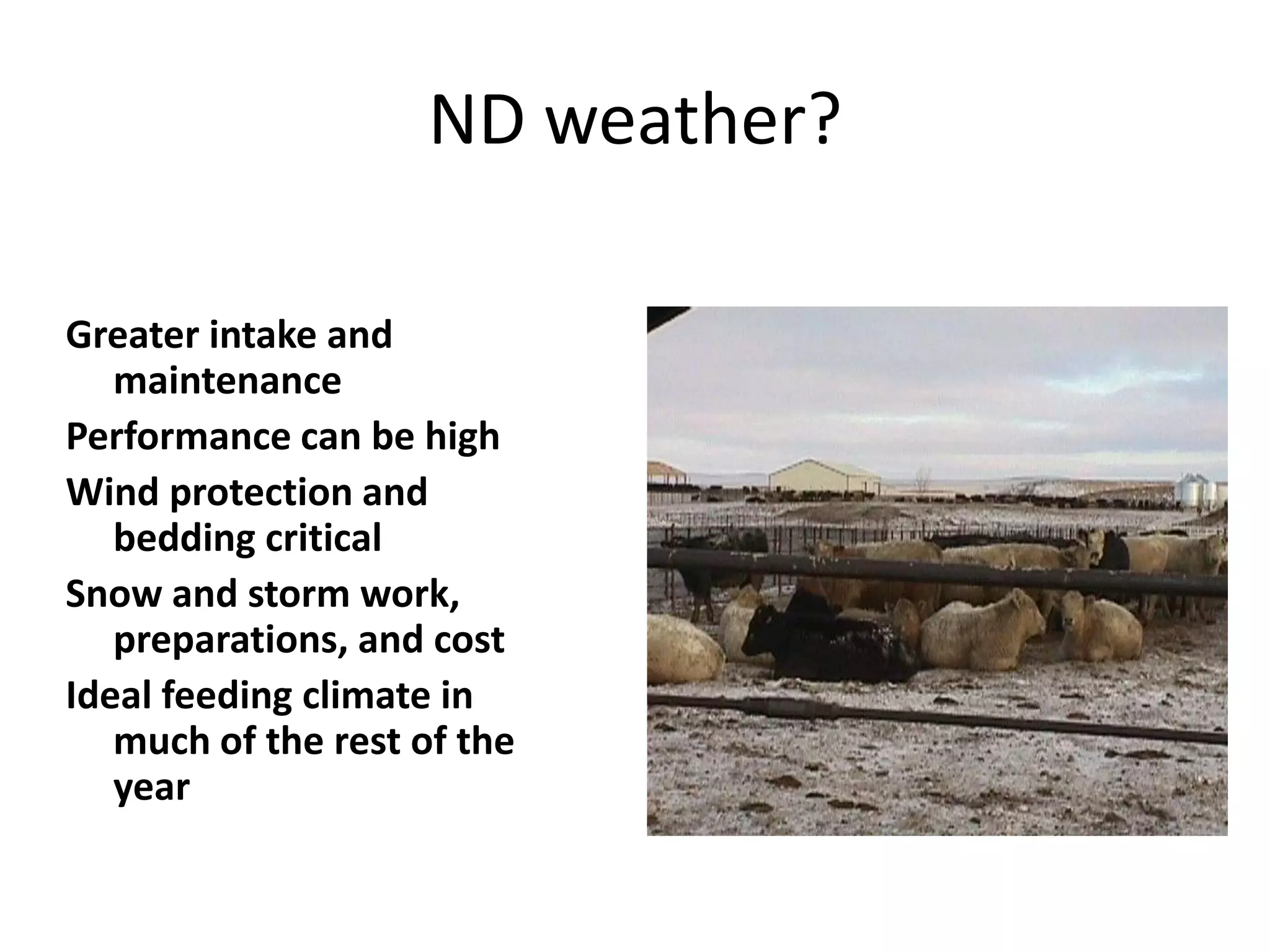
How about our Winter Weather?ND weather?Greater intake and maintenancePerformance can be highWind protection and bedding criticalSnow and storm work,   preparations, and costIdeal feeding climate in much of the rest of the year
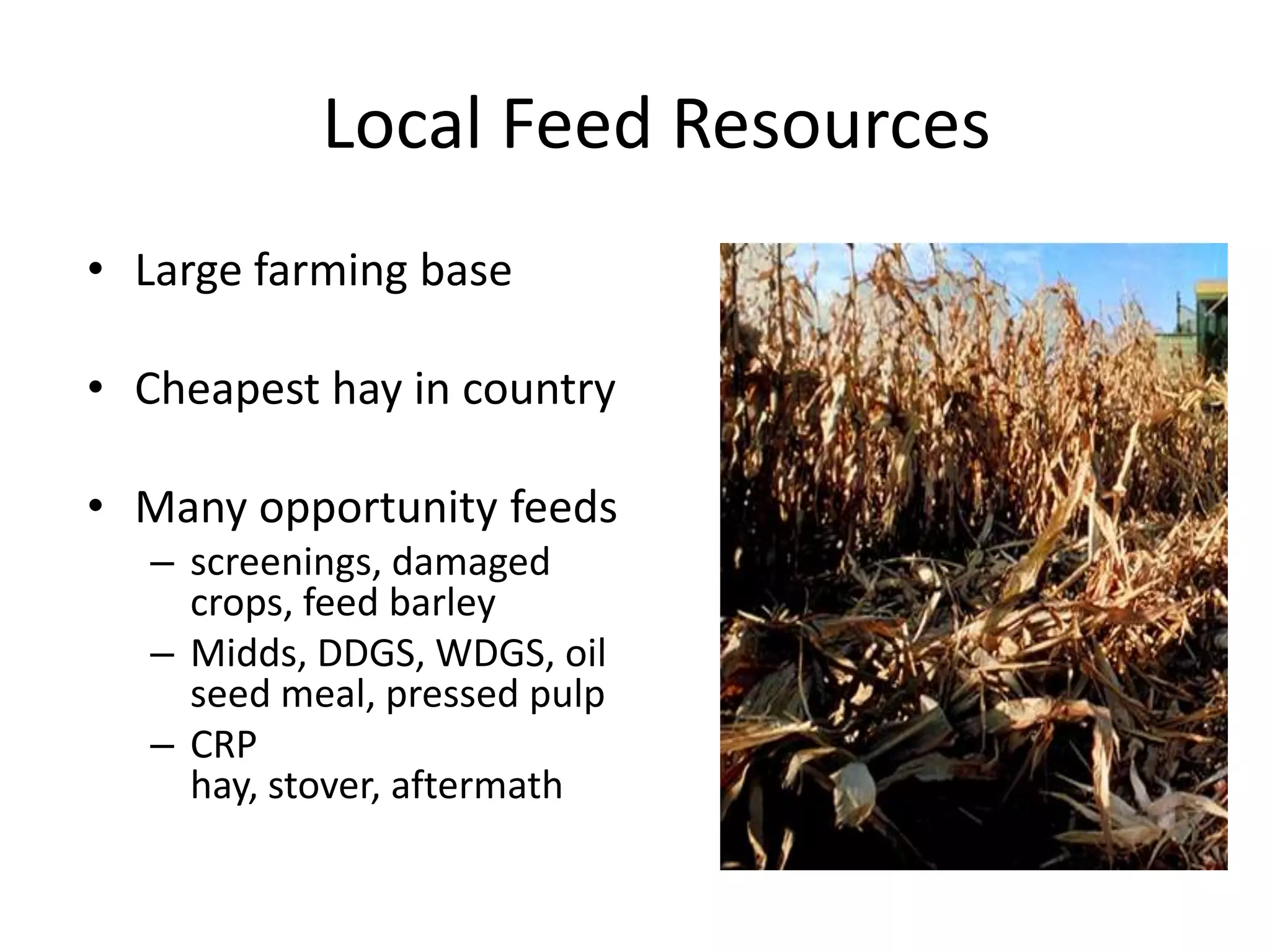
Local Feed ResourcesLarge farming base Cheapest hay in countryMany opportunity feedsscreenings, damaged crops, feed barleyMidds, DDGS, WDGS, oil seed meal, pressed pulpCRP hay, stover, aftermath
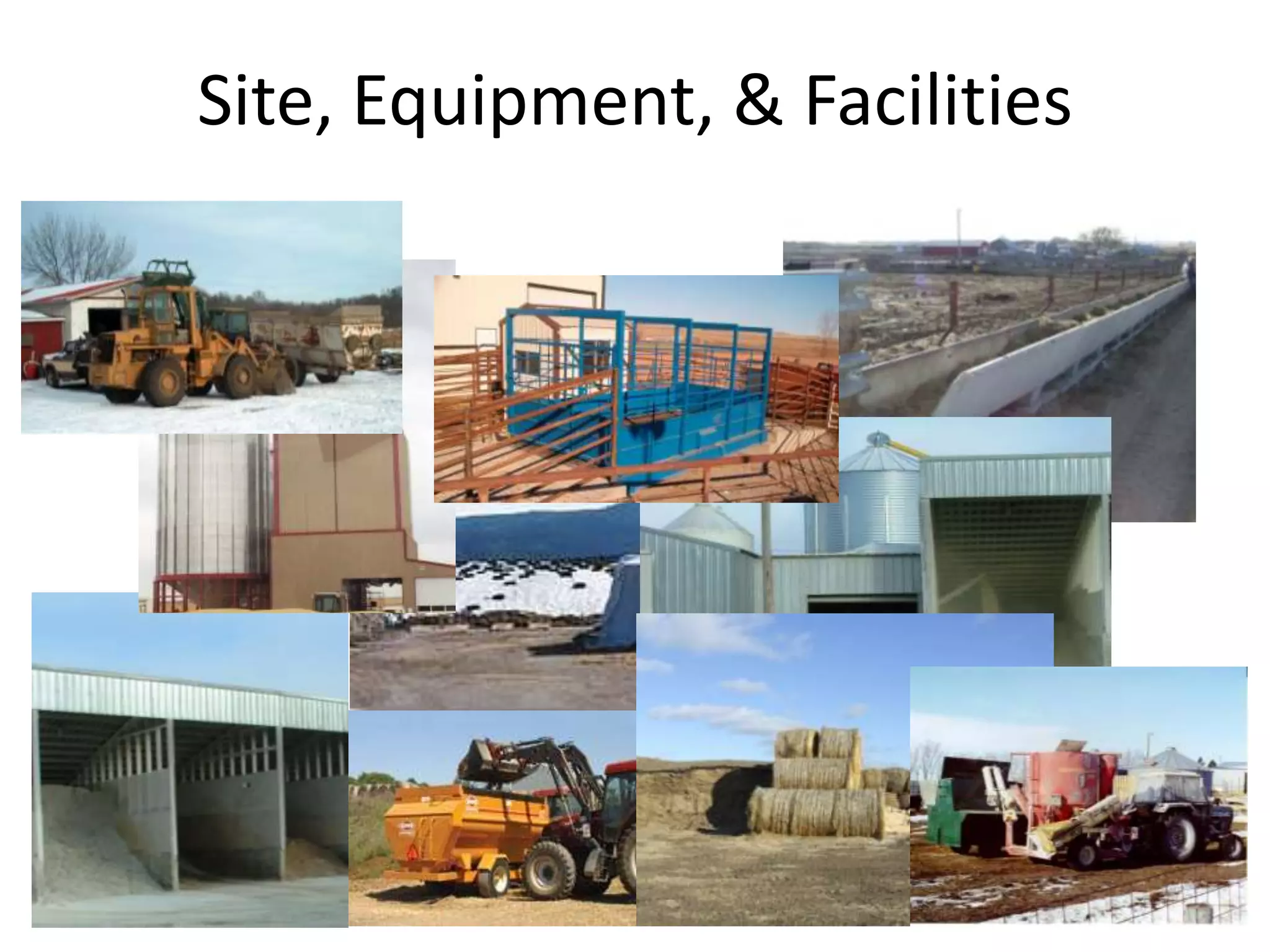
Site, Equipment, & Facilities
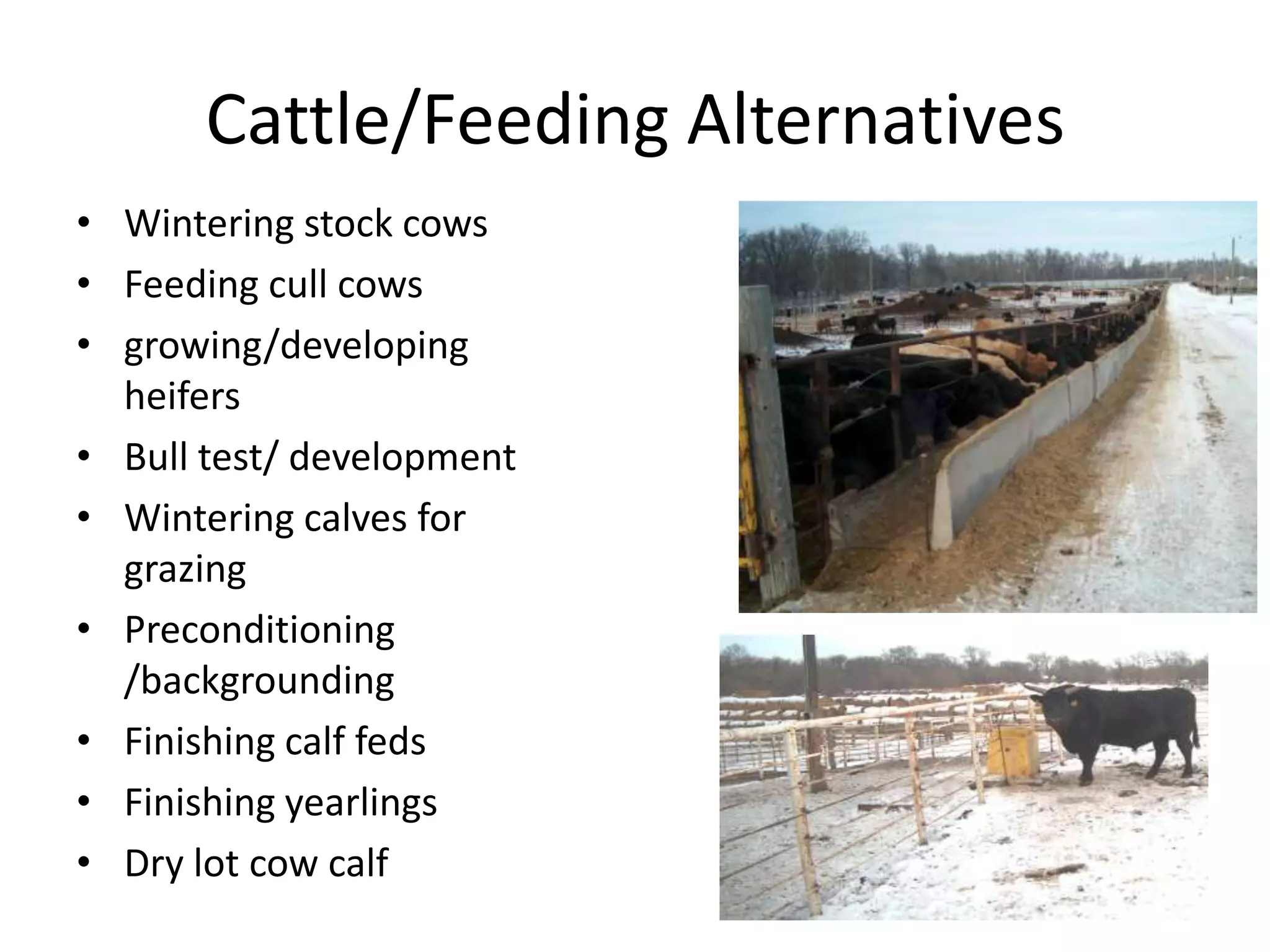
Cattle/Feeding AlternativesWintering stock cowsFeeding cull cowsgrowing/developing heifersBull test/ developmentWintering calves for grazingPreconditioning /backgroundingFinishing calf fedsFinishing yearlingsDry lot cow calf
Business planningAnalyze a business/enterprise idea on paper including definition of production, financial requirements, associated risks and projected returnsInformal to DocumentTakes time, research, and honesty Planning to evaluate alternativesAccess to credit
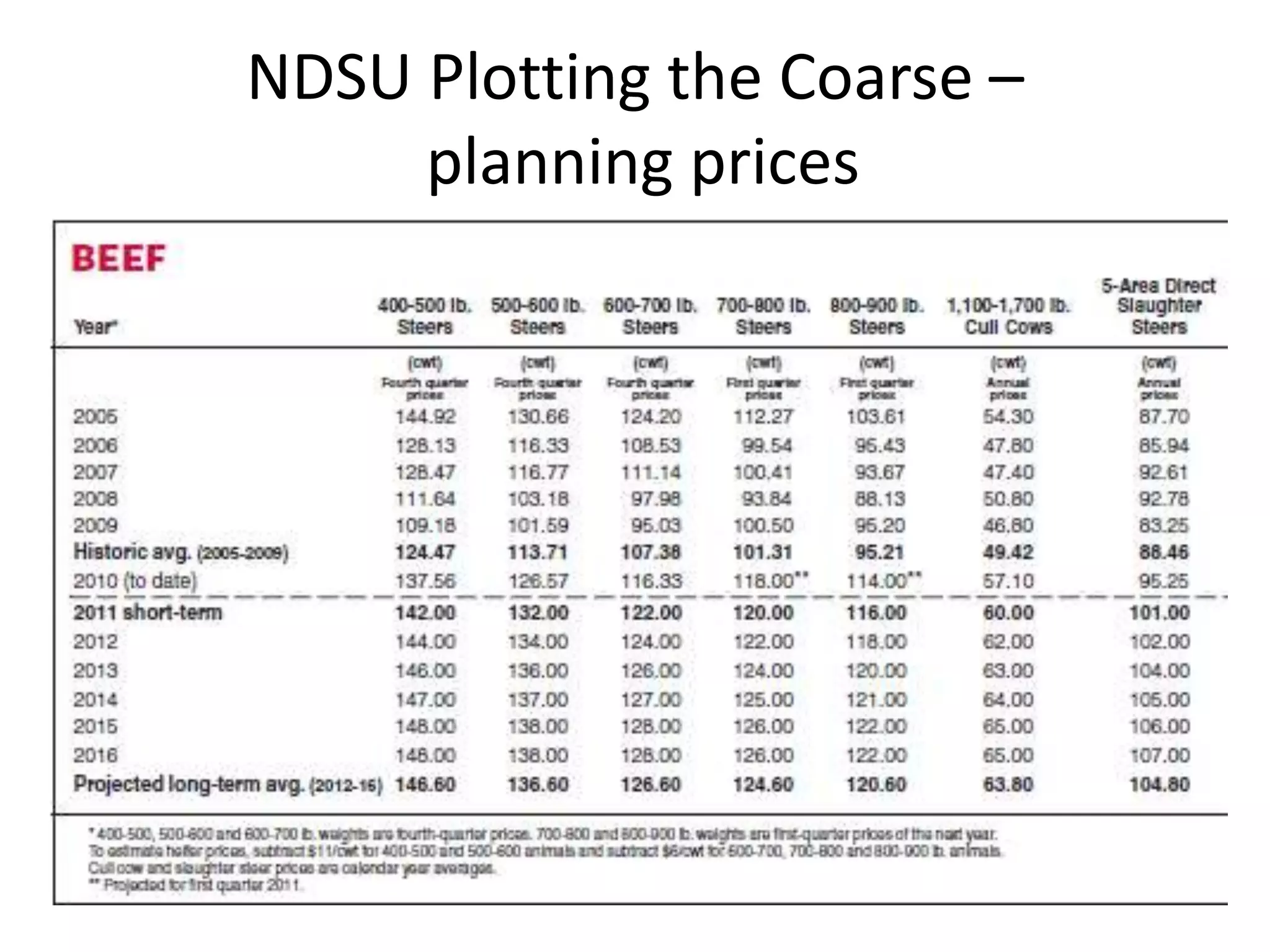
NDSU Plotting the Coarse – planning prices
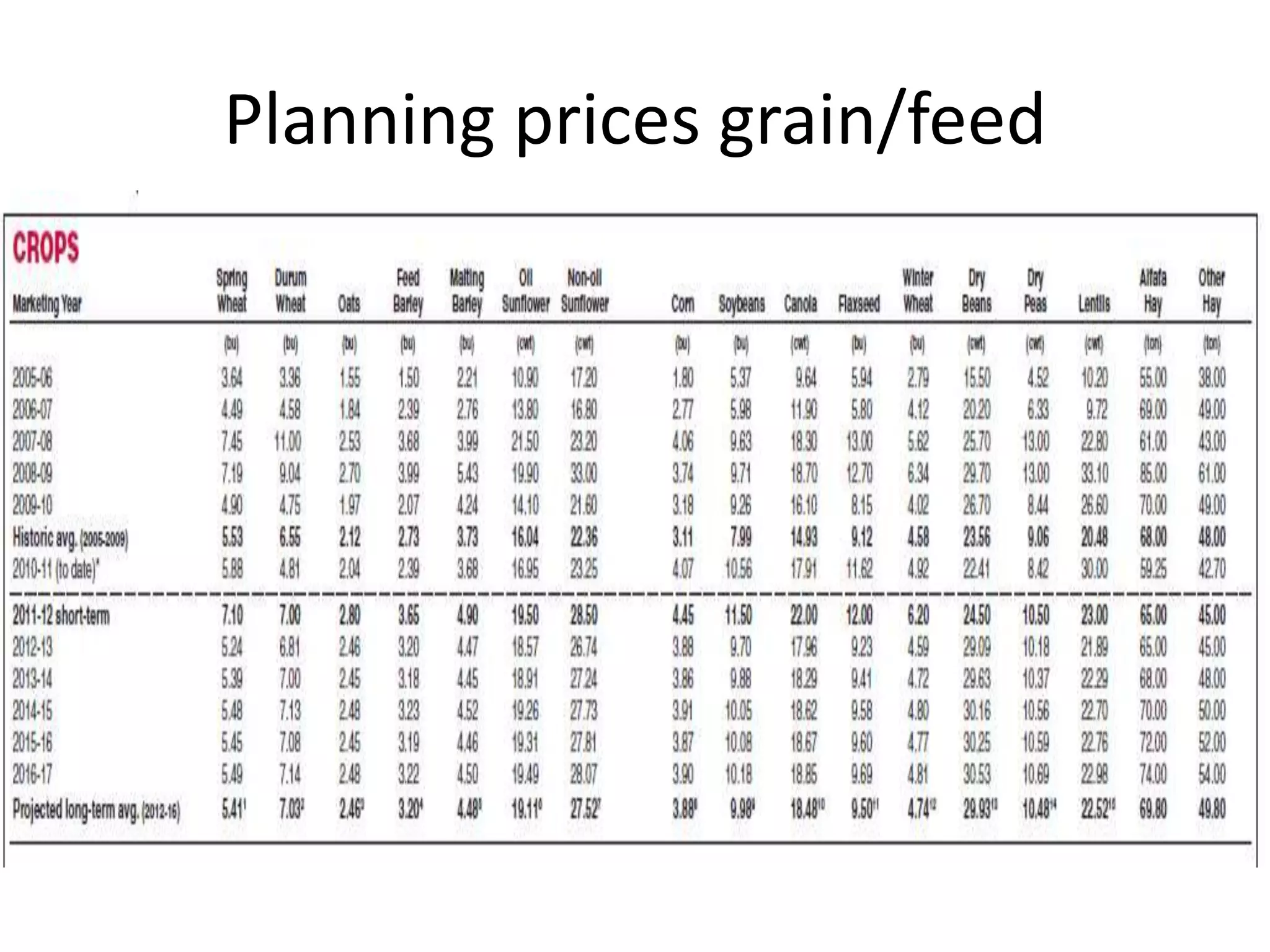
Planning prices grain/feed
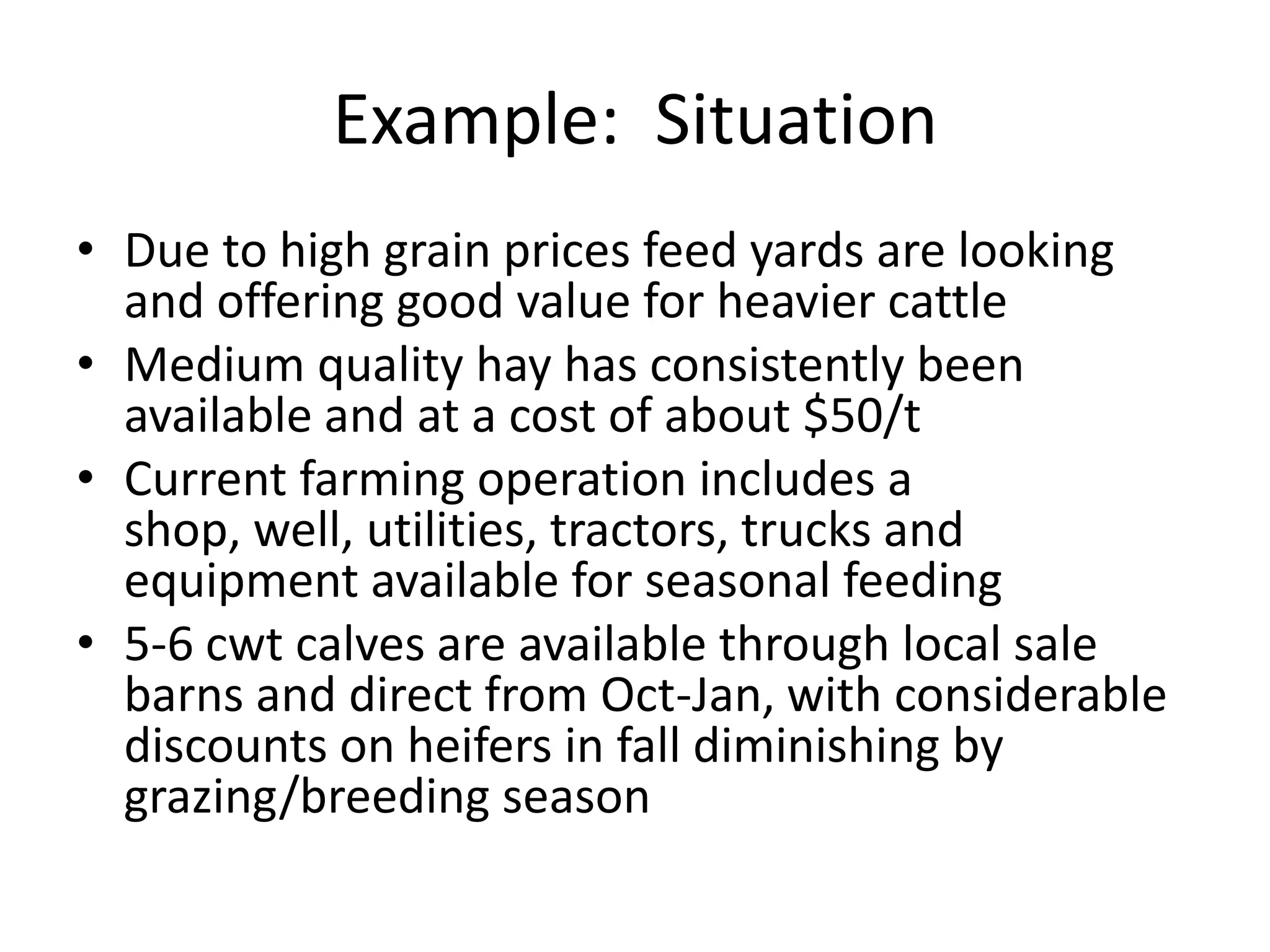
Example:  SituationDue to high grain prices feed yards are looking and offering good value for heavier cattleMedium quality hay has consistently been available and at a cost of about $50/tCurrent farming operation includes a shop, well, utilities, tractors, trucks and equipment available for seasonal feeding5-6 cwt calves are available through local sale barns and direct from Oct-Jan, with considerable discounts on heifers in fall diminishing by grazing/breeding season
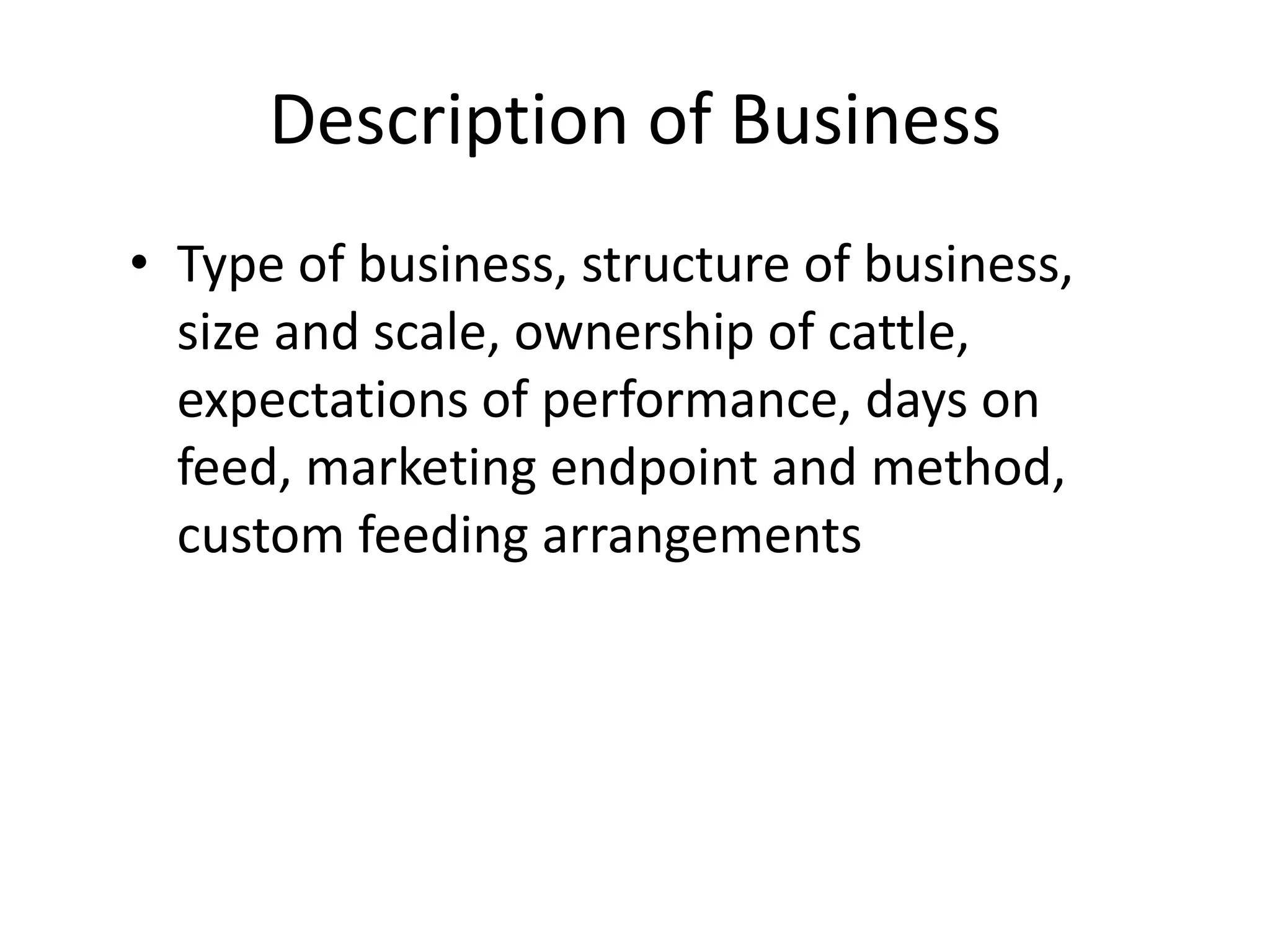
Description of BusinessType of business, structure of business, size and scale, ownership of cattle, expectations of performance, days on feed, marketing endpoint and method, custom feeding arrangements
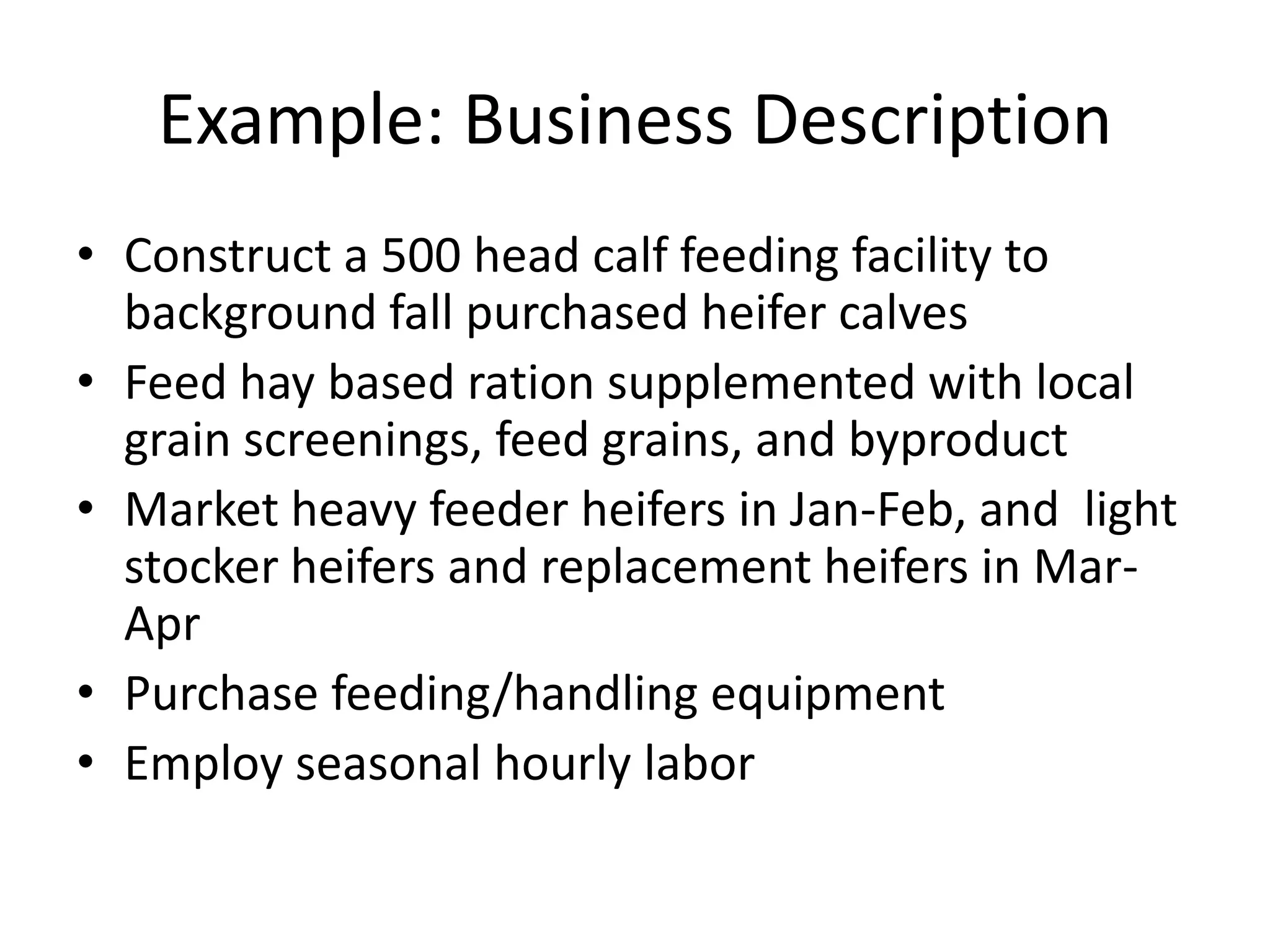
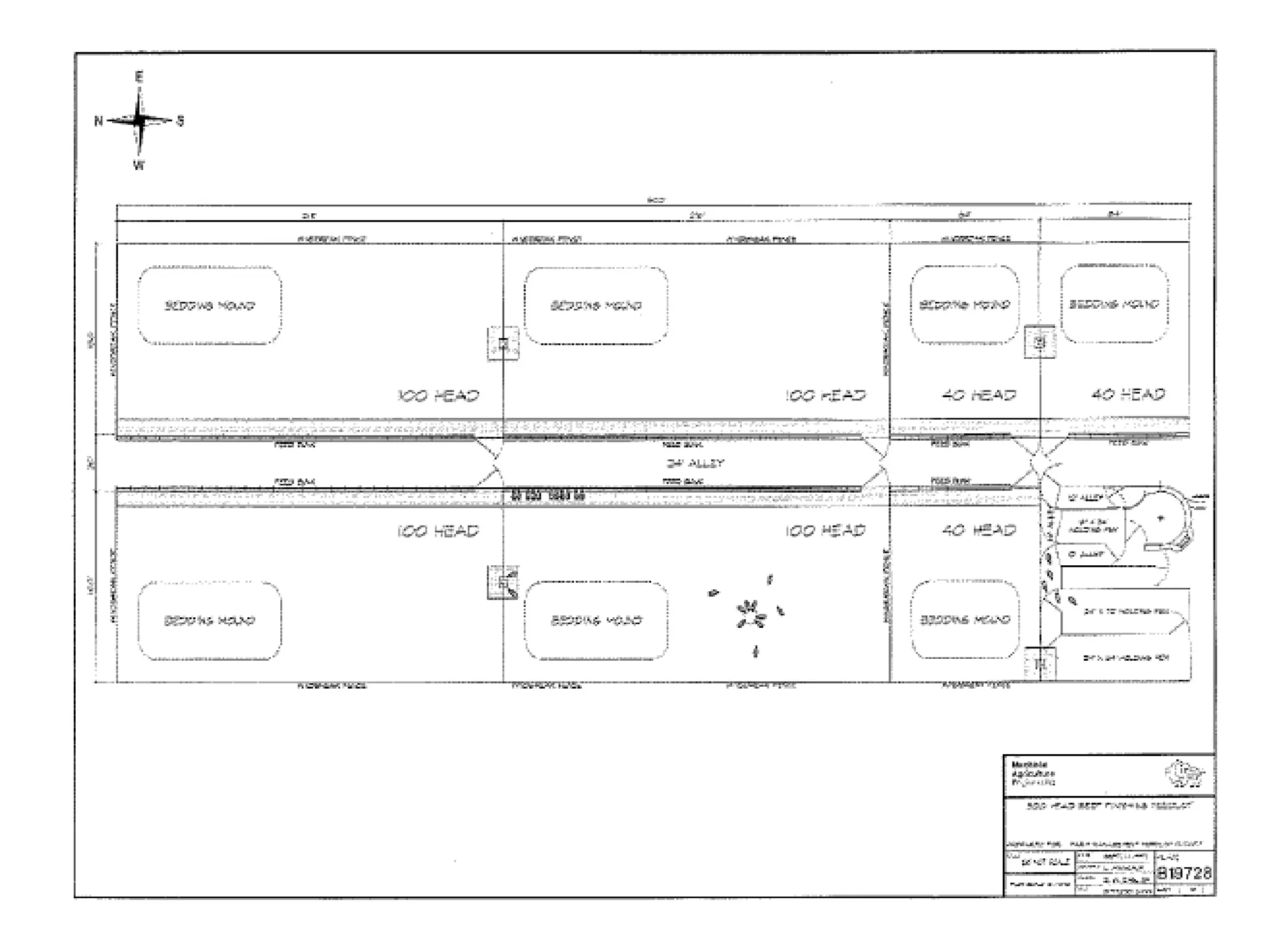
Example: Business DescriptionConstruct a 500 head calf feeding facility to background fall purchased heifer calves Feed hay based ration supplemented with local grain screenings, feed grains, and byproductMarket heavy feeder heifers in Jan-Feb, and  light stocker heifers and replacement heifers in Mar-AprPurchase feeding/handling equipmentEmploy seasonal hourly labor
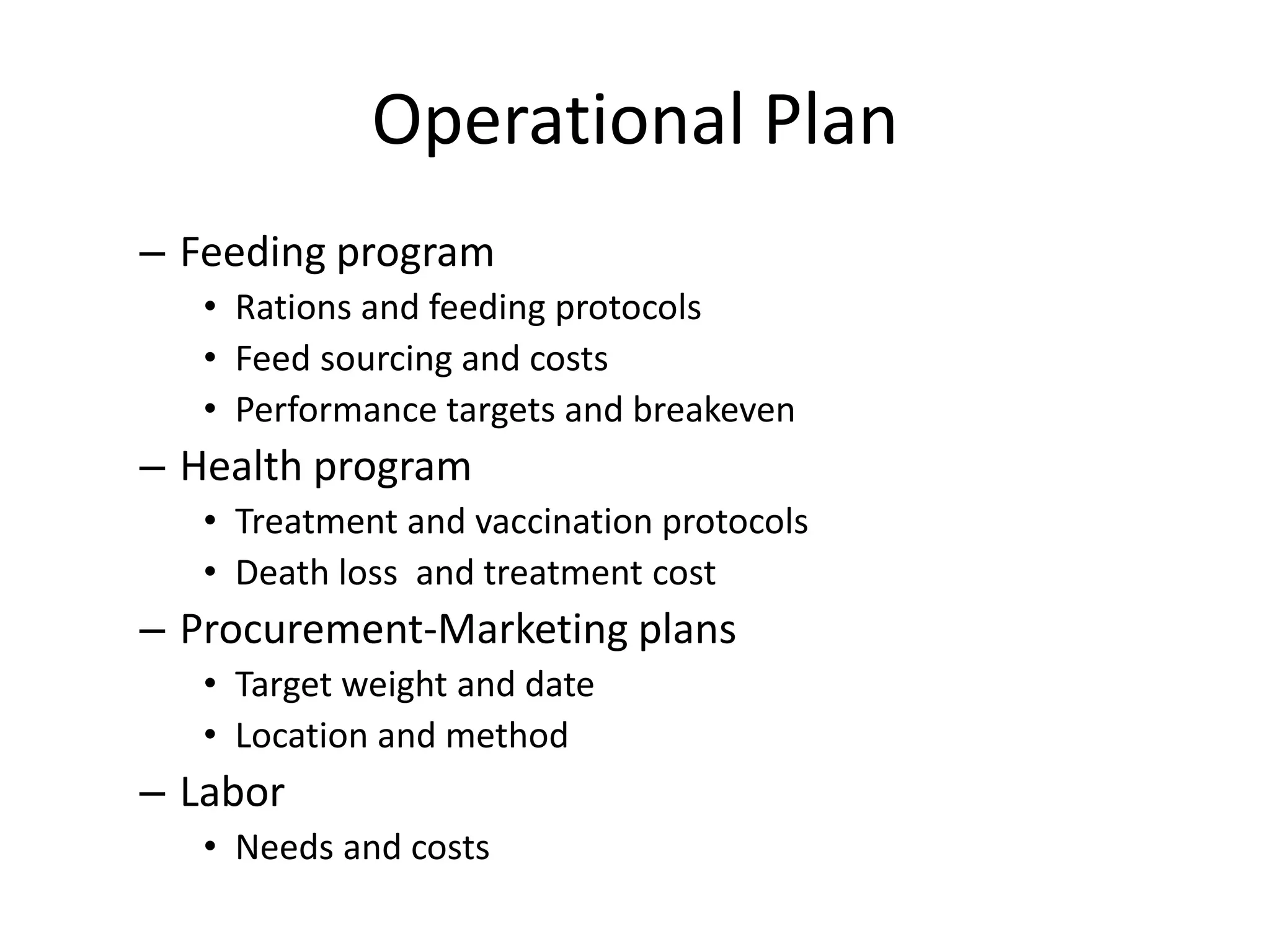
Operational PlanFeeding programRations and feeding protocolsFeed sourcing and costsPerformance targets and breakevenHealth programTreatment and vaccination protocolsDeath loss  and treatment cost Procurement-Marketing plansTarget weight and dateLocation and methodLaborNeeds and costs
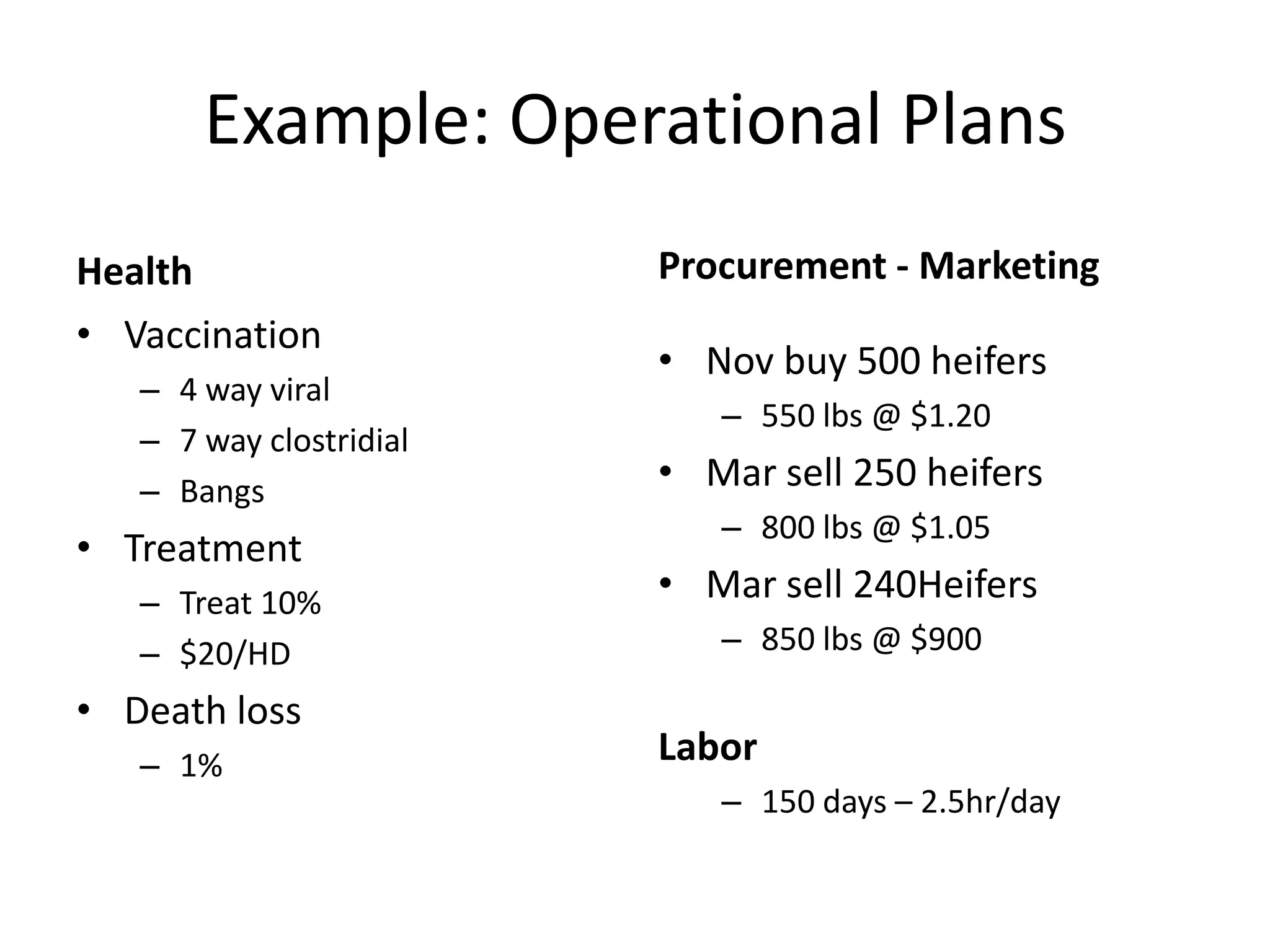
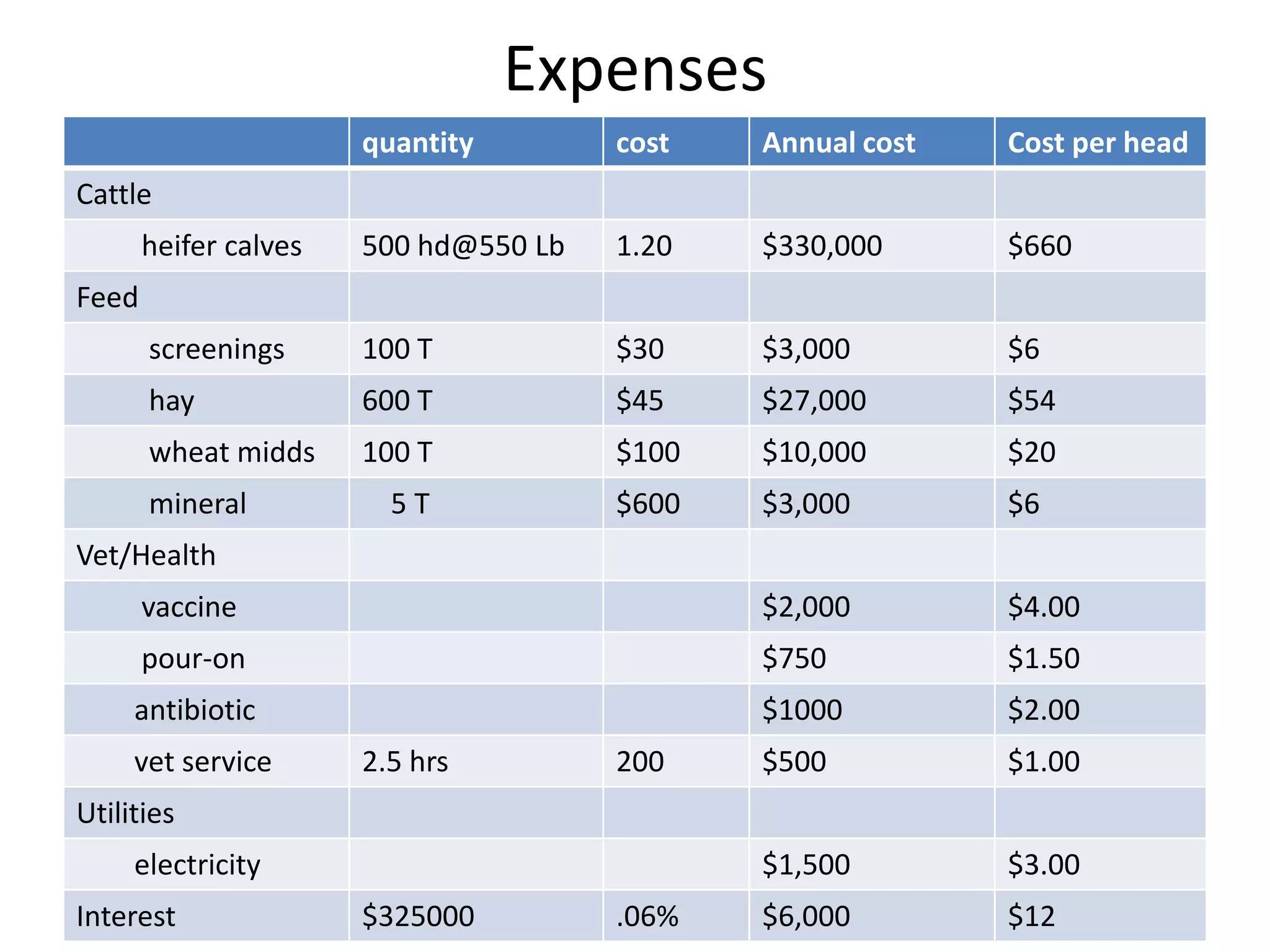
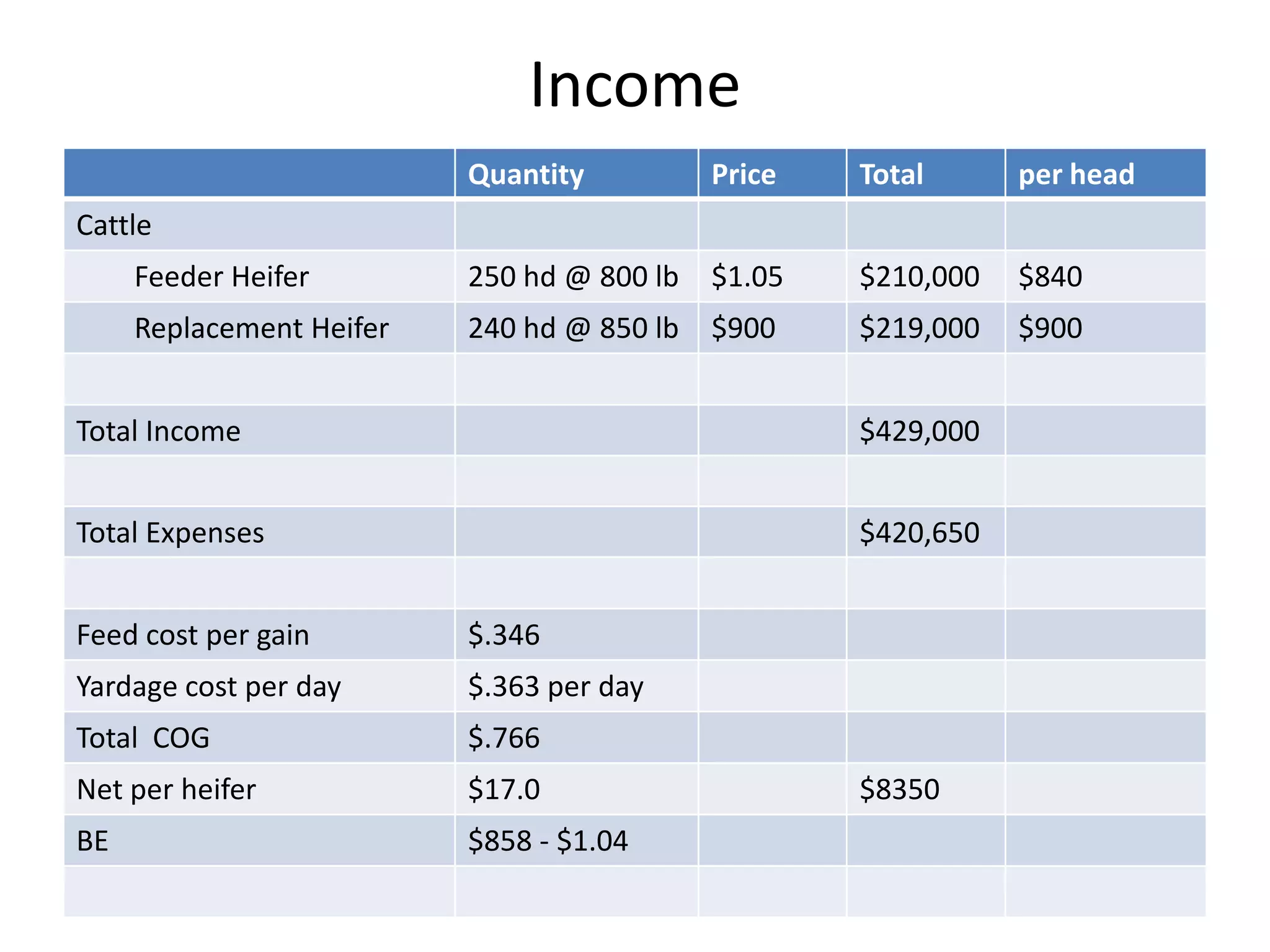
Example: Operational PlansHealthVaccination4 way viral7 way clostridialBangsTreatmentTreat 10%$20/HDDeath loss1%Procurement - MarketingNov buy 500 heifers550 lbs @ $1.20Mar sell 250 heifers800 lbs @ $1.05Mar sell 240Heifers850 lbs @ $900Labor150 days – 2.5hr/day
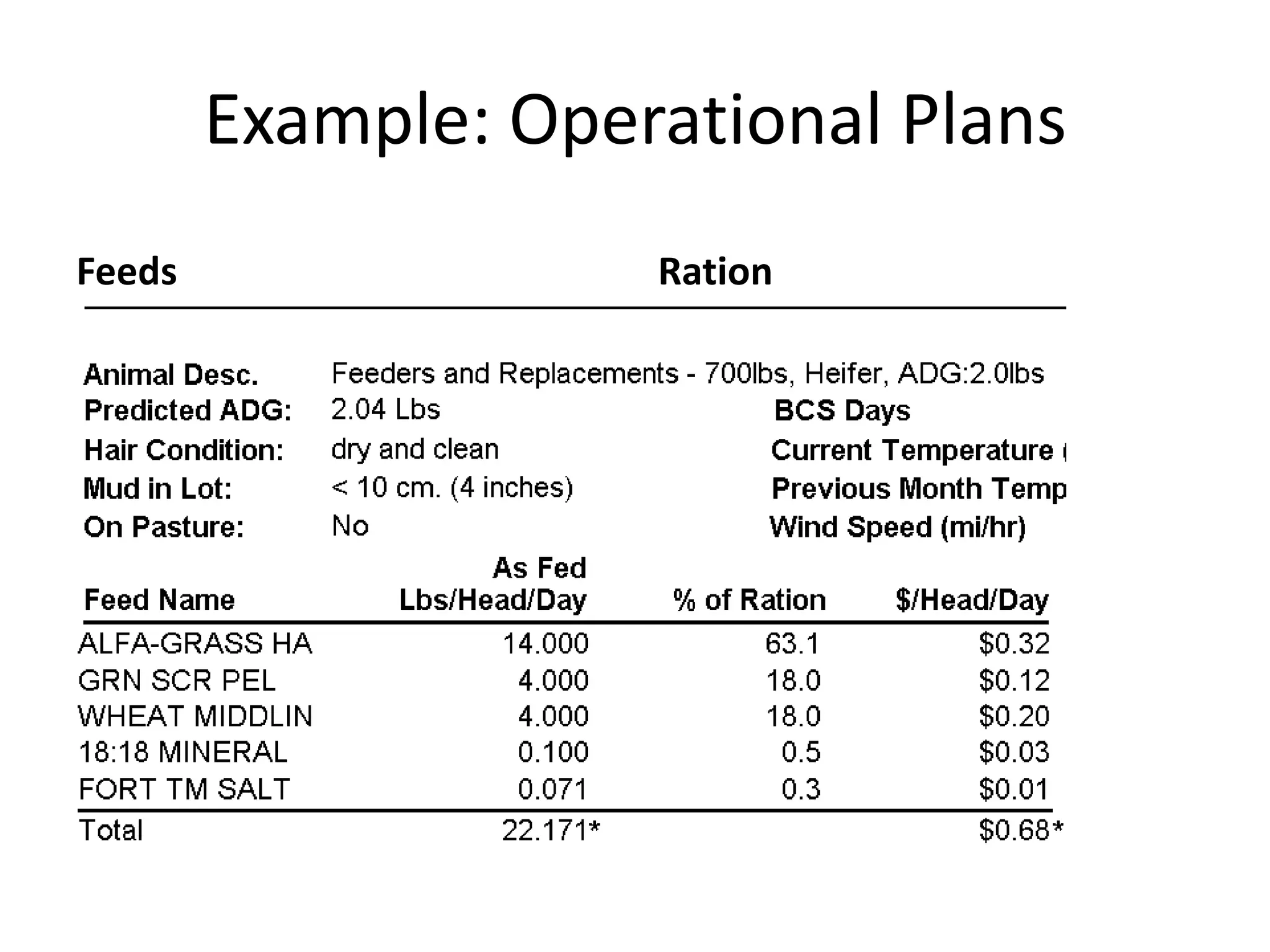
Example: Operational PlansFeedsFeedingRation:Cost:Performance: 2lb/day	Ration
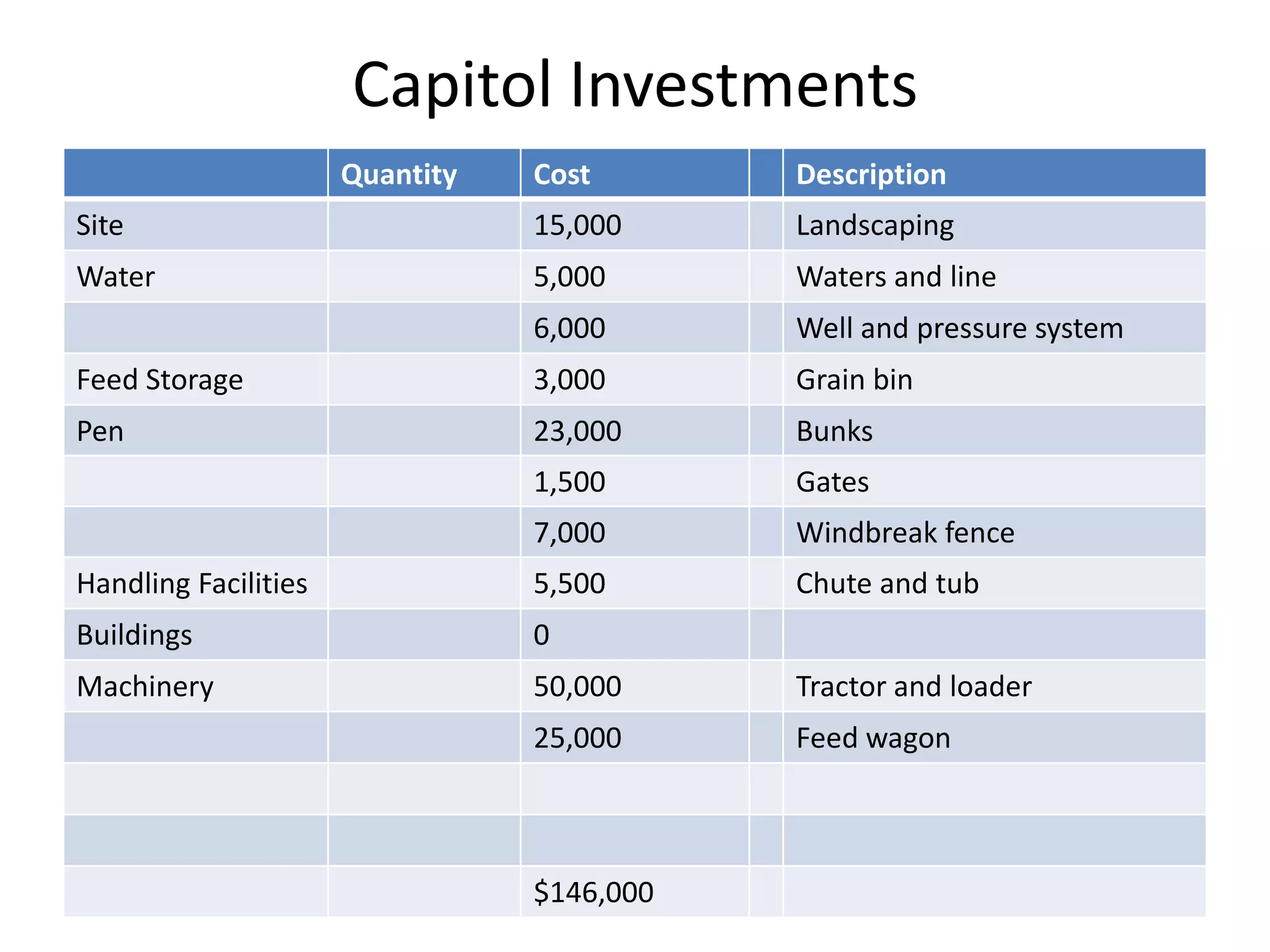
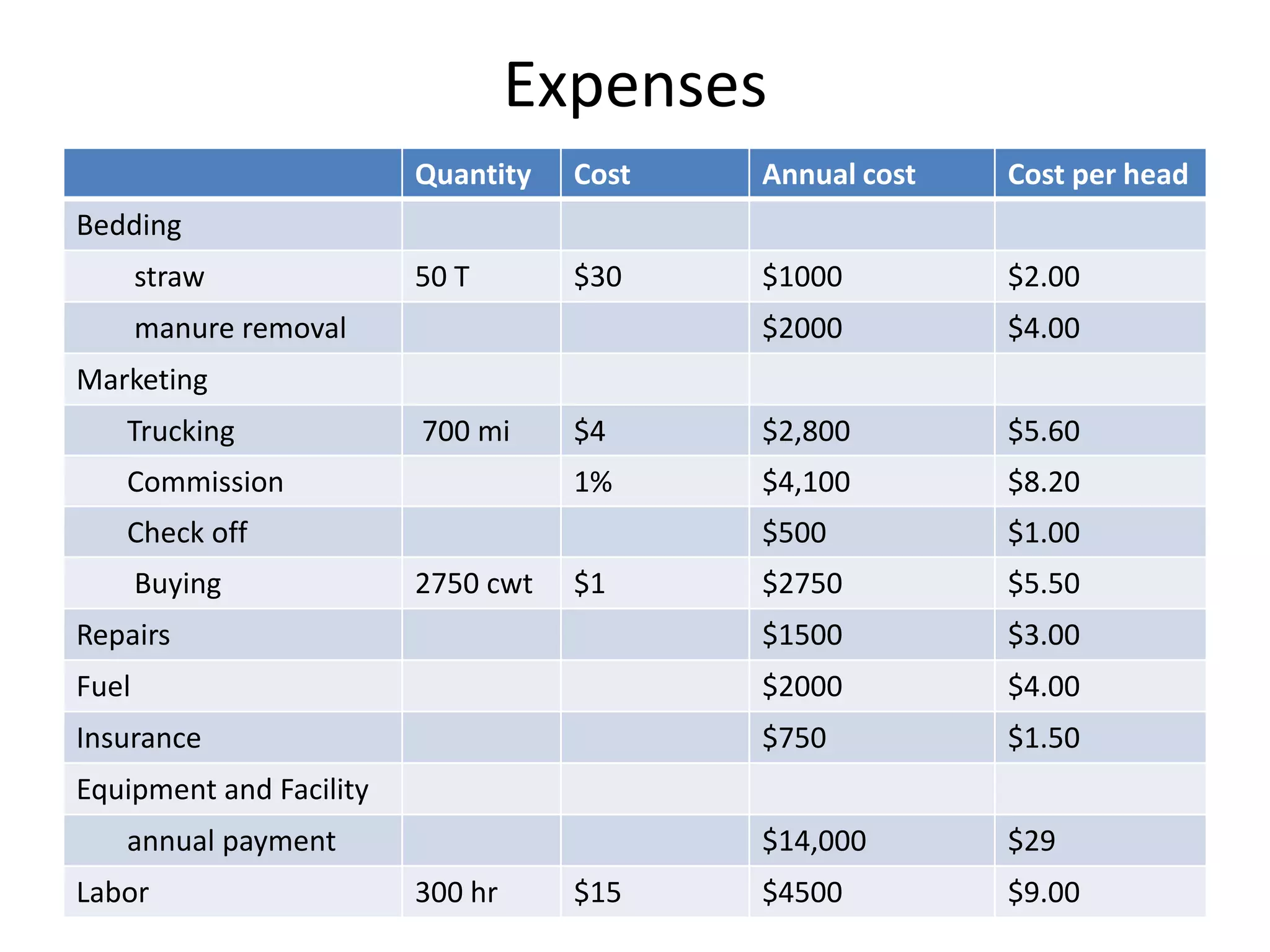
financialsBudget BECapital investment/debt serviceIncome statementBalance sheetCash flow projectionLender assistanceNDSU Extension Adult farm management
Capitol Investments
Expenses
Expenses
Income
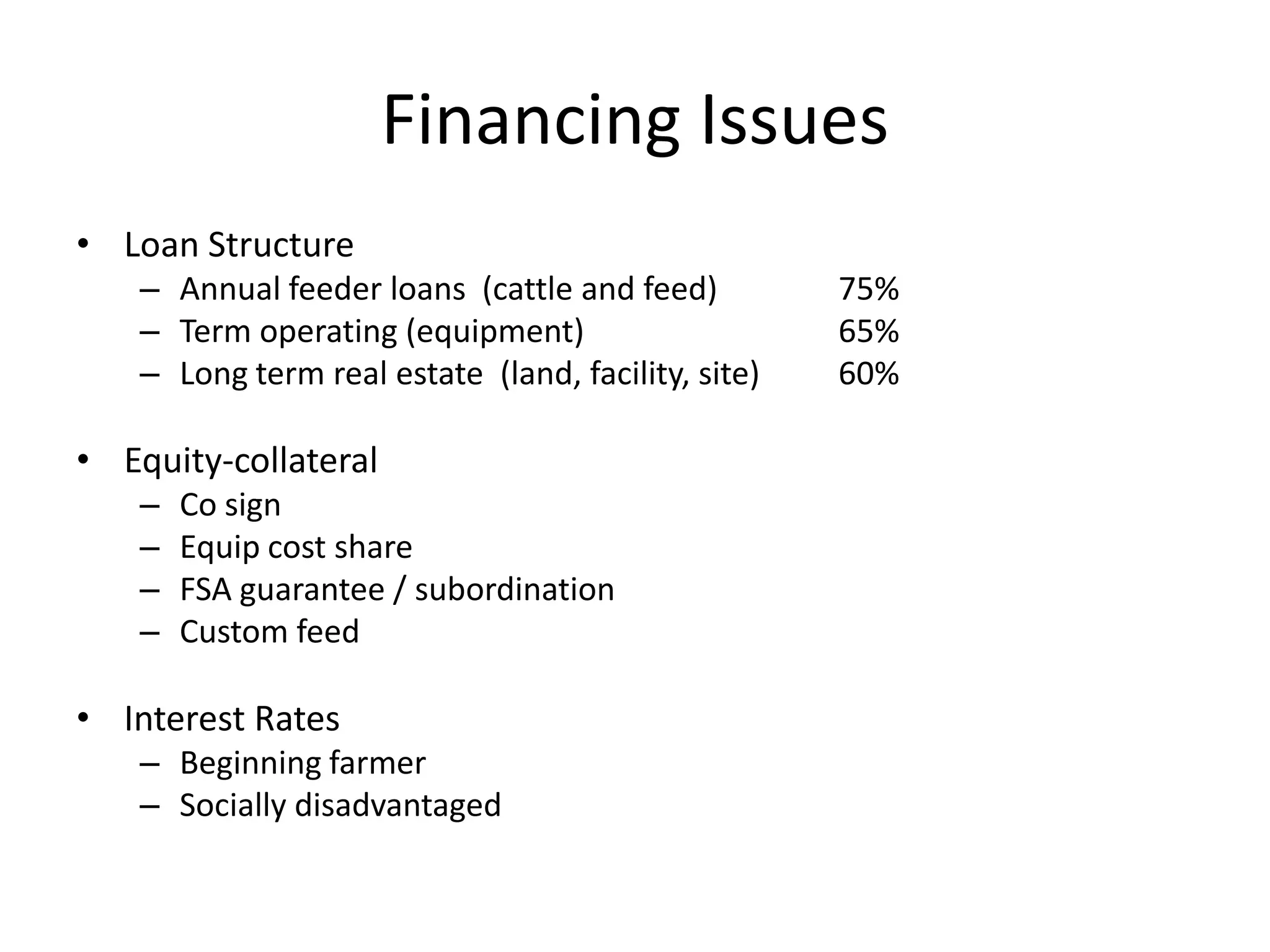
Financing IssuesLoan StructureAnnual feeder loans  (cattle and feed)	75%Term operating (equipment)		65%Long term real estate  (land, facility, site)	60%Equity-collateralCo sign	Equip cost shareFSA guarantee / subordinationCustom feedInterest RatesBeginning farmerSocially disadvantaged
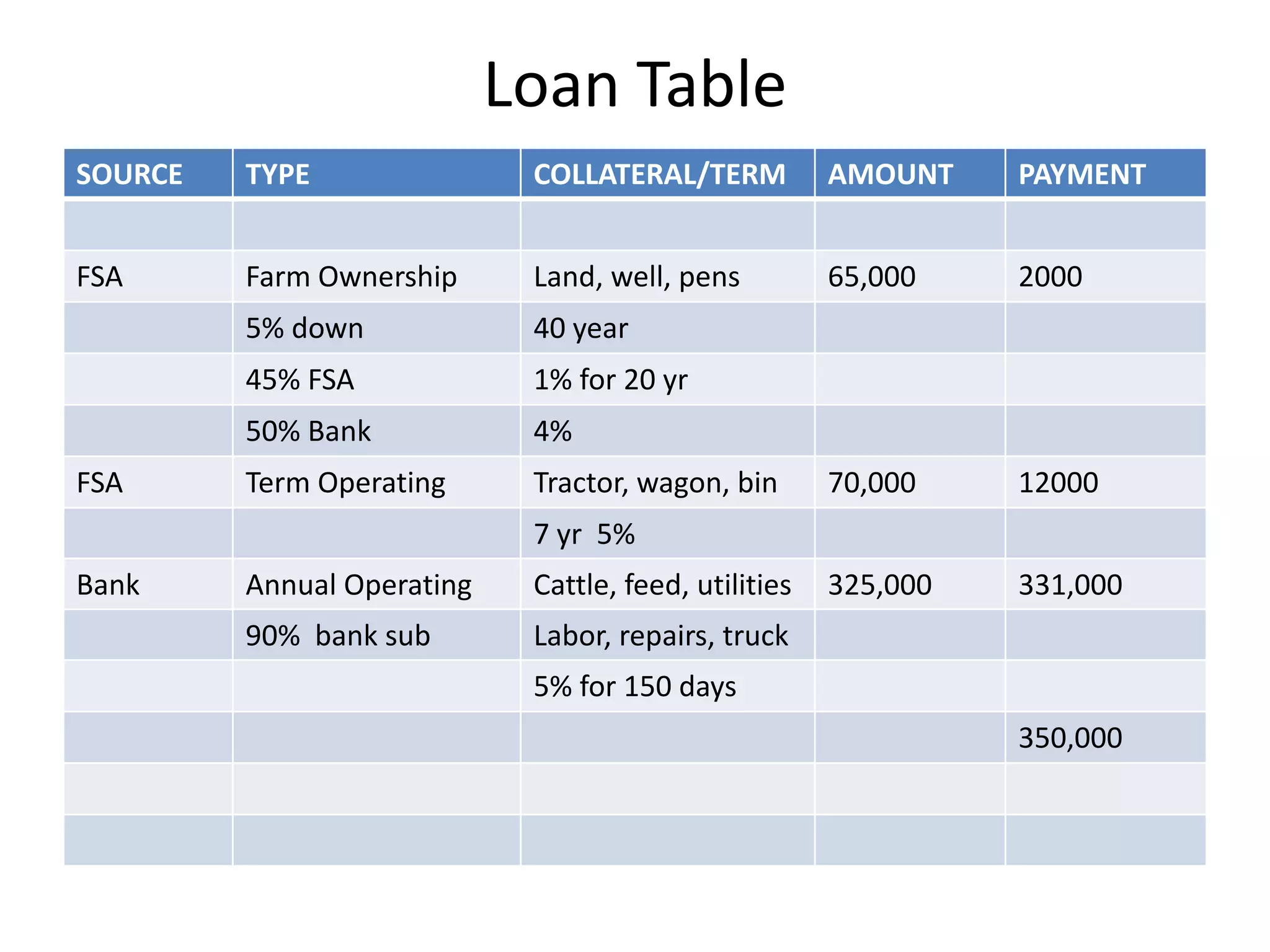
Loan Table
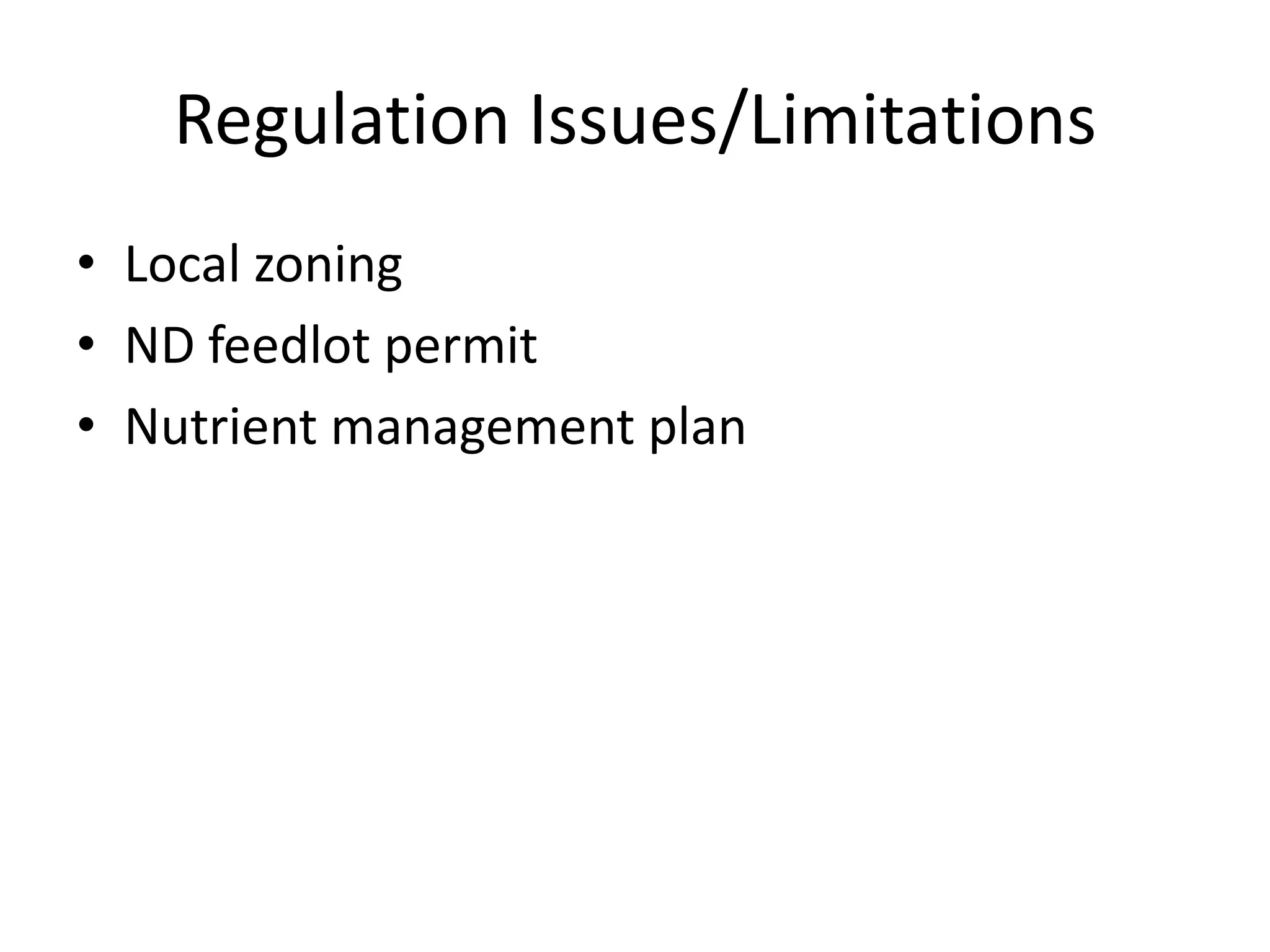
Regulation Issues/LimitationsLocal zoningND feedlot permitNutrient management plan
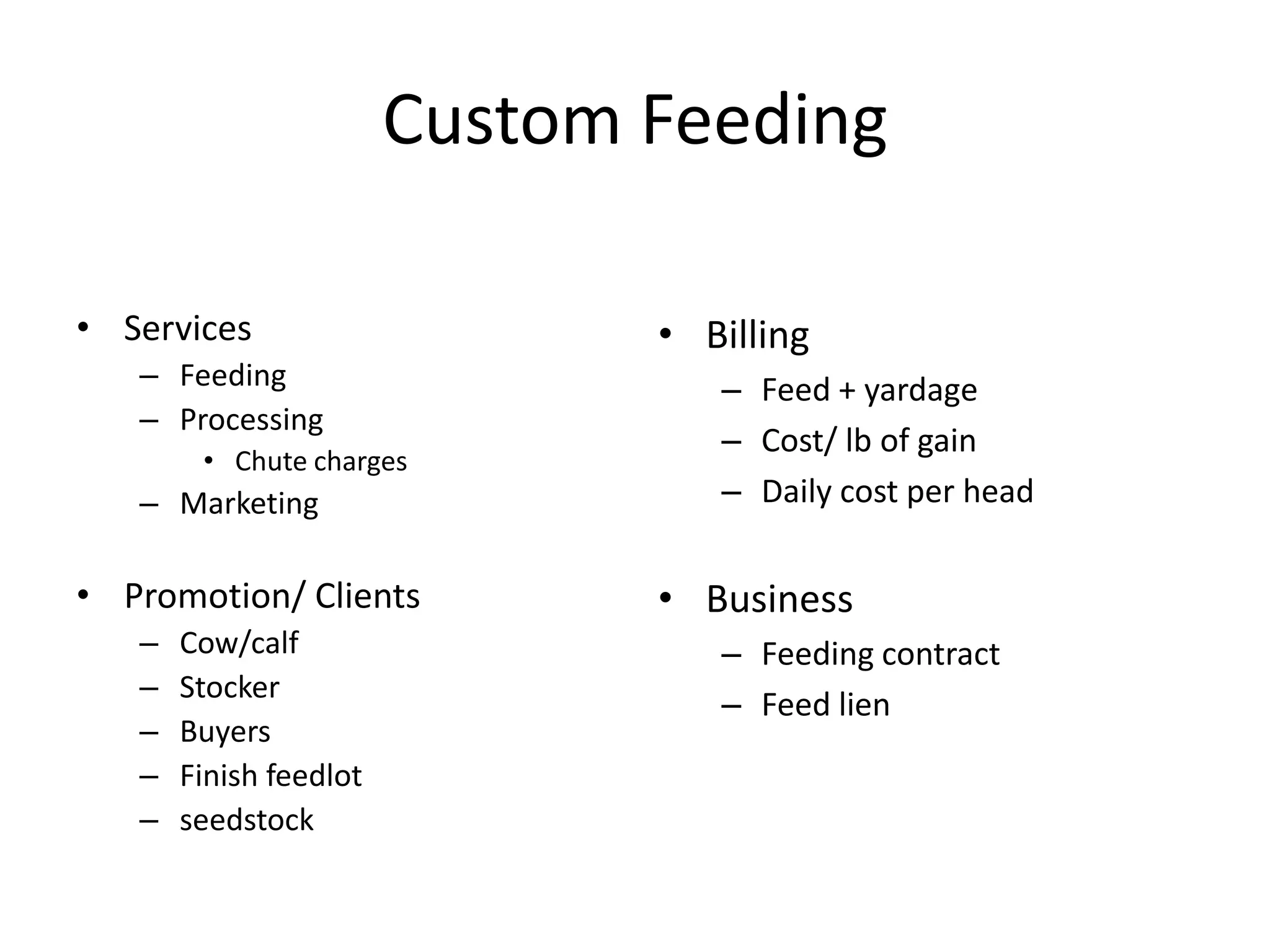
Custom Feeding ServicesFeedingProcessingChute chargesMarketingPromotion/ ClientsCow/calf StockerBuyersFinish feedlotseedstockBillingFeed + yardageCost/ lb of gainDaily cost per headBusinessFeeding contractFeed lien
Adopt a Professional AttitudeYou’re in the customer service businessBe preciseBe timelyBe thoroughBe knowledgeablePay attention to detailsCattle care is a responsibility
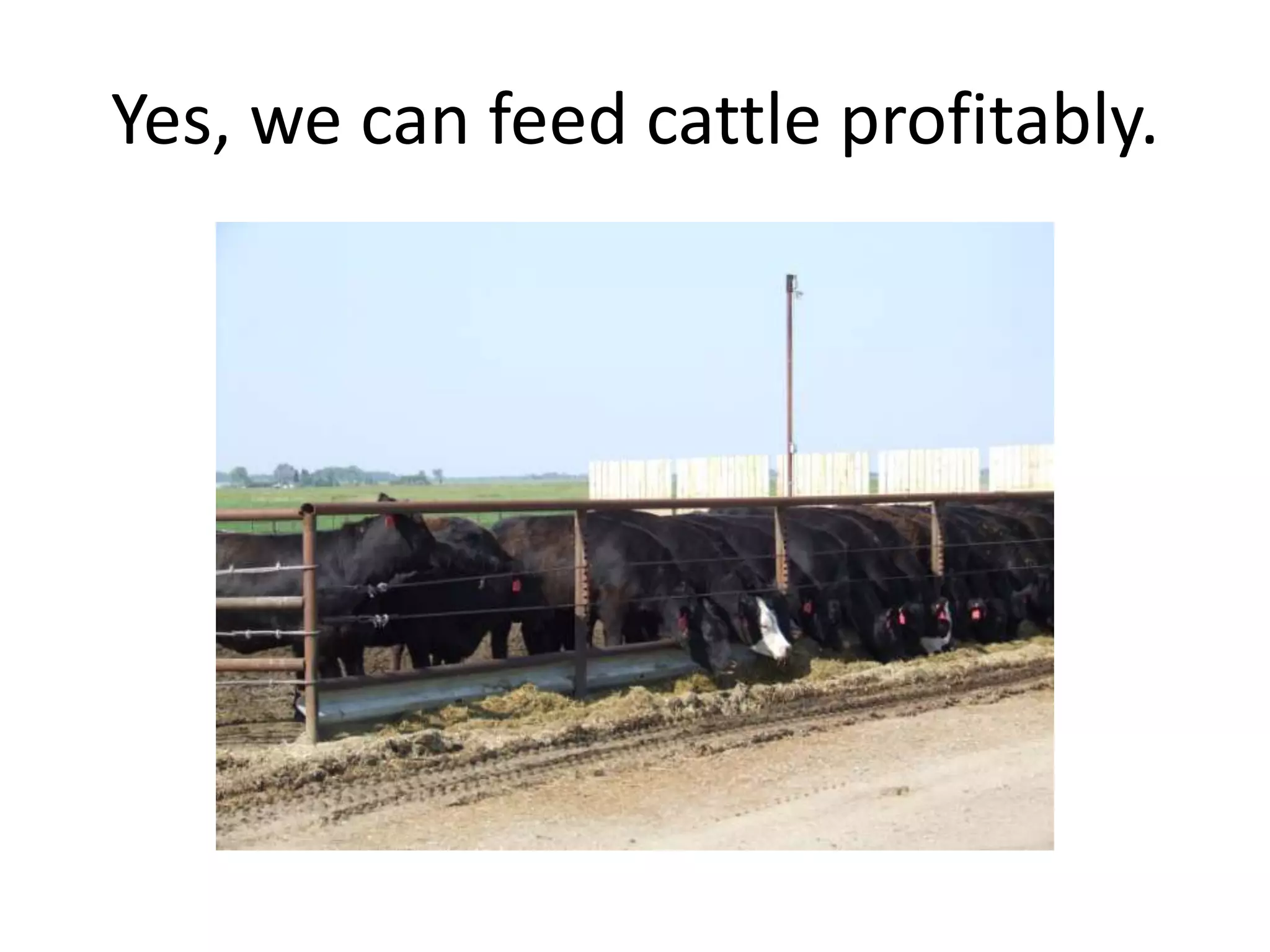
Yes, we can feed cattle profitably.

Do We Want to Feed Cattle?

  • 1.
    CATTLE FEEDINGDo wewant to feed cattle?What kind of cattle feeding ?Business Planning steps?
  • 2.
    Cattle Feeding - has a positive and modest impact on the communityMore Feeding - because better markets for larger lots of uniform preconditioned calvesAdd and capture value in superior cattleutilization of damaged grains and byproduct feedskeep more people involved in agricultureEconomic activity and diversification
  • 3.
    Cattle Feeding - competitive potentially rewarding enterprise with associated riskFeeding - because Personal interest, knowledge and/or experienceComplimentary to other agricultural enterprisesUtilization of available resourceOpportunity for expansion of operation to support next generationEconomic profits
  • 4.
    ND Adult FarmManagement
  • 5.
    Industry TrendsHigh grainprices – increased byproductsLow cattle inventory- high pricesExcess feeding capacity – shift northContinued concentrationProduct BrandingGrowing niche markets (natural, organic,…)Added documentation (PVP, ID, …) Alliances (supply chain integration)Greater RegulationInternational Competition
  • 6.
    Cattle Feeding RequirementsSourceof cattleCompetitive reliable feedFavorable climate – temps, rainfallCapitol/financingLand/facilities/equipment/infrastructureInterest and knowledgeServices – vet, trucking, feedMarketsLabor
  • 7.
    Important Business ConceptsCompetitiveadvantageExamplesLand best suited to corn and alfalfa crops best marketed through finish feedlotFeed base in range country supports custom heifer developmentLow cost land reclamation forage and proximity to DDGS supports custom cattle winteringEconomy of scaleOverheadEquipmentFacilitiesMarketingPurchasingExamplesJBS Five Rivers 960,000 feeding capacity 13 locations
  • 8.
  • 9.
    Economies of ScaleCapitalCost Summary (NDSU 1997)
  • 10.
    How about ourWinter Weather?ND weather?Greater intake and maintenancePerformance can be highWind protection and bedding criticalSnow and storm work, preparations, and costIdeal feeding climate in much of the rest of the year
  • 11.
    Local Feed ResourcesLargefarming base Cheapest hay in countryMany opportunity feedsscreenings, damaged crops, feed barleyMidds, DDGS, WDGS, oil seed meal, pressed pulpCRP hay, stover, aftermath
  • 12.
  • 13.
    Cattle/Feeding AlternativesWintering stockcowsFeeding cull cowsgrowing/developing heifersBull test/ developmentWintering calves for grazingPreconditioning /backgroundingFinishing calf fedsFinishing yearlingsDry lot cow calf
  • 14.
    Business planningAnalyze abusiness/enterprise idea on paper including definition of production, financial requirements, associated risks and projected returnsInformal to DocumentTakes time, research, and honesty Planning to evaluate alternativesAccess to credit
  • 15.
    NDSU Plotting theCoarse – planning prices
  • 16.
  • 17.
    Example: SituationDueto high grain prices feed yards are looking and offering good value for heavier cattleMedium quality hay has consistently been available and at a cost of about $50/tCurrent farming operation includes a shop, well, utilities, tractors, trucks and equipment available for seasonal feeding5-6 cwt calves are available through local sale barns and direct from Oct-Jan, with considerable discounts on heifers in fall diminishing by grazing/breeding season
  • 18.
    Description of BusinessTypeof business, structure of business, size and scale, ownership of cattle, expectations of performance, days on feed, marketing endpoint and method, custom feeding arrangements
  • 19.
    Example: Business DescriptionConstructa 500 head calf feeding facility to background fall purchased heifer calves Feed hay based ration supplemented with local grain screenings, feed grains, and byproductMarket heavy feeder heifers in Jan-Feb, and light stocker heifers and replacement heifers in Mar-AprPurchase feeding/handling equipmentEmploy seasonal hourly labor
  • 20.
    Operational PlanFeeding programRationsand feeding protocolsFeed sourcing and costsPerformance targets and breakevenHealth programTreatment and vaccination protocolsDeath loss and treatment cost Procurement-Marketing plansTarget weight and dateLocation and methodLaborNeeds and costs
  • 21.
    Example: Operational PlansHealthVaccination4way viral7 way clostridialBangsTreatmentTreat 10%$20/HDDeath loss1%Procurement - MarketingNov buy 500 heifers550 lbs @ $1.20Mar sell 250 heifers800 lbs @ $1.05Mar sell 240Heifers850 lbs @ $900Labor150 days – 2.5hr/day
  • 22.
  • 23.
    financialsBudget BECapital investment/debtserviceIncome statementBalance sheetCash flow projectionLender assistanceNDSU Extension Adult farm management
  • 25.
  • 26.
  • 27.
  • 28.
  • 29.
    Financing IssuesLoan StructureAnnualfeeder loans (cattle and feed) 75%Term operating (equipment) 65%Long term real estate (land, facility, site) 60%Equity-collateralCo sign Equip cost shareFSA guarantee / subordinationCustom feedInterest RatesBeginning farmerSocially disadvantaged
  • 30.
  • 31.
    Regulation Issues/LimitationsLocal zoningNDfeedlot permitNutrient management plan
  • 32.
    Custom Feeding ServicesFeedingProcessingChutechargesMarketingPromotion/ ClientsCow/calf StockerBuyersFinish feedlotseedstockBillingFeed + yardageCost/ lb of gainDaily cost per headBusinessFeeding contractFeed lien
  • 33.
    Adopt a ProfessionalAttitudeYou’re in the customer service businessBe preciseBe timelyBe thoroughBe knowledgeablePay attention to detailsCattle care is a responsibility
  • 34.
    Yes, we canfeed cattle profitably.