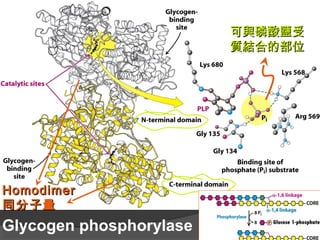
Muscle Glycogen Phosphorylase
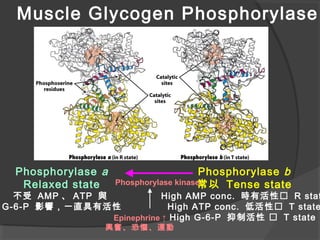
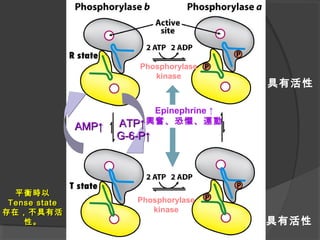
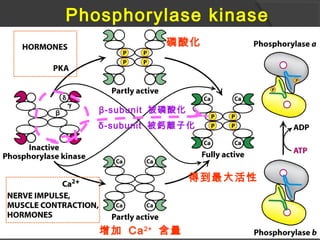
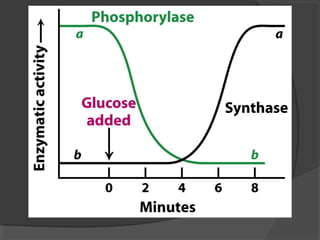
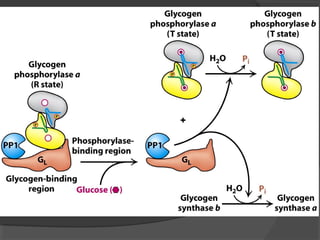
Phosphorylasea
Relaxed state
不受 AMP 、 ATP 與
G-6-P 影響,一直具有活性
Phosphorylase b
常以 Tense state
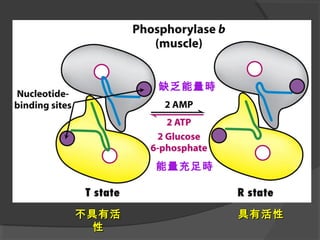
High AMP conc. 時有活性 R stat
High ATP conc. 低活性 T state
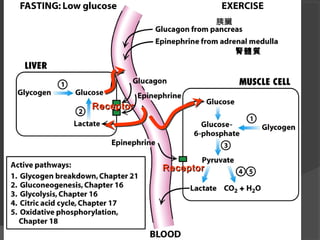
High G-6-P 抑制活性 T stateEpinephrine ↑
興奮、恐懼、運動
Phosphorylase kinase
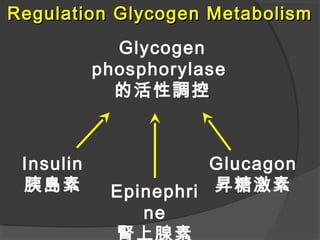
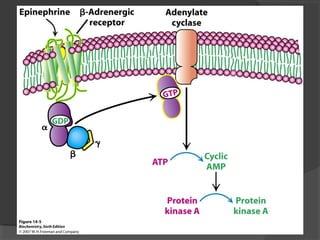
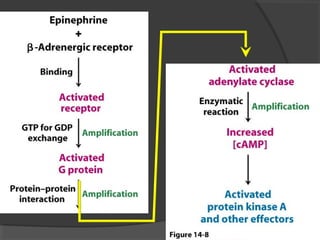
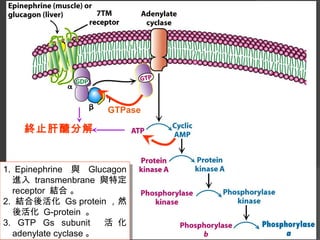
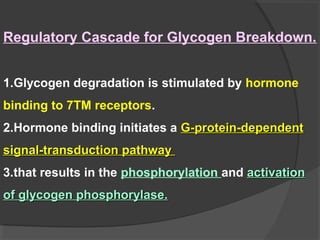
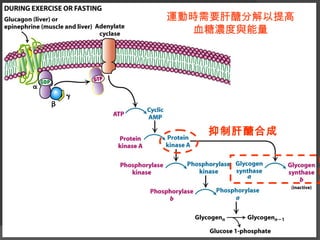
Regulatory Cascade forGlycogen Breakdown.
1.Glycogen degradation is stimulated by hormone
binding to 7TM receptors.
2.Hormone binding initiates a G-protein-dependentG-protein-dependent
signal-transduction pathwaysignal-transduction pathway
3.that results in the phosphorylation and activationactivation
of glycogen phosphorylase.of glycogen phosphorylase.
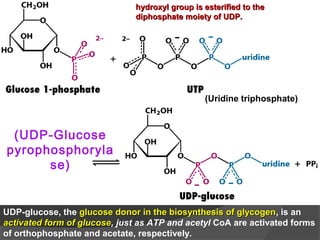
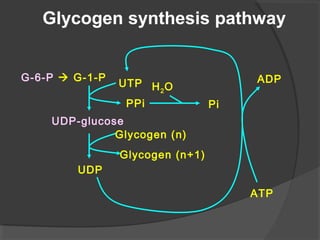
(Uridine triphosphate)
(UDP-Glucose
pyrophosphoryla
se)
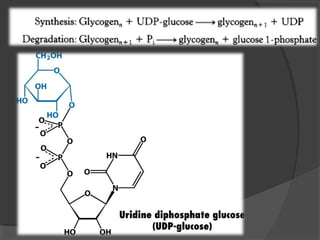
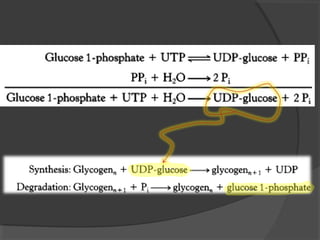
UDP-glucose, theglucose donor in the biosynthesis of glycogenglucose donor in the biosynthesis of glycogen, is an
activated form of glucoseactivated form of glucose, just as ATP and acetyl CoA are activated forms
of orthophosphate and acetate, respectively.
hydroxyl group is esterified to thehydroxyl group is esterified to the
diphosphate moiety of UDP.diphosphate moiety of UDP.
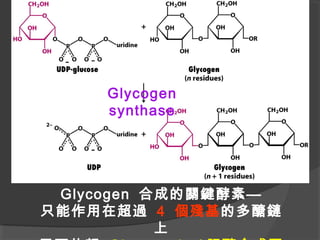
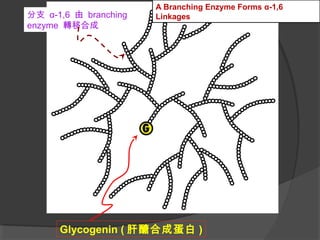
Glycogenin ( 肝醣合成蛋白)
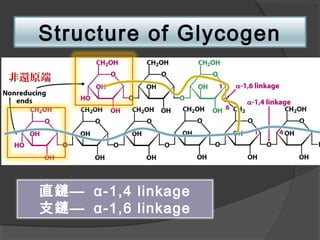
分支 α-1,6 由 branching
enzyme 轉移合成
A Branching Enzyme Forms α-1,6
Linkages
49.
Branching is importantbecause it increases
the solubility of glycogen.
Furthermore, branching creates a large number
of terminal residues, the sites of action of
glycogen phosphorylase and synthase
Thus, branching increases thebranching increases the rate of glycogen
synthesis and degradation.
50.
Glycogen branchingrequires a
single transferase activity.
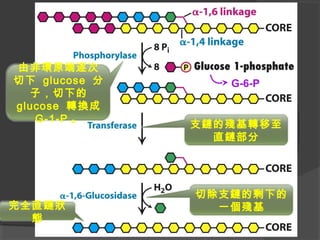
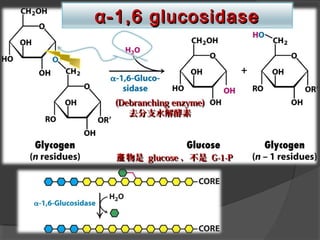
Glycogen debranching requires
two enzyme activities: a transferase and
an α -1,6 glucosidase.
51.
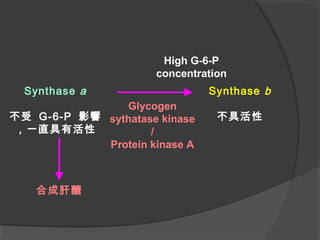
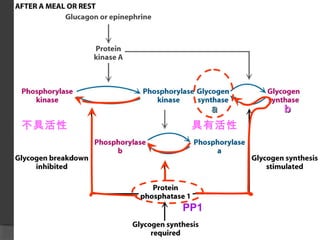
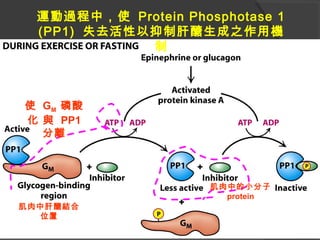
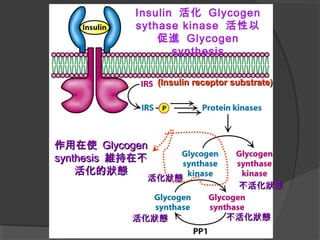
Synthase a
不受 G-6-P影響
,一直具有活性
Synthase b
不具活性
Glycogen
sythatase kinase
/
Protein kinase A
High G-6-P
concentration
合成肝醣