DNA Barcoding and
Undergraduate Science
A Case Study
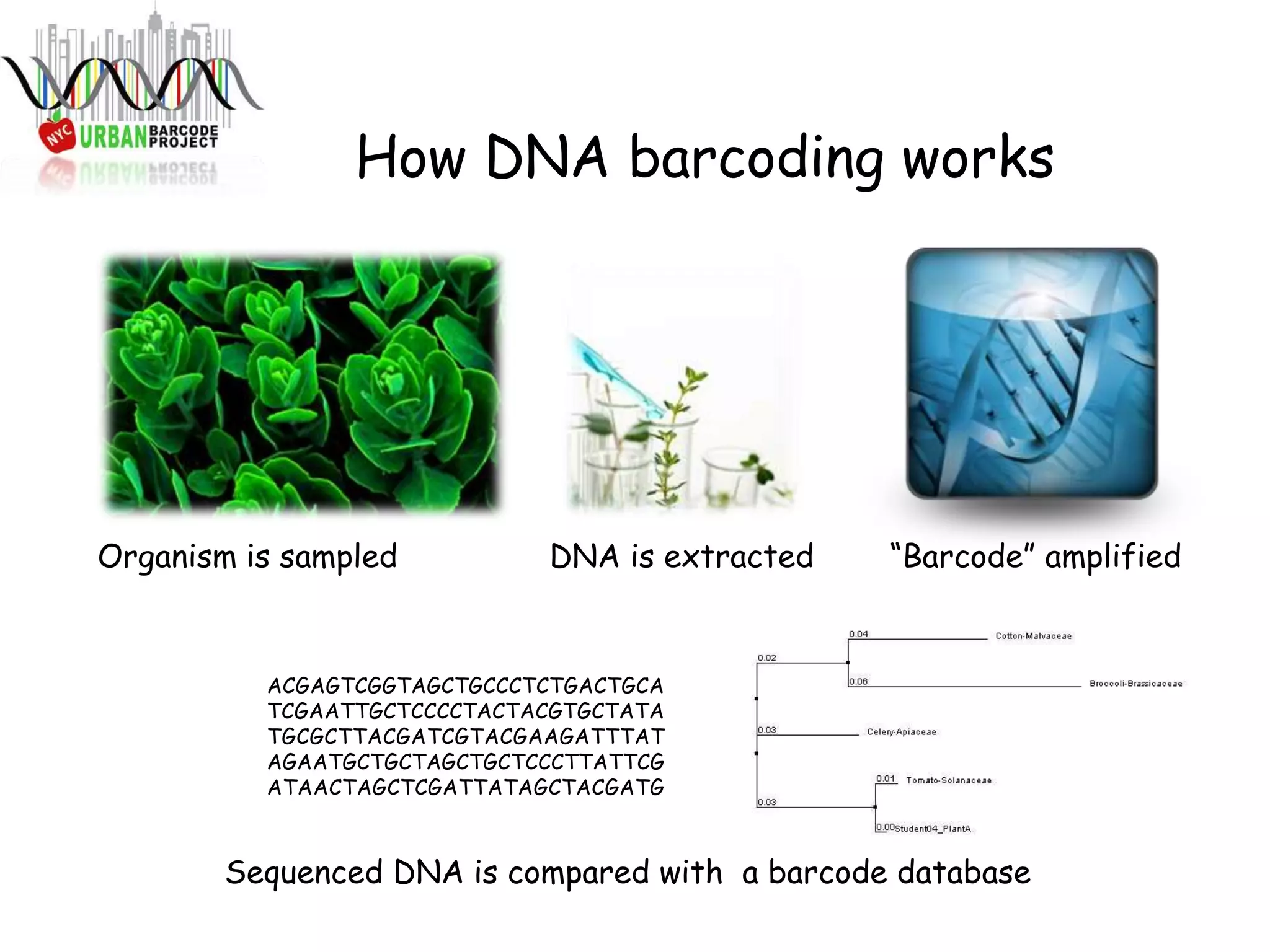
ACGAGTCGGTAGCTGCCCTCTGACTGCA
TCGAATTGCTCCCCTACTACGTGCTATA
TGCGCTTACGATCGTACGAAGATTTAT
AGAATGCTGCTAGCTGCTCCCTTATTCG
ATAACTAGCTCGATTATAGCTACGATG
Organism is sampled DNA is extracted “Barcode” amplified
Sequenced DNA is compared with a barcode database
How DNA barcoding works
7/31/2014 3
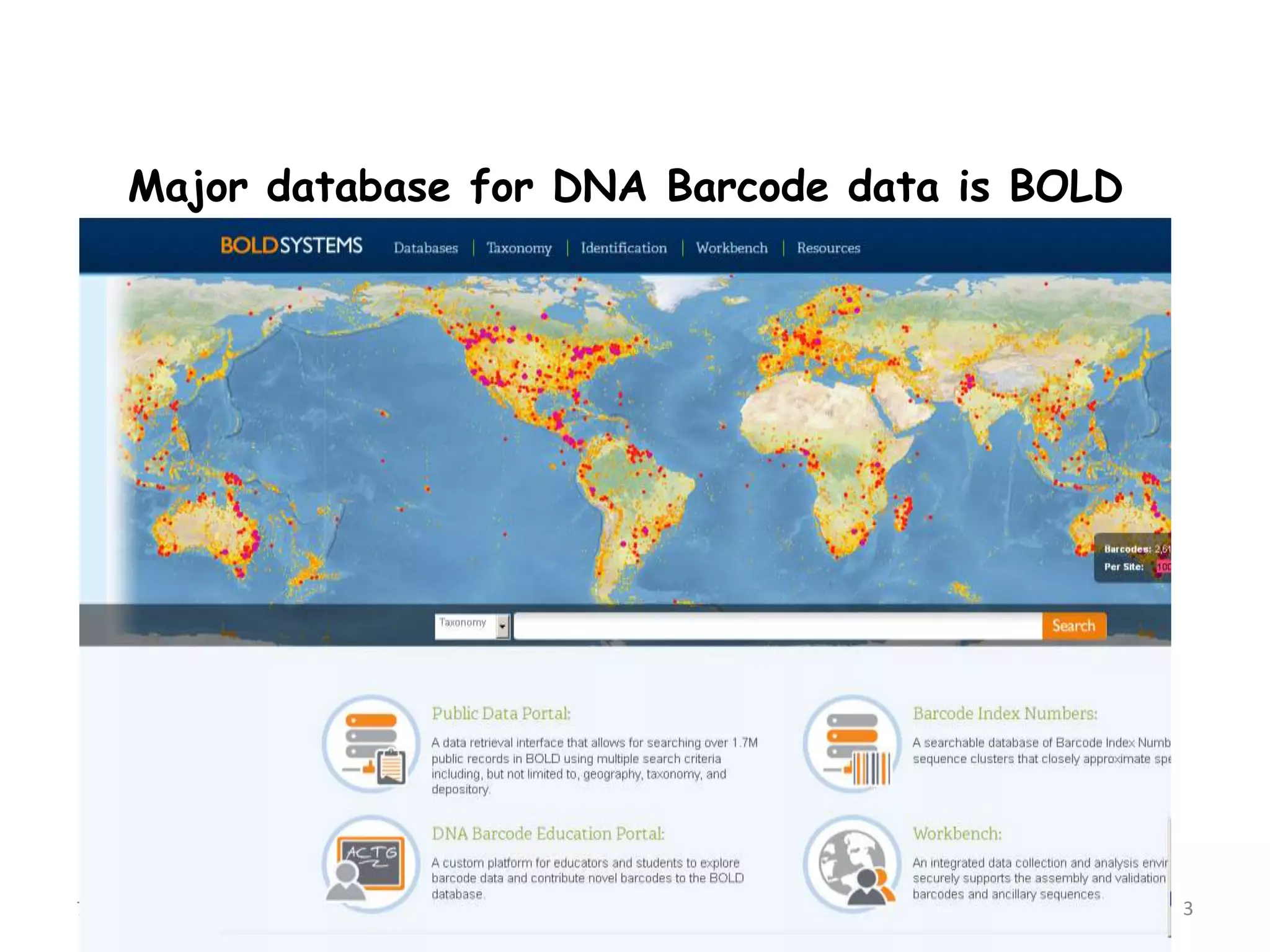
Major database for DNA Barcode data is BOLD
DNA Barcoding-Why Do it?
•Species are vanishing quickly-barcoding allows non-experts
to identify species without needing to be a trained taxonomist
and in a short period of time
•Allows us to document all species in an ecosystem relatively
quickly, helps with conservation efforts
•Is now being used to test the labelling on food products and
to aid quarantine efforts to stop the trade in endangered
species
31/07/2014 4
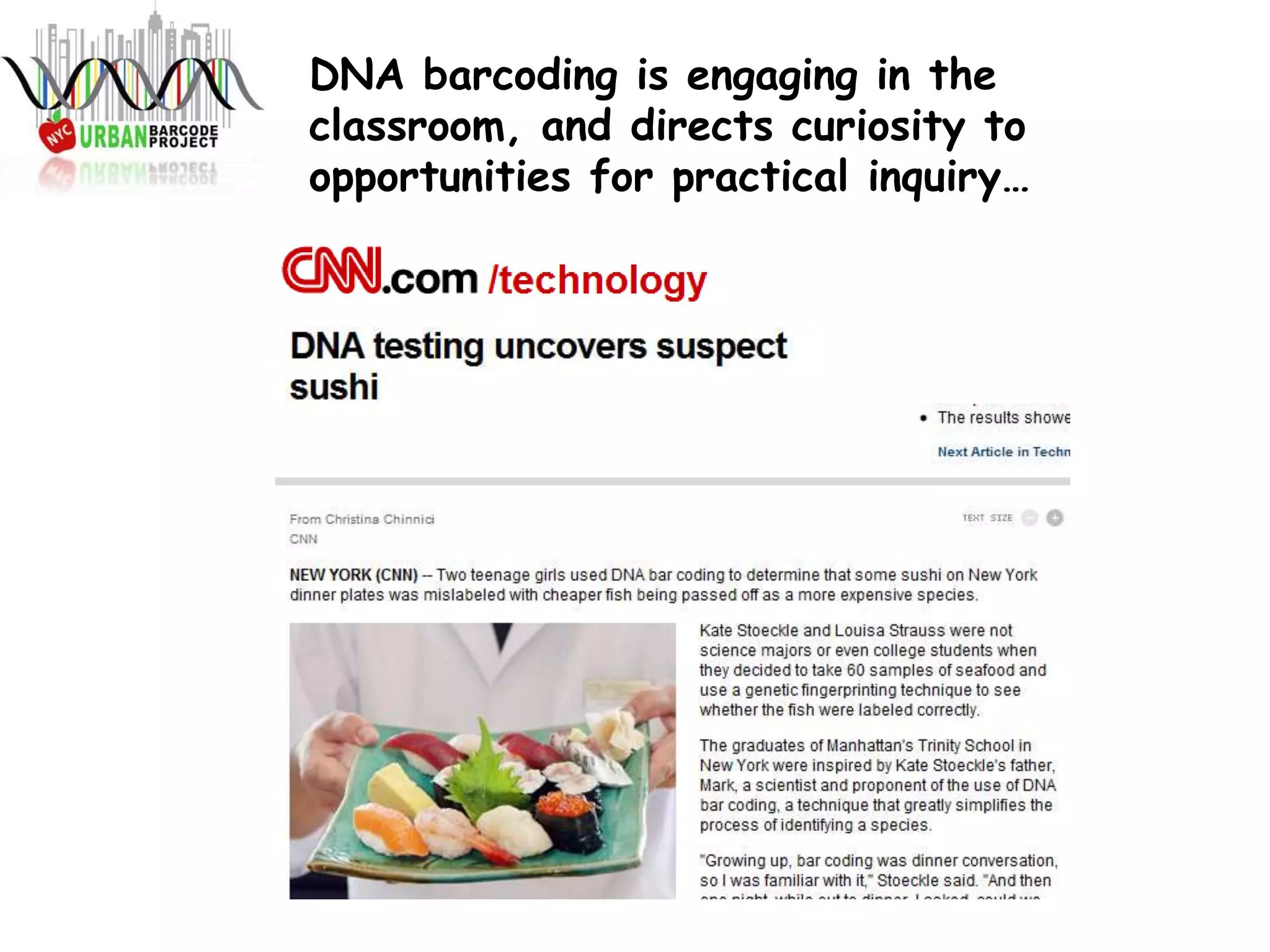
DNA barcoding is engaging in the
classroom, and directs curiosity to
opportunities for practical inquiry…
7/31/2014 6
Education and DNA Barcode projects in the USA
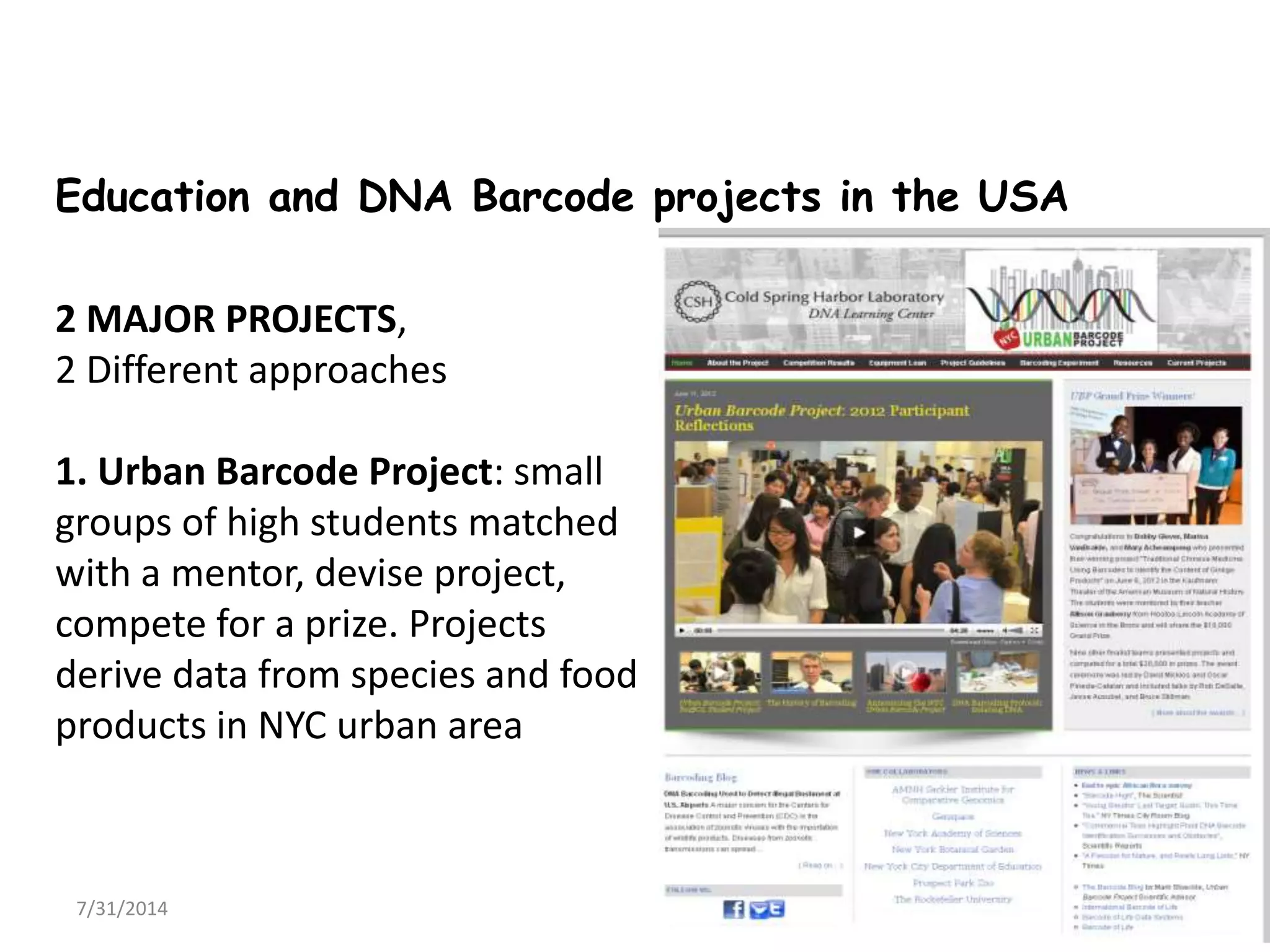
2 MAJOR PROJECTS,
2 Different approaches
1. Urban Barcode Project: small
groups of high students matched
with a mentor, devise project,
compete for a prize. Projects
derive data from species and food
products in NYC urban area
7/31/2014 7
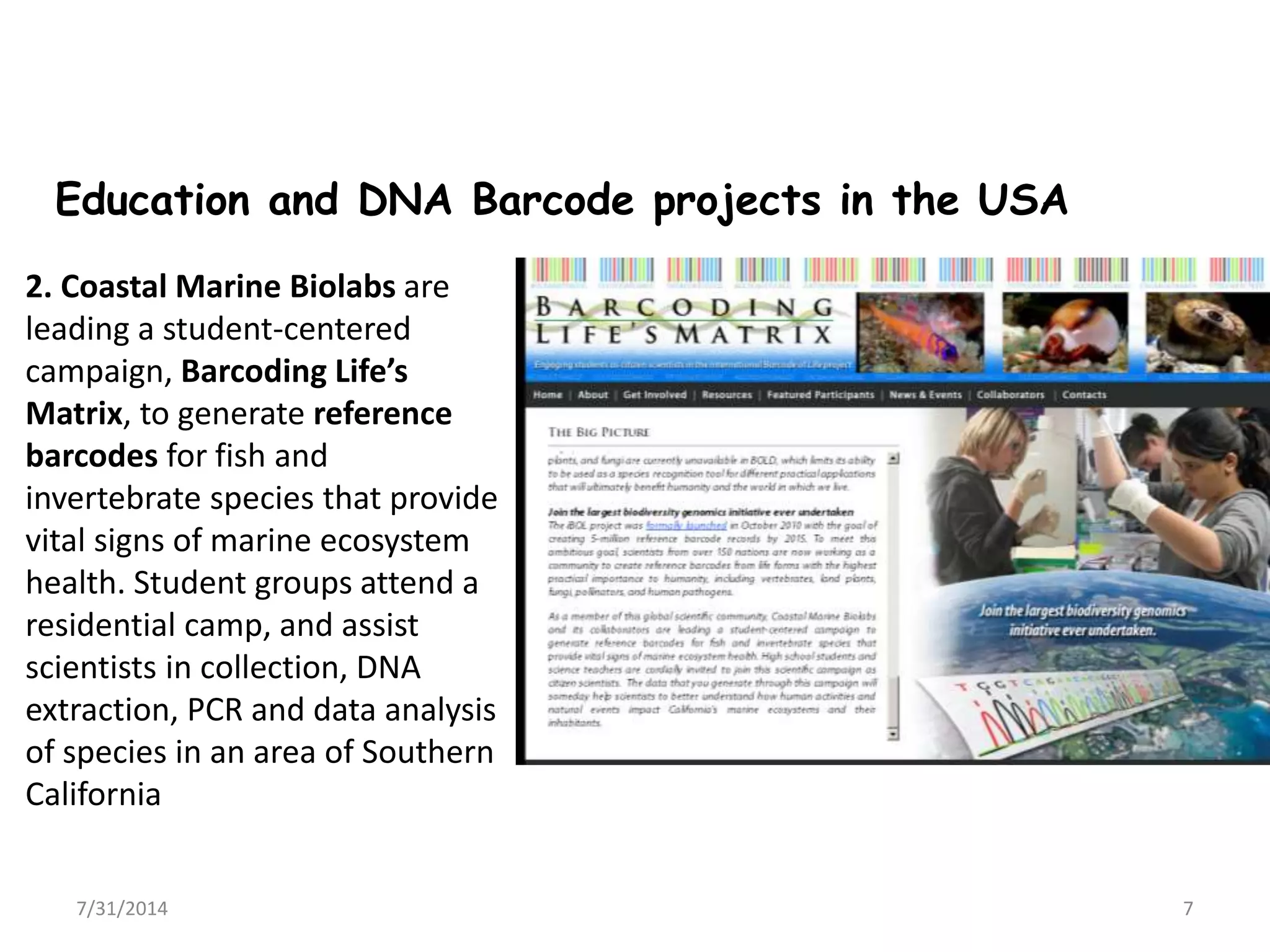
2. Coastal Marine Biolabs are
leading a student-centered
campaign, Barcoding Life’s
Matrix, to generate reference
barcodes for fish and
invertebrate species that provide
vital signs of marine ecosystem
health. Student groups attend a
residential camp, and assist
scientists in collection, DNA
extraction, PCR and data analysis
of species in an area of Southern
California
Education and DNA Barcode projects in the USA
31 July 2014 8
Outline of Holmesglen Projects
Students doing Diploma of Laboratory Technology (2 years).
leads to jobs as lab techs or research assistants, or students
go on to higher degrees.
Ages ~19-45.
Carried out over 8 weeks. Printed project booklet given out to
each student.
Assessed by presentation at departmental seminar and
printed report in scientific report format
Outline of Holmesglen Projects .
Holmesglen has incorporated elements of both the USA projects
2012 our projects similar to the NYC Urban Barcode Project.
2013 students spent an extended period in a remote area making
collections, project more similar to CMB
2014………….??
31/07/2014 9
Week 1. Brainstorming Session
Decide on a question they would like to answer and draw
up a plan for how to do this. (eg what chillie species are
grown and sold in Melbourne, what species can be found
in a rainforest area in the Rubicon state forest?)
They should also develop a hypothesis (eg that you will
find a variety of species labeled as “flake”. flake is a
generic name for shark in Australia.)
31/07/2014 10
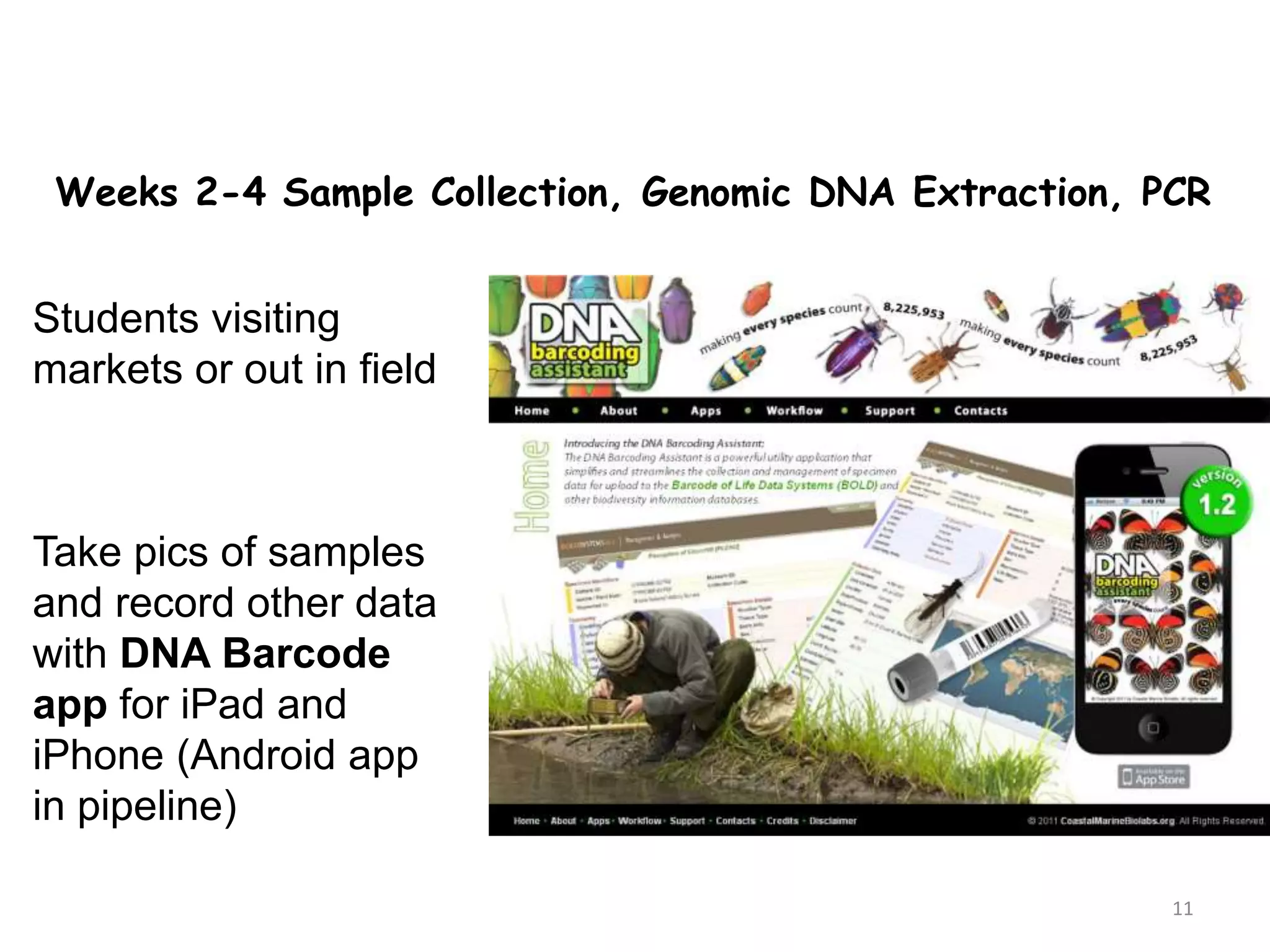
Weeks 2-4 Sample Collection, Genomic DNA Extraction, PCR
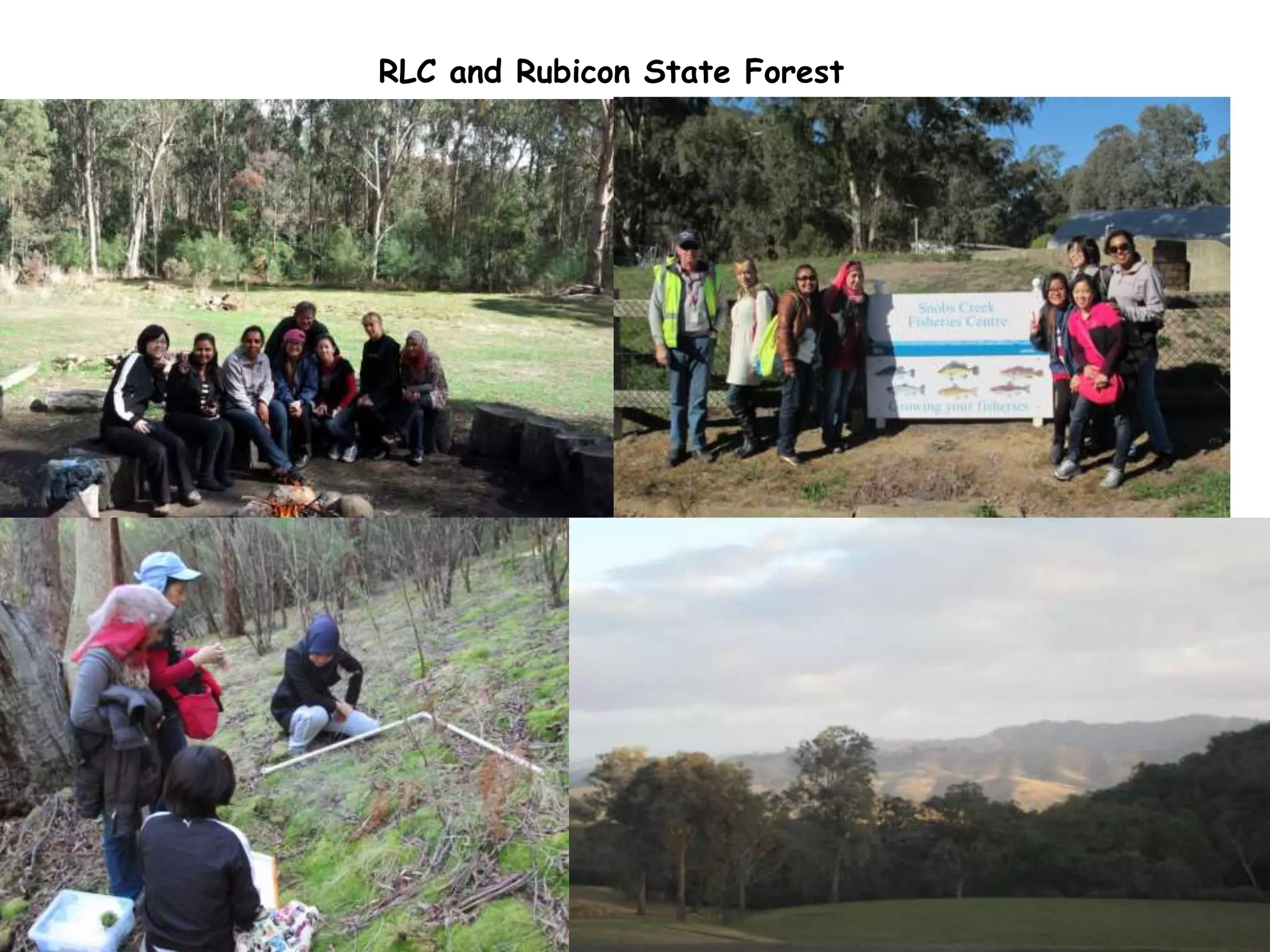
Students visiting
markets or out in field
Take pics of samples
and record other data
with DNA Barcode
app for iPad and
iPhone (Android app
in pipeline)
11
7/31/2014 12
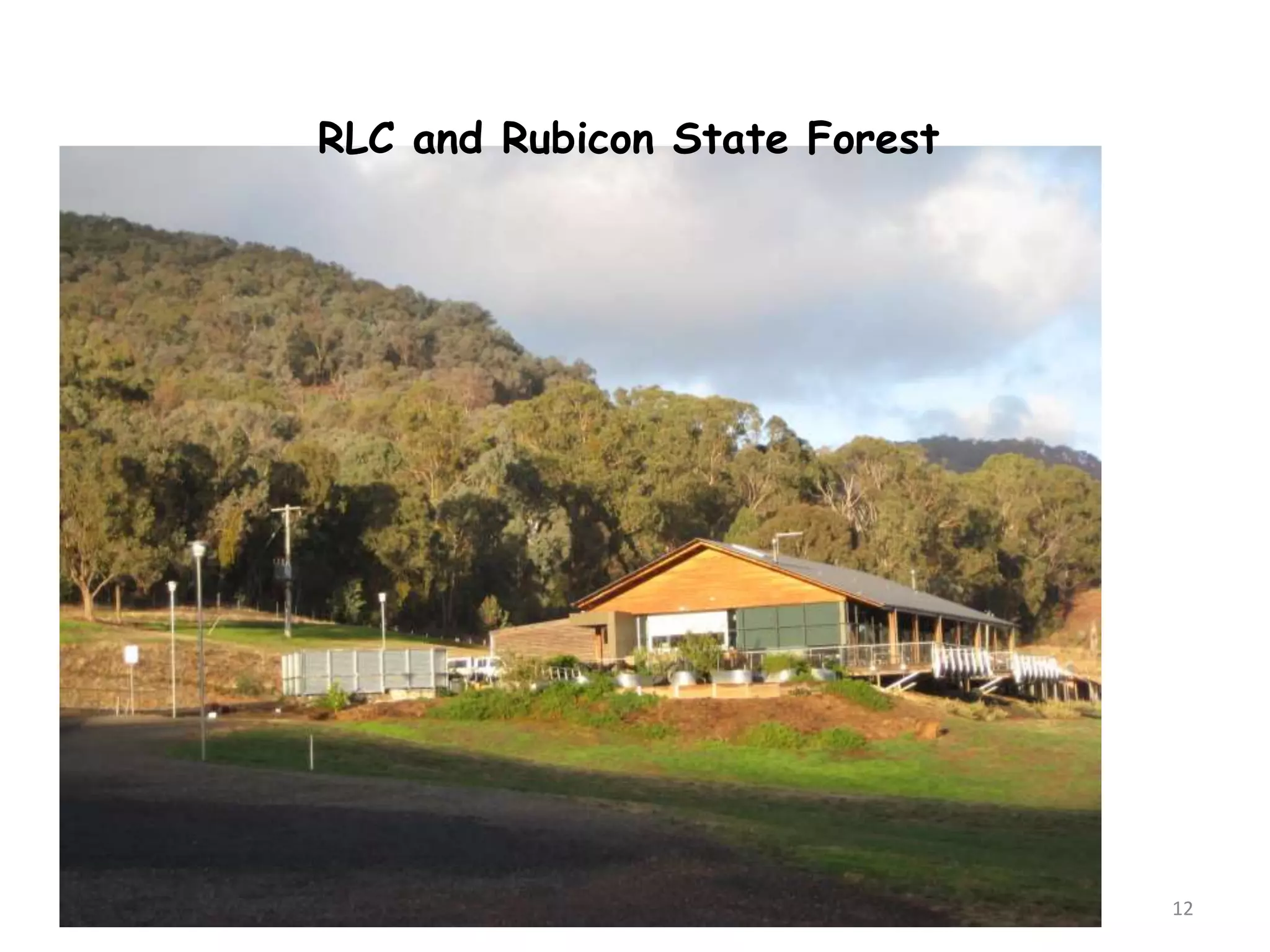
RLC and Rubicon State Forest
7/31/2014 13
RLC and Rubicon State Forest
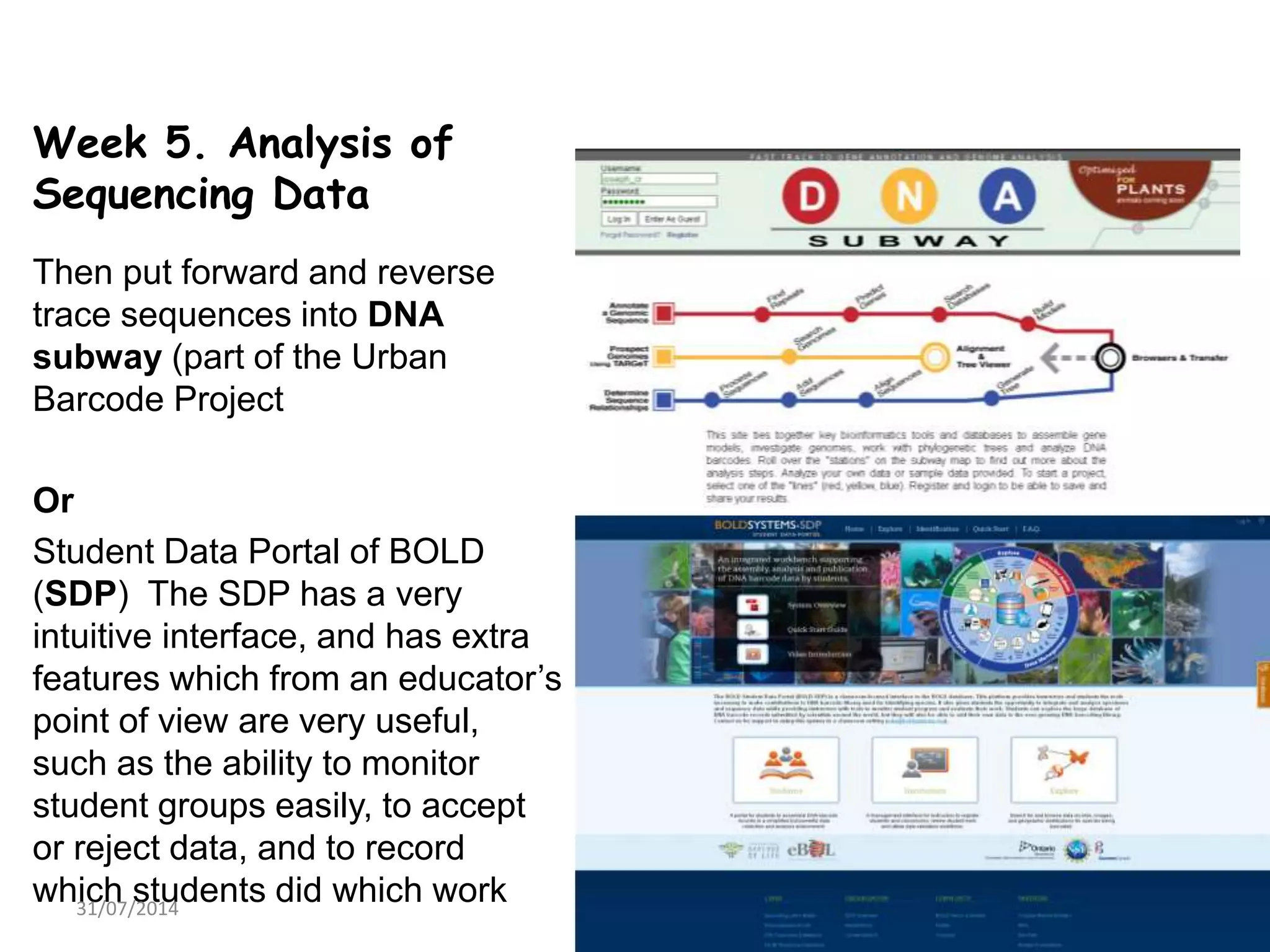
Week 5. Analysis of
Sequencing Data
Then put forward and reverse
trace sequences into DNA
subway (part of the Urban
Barcode Project
Or
Student Data Portal of BOLD
(SDP) The SDP has a very
intuitive interface, and has extra
features which from an educator’s
point of view are very useful,
such as the ability to monitor
student groups easily, to accept
or reject data, and to record
which students did which work31/07/2014 14
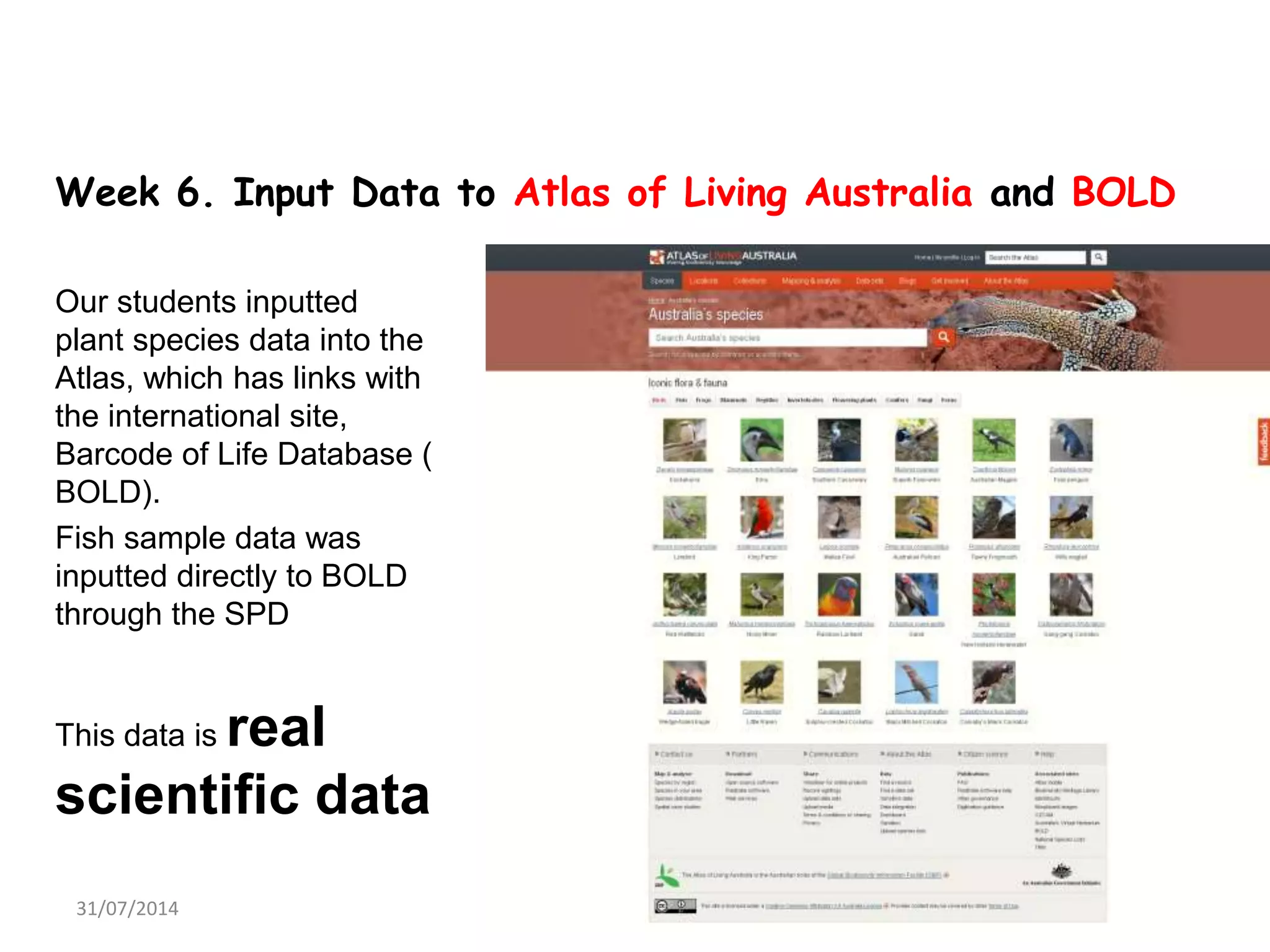
Week 6. Input Data to Atlas of Living Australia and BOLD
Our students inputted
plant species data into the
Atlas, which has links with
the international site,
Barcode of Life Database (
BOLD).
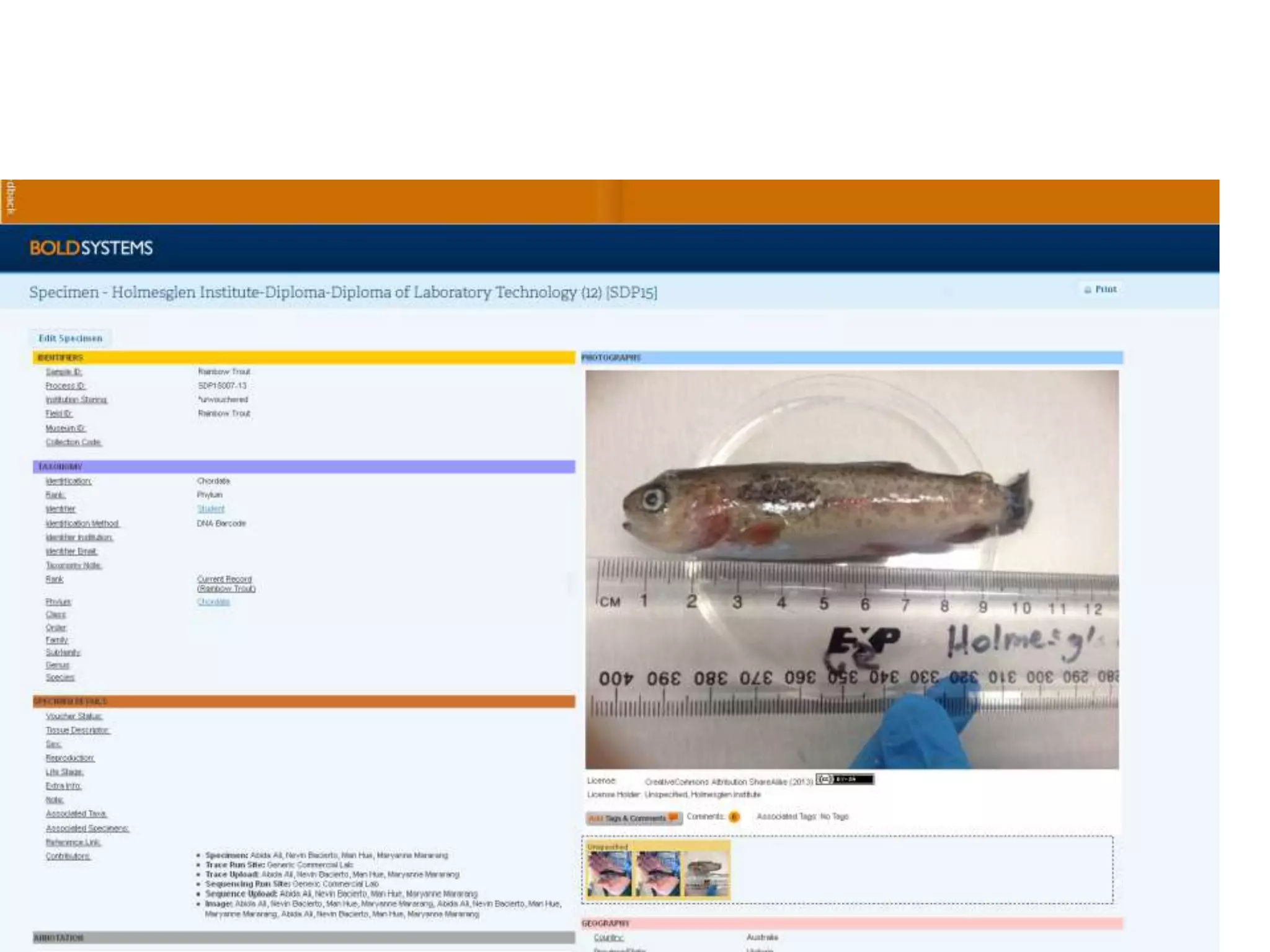
Fish sample data was
inputted directly to BOLD
through the SPD
This data is real
scientific data
31/07/2014 15
7/31/2014 16
Week 8. Seminar Presentations
Final seminar: Invite other staff and students, people
from outside school
My students complained that the audience wasn’t big
enough!
31/07/2014 17
Holmesglen Barcoding
Website
31/07/2014 18
Educational Benefits!
•Student engagement, motivation
•Learning to do real science
•Resume building
•Using a range of skills (PBL) (chemistry, maths)
•Independence, problem solving
31/07/2014 19

Dna Barcoding and Undergraduate Science

  • 1.
    DNA Barcoding and UndergraduateScience A Case Study
  • 2.
    ACGAGTCGGTAGCTGCCCTCTGACTGCA TCGAATTGCTCCCCTACTACGTGCTATA TGCGCTTACGATCGTACGAAGATTTAT AGAATGCTGCTAGCTGCTCCCTTATTCG ATAACTAGCTCGATTATAGCTACGATG Organism is sampledDNA is extracted “Barcode” amplified Sequenced DNA is compared with a barcode database How DNA barcoding works
  • 3.
    7/31/2014 3 Major databasefor DNA Barcode data is BOLD
  • 4.
    DNA Barcoding-Why Doit? •Species are vanishing quickly-barcoding allows non-experts to identify species without needing to be a trained taxonomist and in a short period of time •Allows us to document all species in an ecosystem relatively quickly, helps with conservation efforts •Is now being used to test the labelling on food products and to aid quarantine efforts to stop the trade in endangered species 31/07/2014 4
  • 5.
    DNA barcoding isengaging in the classroom, and directs curiosity to opportunities for practical inquiry…
  • 6.
    7/31/2014 6 Education andDNA Barcode projects in the USA 2 MAJOR PROJECTS, 2 Different approaches 1. Urban Barcode Project: small groups of high students matched with a mentor, devise project, compete for a prize. Projects derive data from species and food products in NYC urban area
  • 7.
    7/31/2014 7 2. CoastalMarine Biolabs are leading a student-centered campaign, Barcoding Life’s Matrix, to generate reference barcodes for fish and invertebrate species that provide vital signs of marine ecosystem health. Student groups attend a residential camp, and assist scientists in collection, DNA extraction, PCR and data analysis of species in an area of Southern California Education and DNA Barcode projects in the USA
  • 8.
    31 July 20148 Outline of Holmesglen Projects Students doing Diploma of Laboratory Technology (2 years). leads to jobs as lab techs or research assistants, or students go on to higher degrees. Ages ~19-45. Carried out over 8 weeks. Printed project booklet given out to each student. Assessed by presentation at departmental seminar and printed report in scientific report format
  • 9.
    Outline of HolmesglenProjects . Holmesglen has incorporated elements of both the USA projects 2012 our projects similar to the NYC Urban Barcode Project. 2013 students spent an extended period in a remote area making collections, project more similar to CMB 2014………….?? 31/07/2014 9
  • 10.
    Week 1. BrainstormingSession Decide on a question they would like to answer and draw up a plan for how to do this. (eg what chillie species are grown and sold in Melbourne, what species can be found in a rainforest area in the Rubicon state forest?) They should also develop a hypothesis (eg that you will find a variety of species labeled as “flake”. flake is a generic name for shark in Australia.) 31/07/2014 10
  • 11.
    Weeks 2-4 SampleCollection, Genomic DNA Extraction, PCR Students visiting markets or out in field Take pics of samples and record other data with DNA Barcode app for iPad and iPhone (Android app in pipeline) 11
  • 12.
    7/31/2014 12 RLC andRubicon State Forest
  • 13.
    7/31/2014 13 RLC andRubicon State Forest
  • 14.
    Week 5. Analysisof Sequencing Data Then put forward and reverse trace sequences into DNA subway (part of the Urban Barcode Project Or Student Data Portal of BOLD (SDP) The SDP has a very intuitive interface, and has extra features which from an educator’s point of view are very useful, such as the ability to monitor student groups easily, to accept or reject data, and to record which students did which work31/07/2014 14
  • 15.
    Week 6. InputData to Atlas of Living Australia and BOLD Our students inputted plant species data into the Atlas, which has links with the international site, Barcode of Life Database ( BOLD). Fish sample data was inputted directly to BOLD through the SPD This data is real scientific data 31/07/2014 15
  • 16.
  • 17.
    Week 8. SeminarPresentations Final seminar: Invite other staff and students, people from outside school My students complained that the audience wasn’t big enough! 31/07/2014 17
  • 18.
  • 19.
    Educational Benefits! •Student engagement,motivation •Learning to do real science •Resume building •Using a range of skills (PBL) (chemistry, maths) •Independence, problem solving 31/07/2014 19