DIY Science Copyright Science World British Columbia 2014 Page 1 of 4
February 21, 2014 Questions? Brian Anderson – banderson@scienceworld.ca, Lyndsay Fraser – lfraser@scienceworld.ca
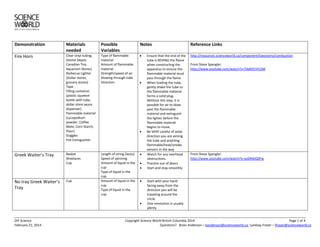
Demonstration Materials
needed
Possible
Variables
Notes Reference Links
Fire Horn Clear vinyl tubing
(Home Depot,
Canadian Tire,
Aquarium Stores)
Barbecue Lighter
(Dollar stores,
grocery stores)
Tape
Filling container
(plastic squeeze
bottle with tube,
dollar store sauce
dispenser)
Flammable material
(Lycopodium
powder, Coffee
Mate, Corn Starch,
Flour)
Goggles
Fire Extinguisher
Type of flammable
material
Amount of flammable
material
Strength/speed of air
blowing through tube
Direction
 Ensure that the end of the
tube is BEHIND the flame
when constructing the
apparatus to ensure the
flammable material must
pass through the flame
 When loading the tube,
gently shake the tube so
the flammable material
forms a solid plug.
Without this step, it is
possible for air to blow
past the flammable
material and extinguish
the lighter before the
flammable material
begins to move.
 Be VERY careful of what
direction you are aiming
the tube and anything
flammable/heat/smoke
sensors in the way
http://resources.scienceworld.ca/component/taxonomy/combustion
From Steve Spangler:
http://www.youtube.com/watch?v=TAdElO1FCSM
Greek Waiter’s Tray Basket
Shoelaces
Cup
Length of string (laces)
Speed of spinning
Amount of liquid in the
cup
Type of liquid in the
cup
 Watch for any overhead
obstructions
 Practice out of doors
 Start and stop smoothly
From Steve Spangler:
http://www.youtube.com/watch?v=yyDRI6iQ9Fw
No tray Greek Waiter’s
Tray
Cup Amount of liquid in the
cup
Type of liquid in the
cup
 Start with your hand
facing away from the
direction you will be
traveling around the
circle.
 One revolution is usually
plenty
DIY Science Copyright Science World British Columbia 2014 Page 2 of 4
February 21, 2014 Questions? Brian Anderson – banderson@scienceworld.ca, Lyndsay Fraser – lfraser@scienceworld.ca
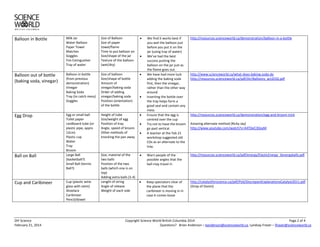
Balloon in Bottle Milk Jar
Water Balloon
Paper Towel
Matches
Goggles
Fire Extinguisher
Tray of water
Size of Balloon
Size of paper
towel/flame
Time to put balloon on
Size/shape of the jar
Texture of the balloon
(wet/dry)
 We find it works best if
you wet the balloon just
before you put it on the
jar (using tray of water)
 We’ve had the best
success putting the
balloon on the jar just as
the flame goes out.
http://resources.scienceworld.ca/demonstration/balloon-in-a-bottle
Balloon out of bottle
(baking soda, vinegar)
Balloon in bottle
(from previous
demonstration)
Vinegar
Baking Soda
Tray (to catch mess)
Goggles
Size of balloon
Size/shape of bottle
Amount of
vinegar/baking soda
Order of adding
vinegar/baking soda
Position (orientation)
of the bottle
 We have had more luck
adding the baking soda
first, then the vinegar,
rather than the other way
around
 Inverting the bottle over
the tray helps form a
good seal and contain any
mess
http://www.scienceworld.ca/what-does-baking-soda-do
http://resources.scienceworld.ca/pdf/Air/Balloons_act2C02.pdf
Egg Drop Egg or small ball
Toilet paper
cardboard tube (or
plastic pipe, apprx
12cm)
Plastic cup
Water
Tray
Broom
Height of tube
Size/weight of egg
Position of tray
Angle, speed of broom
Other methods of
knocking the pan away
 Ensure that the egg is
centred over the cup
 Try not to have the broom
go past vertical
 A teacher at the Feb 21
workshop suggested old
CDs as an alternate to the
tray.
http://resources.scienceworld.ca/demonstration/egg-and-broom-trick
Amazing alternate method (Ricky Jay)
http://www.youtube.com/watch?v=A4TDeC3DyyM
Ball on Ball Large Ball
(basketball?)
Small Ball (tennis
Ball?)
Size, material of the
two balls
Position of the two
balls (which one is on
top)
Adding extra balls (3-4)
 Warn people of the
possible angles that the
ball may travel in
http://resources.scienceworld.ca/pdf/energy/ElasticEnergy_3energyballs.pdf
Cup and Caribineer Cup (plastic wine
glass with stem)
Shoelace
Caribineer
Pencil/dowel
Length of string
Angle of release
Weight of each side
 Keep spectators clear of
the plane that the
caribineer is moving in in
case it comes loose
http://catalystforscience.ca/pdf/PoS/DiscrepantExplanationsCatalyst2011.pdf
(Drop of Doom)
DIY Science Copyright Science World British Columbia 2014 Page 3 of 4
February 21, 2014 Questions? Brian Anderson – banderson@scienceworld.ca, Lyndsay Fraser – lfraser@scienceworld.ca
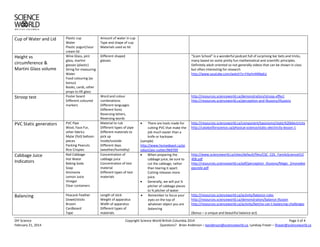
Cup of Water and Lid Plastic cup
Water
Plastic yogurt/sour
cream lid
Amount of water in cup
Type and shape of cup
Materials used as lid
Height vs
circumference &
Martini Glass volume
Wine Glass, pint
glass, martini
glasses (plastic)
String for measuring
Water
Food colouring (as
bonus)
Books, cards, other
props to lift glass
Different shaped
glasses
“Scam School” is a wonderful podcast full of surprising bar bets and tricks,
many based on some pretty fun mathematical and scientific principles.
Definitely adult oriented so not generally videos that can be shown in class
but often interesting for research
http://www.youtube.com/watch?v=FAyHrANNpkU
Stroop test Poster board
Different coloured
markers
Word and colour
combinations
Different languages
Different fonts
Reversing letters,
Reversing words
http://resources.scienceworld.ca/demonstration/stroop-effect
http://resources.scienceworld.ca/perception-and-illusions/illusions
PVC Static generators PVC Pipe
Wool, Faux Fur,
other fabrics
Mylar (foil) balloon
pieces
Packing Peanuts
Rice Crispies
Material to rub
Different types of pipe
Different materials to
pick up
Inside/outside
Different days
(weather/humidity)
 There are tools made for
cutting PVC that make the
job much easier than a
knife or hacksaw:
(sample)
http://www.homedepot.ca/pr
oduct/pvc-cutter/969709
http://resources.scienceworld.ca/component/taxonomy/static%20electricity
http://catalystforscience.ca/physical-science/static-electricity-lesson-1
Cabbage Juice
Indicators
Red Cabbage
Hot Water
Baking Soda
Soap
Ammonia
Lemon Juice
Vinegar
Clear containers
Concentration of
cabbage juice
Concentration of test
material
Different types of test
materials
 When preparing the
cabbage juice, be sure to
cut the cabbage, rather
than tearing it apart.
Cutting releases more
juice.
 Generally, we will put ¼
pitcher of cabbage pieces
to ¾ pitcher of water
http://www.scienceworld.ca/sites/default/files/CSC_COL_FamilyScience012
408.pdf
http://resources.scienceworld.ca/pdf/perception_illusions/Magic_2moredee
ppurple.pdf
Balancing Peacock Feather
Dowel/sticks
Broom
Cardboard
Tape
Length of stick
Weight of apparatus
Width of apparatus
Different types of
materials
 Remember to focus your
eyes on the top of
whatever object you are
balancing
http://resources.scienceworld.ca/activity/balance-rules
http://resources.scienceworld.ca/demonstration/balance-illusion
http://resources.scienceworld.ca/activity/betcha-can-t-balancing-challenges
(Bonus – a unique and beautiful balance act)
DIY Science Copyright Science World British Columbia 2014 Page 4 of 4
February 21, 2014 Questions? Brian Anderson – banderson@scienceworld.ca, Lyndsay Fraser – lfraser@scienceworld.ca
Plastic/stuffed toy http://www.youtube.com/watch?v=-KVPA-9hofw
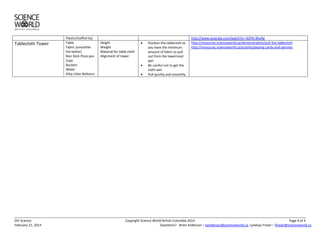
Tablecloth Tower Table
Fabric (smoother
the better)
Non Stick Pizza pan
Cups
Buckets
Water
Kitty Litter Balloons
Height
Weight
Material for table cloth
Alignment of tower
 Position the tablecloth so
you have the minimum
amount of fabric to pull
out from the lowermost
pan
 Be careful not to get the
cloth wet
 Pull quickly and smoothly
http://resources.scienceworld.ca/demonstration/pull-the-tablecloth
http://resources.scienceworld.ca/activity/playing-cards-and-pennies

Handout Dollar Store Science

  • 1.
    DIY Science CopyrightScience World British Columbia 2014 Page 1 of 4 February 21, 2014 Questions? Brian Anderson – banderson@scienceworld.ca, Lyndsay Fraser – lfraser@scienceworld.ca Demonstration Materials needed Possible Variables Notes Reference Links Fire Horn Clear vinyl tubing (Home Depot, Canadian Tire, Aquarium Stores) Barbecue Lighter (Dollar stores, grocery stores) Tape Filling container (plastic squeeze bottle with tube, dollar store sauce dispenser) Flammable material (Lycopodium powder, Coffee Mate, Corn Starch, Flour) Goggles Fire Extinguisher Type of flammable material Amount of flammable material Strength/speed of air blowing through tube Direction  Ensure that the end of the tube is BEHIND the flame when constructing the apparatus to ensure the flammable material must pass through the flame  When loading the tube, gently shake the tube so the flammable material forms a solid plug. Without this step, it is possible for air to blow past the flammable material and extinguish the lighter before the flammable material begins to move.  Be VERY careful of what direction you are aiming the tube and anything flammable/heat/smoke sensors in the way http://resources.scienceworld.ca/component/taxonomy/combustion From Steve Spangler: http://www.youtube.com/watch?v=TAdElO1FCSM Greek Waiter’s Tray Basket Shoelaces Cup Length of string (laces) Speed of spinning Amount of liquid in the cup Type of liquid in the cup  Watch for any overhead obstructions  Practice out of doors  Start and stop smoothly From Steve Spangler: http://www.youtube.com/watch?v=yyDRI6iQ9Fw No tray Greek Waiter’s Tray Cup Amount of liquid in the cup Type of liquid in the cup  Start with your hand facing away from the direction you will be traveling around the circle.  One revolution is usually plenty
  • 2.
    DIY Science CopyrightScience World British Columbia 2014 Page 2 of 4 February 21, 2014 Questions? Brian Anderson – banderson@scienceworld.ca, Lyndsay Fraser – lfraser@scienceworld.ca Balloon in Bottle Milk Jar Water Balloon Paper Towel Matches Goggles Fire Extinguisher Tray of water Size of Balloon Size of paper towel/flame Time to put balloon on Size/shape of the jar Texture of the balloon (wet/dry)  We find it works best if you wet the balloon just before you put it on the jar (using tray of water)  We’ve had the best success putting the balloon on the jar just as the flame goes out. http://resources.scienceworld.ca/demonstration/balloon-in-a-bottle Balloon out of bottle (baking soda, vinegar) Balloon in bottle (from previous demonstration) Vinegar Baking Soda Tray (to catch mess) Goggles Size of balloon Size/shape of bottle Amount of vinegar/baking soda Order of adding vinegar/baking soda Position (orientation) of the bottle  We have had more luck adding the baking soda first, then the vinegar, rather than the other way around  Inverting the bottle over the tray helps form a good seal and contain any mess http://www.scienceworld.ca/what-does-baking-soda-do http://resources.scienceworld.ca/pdf/Air/Balloons_act2C02.pdf Egg Drop Egg or small ball Toilet paper cardboard tube (or plastic pipe, apprx 12cm) Plastic cup Water Tray Broom Height of tube Size/weight of egg Position of tray Angle, speed of broom Other methods of knocking the pan away  Ensure that the egg is centred over the cup  Try not to have the broom go past vertical  A teacher at the Feb 21 workshop suggested old CDs as an alternate to the tray. http://resources.scienceworld.ca/demonstration/egg-and-broom-trick Amazing alternate method (Ricky Jay) http://www.youtube.com/watch?v=A4TDeC3DyyM Ball on Ball Large Ball (basketball?) Small Ball (tennis Ball?) Size, material of the two balls Position of the two balls (which one is on top) Adding extra balls (3-4)  Warn people of the possible angles that the ball may travel in http://resources.scienceworld.ca/pdf/energy/ElasticEnergy_3energyballs.pdf Cup and Caribineer Cup (plastic wine glass with stem) Shoelace Caribineer Pencil/dowel Length of string Angle of release Weight of each side  Keep spectators clear of the plane that the caribineer is moving in in case it comes loose http://catalystforscience.ca/pdf/PoS/DiscrepantExplanationsCatalyst2011.pdf (Drop of Doom)
  • 3.
    DIY Science CopyrightScience World British Columbia 2014 Page 3 of 4 February 21, 2014 Questions? Brian Anderson – banderson@scienceworld.ca, Lyndsay Fraser – lfraser@scienceworld.ca Cup of Water and Lid Plastic cup Water Plastic yogurt/sour cream lid Amount of water in cup Type and shape of cup Materials used as lid Height vs circumference & Martini Glass volume Wine Glass, pint glass, martini glasses (plastic) String for measuring Water Food colouring (as bonus) Books, cards, other props to lift glass Different shaped glasses “Scam School” is a wonderful podcast full of surprising bar bets and tricks, many based on some pretty fun mathematical and scientific principles. Definitely adult oriented so not generally videos that can be shown in class but often interesting for research http://www.youtube.com/watch?v=FAyHrANNpkU Stroop test Poster board Different coloured markers Word and colour combinations Different languages Different fonts Reversing letters, Reversing words http://resources.scienceworld.ca/demonstration/stroop-effect http://resources.scienceworld.ca/perception-and-illusions/illusions PVC Static generators PVC Pipe Wool, Faux Fur, other fabrics Mylar (foil) balloon pieces Packing Peanuts Rice Crispies Material to rub Different types of pipe Different materials to pick up Inside/outside Different days (weather/humidity)  There are tools made for cutting PVC that make the job much easier than a knife or hacksaw: (sample) http://www.homedepot.ca/pr oduct/pvc-cutter/969709 http://resources.scienceworld.ca/component/taxonomy/static%20electricity http://catalystforscience.ca/physical-science/static-electricity-lesson-1 Cabbage Juice Indicators Red Cabbage Hot Water Baking Soda Soap Ammonia Lemon Juice Vinegar Clear containers Concentration of cabbage juice Concentration of test material Different types of test materials  When preparing the cabbage juice, be sure to cut the cabbage, rather than tearing it apart. Cutting releases more juice.  Generally, we will put ¼ pitcher of cabbage pieces to ¾ pitcher of water http://www.scienceworld.ca/sites/default/files/CSC_COL_FamilyScience012 408.pdf http://resources.scienceworld.ca/pdf/perception_illusions/Magic_2moredee ppurple.pdf Balancing Peacock Feather Dowel/sticks Broom Cardboard Tape Length of stick Weight of apparatus Width of apparatus Different types of materials  Remember to focus your eyes on the top of whatever object you are balancing http://resources.scienceworld.ca/activity/balance-rules http://resources.scienceworld.ca/demonstration/balance-illusion http://resources.scienceworld.ca/activity/betcha-can-t-balancing-challenges (Bonus – a unique and beautiful balance act)
  • 4.
    DIY Science CopyrightScience World British Columbia 2014 Page 4 of 4 February 21, 2014 Questions? Brian Anderson – banderson@scienceworld.ca, Lyndsay Fraser – lfraser@scienceworld.ca Plastic/stuffed toy http://www.youtube.com/watch?v=-KVPA-9hofw Tablecloth Tower Table Fabric (smoother the better) Non Stick Pizza pan Cups Buckets Water Kitty Litter Balloons Height Weight Material for table cloth Alignment of tower  Position the tablecloth so you have the minimum amount of fabric to pull out from the lowermost pan  Be careful not to get the cloth wet  Pull quickly and smoothly http://resources.scienceworld.ca/demonstration/pull-the-tablecloth http://resources.scienceworld.ca/activity/playing-cards-and-pennies