Breaking the
Science’s
roject
● Science involves a lot of communication with other
people.
● Science develops patience and perseverance in kids.
● Science teaches kids about the world around them.
● Science can spark in kids' minds that they, too, can help
solve the world's big problems.
WHY SCIENCE?
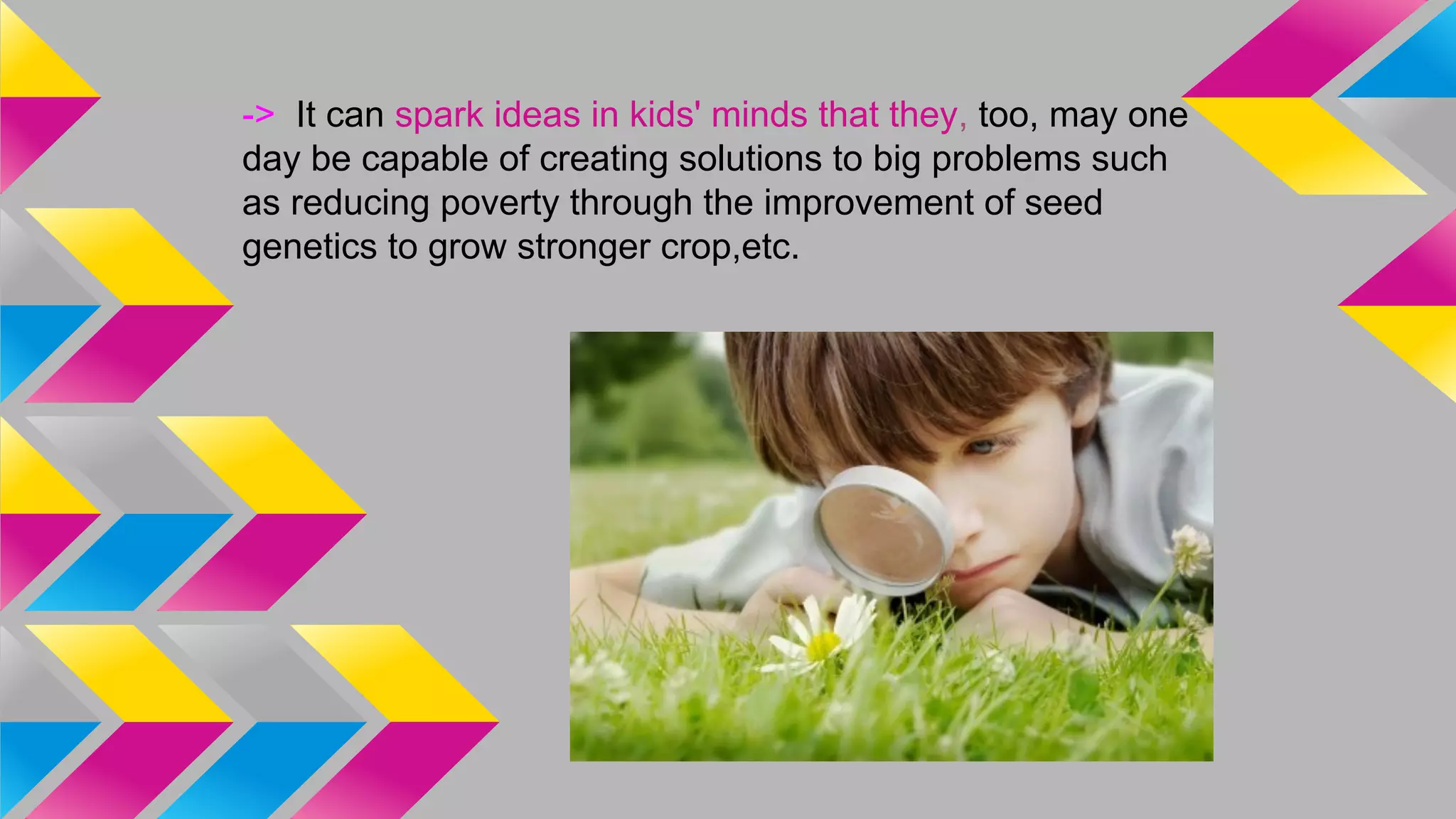
-> It can spark ideas in kids' minds that they, too, may one
day be capable of creating solutions to big problems such
as reducing poverty through the improvement of seed
genetics to grow stronger crop,etc.
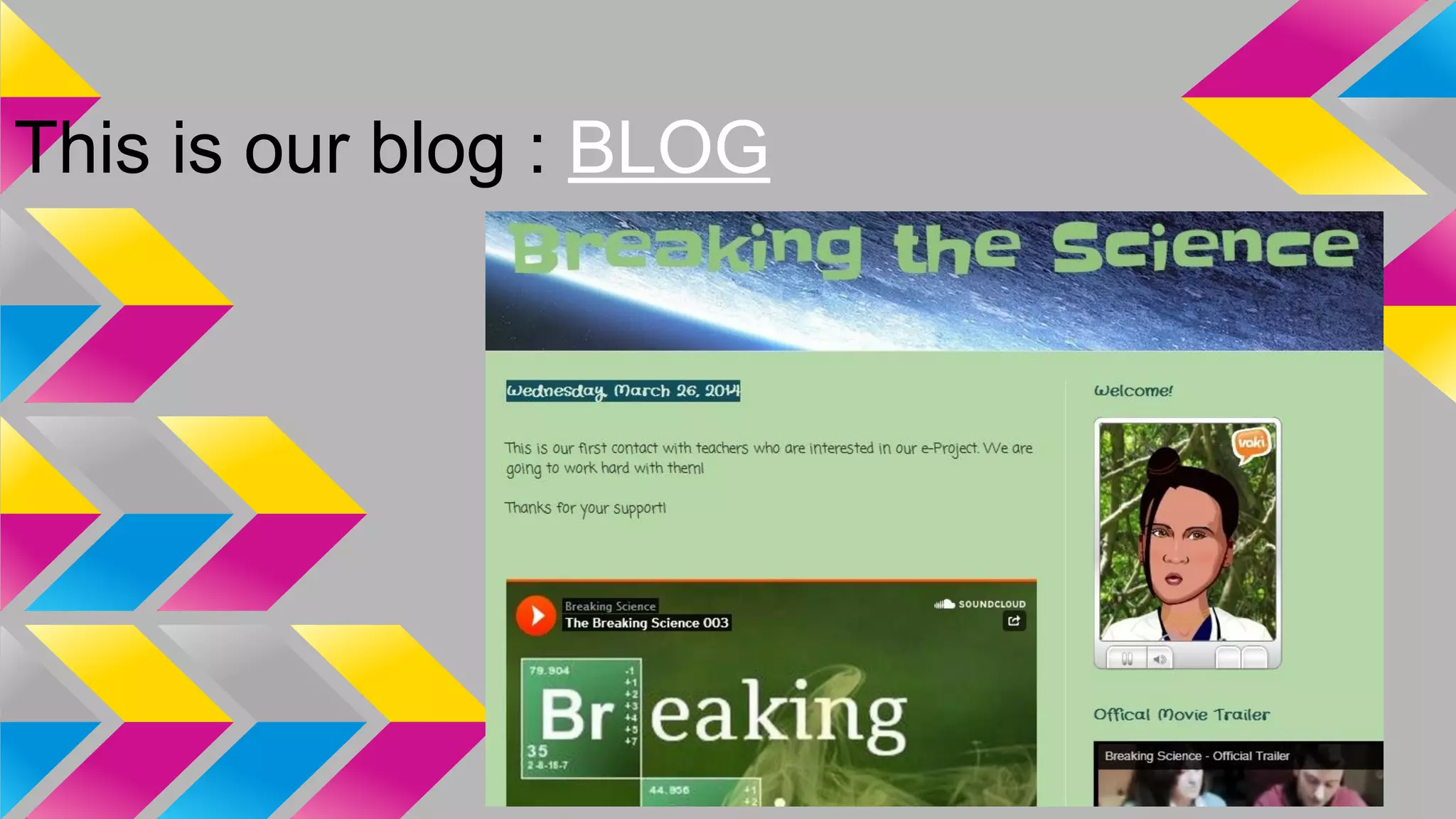
This is our blog : BLOG
Breaking Podcasts
Check out our three podcasts in
soundcloud.
SoundCloud account
Breaking Youtube
Check out our videos in Youtube
Youtube account
Answers to “FIZZY BALLOON”
experiment
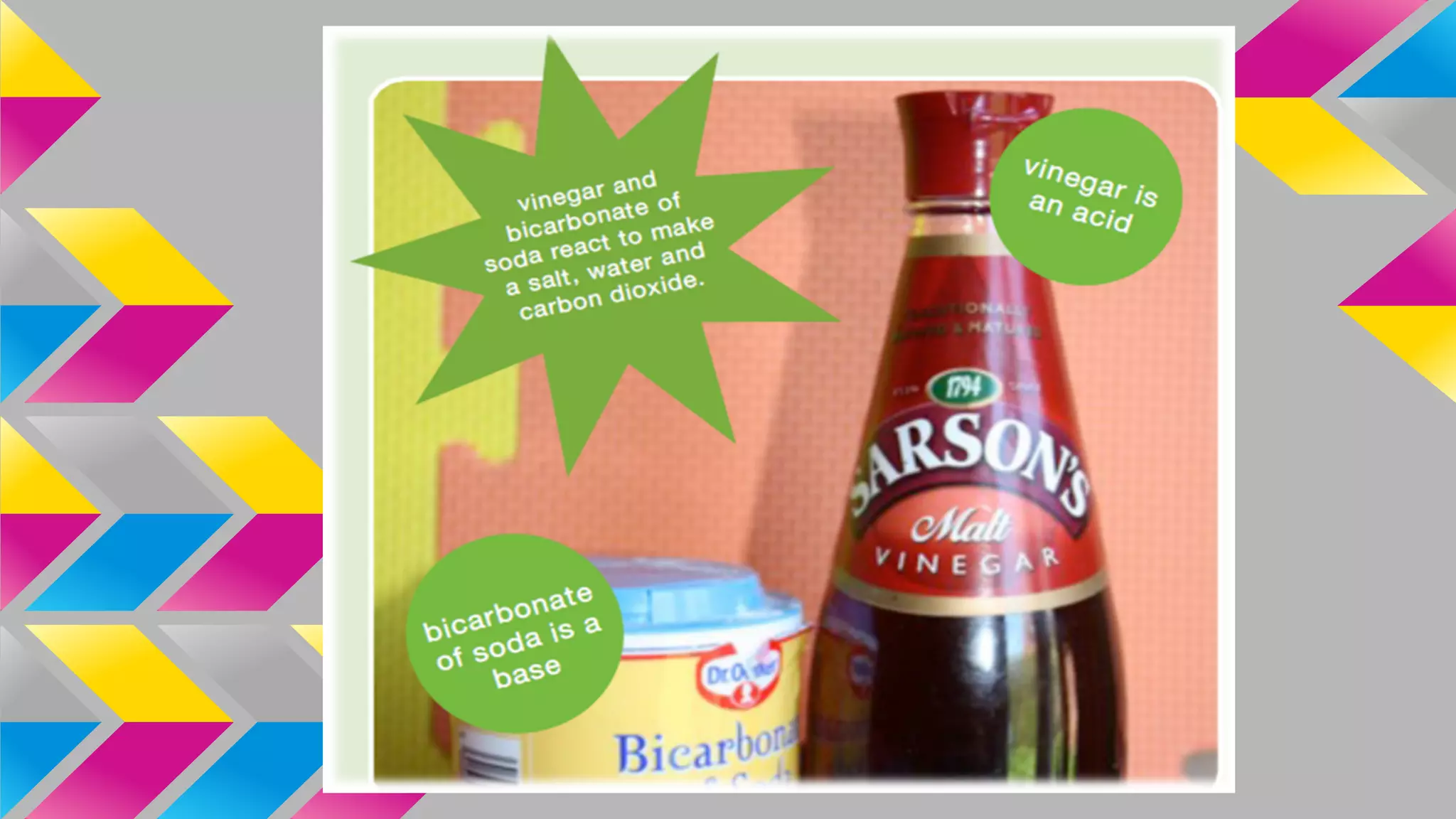
The baking soda and the vinegar create an ACID-BASE reaction and the two
chemicals work together to create a gas(carbon dioxide). Gasses need a lot of room
to spread out and the carbon dioxide starts to fill the bottle, and then moves into the
balloon to inflate it.
When mixing the two chemicals in baking soda (called sodium bicarbonate)
and vinegar (called acetic acid), you cause a chemical reaction to occur.
Carbon dioxide is one result of that reaction. Once the carbon dioxide fills
up the bottle, it has no where else to go but into the balloon filling it up as
more carbon dioxide is created.
Besides, we’re going to do more awesome
experiments which you can work with….
The process will be the same:
→ First of all, we’ll post the experiment through
a video, introducing all the materials you need.
→ In our blog “ Breaking the Science”, we’ll ask
you some questions about the experiments.
→ Later on, there’ll be 7-10 days in which
you can answer us by the blog or by
podscasting as well.
→ Finally, we solve the items we
asked you.
Why experiments?
Experiments encourage kids to be curious,
creative and confident.
"All life is an experiment. The more
experiments you make, the better."
Are you ready?
… YES!
Experiments:
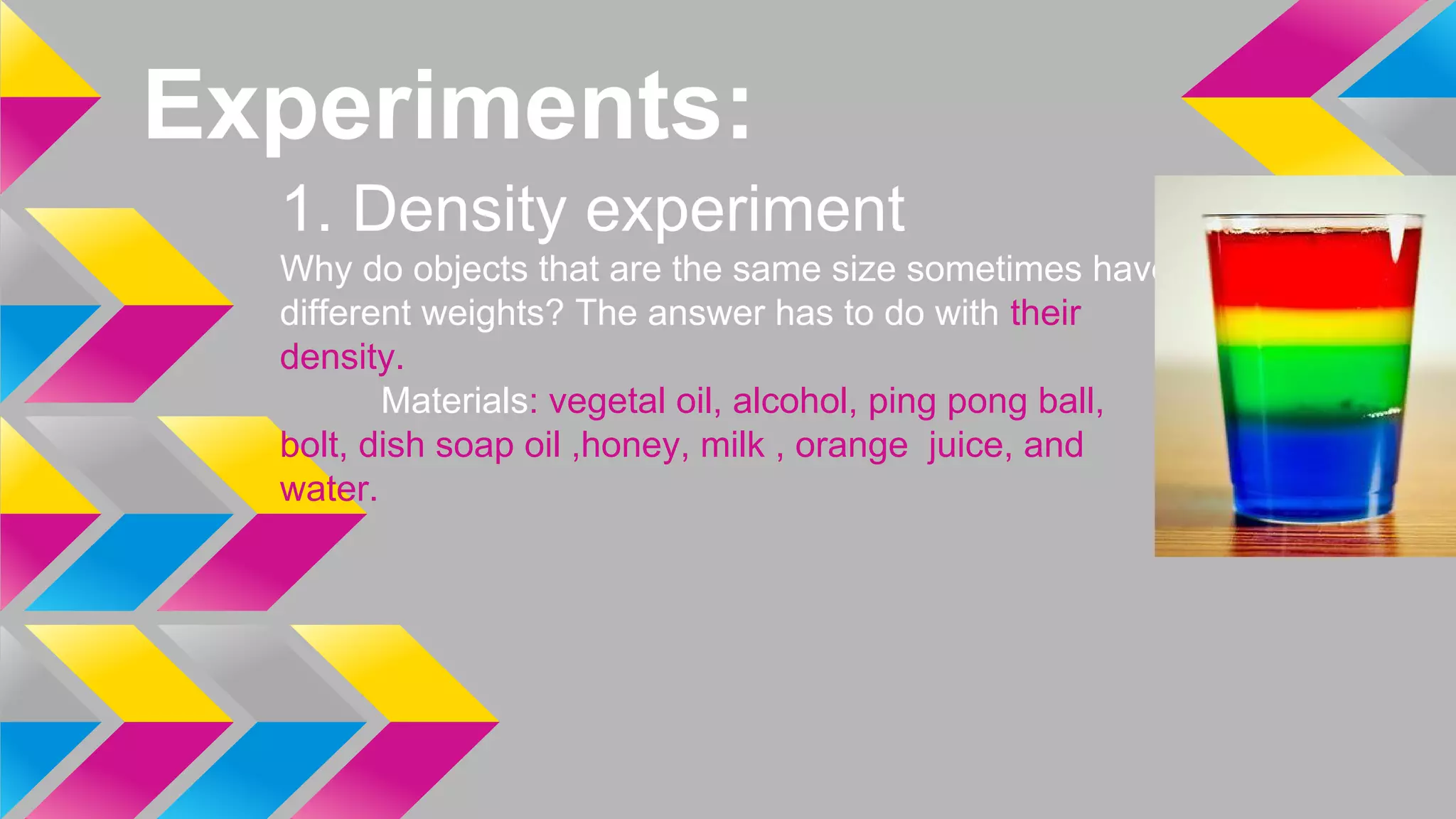
1. Density experiment
Why do objects that are the same size sometimes have
different weights? The answer has to do with their
density.
Materials: vegetal oil, alcohol, ping pong ball,
bolt, dish soap oil ,honey, milk , orange juice, and
water.
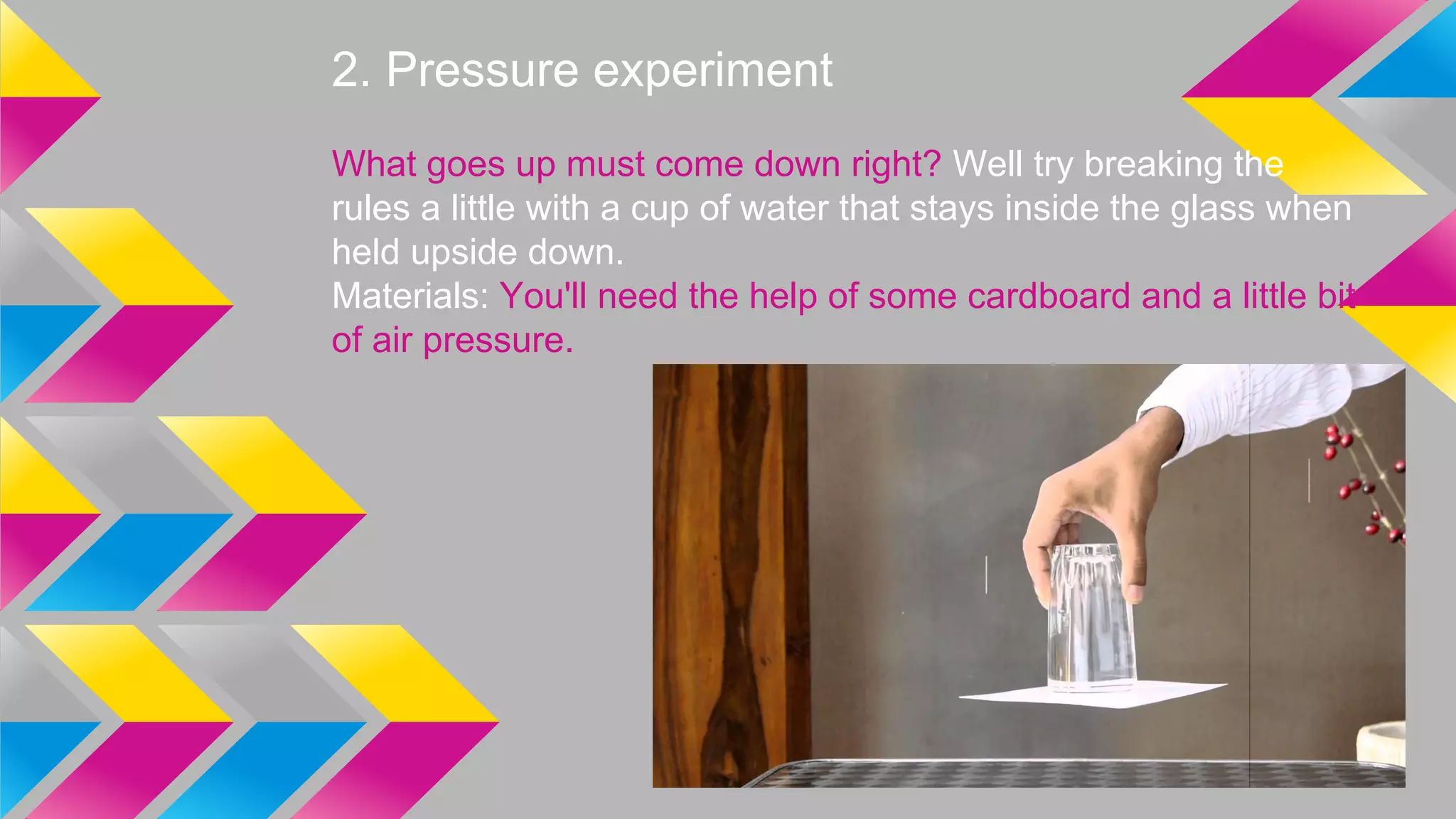
2. Pressure experiment
What goes up must come down right? Well try breaking the
rules a little with a cup of water that stays inside the glass when
held upside down.
Materials: You'll need the help of some cardboard and a little bit
of air pressure.
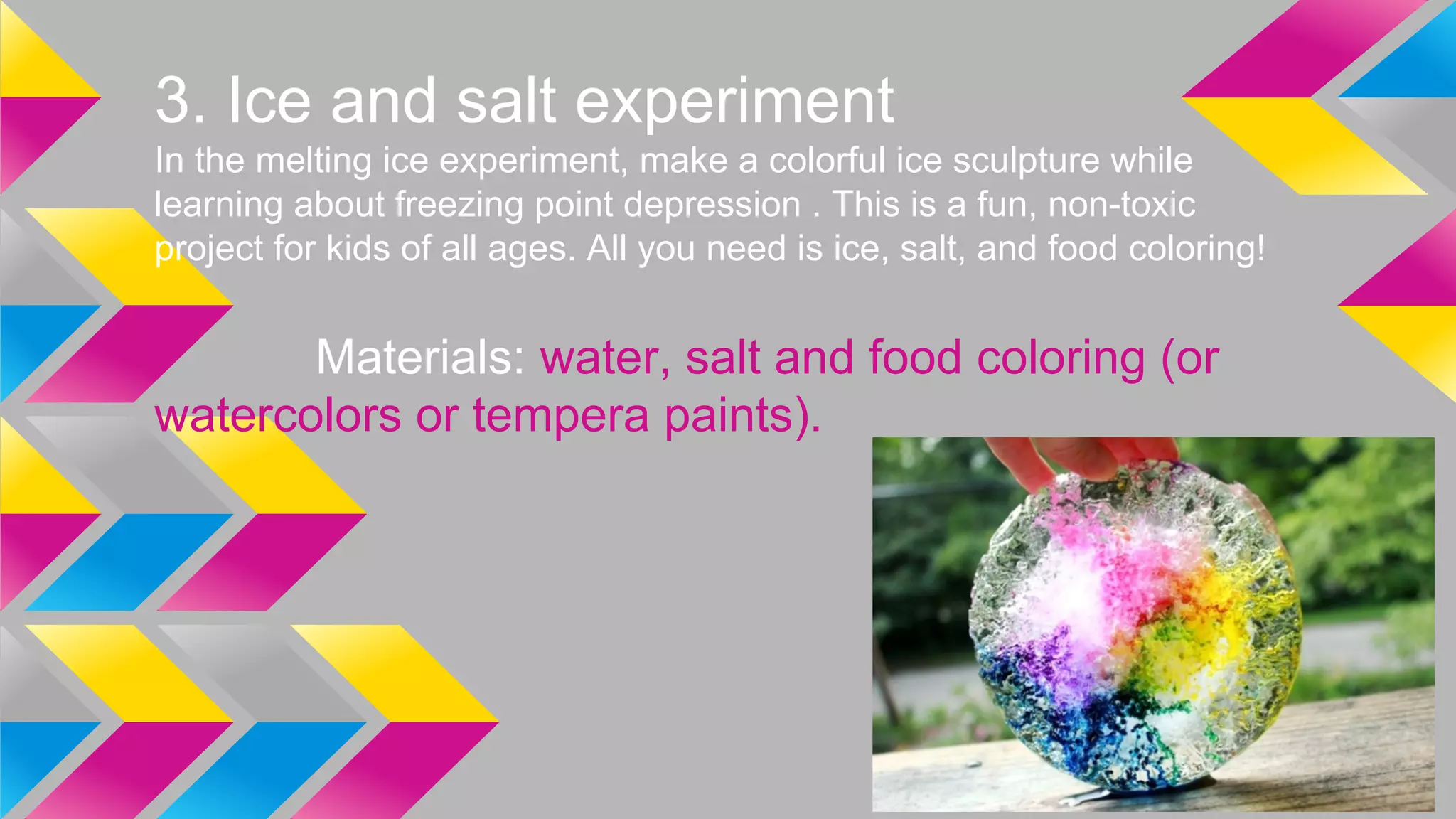
3. Ice and salt experiment
In the melting ice experiment, make a colorful ice sculpture while
learning about freezing point depression . This is a fun, non-toxic
project for kids of all ages. All you need is ice, salt, and food coloring!
Materials: water, salt and food coloring (or
watercolors or tempera paints).
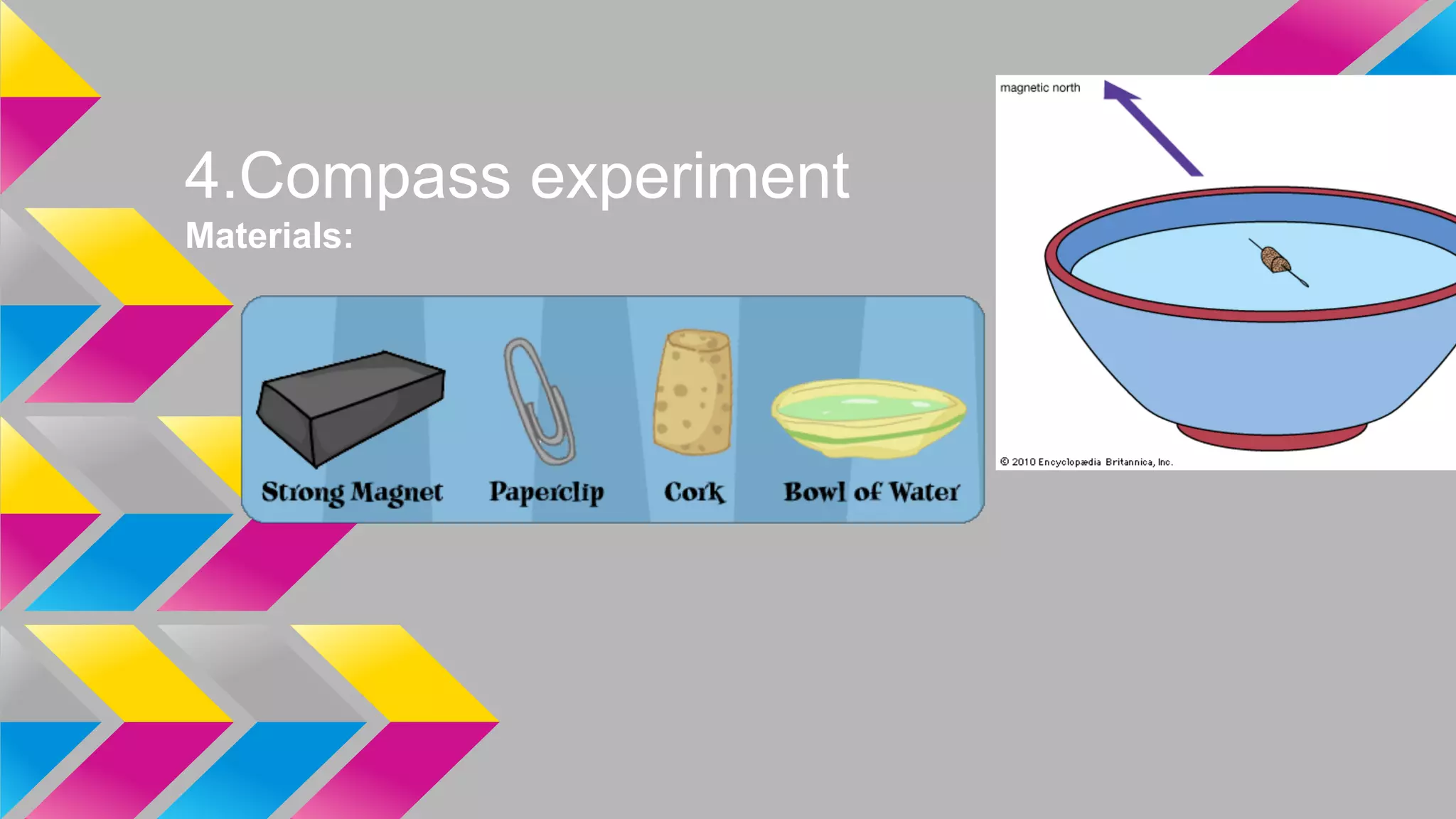
4.Compass experiment
Materials:
Remember…
...Breaking the
Science!!!
Collaborative presentation

Collaborative presentation

  • 1.
  • 2.
    ● Science involvesa lot of communication with other people. ● Science develops patience and perseverance in kids. ● Science teaches kids about the world around them. ● Science can spark in kids' minds that they, too, can help solve the world's big problems. WHY SCIENCE?
  • 3.
    -> It canspark ideas in kids' minds that they, too, may one day be capable of creating solutions to big problems such as reducing poverty through the improvement of seed genetics to grow stronger crop,etc.
  • 4.
    This is ourblog : BLOG
  • 5.
    Breaking Podcasts Check outour three podcasts in soundcloud. SoundCloud account
  • 6.
    Breaking Youtube Check outour videos in Youtube Youtube account
  • 7.
    Answers to “FIZZYBALLOON” experiment The baking soda and the vinegar create an ACID-BASE reaction and the two chemicals work together to create a gas(carbon dioxide). Gasses need a lot of room to spread out and the carbon dioxide starts to fill the bottle, and then moves into the balloon to inflate it. When mixing the two chemicals in baking soda (called sodium bicarbonate) and vinegar (called acetic acid), you cause a chemical reaction to occur. Carbon dioxide is one result of that reaction. Once the carbon dioxide fills up the bottle, it has no where else to go but into the balloon filling it up as more carbon dioxide is created.
  • 9.
    Besides, we’re goingto do more awesome experiments which you can work with…. The process will be the same:
  • 10.
    → First ofall, we’ll post the experiment through a video, introducing all the materials you need. → In our blog “ Breaking the Science”, we’ll ask you some questions about the experiments. → Later on, there’ll be 7-10 days in which you can answer us by the blog or by podscasting as well. → Finally, we solve the items we asked you.
  • 11.
    Why experiments? Experiments encouragekids to be curious, creative and confident. "All life is an experiment. The more experiments you make, the better."
  • 12.
  • 13.
    Experiments: 1. Density experiment Whydo objects that are the same size sometimes have different weights? The answer has to do with their density. Materials: vegetal oil, alcohol, ping pong ball, bolt, dish soap oil ,honey, milk , orange juice, and water.
  • 14.
    2. Pressure experiment Whatgoes up must come down right? Well try breaking the rules a little with a cup of water that stays inside the glass when held upside down. Materials: You'll need the help of some cardboard and a little bit of air pressure.
  • 15.
    3. Ice andsalt experiment In the melting ice experiment, make a colorful ice sculpture while learning about freezing point depression . This is a fun, non-toxic project for kids of all ages. All you need is ice, salt, and food coloring! Materials: water, salt and food coloring (or watercolors or tempera paints).
  • 16.
  • 18.