 The Current Carrying Components Of The Distribution
System:
 Cables
 Wires
 Busways
 Overhead Transmission Lines
 They are the different types of electric conductors which
link between the different components of the distribution
system with all of its parts.
 These types of conductors must be selected to be suitable
for the conditions of the installation and must be properly
sized to withstand the calculated values of current which
flow through it.
 The main four types of the current carrying components in
the distribution system are:
 Cables
 Wires
 Busways
 Overhead lines.
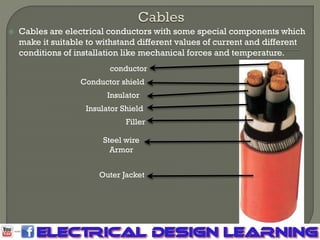
 Cables are electrical conductors with some special components which
make it suitable to withstand different values of current and different
conditions of installation like mechanical forces and temperature.
conductor
Conductor shield
Insulator
Insulator Shield
Filler
Steel wire
Armor
Outer Jacket
 Cables are used in MV part of the distribution system to connect
between the MV distributer and RMUs, also between RMUs and
transformers.
 Also cables are used in the LV part of the distribution system to connect
between the transformer and main distribution board (MDB) and also
between the different distribution boards and their downstream panels.
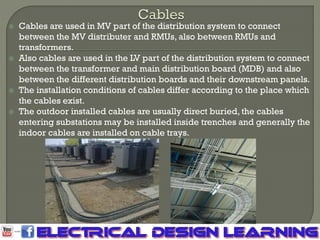
 The installation conditions of cables differ according to the place which
the cables exist.
 The outdoor installed cables are usually direct buried, the cables
entering substations may be installed inside trenches and generally the
indoor cables are installed on cable trays.
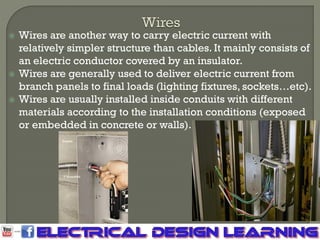
 Wires are another way to carry electric current with
relatively simpler structure than cables. It mainly consists of
an electric conductor covered by an insulator.
 Wires are generally used to deliver electric current from
branch panels to final loads (lighting fixtures, sockets…etc).
 Wires are usually installed inside conduits with different
materials according to the installation conditions (exposed
or embedded in concrete or walls).
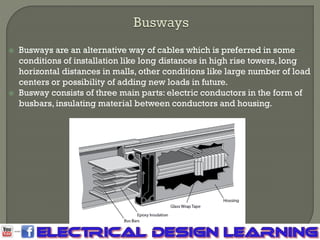
 Busways are an alternative way of cables which is preferred in some
conditions of installation like long distances in high rise towers, long
horizontal distances in malls, other conditions like large number of load
centers or possibility of adding new loads in future.
 Busway consists of three main parts: electric conductors in the form of
busbars, insulating material between conductors and housing.
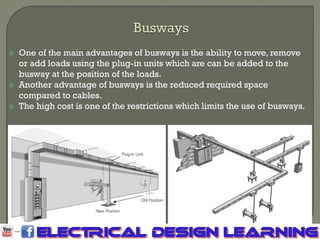
 One of the main advantages of busways is the ability to move, remove
or add loads using the plug-in units which are can be added to the
busway at the position of the loads.
 Another advantage of busways is the reduced required space
compared to cables.
 The high cost is one of the restrictions which limits the use of busways.
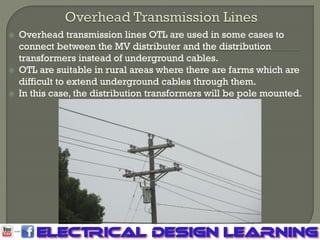
 Overhead transmission lines OTL are used in some cases to
connect between the MV distributer and the distribution
transformers instead of underground cables.
 OTL are suitable in rural areas where there are farms which are
difficult to extend underground cables through them.
 In this case, the distribution transformers will be pole mounted.

Distribution system exploration part.3 current carrying components

  • 2.
     The CurrentCarrying Components Of The Distribution System:  Cables  Wires  Busways  Overhead Transmission Lines
  • 3.
     They arethe different types of electric conductors which link between the different components of the distribution system with all of its parts.  These types of conductors must be selected to be suitable for the conditions of the installation and must be properly sized to withstand the calculated values of current which flow through it.  The main four types of the current carrying components in the distribution system are:  Cables  Wires  Busways  Overhead lines.
  • 4.
     Cables areelectrical conductors with some special components which make it suitable to withstand different values of current and different conditions of installation like mechanical forces and temperature. conductor Conductor shield Insulator Insulator Shield Filler Steel wire Armor Outer Jacket
  • 5.
     Cables areused in MV part of the distribution system to connect between the MV distributer and RMUs, also between RMUs and transformers.  Also cables are used in the LV part of the distribution system to connect between the transformer and main distribution board (MDB) and also between the different distribution boards and their downstream panels.  The installation conditions of cables differ according to the place which the cables exist.  The outdoor installed cables are usually direct buried, the cables entering substations may be installed inside trenches and generally the indoor cables are installed on cable trays.
  • 6.
     Wires areanother way to carry electric current with relatively simpler structure than cables. It mainly consists of an electric conductor covered by an insulator.  Wires are generally used to deliver electric current from branch panels to final loads (lighting fixtures, sockets…etc).  Wires are usually installed inside conduits with different materials according to the installation conditions (exposed or embedded in concrete or walls).
  • 7.
     Busways arean alternative way of cables which is preferred in some conditions of installation like long distances in high rise towers, long horizontal distances in malls, other conditions like large number of load centers or possibility of adding new loads in future.  Busway consists of three main parts: electric conductors in the form of busbars, insulating material between conductors and housing.
  • 8.
     One ofthe main advantages of busways is the ability to move, remove or add loads using the plug-in units which are can be added to the busway at the position of the loads.  Another advantage of busways is the reduced required space compared to cables.  The high cost is one of the restrictions which limits the use of busways.
  • 9.
     Overhead transmissionlines OTL are used in some cases to connect between the MV distributer and the distribution transformers instead of underground cables.  OTL are suitable in rural areas where there are farms which are difficult to extend underground cables through them.  In this case, the distribution transformers will be pole mounted.