Distributed Ledger
Security in the
Enterprise Environment
2
1. Technology
2. How secure is it?
3. What if we take it to enterprise?
4. Major challenges
5. Potential solutions
Outline
3
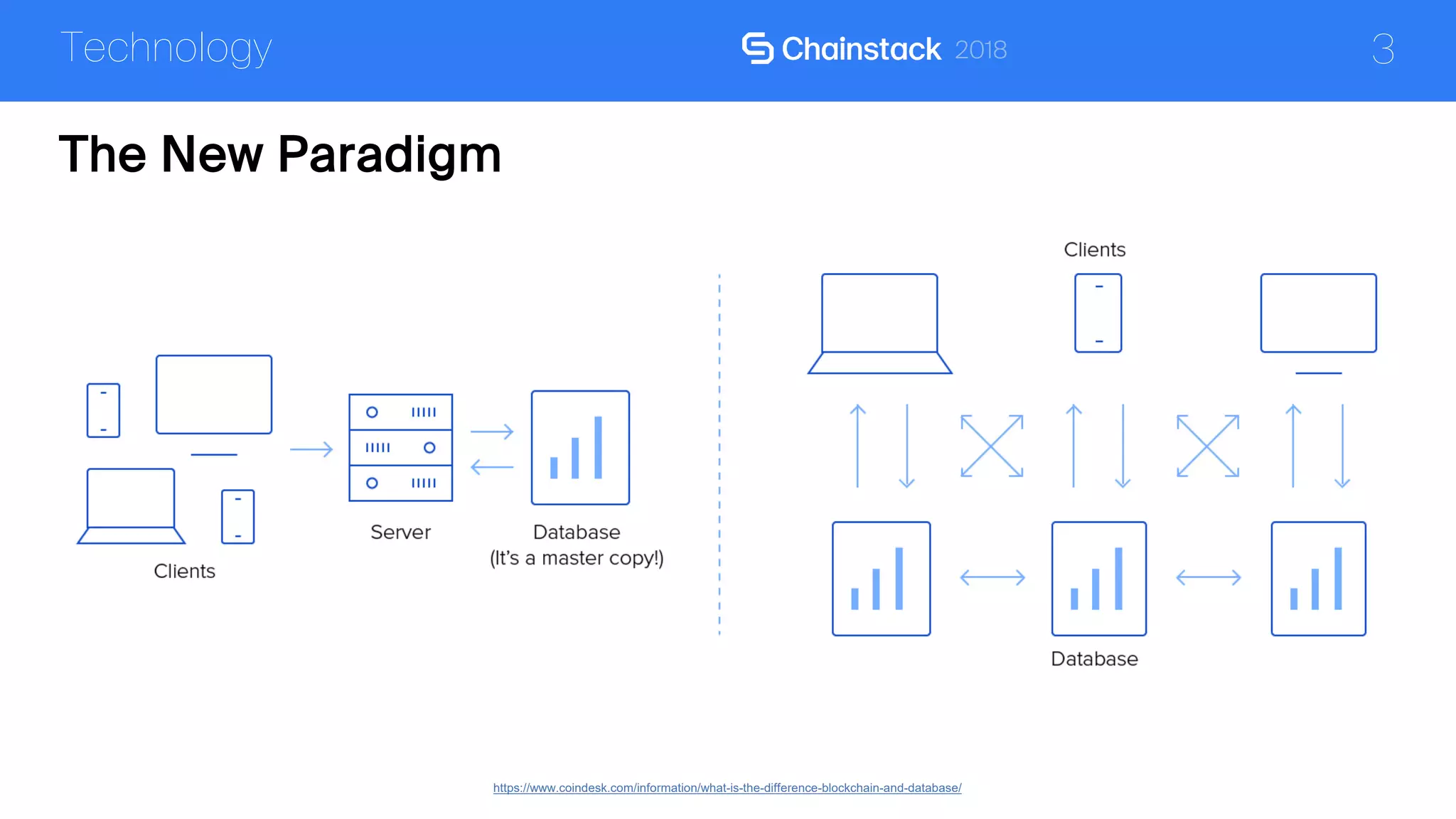
The New Paradigm
Technology
https://www.coindesk.com/information/what-is-the-difference-blockchain-and-database/
4Technology
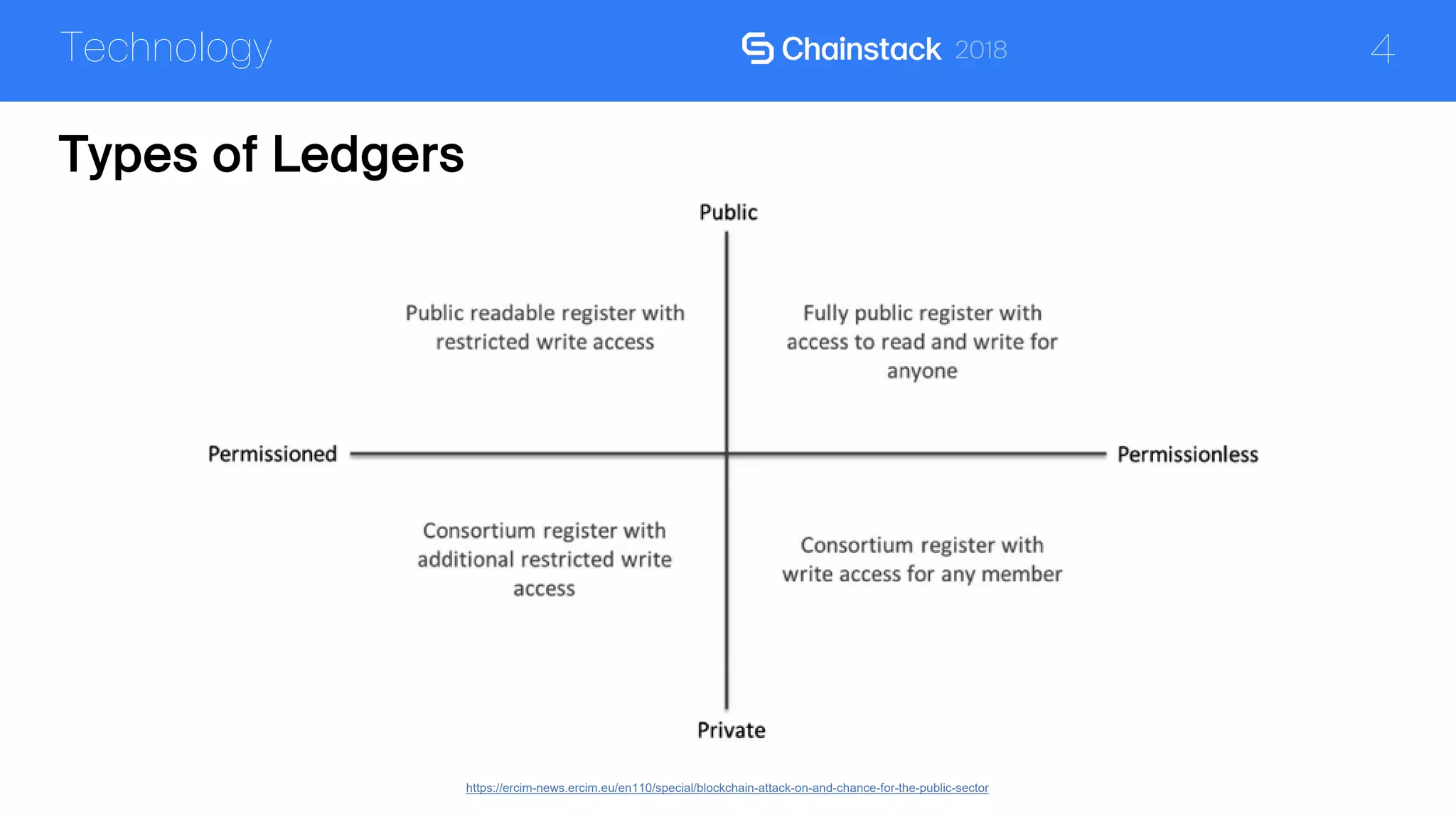
https://ercim-news.ercim.eu/en110/special/blockchain-attack-on-and-chance-for-the-public-sector
Types of Ledgers
5How Secure Is DLT?
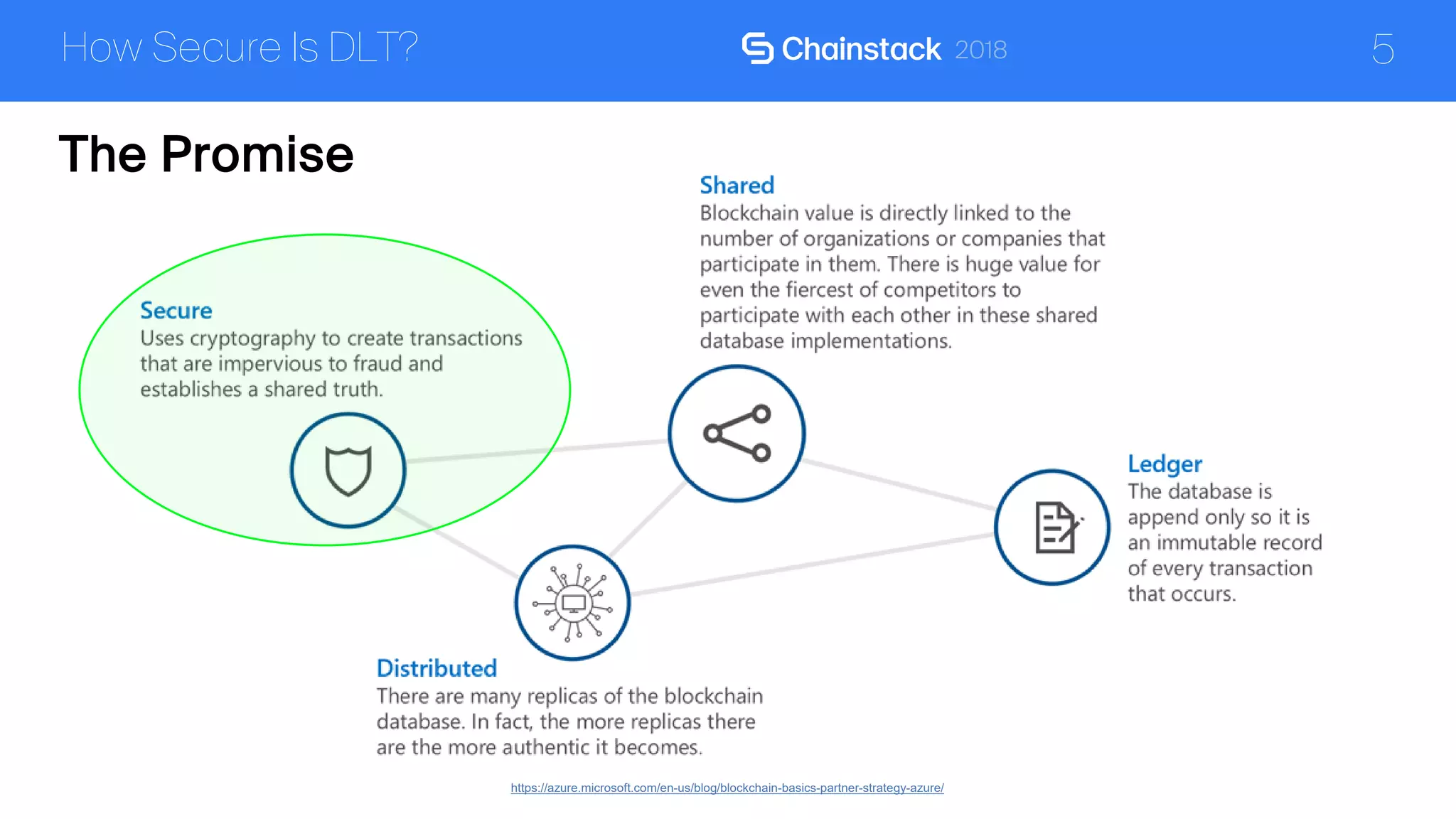
https://azure.microsoft.com/en-us/blog/blockchain-basics-partner-strategy-azure/
The Promise
6How Secure Is DLT?
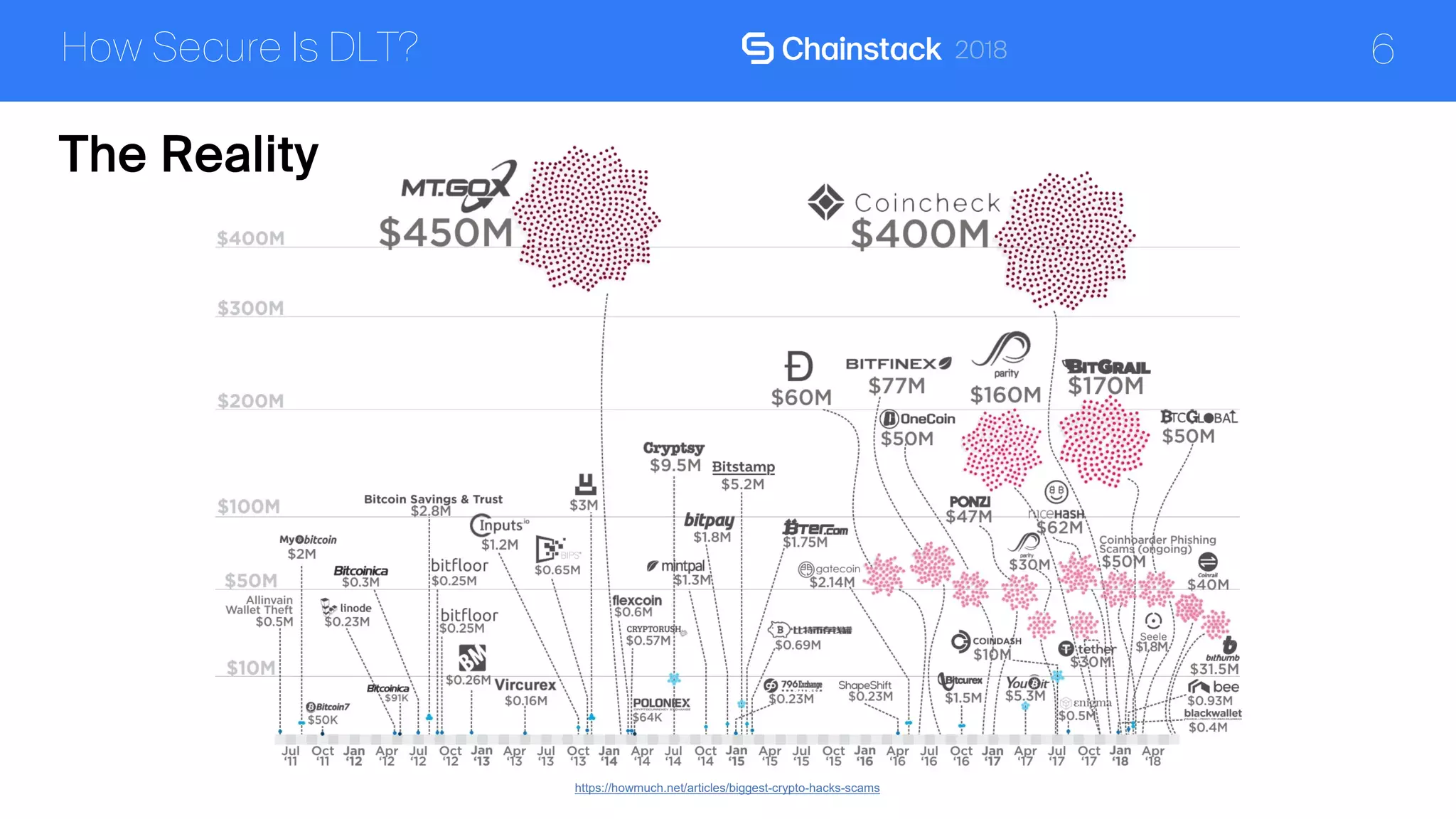
https://howmuch.net/articles/biggest-crypto-hacks-scams
The Reality
7How Secure Is DLT?
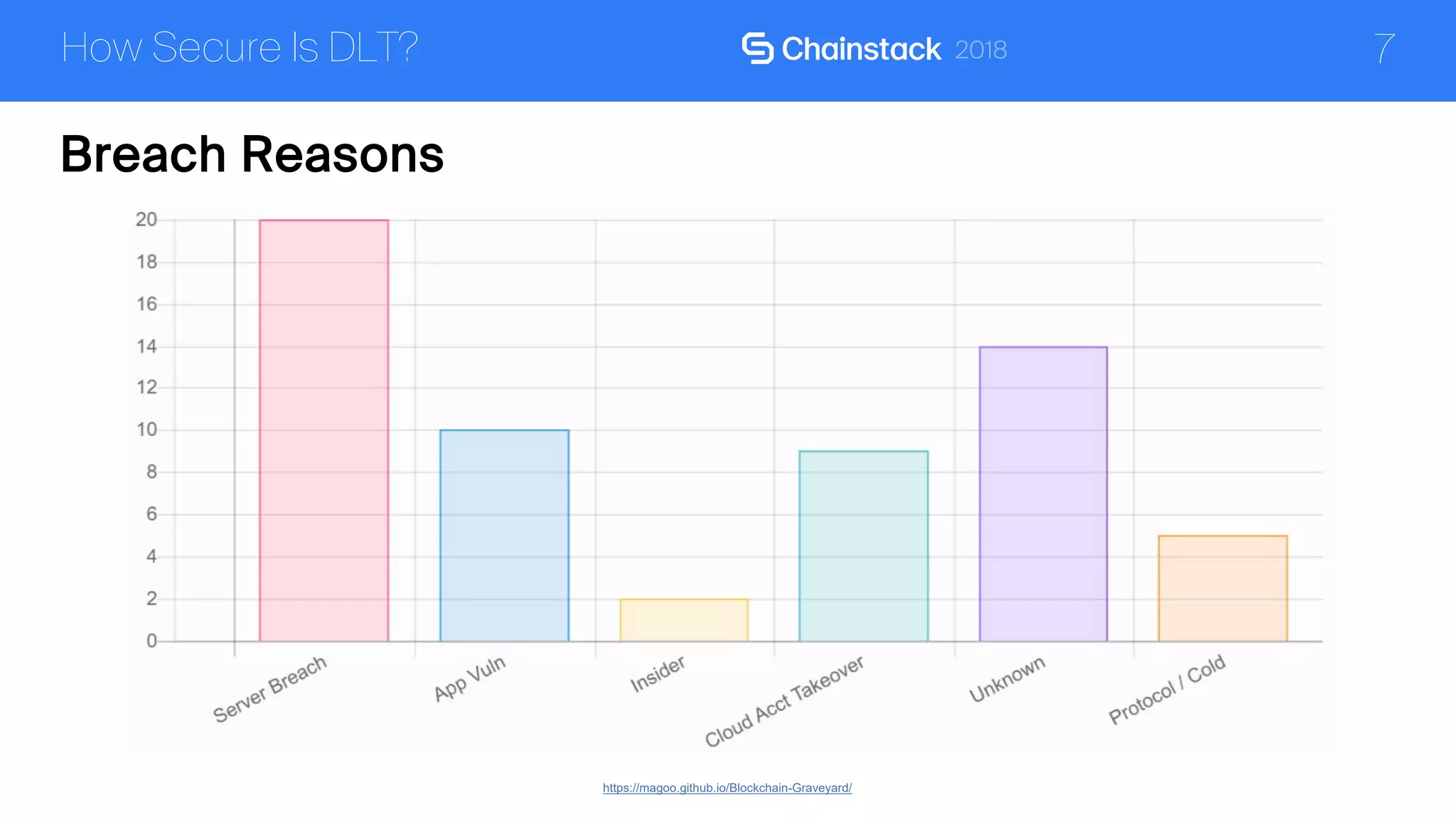
https://magoo.github.io/Blockchain-Graveyard/
Breach Reasons
8How Secure Is DLT?
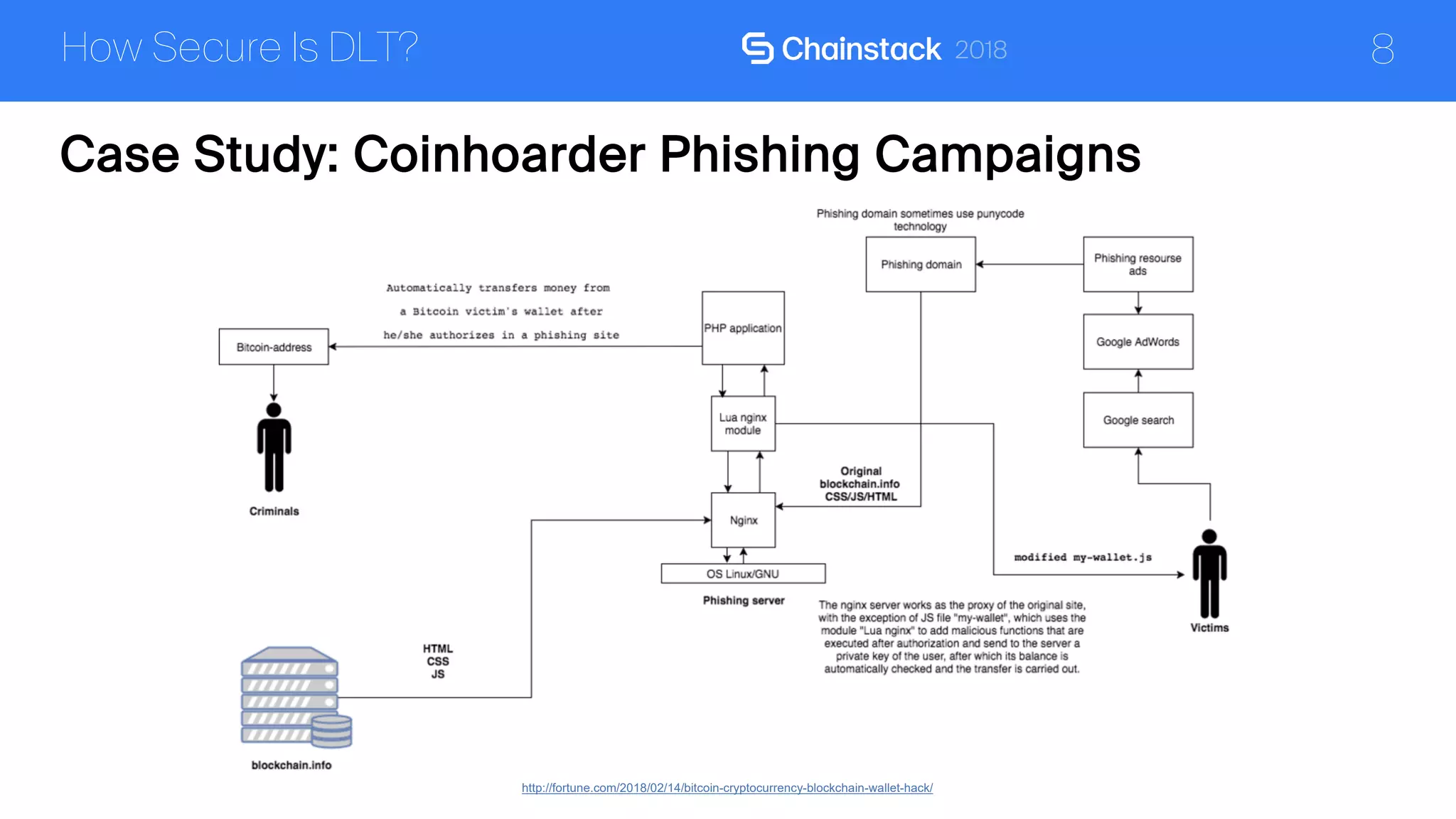
Case Study: Coinhoarder Phishing Campaigns
http://fortune.com/2018/02/14/bitcoin-cryptocurrency-blockchain-wallet-hack/
9
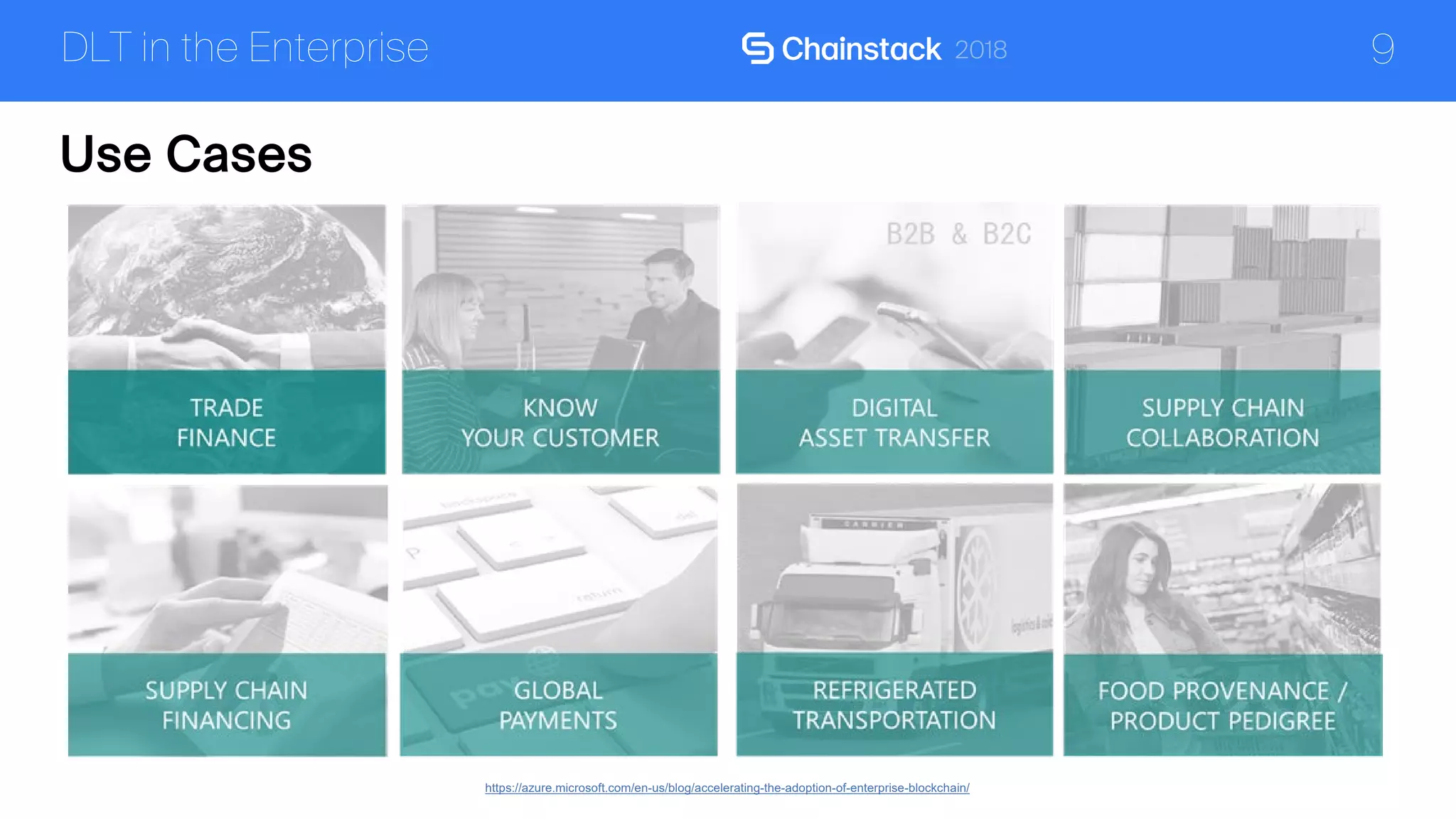
Use Cases
DLT in the Enterprise
https://azure.microsoft.com/en-us/blog/accelerating-the-adoption-of-enterprise-blockchain/
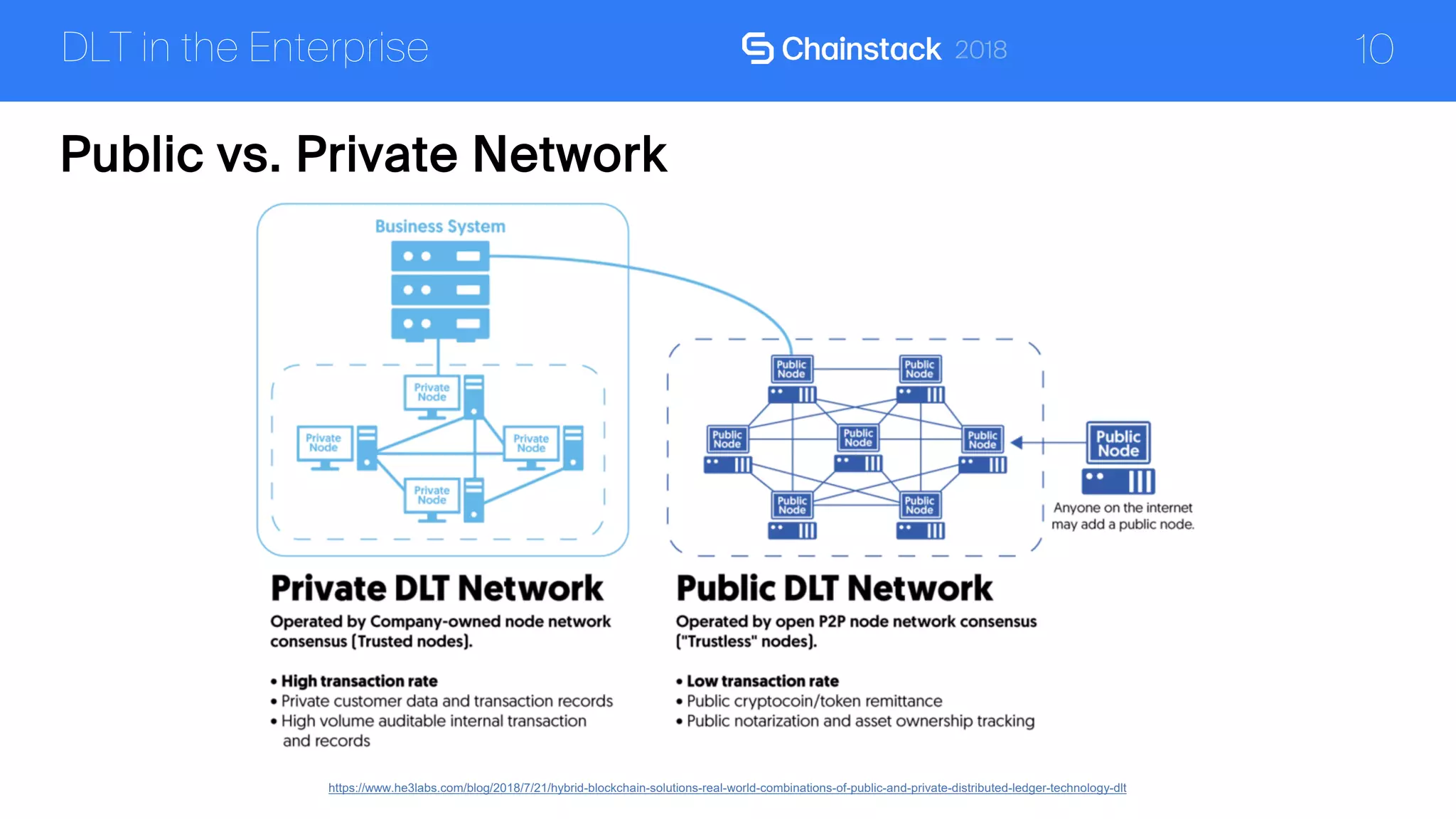
10DLT in the Enterprise
https://www.he3labs.com/blog/2018/7/21/hybrid-blockchain-solutions-real-world-combinations-of-public-and-private-distributed-ledger-technology-dlt
Public vs. Private Network
11
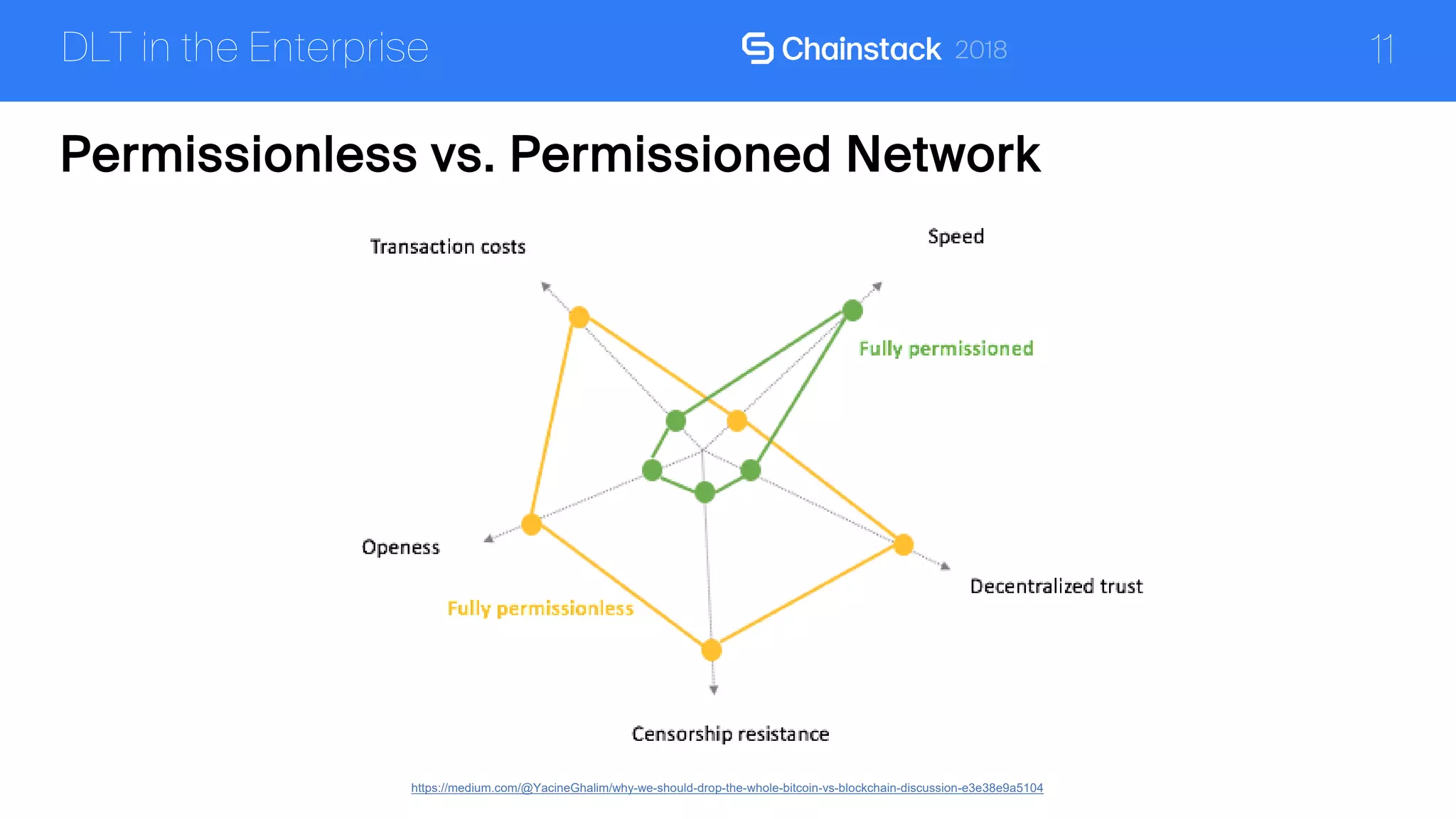
Permissionless vs. Permissioned Network
DLT in the Enterprise
https://medium.com/@YacineGhalim/why-we-should-drop-the-whole-bitcoin-vs-blockchain-discussion-e3e38e9a5104
12
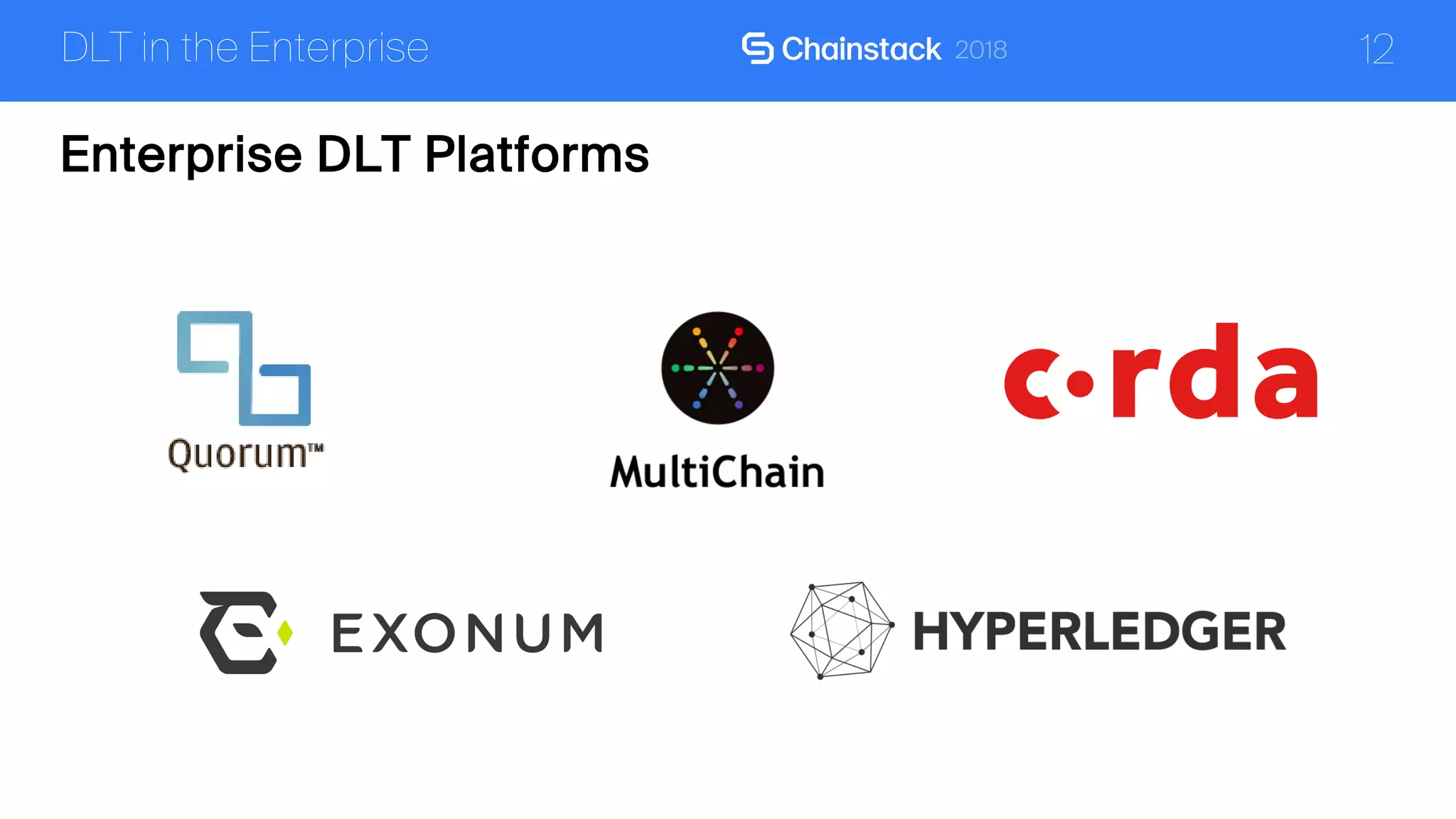
Enterprise DLT Platforms
DLT in the Enterprise
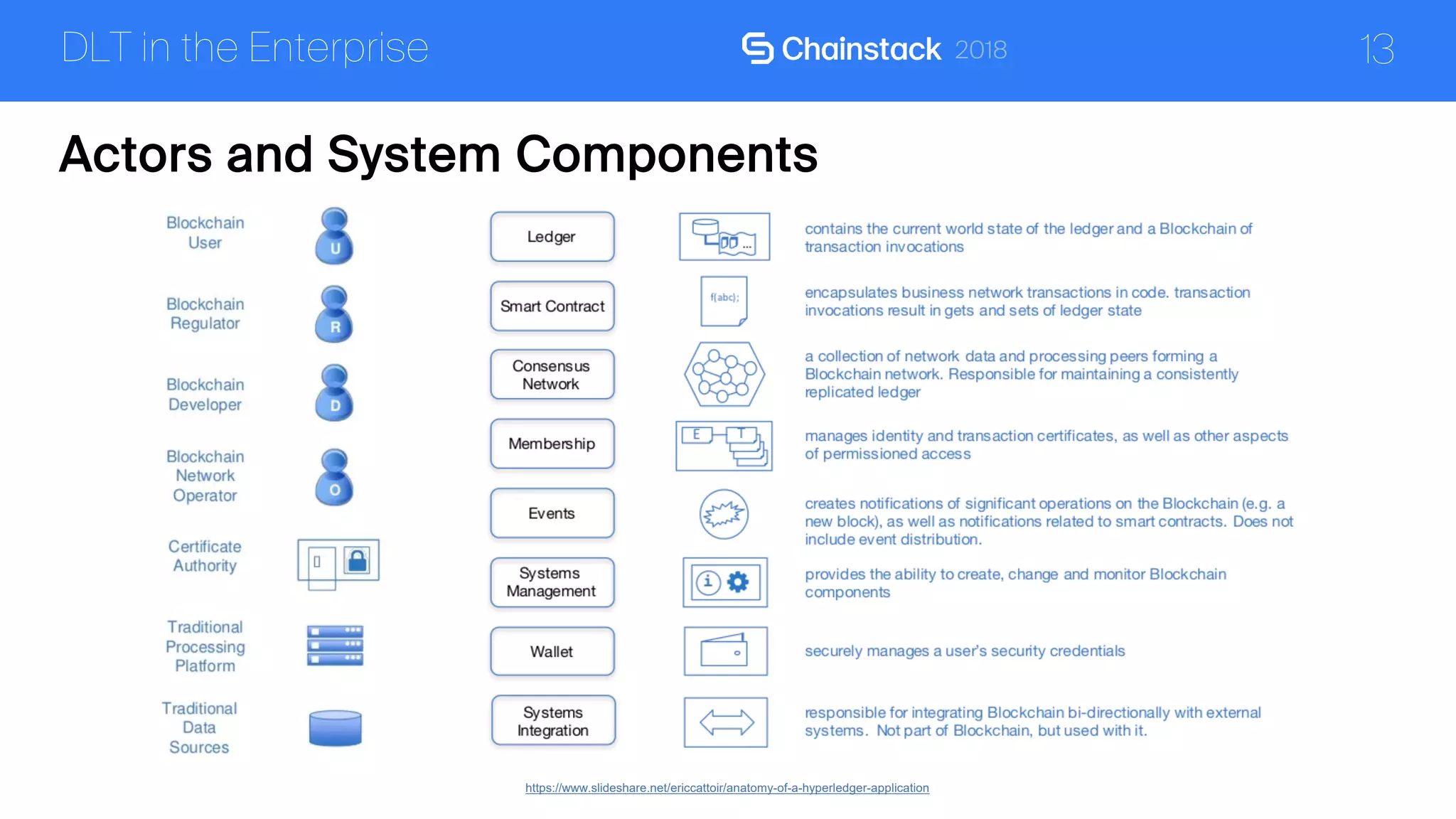
13
Actors and System Components
DLT in the Enterprise
https://www.slideshare.net/ericcattoir/anatomy-of-a-hyperledger-application
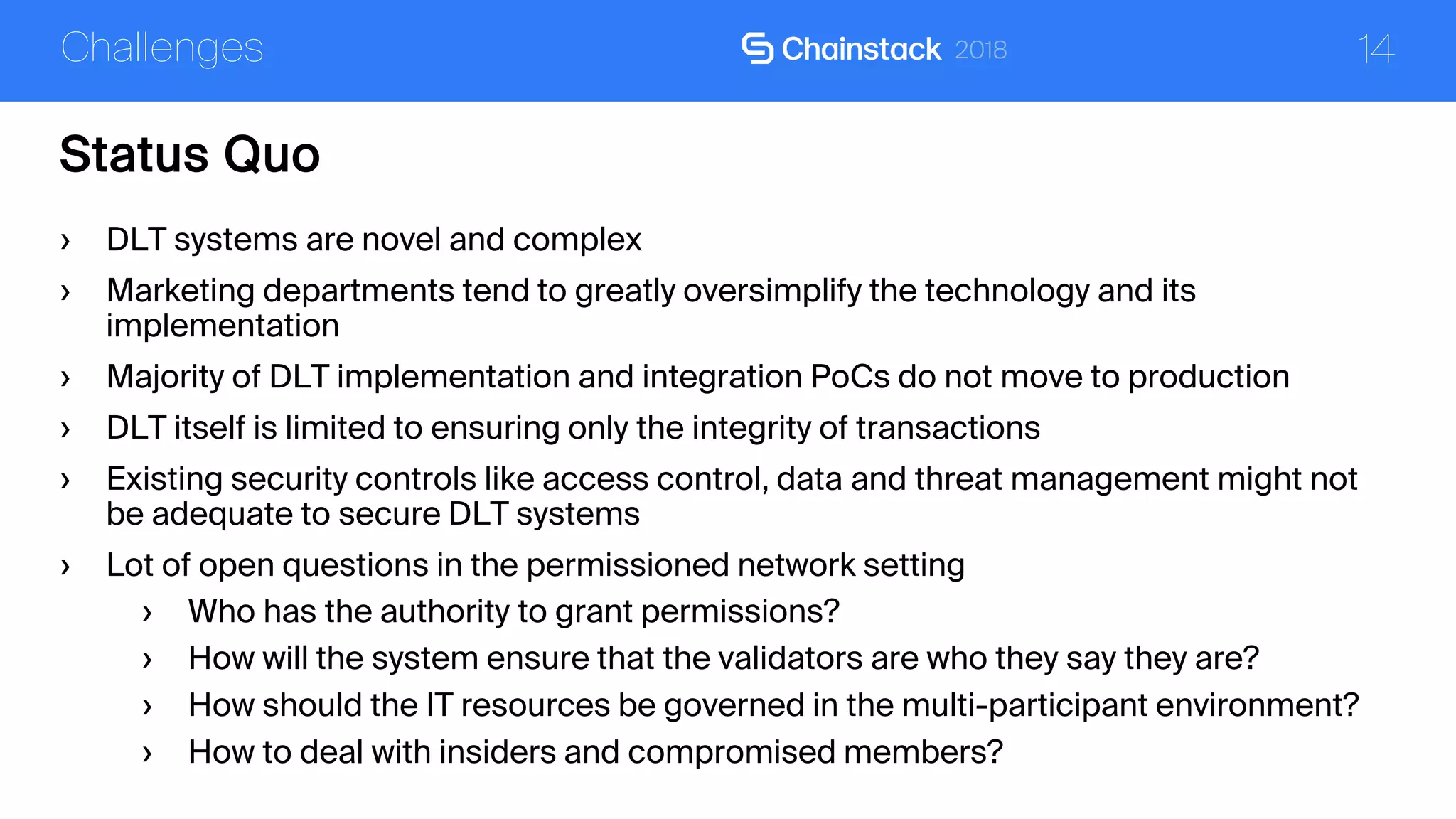
14
Status Quo
Challenges
› DLT systems are novel and complex
› Marketing departments tend to greatly oversimplify the technology and its
implementation
› Majority of DLT implementation and integration PoCs do not move to production
› DLT itself is limited to ensuring only the integrity of transactions
› Existing security controls like access control, data and threat management might not
be adequate to secure DLT systems
› Lot of open questions in the permissioned network setting
› Who has the authority to grant permissions?
› How will the system ensure that the validators are who they say they are?
› How should the IT resources be governed in the multi-participant environment?
› How to deal with insiders and compromised members?
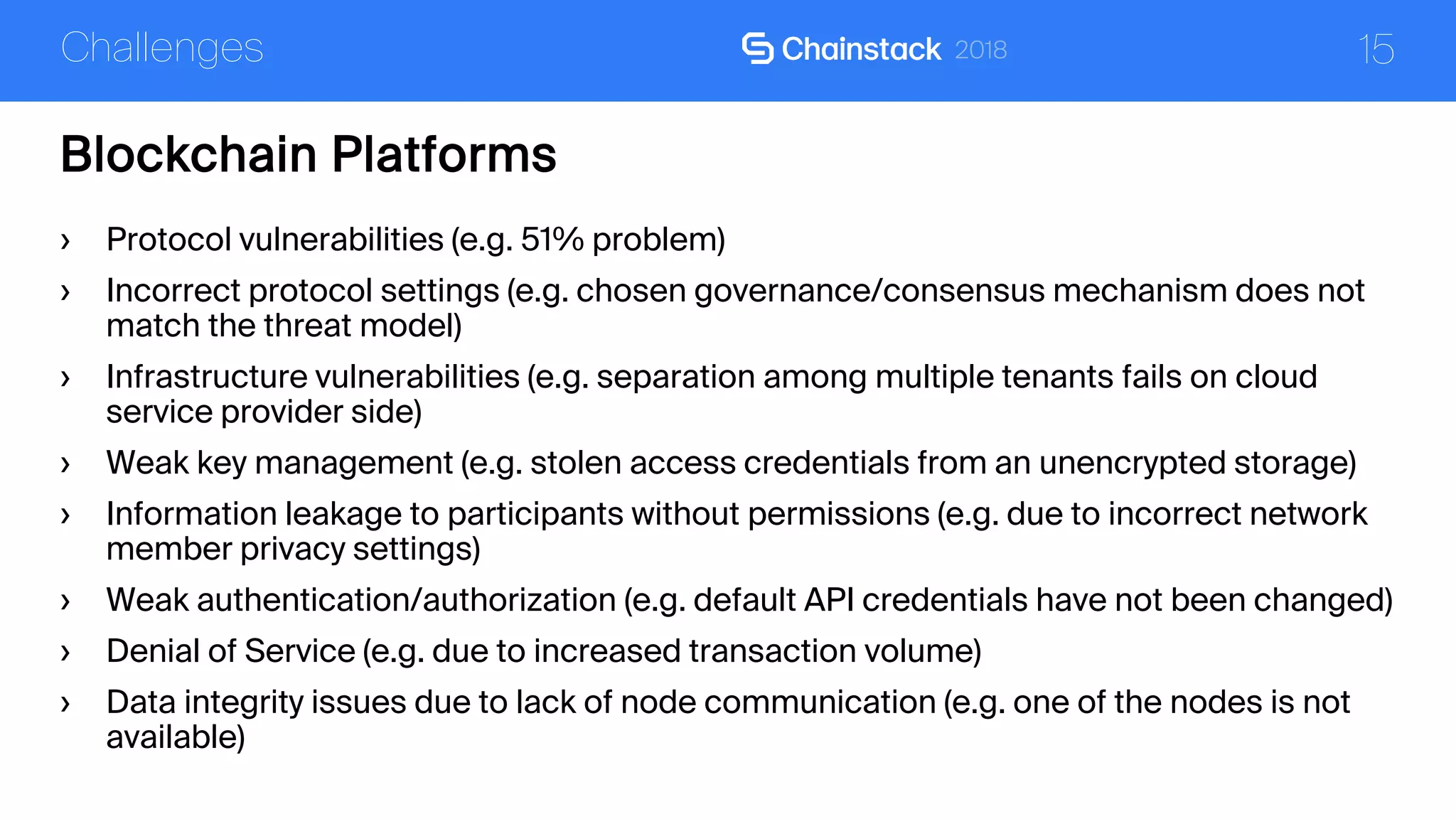
15
Blockchain Platforms
Challenges
› Protocol vulnerabilities (e.g. 51% problem)
› Incorrect protocol settings (e.g. chosen governance/consensus mechanism does not
match the threat model)
› Infrastructure vulnerabilities (e.g. separation among multiple tenants fails on cloud
service provider side)
› Weak key management (e.g. stolen access credentials from an unencrypted storage)
› Information leakage to participants without permissions (e.g. due to incorrect network
member privacy settings)
› Weak authentication/authorization (e.g. default API credentials have not been changed)
› Denial of Service (e.g. due to increased transaction volume)
› Data integrity issues due to lack of node communication (e.g. one of the nodes is not
available)
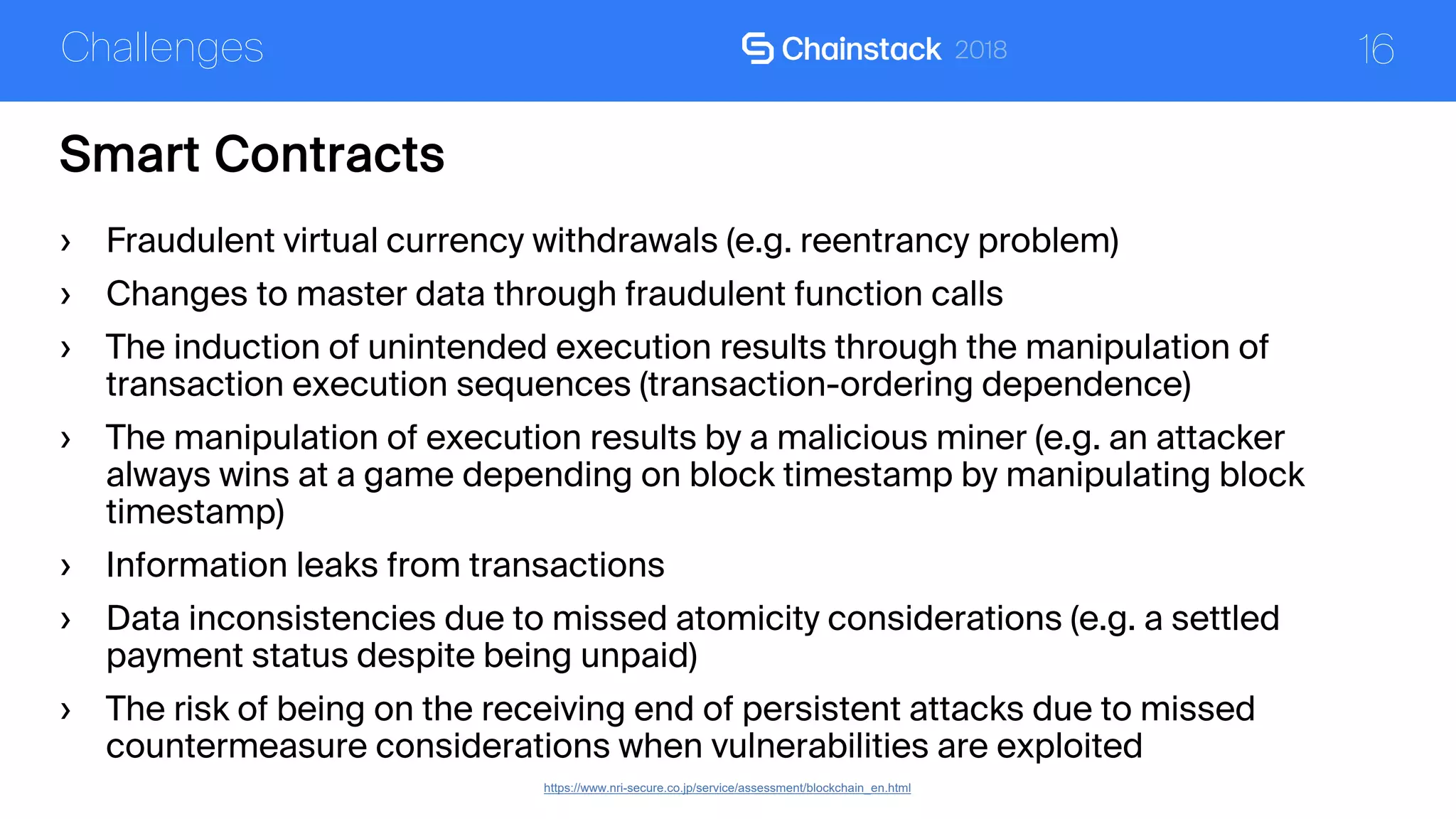
16
Smart Contracts
Challenges
https://www.nri-secure.co.jp/service/assessment/blockchain_en.html
› Fraudulent virtual currency withdrawals (e.g. reentrancy problem)
› Changes to master data through fraudulent function calls
› The induction of unintended execution results through the manipulation of
transaction execution sequences (transaction-ordering dependence)
› The manipulation of execution results by a malicious miner (e.g. an attacker
always wins at a game depending on block timestamp by manipulating block
timestamp)
› Information leaks from transactions
› Data inconsistencies due to missed atomicity considerations (e.g. a settled
payment status despite being unpaid)
› The risk of being on the receiving end of persistent attacks due to missed
countermeasure considerations when vulnerabilities are exploited
17
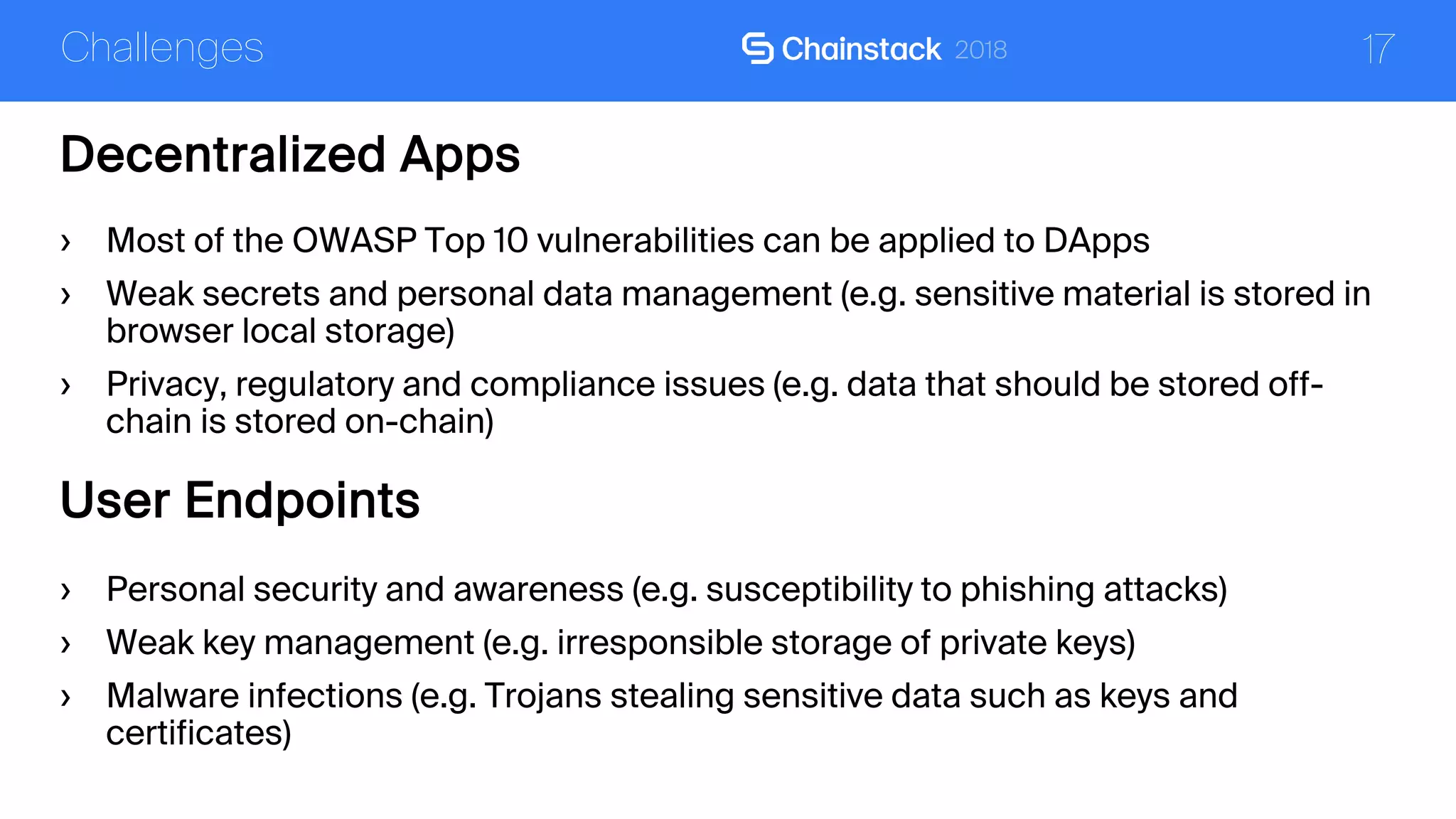
Decentralized Apps
Challenges
› Most of the OWASP Top 10 vulnerabilities can be applied to DApps
› Weak secrets and personal data management (e.g. sensitive material is stored in
browser local storage)
› Privacy, regulatory and compliance issues (e.g. data that should be stored off-
chain is stored on-chain)
User Endpoints
› Personal security and awareness (e.g. susceptibility to phishing attacks)
› Weak key management (e.g. irresponsible storage of private keys)
› Malware infections (e.g. Trojans stealing sensitive data such as keys and
certificates)
18
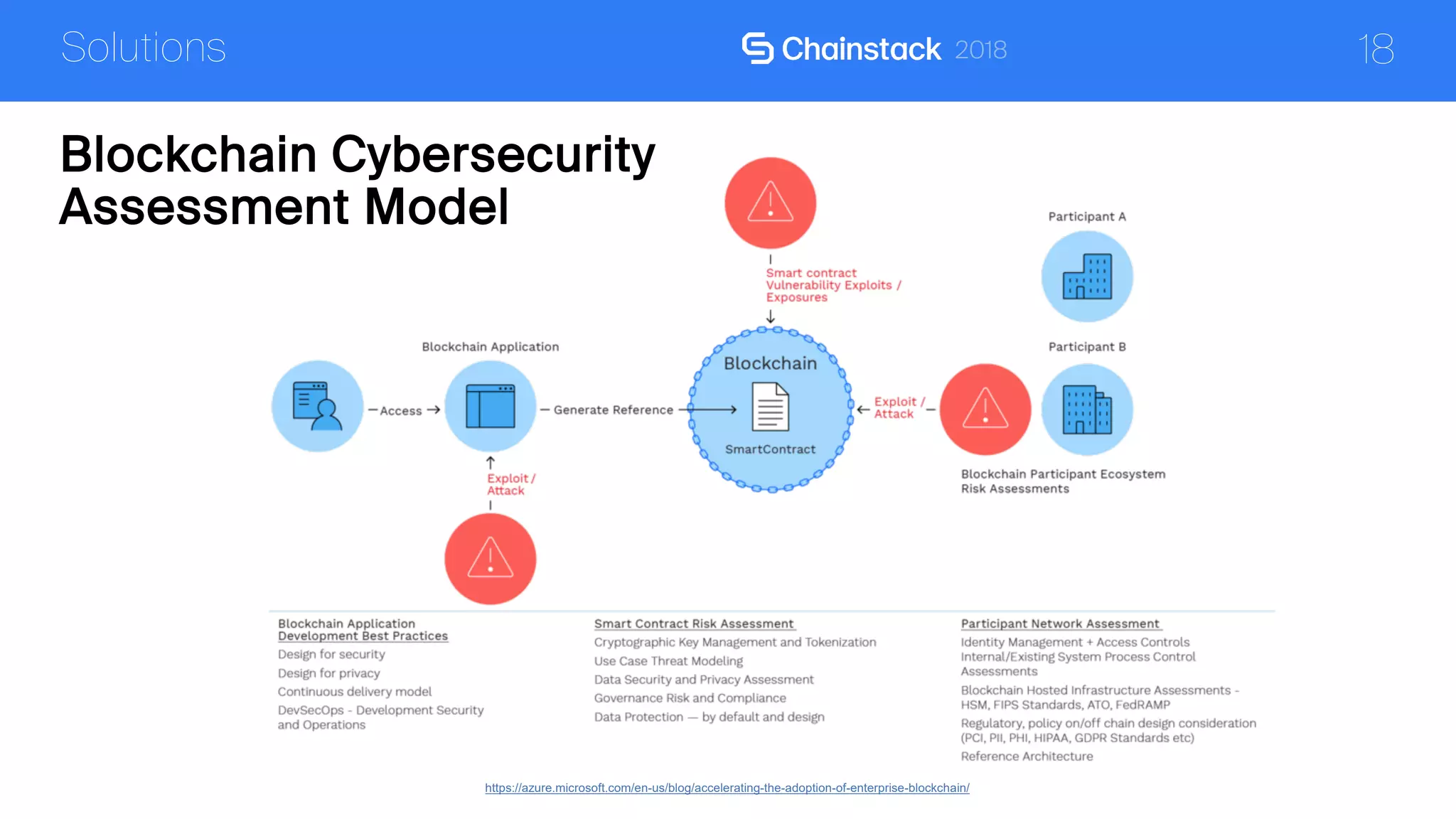
Blockchain Cybersecurity
Assessment Model
Solutions
https://azure.microsoft.com/en-us/blog/accelerating-the-adoption-of-enterprise-blockchain/
19
Blockchain-as-a-Service
Solutions
https://kapitalized.com/blog/hypothetical-blockchain-security-vulnerabilities-and-how-they-can-be-addressed
Since most organizations looking to
adopt blockchain applications likely
won’t have the technical expertise
entirely in-house, the use of third-party
Blockchain-as-a-Service (BaaS)
services will become required.
20
Best Practices We Use at Chainstack
Solutions
› Robust key management (enterprise-grade KMS, HSM)
› Network hardening (dedicated network environments, traffic filtering)
› Images and containers hardening
› File system is encrypted
› No system admin (e.g. SSH) access, only APIs when required
› Service-to-service security
› Persistent storage encryption
› Rigorous on-chain and off-chain governance and network participant ecosystem
design
› MFA for user accounts
21
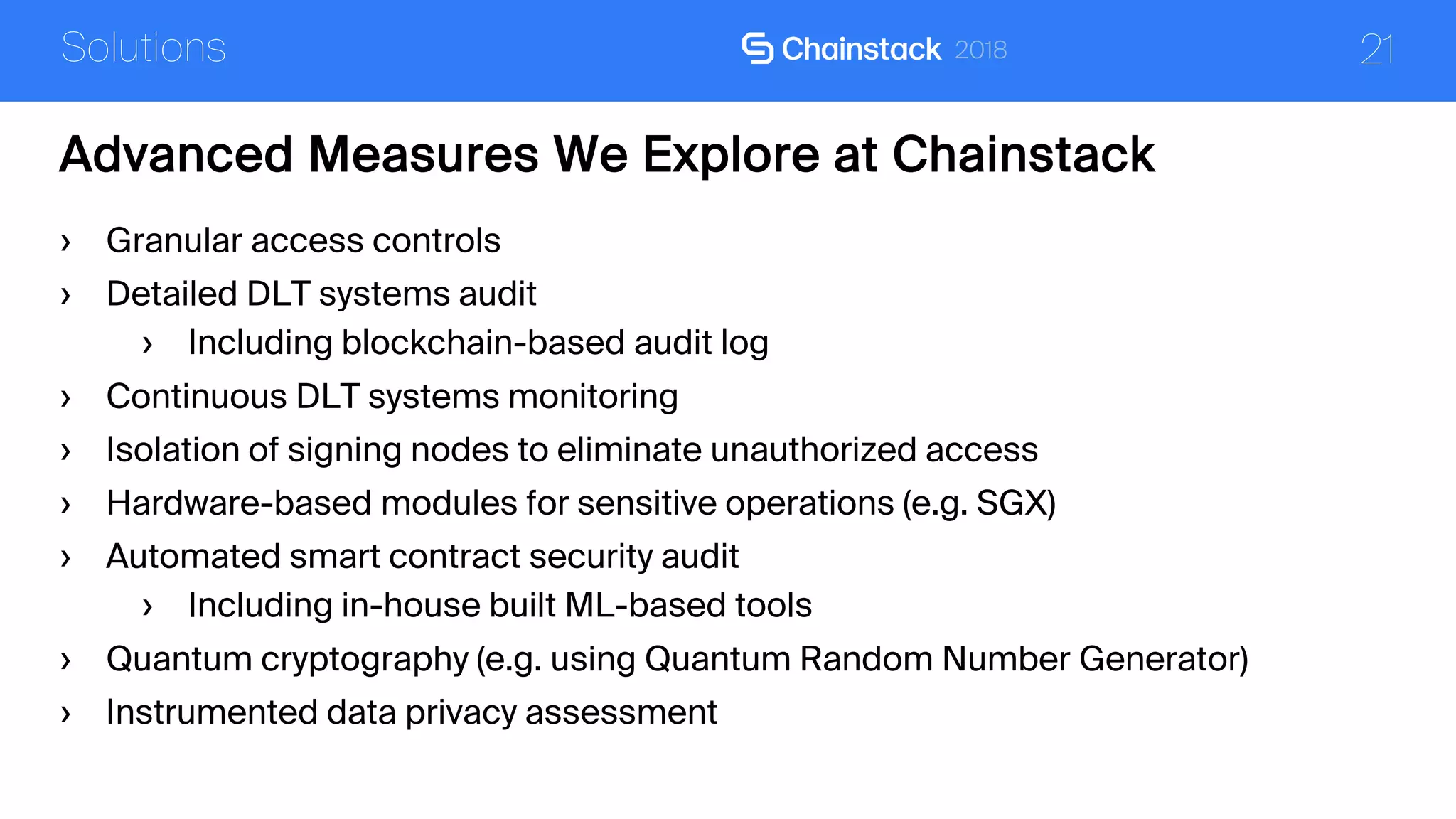
Advanced Measures We Explore at Chainstack
Solutions
› Granular access controls
› Detailed DLT systems audit
› Including blockchain-based audit log
› Continuous DLT systems monitoring
› Isolation of signing nodes to eliminate unauthorized access
› Hardware-based modules for sensitive operations (e.g. SGX)
› Automated smart contract security audit
› Including in-house built ML-based tools
› Quantum cryptography (e.g. using Quantum Random Number Generator)
› Instrumented data privacy assessment
ea@chainstack.com
Thank You!
Questions?

Distributed Ledger Security in the Enterprise Environment

  • 1.
    Distributed Ledger Security inthe Enterprise Environment
  • 2.
    2 1. Technology 2. Howsecure is it? 3. What if we take it to enterprise? 4. Major challenges 5. Potential solutions Outline
  • 3.
  • 4.
  • 5.
    5How Secure IsDLT? https://azure.microsoft.com/en-us/blog/blockchain-basics-partner-strategy-azure/ The Promise
  • 6.
    6How Secure IsDLT? https://howmuch.net/articles/biggest-crypto-hacks-scams The Reality
  • 7.
    7How Secure IsDLT? https://magoo.github.io/Blockchain-Graveyard/ Breach Reasons
  • 8.
    8How Secure IsDLT? Case Study: Coinhoarder Phishing Campaigns http://fortune.com/2018/02/14/bitcoin-cryptocurrency-blockchain-wallet-hack/
  • 9.
    9 Use Cases DLT inthe Enterprise https://azure.microsoft.com/en-us/blog/accelerating-the-adoption-of-enterprise-blockchain/
  • 10.
    10DLT in theEnterprise https://www.he3labs.com/blog/2018/7/21/hybrid-blockchain-solutions-real-world-combinations-of-public-and-private-distributed-ledger-technology-dlt Public vs. Private Network
  • 11.
    11 Permissionless vs. PermissionedNetwork DLT in the Enterprise https://medium.com/@YacineGhalim/why-we-should-drop-the-whole-bitcoin-vs-blockchain-discussion-e3e38e9a5104
  • 12.
  • 13.
    13 Actors and SystemComponents DLT in the Enterprise https://www.slideshare.net/ericcattoir/anatomy-of-a-hyperledger-application
  • 14.
    14 Status Quo Challenges › DLTsystems are novel and complex › Marketing departments tend to greatly oversimplify the technology and its implementation › Majority of DLT implementation and integration PoCs do not move to production › DLT itself is limited to ensuring only the integrity of transactions › Existing security controls like access control, data and threat management might not be adequate to secure DLT systems › Lot of open questions in the permissioned network setting › Who has the authority to grant permissions? › How will the system ensure that the validators are who they say they are? › How should the IT resources be governed in the multi-participant environment? › How to deal with insiders and compromised members?
  • 15.
    15 Blockchain Platforms Challenges › Protocolvulnerabilities (e.g. 51% problem) › Incorrect protocol settings (e.g. chosen governance/consensus mechanism does not match the threat model) › Infrastructure vulnerabilities (e.g. separation among multiple tenants fails on cloud service provider side) › Weak key management (e.g. stolen access credentials from an unencrypted storage) › Information leakage to participants without permissions (e.g. due to incorrect network member privacy settings) › Weak authentication/authorization (e.g. default API credentials have not been changed) › Denial of Service (e.g. due to increased transaction volume) › Data integrity issues due to lack of node communication (e.g. one of the nodes is not available)
  • 16.
    16 Smart Contracts Challenges https://www.nri-secure.co.jp/service/assessment/blockchain_en.html › Fraudulentvirtual currency withdrawals (e.g. reentrancy problem) › Changes to master data through fraudulent function calls › The induction of unintended execution results through the manipulation of transaction execution sequences (transaction-ordering dependence) › The manipulation of execution results by a malicious miner (e.g. an attacker always wins at a game depending on block timestamp by manipulating block timestamp) › Information leaks from transactions › Data inconsistencies due to missed atomicity considerations (e.g. a settled payment status despite being unpaid) › The risk of being on the receiving end of persistent attacks due to missed countermeasure considerations when vulnerabilities are exploited
  • 17.
    17 Decentralized Apps Challenges › Mostof the OWASP Top 10 vulnerabilities can be applied to DApps › Weak secrets and personal data management (e.g. sensitive material is stored in browser local storage) › Privacy, regulatory and compliance issues (e.g. data that should be stored off- chain is stored on-chain) User Endpoints › Personal security and awareness (e.g. susceptibility to phishing attacks) › Weak key management (e.g. irresponsible storage of private keys) › Malware infections (e.g. Trojans stealing sensitive data such as keys and certificates)
  • 18.
  • 19.
    19 Blockchain-as-a-Service Solutions https://kapitalized.com/blog/hypothetical-blockchain-security-vulnerabilities-and-how-they-can-be-addressed Since most organizationslooking to adopt blockchain applications likely won’t have the technical expertise entirely in-house, the use of third-party Blockchain-as-a-Service (BaaS) services will become required.
  • 20.
    20 Best Practices WeUse at Chainstack Solutions › Robust key management (enterprise-grade KMS, HSM) › Network hardening (dedicated network environments, traffic filtering) › Images and containers hardening › File system is encrypted › No system admin (e.g. SSH) access, only APIs when required › Service-to-service security › Persistent storage encryption › Rigorous on-chain and off-chain governance and network participant ecosystem design › MFA for user accounts
  • 21.
    21 Advanced Measures WeExplore at Chainstack Solutions › Granular access controls › Detailed DLT systems audit › Including blockchain-based audit log › Continuous DLT systems monitoring › Isolation of signing nodes to eliminate unauthorized access › Hardware-based modules for sensitive operations (e.g. SGX) › Automated smart contract security audit › Including in-house built ML-based tools › Quantum cryptography (e.g. using Quantum Random Number Generator) › Instrumented data privacy assessment
  • 22.