Blockchain Security
Identifying Risks and Mitigating
Vulnerabilities
Introduction to Blockchain Security
 Critical Role of Blockchain Security: Blockchain
security is essential for maintaining the integrity,
confidentiality, and reliability of transactions on
distributed ledger systems, ensuring trustworthy
blockchain implementations.
 Identifying and Addressing Vulnerabilities:
Blockchain technology faces risks such as cyberattacks,
weak smart contract coding, and privacy challenges.
Identifying and addressing these vulnerabilities is key
to maintaining secure blockchain networks.
 Mitigation Strategies and Best Practices:
Implementing effective strategies and best practices for
mitigating blockchain vulnerabilities is crucial for
organizations to leverage blockchain technology
securely while minimizing risks and protecting sensitive
data.
Understanding Blockchain Risks
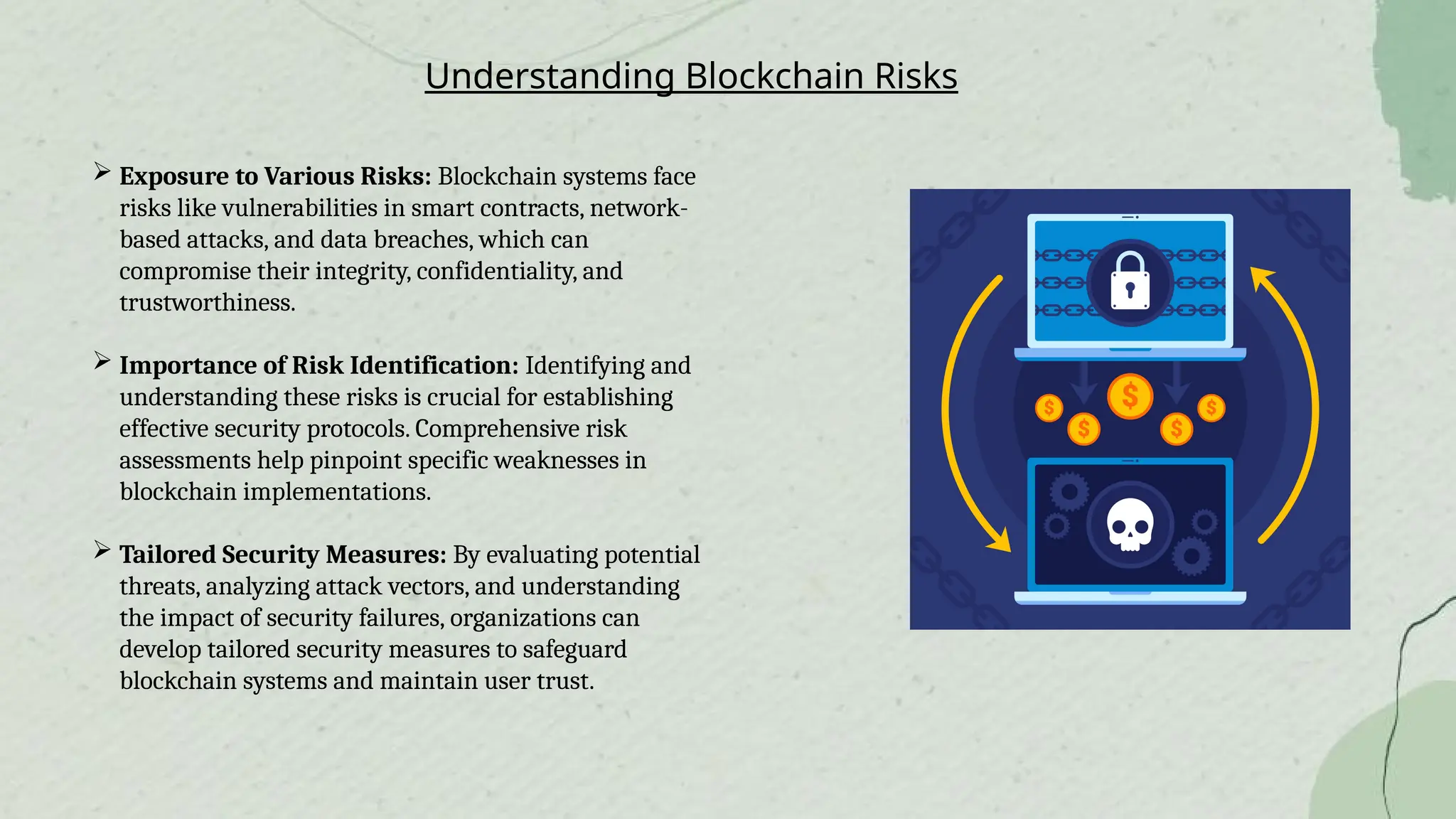
 Exposure to Various Risks: Blockchain systems face
risks like vulnerabilities in smart contracts, network-
based attacks, and data breaches, which can
compromise their integrity, confidentiality, and
trustworthiness.
 Importance of Risk Identification: Identifying and
understanding these risks is crucial for establishing
effective security protocols. Comprehensive risk
assessments help pinpoint specific weaknesses in
blockchain implementations.
 Tailored Security Measures: By evaluating potential
threats, analyzing attack vectors, and understanding
the impact of security failures, organizations can
develop tailored security measures to safeguard
blockchain systems and maintain user trust.
Smart Contract Vulnerabilities
 Vulnerabilities in Smart Contracts: Smart
contracts automate processes but are susceptible
to vulnerabilities like reentrancy attacks and
integer overflows, which can exploit contract
logic and manipulate calculations.
 Financial and Operational Risks: Coding
errors in smart contracts can lead to significant
financial and operational risks, making it crucial
for developers to understand common exploits
and secure their code effectively.
 Security Best Practices: Regular third-party
audits, thorough testing in simulated
environments, and adherence to secure coding
standards are essential to reduce risks and
ensure smart contracts operate reliably and
securely in blockchain applications.
Network Security Threats
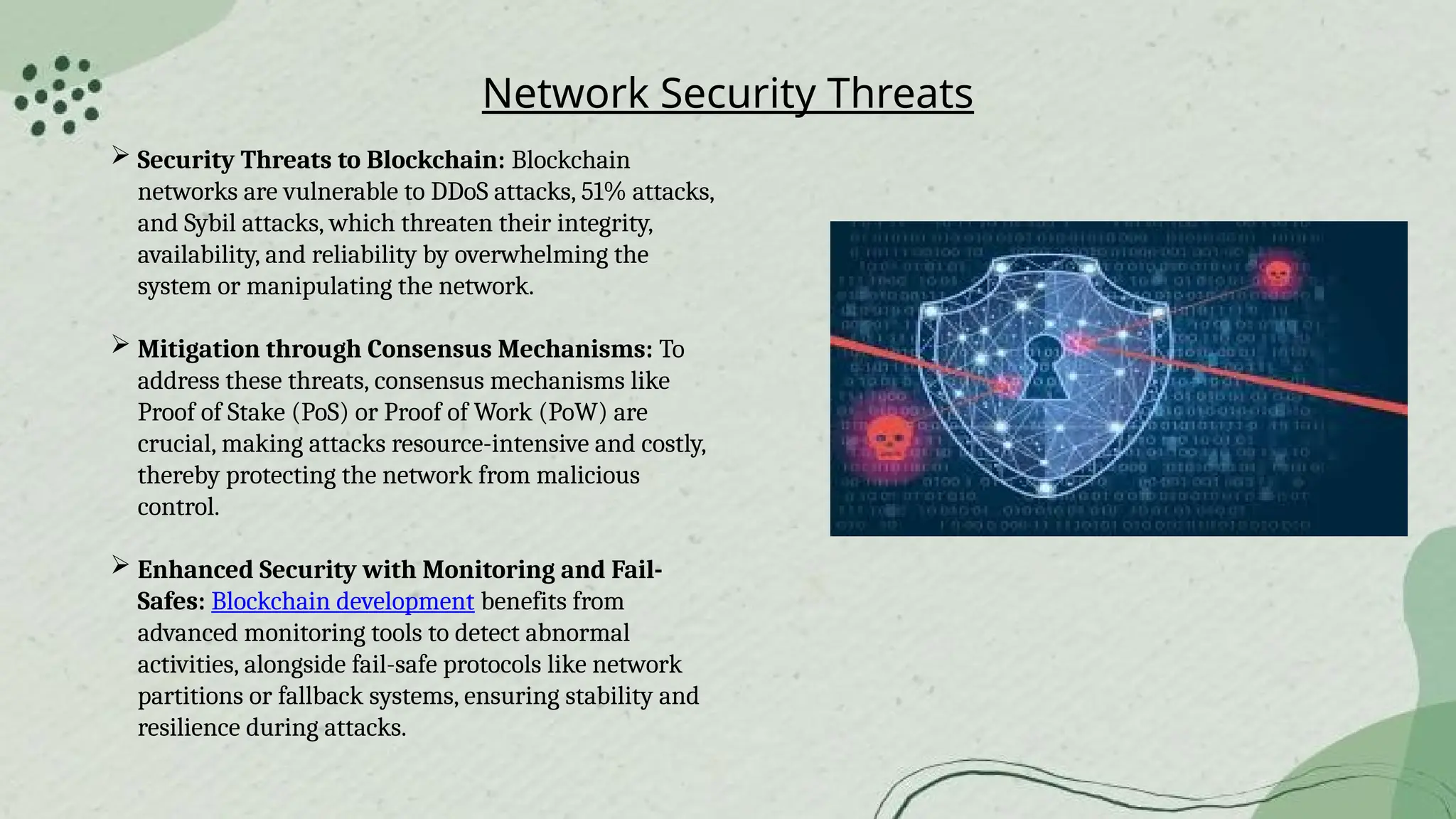
 Security Threats to Blockchain: Blockchain
networks are vulnerable to DDoS attacks, 51% attacks,
and Sybil attacks, which threaten their integrity,
availability, and reliability by overwhelming the
system or manipulating the network.
 Mitigation through Consensus Mechanisms: To
address these threats, consensus mechanisms like
Proof of Stake (PoS) or Proof of Work (PoW) are
crucial, making attacks resource-intensive and costly,
thereby protecting the network from malicious
control.
 Enhanced Security with Monitoring and Fail-
Safes: Blockchain development benefits from
advanced monitoring tools to detect abnormal
activities, alongside fail-safe protocols like network
partitions or fallback systems, ensuring stability and
resilience during attacks.
Data Privacy Concerns
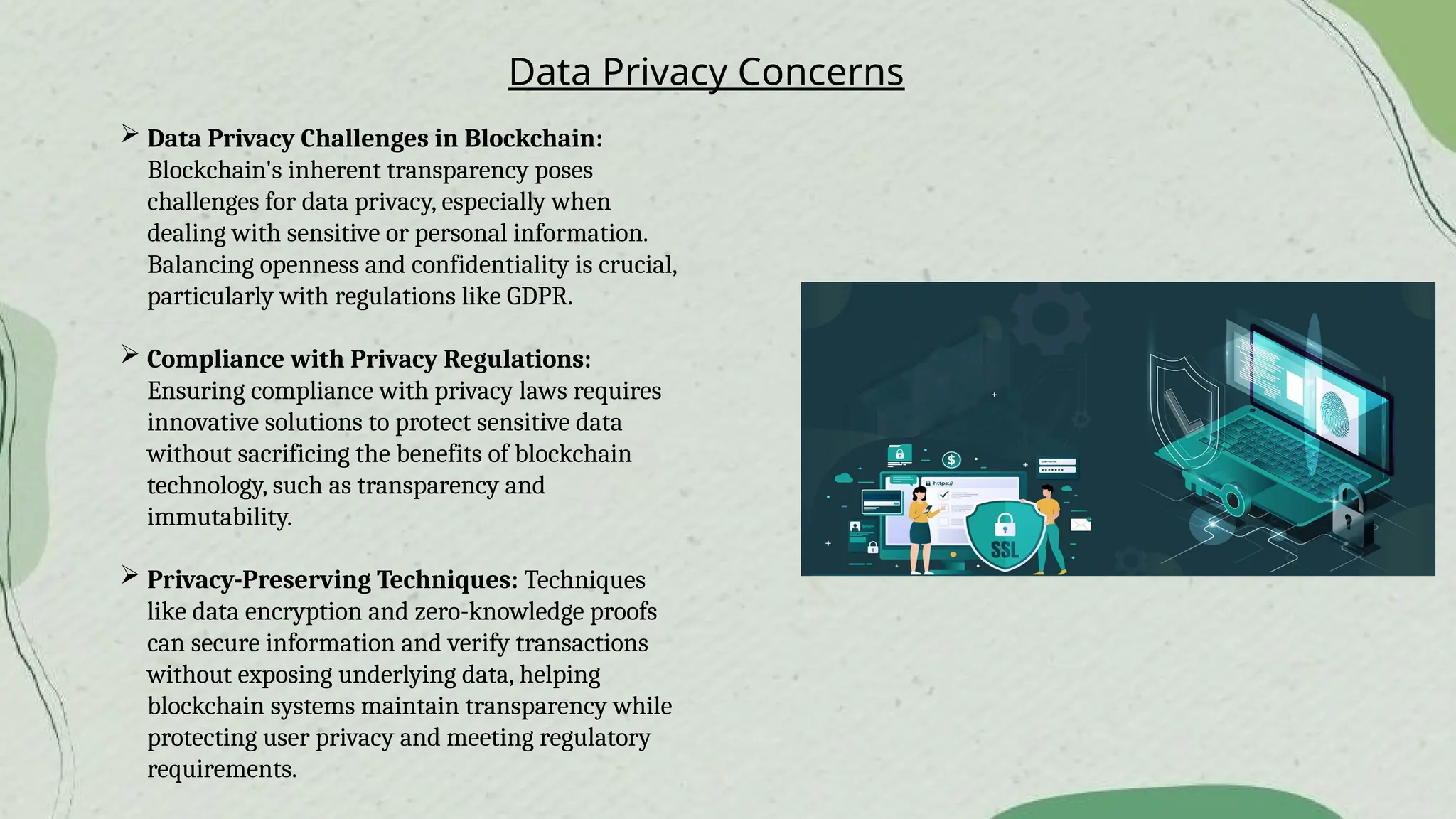
 Data Privacy Challenges in Blockchain:
Blockchain's inherent transparency poses
challenges for data privacy, especially when
dealing with sensitive or personal information.
Balancing openness and confidentiality is crucial,
particularly with regulations like GDPR.
 Compliance with Privacy Regulations:
Ensuring compliance with privacy laws requires
innovative solutions to protect sensitive data
without sacrificing the benefits of blockchain
technology, such as transparency and
immutability.
 Privacy-Preserving Techniques: Techniques
like data encryption and zero-knowledge proofs
can secure information and verify transactions
without exposing underlying data, helping
blockchain systems maintain transparency while
protecting user privacy and meeting regulatory
requirements.
Regulatory Compliance
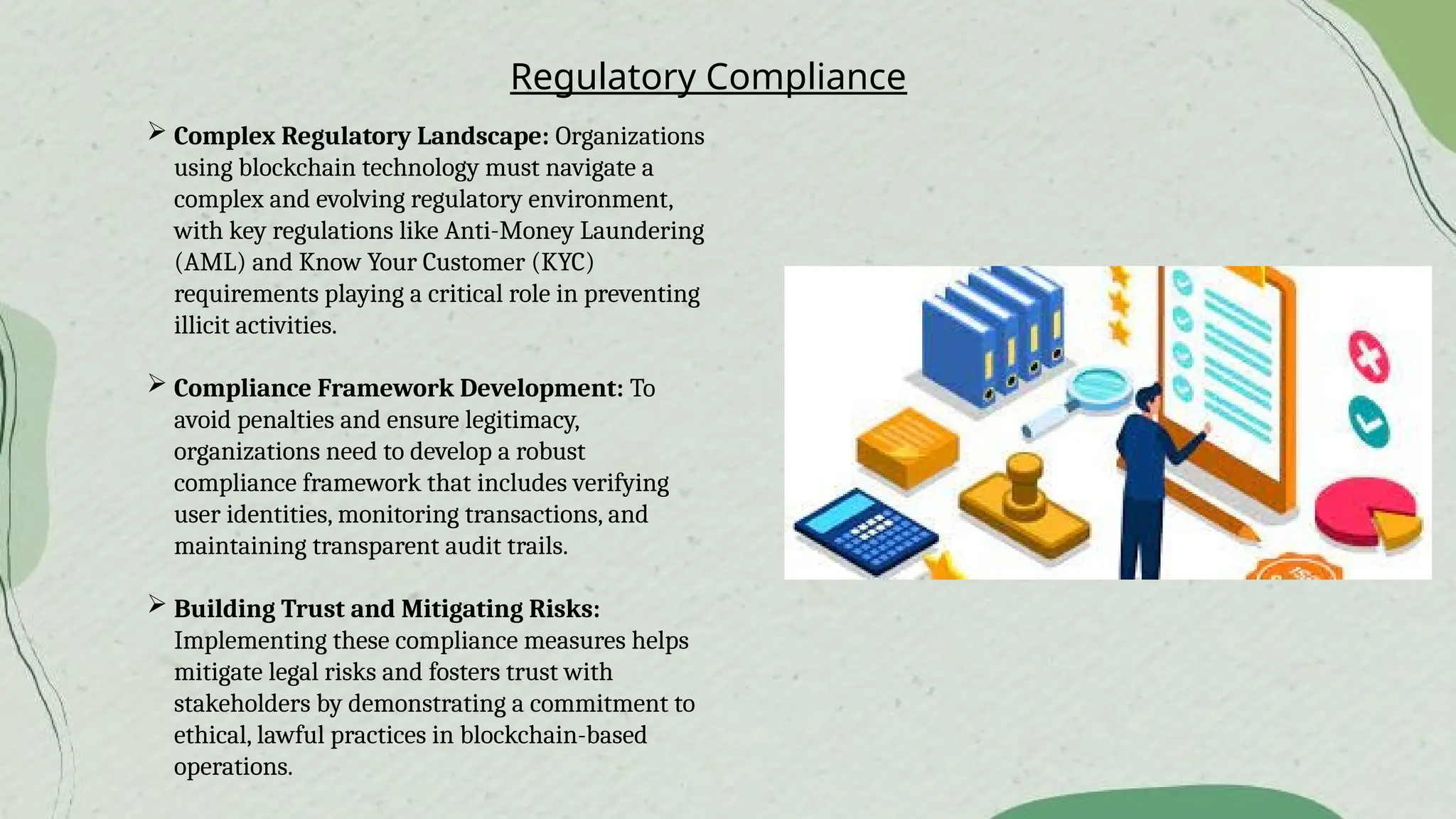
 Complex Regulatory Landscape: Organizations
using blockchain technology must navigate a
complex and evolving regulatory environment,
with key regulations like Anti-Money Laundering
(AML) and Know Your Customer (KYC)
requirements playing a critical role in preventing
illicit activities.
 Compliance Framework Development: To
avoid penalties and ensure legitimacy,
organizations need to develop a robust
compliance framework that includes verifying
user identities, monitoring transactions, and
maintaining transparent audit trails.
 Building Trust and Mitigating Risks:
Implementing these compliance measures helps
mitigate legal risks and fosters trust with
stakeholders by demonstrating a commitment to
ethical, lawful practices in blockchain-based
operations.
Best Practices for Security
 Best Practices for Blockchain Security:
Maintaining robust blockchain security involves
implementing best practices like regular security
audits, employee training to raise awareness of
threats, and incident response plans to minimize
breach impact.
 Proactive and Adaptive Measures: Proactive
measures, including monitoring emerging threats
and updating security strategies, are essential to
address new risks and enhance the resilience of
blockchain systems against evolving cyber threats.
 Building Trust and Resilience: An adaptive
approach to security not only strengthens the
blockchain's defense against cyberattacks but also
reinforces trust in its reliability and security,
positioning it as a dependable technology.
Conclusion and Future Outlook
In conclusion, navigating the complex landscape of blockchain security demands a proactive and
strategic approach to identify potential risks and mitigate vulnerabilities. With the constant
evolution of blockchain technology, organizations must stay informed about emerging threats and
innovative security solutions. By continuously assessing risks, implementing best practices, and
adapting to new challenges, businesses can maintain secure blockchain environments that foster
trust, ensure data integrity, and support safe and effective transactions in an increasingly digital
world.
Thanks!
Contact US
+1 774 435 1060 sales@siliconithub.com
Our Social Media
https://www.siliconithub.com

Blockchain Security Unveiled: Risks & Resilience

  • 1.
    Blockchain Security Identifying Risksand Mitigating Vulnerabilities
  • 2.
    Introduction to BlockchainSecurity  Critical Role of Blockchain Security: Blockchain security is essential for maintaining the integrity, confidentiality, and reliability of transactions on distributed ledger systems, ensuring trustworthy blockchain implementations.  Identifying and Addressing Vulnerabilities: Blockchain technology faces risks such as cyberattacks, weak smart contract coding, and privacy challenges. Identifying and addressing these vulnerabilities is key to maintaining secure blockchain networks.  Mitigation Strategies and Best Practices: Implementing effective strategies and best practices for mitigating blockchain vulnerabilities is crucial for organizations to leverage blockchain technology securely while minimizing risks and protecting sensitive data.
  • 3.
    Understanding Blockchain Risks Exposure to Various Risks: Blockchain systems face risks like vulnerabilities in smart contracts, network- based attacks, and data breaches, which can compromise their integrity, confidentiality, and trustworthiness.  Importance of Risk Identification: Identifying and understanding these risks is crucial for establishing effective security protocols. Comprehensive risk assessments help pinpoint specific weaknesses in blockchain implementations.  Tailored Security Measures: By evaluating potential threats, analyzing attack vectors, and understanding the impact of security failures, organizations can develop tailored security measures to safeguard blockchain systems and maintain user trust.
  • 4.
    Smart Contract Vulnerabilities Vulnerabilities in Smart Contracts: Smart contracts automate processes but are susceptible to vulnerabilities like reentrancy attacks and integer overflows, which can exploit contract logic and manipulate calculations.  Financial and Operational Risks: Coding errors in smart contracts can lead to significant financial and operational risks, making it crucial for developers to understand common exploits and secure their code effectively.  Security Best Practices: Regular third-party audits, thorough testing in simulated environments, and adherence to secure coding standards are essential to reduce risks and ensure smart contracts operate reliably and securely in blockchain applications.
  • 5.
    Network Security Threats Security Threats to Blockchain: Blockchain networks are vulnerable to DDoS attacks, 51% attacks, and Sybil attacks, which threaten their integrity, availability, and reliability by overwhelming the system or manipulating the network.  Mitigation through Consensus Mechanisms: To address these threats, consensus mechanisms like Proof of Stake (PoS) or Proof of Work (PoW) are crucial, making attacks resource-intensive and costly, thereby protecting the network from malicious control.  Enhanced Security with Monitoring and Fail- Safes: Blockchain development benefits from advanced monitoring tools to detect abnormal activities, alongside fail-safe protocols like network partitions or fallback systems, ensuring stability and resilience during attacks.
  • 6.
    Data Privacy Concerns Data Privacy Challenges in Blockchain: Blockchain's inherent transparency poses challenges for data privacy, especially when dealing with sensitive or personal information. Balancing openness and confidentiality is crucial, particularly with regulations like GDPR.  Compliance with Privacy Regulations: Ensuring compliance with privacy laws requires innovative solutions to protect sensitive data without sacrificing the benefits of blockchain technology, such as transparency and immutability.  Privacy-Preserving Techniques: Techniques like data encryption and zero-knowledge proofs can secure information and verify transactions without exposing underlying data, helping blockchain systems maintain transparency while protecting user privacy and meeting regulatory requirements.
  • 7.
    Regulatory Compliance  ComplexRegulatory Landscape: Organizations using blockchain technology must navigate a complex and evolving regulatory environment, with key regulations like Anti-Money Laundering (AML) and Know Your Customer (KYC) requirements playing a critical role in preventing illicit activities.  Compliance Framework Development: To avoid penalties and ensure legitimacy, organizations need to develop a robust compliance framework that includes verifying user identities, monitoring transactions, and maintaining transparent audit trails.  Building Trust and Mitigating Risks: Implementing these compliance measures helps mitigate legal risks and fosters trust with stakeholders by demonstrating a commitment to ethical, lawful practices in blockchain-based operations.
  • 8.
    Best Practices forSecurity  Best Practices for Blockchain Security: Maintaining robust blockchain security involves implementing best practices like regular security audits, employee training to raise awareness of threats, and incident response plans to minimize breach impact.  Proactive and Adaptive Measures: Proactive measures, including monitoring emerging threats and updating security strategies, are essential to address new risks and enhance the resilience of blockchain systems against evolving cyber threats.  Building Trust and Resilience: An adaptive approach to security not only strengthens the blockchain's defense against cyberattacks but also reinforces trust in its reliability and security, positioning it as a dependable technology.
  • 9.
    Conclusion and FutureOutlook In conclusion, navigating the complex landscape of blockchain security demands a proactive and strategic approach to identify potential risks and mitigate vulnerabilities. With the constant evolution of blockchain technology, organizations must stay informed about emerging threats and innovative security solutions. By continuously assessing risks, implementing best practices, and adapting to new challenges, businesses can maintain secure blockchain environments that foster trust, ensure data integrity, and support safe and effective transactions in an increasingly digital world.
  • 10.
    Thanks! Contact US +1 774435 1060 sales@siliconithub.com Our Social Media https://www.siliconithub.com