Session= 2019-2021
Enhancing Learning through
ICT (Paper-6)
Semester-3
Disabled Children
Submitted To :- Mrs. Mandeep Kaur
Submitted By:- Krishma Bawa
Roll. No. 35
University Roll. No. 11081927311
The Convention of the Rights of people with
disabilities adopted in the year 2006, defines
a disability as:
 “Persons with disabilities include those who
have long-term physical, mental, intellectual or
sensory impairments which in interaction with
various barriers may hinder their full and
effective participation in society on an equal
basis with others.”
-Causes
There are numerous causes of disability. It is unfortunately
true that most of these instances could have been avoided
had they been provided with proper prevention and access
to relevant treatment. In deed, a disability is mainly caused
by:
 Genetic problems
 Disease (Polio for example)
 Malnutrition
 War (particularly through anti-personal mines)
 Sanitary neglect
 Poverty
Consequences:-
 Social marginalization:-
• A disability of a child is often followed by his being marginalized in the
society. For example, it is found that only around 2% of the disabled
children have access to education.
 Violence:-
• There is an increasing risk of disabled children becoming unfortunate
victims of violence due to their inability to defend themselves. Thus,
physical, psychological and emotional violence happens to be a sad
reality that disabled children undergo in domestic, institutional as
well as social circles.
 Discrimination due to disability:-
• Discrimination due to disability is numerous: in fields such as
education, lodging, transportation and cultural life, most of the places
and services concerned are largely inaccessible to individuals
suffering from disabilities.
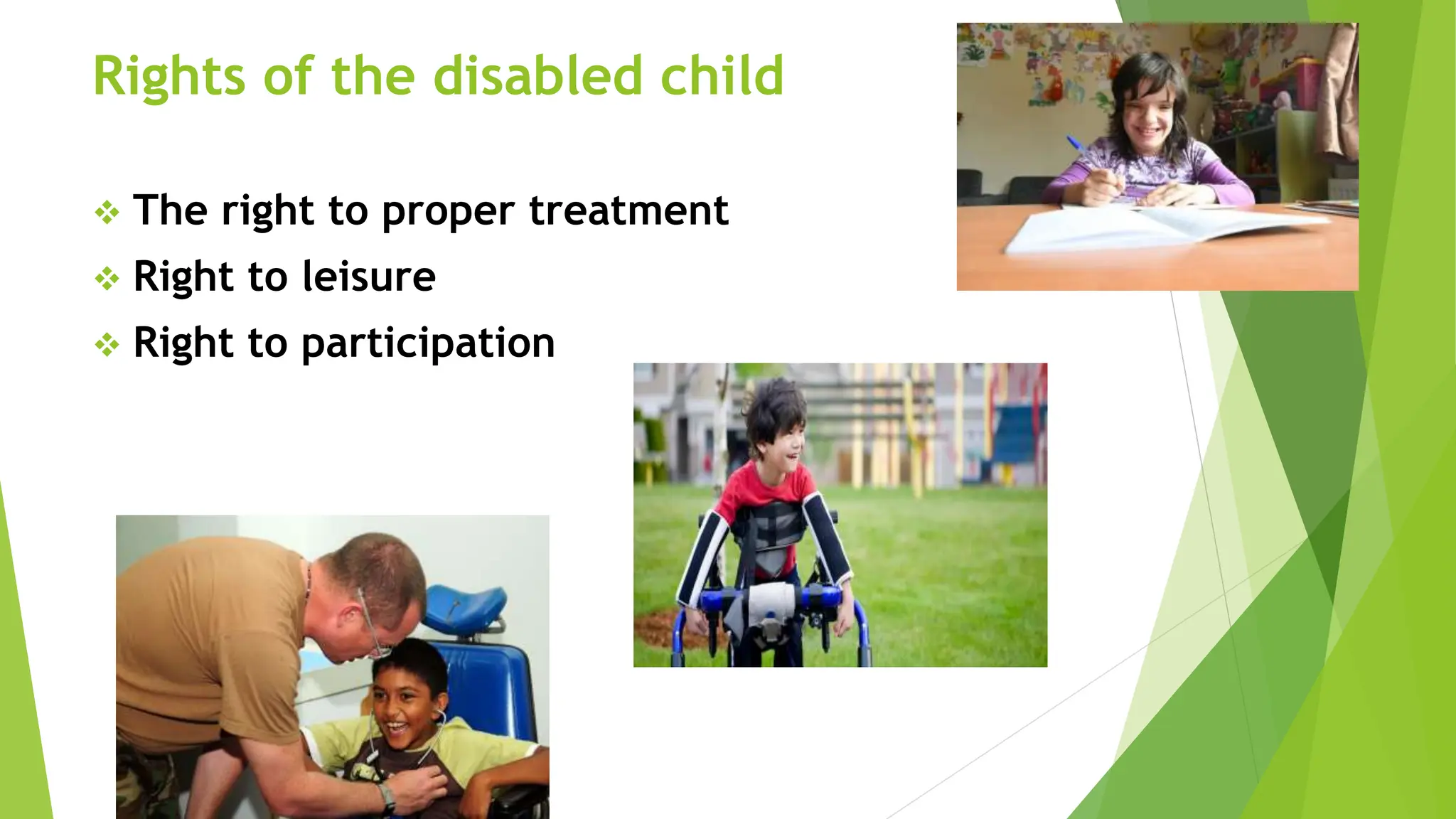
Rights of the disabled child
 The right to proper treatment
 Right to leisure
 Right to participation

Disabled Children presentation ICT based

  • 1.
    Session= 2019-2021 Enhancing Learningthrough ICT (Paper-6) Semester-3 Disabled Children Submitted To :- Mrs. Mandeep Kaur Submitted By:- Krishma Bawa Roll. No. 35 University Roll. No. 11081927311
  • 2.
    The Convention ofthe Rights of people with disabilities adopted in the year 2006, defines a disability as:  “Persons with disabilities include those who have long-term physical, mental, intellectual or sensory impairments which in interaction with various barriers may hinder their full and effective participation in society on an equal basis with others.”
  • 3.
    -Causes There are numerouscauses of disability. It is unfortunately true that most of these instances could have been avoided had they been provided with proper prevention and access to relevant treatment. In deed, a disability is mainly caused by:  Genetic problems  Disease (Polio for example)  Malnutrition  War (particularly through anti-personal mines)  Sanitary neglect  Poverty
  • 4.
    Consequences:-  Social marginalization:- •A disability of a child is often followed by his being marginalized in the society. For example, it is found that only around 2% of the disabled children have access to education.  Violence:- • There is an increasing risk of disabled children becoming unfortunate victims of violence due to their inability to defend themselves. Thus, physical, psychological and emotional violence happens to be a sad reality that disabled children undergo in domestic, institutional as well as social circles.  Discrimination due to disability:- • Discrimination due to disability is numerous: in fields such as education, lodging, transportation and cultural life, most of the places and services concerned are largely inaccessible to individuals suffering from disabilities.
  • 5.
    Rights of thedisabled child  The right to proper treatment  Right to leisure  Right to participation