Axiell East Coast Roadshow 2018
Digital Preservation Discussion Group
Alex Fell, Deputy Head R&D
What does Digital Preservation mean to my
organisation?
● What processes do you
have in place?
○ IT backups
○ Retention policies
○ File formats
○ FIle integrity audits
● What standards do you
follow / aspire to?
○ OAIS
○ OCLC
○ NDSA Levels
● What digital material do you
value?
○ Born DIgital
○ Collection images
● What risks do you see to
material held by your
organisation?
Our understanding of Digital Preservation
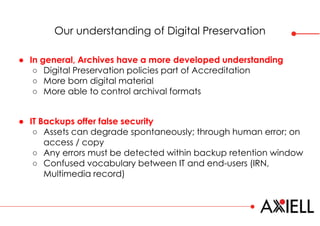
● IT Backups offer false security
○ Assets can degrade spontaneously; through human error; on
access / copy
○ Any errors must be detected within backup retention window
○ Confused vocabulary between IT and end-users (IRN,
Multimedia record)
● In general, Archives have a more developed understanding
○ Digital Preservation policies part of Accreditation
○ More born digital material
○ More able to control archival formats
Our understanding of Digital Preservation
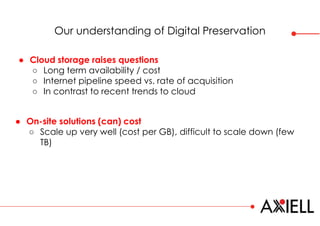
● On-site solutions (can) cost
○ Scale up very well (cost per GB), difficult to scale down (few
TB)
● Cloud storage raises questions
○ Long term availability / cost
○ Internet pipeline speed vs. rate of acquisition
○ In contrast to recent trends to cloud
Our understanding of Digital Preservation
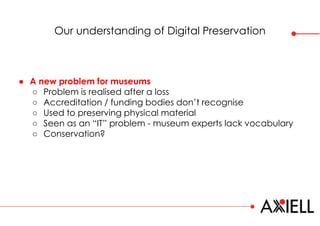
● A new problem for museums
○ Problem is realised after a loss
○ Accreditation / funding bodies don’t recognise
○ Used to preserving physical material
○ Seen as an “IT” problem - museum experts lack vocabulary
○ Conservation?
Open discussion
- challenges?
- problems?
- questions to the floor?
Possible solutions?
● Integration with Collections Management System
○ Light-touch - Set institution policies up-front
○ Specific interactions to preserve specific items
○ Management reports
○ DIgital preservation policy “wizard”
○ Overview of stored assets
● Integrity
● Formats & longevity
○ Automated checks of fixity / checksum / formats
○ Email alerts when action is required, policies need
review

Digital Preservation Discussion Group

  • 1.
    Axiell East CoastRoadshow 2018 Digital Preservation Discussion Group Alex Fell, Deputy Head R&D
  • 2.
    What does DigitalPreservation mean to my organisation? ● What processes do you have in place? ○ IT backups ○ Retention policies ○ File formats ○ FIle integrity audits ● What standards do you follow / aspire to? ○ OAIS ○ OCLC ○ NDSA Levels ● What digital material do you value? ○ Born DIgital ○ Collection images ● What risks do you see to material held by your organisation?
  • 3.
    Our understanding ofDigital Preservation ● IT Backups offer false security ○ Assets can degrade spontaneously; through human error; on access / copy ○ Any errors must be detected within backup retention window ○ Confused vocabulary between IT and end-users (IRN, Multimedia record) ● In general, Archives have a more developed understanding ○ Digital Preservation policies part of Accreditation ○ More born digital material ○ More able to control archival formats
  • 4.
    Our understanding ofDigital Preservation ● On-site solutions (can) cost ○ Scale up very well (cost per GB), difficult to scale down (few TB) ● Cloud storage raises questions ○ Long term availability / cost ○ Internet pipeline speed vs. rate of acquisition ○ In contrast to recent trends to cloud
  • 5.
    Our understanding ofDigital Preservation ● A new problem for museums ○ Problem is realised after a loss ○ Accreditation / funding bodies don’t recognise ○ Used to preserving physical material ○ Seen as an “IT” problem - museum experts lack vocabulary ○ Conservation?
  • 6.
    Open discussion - challenges? -problems? - questions to the floor?
  • 7.
    Possible solutions? ● Integrationwith Collections Management System ○ Light-touch - Set institution policies up-front ○ Specific interactions to preserve specific items ○ Management reports ○ DIgital preservation policy “wizard” ○ Overview of stored assets ● Integrity ● Formats & longevity ○ Automated checks of fixity / checksum / formats ○ Email alerts when action is required, policies need review

Editor's Notes

  • #8 Do you see that as a part of DAMS or as a separate product? Do you see that you will or do have a need for such a product? When do you think your organisation will need to deal with this problem (if at all)?