Mary Jo Swiger
2012
The collaborative magazine cover project allowed 5th grade
    students to participate in viewing, making comments and
    connecting with FSU students through blogging.

   An article in District Administration (2006) states, “Among Internet-using teens, 57 percent
    are content creators, or those who have worked on a blog or Web page or shared original
    creative content, according to a Pew Internet and American Life Project report, Teen
    Content Creators and Consumers”(p. 18).


                            Magazine Cover Project
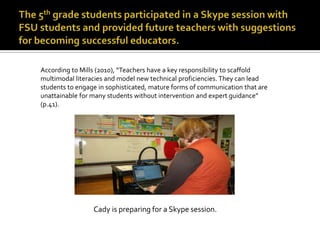
According to Mills (2010), “Teachers have a key responsibility to scaffold
multimodal literacies and model new technical proficiencies. They can lead
students to engage in sophisticated, mature forms of communication that are
unattainable for many students without intervention and expert guidance”
(p.41).


                 Cady is preparing for a Skype session.
Teachers acting as facilitators and managing classroom blogs arrange student
writing situations with an authentic audience increase motivation and
engagement. (Castek, et al., 2008)


                     Collaborative writing artifact.
Displays a Willing                            Able to Write
    Attitude                               Attentively for 15-20
towards Writing                                  Minutes
      5%                                           4%
 6%
                                             12%


           89%
                                                          84%


Each chart reveals more than half of the students displayed a
willing attitude towards writing and wrote attentively for 15-20
minutes.
   Boling, E., Castek, J., Zawilinski, L., Barton, K., & Nierlich, T. (2008). Collaborative literacy:
    Blogs and internet projects. Reading Teacher, 61(6), 504-506.

   District Administration. (2006). Beauty of blogging: But is it too much information?.
    (2006). District Administration, 42(1), 18.

   Mills, K. A. (2010). Shrek Meets Vygotsky: Rethinking Adolescents' Multimodal Literacy
    Practices in Schools. Journal Of Adolescent & Adult Literacy, 54(1), 35-45.

Digital Media Projects

  • 1.
  • 2.
    The collaborative magazinecover project allowed 5th grade students to participate in viewing, making comments and connecting with FSU students through blogging.  An article in District Administration (2006) states, “Among Internet-using teens, 57 percent are content creators, or those who have worked on a blog or Web page or shared original creative content, according to a Pew Internet and American Life Project report, Teen Content Creators and Consumers”(p. 18). Magazine Cover Project
  • 3.
    According to Mills(2010), “Teachers have a key responsibility to scaffold multimodal literacies and model new technical proficiencies. They can lead students to engage in sophisticated, mature forms of communication that are unattainable for many students without intervention and expert guidance” (p.41). Cady is preparing for a Skype session.
  • 4.
    Teachers acting asfacilitators and managing classroom blogs arrange student writing situations with an authentic audience increase motivation and engagement. (Castek, et al., 2008) Collaborative writing artifact.
  • 5.
    Displays a Willing Able to Write Attitude Attentively for 15-20 towards Writing Minutes 5% 4% 6% 12% 89% 84% Each chart reveals more than half of the students displayed a willing attitude towards writing and wrote attentively for 15-20 minutes.
  • 6.
    Boling, E., Castek, J., Zawilinski, L., Barton, K., & Nierlich, T. (2008). Collaborative literacy: Blogs and internet projects. Reading Teacher, 61(6), 504-506.  District Administration. (2006). Beauty of blogging: But is it too much information?. (2006). District Administration, 42(1), 18.  Mills, K. A. (2010). Shrek Meets Vygotsky: Rethinking Adolescents' Multimodal Literacy Practices in Schools. Journal Of Adolescent & Adult Literacy, 54(1), 35-45.