A STRATEGIC BRIEFING
Digital Disruption
from Zero to Sixty
With Neel Banerjee of Urban Airship
And Gene Ehrbar of ISITE Design
WENDESDAY, MARCH 19th AT 2PM EST.
In this briefing, you will learn:
1. What is Digital Disruption?
2. Why are customer-focused ideation techniques critical for
driving new product development?
3. How can enterprise organizations foster collaborative
innovation teams across the company?
Hello and Welcome!
Our flight plan for today:
• A Brief History of Innovation
• Digital Disruption: Phenomenon, Practice, Mission
• Q&A
Agenda
What is Digital Disruption?
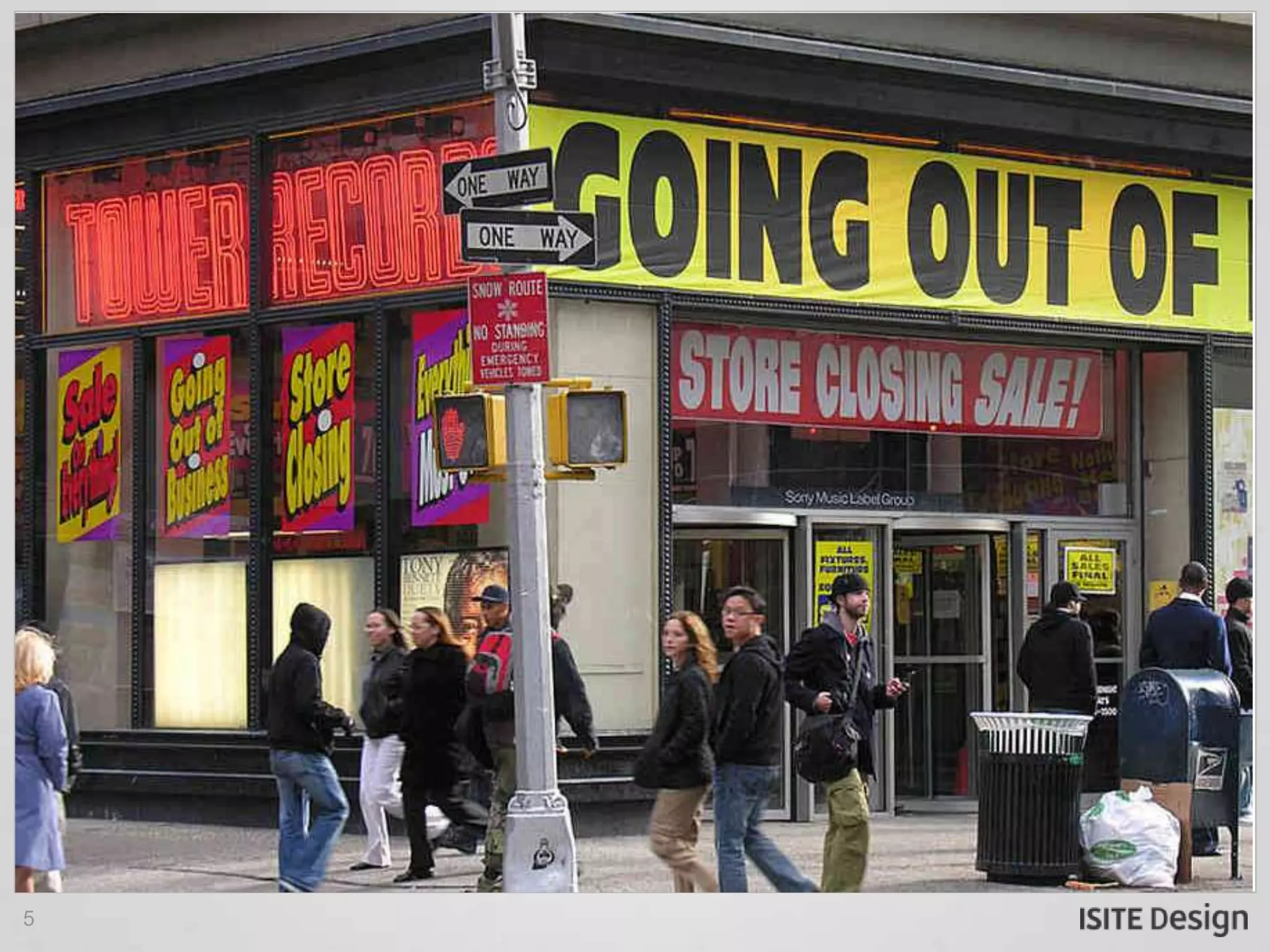
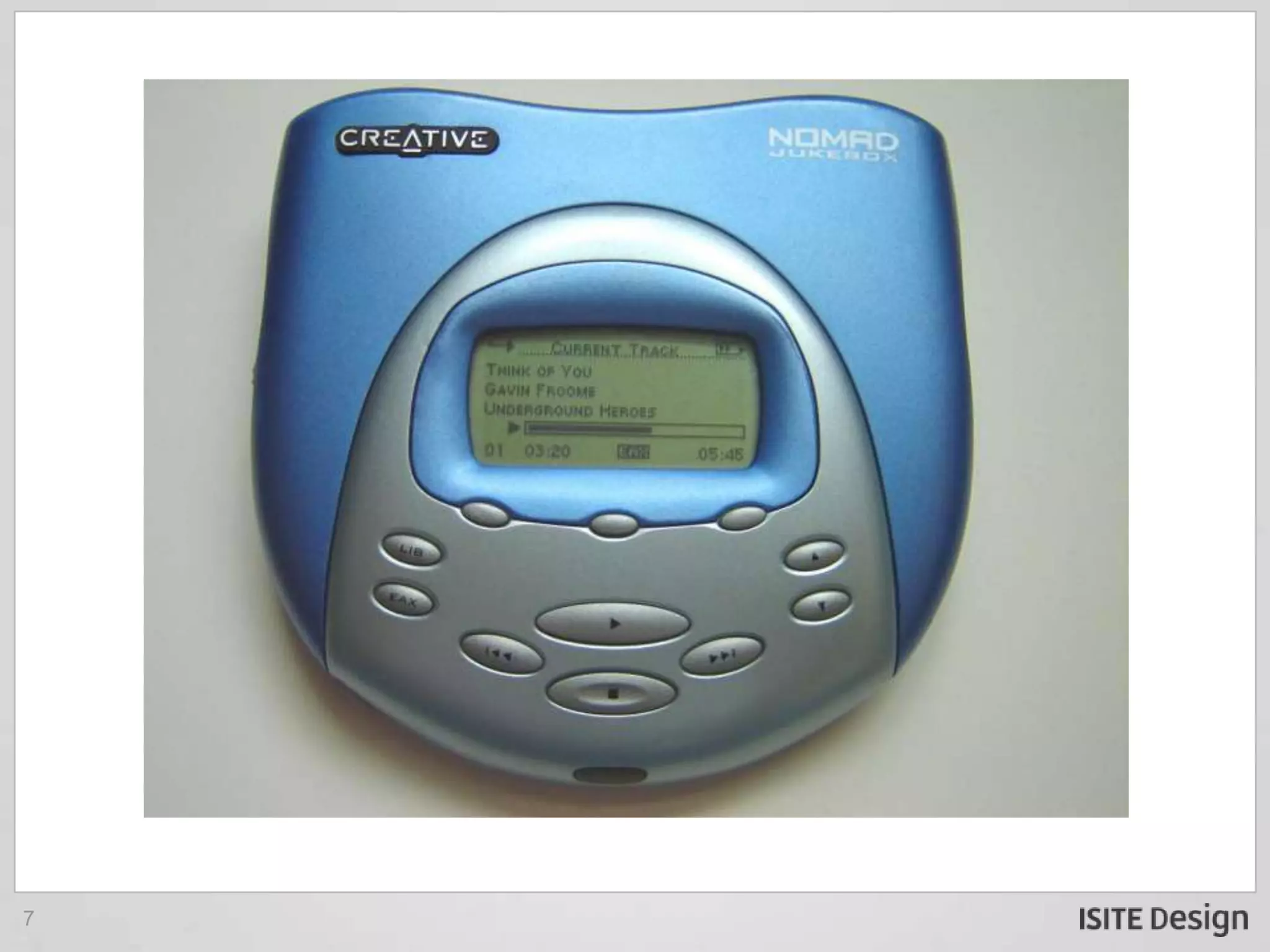
A Brief History of Innovation
5
6
7
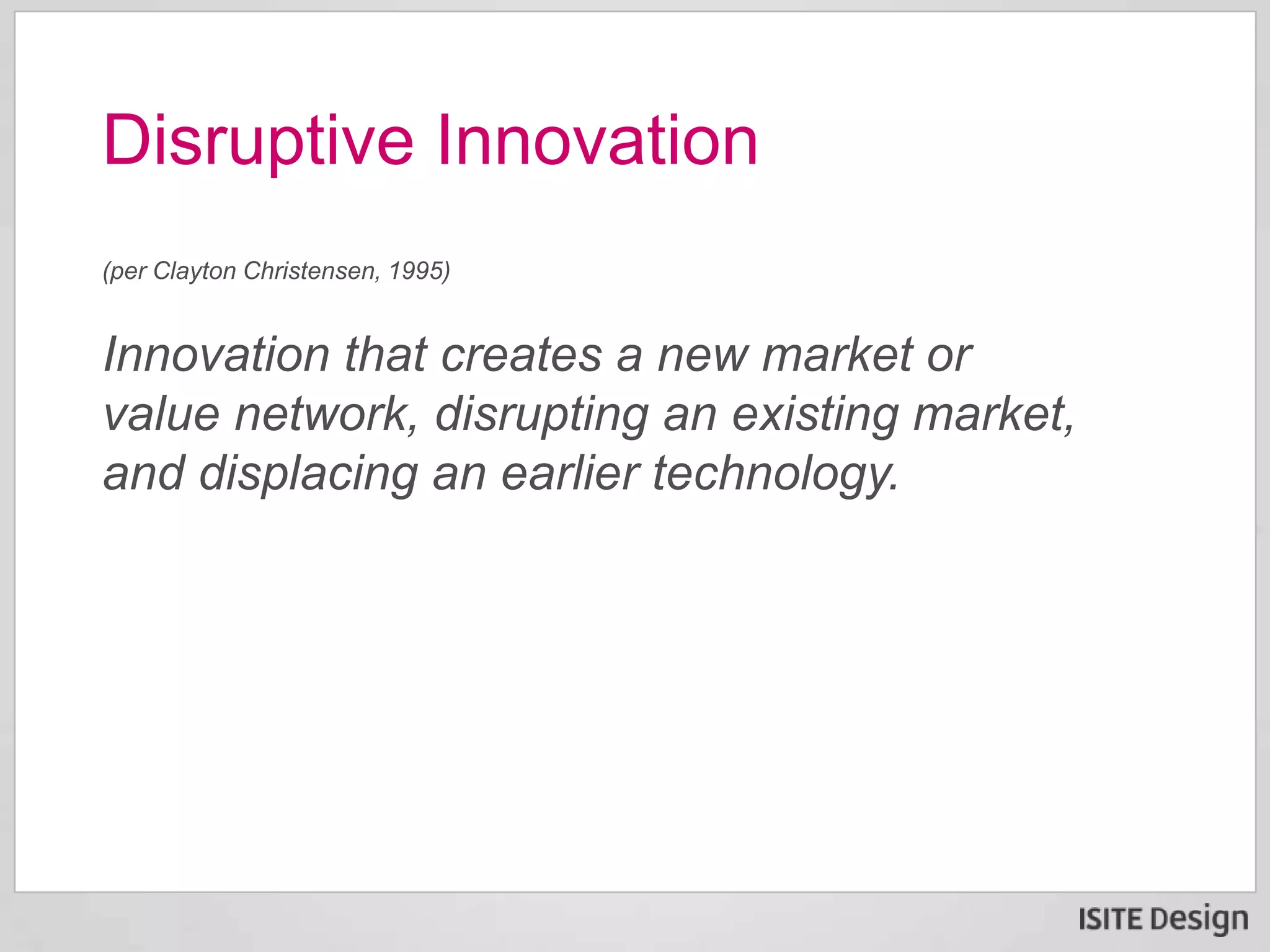
(per Clayton Christensen, 1995)
Innovation that creates a new market or
value network, disrupting an existing market,
and displacing an earlier technology.
Disruptive Innovation
9
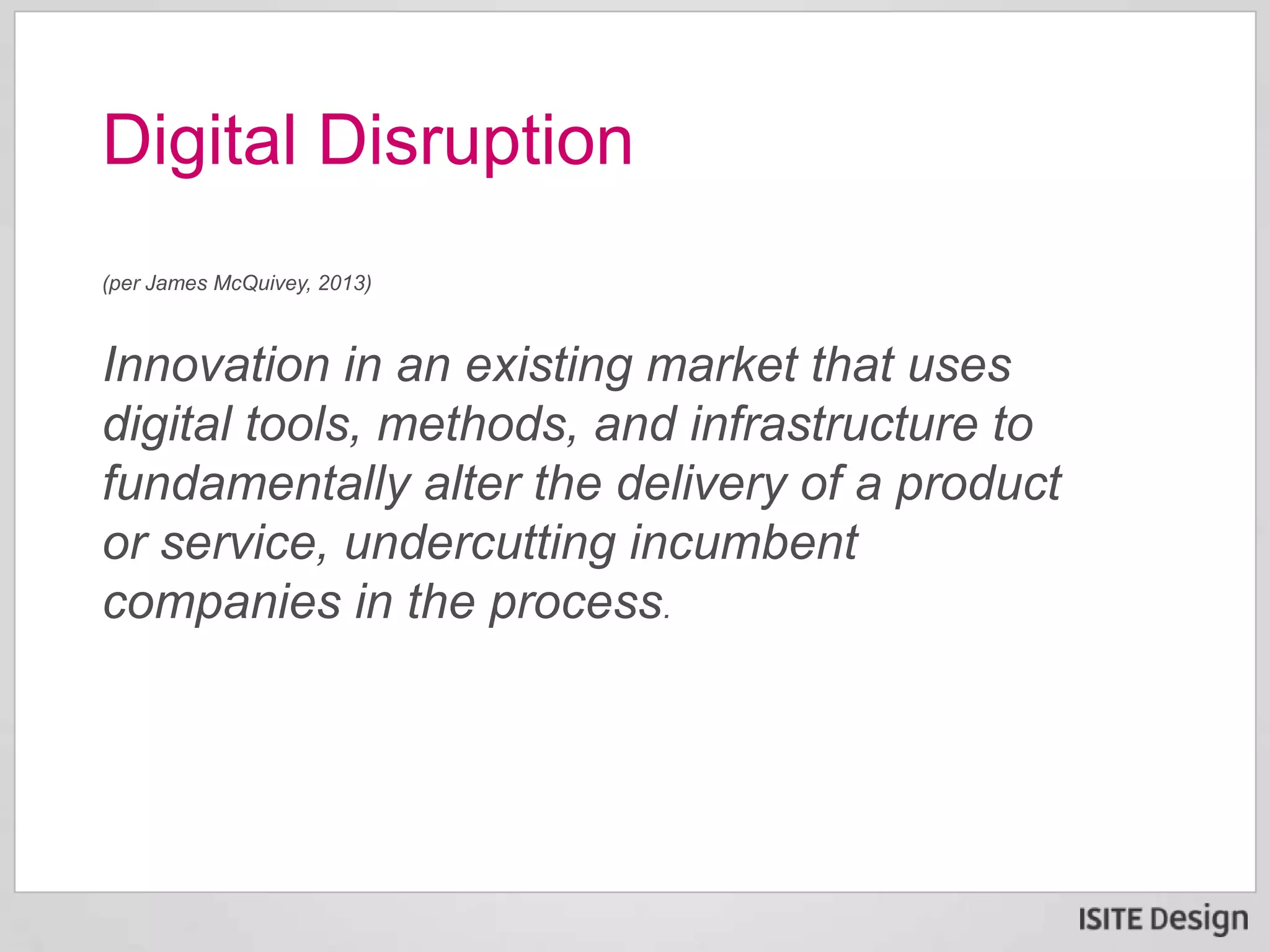
(per James McQuivey, 2013)
Innovation in an existing market that uses
digital tools, methods, and infrastructure to
fundamentally alter the delivery of a product
or service, undercutting incumbent
companies in the process.
Digital Disruption
Why has Digital Disruption emerged?
• Free/cheap digital tools
• Radically reduced infrastructure costs
• Overall reduced cost to engage customer
Net result: small, new upstarts can compete with established
market leaders quickly.
Digital Disruption:
As a Phenomenon
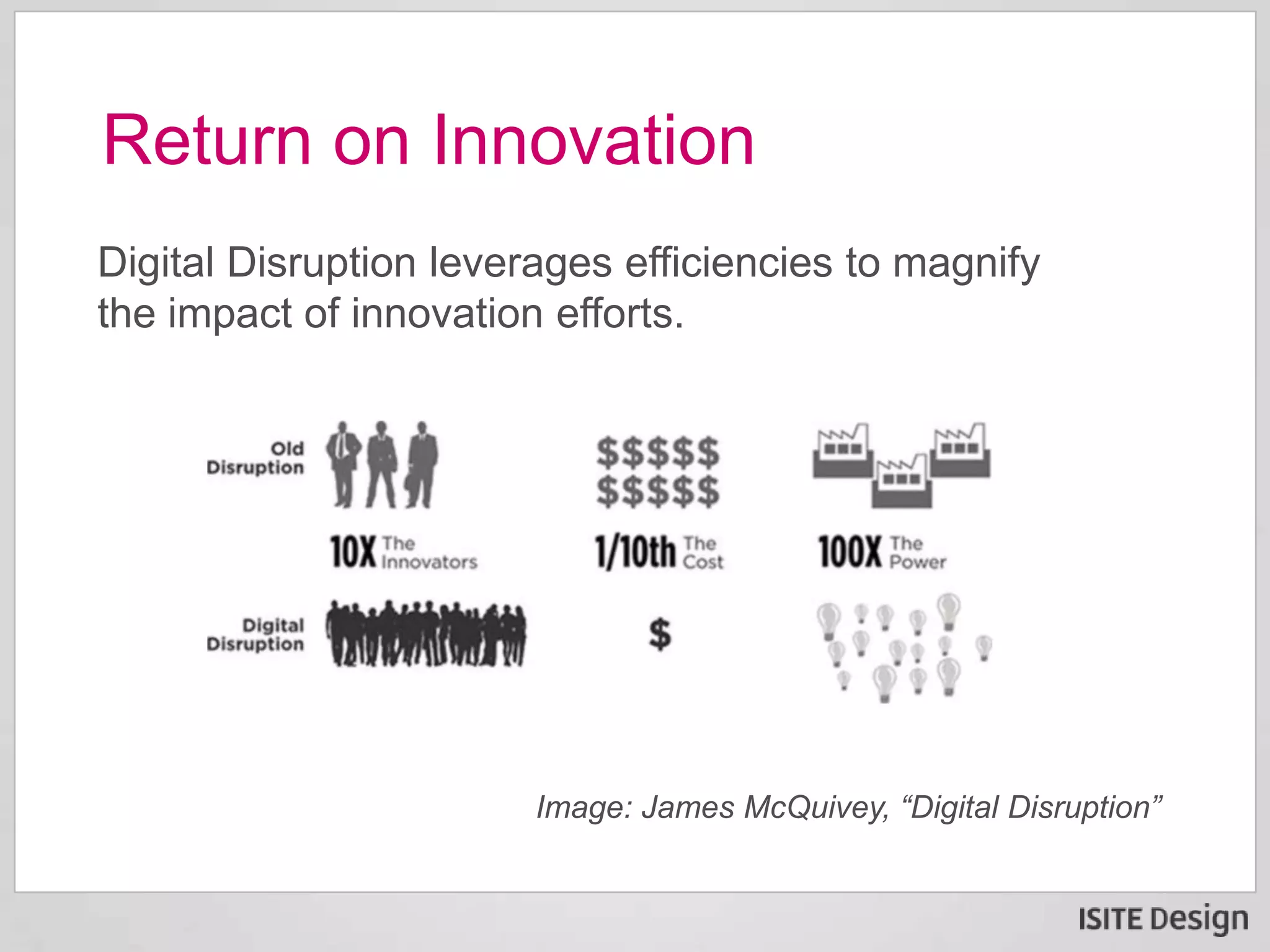
Image: James McQuivey, “Digital Disruption”
Return on Innovation
Digital Disruption leverages efficiencies to magnify
the impact of innovation efforts.
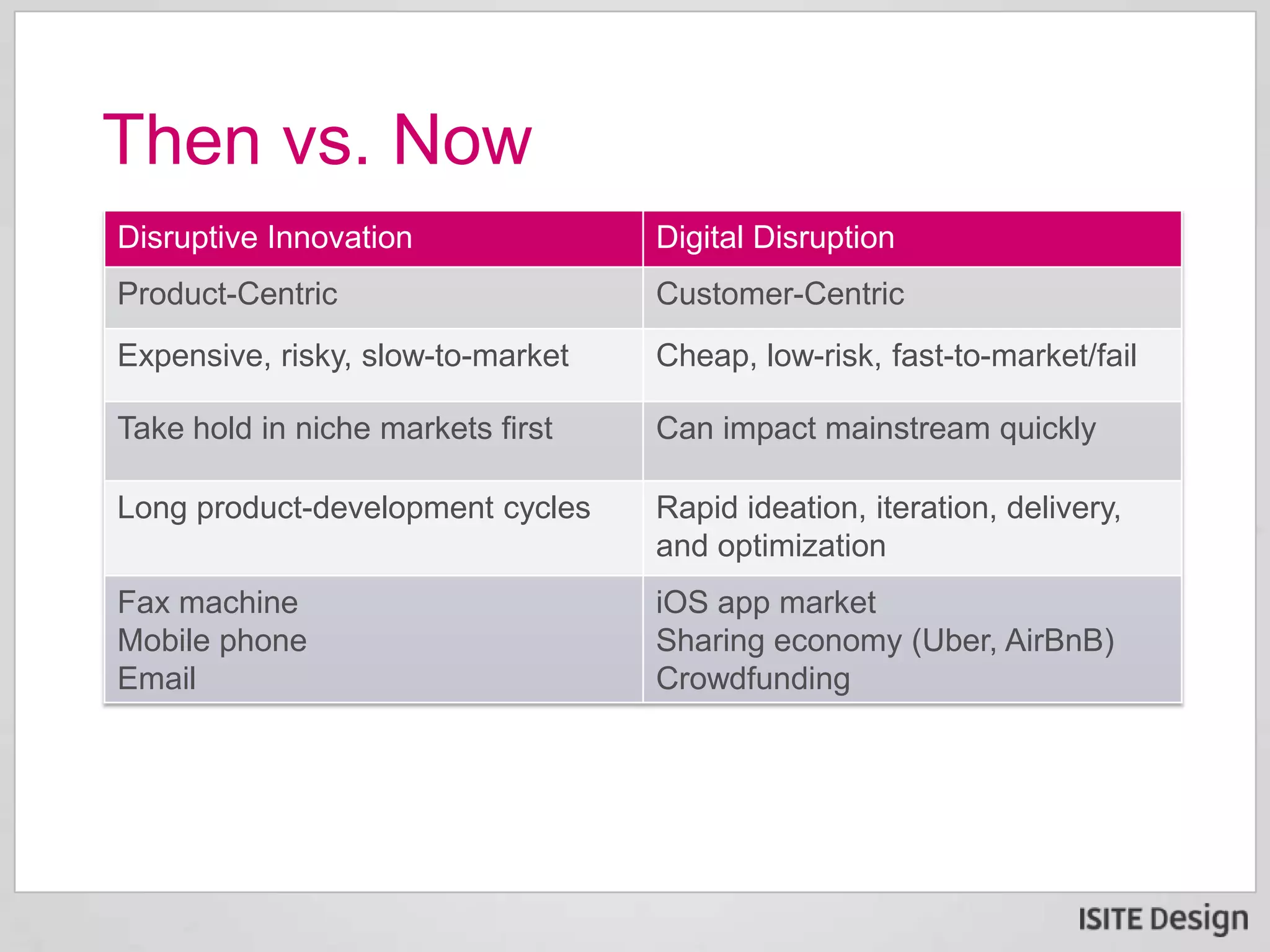
Then vs. Now
Disruptive Innovation Digital Disruption
Product-Centric Customer-Centric
Expensive, risky, slow-to-market Cheap, low-risk, fast-to-market/fail
Take hold in niche markets first Can impact mainstream quickly
Long product-development cycles Rapid ideation, iteration, delivery,
and optimization
Fax machine
Mobile phone
Email
iOS app market
Sharing economy (Uber, AirBnB)
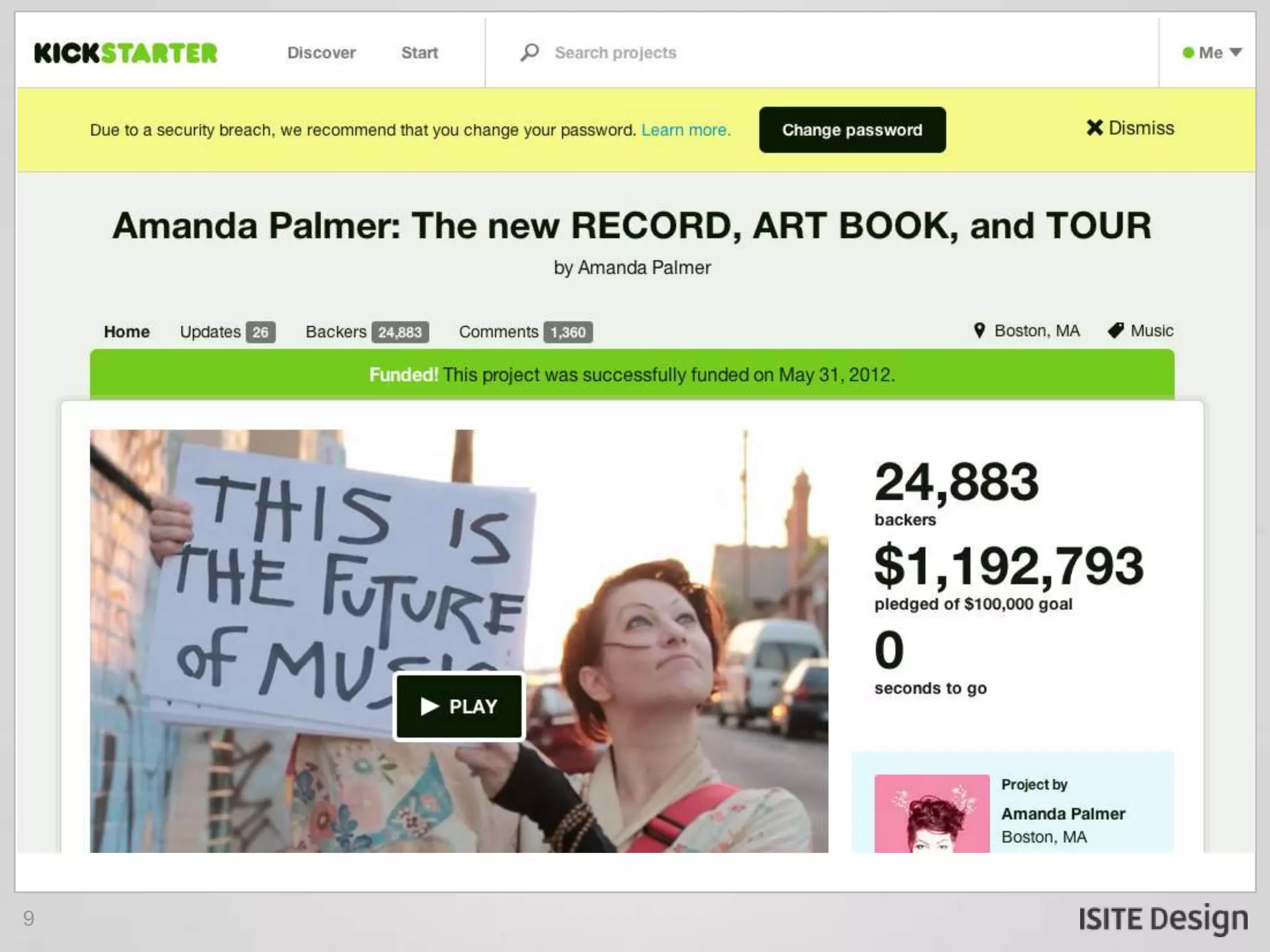
Crowdfunding
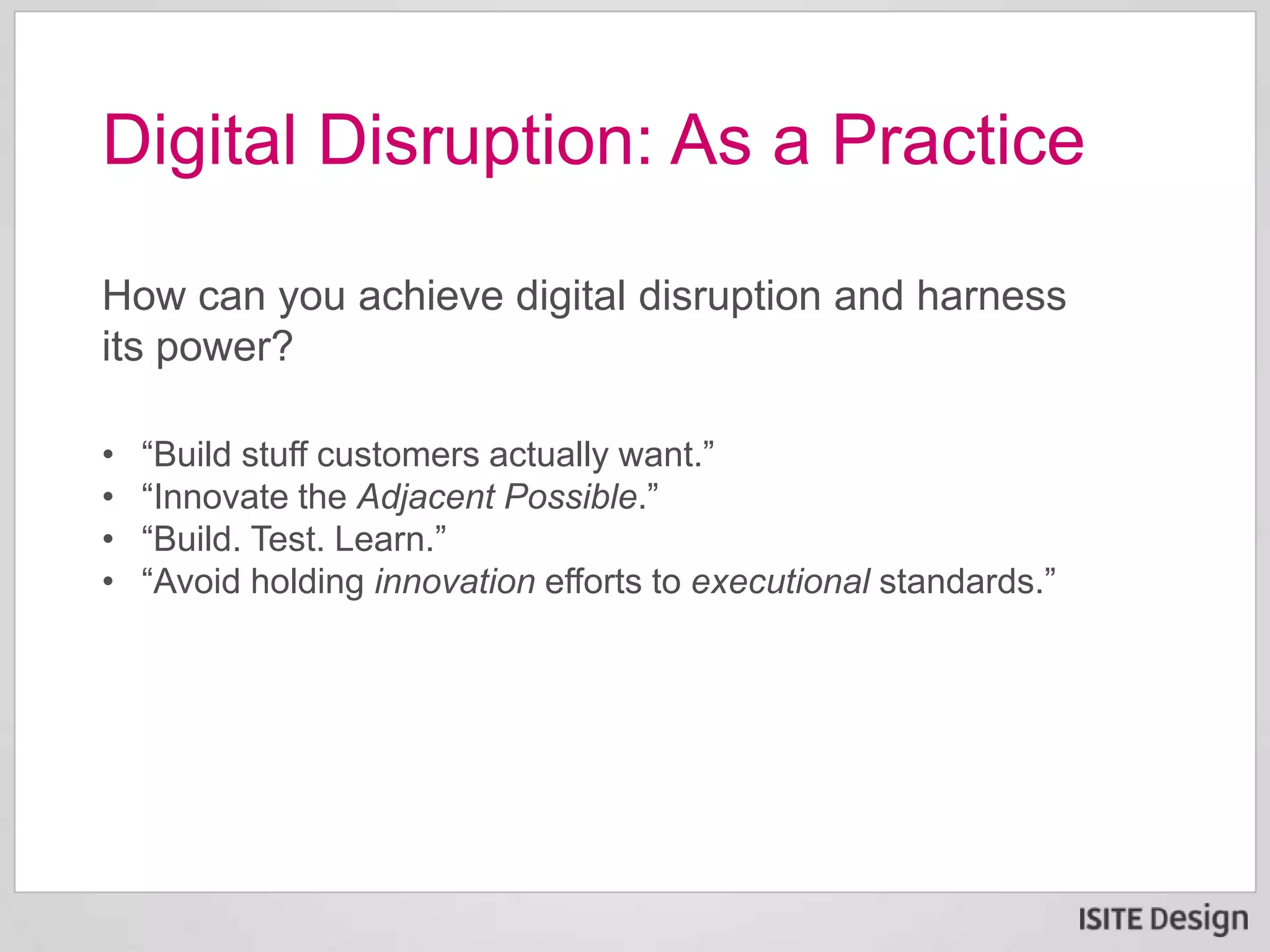
How can you achieve digital disruption and harness
its power?
Digital Disruption: As a Practice
• “Build stuff customers actually want.”
• “Innovate the Adjacent Possible.”
• “Build. Test. Learn.”
• “Avoid holding innovation efforts to executional standards.”
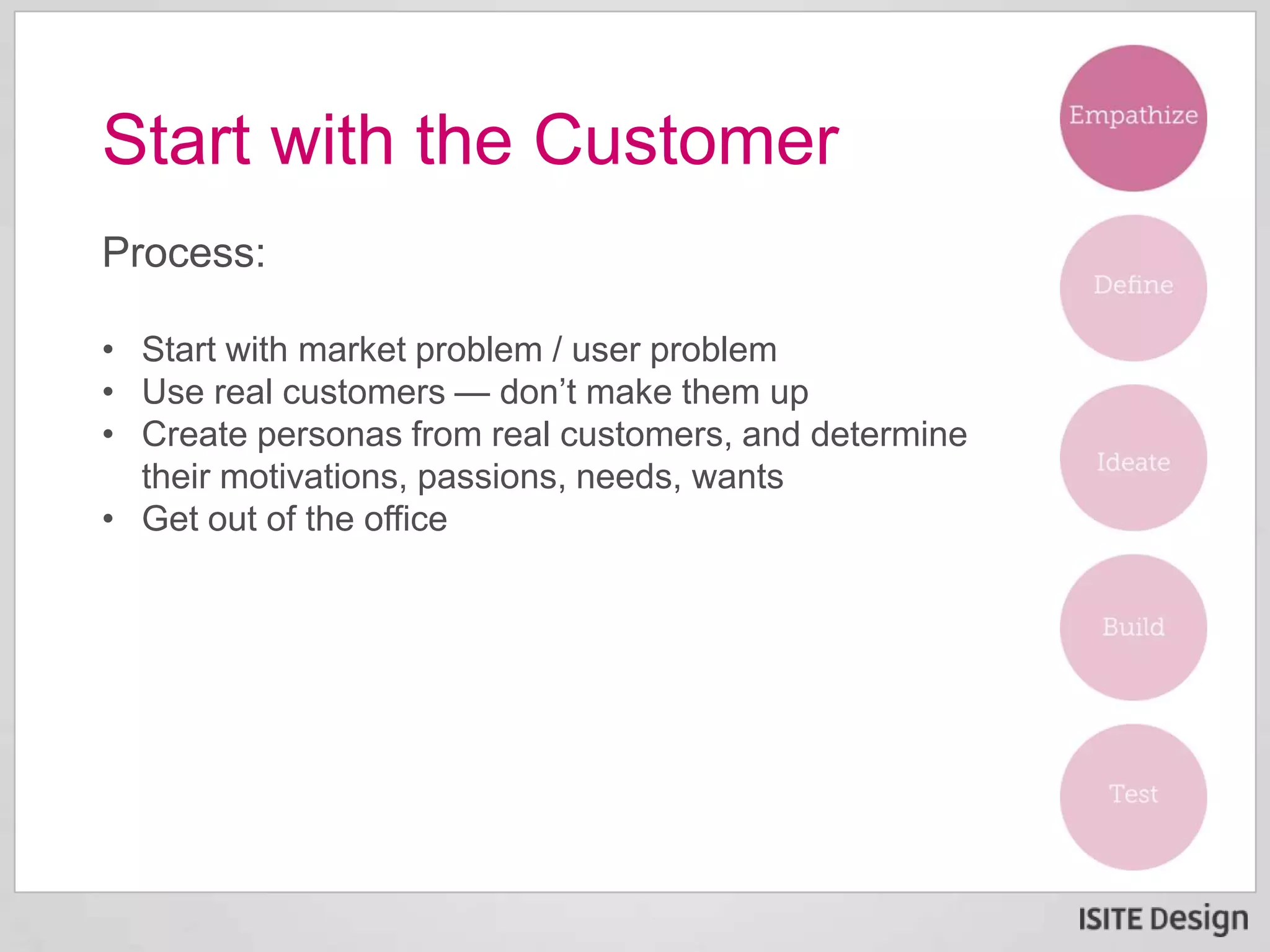
Process:
• Start with market problem / user problem
• Use real customers — don’t make them up
• Create personas from real customers, and determine
their motivations, passions, needs, wants
• Get out of the office
Start with the Customer
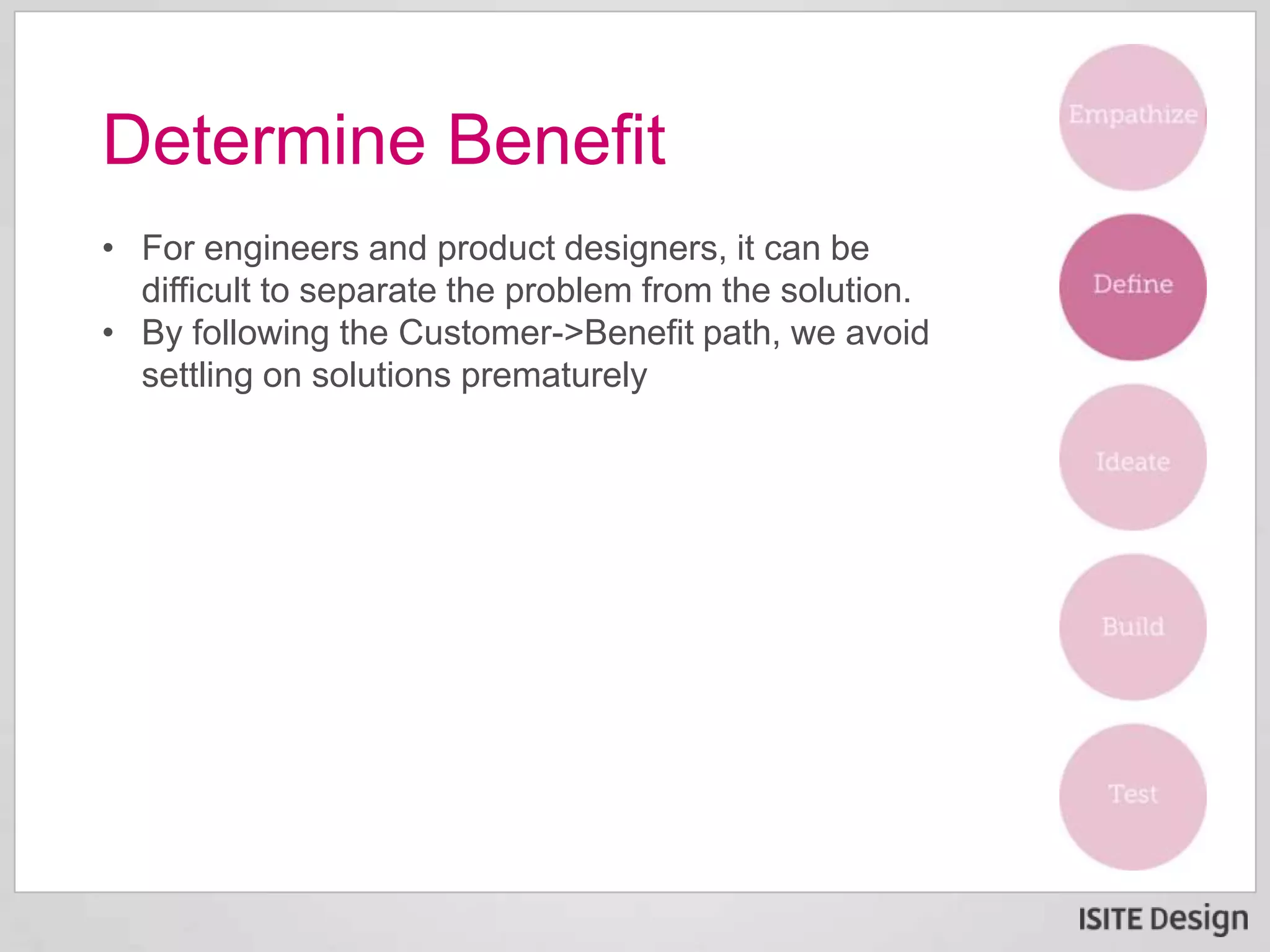
• For engineers and product designers, it can be
difficult to separate the problem from the solution.
• By following the Customer->Benefit path, we avoid
settling on solutions prematurely
Determine Benefit
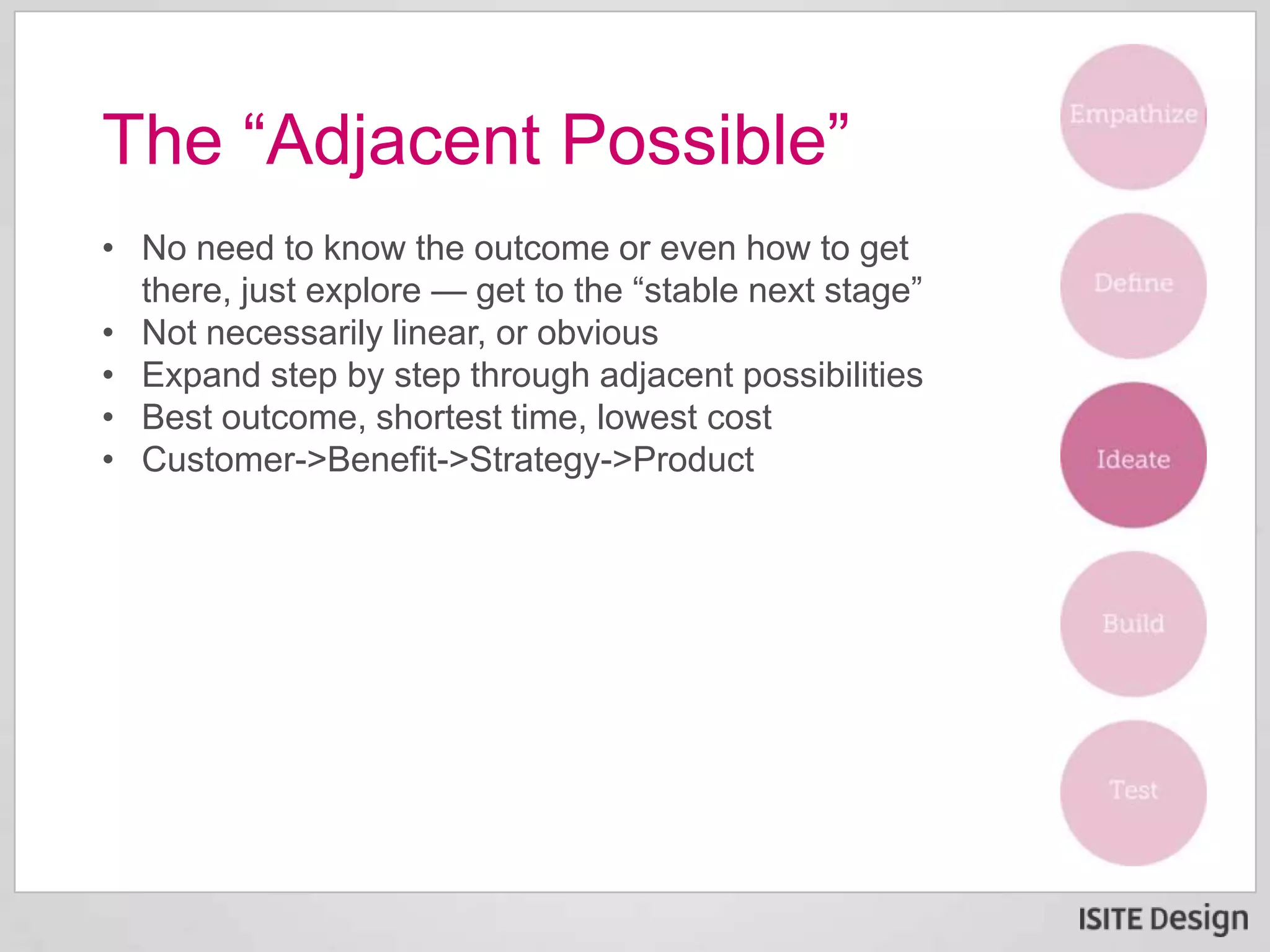
• No need to know the outcome or even how to get
there, just explore — get to the “stable next stage”
• Not necessarily linear, or obvious
• Expand step by step through adjacent possibilities
• Best outcome, shortest time, lowest cost
• Customer->Benefit->Strategy->Product
The “Adjacent Possible”
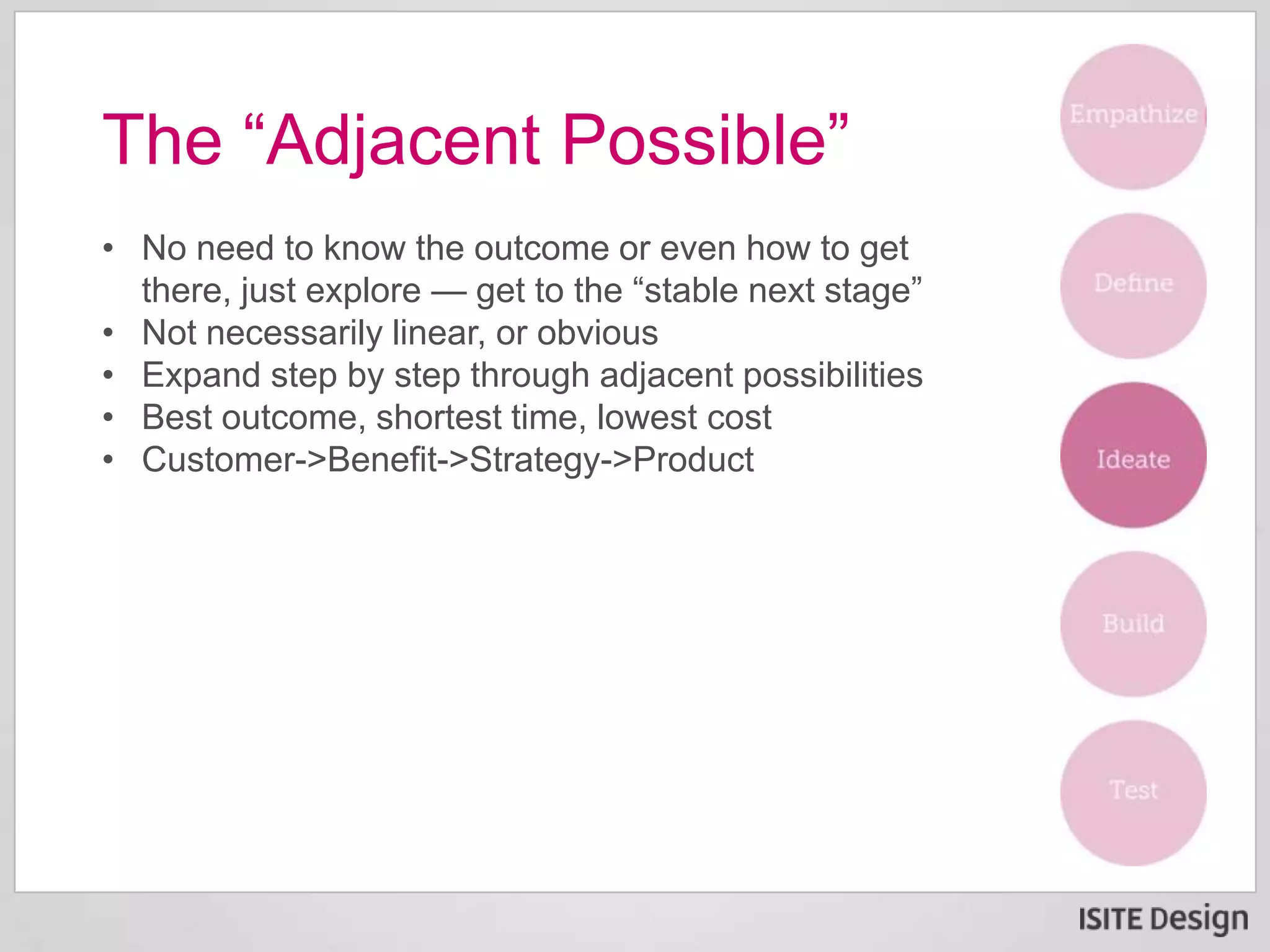
• No need to know the outcome or even how to get
there, just explore — get to the “stable next stage”
• Not necessarily linear, or obvious
• Expand step by step through adjacent possibilities
• Best outcome, shortest time, lowest cost
• Customer->Benefit->Strategy->Product
The “Adjacent Possible”
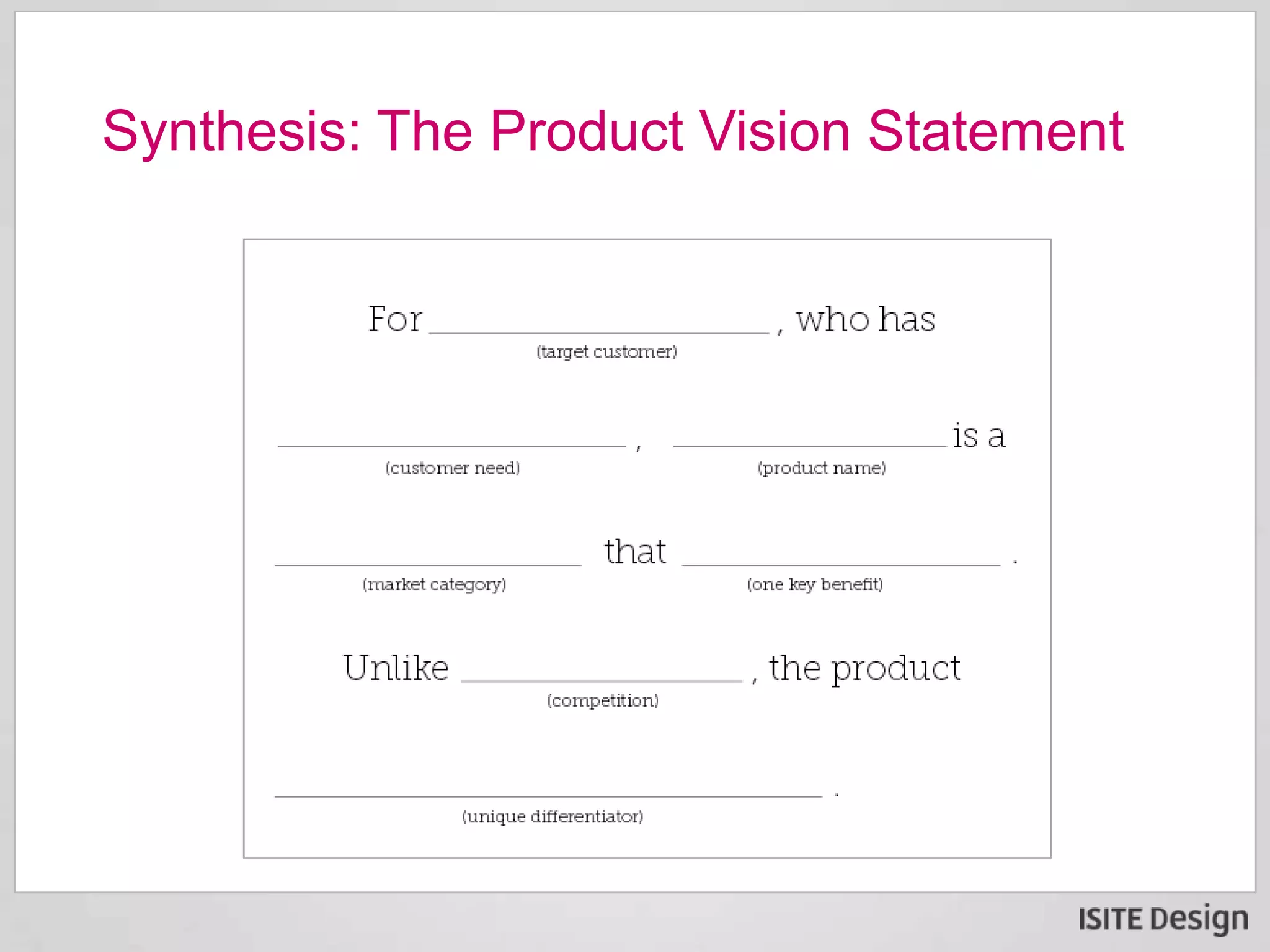
Synthesis: The Product Vision Statement
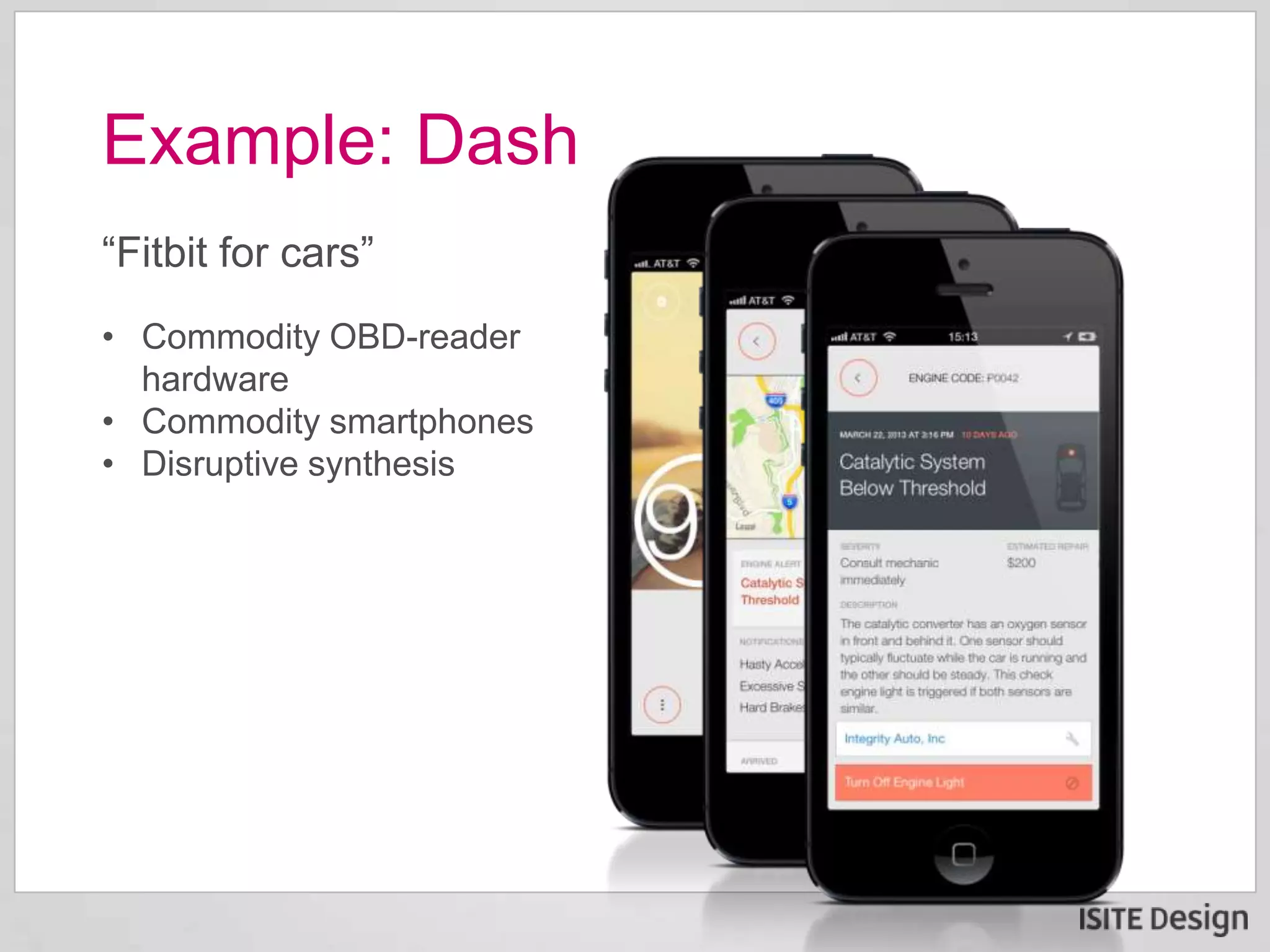
“Fitbit for cars”
• Commodity OBD-reader
hardware
• Commodity smartphones
• Disruptive synthesis
Example: Dash
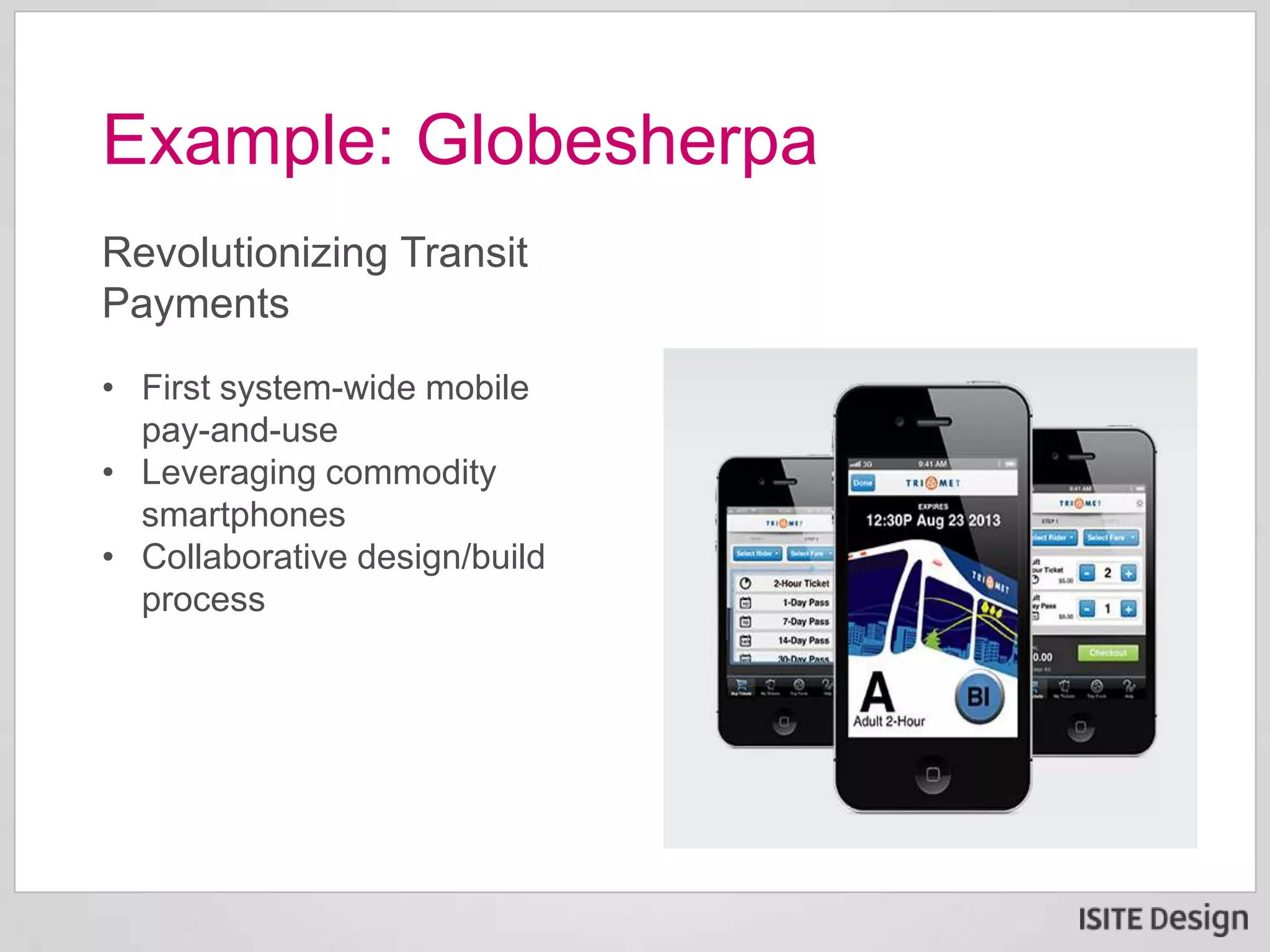
Revolutionizing Transit
Payments
• First system-wide mobile
pay-and-use
• Leveraging commodity
smartphones
• Collaborative design/build
process
Example: Globesherpa
How can you convince your organization
to try this?
• Larger organizations naturally more risk-averse, wary of
premature sharing of results with customers.
• On the contrary, iteration & rapid prototyping can be seen as
risk mitigation techniques — lowered initial cost, faster
results, shorter path to validation.
• Keep teams small
• Cross organizational boundaries
• Resist holding innovation efforts to executional standards.
• Disrupt or be disrupted
Digital Disruption: As a Mission
• Digital Disruption is happening right now, in every industry
• The competitive landscape has been completely reshaped
by the emergence of Digital Disruption
• Companies of all types can use disruptive techniques to
improve their customer experience
• Lean Startup and Design Thinking methodologies can help
inform disruptive efforts
• Becoming a disruptive company requires a deliberate effort,
that is likely outside of the usual scope of operations for
enterprise companies
Summing up…
Q&A Time!
Download a free ideation template at http://isitedesign.com/disrupt
Thank you!
Gene Ehrbar
@pdxgene
Neel Banerjee
@nbanerje
http://urbanairship.com

Digital Disruption: From Zero to Sixty

  • 1.
    A STRATEGIC BRIEFING DigitalDisruption from Zero to Sixty With Neel Banerjee of Urban Airship And Gene Ehrbar of ISITE Design WENDESDAY, MARCH 19th AT 2PM EST.
  • 2.
    In this briefing,you will learn: 1. What is Digital Disruption? 2. Why are customer-focused ideation techniques critical for driving new product development? 3. How can enterprise organizations foster collaborative innovation teams across the company? Hello and Welcome!
  • 3.
    Our flight planfor today: • A Brief History of Innovation • Digital Disruption: Phenomenon, Practice, Mission • Q&A Agenda
  • 4.
    What is DigitalDisruption? A Brief History of Innovation
  • 5.
  • 6.
  • 7.
  • 8.
    (per Clayton Christensen,1995) Innovation that creates a new market or value network, disrupting an existing market, and displacing an earlier technology. Disruptive Innovation
  • 9.
  • 10.
    (per James McQuivey,2013) Innovation in an existing market that uses digital tools, methods, and infrastructure to fundamentally alter the delivery of a product or service, undercutting incumbent companies in the process. Digital Disruption
  • 11.
    Why has DigitalDisruption emerged? • Free/cheap digital tools • Radically reduced infrastructure costs • Overall reduced cost to engage customer Net result: small, new upstarts can compete with established market leaders quickly. Digital Disruption: As a Phenomenon
  • 12.
    Image: James McQuivey,“Digital Disruption” Return on Innovation Digital Disruption leverages efficiencies to magnify the impact of innovation efforts.
  • 13.
    Then vs. Now DisruptiveInnovation Digital Disruption Product-Centric Customer-Centric Expensive, risky, slow-to-market Cheap, low-risk, fast-to-market/fail Take hold in niche markets first Can impact mainstream quickly Long product-development cycles Rapid ideation, iteration, delivery, and optimization Fax machine Mobile phone Email iOS app market Sharing economy (Uber, AirBnB) Crowdfunding
  • 14.
    How can youachieve digital disruption and harness its power? Digital Disruption: As a Practice • “Build stuff customers actually want.” • “Innovate the Adjacent Possible.” • “Build. Test. Learn.” • “Avoid holding innovation efforts to executional standards.”
  • 15.
    Process: • Start withmarket problem / user problem • Use real customers — don’t make them up • Create personas from real customers, and determine their motivations, passions, needs, wants • Get out of the office Start with the Customer
  • 16.
    • For engineersand product designers, it can be difficult to separate the problem from the solution. • By following the Customer->Benefit path, we avoid settling on solutions prematurely Determine Benefit
  • 17.
    • No needto know the outcome or even how to get there, just explore — get to the “stable next stage” • Not necessarily linear, or obvious • Expand step by step through adjacent possibilities • Best outcome, shortest time, lowest cost • Customer->Benefit->Strategy->Product The “Adjacent Possible”
  • 18.
    • No needto know the outcome or even how to get there, just explore — get to the “stable next stage” • Not necessarily linear, or obvious • Expand step by step through adjacent possibilities • Best outcome, shortest time, lowest cost • Customer->Benefit->Strategy->Product The “Adjacent Possible”
  • 19.
    Synthesis: The ProductVision Statement
  • 20.
    “Fitbit for cars” •Commodity OBD-reader hardware • Commodity smartphones • Disruptive synthesis Example: Dash
  • 21.
    Revolutionizing Transit Payments • Firstsystem-wide mobile pay-and-use • Leveraging commodity smartphones • Collaborative design/build process Example: Globesherpa
  • 22.
    How can youconvince your organization to try this? • Larger organizations naturally more risk-averse, wary of premature sharing of results with customers. • On the contrary, iteration & rapid prototyping can be seen as risk mitigation techniques — lowered initial cost, faster results, shorter path to validation. • Keep teams small • Cross organizational boundaries • Resist holding innovation efforts to executional standards. • Disrupt or be disrupted Digital Disruption: As a Mission
  • 23.
    • Digital Disruptionis happening right now, in every industry • The competitive landscape has been completely reshaped by the emergence of Digital Disruption • Companies of all types can use disruptive techniques to improve their customer experience • Lean Startup and Design Thinking methodologies can help inform disruptive efforts • Becoming a disruptive company requires a deliberate effort, that is likely outside of the usual scope of operations for enterprise companies Summing up…
  • 24.
  • 25.
    Download a freeideation template at http://isitedesign.com/disrupt Thank you! Gene Ehrbar @pdxgene Neel Banerjee @nbanerje http://urbanairship.com