May 2010 Tour Briefing Creative and Media Overview Tony Hughes Tony Hughes, May 2010
Digital Content Briefing Overview Sector Focus Market trends UK Strengths Investor Opportunities Other key selling messages Case Studies 09/06/10
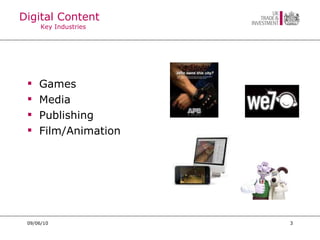
Digital Content Key Industries Games  Media Publishing Film/Animation 09/06/10
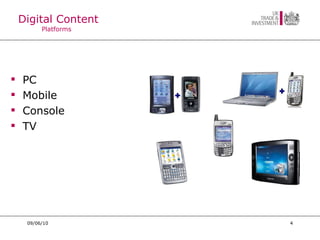
Digital Content  Platforms 09/06/10 PC Mobile Console TV
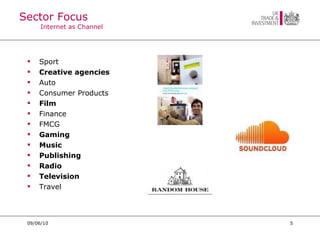
Sector Focus Internet as Channel Sport Creative agencies Auto  Consumer Products Film Finance FMCG Gaming   Music Publishing  Radio Television Travel 09/06/10
Market Trends Major themes Creative Agencies –  interactive broadcasting, social media, behavioural targeting and measurement Film –  digital distribution, interactive broadcasting, micropayments Gaming –  digital distribution, interactive broadcasting, proliferation of devices, social media and micropayments Music –  digital distribution, social media, micropayments, measurement tools and tracking Publishing –  digital distribution, proliferation of devices, micropayments, real time measurement tools and social media  Radio –  interactive broadcasting, proliferation of devices, micropayments and measurement tools Television  – interactive broadcasting, proliferation of devices, micropayments, measurement tools and social media 09/06/10
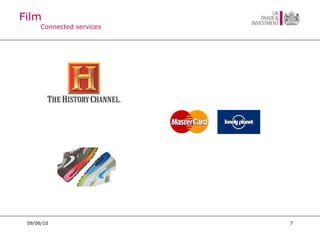
Film Connected services 09/06/10
Film Monetising Media 09/06/10
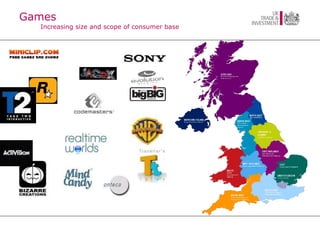
Games Increasing size and scope of consumer base
Music Mobile consumer 09/06/10 Graphic – Universal/EMI
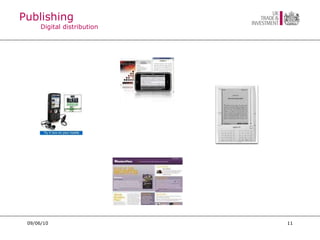
Publishing Digital distribution 09/06/10
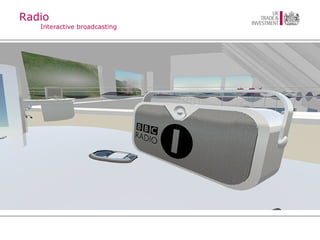
Radio Interactive broadcasting
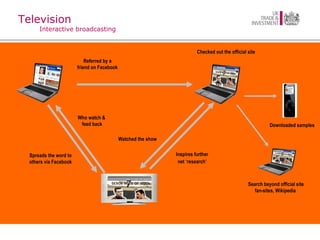
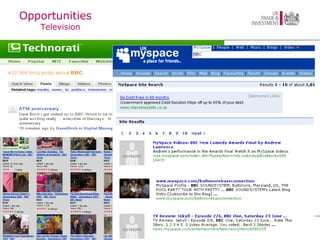
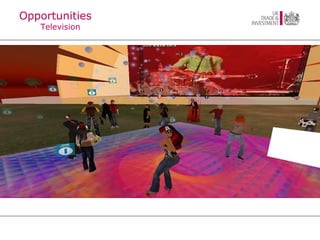
Referred by a  friend on Facebook  Checked out the official site  Television Interactive broadcasting Watched the show Search beyond official site fan-sites, Wikipedia  Downloaded samples Inspires further net   ‘research’ Spreads the word to others via Facebook Who watch &  feed back
UK Strengths General Access to Creative and Tech Talent High spending & early adopter consumer market Centre of Europe’s Advertising, Publishing, Telecoms & Media Industries Substantial investment in fixed broadband and mobile infrastructure Ease of doing business - ranks No.1 in Europe Good communications routes Home to larger % of EHQs than rest of Europe 09/06/10
UK Strengths Creative Agencies Multiplicity of agency specialists Articulation of digital opportunities to Ad agencies Pull the converging industry models together Increasing reliance on digital production in UK than outsourced 09/06/10
UK Strengths Film Market: The UK has more digital cinemas than any other European country – 365 and counting Spend: UK box-office takings are at record-breaking levels, worth £944 million in the UK in 2009, up 62% from 2000 Variety: There are over 100 production studios in the UK, ranging from large studios capable of housing the biggest sets to small studios catering for music videos and commercial work.  Talent: The UK film industry directly employs almost 44,000 people, with extended employment impact of 95,000 jobs Warner Brothers recently acquired Leavesden studios in Hertfordshire, making it the only major Hollywood studio to have a permanent base outside of the USA. 09/06/10
UK Strengths Games Innovative and ground breaking IP Largest developer pool in Europe High % of employers with first or higher degrees Multiplatform development expertise Attracted major global publishers Cross media links growing Growth in online and casual gaming sub sectors Developing Serious Games and Virtual World clusters High spending, engaged consumer market Broadening demographic playing casual games Trusted and flexible payment mechanisms 09/06/10
UK Strengths  Music Largest market in Europe for music downloads  Centre of Europe’s music industry Global music players all present Thriving live events sector  Melting pot for technologist and music collaboration 09/06/10
UK Strengths  Publishing  Largest single creative industry generating over £20bn 164,000 employees and over 8,000 companies in the UK In its quality, diversity and reach, UK publishing leads the world Despite the world economic downturn there is a positive outlook for the publishing industry in the UK. The PPA calculates that more than one billion consumer magazines were sold in 2009 09/06/10
UK Strengths  Radio  Radio audiences increasing across different platforms Internet radio seeing largest increases in each segment ¼ listening through digital devices The UK consumer is responding to the advantages of digital radio, with ownership of DAB increasing 14% year on year, with 16.6m households having a DAB receiver, compared to 14.5m a year ago. 09/06/10
UK Strengths  Television  The UK television industry contributes around £12 billion to the UK economy, with exports approaching £500 million.  Best supply chain structure in the world outside LA London is second only to LA in the size of the post production sector servicing TV and Film Digital switchover creating more channels  BBC is a world leader in programme quality and broadcast innovation (e.g. Project Canvass). 09/06/10
Investor Opportunties Expanding consumer base for paid for content (games, video, social media) Leading expertise across Creative, Business and Technical disciplines Client base across Creative Industries and related sectors For example:  Publishing: real time tracking tools and marketing  TV – content, download and multiplatform tools Games – development applications, mobile flash games, social gaming Film – online, interactive and post production tools Radio – strong consumer interest for new and innovative interactions Music – social media applications and live event link-up applications 09/06/10
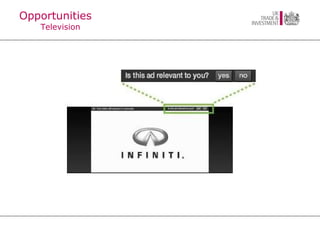
Opportunities Television
Opportunities Music
Opportunities Radio 09/06/10
Opportunities All
Opportunities Games
Selling messages 09/06/10
UK Consumer Demand for Broadband Through their broadband connections, consumers are able to access and interact with a wide range of content and services and businesses can exploit new market opportunities. The current generation of broadband services in the UK have become a success story with competition, based largely on the use of local loop unbundling, driving choice and innovation, low prices and high take up.  The increasing number of consumers using their broadband connections for activities such as downloading or streaming videos and music, is beginning to limit the current networks. New networks being introduced today, using fibre optical cable to deliver super-fast broadband services, are expected to deliver significant benefits to UK consumers.  Super fast broadband (i.e. broadband with speeds greater than 24Mbps)  has the potential to deliver speeds of 50 to 100Mb/s (megabits per second) and enhance new consumer services such as broadcast quality video services, High Definition and 3D TV and interactive fast, fibre optic broadband has the potential to deliver speeds of 50 to 100Mb/s (megabits per second) and enhance new consumer services such as broadcast quality video services, High Definition and 3D TV and interactive online gaming.  Source: OFCOM 2010 BT has launched its super-fast broadband product and plans to cover 40% of the UK by 2012 and Virgin Media has rolled out 50Mb/s to 46% of the UK population and has recently launched a 100Mb/s service. Other smaller companies are also investing in these products including IFNL and H20. Ofcom's Chief Executive, Ed Richard said: “ Super-fast broadband is starting to be a reality in the UK, with very significant advances in recent months in the speeds some providers are offering. Ofcom's proposed regulatory framework is intended to support the next phase of development by promoting investment, competition and innovation for consumers across the UK” Availability of super-fast broadband in the UK (some 46% of homes) is now ahead of most large economies where deployments have been funded commercially. In the US, AT&T and Verizon have upgraded their networks to cover 17% and 12% of households respectively, while cable company Comcast is approaching coverage of around 35% of US households with super-fast cable broadband. In Europe, super-fast networks are available to 21% of households in France and 23% of households in Germany.  UK consumers and businesses have benefited from the development of broadband to date. Commercial investments in super-fast broadband are now well underway and almost half the UK population today has access to at least one super-fast broadband network which places the UK in a favourable position internationally.  Broadband is becoming increasingly central to the lives of UK consumers and the success of businesses.
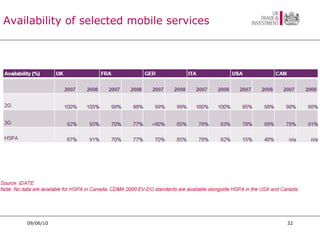
Availability of selected mobile services 09/06/10
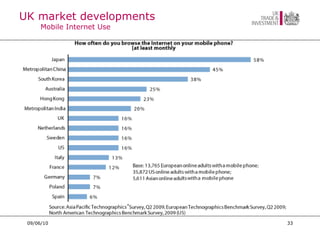
UK market developments Mobile Internet Use 09/06/10
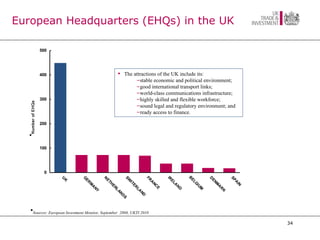
European Headquarters (EHQs) in the UK Sources: European Investment Monitor, September  2008, UKTI 2010 Number of EHQs The attractions of the UK include its: stable economic and political environment; good international transport links; world-class communications infrastructure; highly skilled and flexible workforce; sound legal and regulatory environment; and ready access to finance.
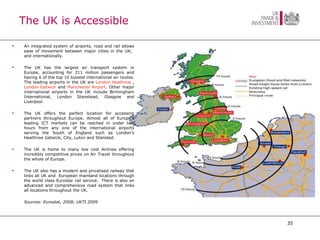
The UK is Accessible An integrated system of airports, road and rail allows ease of movement between major cities in the UK,  and internationally. The UK has the largest air transport system in Europe, accounting for 211 million passengers and having 6 of the top 10 busiest international air routes. The leading airports in the UK are  London Heathrow  ,  London Gatwick  and  Manchester Airport . Other major international airports in the UK include Birmingham International, London Stanstead, Glasgow and Liverpool. The UK offers the perfect location for accessing partners throughout Europe. Almost all of Europe’s leading ICT markets can be reached in under two hours from any one of the international airports serving the South of England such as London’s Heathrow Gatwick, City, Luton and Stansted.  The UK is home to many low cost Airlines offering incredibly competitive prices on Air Travel throughout the whole of Europe. The UK also has a modern and privatised railway that links all UK and  European mainland locations through the world class Eurostar rail service.  There is also an advanced and comprehensive road system that links all locations throughout the UK. Sources: Eurostat, 2008; UKTI 2009
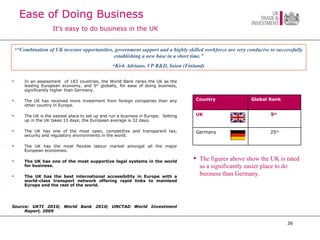
Ease of Doing Business   It’s easy to do business in the UK In an assessment  of 183 countries, the World Bank ranks the UK as the leading European economy, and 5 th  globally, for ease of doing business, significantly higher than Germany. The UK has received more investment from foreign companies than any other country in Europe. The UK is the easiest place to set up and run a business in Europe.  Setting up in the UK takes 13 days; the European average is 32 days. The UK has one of the most open, competitive and transparent tax, security and regulatory environments in the world. The UK has the most flexible labour market amongst all the major European economies. The UK has one of the most supportive legal systems in the world for business. The UK has the best international accessibility in Europe with a world-class transport network offering rapid links to mainland Europe and the rest of the world. Source: UKTI   2010; World Bank 2010; UNCTAD World Investment Report, 2009 “ Combination of UK investor opportunities, government support and a highly skilled workforce are very conducive to successfully establishing a new base in a short time.” Kirk Adriano, VP R&D, Inion (Finland) The figures above show the UK is rated as a significantly easier place to do business than Germany. Country Global Rank UK 5 th   Germany 25 th
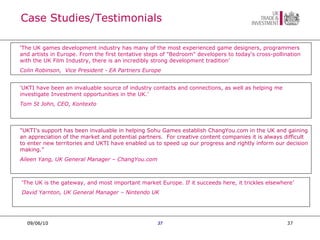
Case Studies/Testimonials 09/06/10 09/06/10 ‘ UKTI have been an invaluable source of industry contacts and connections, as well as helping me investigate Investment opportunities in the UK.’ Tom St John, CEO, Kontexto ‘ The UK is the gateway, and most important market Europe. If it succeeds here, it trickles elsewhere’  David Yarnton, UK General Manager – Nintendo UK "UKTI's support has been invaluable in helping Sohu Games establish ChangYou.com in the UK and gaining an appreciation of the market and potential partners.  For creative content companies it is always difficult to enter new territories and UKTI have enabled us to speed up our progress and rightly inform our decision making. ”    Aileen Yang, UK General Manager – ChangYou.com ‘ The UK games development industry has many of the most experienced game designers, programmers and artists in Europe. From the first tentative steps of "Bedroom" developers to today's cross-pollination with the UK Film Industry, there is an incredibly strong development tradition’    Colin Robinson,  Vice President - EA Partners Europe
Thank you!     tony.hughes@pera.com  [email_address] August 2009

Digital content briefing_tour_may2010

  • 1.
    May 2010 TourBriefing Creative and Media Overview Tony Hughes Tony Hughes, May 2010
  • 2.
    Digital Content BriefingOverview Sector Focus Market trends UK Strengths Investor Opportunities Other key selling messages Case Studies 09/06/10
  • 3.
    Digital Content KeyIndustries Games Media Publishing Film/Animation 09/06/10
  • 4.
    Digital Content Platforms 09/06/10 PC Mobile Console TV
  • 5.
    Sector Focus Internetas Channel Sport Creative agencies Auto Consumer Products Film Finance FMCG Gaming Music Publishing Radio Television Travel 09/06/10
  • 6.
    Market Trends Majorthemes Creative Agencies – interactive broadcasting, social media, behavioural targeting and measurement Film – digital distribution, interactive broadcasting, micropayments Gaming – digital distribution, interactive broadcasting, proliferation of devices, social media and micropayments Music – digital distribution, social media, micropayments, measurement tools and tracking Publishing – digital distribution, proliferation of devices, micropayments, real time measurement tools and social media Radio – interactive broadcasting, proliferation of devices, micropayments and measurement tools Television – interactive broadcasting, proliferation of devices, micropayments, measurement tools and social media 09/06/10
  • 7.
  • 8.
  • 9.
    Games Increasing sizeand scope of consumer base
  • 10.
    Music Mobile consumer09/06/10 Graphic – Universal/EMI
  • 11.
  • 12.
  • 13.
    Referred by a friend on Facebook Checked out the official site Television Interactive broadcasting Watched the show Search beyond official site fan-sites, Wikipedia Downloaded samples Inspires further net ‘research’ Spreads the word to others via Facebook Who watch & feed back
  • 14.
    UK Strengths GeneralAccess to Creative and Tech Talent High spending & early adopter consumer market Centre of Europe’s Advertising, Publishing, Telecoms & Media Industries Substantial investment in fixed broadband and mobile infrastructure Ease of doing business - ranks No.1 in Europe Good communications routes Home to larger % of EHQs than rest of Europe 09/06/10
  • 15.
    UK Strengths CreativeAgencies Multiplicity of agency specialists Articulation of digital opportunities to Ad agencies Pull the converging industry models together Increasing reliance on digital production in UK than outsourced 09/06/10
  • 16.
    UK Strengths FilmMarket: The UK has more digital cinemas than any other European country – 365 and counting Spend: UK box-office takings are at record-breaking levels, worth £944 million in the UK in 2009, up 62% from 2000 Variety: There are over 100 production studios in the UK, ranging from large studios capable of housing the biggest sets to small studios catering for music videos and commercial work. Talent: The UK film industry directly employs almost 44,000 people, with extended employment impact of 95,000 jobs Warner Brothers recently acquired Leavesden studios in Hertfordshire, making it the only major Hollywood studio to have a permanent base outside of the USA. 09/06/10
  • 17.
    UK Strengths GamesInnovative and ground breaking IP Largest developer pool in Europe High % of employers with first or higher degrees Multiplatform development expertise Attracted major global publishers Cross media links growing Growth in online and casual gaming sub sectors Developing Serious Games and Virtual World clusters High spending, engaged consumer market Broadening demographic playing casual games Trusted and flexible payment mechanisms 09/06/10
  • 18.
    UK Strengths Music Largest market in Europe for music downloads Centre of Europe’s music industry Global music players all present Thriving live events sector Melting pot for technologist and music collaboration 09/06/10
  • 19.
    UK Strengths Publishing Largest single creative industry generating over £20bn 164,000 employees and over 8,000 companies in the UK In its quality, diversity and reach, UK publishing leads the world Despite the world economic downturn there is a positive outlook for the publishing industry in the UK. The PPA calculates that more than one billion consumer magazines were sold in 2009 09/06/10
  • 20.
    UK Strengths Radio Radio audiences increasing across different platforms Internet radio seeing largest increases in each segment ¼ listening through digital devices The UK consumer is responding to the advantages of digital radio, with ownership of DAB increasing 14% year on year, with 16.6m households having a DAB receiver, compared to 14.5m a year ago. 09/06/10
  • 21.
    UK Strengths Television The UK television industry contributes around £12 billion to the UK economy, with exports approaching £500 million. Best supply chain structure in the world outside LA London is second only to LA in the size of the post production sector servicing TV and Film Digital switchover creating more channels BBC is a world leader in programme quality and broadcast innovation (e.g. Project Canvass). 09/06/10
  • 22.
    Investor Opportunties Expandingconsumer base for paid for content (games, video, social media) Leading expertise across Creative, Business and Technical disciplines Client base across Creative Industries and related sectors For example: Publishing: real time tracking tools and marketing TV – content, download and multiplatform tools Games – development applications, mobile flash games, social gaming Film – online, interactive and post production tools Radio – strong consumer interest for new and innovative interactions Music – social media applications and live event link-up applications 09/06/10
  • 23.
  • 24.
  • 25.
  • 26.
  • 27.
  • 28.
  • 29.
  • 30.
  • 31.
    UK Consumer Demandfor Broadband Through their broadband connections, consumers are able to access and interact with a wide range of content and services and businesses can exploit new market opportunities. The current generation of broadband services in the UK have become a success story with competition, based largely on the use of local loop unbundling, driving choice and innovation, low prices and high take up. The increasing number of consumers using their broadband connections for activities such as downloading or streaming videos and music, is beginning to limit the current networks. New networks being introduced today, using fibre optical cable to deliver super-fast broadband services, are expected to deliver significant benefits to UK consumers. Super fast broadband (i.e. broadband with speeds greater than 24Mbps) has the potential to deliver speeds of 50 to 100Mb/s (megabits per second) and enhance new consumer services such as broadcast quality video services, High Definition and 3D TV and interactive fast, fibre optic broadband has the potential to deliver speeds of 50 to 100Mb/s (megabits per second) and enhance new consumer services such as broadcast quality video services, High Definition and 3D TV and interactive online gaming. Source: OFCOM 2010 BT has launched its super-fast broadband product and plans to cover 40% of the UK by 2012 and Virgin Media has rolled out 50Mb/s to 46% of the UK population and has recently launched a 100Mb/s service. Other smaller companies are also investing in these products including IFNL and H20. Ofcom's Chief Executive, Ed Richard said: “ Super-fast broadband is starting to be a reality in the UK, with very significant advances in recent months in the speeds some providers are offering. Ofcom's proposed regulatory framework is intended to support the next phase of development by promoting investment, competition and innovation for consumers across the UK” Availability of super-fast broadband in the UK (some 46% of homes) is now ahead of most large economies where deployments have been funded commercially. In the US, AT&T and Verizon have upgraded their networks to cover 17% and 12% of households respectively, while cable company Comcast is approaching coverage of around 35% of US households with super-fast cable broadband. In Europe, super-fast networks are available to 21% of households in France and 23% of households in Germany. UK consumers and businesses have benefited from the development of broadband to date. Commercial investments in super-fast broadband are now well underway and almost half the UK population today has access to at least one super-fast broadband network which places the UK in a favourable position internationally. Broadband is becoming increasingly central to the lives of UK consumers and the success of businesses.
  • 32.
    Availability of selectedmobile services 09/06/10
  • 33.
    UK market developmentsMobile Internet Use 09/06/10
  • 34.
    European Headquarters (EHQs)in the UK Sources: European Investment Monitor, September 2008, UKTI 2010 Number of EHQs The attractions of the UK include its: stable economic and political environment; good international transport links; world-class communications infrastructure; highly skilled and flexible workforce; sound legal and regulatory environment; and ready access to finance.
  • 35.
    The UK isAccessible An integrated system of airports, road and rail allows ease of movement between major cities in the UK, and internationally. The UK has the largest air transport system in Europe, accounting for 211 million passengers and having 6 of the top 10 busiest international air routes. The leading airports in the UK are London Heathrow , London Gatwick and Manchester Airport . Other major international airports in the UK include Birmingham International, London Stanstead, Glasgow and Liverpool. The UK offers the perfect location for accessing partners throughout Europe. Almost all of Europe’s leading ICT markets can be reached in under two hours from any one of the international airports serving the South of England such as London’s Heathrow Gatwick, City, Luton and Stansted. The UK is home to many low cost Airlines offering incredibly competitive prices on Air Travel throughout the whole of Europe. The UK also has a modern and privatised railway that links all UK and European mainland locations through the world class Eurostar rail service. There is also an advanced and comprehensive road system that links all locations throughout the UK. Sources: Eurostat, 2008; UKTI 2009
  • 36.
    Ease of DoingBusiness It’s easy to do business in the UK In an assessment of 183 countries, the World Bank ranks the UK as the leading European economy, and 5 th globally, for ease of doing business, significantly higher than Germany. The UK has received more investment from foreign companies than any other country in Europe. The UK is the easiest place to set up and run a business in Europe. Setting up in the UK takes 13 days; the European average is 32 days. The UK has one of the most open, competitive and transparent tax, security and regulatory environments in the world. The UK has the most flexible labour market amongst all the major European economies. The UK has one of the most supportive legal systems in the world for business. The UK has the best international accessibility in Europe with a world-class transport network offering rapid links to mainland Europe and the rest of the world. Source: UKTI 2010; World Bank 2010; UNCTAD World Investment Report, 2009 “ Combination of UK investor opportunities, government support and a highly skilled workforce are very conducive to successfully establishing a new base in a short time.” Kirk Adriano, VP R&D, Inion (Finland) The figures above show the UK is rated as a significantly easier place to do business than Germany. Country Global Rank UK 5 th Germany 25 th
  • 37.
    Case Studies/Testimonials 09/06/1009/06/10 ‘ UKTI have been an invaluable source of industry contacts and connections, as well as helping me investigate Investment opportunities in the UK.’ Tom St John, CEO, Kontexto ‘ The UK is the gateway, and most important market Europe. If it succeeds here, it trickles elsewhere’ David Yarnton, UK General Manager – Nintendo UK "UKTI's support has been invaluable in helping Sohu Games establish ChangYou.com in the UK and gaining an appreciation of the market and potential partners. For creative content companies it is always difficult to enter new territories and UKTI have enabled us to speed up our progress and rightly inform our decision making. ”   Aileen Yang, UK General Manager – ChangYou.com ‘ The UK games development industry has many of the most experienced game designers, programmers and artists in Europe. From the first tentative steps of "Bedroom" developers to today's cross-pollination with the UK Film Industry, there is an incredibly strong development tradition’   Colin Robinson, Vice President - EA Partners Europe
  • 38.
    Thank you! tony.hughes@pera.com [email_address] August 2009

Editor's Notes

  • #3 UK creative industries currently contribute 6.2% to the British economy and are set to grow at more than 4% per annum over the next five years, employing 1.3 million people. These companies are competing in a worldwide market in creative industries worth around 7% of global GDP.
  • #8 Interactive TV – both cross platform projects and more sophisticated use of old red button services – working with brands and advertising agencies. In the UK BBC leading the way due to its size, resources and remit (push for Digital Switchover) with the iPlayer across platforms (Mobile, Console, TV and PC) also with Project Canvass (also incorporating BT, Two Way TV and other TV channels) – and now BBC research focus on interplay between the devices in the home – linked screens extending the reach and depth of programmes Honda TV – example of use of platform for targeted marketing History Channel – working with creative agency in london to sell through its programmes from TV to PC internet Social Media – the idea of create and share that underpins the growth of social media (likes of FB and Twitter) is being harnessed by the agencies for brands such as Nike – campaigns particularly targetting younger digital natives who spread the message virally Behaviourial Targeting – not just tracking how consumers browse through the internet but also in the sense of cross marketing – e.g. The use of mastercard data and lonely planet guide info channelled to users in particular destinations across the world (Quid pro quo arrangement) Measurement tools – for the use of the internet and applications across fixed and mobile devices – all important in persuading the advertising money to back new content across emerging technologies
  • #9 Digital Distribution – The success of online video on sites like YouTube (2bn views a day) is gradually been viewed less of a threat and more of an opportunity for professionally made content. Most of the YouTube downloads are professional content – more companies doing deals with YouTube to distribute their content. For film its opportunities are being realised as both marketing and distribution of content – the experience of the theatre is still distinct from the viewing on a laptop or even TV. Interactive Broadcasting – more pay per view options to give films more energy in the “long tail” and potential with clever marketing more audience for niche films. Micropayments – in terms of financing films – but in this sense of customers paying for films online – through sites like Blockbuster or Flixter. Also more potential there in mash-up content aimed at niche audiences with other content/publishers portals...?
  • #10 Digital Distribution – Move from packaged goods to digital distribution and online, connected gaming (consoles plugging into TV and internet – whether on fixed or mobile). Interactive Broadcasting – games available through the set top box more varied and sophisticated as the devices and network improves though still limited by interface and lack of design know how on design and interaction Proliferation of devices – Key ones are still console but more so PC and mobile gaming with larger games companies as well as media corporation seeking diversify their IP across many devices (ubiquitous gaming) Social Media – Platforms such as Facebook are developing into the worlds largest gaming platforms due to the reach and stickiness of their sites (22m in UK on fixed and 6m on mobile – leading site). Type of gaming is different to the traditional market as the demographic and play context differs – shorter, dipping in and out and boarder demographic – more social and collaborative in nature Micropayments – the ability to charge (through multiple payment mechanisms and trusted sites) means games can more easily monetise their content through smaller transactions – helping smaller games companies to build consumer base
  • #11 Digital Distribution - Mobile is tipped to drive the next wave of innovation, with more sophisticated location-specific and personalised information and entertainment Social Media - The next wave of digital-driven innovation in live music is expected to be social: recommending events and sharing music-related content Micropayments – Customer trend from album purchases to single tracks with labels and bands looking to build on to their existing fan base with incentivised schemes online and broadening their brand across other sites and devices Measurement tools and tracking – UK is the largest consumer market for music downloads in EU and music industry needs tools to track an increasing diffuse and connected consumer base
  • #12 Digital Distribution – greater capacity both on fixed and mobile internet to access and download content – whether for news/magazines or books – newspaper sites such as the Guardian increasing looking to monetise their content on digital platforms (eg. Recent iphone paid app had 100,000 downloads in one month) Proliferation of devices – eReaders, mobile phones, iPad as well as laptops and fixed PCs – not the end of the physical product but new business models emerging with consumer habits changing Micropayments – exploring the flexibility of online payments for editions, article searches, subscriptions real time measurement tools – need to keep advertisers on side with measurement tools and analysis of audience data social media – all important medium through which to maintain and grow customer base – whether its indirect use through FB or direct social media tools to enagage and keep audience on their site. Book publishers like penguin are increasingly proactive in pushing writers and works through social media means and encouraging discussion with and between readers (Clay Shirky comments....)
  • #13 interactive broadcasting – with digital switchover - greater bandwidth for enhanced or niche players in the market proliferation of devices – more apps on mobile phones for eg, to enable audience to tune in wherever they are Micropayments – little as yet exploited use with radio due to dominance of BBC though they are cutting back on more popular media stations to not hinder commercial market development measurement tools – advertisers need to see ROI Social media – advertising means?? Need some more egs’ here other than the mobile apps to suggest the space for radio is not redundant – remember the radio company that came in through Brain Shaw??
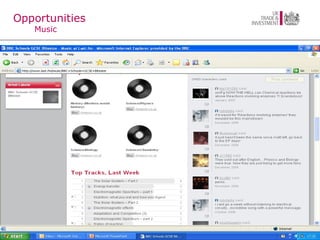
  • #14 interactive broadcasting – extend life of programme content and potential revenue links proliferation of devices – connected experience (as diagram indicates) Micropayments – Hulu, iplayer, 4OD, other platforms measurement tools – improving social media – referral and promo Appeal is the subject ’ s potential to extend beyond TV format Music has found a natural home on-line – a great way to discover and sample music new to the listener As such makes perfect sense for BBC to create an ‘ encyclopaedic ’ resource such as this Site especially good at providing a ‘ map ’ for new musical horizons The ability to upload key clips from the show is appealing as a concept Though clearly dependent on personal interest Taps into the need for users of Facebook (et al) to create their personal iconography Clips can ‘ reveal ’ who you are in a dynamic way In this case clips ’ branding is clear – credit goes to BBC BBC seen to enable this facility – a progressive step The ‘ time-line ’ especially appreciated
  • #16 Client interest in social media and their use of it for a range of marketing activities is a fast-growing trend This is fuelling a rise in the number of digital agencies claiming to specialise in social media marketing Social media will remain a key channel but one that goes well beyond the relatively narrow realms of Facebook and Twitter. And whatever type of agency ultimately comes out on top, it’ll be one that’s best able to keep pace with this change. Some have been concentrating on a pure production focus for some time, such as ClickTag, Specialmoves and Unit9. If these agencies take on work for other agencies, it’s usually under a non-disclosure agreement, but others are upfront about the connection. Pirata, for example, was set up with the backing of Work Club, while London-based Dare launched its own production division, Dare West, in Bristol last month with six staff. Meanwhile new UK branches of established European production specialists, such as B-Reel from Sweden and MediaMonks from the Netherlands, are setting up shop. The move is being driven by client demand, by agencies that have been burned by experiences with overseas outsourcing, using freelance staff and, to a certain degree, by a nerdier element in the digital marketing industry that’s dedicated to the craft of production.
  • #17 Over 3.1bn views makes UK users biggest watchers of online video New survey found 27.4m UK users watched an average of 127.7 videos each, putting the UK ahead of the US, Canada, France and Germany. YouTube continues to dominate the space. Of all online video watched in April, 48.2% (1.53bn videos) were on Google-owned sites. YouTube accounts for 99% of these views Rival online video providers like the BBC and Facebook have begun to increase their market share, though. The BBC has increased its unique users from 5m in November to more than 6.2m in April, driven by the iPlayer. Facebook has also increased the number of visitors who use the site to watch video from 1.14m in November to over 1.59m. A survey last year by CSS Insight has found that a third of UK teens want to access the BBC's iPlayer on their phones. Blinkbox has launched its first movie streaming service for the Sony PlayStation 3 in the UK. Console owners can, from today, stream up to 6,000 movie and TV titles, including box office hits such as Avatar and The Hangover. Later this month movies such as Sherlock Holmes and Up In The Air will be available, along with US TV series Gossip Girl, Heroes,and 30 Rock. The move was triggered by the increasing number of UK visitors to the Blinkbox movie streaming site, topping 1m unique monthly users, and a growth in requests from PS3-owning Blinkbox users for their own version. According to Skillset Animation companies provide employment for around 4,700 in the UK
  • #18 Channel 4 Education is to harness games consoles as a core channel to reach teenagers in the next phase of its multi-million-pound online education strategy. The broadcaster has singled out Microsoft’s Xbox, and in particular its Indie games channel on Xbox Live, as a vital platform to engage with teenagers. It’s planning to launch its first educational content on the console this year.
  • #19 Absolute Radio (India) is to launch a further digital station, Absolute 90s, in a bid to increase its reach. The station will play music from the likes of Blur, Oasis, Texas, Lenny Kravitz, Beautiful South and Sheryl Crow, and will be available on the London DAB network from June. The broadcaster’s 1980s-music station, which launched in December on London DAB and online ( nma.co.uk 3 November 2009 ) will go on national DAB from today (14 May).
  • #20 The sector is made up of from the printed word to online and contains a diverse group of industries including: Books, Directories and Databases, Journals, Magazines and Business Media, Newspapers and News Agencies.  The future of the publishing industry appears strong. New forms of content are appearing and evolving the need to deliver content in whatever form and via whatever channel the customer wants, despite the background of a challenging business environment.
  • #21 Digital listening has also increased its reach, with 19.7m people listening via a digital device each week, up 15% in the past year. Listening to the radio via mobile devices has remained steady, at 12.6% of adults in Q1 2010. According to Rajar, younger people are more likely to access radio in this way, as 30.4% of 15-24-year-olds have listened to the radio via their mobile phone.
  • #23 Some recent company examples I’ve been involved with: Kontexto Sohu Bravo Games company Demand Media Absolute Radio Spotify Little Airplane Disney Turner Square Enix NC Soft E4E DeNA Konami
  • #24 Iplayer and likes of Hulu (commercial players) coming into market to extend reach of TV product BBC: Increasing total BBC spend to more than £1billion Locating 50% of BBC staff outside London Moving at least 20% commissioning outside London
  • #25 SHARE - New ways of finding content – blogs, social networks, you tube
  • #26 PLAY - New ways of broadcasting
  • #28 Jelli has one of the more interesting and feasible business models related to music around Silicon Valley. It allows listeners to “take over” a radio station and collaboratively create playlists. It’s more interactive than a Top 40 or Total Request Live type of format. There are game mechanics that award Jelli listeners the ability to “rocket” song choices to the top or bomb choices that are bad. The benefit of going with traditional radio stations, and not the online route like Pandora, is that old media properties don’t have to pay the same kinds of onerous royalties that Internet radio stations do. Traditional radio also has a more established advertising network; CBS’ radio properties for example, bring in just over $1 billion in revenue annually. Jelli first started doing tests with CBS’ rock station LIVE 105 in San Francisco; it worked so well that the company expanded to six nights a week. The company has also signed with Triton Media to launch across the U.S.
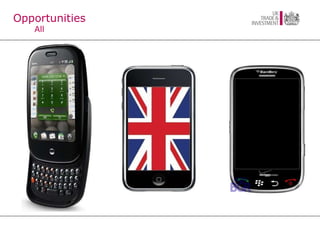
  • #29 Overall: Increasing transparency of mobile packages Improved and bespoke mobile internet sites Content has improved and is more relevant to the platform Improvement in quality of mobile devices (processes, interface, navigation) UK: Largest Wi-Fi deployment in Western Europe 3G and further roll out of HSPDA UK content production accounts for more than 6% of UK gross value, the equivalent in scale to the financial industry UK users with a smart phone spend about £41 a month on their bill, more than double the average The UK is the largest individual mobile music market in research company eMarketer's EU-5 grouping of countries. It predicts mobile music retail revenues in the five EU countries will reach $1.4bn (£703m) by 2012 Mobile music downloads are up 21% year on year for last couple of months (GfK, 2009) Orange Mobile Music saw an increase in traffic of 10.5% since the last Digital Media Index in Jan 08, with 300,014 tracks downloaded in September 2008. ComScore has released a study in March 2010 of the Smartphone market in Europe showing that Smartphone adoption in the EU5 (U.K., France, Germany, Spain, Italy) has grown 32 percent versus a year ago to 51.6 million subscribers. The U.K. market strongly leads in growth of Smartphone adoption over the past year, growing 70 percent to more than 11 million subscribers
  • #30 brands have been weak because the primary way to spread apps is through friend recommendations. This week, the company announced that EA Playfish would launch FIFA Superstars, a new Facebook game that taps the brand of EA’s cash-cow soccer game franchise. DeHalleux believes it will be possible to create a billion-dollar game on Facebook . EA is putting one of its best franchises on it. It’s a billion-dollar franchise already. FIFA 10 sold more than 10 million units at $60. It’s our way of saying to the world that the Facebook ecosystem is valid. It will create a long-term opportunity. We think Facebook can deliver a billion-dollar hit on the scale of the film Avatar. It’s early days, but we’re serious about it. The World Cup is happening very soon, and the last one drew the attention of more than 750 million people. An event of that magnitude is ideal for us. it could help distribute value down the chain. In a healthy ecosystem, platform holders are aligned with publisher interests. The biggest promise Facebook Credits can deliver is liquidity on the platform. That means more people will spend. Today, on Facebook, the number of spenders is small compared to the number of active users. Compare that to casual game platforms where the number is 10 percent or more. We are very very far from that. Facebook Credits could create a more frictionless environment for users. We believe users should be able to choose what is most convenient for them. Connected/always on attitude of consumers: The popularity and broad demographic appeal of social media networks in the UK has led to more people remaining online and connected throughout the day, at home or at work. Facebook has widened its list of recommended agencies developing tools and apps for the social network. Its has expanded from 15 to 50 across 15 countries and the UK has gone from having 2 to 9 agencies listed. The original 2 included London-based iPlatform. Others.... broadening demographics/smaller, disposable games for cheaper but more numbers/ easier access to worldwide distribution platform
  • #33 The UK has high mobile subscription rates, with approximately 1.3 active subscriptions per person in the UK and roughly one third of the population accessing 3G services on a regular basis (ii). There is an increasing trend for subscribers entering into contracts with mobile operators, as flat rate data billing is encouraging more people to spend time on rich media applications on their mobile phones. The entrance of more mobile virtual network operators (MVNOs), now with 13% of the market (iii), has seen mobile tariffs decrease as the competition increases amongst the operators. This is another contributing factor that is empowering the UK consumer to take control of their mobile phone charges. The introduction of apps stores has provided an easy to use interface and better quality games for consumers to access and play on their mobile phones. Possibly the key driving factor behind the success of games on mobile phones is the improvement of the devices. Much of the mass consumer market has been led towards adoption of smartphones in the UK from the introduction of the Iphone in 2007. Until the latter part of 2009 the Iphone was only available through one of the main 5 network operators, O2. Since then, with the merger of Orange and T-Mobile in the UK, 4 of the 5 major network operators are selling the Iphone, in addition to Tesco – one of the growing number of MNVOs in the UK. O2 has sold over 2 million iPhones in the UK (i) . In January during the first week of the iPhone’s launch on Vodafone UK over 100,000 iPhones were sold and 50,000 were pre-ordered before it had even launched. Tesco and Orange have not yet provided up to date figures so it’s impossible to get an exact total for the UK, however it is a safe bet to say that total UK sales are between 2.25m and 2.5m iphones. There are no demographics available for the device and it appears that the operators are not measuring this. However reports from Comscore and annecdotally suggests that they ownership is concentrated in the 20-40 yrs age range, and generally middle to higher incomes. Although it is available on pay as you go, most users are on subscription packages. A mixture of both cost and functions suggests that the iphone does not appeal to a younger age demographic .