Downloaded 27 times


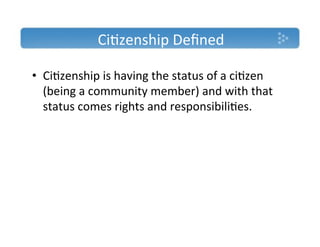
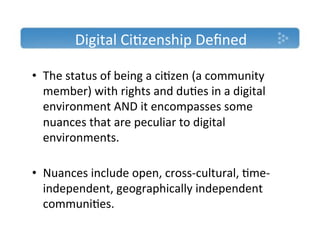

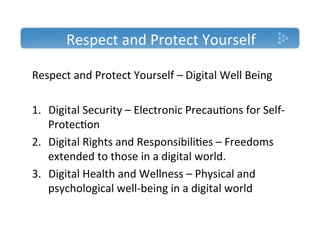
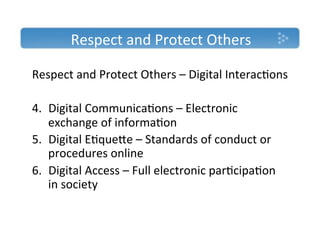
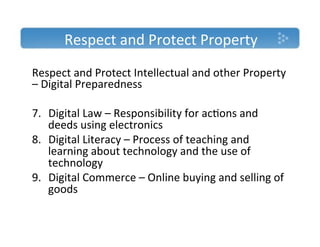
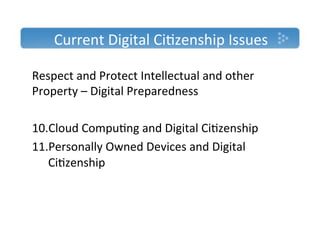

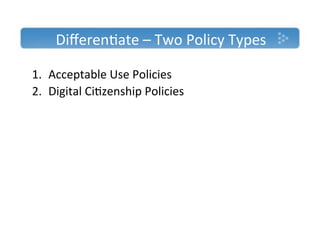
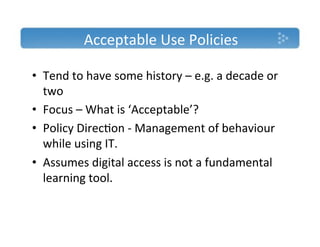
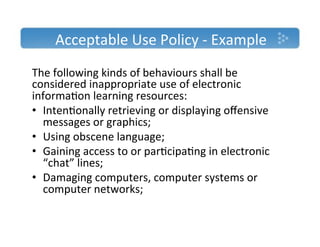
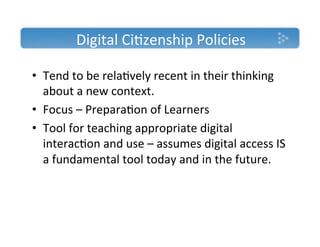
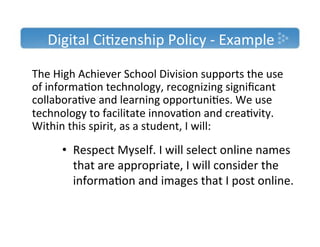













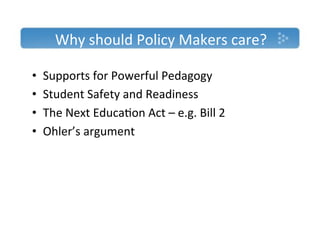


This document provides an overview and guidance for developing digital citizenship policies in K-12 schools. It defines digital citizenship and outlines Ribble's nine elements of digital citizenship. The document discusses the importance of digital citizenship policies in supporting powerful pedagogy, student safety and readiness, meeting requirements of education acts, and addressing Ohler's argument that schools should take a "one life" rather than "two lives" approach to students' digital experiences. It provides examples of acceptable use policies versus digital citizenship policies and recommends a process for policy development that involves compliance as well as commitment and teamwork.


