The Digestive System Bleecker-Style  
Table of Contents Cells, Tissues, Organs, Organ Systems Introduction to the Digestive System What is Digestion? 2 Phases of Digestion 4 Components of Digestion The Organs of Digestion
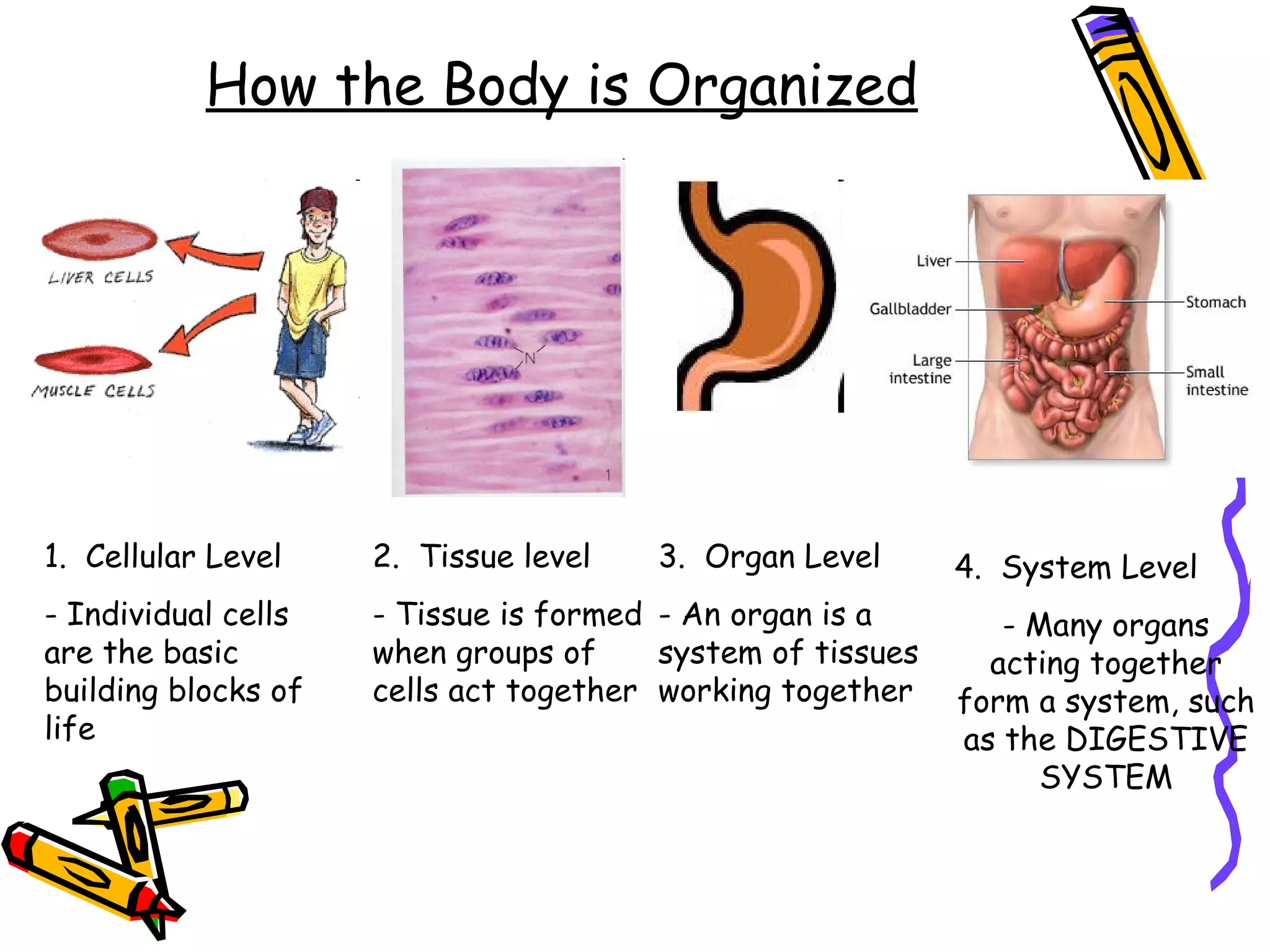
How the Body is Organized 1.  Cellular Level - Individual cells are the basic building blocks of life 2.  Tissue level - Tissue is formed when groups of cells act together 3.  Organ Level - An organ is a system of tissues working together 4.  System Level - Many organs acting together form a system, such as the DIGESTIVE SYSTEM
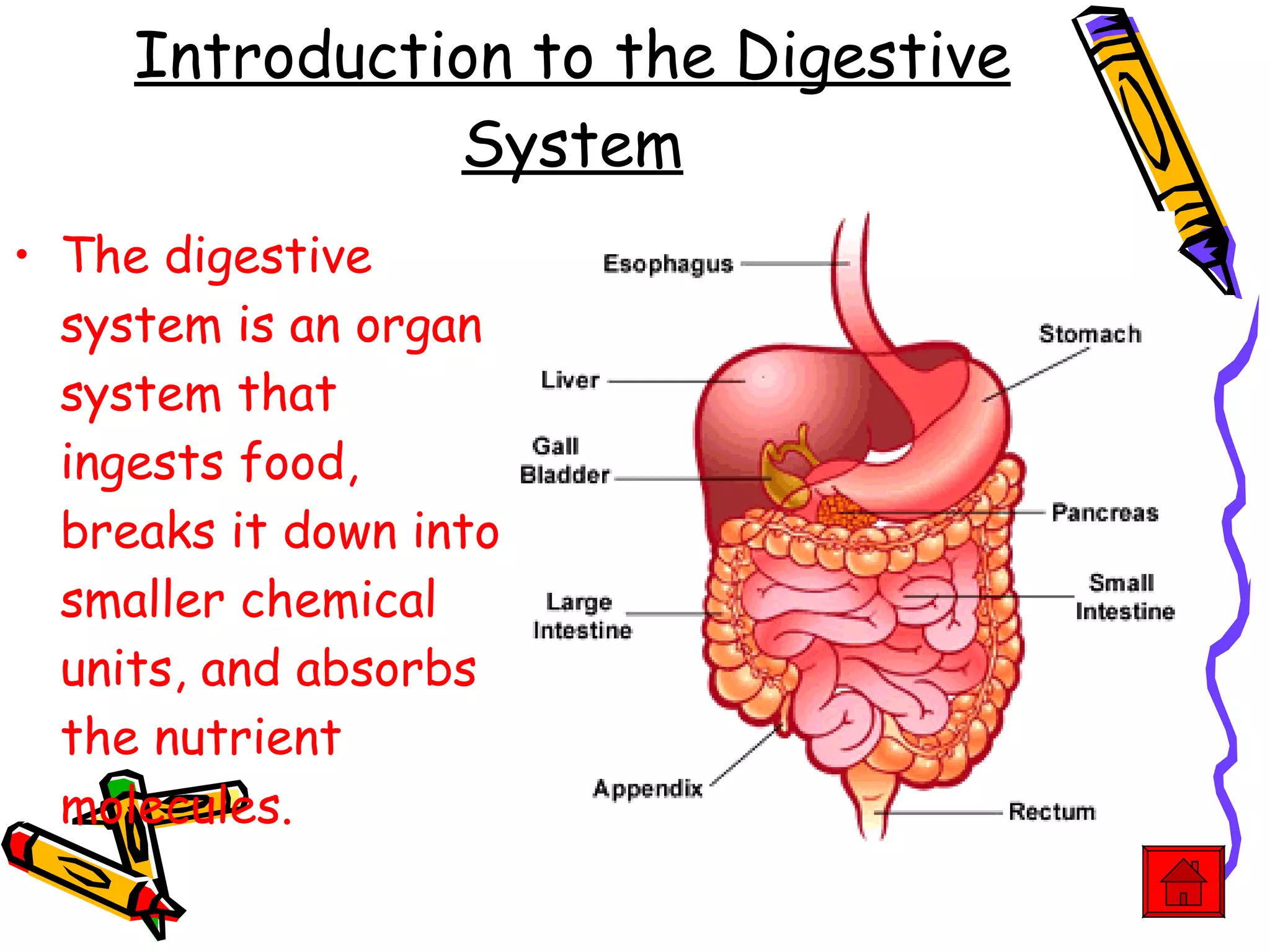
Introduction to the Digestive System The digestive system is an organ system that ingests food, breaks it down into smaller chemical units, and absorbs the nutrient molecules.
What is Digestion? Digestion is the mechanical and chemical breakdown of food into molecules small enough for the body to absorb.
2 Phases of Digestion Mechanical Digestion – begins in the mouth where the food is chewed.  - Saliva = watery fluid making it easier to    swallow.  Also some enzymatic    digestion of starch Chemical Digestion – occurs in the mouth and the stomach.  HCl produced by the stomach cells.
4 Components of Digestion Ingestion – the intake of nutrients Digestion – the breakdown of organic molecules Absorption – the transport of digested nutrients to body tissues Egestion – the removal of materials from food that the body cannot digest
The Organs of Digestion
Mouth Physical digestion begins Food is chewed into a bolus and mixed with saliva Initial carbohydrate digestion
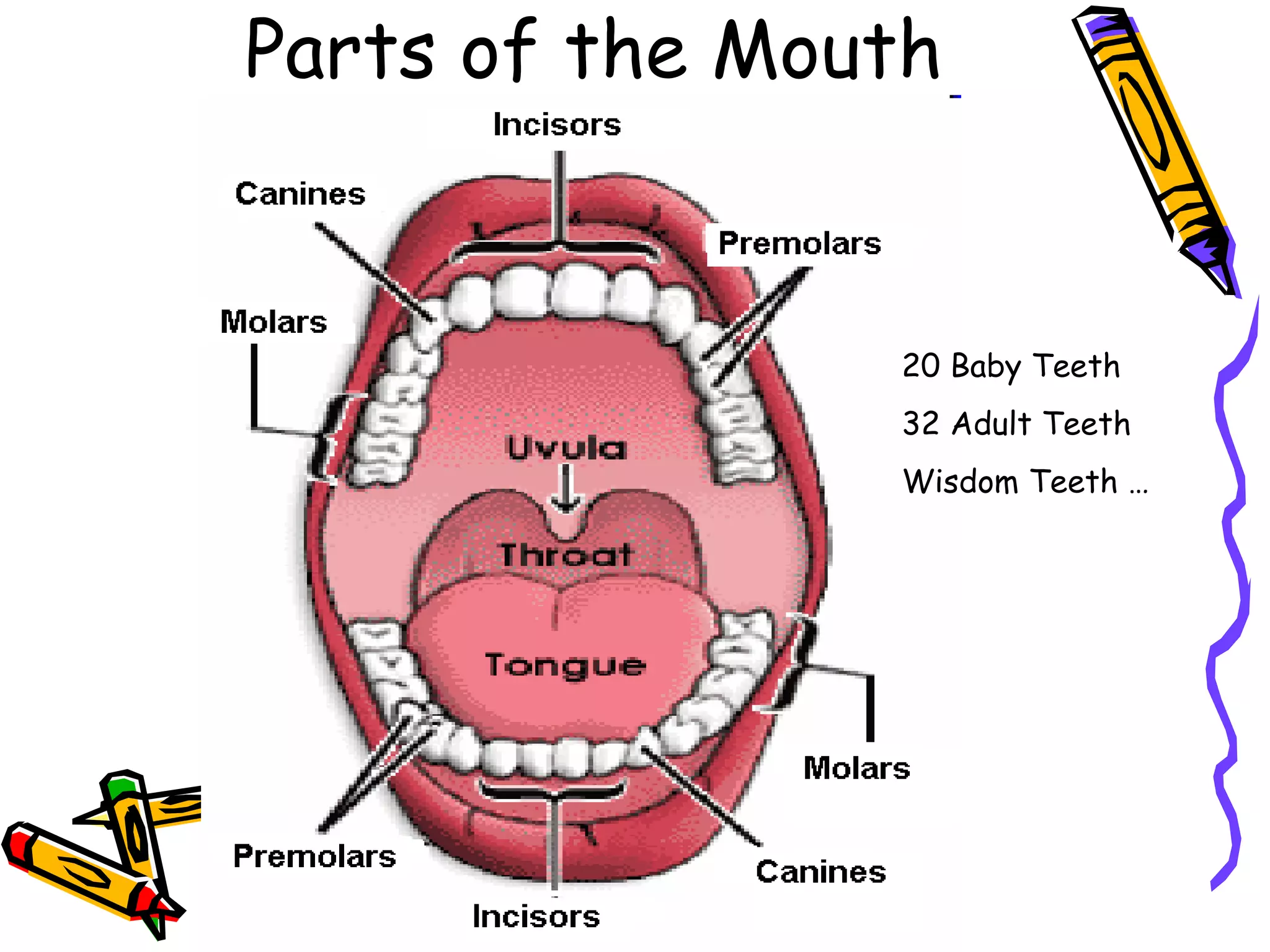
Parts of the Mouth 20 Baby Teeth 32 Adult Teeth Wisdom Teeth …
 
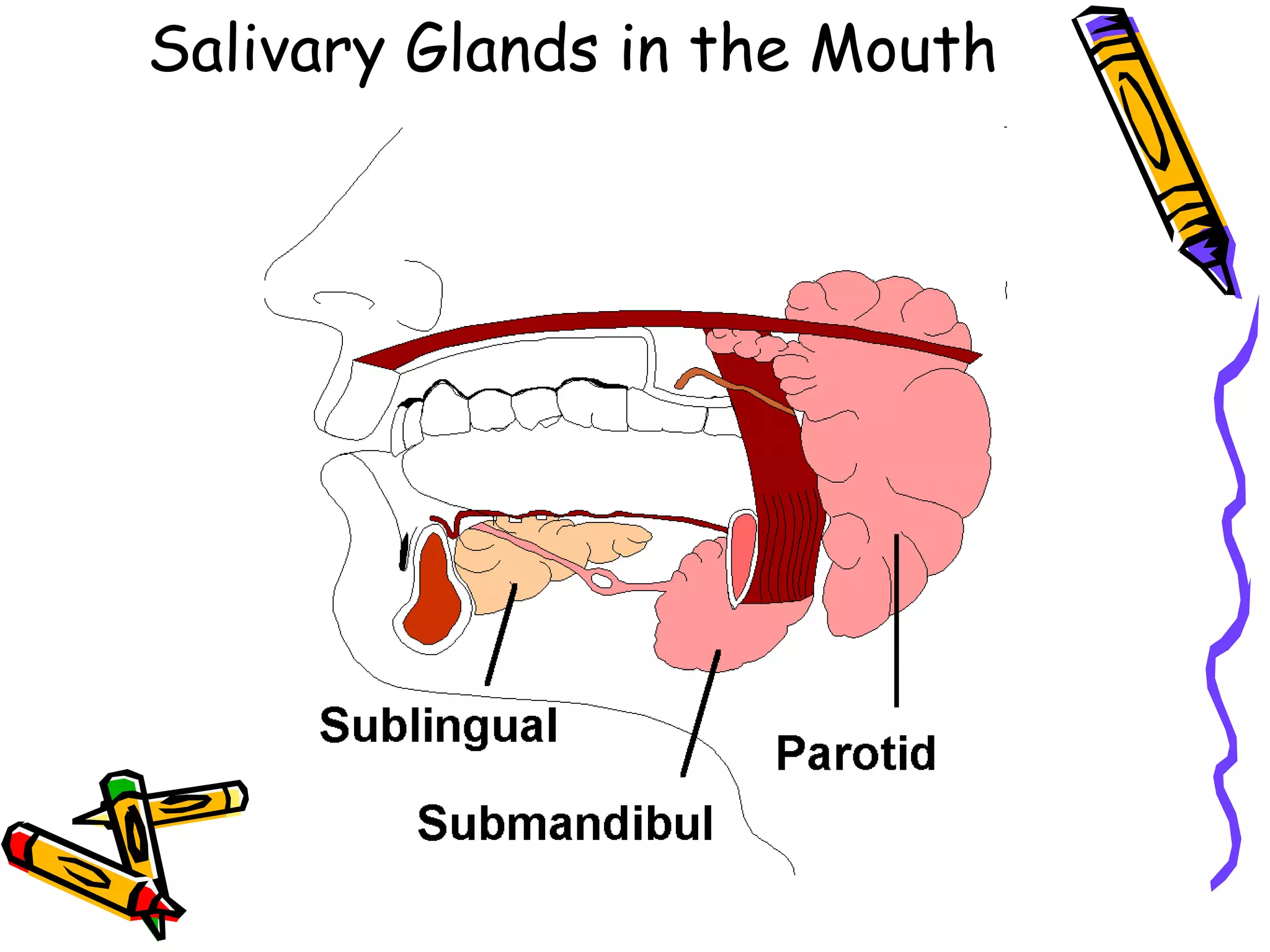
Salivary Glands in the Mouth
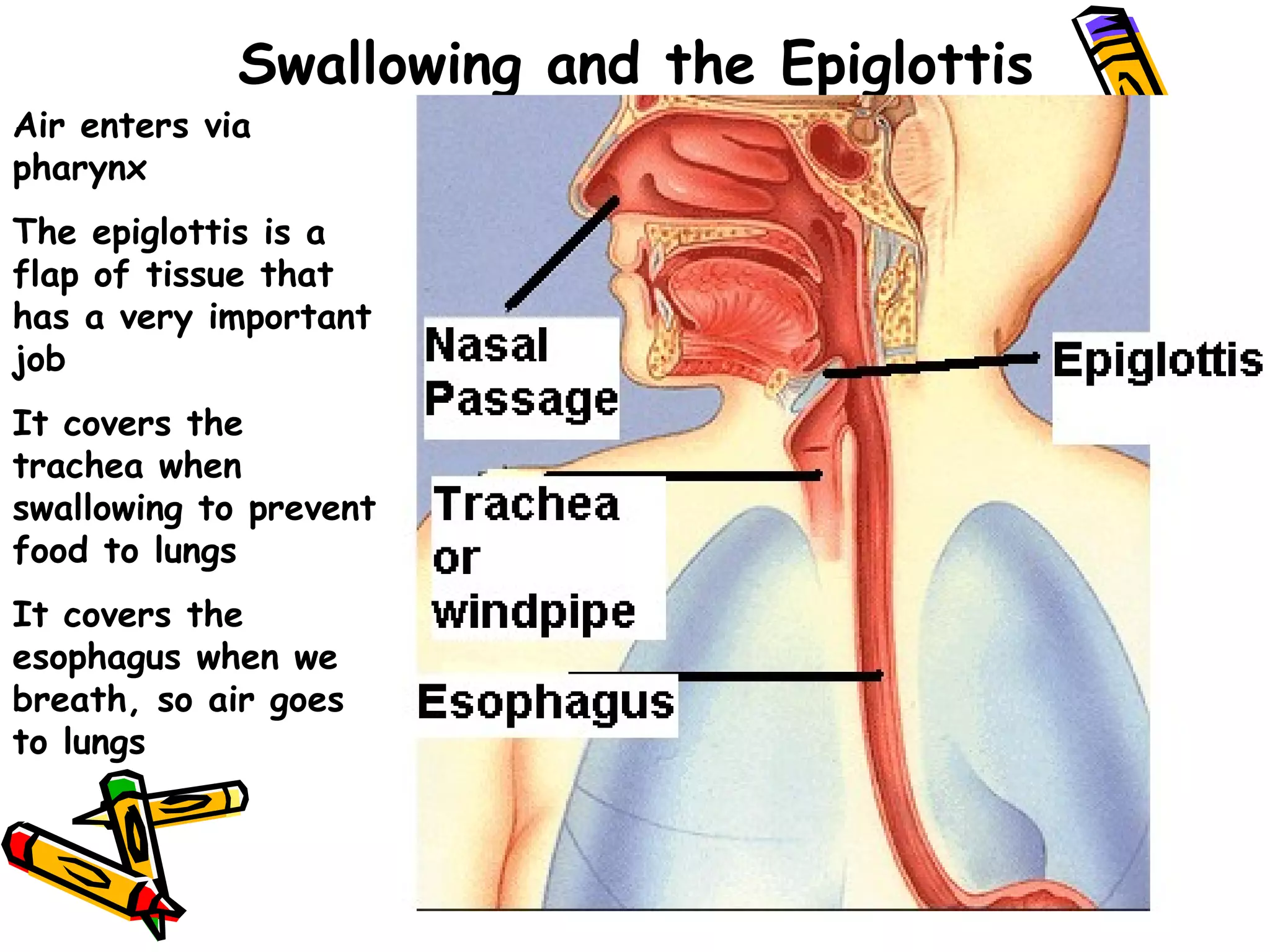
Swallowing and the Epiglottis Air enters via pharynx The epiglottis is a flap of tissue that has a very important job It covers the trachea when swallowing to prevent food to lungs It covers the esophagus when we breath, so air goes to lungs
 
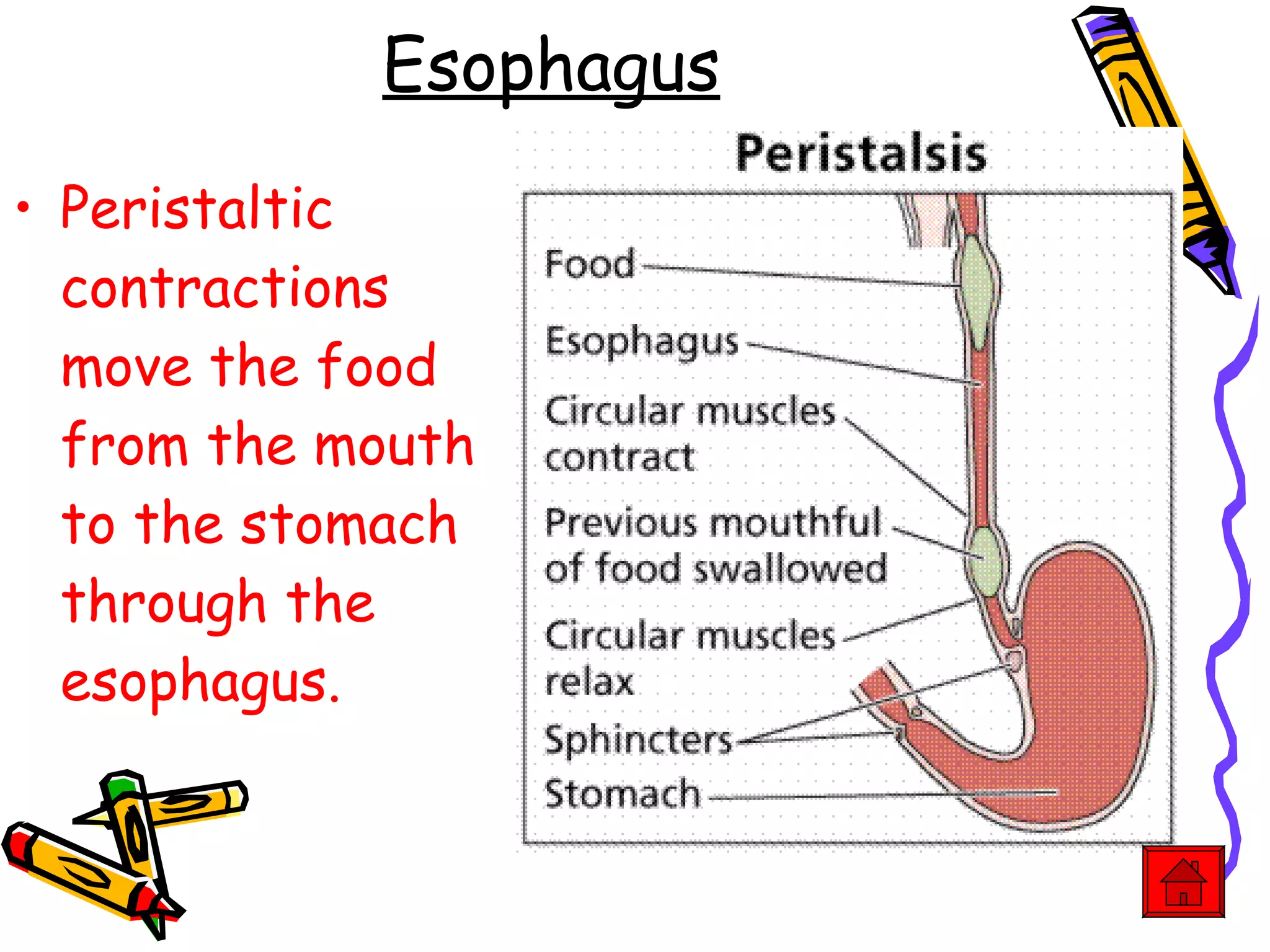
Esophagus Peristaltic contractions move the food from the mouth to the stomach through the esophagus.
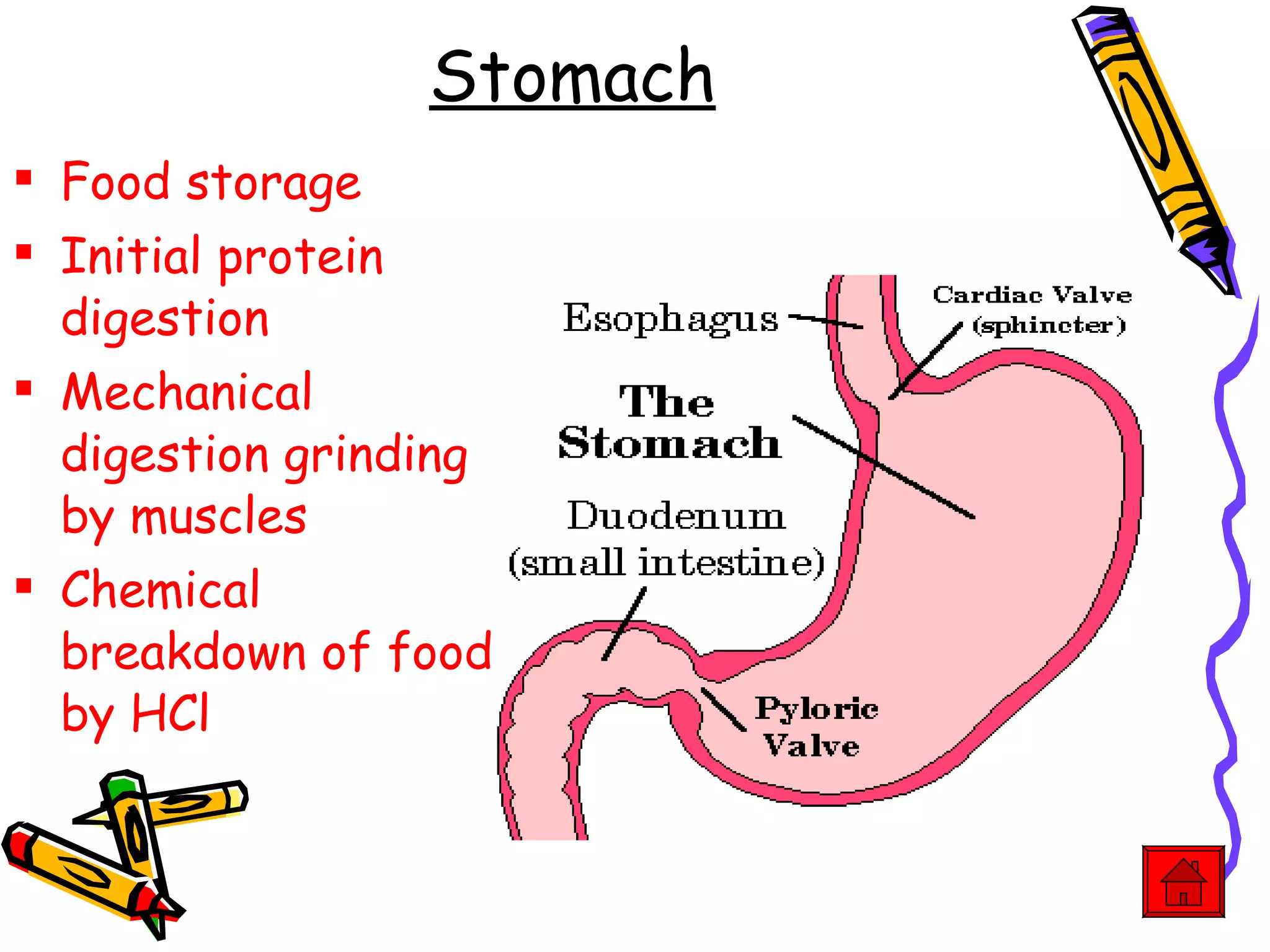
Stomach Food storage Initial protein digestion Mechanical digestion grinding by muscles Chemical breakdown of food by HCl
Stomach Protection from Acid What protects stomach from digesting itself? HCl is nasty! Answer:  cells also secrete mucus that acts as a barrier!
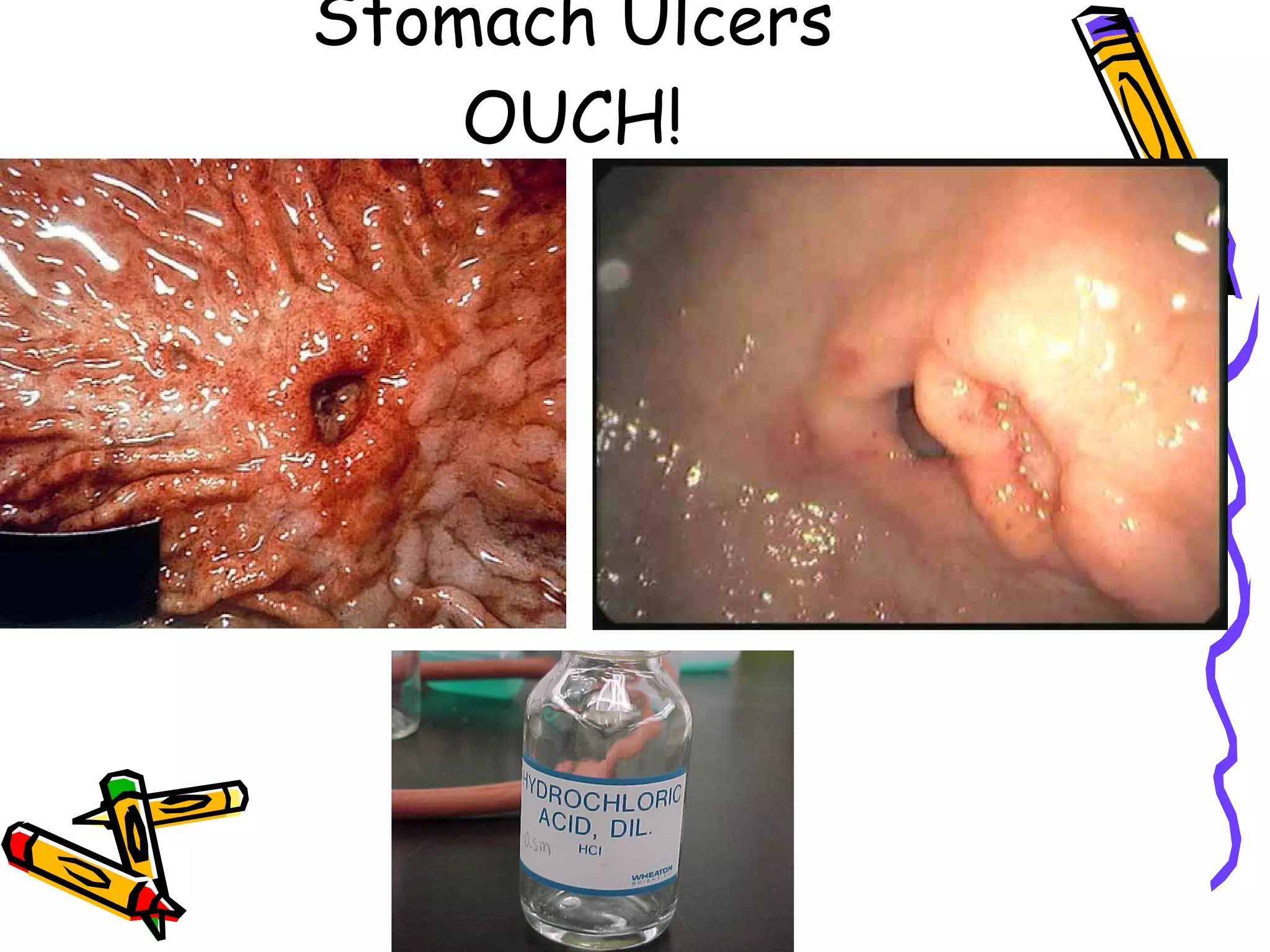
Stomach Ulcers OUCH!
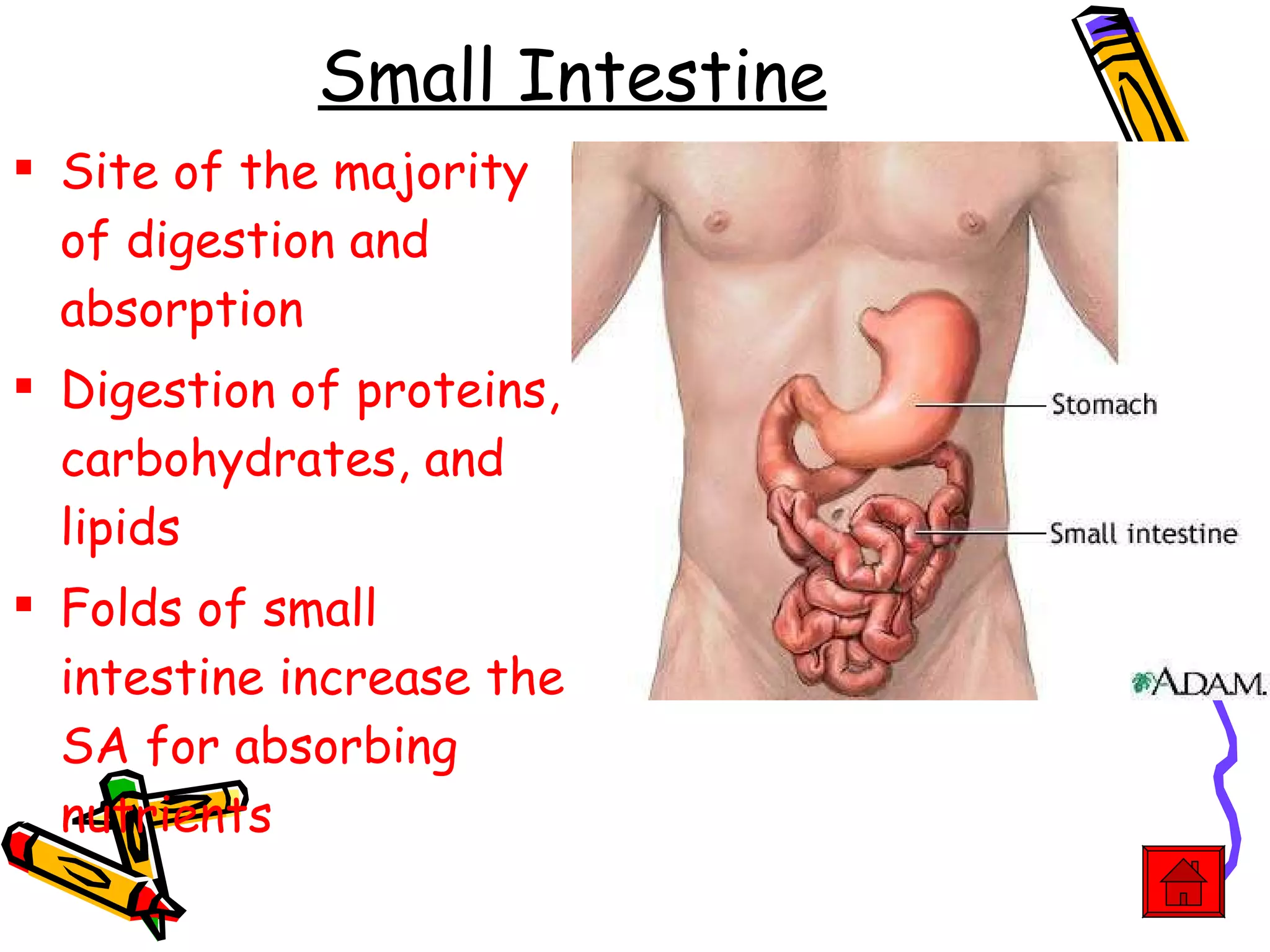
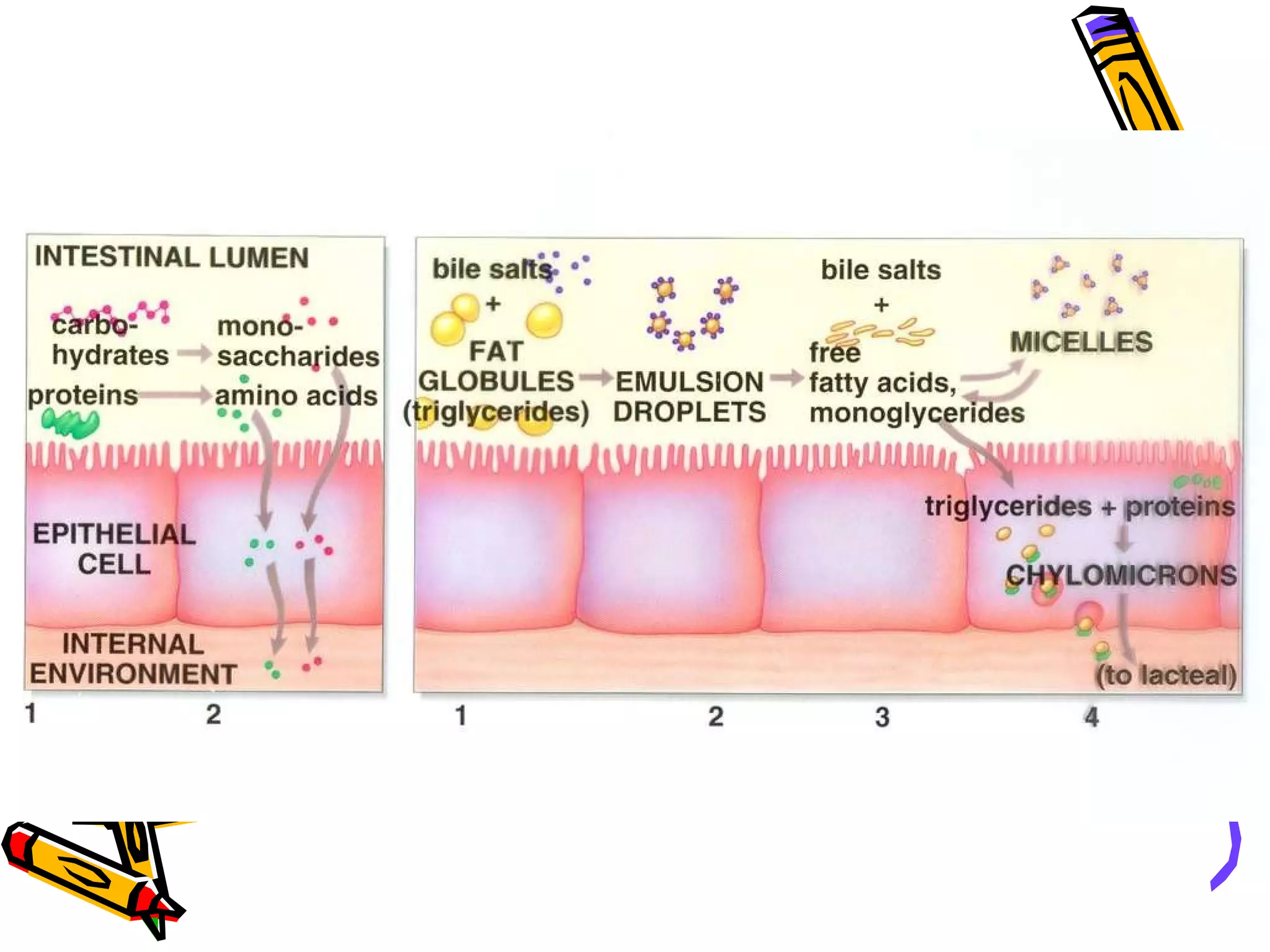
Small Intestine Site of the majority of digestion and absorption Digestion of proteins, carbohydrates, and lipids Folds of small intestine increase the SA for absorbing nutrients
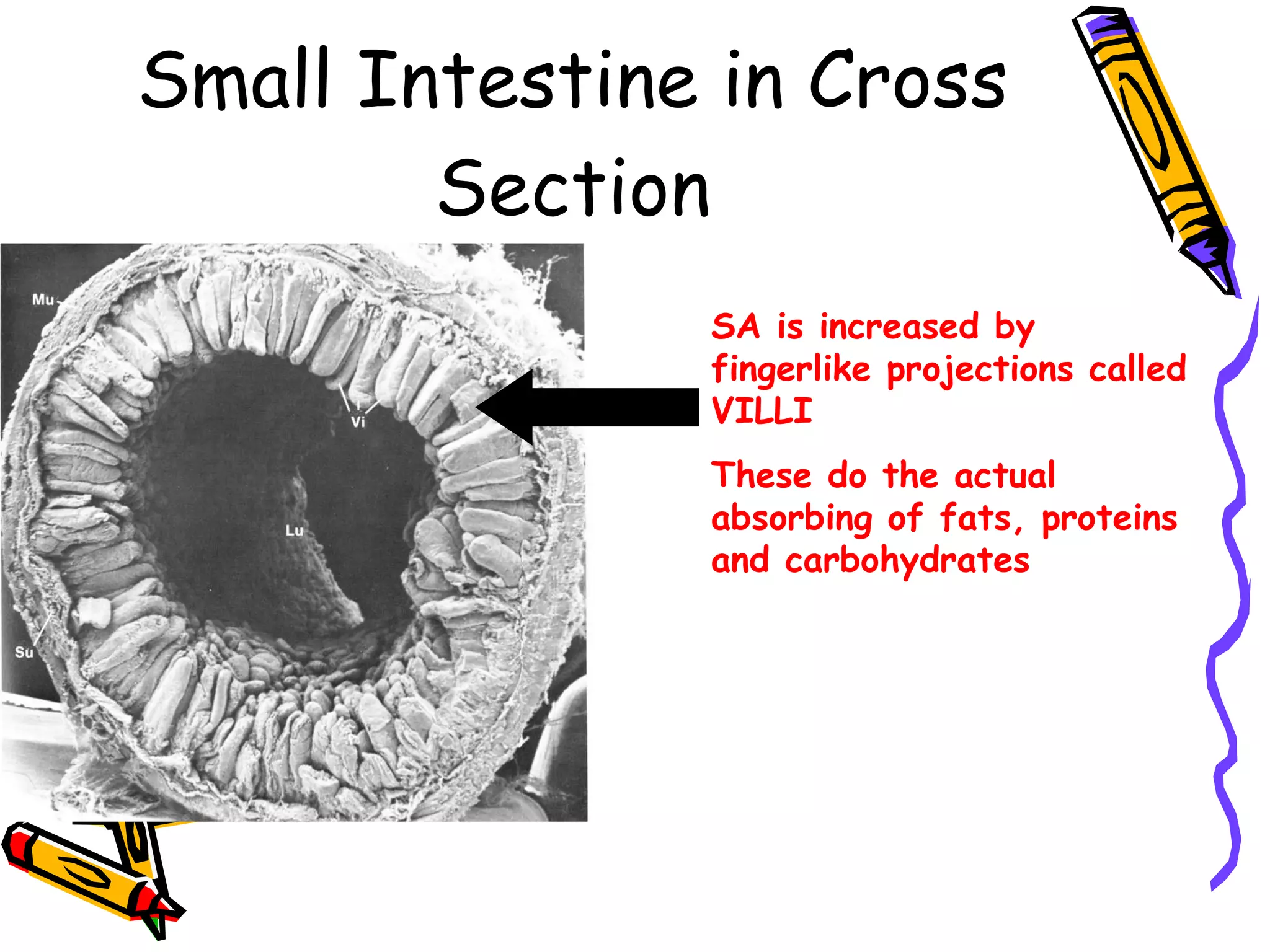
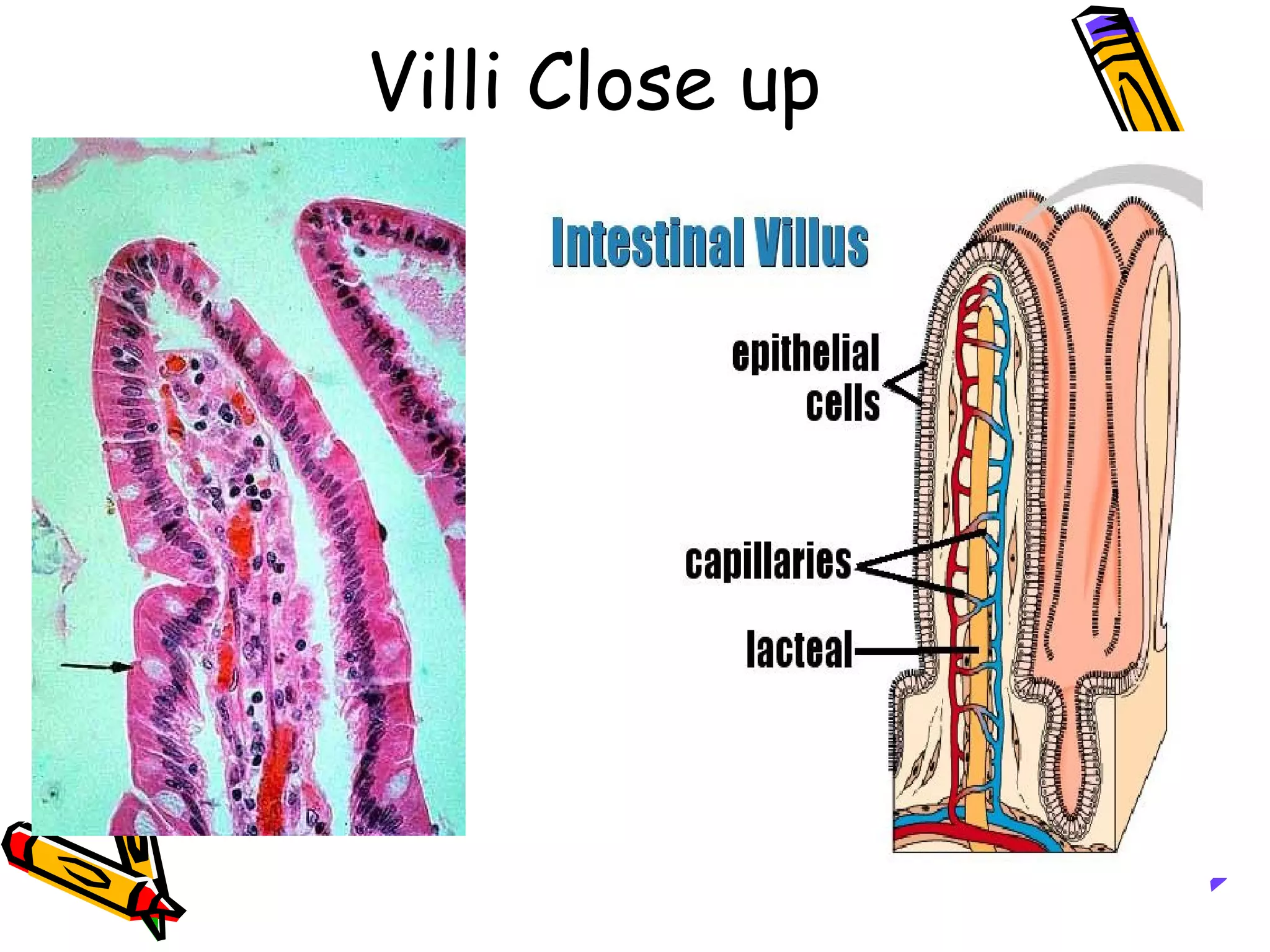
Small Intestine in Cross Section SA is increased by fingerlike projections called VILLI These do the actual absorbing of fats, proteins and carbohydrates
Villi Close up
 
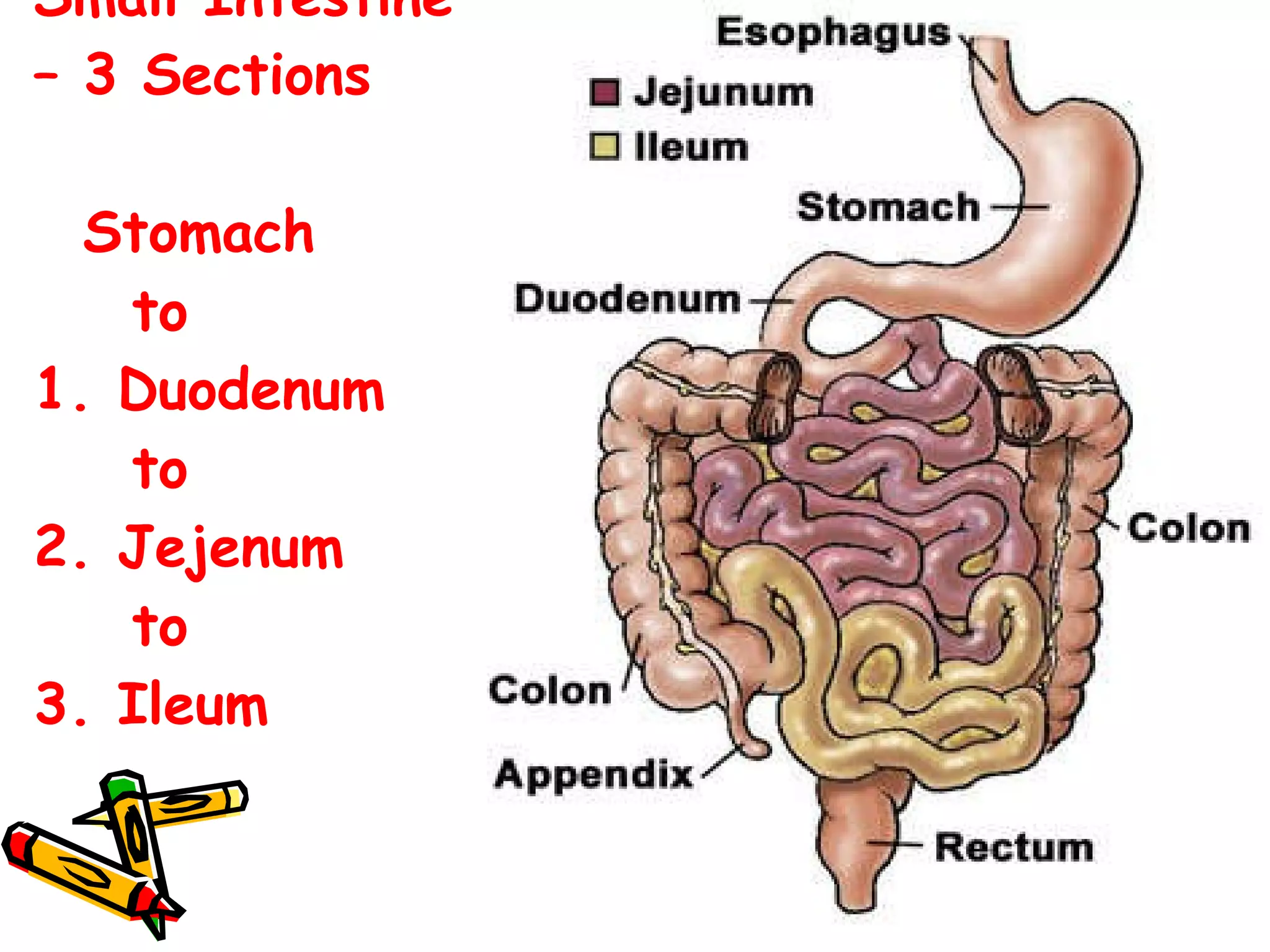
Small Intestine – 3 Sections   Stomach   to 1. Duodenum   to  2. Jejenum   to  3. Ileum
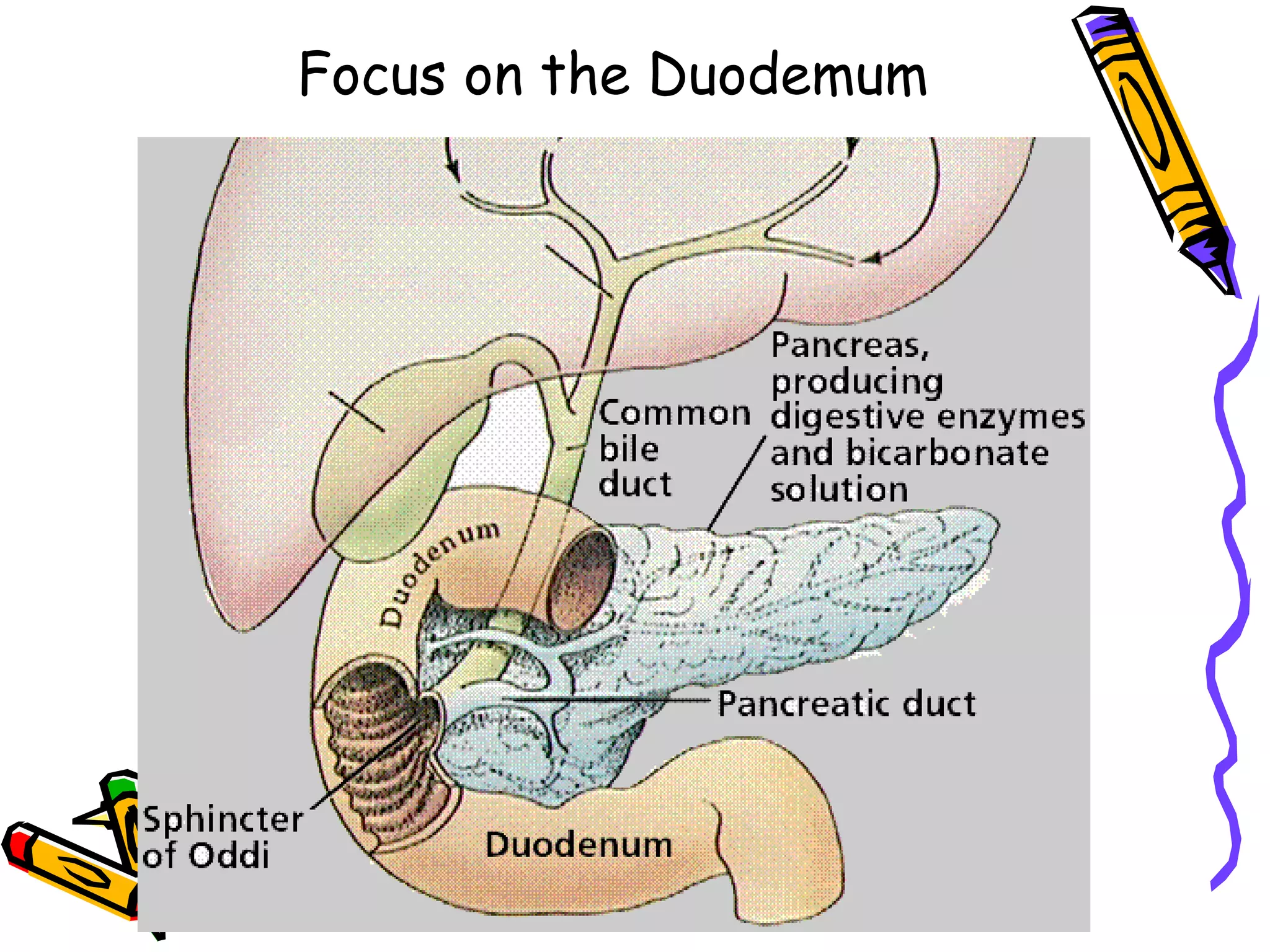
Focus on the Duodemum
Enzyme Action in Duodemum Bile from Liver is received from the Gallbladder (green) The bile is used as an emulsifier to help the body absorb fats Lipase from the Pancreas breaks down fats into fatty acids Trypsin is activated by acid from the stomach, and digests the protein further into amino acids Pancreatic Amylase – digests carbohydrates
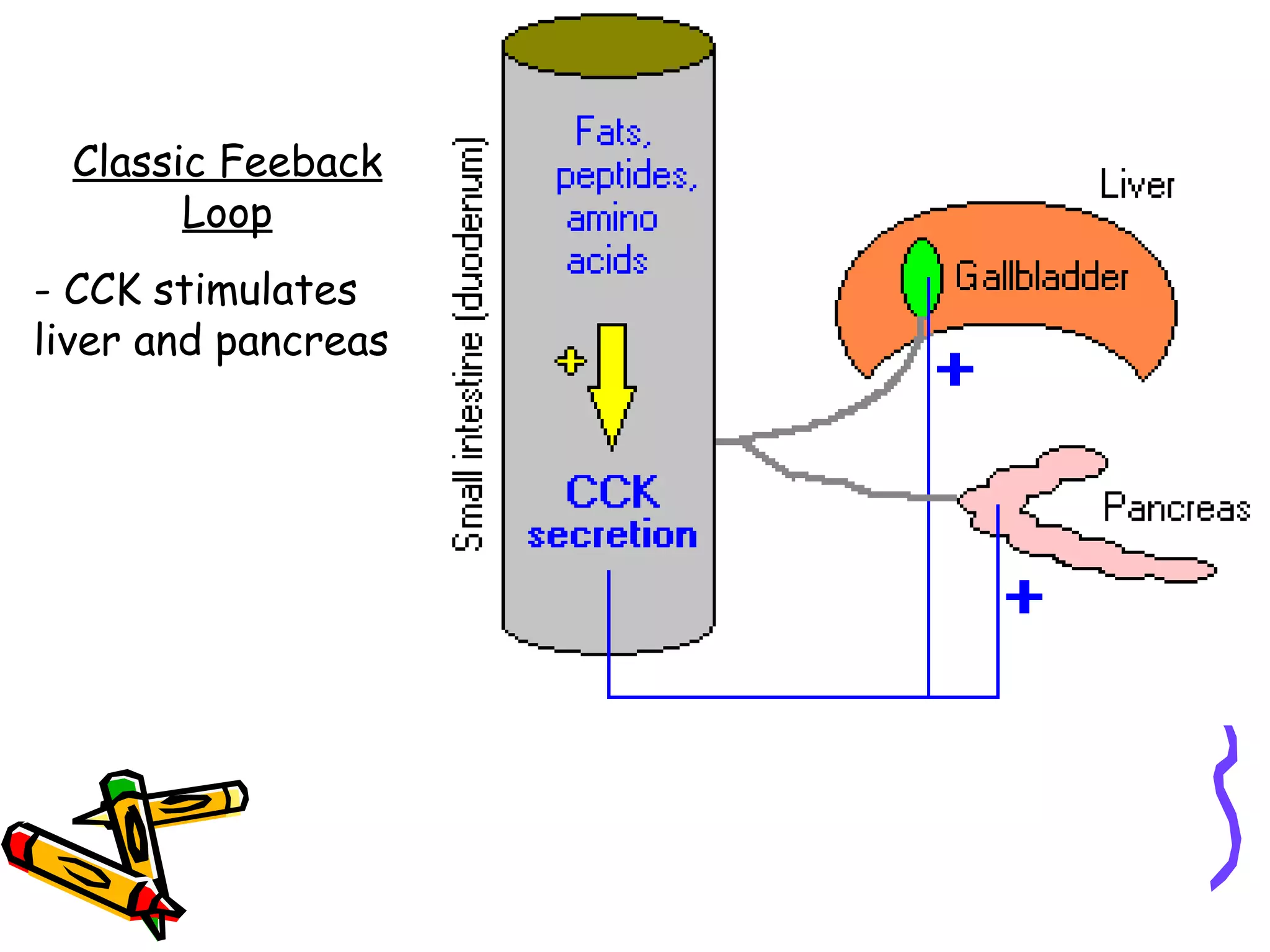
Regulating Digestive Secretions Gastrin Produced by stomach when churns Inhibited by duodenal response Duodenum secretes GIP (gastro-inhibatory peptides) to turn off gastrin production in stomach (neg loop) Duodenum also produces CCK (cholecystokinin) in response to partly digested fat and protein as well as secretin that increase the output of bile from liver and pancreatic juice.
Classic Feeback Loop - CCK stimulates liver and pancreas
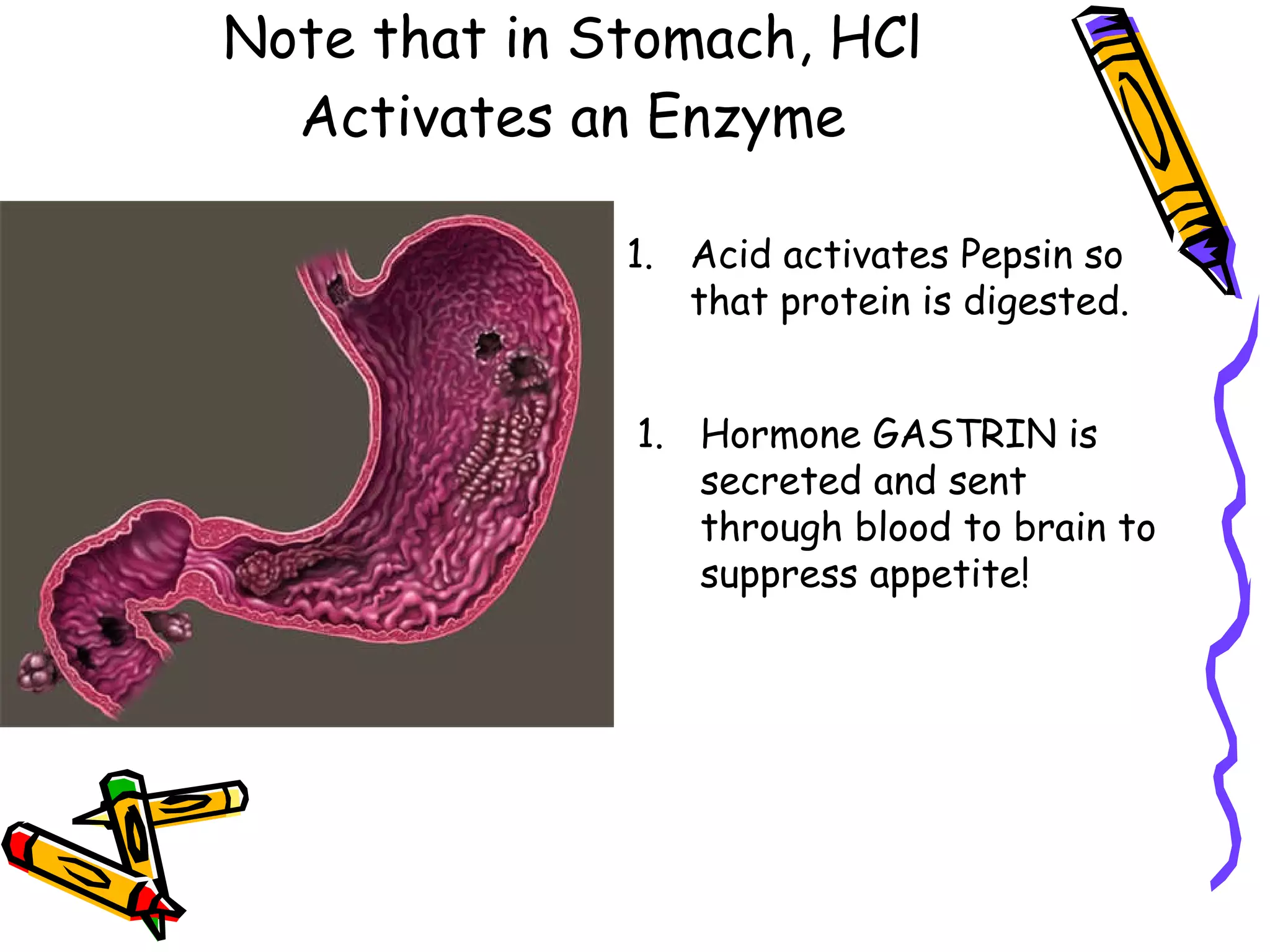
Note that in Stomach, HCl Activates an Enzyme Acid activates Pepsin so that protein is digested. Hormone GASTRIN is secreted and sent through blood to brain to suppress appetite!
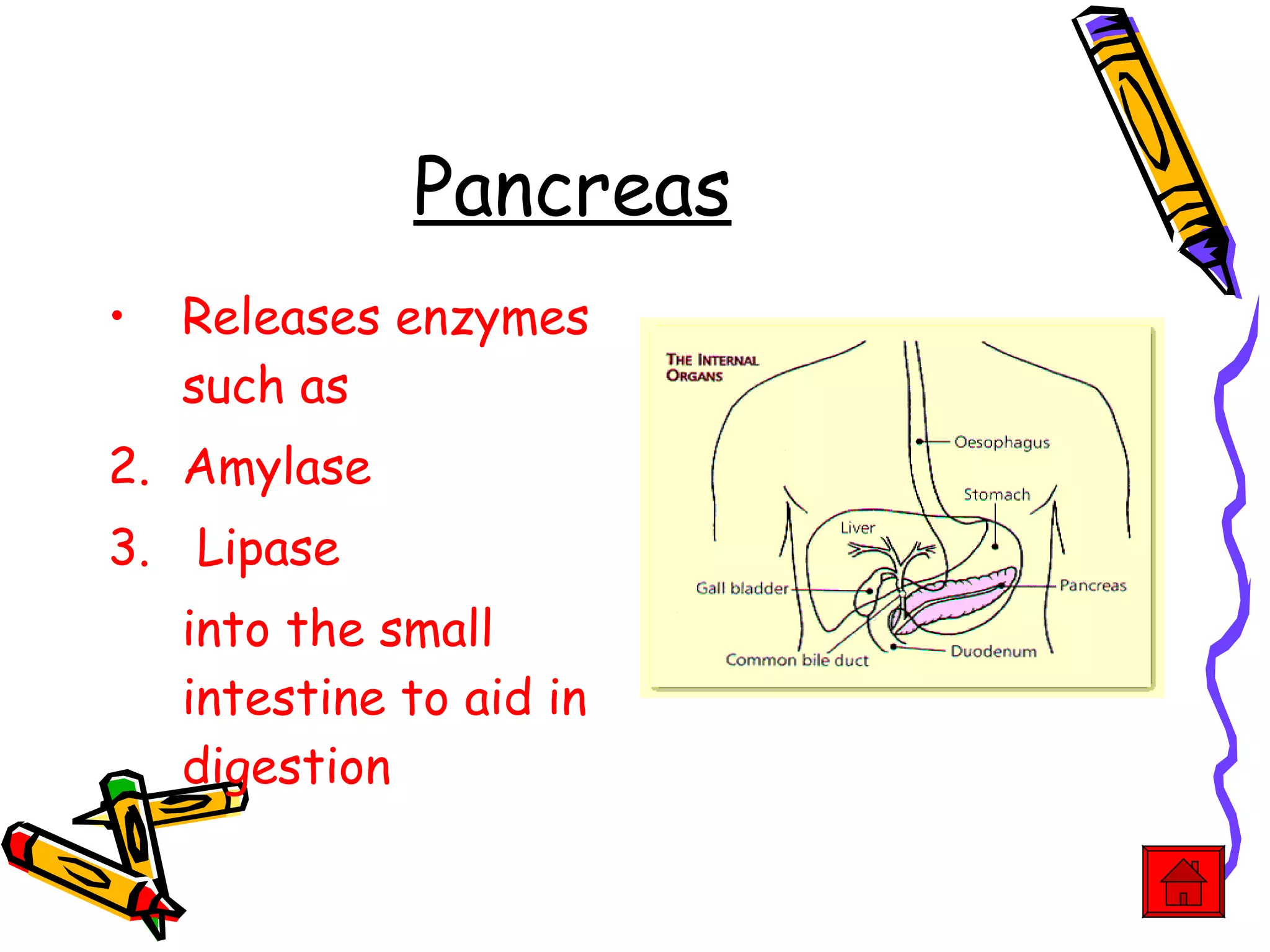
Pancreas Releases enzymes such as Amylase Lipase into the small intestine to aid in digestion
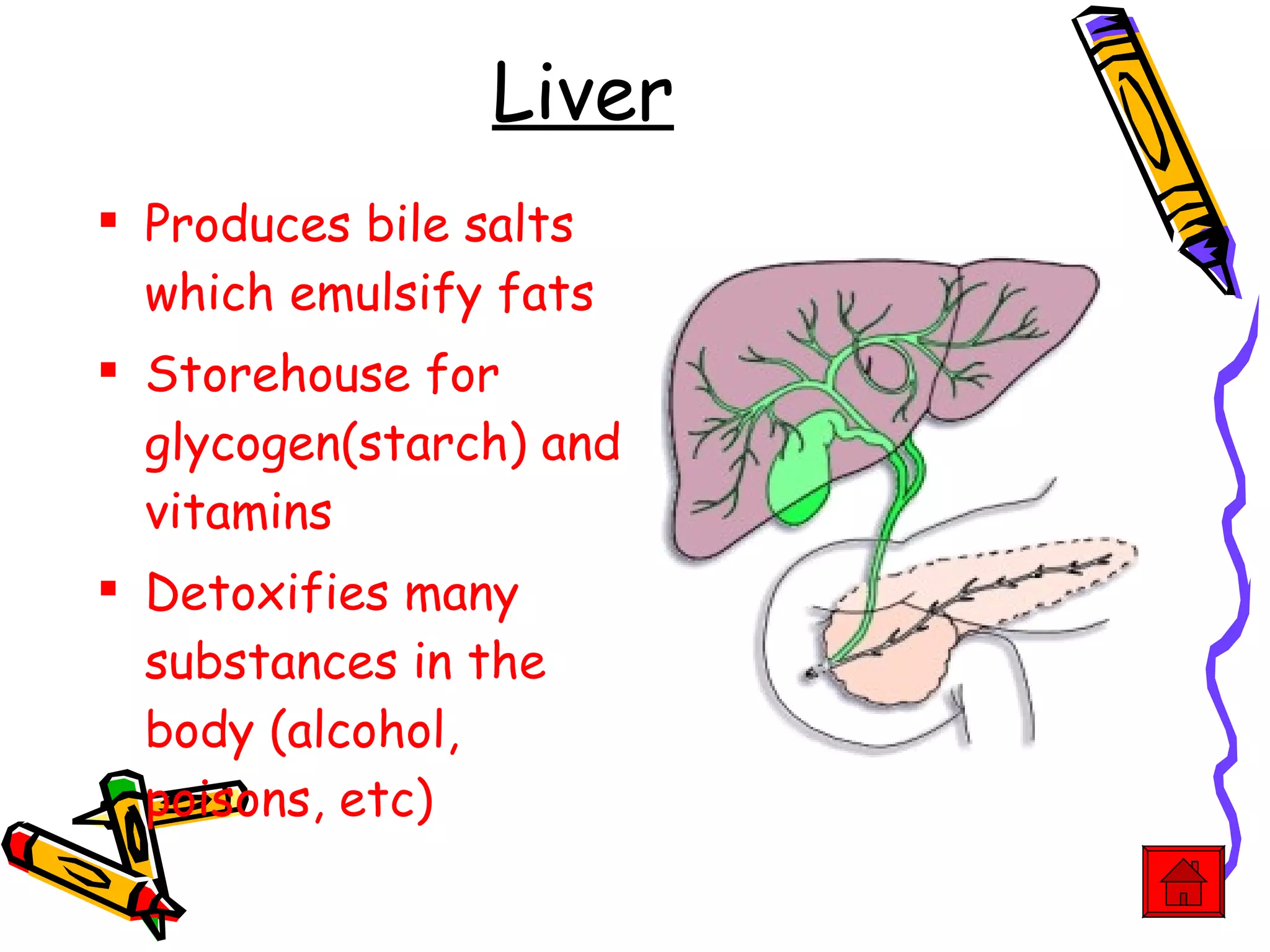
Liver Produces bile salts which emulsify fats Storehouse for glycogen(starch) and vitamins Detoxifies many substances in the body (alcohol, poisons, etc)
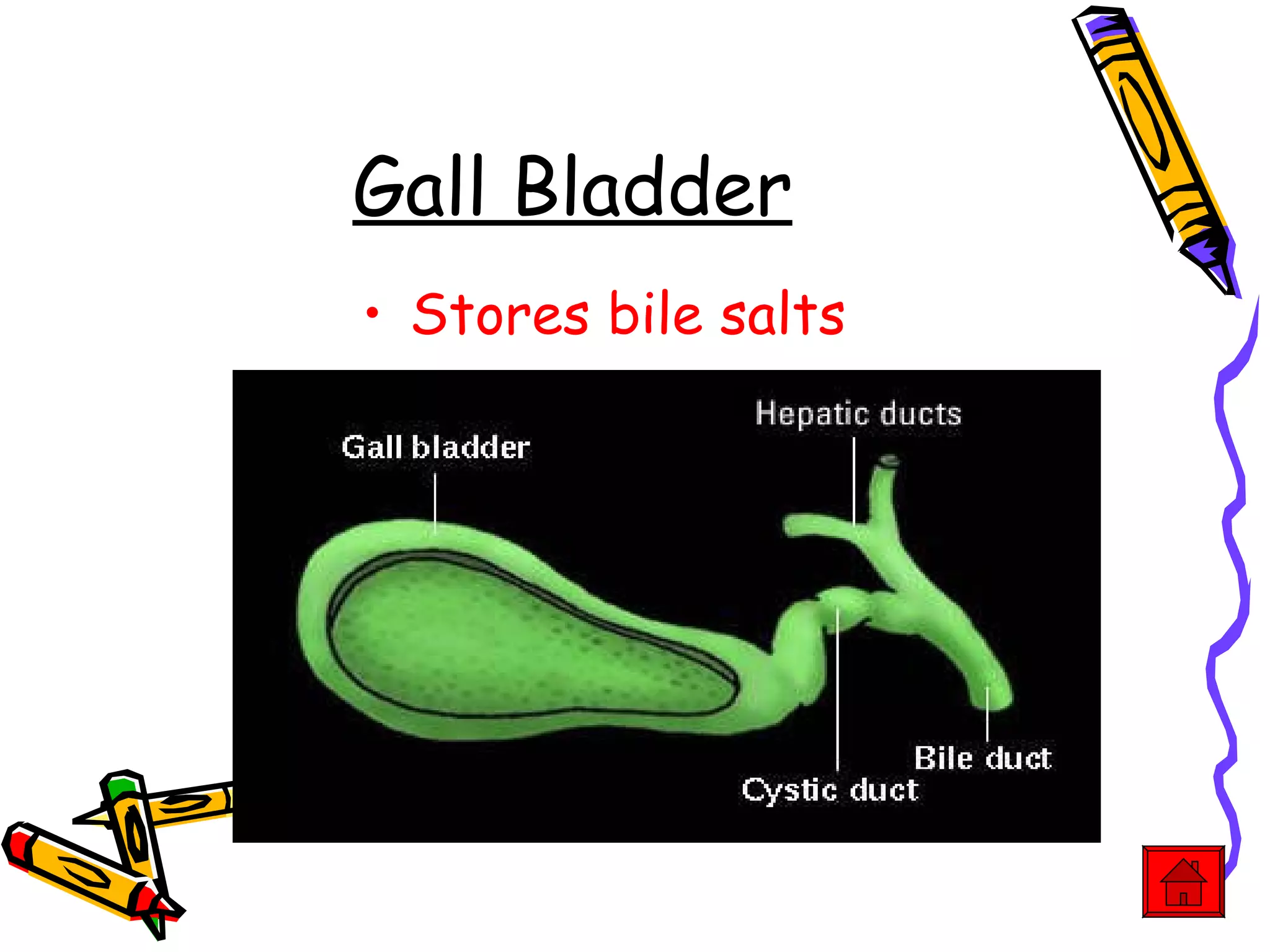
Gall Bladder Stores bile salts
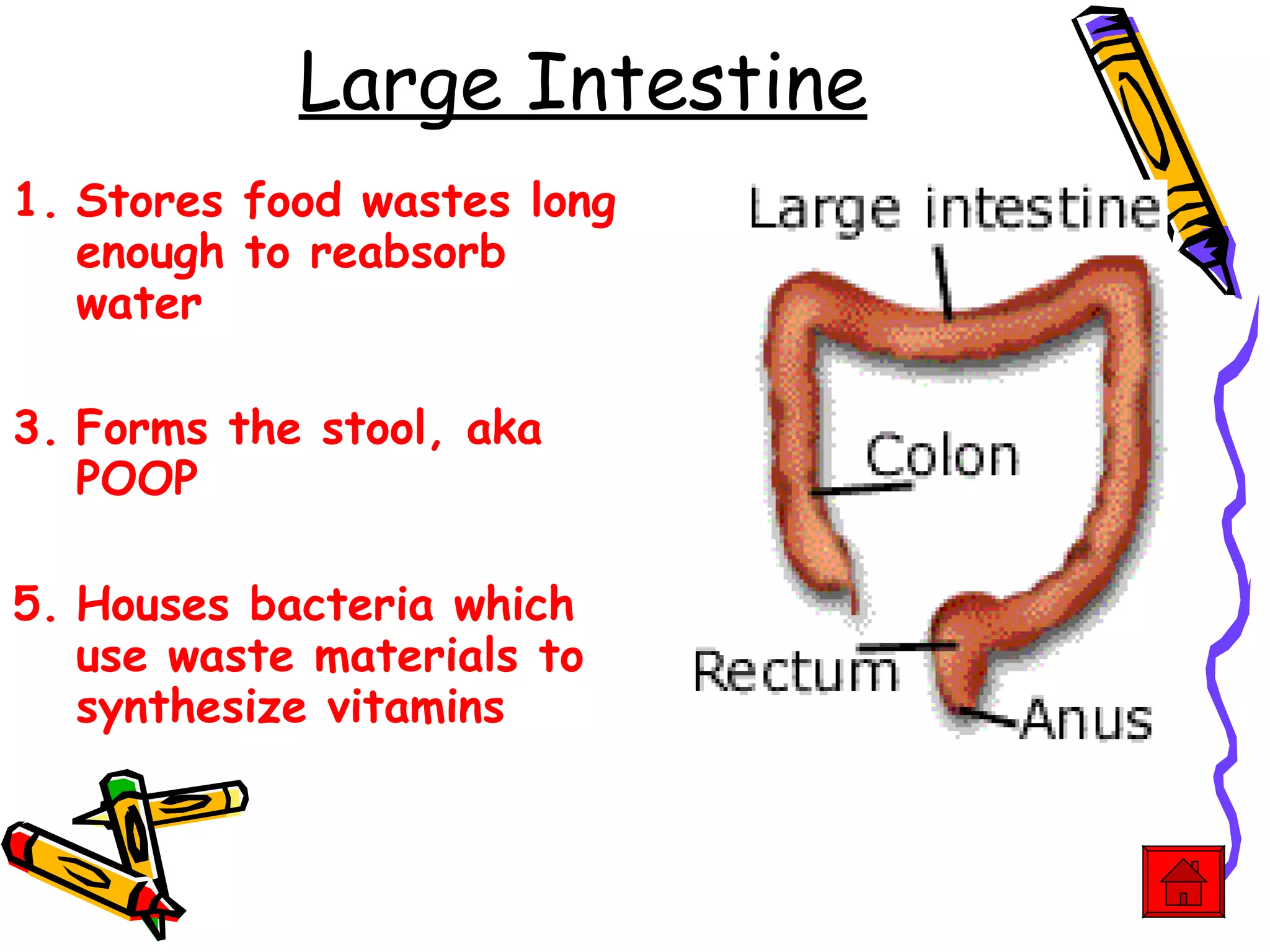
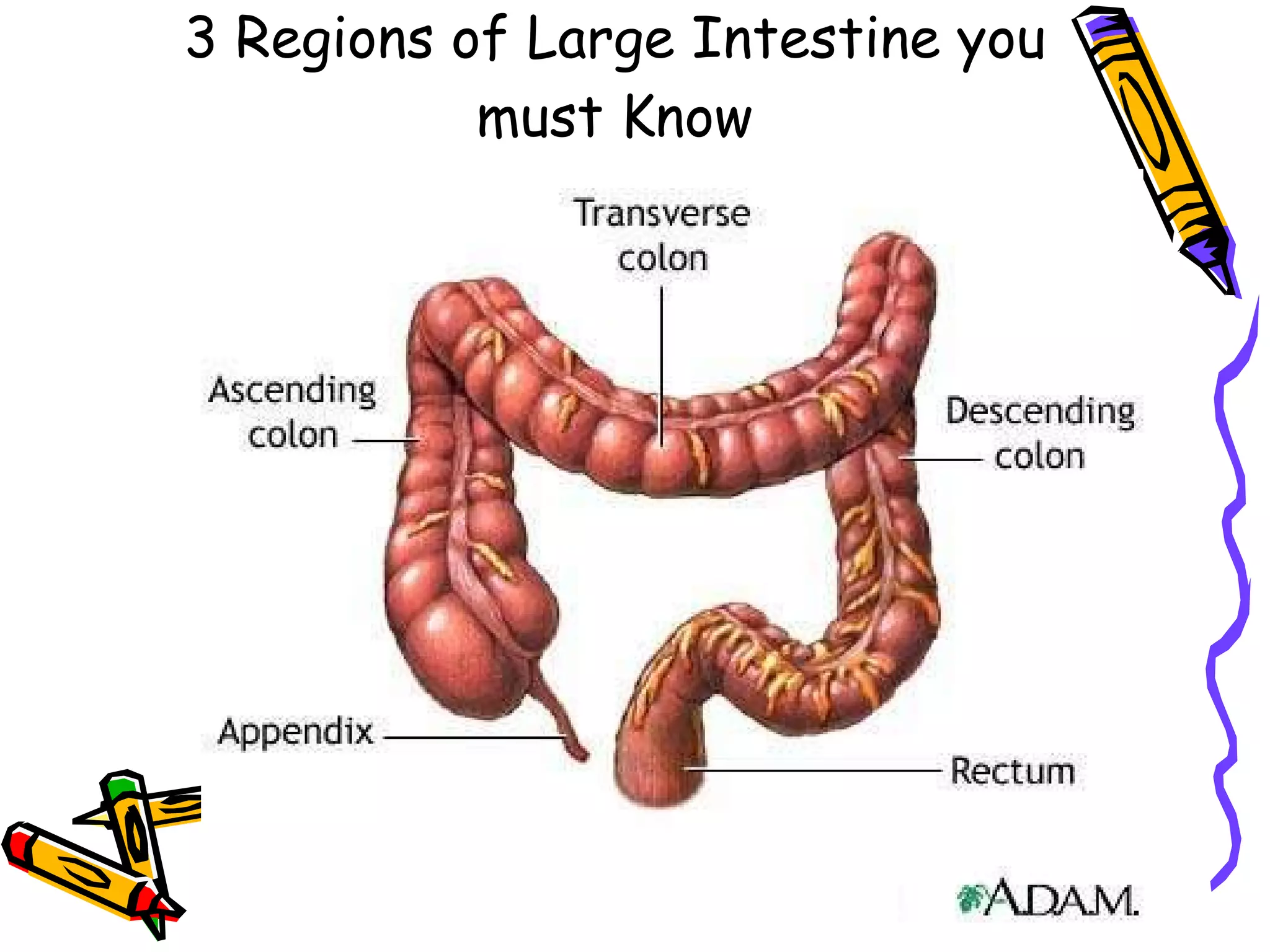
Large Intestine Stores food wastes long enough to reabsorb water Forms the stool, aka POOP Houses bacteria which use waste materials to synthesize vitamins
3 Regions of Large Intestine you must Know
AssiGnments Ensure that The Breakdown Video Wkst. is done and handed in before you leave. Complete Chp Review on pg. 148 #C1,C2,C4,C6,C7. Readings: (relax, they’re like the notes we just did) Chapter notes for 7.3 & 7.4 (pg’s 140-148) Color the rest of the digestive system handout!  Know it, because you will be quizzed on it  

Digestive System Teacher

  • 1.
    The Digestive SystemBleecker-Style 
  • 2.
    Table of ContentsCells, Tissues, Organs, Organ Systems Introduction to the Digestive System What is Digestion? 2 Phases of Digestion 4 Components of Digestion The Organs of Digestion
  • 3.
    How the Bodyis Organized 1. Cellular Level - Individual cells are the basic building blocks of life 2. Tissue level - Tissue is formed when groups of cells act together 3. Organ Level - An organ is a system of tissues working together 4. System Level - Many organs acting together form a system, such as the DIGESTIVE SYSTEM
  • 4.
    Introduction to theDigestive System The digestive system is an organ system that ingests food, breaks it down into smaller chemical units, and absorbs the nutrient molecules.
  • 5.
    What is Digestion?Digestion is the mechanical and chemical breakdown of food into molecules small enough for the body to absorb.
  • 6.
    2 Phases ofDigestion Mechanical Digestion – begins in the mouth where the food is chewed. - Saliva = watery fluid making it easier to swallow. Also some enzymatic digestion of starch Chemical Digestion – occurs in the mouth and the stomach. HCl produced by the stomach cells.
  • 7.
    4 Components ofDigestion Ingestion – the intake of nutrients Digestion – the breakdown of organic molecules Absorption – the transport of digested nutrients to body tissues Egestion – the removal of materials from food that the body cannot digest
  • 8.
    The Organs ofDigestion
  • 9.
    Mouth Physical digestionbegins Food is chewed into a bolus and mixed with saliva Initial carbohydrate digestion
  • 10.
    Parts of theMouth 20 Baby Teeth 32 Adult Teeth Wisdom Teeth …
  • 11.
  • 12.
  • 13.
    Swallowing and theEpiglottis Air enters via pharynx The epiglottis is a flap of tissue that has a very important job It covers the trachea when swallowing to prevent food to lungs It covers the esophagus when we breath, so air goes to lungs
  • 14.
  • 15.
    Esophagus Peristaltic contractionsmove the food from the mouth to the stomach through the esophagus.
  • 16.
    Stomach Food storageInitial protein digestion Mechanical digestion grinding by muscles Chemical breakdown of food by HCl
  • 17.
    Stomach Protection fromAcid What protects stomach from digesting itself? HCl is nasty! Answer: cells also secrete mucus that acts as a barrier!
  • 18.
  • 19.
    Small Intestine Siteof the majority of digestion and absorption Digestion of proteins, carbohydrates, and lipids Folds of small intestine increase the SA for absorbing nutrients
  • 20.
    Small Intestine inCross Section SA is increased by fingerlike projections called VILLI These do the actual absorbing of fats, proteins and carbohydrates
  • 21.
  • 22.
  • 23.
    Small Intestine –3 Sections Stomach to 1. Duodenum to 2. Jejenum to 3. Ileum
  • 24.
    Focus on theDuodemum
  • 25.
    Enzyme Action inDuodemum Bile from Liver is received from the Gallbladder (green) The bile is used as an emulsifier to help the body absorb fats Lipase from the Pancreas breaks down fats into fatty acids Trypsin is activated by acid from the stomach, and digests the protein further into amino acids Pancreatic Amylase – digests carbohydrates
  • 26.
    Regulating Digestive SecretionsGastrin Produced by stomach when churns Inhibited by duodenal response Duodenum secretes GIP (gastro-inhibatory peptides) to turn off gastrin production in stomach (neg loop) Duodenum also produces CCK (cholecystokinin) in response to partly digested fat and protein as well as secretin that increase the output of bile from liver and pancreatic juice.
  • 27.
    Classic Feeback Loop- CCK stimulates liver and pancreas
  • 28.
    Note that inStomach, HCl Activates an Enzyme Acid activates Pepsin so that protein is digested. Hormone GASTRIN is secreted and sent through blood to brain to suppress appetite!
  • 29.
    Pancreas Releases enzymessuch as Amylase Lipase into the small intestine to aid in digestion
  • 30.
    Liver Produces bilesalts which emulsify fats Storehouse for glycogen(starch) and vitamins Detoxifies many substances in the body (alcohol, poisons, etc)
  • 31.
  • 32.
    Large Intestine Storesfood wastes long enough to reabsorb water Forms the stool, aka POOP Houses bacteria which use waste materials to synthesize vitamins
  • 33.
    3 Regions ofLarge Intestine you must Know
  • 34.
    AssiGnments Ensure thatThe Breakdown Video Wkst. is done and handed in before you leave. Complete Chp Review on pg. 148 #C1,C2,C4,C6,C7. Readings: (relax, they’re like the notes we just did) Chapter notes for 7.3 & 7.4 (pg’s 140-148) Color the rest of the digestive system handout! Know it, because you will be quizzed on it 