LOREM IPSUM 
Book Title 
DOLOR SET AMET 
McKenna Chase Monday, December 1, 2014 at 10:16:44 AM Pacific Standard Time 70:cd:60:8b:aa:a6
CHAPTER 1 
Digestive 
System 
McKenna Chase Monday, December 1, 2014 at 10:16:44 AM Pacific Standard Time 70:cd:60:8b:aa:a6
SECTION 1 
Ruminants 
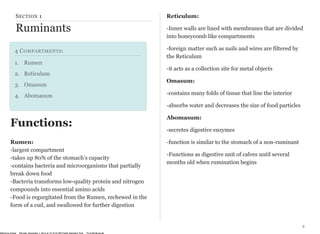
4 COMPARTMENTS: 
1. Rumen 
2. Reticulum 
3. Omasum 
4. Abomasum 
Reticulum: 
-Inner walls are lined with membranes that are divided 
into honeycomb like compartments 
-foreign matter such as nails and wires are filtered by 
the Reticulum 
-it acts as a collection site for metal objects 
Omasum: 
-contains many folds of tissue that line the interior 
-absorbs water and decreases the size of food particles 
Abomasum: 
-secretes digestive enzymes 
-function is similar to the stomach of a non-ruminant 
-Functions as digestive unit of calves until several 
months old when rumination begins 
2 
Functions: 
Rumen: 
-largest compartment 
-takes up 80% of the stomach’s capacity 
-contains bacteria and microorganisms that partially 
break down food 
-Bacteria transforms low-quality protein and nitrogen 
compounds into essential amino acids 
-Food is regurgitated from the Rumen, rechewed in the 
form of a cud, and swallowed for further digestion 
McKenna Chase Monday, December 1, 2014 at 10:16:44 AM Pacific Standard Time 70:cd:60:8b:aa:a6
SECTION 2 
Nonruminants 
1. Food is passed from the mouth to the 
esophagus to a single compartment stomach 
2. The stomach breaks down food by muscular 
movement and digestive juices 
3. Digestive juices break down proteins and fats 
3 
Intestines: 
-the primary site for digestion and absorption of carbohydrates, lipids, 
and proteins is the small intestine 
-Undigested food passes from the small intestine to the large intestine 
where water is absorbed and lubricating mucus is added to aid the pas-sage 
of material through the large intestine 
McKenna Chase Monday, December 1, 2014 at 10:16:44 AM Pacific Standard Time 70:cd:60:8b:aa:a6
SECTION 3 
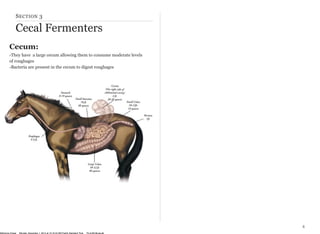
Cecal Fermenters 
4 
Cecum: 
-They have a large cecum allowing them to consume moderate levels 
of roughages 
-Bacteria are present in the cecum to digest roughages 
McKenna Chase Monday, December 1, 2014 at 10:16:44 AM Pacific Standard Time 70:cd:60:8b:aa:a6
SECTION 4 
Digestive Process 
5 Processes: 
1. Mechanical 
2.Peristalsis 
3.Chemical 
4.Absorption 
5.Metabolism 
5 
Mechanical: 
-digestions begins in the mouth 
-food is chewed and broken down into smaller pieces 
*poultry use a gizzard to grind food* 
Peristalsis: 
-a muscular contraction of the digestive system 
-causes food to move through the digestive tract 
-this occurs as a wavelike movement 
Chemical: 
-involves enzymes and acids to reduce food particle size and 
change food particles into forms that the animal can use 
-some chemical digestion occurs in the mouth with saliva 
-Most takes place in the stomach and small intestines 
Absorption: 
-nutrients move from the digestive tract into the blood stream 
-takes place mainly in the small intestine through villi 
-In ruminants, some absorption takes place in the rumen 
-occurs through diffusion and osmosis 
Metabolism: 
-removes nutrients from the blood stream and allows different 
organs of the body to use nutrients 
-responsible for growth of bone, muscle, fat, skin, and hair 
-maintains body temperature and proper functioning of or-gans 
-aids in repair of body tissue, production of milk and perform-ance 
McKenna Chase Monday, December 1, 2014 at 10:16:44 AM Pacific Standard Time 70:cd:60:8b:aa:a6
6 
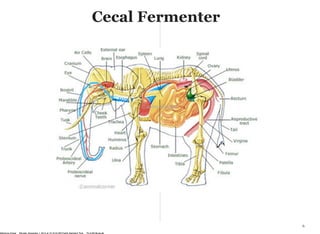
Cecal Fermenter 
McKenna Chase Monday, December 1, 2014 at 10:16:44 AM Pacific Standard Time 70:cd:60:8b:aa:a6

Digestive system

  • 1.
    LOREM IPSUM BookTitle DOLOR SET AMET McKenna Chase Monday, December 1, 2014 at 10:16:44 AM Pacific Standard Time 70:cd:60:8b:aa:a6
  • 2.
    CHAPTER 1 Digestive System McKenna Chase Monday, December 1, 2014 at 10:16:44 AM Pacific Standard Time 70:cd:60:8b:aa:a6
  • 3.
    SECTION 1 Ruminants 4 COMPARTMENTS: 1. Rumen 2. Reticulum 3. Omasum 4. Abomasum Reticulum: -Inner walls are lined with membranes that are divided into honeycomb like compartments -foreign matter such as nails and wires are filtered by the Reticulum -it acts as a collection site for metal objects Omasum: -contains many folds of tissue that line the interior -absorbs water and decreases the size of food particles Abomasum: -secretes digestive enzymes -function is similar to the stomach of a non-ruminant -Functions as digestive unit of calves until several months old when rumination begins 2 Functions: Rumen: -largest compartment -takes up 80% of the stomach’s capacity -contains bacteria and microorganisms that partially break down food -Bacteria transforms low-quality protein and nitrogen compounds into essential amino acids -Food is regurgitated from the Rumen, rechewed in the form of a cud, and swallowed for further digestion McKenna Chase Monday, December 1, 2014 at 10:16:44 AM Pacific Standard Time 70:cd:60:8b:aa:a6
  • 4.
    SECTION 2 Nonruminants 1. Food is passed from the mouth to the esophagus to a single compartment stomach 2. The stomach breaks down food by muscular movement and digestive juices 3. Digestive juices break down proteins and fats 3 Intestines: -the primary site for digestion and absorption of carbohydrates, lipids, and proteins is the small intestine -Undigested food passes from the small intestine to the large intestine where water is absorbed and lubricating mucus is added to aid the pas-sage of material through the large intestine McKenna Chase Monday, December 1, 2014 at 10:16:44 AM Pacific Standard Time 70:cd:60:8b:aa:a6
  • 5.
    SECTION 3 CecalFermenters 4 Cecum: -They have a large cecum allowing them to consume moderate levels of roughages -Bacteria are present in the cecum to digest roughages McKenna Chase Monday, December 1, 2014 at 10:16:44 AM Pacific Standard Time 70:cd:60:8b:aa:a6
  • 6.
    SECTION 4 DigestiveProcess 5 Processes: 1. Mechanical 2.Peristalsis 3.Chemical 4.Absorption 5.Metabolism 5 Mechanical: -digestions begins in the mouth -food is chewed and broken down into smaller pieces *poultry use a gizzard to grind food* Peristalsis: -a muscular contraction of the digestive system -causes food to move through the digestive tract -this occurs as a wavelike movement Chemical: -involves enzymes and acids to reduce food particle size and change food particles into forms that the animal can use -some chemical digestion occurs in the mouth with saliva -Most takes place in the stomach and small intestines Absorption: -nutrients move from the digestive tract into the blood stream -takes place mainly in the small intestine through villi -In ruminants, some absorption takes place in the rumen -occurs through diffusion and osmosis Metabolism: -removes nutrients from the blood stream and allows different organs of the body to use nutrients -responsible for growth of bone, muscle, fat, skin, and hair -maintains body temperature and proper functioning of or-gans -aids in repair of body tissue, production of milk and perform-ance McKenna Chase Monday, December 1, 2014 at 10:16:44 AM Pacific Standard Time 70:cd:60:8b:aa:a6
  • 7.
    6 Cecal Fermenter McKenna Chase Monday, December 1, 2014 at 10:16:44 AM Pacific Standard Time 70:cd:60:8b:aa:a6