Differentiated Instruction In
the LOTE Classroom
“A brief overview of Jennifer-RichWalter’s model of Differentiated
Instruction”
Christine-Cioppa
Fayetteville-Manlius Schools
Foundations for
Differentiated
Instruction
Chrissie Cioppa
Spanish Teacher
Fayetteville-Manlius High School
Adapted from the work of Jennifer Rich - Walters
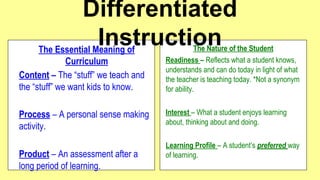
Differentiated
Instruction
The Essential Meaning of
Curriculum
Content – The “stuff” we teach and
the “stuff” we want kids to know.
Process – A personal sense making
activity.
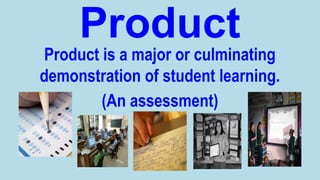
Product – An assessment after a
long period of learning.

The Nature of the Student
Readiness – Reflects what a student knows,
understands and can do today in light of what
the teacher is teaching today. *Not a synonym
for ability.
Interest – What a student enjoys learning
about, thinking about and doing.
Learning Profile – A student’s preferred way
of learning.
The Essential
Meaning of
Curriculum
Content
Content
Content is the “stuff” we teach and
the “stuff” we want kids to know.
Ex: Vocabulary, Grammar Concepts,
Cultural Themes, Stories/Films, etc.
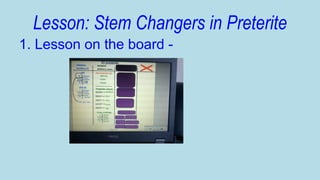
Lesson: Stem Changers in Preterite
1. Lesson on the board -
Lesson: Stem Changers in Preterite
2. Image of notes on Instagram -
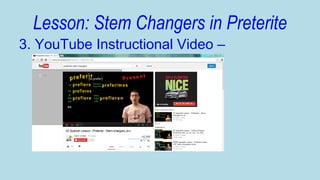
Lesson: Stem Changers in Preterite
3. YouTube Instructional Video –
Process
Process
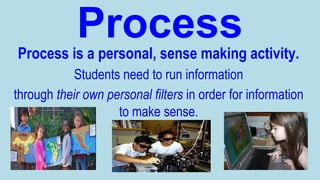
Process is a personal, sense making activity.
Students need to run information
through their own personal filters in order for information
to make sense.
Content: How to take care of a
dog
Content: How to stem change a
verb in the preterite tense.
- Fill in chart as a class (first stems, then
endings)
- Verb relay game (students cycle through each
form of the verb chart, first writing in the
stem, then adding the endings)
- White boards (as pairs or individuals)
Am I differentiating CONTENT or
PROCESS?
1.

2.

CONTENT
Am I, as the teacher,
responsible for conveying
this information to my
students?
Did I, as the teacher,
provide multiple ways to
understand my content?

PROCESS
1.

2.
3.
4.

Is it personal for the learner?/Does
it enable the learner to “own” the
information?
Is it sense making for the learning?
Is it an activity for the learner?
Do I provide multiple ways for
students to process the same
information?
Product
Product
Product is a major or culminating
demonstration of student learning.
(An assessment)
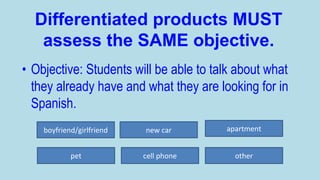
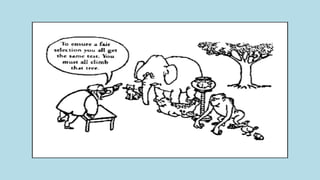
Differentiated products MUST
assess the SAME objective.
• Objective: Students will be able to talk about what
they already have and what they are looking for in
Spanish.
boyfriend/girlfriend

new car

apartment

pet

cell phone

other
The Nature of the
Student
Readiness
Readiness
Readiness is the current knowledge, understanding and
skill level a student has related to a particular sequence
of learning.
It reflects what a student knows, understands and can
do, today, in light of what the teacher is teaching today.
*Readiness is not a synonym for ability.
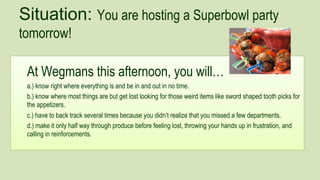
Situation: You are hosting a Superbowl party
tomorrow!
At Wegmans this afternoon, you will…
a.) know right where everything is and be in and out in no time.
b.) know where most things are but get lost looking for those weird items like sword shaped tooth picks for
the appetizers.
c.) have to back track several times because you didn’t realize that you missed a few departments.
d.) make it only half way through produce before feeling lost, throwing your hands up in frustration, and
calling in reinforcements.
Situation: You are hosting a Superbowl party
tomorrow!
When you get a flat tire on the way home from
the store, you will…
a.) fix it yourself. No sweat!
b.) attempt to fix it, but call up a friend to make sure you know what you’re doing.
c.) feel a little hesitant fixing it on your own, so you call a friend to come lend a hand.
d.) have no idea what to do. That’s why you have AAA!
Situation: You are hosting a Superbowl party
tomorrow!
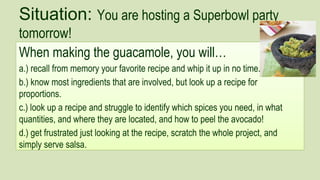
When making the guacamole, you will…
a.) recall from memory your favorite recipe and whip it up in no time.
b.) know most ingredients that are involved, but look up a recipe for
proportions.
c.) look up a recipe and struggle to identify which spices you need, in what
quantities, and where they are located, and how to peel the avocado!
d.) get frustrated just looking at the recipe, scratch the whole project, and
simply serve salsa.
Interest
Interest
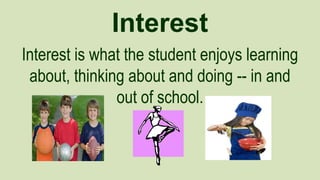
Interest is what the student enjoys learning
about, thinking about and doing -- in and
out of school.
Learning
Profile
Learning Profile
Learning Profile is a student’s preferred
way of learning…
Five Models to Consider:
True Colors
The Dunn and Dunn Model
Multiple Intelligences Model
Auditory, Visual and Kinesthetic (Tactile) Model
Brain Hemisphere Model
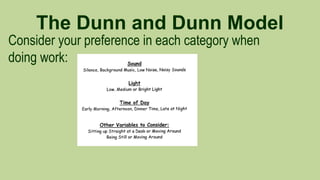
The Dunn and Dunn Model
Consider your preference in each category when
doing work:
Differentiated
Instruction

The Essential Meaning of Curriculum

The Nature of the Student

Content – The “stuff” we teach and the “stuff”
we want kids to know.
Process – A personal sense making activity.

Readiness – Reflects what a student knows,
understands and can do today in light of what
the teacher is teaching today. *Not a synonym
for ability.

Product – An assessment after a long period
of learning.
Interest – What a student enjoys learning
about, thinking about and doing.
Learning Profile – A student’s preferred way
of learning.
Differentiated instruction in the lote classroom

  • 1.
    Differentiated Instruction In theLOTE Classroom “A brief overview of Jennifer-RichWalter’s model of Differentiated Instruction” Christine-Cioppa Fayetteville-Manlius Schools
  • 2.
    Foundations for Differentiated Instruction Chrissie Cioppa SpanishTeacher Fayetteville-Manlius High School Adapted from the work of Jennifer Rich - Walters
  • 3.
    Differentiated Instruction The Essential Meaningof Curriculum Content – The “stuff” we teach and the “stuff” we want kids to know. Process – A personal sense making activity. Product – An assessment after a long period of learning. The Nature of the Student Readiness – Reflects what a student knows, understands and can do today in light of what the teacher is teaching today. *Not a synonym for ability. Interest – What a student enjoys learning about, thinking about and doing. Learning Profile – A student’s preferred way of learning.
  • 4.
  • 5.
  • 6.
    Content Content is the“stuff” we teach and the “stuff” we want kids to know. Ex: Vocabulary, Grammar Concepts, Cultural Themes, Stories/Films, etc.
  • 8.
    Lesson: Stem Changersin Preterite 1. Lesson on the board -
  • 9.
    Lesson: Stem Changersin Preterite 2. Image of notes on Instagram -
  • 10.
    Lesson: Stem Changersin Preterite 3. YouTube Instructional Video –
  • 11.
  • 12.
    Process Process is apersonal, sense making activity. Students need to run information through their own personal filters in order for information to make sense.
  • 13.
    Content: How totake care of a dog
  • 14.
    Content: How tostem change a verb in the preterite tense. - Fill in chart as a class (first stems, then endings) - Verb relay game (students cycle through each form of the verb chart, first writing in the stem, then adding the endings) - White boards (as pairs or individuals)
  • 15.
    Am I differentiatingCONTENT or PROCESS? 1. 2. CONTENT Am I, as the teacher, responsible for conveying this information to my students? Did I, as the teacher, provide multiple ways to understand my content? PROCESS 1. 2. 3. 4. Is it personal for the learner?/Does it enable the learner to “own” the information? Is it sense making for the learning? Is it an activity for the learner? Do I provide multiple ways for students to process the same information?
  • 16.
  • 17.
    Product Product is amajor or culminating demonstration of student learning. (An assessment)
  • 18.
    Differentiated products MUST assessthe SAME objective. • Objective: Students will be able to talk about what they already have and what they are looking for in Spanish. boyfriend/girlfriend new car apartment pet cell phone other
  • 20.
    The Nature ofthe Student
  • 21.
  • 22.
    Readiness Readiness is thecurrent knowledge, understanding and skill level a student has related to a particular sequence of learning. It reflects what a student knows, understands and can do, today, in light of what the teacher is teaching today. *Readiness is not a synonym for ability.
  • 23.
    Situation: You arehosting a Superbowl party tomorrow! At Wegmans this afternoon, you will… a.) know right where everything is and be in and out in no time. b.) know where most things are but get lost looking for those weird items like sword shaped tooth picks for the appetizers. c.) have to back track several times because you didn’t realize that you missed a few departments. d.) make it only half way through produce before feeling lost, throwing your hands up in frustration, and calling in reinforcements.
  • 24.
    Situation: You arehosting a Superbowl party tomorrow! When you get a flat tire on the way home from the store, you will… a.) fix it yourself. No sweat! b.) attempt to fix it, but call up a friend to make sure you know what you’re doing. c.) feel a little hesitant fixing it on your own, so you call a friend to come lend a hand. d.) have no idea what to do. That’s why you have AAA!
  • 25.
    Situation: You arehosting a Superbowl party tomorrow! When making the guacamole, you will… a.) recall from memory your favorite recipe and whip it up in no time. b.) know most ingredients that are involved, but look up a recipe for proportions. c.) look up a recipe and struggle to identify which spices you need, in what quantities, and where they are located, and how to peel the avocado! d.) get frustrated just looking at the recipe, scratch the whole project, and simply serve salsa.
  • 26.
  • 27.
    Interest Interest is whatthe student enjoys learning about, thinking about and doing -- in and out of school.
  • 28.
  • 29.
    Learning Profile Learning Profileis a student’s preferred way of learning… Five Models to Consider: True Colors The Dunn and Dunn Model Multiple Intelligences Model Auditory, Visual and Kinesthetic (Tactile) Model Brain Hemisphere Model
  • 30.
    The Dunn andDunn Model Consider your preference in each category when doing work:
  • 31.
    Differentiated Instruction The Essential Meaningof Curriculum The Nature of the Student Content – The “stuff” we teach and the “stuff” we want kids to know. Process – A personal sense making activity. Readiness – Reflects what a student knows, understands and can do today in light of what the teacher is teaching today. *Not a synonym for ability. Product – An assessment after a long period of learning. Interest – What a student enjoys learning about, thinking about and doing. Learning Profile – A student’s preferred way of learning.