Cheese styling is the art of
arranging cheese on a platter or
board in an aesthetically pleasing
and appetizing way. It's about
more than just placing down some
cheese and crackers; it's about
creating a visual and culinary
experience for your guests.
cheese style 1
cheese style 2
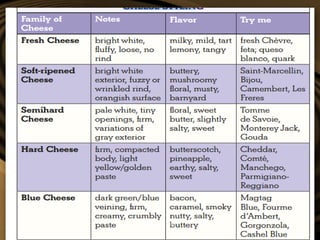
Choose a variety of cheeses. Select
cheeses with different
textures, flavors, and milk types
(cow, goat, sheep) to create
interest and cater to different
palates. A good rule of thumb is to
include 3-5 cheeses.
cheese style 3
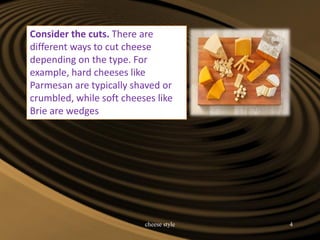
Consider the cuts. There are
different ways to cut cheese
depending on the type. For
example, hard cheeses like
Parmesan are typically shaved or
crumbled, while soft cheeses like
Brie are wedges
cheese style 4
•Arrange the cheese strategically. Place the
cheeses on the board in a visually appealing
way, using different heights and textures to
create dimension. Leave space between the
cheeses so guests can easily grab what they
want.
•Garnish strategically. Use garnishes like
herbs, edible flowers, and drizzles of honey or
balsamic glaze to add pops of color and flavor.
•Use the right board or platter. Choose a board
or platter that is large enough to accommodate
all of the cheese and accompaniments, and that
complements the style of your event.
cheese style 5
1. For a party: Go for a variety of crowd-
pleasing cheeses, such as cheddar, brie, and
goat cheese. Include a mix of cuts and
accompaniments to cater to different
preferences.
2. For a romantic evening: Choose cheeses
that are rich and decadent, such as
Camembert, Roquefort, and truffle
cheese. Add accompaniments that are
luxurious, such as figs, prosciutto, and
honey.
3. For a wine tasting: Pair the cheeses with the
wines that you will be serving. For
example, serve a sharp cheddar with a bold
red wine, and a creamy brie with a light
white wine.
cheese style 6

different cheese styles cheese styles

  • 1.
    Cheese styling isthe art of arranging cheese on a platter or board in an aesthetically pleasing and appetizing way. It's about more than just placing down some cheese and crackers; it's about creating a visual and culinary experience for your guests. cheese style 1
  • 2.
  • 3.
    Choose a varietyof cheeses. Select cheeses with different textures, flavors, and milk types (cow, goat, sheep) to create interest and cater to different palates. A good rule of thumb is to include 3-5 cheeses. cheese style 3
  • 4.
    Consider the cuts.There are different ways to cut cheese depending on the type. For example, hard cheeses like Parmesan are typically shaved or crumbled, while soft cheeses like Brie are wedges cheese style 4
  • 5.
    •Arrange the cheesestrategically. Place the cheeses on the board in a visually appealing way, using different heights and textures to create dimension. Leave space between the cheeses so guests can easily grab what they want. •Garnish strategically. Use garnishes like herbs, edible flowers, and drizzles of honey or balsamic glaze to add pops of color and flavor. •Use the right board or platter. Choose a board or platter that is large enough to accommodate all of the cheese and accompaniments, and that complements the style of your event. cheese style 5
  • 6.
    1. For aparty: Go for a variety of crowd- pleasing cheeses, such as cheddar, brie, and goat cheese. Include a mix of cuts and accompaniments to cater to different preferences. 2. For a romantic evening: Choose cheeses that are rich and decadent, such as Camembert, Roquefort, and truffle cheese. Add accompaniments that are luxurious, such as figs, prosciutto, and honey. 3. For a wine tasting: Pair the cheeses with the wines that you will be serving. For example, serve a sharp cheddar with a bold red wine, and a creamy brie with a light white wine. cheese style 6