Garnishing & PresentationTechniques Introduction
01
Food
Pairing
Combining colors and textures of food can
enhance the overall appeal and create a
balance that attracts diners, making the dish
more visually appealing and enjoyable.
02
Plate
Arrangement
The strategic placement of food on the plate
creates a flow that guides the diner’s eye,
highlighting the main components and
ensuring proper portion control.
03
Use of
Accessories
Incorporating edible flowers, sauces, or
herbs can elevate presentation, adding a
pop of color and flavor that enhances the
overall experience of the meal.
3.
The Importance ofFood Presentation
Visual
Appeal
Creates an enticing visual experience
that attracts diners' attention.
First
Impressions
A well-presented dish enhances the
initial perception of quality.
Flavor
Enhancement
Aesthetic arrangements can elevate the
perceived taste of the food.
Customer
Satisfaction
Enhances overall dining experience
leading to happier customers.
Dish
Identity
Distinct presentation styles can define
a dish's unique character.
Culinary
Creativity
Encourages chefs to express their
artistry and innovative flair.
Social Media
Ready
Appealing presentations are more likely to
be shared online.
Increased
Sales
Visually appealing dishes can lead to
higher customer orders.
4.
Common Garnishing Techniques
Explained
Chopping
Choppingherbs finely enhances
their flavor and appearance.
Slicin
g
Slicing fruits and vegetables
creates uniform shapes for
garnishes.
Finishin
g
Finishing touches include adding
a drizzle of sauce for flavor.
Twistin
g
Twisting citrus peels adds an
elegant flair to beverages.
Layerin
g
Layering ingredients creates
visual depth on the plate.
Pipin
g
Piping sauces or creams
can provide intricate
designs on dishes.
Platin
g
Plating is essential for
arranging food attractively on
the dish.
Sprinklin
g
Sprinkling garnishes, like nuts
or seeds, adds texture and
flavor.
5.
Choosing the RightPiate for Presentation
Plate Choice Color Contrast Size
Matters
Select the right plate shape to
complement your dish design.
Use plates that contrast with the food
for enhanced visual appeal.
Choose an appropriately sized plate to
avoid overcrowding the dish.
Height Variation
Incorporate height with stackea elements for
an engaging presentation.
Texture Play
Experiment with textured plates to create
visual and tactile interest.
Edge Design
Opt for plates with interesting edges to
frame your food beautifully.
Theme Consistency
Ensure the plate style matches the
overall theme of your meal.
6.
Coior Theory inFood
Presentation Choose
Colors
Select colors that complement each other
well.
Garnish
Thoughtfully
o
g
Select garnishes that enhance the overall
color
scheme.
Mindful
Portions w
”
Consider portion sizes for proper
color
distribution.
O
Z
0
1
0
6
Seasonal
Colors
Use colors reflecting seasonal
ingredients
and themes.
Create
Contrast
02 Use contrasting colors for visual appeal and
interest.
05
Balance
Plates
0
3 Balance colors to create a harmonious
plate design.
04 Color
Placement
Strategically place colors for maximum
visual impact.
Texture
Variation
Incorporate different textures
to enhance color effects.
7.
Textures: Importance andHow to
Layer
Layering
Incorporate different textures such as crispy,
creamy, and crunchy elements to create
depth, making dishes visually appealing and
enhancing the overall dining experience.
Contrast
Use contrasting textures intentionally, like
pairing soft ingredients with hard ones, to
stimulate the palate and elevate the visual
presentation of the dish.
8.
Plating Techniques: Rulesand Styles
Balance
Ensure visual weight is equally distributed across the plate.
Color
Use contrasting colors to create visual appeal and
interest.
Height
Incorporate height for a dynamic presentation and added
intrigue.
Negative Space
Leave empty space to enhance focus on the main dish
elements.
Garnishes
Select garnishes that complement and enhance the dish's
flavors.
9.
Sauces: Drizzling, Dots,and Swipes
Drizzlin
g
Use a squeeze bottle for
controlled drizzling of sauce
over the dish for an elegant
finish.
Dot
s
Create small dots of sauce on
the plate for a modern artistic
touch to the dish
presentation.
Swipe
s
Use the back of a spoon to
swipe sauce across the plate for
a dynamic and visually
appealing effect.
Contras
t
Choose sauces that contrast in
color with the food to enhance
the visual appeal and highlight
ingredients.
Temperature
Serve sauces at the proper
temperature—hot sauces on
warm plates and cold sauces on
chilled dishes.
10.
Using Edible FlowersEffectively
Select edible flowers like nasturtiums and
pansies to add vibrant colors and unique
flavors to your dishes, ensuring they are
pesticide-free. Use them as garnishes on
plates or incorporate them into salads for an
eye-catching presentation that heightens the
dining experience.
11.
Herbs as aGarnish and Flavor Enhancers
Fresh Herbs
Use fresh herbs like basil or cilantro to
enhance dish flavors and add visual appeal.
Herb Infusions
Create herb-infused oils or vinegars to
drizzle over dishes for added depth and
richness.
Garnish Placement
Strategically place garnishes on dishes
to guide diners’ eyes and create an
inviting presentation.
12.
The Role ofAccompaniments in Presentation
Use vibrant accompaniments to enhance
the overall dish appeal.
Color Balance Textural
Variety
Integrate crunchy elements for contrast
with soft main dishes.
Flavor
Enhancement
Select sauces or sides that complement
the main flavors effectively.
Visual
Harmony
Ensure accompaniments align with the
main dish’s aesthetic theme.
13.
Creating Height andDimensions on the Plate
0
1
Focus
Point
Highlight a key element that
draws attention immediately.
0
2
Layering
Elements
Use stacks of food to create
verticality and depth on the plate.
0
3
Color
Contrast
Incorporate various colors to
enhance visual appeal and
interest.
0
4
Garnish
Depth
Add garnishes that rise above the
main components for
dimension.
0
5
Plate
Selection
Choose plates that complement
and emphasize the food's
height.
14.
Utilizing Garnishes inAppetizers and
Desserts
Color
Use vibrant colors to enhance
visual appeal of dishes.
Texture
s
Incorporate various textures for
depth and interest in each
bite.
Flavor
s
Ensure garnishes complement the
main flavor profiles of the dish.
Placement
Strategically place garnishes to
draw attention to specific
areas.
Edibilit
y
Select garnishes that are edible
and add to the overall meal
experience.
Simplicit
y
Keep garnishes simple to avoid
overwhelming the presentation.
Seasona
l
Utilize seasonal ingredients to
create freshness in presentation.
15.
Cuiturai Considerations inFood Presentation
Plating Style Color
Significance
Different cultures have aistinct styles of
plating and art.
Serving
Customs
Serving customs can vary widely from
one culture to another.
Colors may carry various meanings
across
different cultures.
Utensil
Choices
Different cultures use specific utensils
that affect presentation.
^“ ,
”x
“ ” ”'
S
Ingredient
Arrangements
How ingreaients are arranged can
reflect
cultural traditions.
Portion
Sizes
Cultural norms dictate appropriate
portion
sizes for meals.
16.
Seasonai Ingredients forVisuai Appeai
Color Variety Textural
Contrast
Incorporate bright, seasonal proauce for
an attractive plate.
Mix smooth and crunchy elements for
visual interest.
f
Herb
Garnishes
Use fresh herbs to enhance aesthetics and
flavor.
Seasonal Themes
Tailor displays to reflect current seasonal events
or holidays.
Edible Flowers
Incorporate edible flowers for a colorful,
delicate touch.
Layering Heights
• Create height in dishes for a more
dynamic
presentation.
Sauce Drizzles
Artfully drizzle sauces for an
elegant
finishing touch.
17.
Use of Glasswareand Bowls in Presentation
Select unique glassware to elevate
dish presentation and allure.
Enhance Visual Appeal Layered
Presentation
Use clear bowls for layered desserts
to showcase ingredients creatively.
Textural
Contrast
Combine different glass shapes for added
textural interest on tables.
Color
Coordination
Match bowl colors with dish ingredients for
a cohesive look.
18.
Incorporating Natural Elementsin Garnishing
Fresh Herbs
Use fresh herbs like basil or cilantro to
enhance flavor and add a pop of color to
your dish.
Edible Flowers
Incorporate edible flowers to create
visually stunning plates and provide a
unique flavor profile.
Natural Colors
Utilize vibrant fruits and vegetables to
create a visually appealing contrast and
freshness on the plate.
19.
Plating for DifferentMeal
Types
Focus on balance between protein and
vegetables for lunches.
Lunch
Dinner
Layer flavors and textures for an elegant
dinner presentation.
Breakfast
Use bright colors to enhance aesthetic appeal in
breakfast plating.
Appetizers
Utilize small plates to create a visually appealing
appetizer spread.
Dessert
s
Incorporate sauces and garnishes for height
in dessert plating.
Soup
s
Serve soups in unique bowls to
elevate overall dining experience.
Salad
s
Arrange layers for an eye-catching salad
presentation style.
20.
The Role ofLighting in Food Photography
Use natural light for softer and appealing food
images.
Experiment with light direction to enhance
texture and depth.
Natural Direction
Control
Control exposure settings for optimal lighting
across dishes.
Diffusion
Use diffusers to soften harsh shadows in
food photography.
Backlighting
Utilize backlighting to create an inviting and warm
ambiance.
Reflectors
Incorporate reflectors to brighten shadowy
areas in photographs.
Gold
Golden hour gives a warm hue
that enhances food appeal.
21.
Tips for Platingfor Social Media
Choose
Colors
Select vibrant colors that
enhance the dish's appeal.
Use
Texture
Incorporate various textures
for an inviting visual
experience.
Balance
Composition
Arrange elements
symmetrically for a
well- balanced
presentation.
Garnish
Thoughtfully
Add garnishes that
complement flavors and
enhance visuals.
Select Right
Plate
Choose plate shapes and
sizes that highlight the food
beautifully.
Keep I
t
Clean
Make sure the plate is clean
and free from any spills.
22.
Problem
1
Problem
2
Addressing Common PresentationChallenges
Problem
3
Inadequate attention to plate
composition and balance
Neglecting color contrast can reduce
appeal
Ignoring texture variety leads to
monotony
Difficulty in creating visual harmony and
flow
Lack of strategic placement affects
aesthetics
Improper proportions disrupt visual balance
Challenges in selecting
appropriate garnishing
techniques
Using too many ingredients can
overwhelm dish
Inconsistent sizes hinder
professional
presentation
23.
Time-Saving Techniques forBusy
Kitchens
Prep Ahead
Pre-cut vegetables and fruits on slower days
to save time during busy kitchen hours and
ensure efficient garnishing and plating for
your dishes.
Batch Cooking
Prepare large quantities of sauces and
garnishes that can be easily stored and
reused throughout the week for quick
access during meal service.
24.
Training Staff onGarnishing Techniques
Anno
Pastry Chef
Chef de
Partie
Emm
a
3ohn
Sous Chef
Heed Chef
Olivia
Line Cook
Liam
25.
Customer Expectations andPresentation Trends
Visual Appeal
Use vibrant colors and textures to enhance
visual impact and catch customer
attention effectively.
Creative Plating
Implement unique arrangements and
layering techniques to create a memorable
dining experience for customers.
Seasonal Ingredients
Incorporate fresh, seasonal elements into
dishes to highlight sustainability and enhance
the overall presentation.
26.
Case Studies ofSuccessful Food Presentations
Problem
Faced
Creating visually
appealing plating
seemed difficult at
times.
Solution
Offered
Implementing creative
garnishing techniques
improved visual impact.
Benefit
s
Enhanced customer
satisfaction through better
food aesthetics.
Approach 01
Pla
n
Outline desired
presentation style for
each dish.
02
Selec
t
Choose appropriate
garnishes that
complement flavors.
0
3
Arrang
e
Carefully place food
items for optimal
visual appeal.
04
Serv
e
Present each dish
with confidence and
enthusiasm.
27.
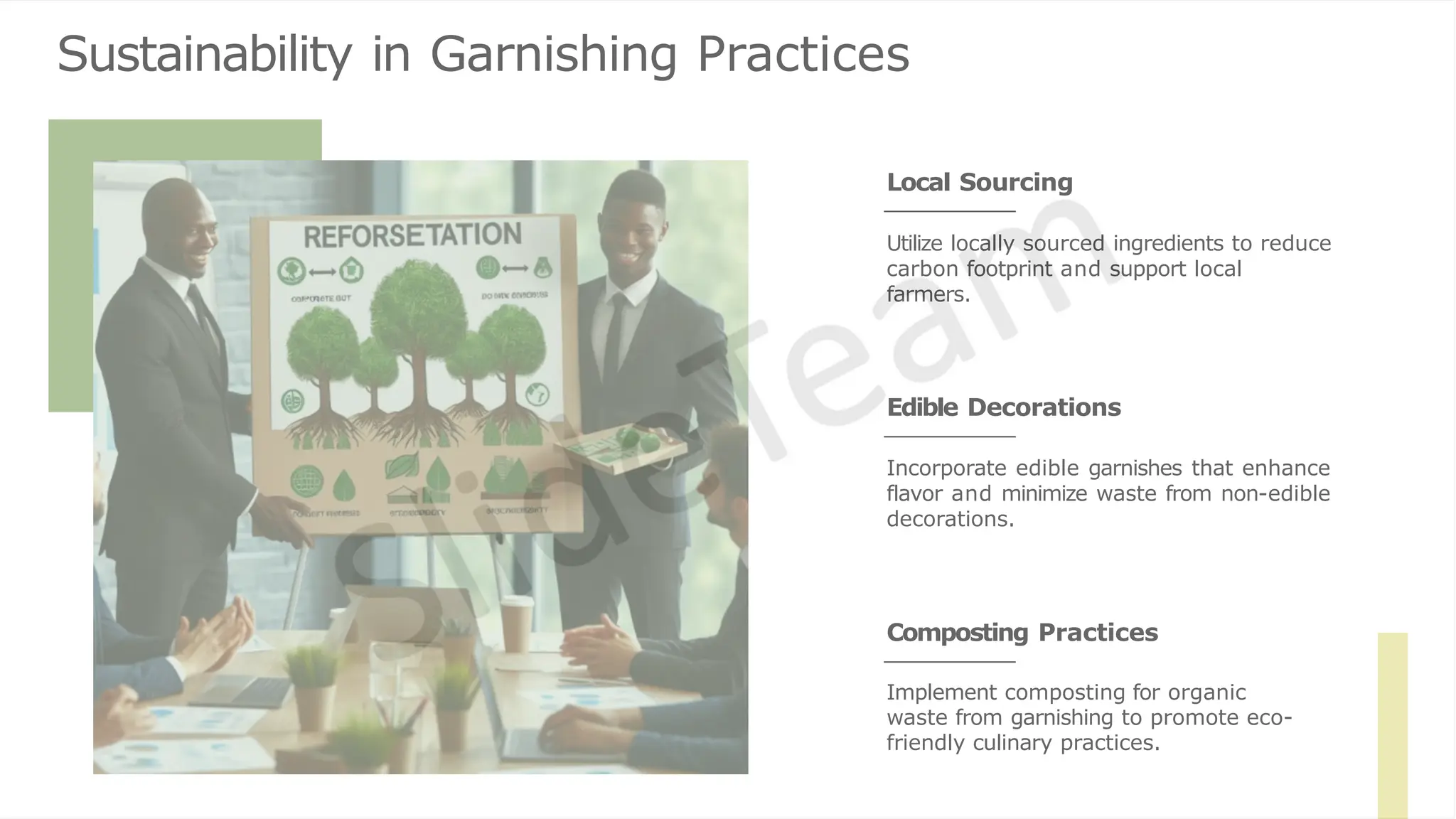
Sustainability in GarnishingPractices
Local Sourcing
Utilize locally sourced ingredients to reduce
carbon footprint and support local
farmers.
Edible Decorations
Incorporate edible garnishes that enhance
flavor and minimize waste from non-edible
decorations.
Composting Practices
Implement composting for organic
waste from garnishing to promote eco-
friendly culinary practices.
28.
Future Trends inFood Presentation
Utilize locally sourced ingredients for a
fresher presentation.
Sustainable Sourcing Interactive
Experiences
Engage guests with customizable
garnishes and presentation styles.
Edible
Flowers
Incorporate vibrant edible flowers for enhanced
visual appeal.
Minimalism
Adopt a minimalist approach for a sophisticated
food presentation.
Unique Textures
Combine various textures to create
visually stimulating dishes.
Bold Colors
Use bright, bold colors to attract
attention and stimulate appetite.
Technology Integration
Incorporate technology, like AR, for
innovative dining experiences.
29.
Feedback Mechanisms forImprovement
How would you rate the garnishing presentation
techniques used?
What suggestions can improve the presentation of garnishes?
How satisfied are you with the garnishing
techniques demonstrated?
30.
Interactive Elements: EngagingGuests with Presentation
Visual
Appeal
Incorporate vibrant colors
and textures to create
visually enticing garnishes and
presentations.
Interactive
Displays
Utilize serving stations or live
cooking demonstrations to
engage guests and enhance
their experience.
Edible
Garnishes
Choose garnishes that are not
only decorative but also
enhance the dish’s flavor
profile and appeal.
Themed
Presentation
Align presentation styles with
specific themes or occasions,
making dining experiences
memorable for guests.
31.
Hands-On Demonstrations andWorkshops
0
1
Select
Ingredients
Choose fresh and
suitable garnishing
ingredients.
0
2
Prepare
Equipment
Gather all
necessary tools for
garnishing.
0
3
Design
Garnishes
Create unique designs
using your chosen
ingredients.
0
4
Practice
Techniques
Apply various
techniques to enhance
presentation.
0
5
Present
Creatively
Showcase garnished
dishes with artistic flair
.
32.
Final Thoughts onMastering Presentation
Techniques
0
1
Embrace
Creativity
Innovation in garnishing enhances appeal
and dining experience for guests.
0
2
Balance
Colors
Utilizing contrasting colors can make
dishes more visually appealing and
inviting.
0
3
Consider
Texture
Incorporating different textures adds
depth and interest to plated dishes.
0
4
Focus on
Height
Creating height in presentation can
elevate the visual impact of the
food.
0
5
Use Negative
Space
Strategically leaving empty space
improves presentation aesthetics and
emphasizes food.
0
6
Mindful
Placement
Where food is placed on the
plate plays a crucial role in
overall presentation.