Downloaded 51 times
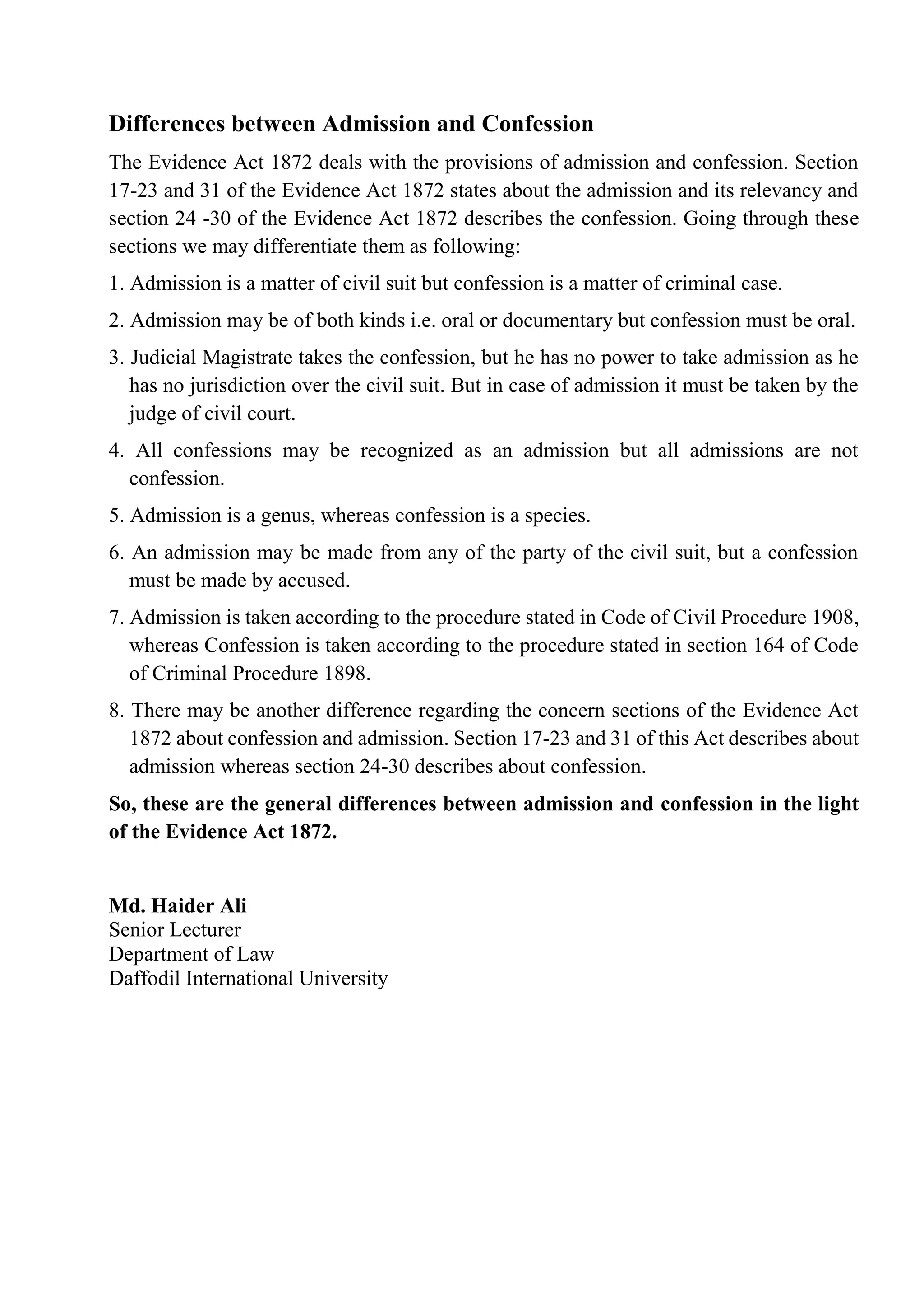

Admission and confession differ in several key ways according to the Evidence Act of 1872. Admissions are for civil suits, while confessions are for criminal cases. Admissions can be oral or written, but confessions must be oral. Judicial magistrates have the power to record confessions but not admissions, as they do not have jurisdiction over civil suits. While all confessions are a type of admission, not all admissions are confessions. Admissions are broader and confessions are more specific. Admissions can be made by any party in a civil suit, but confessions must come from the accused. Admissions and confessions also differ in the procedures for being recorded and the sections of the Evidence Act that govern them.


