WELCOME
TO
MY PRESENTATION
PRESENTED BY,
ABDULLAH MOHAMMAD KAWSAR
ID: 213-26-418
BATCH: 43
DEPARTMENT OF LAW
DAFFODIL INTERNATIONAL UNIVERSITY
HOSTED BY,
Professor Dr. Kudrat-E-Khuda Babu
Professor & Head
DEPARTMENT OF LAW
Faculty of Humanities & Social Sciences
DAFFODIL INTERNATIONAL UNIVERSITY
CHARGES
THE CODE OF CRIMINAL PROCEDURE, 1898
Section 221 to 239
V.C SHUKLA VS STATE, 1980
JUSTICE DESAI OPINED THAT,
THE PURPOSE OF FRAMING A CHARGE IS TO GIVE INTIMATION TO THE
ACCUSED OF CLEAR, UNAMBIGUOUS AND PRECISE NOTICE OF THE
NATURE OF ACCUSATION THAT THE ACCUSED IS CALLED UPON TO MEET
IN THE COURSE OF A TRIAL
Definition of Charge: Section 2(b)
● Charge simply means 'accusation'.
● A charge is a formal recognition of concrete accusations by a
magistrate or a court based upon a complaint or information
against the accused.
● A charge is drawn up by a court only when the court is
satisfied by the prima facie evidence against the accused.
● The basic idea behind a charge is to make the accused
understand what exactly he is accused of so that he can defend
himself.
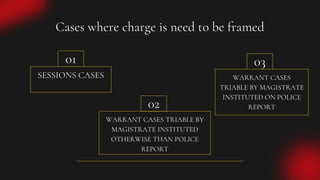
Cases where charge is need to be framed
01
02
03
SESSIONS CASES WARRANT CASES
TRIABLE BY MAGISTRATE
INSTITUTED ON POLICE
REPORT
WARRANT CASES TRIABLE BY
MAGISTRATE INSTITUTED
OTHERWISE THAN POLICE
REPORT
CONTENT OF CHARGE (221)
• Every charge under this Code shall state the offence with which
the accused is charged.
• If the law that creates the offence gives it any specific name, the
offence should be described in the charge by that name only. Eg.
‘murder’ ‘extortion’.
• If the law that creates the offence does not give it any specific
name so much of the definition of the offence must be stated as to
give the accused notice of the matter with which he is charged.
CONTENT OF CHARGE (221)
• The law and section of the law against which the offence is
said to have been committed shall be mentioned in the charge.
• If the accused has a previous conviction that could affect their
punishment for a subsequent offense, the charge must include
the details of the previous conviction. The court can add this
information at any time before sentencing if it was omitted.
Case laws
Abu Bakkar Siddiqui and others Vs State:
The High Court observed that Tota Mia was found guilty
under sections 302/34 of the Penal Code but it was noted that
he had not been charged under these sections earlier, which
did not give him chance to defend himself. As a result, the
Court ruled that the conviction and sentence against Tota
Mia were not sustainable in law and set them aside.
Trial incase where the offence is not stated by law
If any offence which is not specifically stated by law,
the trial must be held. It does not matter whether
there are law or not for that offence.
Time and Place of the Offence(222)
● The charge must specify the essential facts such as time,
place, and person comprising the offence.
For example: if a person is charged with Murder, the charge
must specify the name of the victim and date and place of the
murder.
Case: In Shashidhara Kurup vs Union of India 1994 case, no
particulars of offence were stated in the charge. It was held that
the particulars of offence are required to be stated in the charge so
that the accused may take appropriate defence.
Manner of committing offence(223)
Sometimes, even the time and place do not provide
sufficient notice of the offence which a person is
charged. In such situation, the manner in which the
offence committed must also be specified in the
charge.
Alteration of Charge(227)
1. Any Court may alter or add to any charge at any time
before judgment is pronounced
2. Every such alteration or addition shall be read and
explained to the accused.
3.The Court under section 227 of Criminal Procedure Code is
competent to alter or amend the charge at any stage of the
proceeding before pronouncement of judgment. [57 DLR
546]
Effect of error
34 DLR 94: Charge which causes prejudice to the
accused due to error or irregularity makes out a case for
retrial.
In Rawalpenta Venkalu vs State of Hyderabad, 1956: the
charge failed to mention the Section 34 of IPC but the
description of the offence was mentioned clearly. The SC held
that the section number was only of academic significance and
the omission was immaterial.
Charge and its essentials rules Under the CRPC, 1898

Charge and its essentials rules Under the CRPC, 1898

  • 1.
    WELCOME TO MY PRESENTATION PRESENTED BY, ABDULLAHMOHAMMAD KAWSAR ID: 213-26-418 BATCH: 43 DEPARTMENT OF LAW DAFFODIL INTERNATIONAL UNIVERSITY
  • 2.
    HOSTED BY, Professor Dr.Kudrat-E-Khuda Babu Professor & Head DEPARTMENT OF LAW Faculty of Humanities & Social Sciences DAFFODIL INTERNATIONAL UNIVERSITY
  • 3.
    CHARGES THE CODE OFCRIMINAL PROCEDURE, 1898 Section 221 to 239
  • 4.
    V.C SHUKLA VSSTATE, 1980 JUSTICE DESAI OPINED THAT, THE PURPOSE OF FRAMING A CHARGE IS TO GIVE INTIMATION TO THE ACCUSED OF CLEAR, UNAMBIGUOUS AND PRECISE NOTICE OF THE NATURE OF ACCUSATION THAT THE ACCUSED IS CALLED UPON TO MEET IN THE COURSE OF A TRIAL
  • 5.
    Definition of Charge:Section 2(b) ● Charge simply means 'accusation'. ● A charge is a formal recognition of concrete accusations by a magistrate or a court based upon a complaint or information against the accused. ● A charge is drawn up by a court only when the court is satisfied by the prima facie evidence against the accused. ● The basic idea behind a charge is to make the accused understand what exactly he is accused of so that he can defend himself.
  • 6.
    Cases where chargeis need to be framed 01 02 03 SESSIONS CASES WARRANT CASES TRIABLE BY MAGISTRATE INSTITUTED ON POLICE REPORT WARRANT CASES TRIABLE BY MAGISTRATE INSTITUTED OTHERWISE THAN POLICE REPORT
  • 7.
    CONTENT OF CHARGE(221) • Every charge under this Code shall state the offence with which the accused is charged. • If the law that creates the offence gives it any specific name, the offence should be described in the charge by that name only. Eg. ‘murder’ ‘extortion’. • If the law that creates the offence does not give it any specific name so much of the definition of the offence must be stated as to give the accused notice of the matter with which he is charged.
  • 8.
    CONTENT OF CHARGE(221) • The law and section of the law against which the offence is said to have been committed shall be mentioned in the charge. • If the accused has a previous conviction that could affect their punishment for a subsequent offense, the charge must include the details of the previous conviction. The court can add this information at any time before sentencing if it was omitted.
  • 9.
    Case laws Abu BakkarSiddiqui and others Vs State: The High Court observed that Tota Mia was found guilty under sections 302/34 of the Penal Code but it was noted that he had not been charged under these sections earlier, which did not give him chance to defend himself. As a result, the Court ruled that the conviction and sentence against Tota Mia were not sustainable in law and set them aside.
  • 10.
    Trial incase wherethe offence is not stated by law If any offence which is not specifically stated by law, the trial must be held. It does not matter whether there are law or not for that offence.
  • 11.
    Time and Placeof the Offence(222) ● The charge must specify the essential facts such as time, place, and person comprising the offence. For example: if a person is charged with Murder, the charge must specify the name of the victim and date and place of the murder. Case: In Shashidhara Kurup vs Union of India 1994 case, no particulars of offence were stated in the charge. It was held that the particulars of offence are required to be stated in the charge so that the accused may take appropriate defence.
  • 12.
    Manner of committingoffence(223) Sometimes, even the time and place do not provide sufficient notice of the offence which a person is charged. In such situation, the manner in which the offence committed must also be specified in the charge.
  • 13.
    Alteration of Charge(227) 1.Any Court may alter or add to any charge at any time before judgment is pronounced 2. Every such alteration or addition shall be read and explained to the accused. 3.The Court under section 227 of Criminal Procedure Code is competent to alter or amend the charge at any stage of the proceeding before pronouncement of judgment. [57 DLR 546]
  • 14.
    Effect of error 34DLR 94: Charge which causes prejudice to the accused due to error or irregularity makes out a case for retrial. In Rawalpenta Venkalu vs State of Hyderabad, 1956: the charge failed to mention the Section 34 of IPC but the description of the offence was mentioned clearly. The SC held that the section number was only of academic significance and the omission was immaterial.