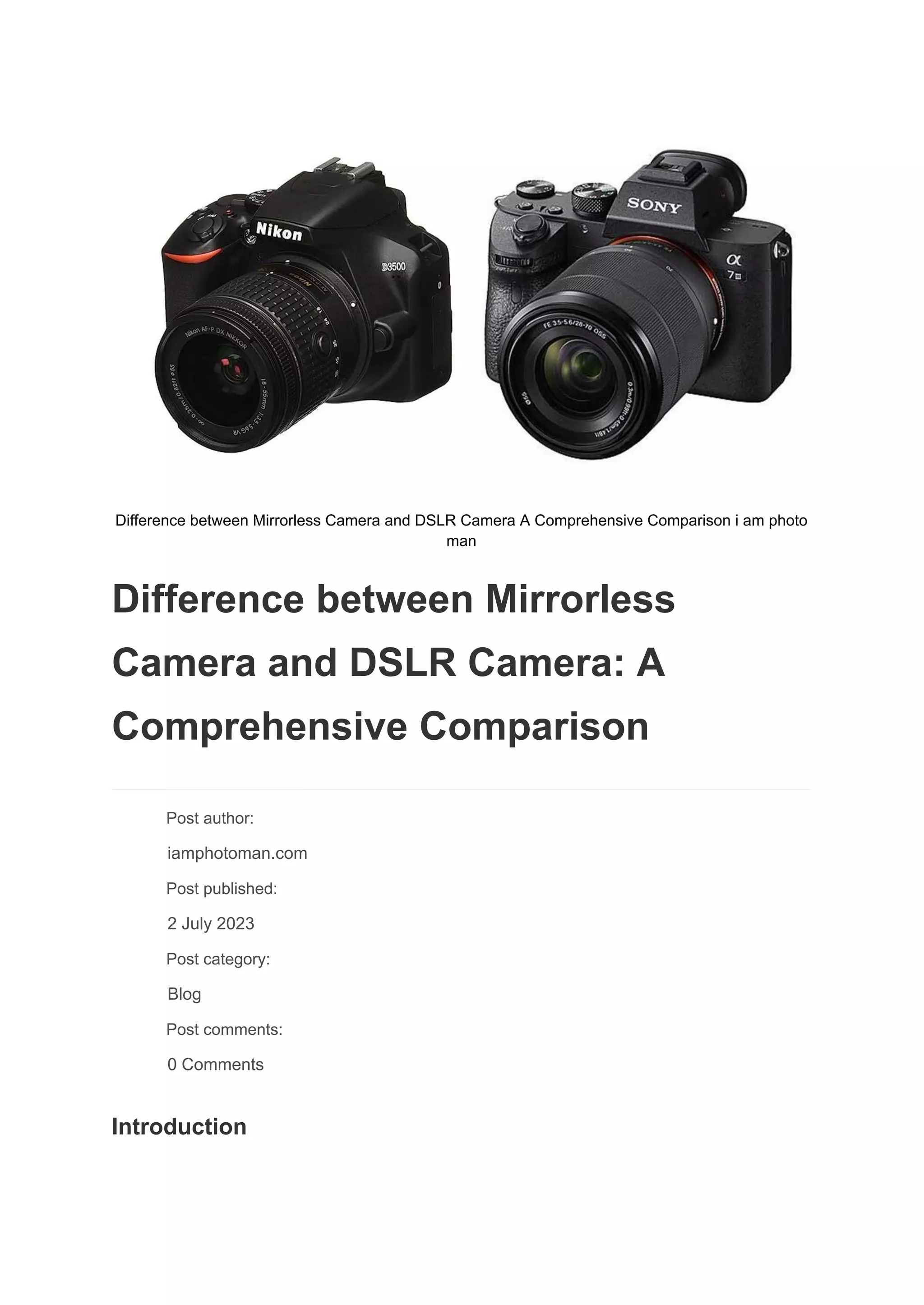
Difference between Mirrorless Camera and DSLR Camera A Comprehensive Comparison i am photo
man
Difference between Mirrorless
Camera and DSLR Camera: A
Comprehensive Comparison
​ Post author:
​ iamphotoman.com
​ Post published:
​ 2 July 2023
​ Post category:
​ Blog
​ Post comments:
​ 0 Comments
Introduction
In the world of photography, two popular types of cameras often come up in discussions:
mirrorless cameras and DSLR cameras. Both these camera systems have their unique features
and advantages. In this article, we will explore the differences between mirrorless cameras and
DSLR cameras, comparing their key aspects, functionalities, and performance. Whether you are
an amateur photographer looking to upgrade your gear or a professional seeking insights, this
article will help you make an informed decision.
Table of Contents
● Introduction
● What is a Mirrorless Camera?
● What is a DSLR Camera?
● Size and Weight
● Image Quality
● Autofocus System
● Lens Selection
● Electronic Viewfinder vs. Optical Viewfinder
● Video Performance
● Battery Life
● Price Range
● Durability and Weather Sealing
● Burst Mode and Continuous Shooting
● User Interface and Controls
● Post-Processing and Editing Capabilities
● Conclusion
● FAQs (Frequently Asked Questions)
What is a Mirrorless Camera?
A mirrorless camera, as the name suggests, does not have a mirror mechanism like a DSLR
camera. Instead, it uses a digital sensor to capture light directly. The light passes through the
lens and is captured by the sensor, which then processes the image and displays it on an
electronic viewfinder or the rear LCD screen.
What is a DSLR Camera?
On the other hand, DSLR stands for Digital Single Lens Reflex. These cameras use a mirror
mechanism that reflects light coming through the lens into an optical viewfinder. When you press
the shutter button, the mirror flips up, allowing the light to reach the image sensor and capture
the image.
Sure! Here’s a comparison table highlighting the key differences between mirrorless cameras
and DSLR cameras:
FEATURE MIRRORLESS CAMERA DSLR CAMERA
Size and
Weight
Compact and lightweight Bulkier and heavier
Image
Quality
Excellent with advancements in
sensor technology
Excellent with larger sensor sizes
Autofocus
System
Advanced hybrid autofocus systems Sophisticated phase-detection
autofocus
Lens
Selection
Growing selection with adapters for
DSLR lenses
Wide range of lenses available from
various brands
Viewfinder Electronic viewfinder or rear LCD
screen
Optical viewfinder
Video
Performance
Advanced features like 4K recording
and stabilization
Capable of recording videos, but fewer
advanced features
Battery Life Typically shorter Typically longer
Price Range Varies, with high-end models being
expensive
Varies, with entry-level models being
more affordable
Durability Well-built, but may have less
ruggedness
Robust build quality and extensive
weather sealing
Burst Mode Impressive burst rates and fast
continuous shooting
High burst rates and fast continuous
shooting
User
Interface
Touchscreen interfaces and
customizable controls
Physical dials and buttons for easy
access
Post-Proces
sing
Advanced in-camera processing
capabilities
Limited in-camera processing features
Please note that this table provides a general overview, and specific models may have variations
in features and performance.
Size and Weight
One of the significant differences between mirrorless cameras and DSLR cameras is their size
and weight. Mirrorless cameras are generally smaller and lighter compared to DSLRs. This is
because they lack the mirror box and the pentaprism, resulting in a more compact and portable
design. Photographers who prioritize portability often prefer mirrorless cameras.
Image Quality
Both mirrorless cameras and DSLRs are capable of delivering excellent image quality. The
image quality primarily depends on factors such as sensor size, resolution, and lens quality. In
general, DSLRs have larger sensors, which can result in better low-light performance and
dynamic range. However, advancements in mirrorless camera technology have narrowed the
gap, and many mirrorless cameras now offer exceptional image quality comparable to DSLRs.
Autofocus System
Autofocus performance is crucial for capturing sharp and well-focused images. DSLRs
traditionally had an advantage in this area due to their sophisticated phase-detection autofocus
system. However, modern mirrorless cameras have made significant advancements in autofocus
technology, often employing hybrid autofocus systems that combine phase detection and
contrast detection. These advancements have made mirrorless cameras on par with DSLRs in
terms of autofocus performance.
Lens Selection
The availability and diversity of lenses are essential factors for photographers when choosing a
camera system. DSLRs have been in the market for a more extended period and, therefore,
have a wider selection of lenses from various manufacturers. Mirrorless cameras, although
relatively newer, have been rapidly expanding their lens lineup, and many popular lenses are
now available for mirrorless systems. The lens selection for mirrorless cameras continues to
grow, offering photographers more options.
Electronic Viewfinder vs. Optical Viewfinder
One of the primary differences between mirrorless cameras and DSLRs is the type of viewfinder
they use. DSLRs feature an optical viewfinder that provides a direct optical view through the lens.
This viewfinder shows the scene as it appears to the naked eye, which some photographers
prefer. In contrast, mirrorless cameras utilize an electronic viewfinder (EVF) or the rear LCD
screen to display the image captured by the sensor. EVFs offer real-time previews, exposure
information, and various overlays, allowing photographers to have a more accurate
representation of the final image.
Video Performance
Both mirrorless cameras and DSLRs are capable of recording high-quality videos. However,
mirrorless cameras have gained popularity among videographers due to their advanced video
capabilities. Many mirrorless cameras offer features like 4K video recording, high-speed frame
rates, and built-in image stabilization, making them suitable for professional video production.
DSLRs, while capable of capturing videos, often lack some of the advanced video features found
in mirrorless counterparts.
Battery Life
Battery life is an important consideration, especially for photographers who engage in long
shooting sessions or travel extensively. DSLRs typically have a longer battery life compared to
mirrorless cameras. The power-hungry electronic viewfinder and continuous use of the rear LCD
screen on mirrorless cameras can drain the battery faster. However, it is worth noting that
mirrorless camera technology is constantly improving, and many modern mirrorless models now
offer decent battery life.
Price Range
When it comes to price, both mirrorless cameras and DSLRs cover a wide range of options. In
general, entry-level DSLRs tend to be more affordable than entry-level mirrorless cameras.
However, as you move up the price scale and consider advanced features, the price difference
between the two systems becomes less significant. Ultimately, the price range depends on the
specific model, brand, and features you prioritize.
Durability and Weather Sealing
Durability and weather sealing are important factors, especially for outdoor and adventurous
photographers. DSLRs, with their robust build quality and extensive weather sealing, are known
for their durability in harsh conditions. Mirrorless cameras, while generally well-built, may not
offer the same level of ruggedness as DSLRs. However, many mirrorless models now come with
weather sealing, providing protection against dust and moisture.
Burst Mode and Continuous Shooting
For sports, wildlife, and action photography, the burst mode and continuous shooting capabilities
play a vital role. DSLRs typically have an advantage in this aspect, offering higher burst rates
and faster continuous shooting speeds. However, mirrorless cameras are catching up quickly
and can achieve impressive burst rates as well. The specific capabilities may vary between
models, so it is essential to consider the intended usage and compare the specifications.
User Interface and Controls
The user interface and controls of a camera greatly impact the shooting experience. DSLRs often
feature a more traditional control layout, with physical dials and buttons for easy access to
essential settings. Mirrorless cameras, on the other hand, may have a more streamlined design
with touchscreen interfaces and customizable controls. The preference for user interface and
controls is subjective, and photographers should try out different models to determine which
system feels more intuitive and comfortable to use.
Post-Processing and Editing Capabilities
The ability to process and edit images directly in-camera can be beneficial for photographers
who prefer a streamlined workflow. Mirrorless cameras generally offer more advanced in-camera
processing features, including creative filters, image adjustments, and Wi-Fi connectivity for
wireless image transfer. While some DSLRs also provide similar capabilities, mirrorless cameras
often have a more extensive range of editing options and connectivity features.
Conclusion
In conclusion, mirrorless cameras and DSLR cameras have their own distinct advantages and
characteristics. Mirrorless cameras excel in terms of portability, advanced autofocus, and video
capabilities. On the other hand, DSLRs offer larger sensors, optical viewfinders, and longer
battery life. The choice between the two depends on individual preferences, shooting style, and
specific requirements. It is recommended to try out different models, consider the intended
usage, and prioritize the features that align with your photography needs.
FAQs (Frequently Asked Questions)
1. Can I use my DSLR lenses on a mirrorless camera?
Yes, in many cases, you can use DSLR lenses on mirrorless cameras with the help of lens
adapters. However, certain limitations may apply, such as autofocus performance and
compatibility with specific features.
2. Which camera system is better for beginners, mirrorless or DSLR?
Both mirrorless and DSLR systems have excellent options for beginners. Mirrorless cameras
offer a more compact and user-friendly design, while DSLRs provide a more traditional shooting
experience. It is advisable to consider factors such as budget, desired features, and personal
preferences when making a choice.
3. Do mirrorless cameras have a shutter lag?
Modern mirrorless cameras generally have minimal shutter lag, thanks to their electronic shutters
and advanced autofocus systems. However, the specific performance may vary between models,
so it is recommended to consult individual camera specifications for accurate information.
4. Are mirrorless cameras the future of photography?
Mirrorless cameras have gained significant popularity and have undoubtedly shaped the future of
photography. Their compactness, advanced features, and technological advancements make
them a preferred choice for many photographers. However, DSLRs still have their place in the
industry and continue to be widely used.
5. Can mirrorless cameras achieve the same image quality as DSLRs?
Yes, mirrorless cameras can achieve similar image quality as DSLRs. With advancements in
sensor technology, image processing algorithms, and lens quality, mirrorless cameras have
closed the gap and can produce stunning, high-resolution images comparable to DSLRs.

Difference between Mirrorless Camera and DSLR Camera A Comprehensive Comparison.pdf

  • 1.
    Difference between MirrorlessCamera and DSLR Camera A Comprehensive Comparison i am photo man Difference between Mirrorless Camera and DSLR Camera: A Comprehensive Comparison ​ Post author: ​ iamphotoman.com ​ Post published: ​ 2 July 2023 ​ Post category: ​ Blog ​ Post comments: ​ 0 Comments Introduction
  • 2.
    In the worldof photography, two popular types of cameras often come up in discussions: mirrorless cameras and DSLR cameras. Both these camera systems have their unique features and advantages. In this article, we will explore the differences between mirrorless cameras and DSLR cameras, comparing their key aspects, functionalities, and performance. Whether you are an amateur photographer looking to upgrade your gear or a professional seeking insights, this article will help you make an informed decision. Table of Contents ● Introduction ● What is a Mirrorless Camera? ● What is a DSLR Camera? ● Size and Weight ● Image Quality ● Autofocus System ● Lens Selection ● Electronic Viewfinder vs. Optical Viewfinder ● Video Performance ● Battery Life ● Price Range ● Durability and Weather Sealing ● Burst Mode and Continuous Shooting ● User Interface and Controls ● Post-Processing and Editing Capabilities ● Conclusion ● FAQs (Frequently Asked Questions) What is a Mirrorless Camera? A mirrorless camera, as the name suggests, does not have a mirror mechanism like a DSLR camera. Instead, it uses a digital sensor to capture light directly. The light passes through the lens and is captured by the sensor, which then processes the image and displays it on an electronic viewfinder or the rear LCD screen. What is a DSLR Camera? On the other hand, DSLR stands for Digital Single Lens Reflex. These cameras use a mirror mechanism that reflects light coming through the lens into an optical viewfinder. When you press the shutter button, the mirror flips up, allowing the light to reach the image sensor and capture the image.
  • 3.
    Sure! Here’s acomparison table highlighting the key differences between mirrorless cameras and DSLR cameras: FEATURE MIRRORLESS CAMERA DSLR CAMERA Size and Weight Compact and lightweight Bulkier and heavier Image Quality Excellent with advancements in sensor technology Excellent with larger sensor sizes Autofocus System Advanced hybrid autofocus systems Sophisticated phase-detection autofocus Lens Selection Growing selection with adapters for DSLR lenses Wide range of lenses available from various brands Viewfinder Electronic viewfinder or rear LCD screen Optical viewfinder Video Performance Advanced features like 4K recording and stabilization Capable of recording videos, but fewer advanced features
  • 4.
    Battery Life Typicallyshorter Typically longer Price Range Varies, with high-end models being expensive Varies, with entry-level models being more affordable Durability Well-built, but may have less ruggedness Robust build quality and extensive weather sealing Burst Mode Impressive burst rates and fast continuous shooting High burst rates and fast continuous shooting User Interface Touchscreen interfaces and customizable controls Physical dials and buttons for easy access Post-Proces sing Advanced in-camera processing capabilities Limited in-camera processing features Please note that this table provides a general overview, and specific models may have variations in features and performance. Size and Weight One of the significant differences between mirrorless cameras and DSLR cameras is their size and weight. Mirrorless cameras are generally smaller and lighter compared to DSLRs. This is
  • 5.
    because they lackthe mirror box and the pentaprism, resulting in a more compact and portable design. Photographers who prioritize portability often prefer mirrorless cameras. Image Quality Both mirrorless cameras and DSLRs are capable of delivering excellent image quality. The image quality primarily depends on factors such as sensor size, resolution, and lens quality. In general, DSLRs have larger sensors, which can result in better low-light performance and dynamic range. However, advancements in mirrorless camera technology have narrowed the gap, and many mirrorless cameras now offer exceptional image quality comparable to DSLRs. Autofocus System Autofocus performance is crucial for capturing sharp and well-focused images. DSLRs traditionally had an advantage in this area due to their sophisticated phase-detection autofocus system. However, modern mirrorless cameras have made significant advancements in autofocus technology, often employing hybrid autofocus systems that combine phase detection and contrast detection. These advancements have made mirrorless cameras on par with DSLRs in terms of autofocus performance. Lens Selection The availability and diversity of lenses are essential factors for photographers when choosing a camera system. DSLRs have been in the market for a more extended period and, therefore, have a wider selection of lenses from various manufacturers. Mirrorless cameras, although relatively newer, have been rapidly expanding their lens lineup, and many popular lenses are now available for mirrorless systems. The lens selection for mirrorless cameras continues to grow, offering photographers more options. Electronic Viewfinder vs. Optical Viewfinder One of the primary differences between mirrorless cameras and DSLRs is the type of viewfinder they use. DSLRs feature an optical viewfinder that provides a direct optical view through the lens. This viewfinder shows the scene as it appears to the naked eye, which some photographers prefer. In contrast, mirrorless cameras utilize an electronic viewfinder (EVF) or the rear LCD screen to display the image captured by the sensor. EVFs offer real-time previews, exposure information, and various overlays, allowing photographers to have a more accurate representation of the final image.
  • 6.
    Video Performance Both mirrorlesscameras and DSLRs are capable of recording high-quality videos. However, mirrorless cameras have gained popularity among videographers due to their advanced video capabilities. Many mirrorless cameras offer features like 4K video recording, high-speed frame rates, and built-in image stabilization, making them suitable for professional video production. DSLRs, while capable of capturing videos, often lack some of the advanced video features found in mirrorless counterparts. Battery Life Battery life is an important consideration, especially for photographers who engage in long shooting sessions or travel extensively. DSLRs typically have a longer battery life compared to mirrorless cameras. The power-hungry electronic viewfinder and continuous use of the rear LCD screen on mirrorless cameras can drain the battery faster. However, it is worth noting that mirrorless camera technology is constantly improving, and many modern mirrorless models now offer decent battery life. Price Range When it comes to price, both mirrorless cameras and DSLRs cover a wide range of options. In general, entry-level DSLRs tend to be more affordable than entry-level mirrorless cameras. However, as you move up the price scale and consider advanced features, the price difference between the two systems becomes less significant. Ultimately, the price range depends on the specific model, brand, and features you prioritize. Durability and Weather Sealing Durability and weather sealing are important factors, especially for outdoor and adventurous photographers. DSLRs, with their robust build quality and extensive weather sealing, are known for their durability in harsh conditions. Mirrorless cameras, while generally well-built, may not offer the same level of ruggedness as DSLRs. However, many mirrorless models now come with weather sealing, providing protection against dust and moisture. Burst Mode and Continuous Shooting
  • 7.
    For sports, wildlife,and action photography, the burst mode and continuous shooting capabilities play a vital role. DSLRs typically have an advantage in this aspect, offering higher burst rates and faster continuous shooting speeds. However, mirrorless cameras are catching up quickly and can achieve impressive burst rates as well. The specific capabilities may vary between models, so it is essential to consider the intended usage and compare the specifications. User Interface and Controls The user interface and controls of a camera greatly impact the shooting experience. DSLRs often feature a more traditional control layout, with physical dials and buttons for easy access to essential settings. Mirrorless cameras, on the other hand, may have a more streamlined design with touchscreen interfaces and customizable controls. The preference for user interface and controls is subjective, and photographers should try out different models to determine which system feels more intuitive and comfortable to use. Post-Processing and Editing Capabilities The ability to process and edit images directly in-camera can be beneficial for photographers who prefer a streamlined workflow. Mirrorless cameras generally offer more advanced in-camera processing features, including creative filters, image adjustments, and Wi-Fi connectivity for wireless image transfer. While some DSLRs also provide similar capabilities, mirrorless cameras often have a more extensive range of editing options and connectivity features. Conclusion In conclusion, mirrorless cameras and DSLR cameras have their own distinct advantages and characteristics. Mirrorless cameras excel in terms of portability, advanced autofocus, and video capabilities. On the other hand, DSLRs offer larger sensors, optical viewfinders, and longer battery life. The choice between the two depends on individual preferences, shooting style, and specific requirements. It is recommended to try out different models, consider the intended usage, and prioritize the features that align with your photography needs. FAQs (Frequently Asked Questions) 1. Can I use my DSLR lenses on a mirrorless camera?
  • 8.
    Yes, in manycases, you can use DSLR lenses on mirrorless cameras with the help of lens adapters. However, certain limitations may apply, such as autofocus performance and compatibility with specific features. 2. Which camera system is better for beginners, mirrorless or DSLR? Both mirrorless and DSLR systems have excellent options for beginners. Mirrorless cameras offer a more compact and user-friendly design, while DSLRs provide a more traditional shooting experience. It is advisable to consider factors such as budget, desired features, and personal preferences when making a choice. 3. Do mirrorless cameras have a shutter lag? Modern mirrorless cameras generally have minimal shutter lag, thanks to their electronic shutters and advanced autofocus systems. However, the specific performance may vary between models, so it is recommended to consult individual camera specifications for accurate information. 4. Are mirrorless cameras the future of photography? Mirrorless cameras have gained significant popularity and have undoubtedly shaped the future of photography. Their compactness, advanced features, and technological advancements make them a preferred choice for many photographers. However, DSLRs still have their place in the industry and continue to be widely used. 5. Can mirrorless cameras achieve the same image quality as DSLRs? Yes, mirrorless cameras can achieve similar image quality as DSLRs. With advancements in sensor technology, image processing algorithms, and lens quality, mirrorless cameras have closed the gap and can produce stunning, high-resolution images comparable to DSLRs.