DIAGNOSTIC USES OF
ENZYMES.
PRESENTED BY
Fazal subhan
1254-FBAS/BSBT/F-19.
Subhanfazal218@gmail.com
Contents.
Introduction.
Applications
diagnostic uses
Why they are preferred.
Introduction.
• Diagnostic enzymes refers to the enzymes that are used
directly or as components of the assay system for
the determination of number of substances.
• Changes in the concentrations of various
biomolecules are indications of abnormal metabolic
activities, infections, infectious
and noninfectious diseases and
inflammatory conditions.
• Diagnostic
enzymes are used to detect and quantify
certain substances. As a marker in an enzyme
immunoassay
(EIA) system, in clinical laboratories they
usually use many alternative techniques for
diagnosis, including electrophoresis,
chromatography, isoelectric focusing, etc.
Applications.
Diagnostic enzymes for lipid metabolism
• cholesterol esterase, cholesterol oxidase, cholesterol
dehydrogenase, glucose-6-phosphate dehydrogenase,
hexokinase are the enzymes involved in lipid metabolism
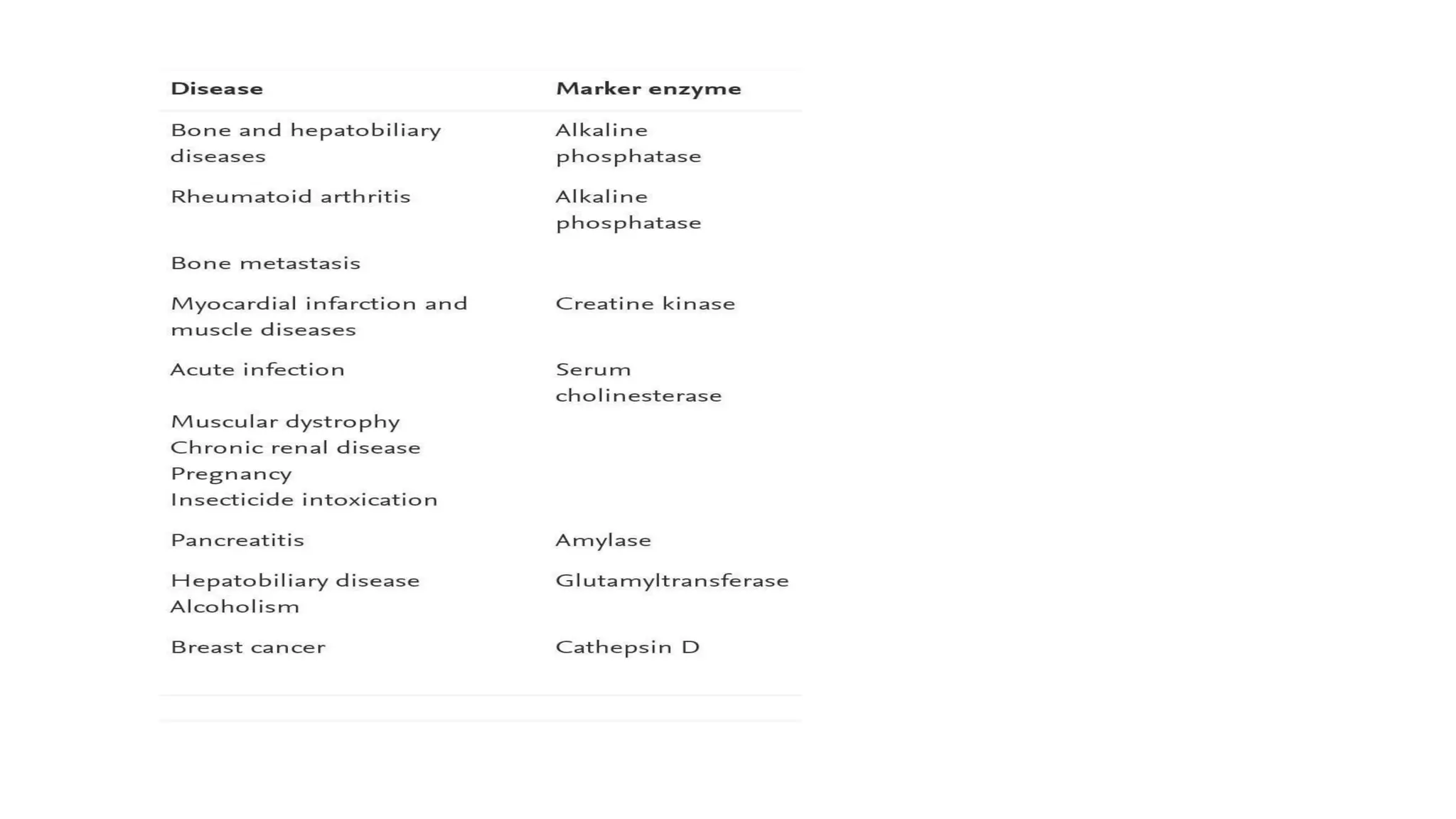
Diagnostic role in bone diseases.
• Alkaline phosphate (ALP) is correlated with the
rate of bone growth.
• The increase in the level of serum ALP indicates
an increased osteoblastic activity or when there
is active bone formation as in the case of
PAGET’s disease or rheumatoid arthritis.
Acid phosphatase (ACP) level in male prostate gland
is 100 times more than in any other body tissue.
Prostatic acid phosphatase (PAP) is strongly Role
in cancer diagnosis.expressed by
prostate cancer cells, especially in bone metastases.
• Abnormal expression of genetically-distinct alkaline
phosphatase (ALP) isoenzymes is valuable in monitoring
cancers, particularly germ-cell tumors.
• Cathepsin D in brease tissue may be useful in predicting
women with breast cancer who are at risk for early
recurrence.
• Higher levels of alkaline phosphatase (ALP) may be
considered as a risk factor linked to hepatic fibrosis in
Diabetes.
•
patients with non-alcoholic steatohepatitis (NASH) and
type 2 diabetes.
• Glucose oxidase and glucose dehydrogenase are mostly
commonly used for clinical blood sugar test.
Liver diseases.
• increased serum level alanine transaminase (ALT)
indicates a severe liver disease, usually viral hepatitis and
toxic liver necrosis.
Dental disorders.
• Higher levels of aspartate transaminase (AST) are noticed
in the gingival crevicular fluids of diseased sites.
• The relationship between AST levels in saliva and gingival
crevicular fluid (GCF) with periodontal disease
progression has been studied in a large number of
patients.
Detection of covid through enzymes
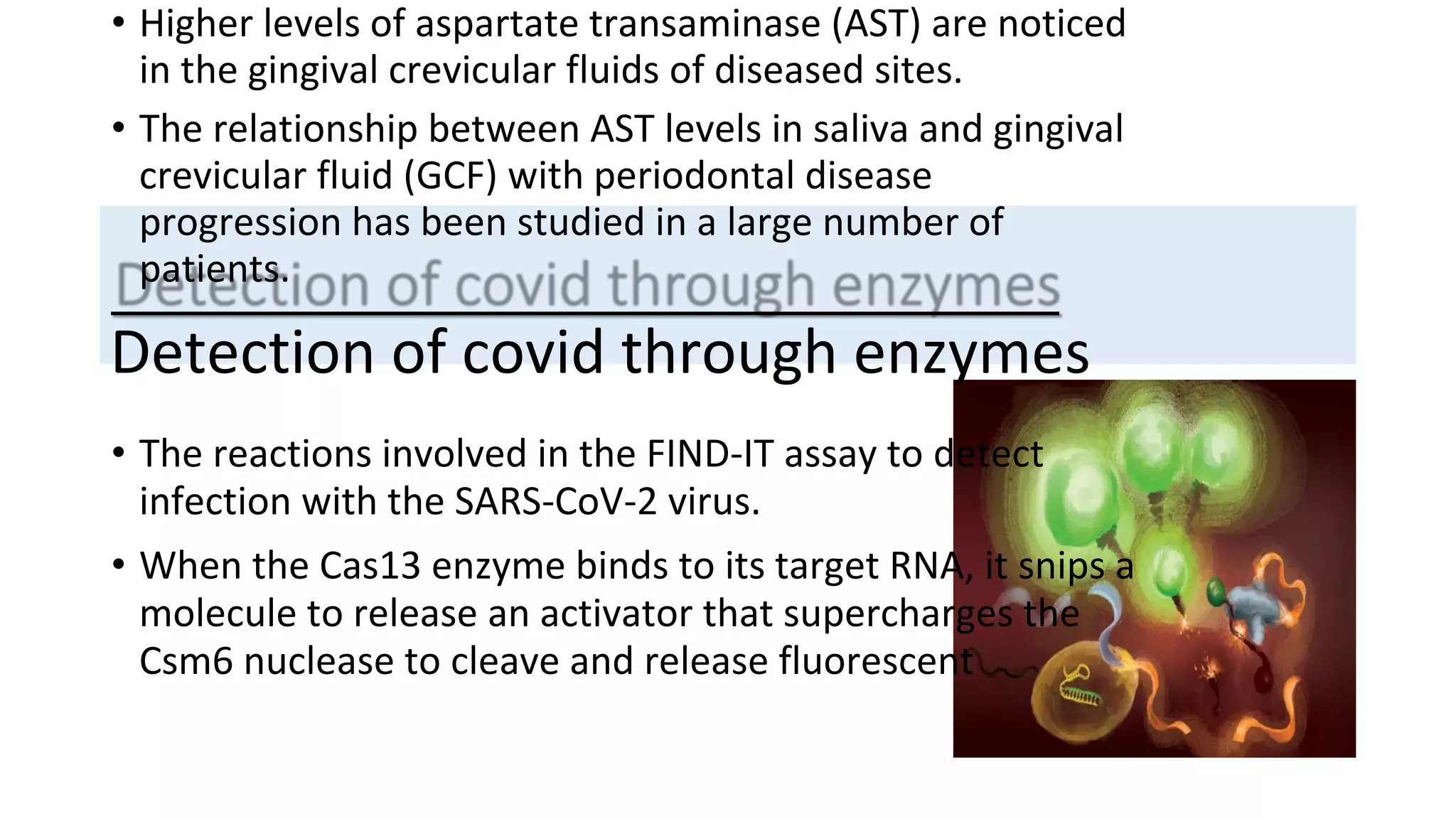
• The reactions involved in the FIND-IT assay to detect
infection with the SARS-CoV-2 virus.
• When the Cas13 enzyme binds to its target RNA, it snips a
molecule to release an activator that supercharges the
Csm6 nuclease to cleave and release fluorescent
molecules that light up and signal the presence of viral
RNA.
Why enzymes are preferred over other
methods.
• The use of enzymes frequently results in many benefits that
cannot be obtained with traditional chemical treatment.
• These often include higher product quality and lower
manufacturing cost, and less waste and reduced energy
consumption.
• Enzymes are specific in nature. Means no side reaction.
Thank you.

DIAGNOSTIC USES OF ENZYMES.pdf

  • 1.
    DIAGNOSTIC USES OF ENZYMES. PRESENTEDBY Fazal subhan 1254-FBAS/BSBT/F-19. Subhanfazal218@gmail.com Contents.
  • 2.
    Introduction. Applications diagnostic uses Why theyare preferred. Introduction. • Diagnostic enzymes refers to the enzymes that are used directly or as components of the assay system for the determination of number of substances. • Changes in the concentrations of various biomolecules are indications of abnormal metabolic
  • 3.
    activities, infections, infectious andnoninfectious diseases and inflammatory conditions. • Diagnostic enzymes are used to detect and quantify certain substances. As a marker in an enzyme immunoassay (EIA) system, in clinical laboratories they usually use many alternative techniques for diagnosis, including electrophoresis, chromatography, isoelectric focusing, etc. Applications.
  • 4.
    Diagnostic enzymes forlipid metabolism • cholesterol esterase, cholesterol oxidase, cholesterol dehydrogenase, glucose-6-phosphate dehydrogenase, hexokinase are the enzymes involved in lipid metabolism
  • 5.
    Diagnostic role inbone diseases. • Alkaline phosphate (ALP) is correlated with the rate of bone growth. • The increase in the level of serum ALP indicates an increased osteoblastic activity or when there is active bone formation as in the case of PAGET’s disease or rheumatoid arthritis. Acid phosphatase (ACP) level in male prostate gland is 100 times more than in any other body tissue. Prostatic acid phosphatase (PAP) is strongly Role
  • 6.
    in cancer diagnosis.expressedby prostate cancer cells, especially in bone metastases. • Abnormal expression of genetically-distinct alkaline phosphatase (ALP) isoenzymes is valuable in monitoring cancers, particularly germ-cell tumors. • Cathepsin D in brease tissue may be useful in predicting women with breast cancer who are at risk for early recurrence. • Higher levels of alkaline phosphatase (ALP) may be considered as a risk factor linked to hepatic fibrosis in Diabetes. •
  • 7.
    patients with non-alcoholicsteatohepatitis (NASH) and type 2 diabetes. • Glucose oxidase and glucose dehydrogenase are mostly commonly used for clinical blood sugar test. Liver diseases. • increased serum level alanine transaminase (ALT) indicates a severe liver disease, usually viral hepatitis and toxic liver necrosis. Dental disorders.
  • 8.
    • Higher levelsof aspartate transaminase (AST) are noticed in the gingival crevicular fluids of diseased sites. • The relationship between AST levels in saliva and gingival crevicular fluid (GCF) with periodontal disease progression has been studied in a large number of patients. Detection of covid through enzymes • The reactions involved in the FIND-IT assay to detect infection with the SARS-CoV-2 virus. • When the Cas13 enzyme binds to its target RNA, it snips a molecule to release an activator that supercharges the Csm6 nuclease to cleave and release fluorescent
  • 9.
    molecules that lightup and signal the presence of viral RNA.
  • 11.
    Why enzymes arepreferred over other methods. • The use of enzymes frequently results in many benefits that cannot be obtained with traditional chemical treatment. • These often include higher product quality and lower manufacturing cost, and less waste and reduced energy consumption.
  • 12.
    • Enzymes arespecific in nature. Means no side reaction. Thank you.