
Diagnosing DiabetesJoseliza de la Cruz, M.D.Tiffany Chu, RN
S.B. 45 y/o F from SampalokCC: numbness over lower extremities 3 days PTC            weakness with easy fatigability                                  no chest pain, epigastric pain or                                   back pain                                  self medicated with Paracetamol and                                                    No consult done 1 day PTC                  weakness persisted                                   numbness over lower extremities                                   			“karayomnatumutusok”                                   no blurring of vision                   Consult
ROS: (-) cough, colds, fever(-) SOB, orthopnea, PND(+) occ. Palpitations, (-) chest pain(+)polydipsia (10-12 glass of water and soda)(-) epigastric pain, vomiting, change in appetite(-) lbm, constipation(+) polyuria (8x/day) , (-) dysuria, oliguria(+) wt loss PMH: TB 1999 treated for 6 months with no ff up(-) asthma, HPN, Diabetes or kidney dse(-) cancer
Ob-Gyne History: G2P2 (2-0-0-2)History of delivering large babies via CSHistory of elevated BS during pregnancyFH:  diabetes – father and 2 siblingsHPN – mother (-) CA, Kidney dse, AsthmaPSH: non-smoker, non-alcoholicWorks as a Caterer
PE: conscious, coherent, ambulatoryHt: 5’3” Wt: 150 lbs BMI: 26.6BP 150/90 HR 92 RR 18 Temp 37CPink palpebral conjunctivae, anictericscleraeSupple neck, no palpable lymph nodes, neck veins not distendedSymmetrical chest expansion, no retractions, clear breath soundsAdynamicprecordium, normal rate, regular rhythm, no murmursFlabby abdomen with midincisional scar in the hypogastric area, NABS, soft nontenderPulses full and equal, no edema
Neurological examGCS 15 CN intact (no ptosis, no facial asymmetry, tongue midline)No motor or sensory deficitsNo babinski
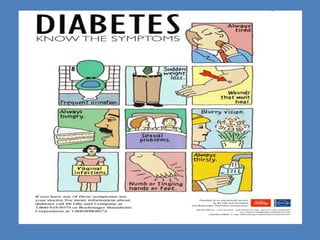
Subjective data45 y/o female caterernumbness over lower extremities  “karayomnatumutusok”weakness with easy fatigabilitypolydipsia, polyuria, wt loss no chest pain, blurring of visionStrong family history of diabetesHistory of delivering large babies
Objective dataBMI: 26.6BP: 150/90 HR92Pink palpebral conjunctivaeClear breath soundNormal rate regular rhythmNo edemaEssentially normal neuro exam
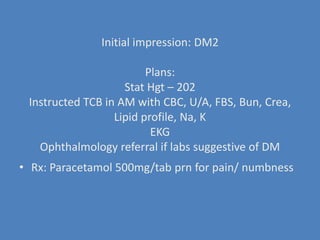
Initial impression: DM2Plans: Stat Hgt – 202Instructed TCB in AM with CBC, U/A, FBS, Bun, Crea, Lipid profile, Na, KEKGOphthalmology referral if labs suggestive of DMRx: Paracetamol 500mg/tab prn for pain/ numbness
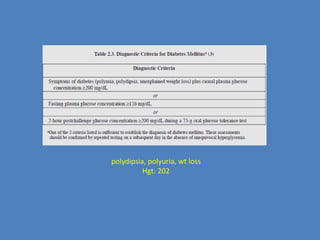
polydipsia, polyuria, wt lossHgt: 202
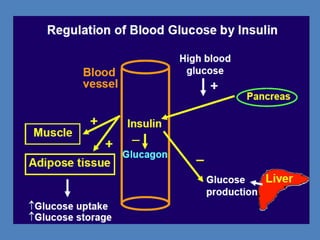
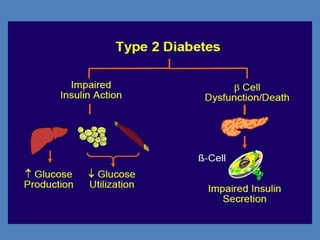
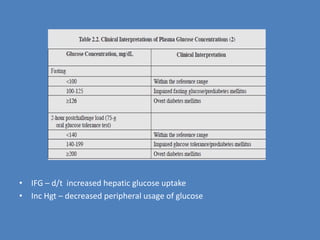
IFG – d/t  increased hepatic glucose uptakeInc Hgt – decreased peripheral usage of glucose
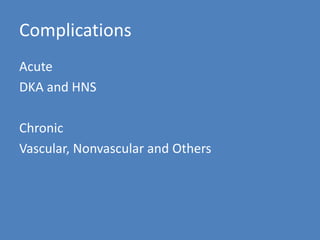
Complications    Acute DKA and HNSChronic Vascular, Nonvascular and Others
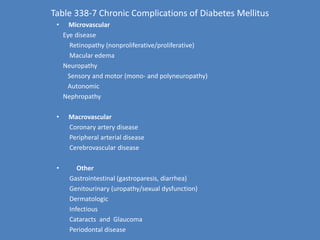
Table 338-7 Chronic Complications of Diabetes MellitusMicrovascular     Eye disease            Retinopathy (nonproliferative/proliferative)          Macular edema      Neuropathy           Sensory and motor (mono- and polyneuropathy)          Autonomic      NephropathyMacrovascular         Coronary artery disease          Peripheral arterial disease  Cerebrovascular diseaseOther          Gastrointestinal (gastroparesis, diarrhea)          Genitourinary (uropathy/sexual dysfunction)         Dermatologic         Infectious         Cataracts  and  Glaucoma          Periodontal disease
Mechanisms of ComplicationsInc intracellular glucose  -> AGEsSorbitol pathway                    -  aldosereductase                  -  redox potential  DAG  - PKC                    - alters endothelial cells and neuronal structures        Hexosamine pathway                    -F6P in glycosylation and proteoglycan production                   - altering gene expression of TGF or PAI-1Growth factors                 VEGF-A   - diabetic proliferative retinopathy                  TGF -  diabetic nephropathy                          - (+)  BM production of collagen and fibronectin by mesangial cells  Hyperglycemia leads to increased production of reactive oxygen species or superoxide in the mitochondria.
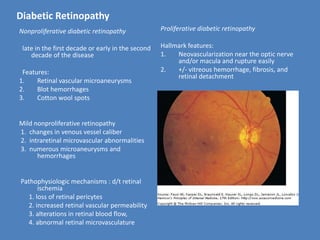
Diabetic RetinopathyProliferative diabetic retinopathyHallmark features:Neovascularization near the optic nerve and/or macula and rupture easily+/- vitreous hemorrhage, fibrosis, and retinal detachmentNonproliferative diabetic retinopathy   late in the first decade or early in the second decade of the disease  Features: Retinal vascular microaneurysmsBlot hemorrhagesCotton wool spots  Mild nonproliferative retinopathy  1.  changes in venous vessel caliber 2.  intraretinalmicrovascular abnormalities 3.  numerous microaneurysms and hemorrhagesPathophysiologic mechanisms : d/t retinal ischemia      1. loss of retinal pericytes      2. increased retinal vascular permeability      3. alterations in retinal blood flow,      4. abnormal retinal microvasculature
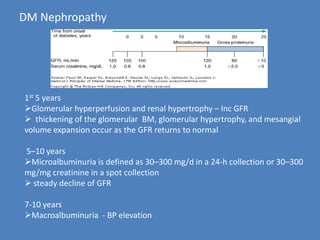
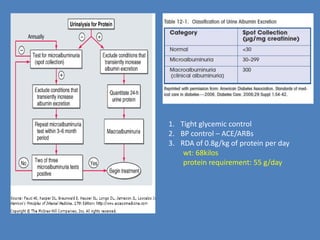
DM Nephropathy1st 5 yearsGlomerularhyperperfusion and renal hypertrophy – Inc GFR
  thickening of the glomerular  BM, glomerular hypertrophy, and mesangial volume expansion occur as the GFR returns to normal 5–10 yearsMicroalbuminuria is defined as 30–300 mg/d in a 24-h collection or 30–300 mg/mg creatinine in a spot collection
 steady decline of GFR 7-10 yearsMacroalbuminuria  - BP elevation Tight glycemic control BP control – ACE/ARBsRDA of 0.8g/kg of protein per daywt: 68kilos        protein requirement: 55 g/day
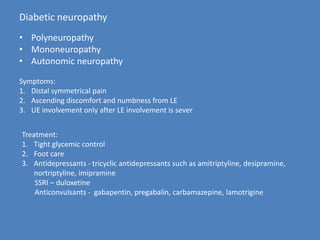
Diabetic neuropathyPolyneuropathyMononeuropathyAutonomic neuropathySymptoms:Distal symmetrical painAscending discomfort and numbness from LEUE involvement only after LE involvement is sever Treatment:Tight glycemic controlFoot careAntidepressants - tricyclic antidepressants such as amitriptyline, desipramine, nortriptyline, imipramine       SSRI – duloxetine       Anticonvulsants -  gabapentin, pregabalin, carbamazepine, lamotrigine
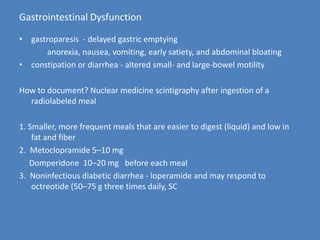
Gastrointestinal Dysfunctiongastroparesis  - delayed gastric emptying              anorexia, nausea, vomiting, early satiety, and abdominal bloatingconstipation or diarrhea - altered small- and large-bowel motility How to document? Nuclear medicine scintigraphy after ingestion of a radiolabeled meal1. Smaller, more frequent meals that are easier to digest (liquid) and low in fat and fiber2.  Metoclopramide 5–10 mg Domperidone  10–20 mg   before each meal3.  Noninfectious diabetic diarrhea - loperamide and may respond to octreotide (50–75 g three times daily, SC
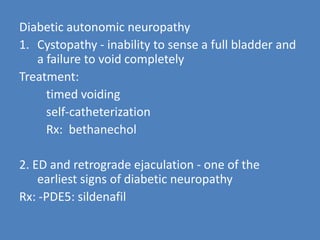
Diabetic autonomic neuropathy Cystopathy - inability to sense a full bladder and a failure to void completelyTreatment:         timed voiding          self-catheterization         Rx:  bethanechol2. ED and retrograde ejaculation - one of the earliest signs of diabetic neuropathy Rx: -PDE5: sildenafil
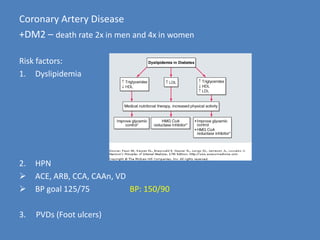
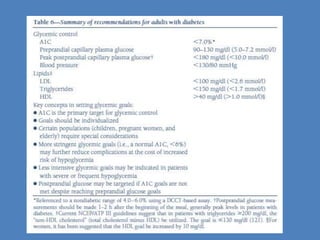
Coronary Artery Disease+DM2 – death rate 2x in men and 4x in womenRisk factors:DyslipidemiaHPNACE, ARB, CCA, CAAn, VD
BP goal 125/75                    BP: 150/903.     PVDs (Foot ulcers)
Alpha-glucosidase inhibitors - inhibitors block polysaccharide and disaccharide breakdown and decrease postprandial hyperglycemia when administered with food          > Acarbose	    > MiglitolBiguanidesDecreases liver production of glucoseDecreases intestinal absorption of glucoseImproves cell sensitivity to insulin	> MetforminCombinationsGlucovance  (Glyburide and Metformin)Avandamet (Avandia and Metformin)
D-phenylalinine derivatives - acts directly on the pancreatic β cells to stimulate early insulin secretion	   >Nateglinide (Starlix)Thiazolidinediones - increase insulin sensitivity in muscle, adipose tissue, and liver specifically bind to the PPAR- (peroxisomeproliferator-activated receptor-) nuclear receptor         >Pioglitazone (Actos)  >Rosiglitazone (Avandia)CI: CHF and Liver dse
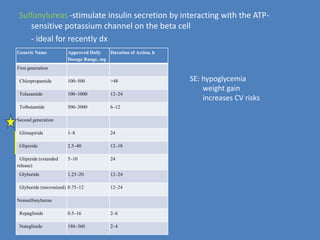
Sulfonylureas -stimulate insulin secretion by interacting with the ATP-sensitive potassium channel on the beta cell       - ideal for recently dxSE: hypoglycemia       weight gain       increases CV risks
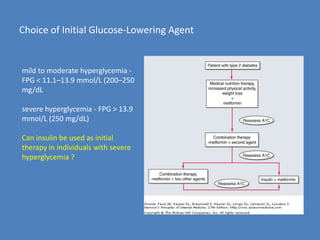
Choice of Initial Glucose-Lowering Agent mild to moderate hyperglycemia -  FPG < 11.1–13.9 mmol/L (200–250 mg/dLsevere hyperglycemia - FPG > 13.9 mmol/L (250 mg/dL)Can insulin be used as initial therapy in individuals with severe hyperglycemia ?

Diagnosing diabetes

  • 1.
    Diagnosing DiabetesJoseliza dela Cruz, M.D.Tiffany Chu, RN
  • 2.
    S.B. 45 y/oF from SampalokCC: numbness over lower extremities 3 days PTC weakness with easy fatigability no chest pain, epigastric pain or back pain self medicated with Paracetamol and No consult done 1 day PTC weakness persisted numbness over lower extremities “karayomnatumutusok” no blurring of vision Consult
  • 3.
    ROS: (-) cough,colds, fever(-) SOB, orthopnea, PND(+) occ. Palpitations, (-) chest pain(+)polydipsia (10-12 glass of water and soda)(-) epigastric pain, vomiting, change in appetite(-) lbm, constipation(+) polyuria (8x/day) , (-) dysuria, oliguria(+) wt loss PMH: TB 1999 treated for 6 months with no ff up(-) asthma, HPN, Diabetes or kidney dse(-) cancer
  • 4.
    Ob-Gyne History: G2P2(2-0-0-2)History of delivering large babies via CSHistory of elevated BS during pregnancyFH: diabetes – father and 2 siblingsHPN – mother (-) CA, Kidney dse, AsthmaPSH: non-smoker, non-alcoholicWorks as a Caterer
  • 5.
    PE: conscious, coherent,ambulatoryHt: 5’3” Wt: 150 lbs BMI: 26.6BP 150/90 HR 92 RR 18 Temp 37CPink palpebral conjunctivae, anictericscleraeSupple neck, no palpable lymph nodes, neck veins not distendedSymmetrical chest expansion, no retractions, clear breath soundsAdynamicprecordium, normal rate, regular rhythm, no murmursFlabby abdomen with midincisional scar in the hypogastric area, NABS, soft nontenderPulses full and equal, no edema
  • 6.
    Neurological examGCS 15CN intact (no ptosis, no facial asymmetry, tongue midline)No motor or sensory deficitsNo babinski
  • 7.
    Subjective data45 y/ofemale caterernumbness over lower extremities “karayomnatumutusok”weakness with easy fatigabilitypolydipsia, polyuria, wt loss no chest pain, blurring of visionStrong family history of diabetesHistory of delivering large babies
  • 8.
    Objective dataBMI: 26.6BP:150/90 HR92Pink palpebral conjunctivaeClear breath soundNormal rate regular rhythmNo edemaEssentially normal neuro exam
  • 9.
    Initial impression: DM2Plans:Stat Hgt – 202Instructed TCB in AM with CBC, U/A, FBS, Bun, Crea, Lipid profile, Na, KEKGOphthalmology referral if labs suggestive of DMRx: Paracetamol 500mg/tab prn for pain/ numbness
  • 13.
  • 14.
    IFG – d/t increased hepatic glucose uptakeInc Hgt – decreased peripheral usage of glucose
  • 15.
    Complications Acute DKA and HNSChronic Vascular, Nonvascular and Others
  • 16.
    Table 338-7 ChronicComplications of Diabetes MellitusMicrovascular   Eye disease     Retinopathy (nonproliferative/proliferative)     Macular edema   Neuropathy     Sensory and motor (mono- and polyneuropathy)     Autonomic   NephropathyMacrovascular   Coronary artery disease   Peripheral arterial disease  Cerebrovascular diseaseOther   Gastrointestinal (gastroparesis, diarrhea)   Genitourinary (uropathy/sexual dysfunction)   Dermatologic   Infectious   Cataracts and  Glaucoma   Periodontal disease
  • 17.
    Mechanisms of ComplicationsIncintracellular glucose -> AGEsSorbitol pathway - aldosereductase - redox potential DAG - PKC - alters endothelial cells and neuronal structures Hexosamine pathway -F6P in glycosylation and proteoglycan production - altering gene expression of TGF or PAI-1Growth factors VEGF-A - diabetic proliferative retinopathy TGF - diabetic nephropathy - (+) BM production of collagen and fibronectin by mesangial cells Hyperglycemia leads to increased production of reactive oxygen species or superoxide in the mitochondria.
  • 19.
    Diabetic RetinopathyProliferative diabeticretinopathyHallmark features:Neovascularization near the optic nerve and/or macula and rupture easily+/- vitreous hemorrhage, fibrosis, and retinal detachmentNonproliferative diabetic retinopathy late in the first decade or early in the second decade of the disease Features: Retinal vascular microaneurysmsBlot hemorrhagesCotton wool spots Mild nonproliferative retinopathy 1. changes in venous vessel caliber 2. intraretinalmicrovascular abnormalities 3. numerous microaneurysms and hemorrhagesPathophysiologic mechanisms : d/t retinal ischemia 1. loss of retinal pericytes 2. increased retinal vascular permeability 3. alterations in retinal blood flow, 4. abnormal retinal microvasculature
  • 20.
    DM Nephropathy1st 5yearsGlomerularhyperperfusion and renal hypertrophy – Inc GFR
  • 21.
    thickeningof the glomerular BM, glomerular hypertrophy, and mesangial volume expansion occur as the GFR returns to normal 5–10 yearsMicroalbuminuria is defined as 30–300 mg/d in a 24-h collection or 30–300 mg/mg creatinine in a spot collection
  • 22.
    steady declineof GFR 7-10 yearsMacroalbuminuria - BP elevation Tight glycemic control BP control – ACE/ARBsRDA of 0.8g/kg of protein per daywt: 68kilos protein requirement: 55 g/day
  • 23.
    Diabetic neuropathyPolyneuropathyMononeuropathyAutonomic neuropathySymptoms:Distalsymmetrical painAscending discomfort and numbness from LEUE involvement only after LE involvement is sever Treatment:Tight glycemic controlFoot careAntidepressants - tricyclic antidepressants such as amitriptyline, desipramine, nortriptyline, imipramine SSRI – duloxetine Anticonvulsants - gabapentin, pregabalin, carbamazepine, lamotrigine
  • 24.
    Gastrointestinal Dysfunctiongastroparesis - delayed gastric emptying anorexia, nausea, vomiting, early satiety, and abdominal bloatingconstipation or diarrhea - altered small- and large-bowel motility How to document? Nuclear medicine scintigraphy after ingestion of a radiolabeled meal1. Smaller, more frequent meals that are easier to digest (liquid) and low in fat and fiber2. Metoclopramide 5–10 mg Domperidone 10–20 mg before each meal3. Noninfectious diabetic diarrhea - loperamide and may respond to octreotide (50–75 g three times daily, SC
  • 25.
    Diabetic autonomic neuropathyCystopathy - inability to sense a full bladder and a failure to void completelyTreatment: timed voiding self-catheterization Rx: bethanechol2. ED and retrograde ejaculation - one of the earliest signs of diabetic neuropathy Rx: -PDE5: sildenafil
  • 26.
    Coronary Artery Disease+DM2– death rate 2x in men and 4x in womenRisk factors:DyslipidemiaHPNACE, ARB, CCA, CAAn, VD
  • 27.
    BP goal 125/75 BP: 150/903. PVDs (Foot ulcers)
  • 29.
    Alpha-glucosidase inhibitors -inhibitors block polysaccharide and disaccharide breakdown and decrease postprandial hyperglycemia when administered with food > Acarbose > MiglitolBiguanidesDecreases liver production of glucoseDecreases intestinal absorption of glucoseImproves cell sensitivity to insulin > MetforminCombinationsGlucovance (Glyburide and Metformin)Avandamet (Avandia and Metformin)
  • 30.
    D-phenylalinine derivatives -acts directly on the pancreatic β cells to stimulate early insulin secretion >Nateglinide (Starlix)Thiazolidinediones - increase insulin sensitivity in muscle, adipose tissue, and liver specifically bind to the PPAR- (peroxisomeproliferator-activated receptor-) nuclear receptor >Pioglitazone (Actos) >Rosiglitazone (Avandia)CI: CHF and Liver dse
  • 31.
    Sulfonylureas -stimulate insulinsecretion by interacting with the ATP-sensitive potassium channel on the beta cell - ideal for recently dxSE: hypoglycemia weight gain increases CV risks
  • 32.
    Choice of InitialGlucose-Lowering Agent mild to moderate hyperglycemia - FPG < 11.1–13.9 mmol/L (200–250 mg/dLsevere hyperglycemia - FPG > 13.9 mmol/L (250 mg/dL)Can insulin be used as initial therapy in individuals with severe hyperglycemia ?