Comparison ofRemovable Cast Walkers to the Total Contact Cast for the Treatment of Diabetic Foot UlcersCritically Appraised Topic  (CAT) SummaryLinda LaaksoB.Sc.,C.O.(c)www.customorthotic.ca
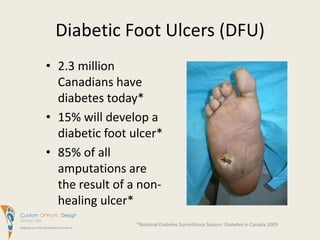
Diabetic Foot Ulcers (DFU)2.3 million Canadians have diabetes today*15% will develop a diabetic foot ulcer*85% of all amputations are the result of a non-healing ulcer**National Diabetes Surveillance System: Diabetes in Canada 2009
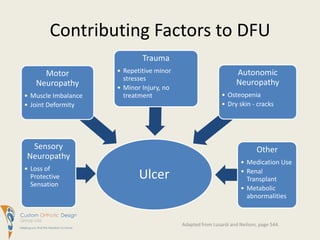
Contributing Factors to DFUAdapted from Lusardi and Neilson, page 544.
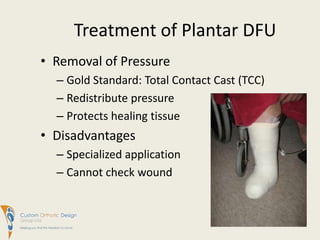
Treatment of Plantar DFURemoval of PressureGold Standard: Total Contact Cast (TCC)Redistribute pressureProtects healing tissueDisadvantagesSpecialized applicationCannot check wound
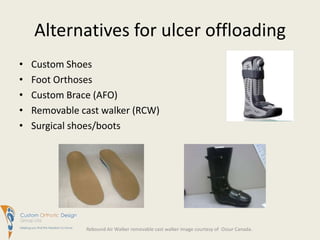
Alternatives for ulcer offloadingCustom ShoesFoot OrthosesCustom Brace (AFO)Removable cast walker (RCW)Surgical shoes/bootsRebound Air Walker removable cast walker image courtesy of  Ossur Canada.
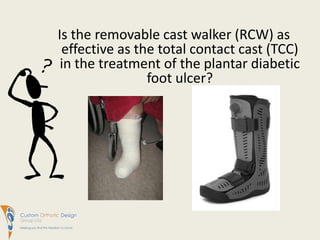
Is the removable cast walker (RCW) as effective as the total contact cast (TCC) in the treatment of the plantar diabetic foot ulcer?
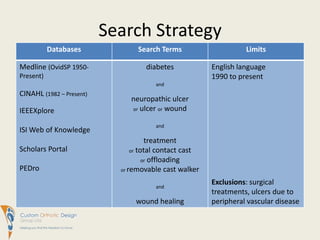
Search Strategy
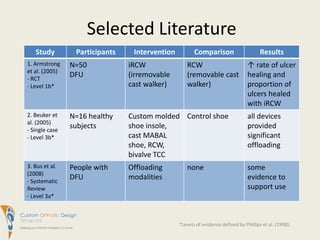
Selected Literature*Levels of evidence defined by Phillips et al. (1998).
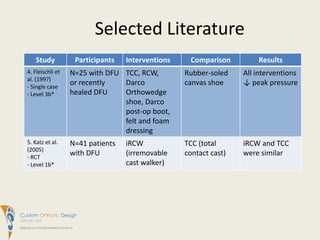
Selected Literature
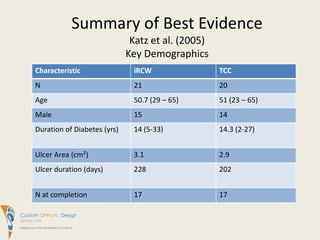
Summary of Best EvidenceKatz et al. (2005)Key Demographics
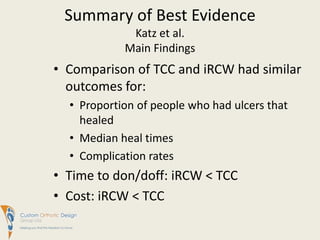
Summary of Best EvidenceKatz et al.Main FindingsComparison of TCC and iRCW had similar outcomes for:Proportion of people who had ulcers that healed
Median heal times
Complication ratesTime to don/doff: iRCW< TCCCost: iRCW< TCC
Implications for PracticeBest Practice Recommendations:-> Remove the pressureHow?Consensus suggests:Fulltime use provides better outcomesThe RCW when made irremovable has similar outcomes when compared to the TCC
ConsiderationsStrengthsStudies are consistent with each otherHigher level studies (1b)Studies are valid, reliable and relevantLimitationsStudies use small numbersStudies are not blinded
Next StepsLarger studies comparing TCC to RCWFurther study to compare RCW with and without custom insoleImplementation of results into clinical practice-> make the RCW irremovable when using
ReferencesArmstrong, D. G., Lavery, L. A., Wu, S., Boulton, A. J. M. (2005).  Evaluation of removable and irremovable cast walkers in the healing of diabetic foot wounds. Diabetes Care, 28(3), 551-554.Beuker, B. J., van Deursen, R. W., Price, P., Manning, E. A., van Baal, J. G., Harding, K. G. (2005). Plantar pressure in off-loading devices used in diabetic ulcer treatment. Wound Repair and Regeneration, 13, 537-542.Boninger, M. L., Leonard, J. A. (1996). Use of bivalve ankle foot orthosis in neuropathic foot and ankle lesions. Journal of Rehabilitation Research and Development, 33(1), 16-22.Botros, M., Goett, K., Parsons, L. Menzildzic, S., Morin, C., Smith, T. Hoar, A., Nesbeth, H., McGrath, S. (2010). Best Practice Recommendation for the Prevention, Diagnosis and Treatment of Diabetic Foot Ulcers: Update 2010. Wound Care, 8(4), 6-40.Bus, S. A., van Deursen, R. W., Armstrong, D. G.,  Caravaggi, C., Hlavacek, P., Bakker, K., Cavanaugh, P. R. (2008). The effectiveness of footwear and offloading interventions to prevent and heal foot ulcers and reduce plantar pressure in diabetes: a systematic review. Diabetes/Metabolism Research and Reviews, 24(Suppl 1), S162-S180. DOI:10.1002/dmrr.850.Elftman, N. W. (2006). Orthotic management of the neuropathic limb. Physical Medicine and Rehabilitation Clinics of North America, 17, 115-157.

Diabetic Foot Ulcers - Comparison of Cast Alternatives

  • 1.
    Comparison ofRemovable CastWalkers to the Total Contact Cast for the Treatment of Diabetic Foot UlcersCritically Appraised Topic (CAT) SummaryLinda LaaksoB.Sc.,C.O.(c)www.customorthotic.ca
  • 2.
    Diabetic Foot Ulcers(DFU)2.3 million Canadians have diabetes today*15% will develop a diabetic foot ulcer*85% of all amputations are the result of a non-healing ulcer**National Diabetes Surveillance System: Diabetes in Canada 2009
  • 3.
    Contributing Factors toDFUAdapted from Lusardi and Neilson, page 544.
  • 4.
    Treatment of PlantarDFURemoval of PressureGold Standard: Total Contact Cast (TCC)Redistribute pressureProtects healing tissueDisadvantagesSpecialized applicationCannot check wound
  • 5.
    Alternatives for ulceroffloadingCustom ShoesFoot OrthosesCustom Brace (AFO)Removable cast walker (RCW)Surgical shoes/bootsRebound Air Walker removable cast walker image courtesy of Ossur Canada.
  • 6.
    Is the removablecast walker (RCW) as effective as the total contact cast (TCC) in the treatment of the plantar diabetic foot ulcer?
  • 7.
  • 8.
    Selected Literature*Levels ofevidence defined by Phillips et al. (1998).
  • 9.
  • 10.
    Summary of BestEvidenceKatz et al. (2005)Key Demographics
  • 11.
    Summary of BestEvidenceKatz et al.Main FindingsComparison of TCC and iRCW had similar outcomes for:Proportion of people who had ulcers that healed
  • 12.
  • 13.
    Complication ratesTime todon/doff: iRCW< TCCCost: iRCW< TCC
  • 14.
    Implications for PracticeBestPractice Recommendations:-> Remove the pressureHow?Consensus suggests:Fulltime use provides better outcomesThe RCW when made irremovable has similar outcomes when compared to the TCC
  • 15.
    ConsiderationsStrengthsStudies are consistentwith each otherHigher level studies (1b)Studies are valid, reliable and relevantLimitationsStudies use small numbersStudies are not blinded
  • 16.
    Next StepsLarger studiescomparing TCC to RCWFurther study to compare RCW with and without custom insoleImplementation of results into clinical practice-> make the RCW irremovable when using
  • 17.
    ReferencesArmstrong, D. G.,Lavery, L. A., Wu, S., Boulton, A. J. M. (2005). Evaluation of removable and irremovable cast walkers in the healing of diabetic foot wounds. Diabetes Care, 28(3), 551-554.Beuker, B. J., van Deursen, R. W., Price, P., Manning, E. A., van Baal, J. G., Harding, K. G. (2005). Plantar pressure in off-loading devices used in diabetic ulcer treatment. Wound Repair and Regeneration, 13, 537-542.Boninger, M. L., Leonard, J. A. (1996). Use of bivalve ankle foot orthosis in neuropathic foot and ankle lesions. Journal of Rehabilitation Research and Development, 33(1), 16-22.Botros, M., Goett, K., Parsons, L. Menzildzic, S., Morin, C., Smith, T. Hoar, A., Nesbeth, H., McGrath, S. (2010). Best Practice Recommendation for the Prevention, Diagnosis and Treatment of Diabetic Foot Ulcers: Update 2010. Wound Care, 8(4), 6-40.Bus, S. A., van Deursen, R. W., Armstrong, D. G., Caravaggi, C., Hlavacek, P., Bakker, K., Cavanaugh, P. R. (2008). The effectiveness of footwear and offloading interventions to prevent and heal foot ulcers and reduce plantar pressure in diabetes: a systematic review. Diabetes/Metabolism Research and Reviews, 24(Suppl 1), S162-S180. DOI:10.1002/dmrr.850.Elftman, N. W. (2006). Orthotic management of the neuropathic limb. Physical Medicine and Rehabilitation Clinics of North America, 17, 115-157.