Download to read offline



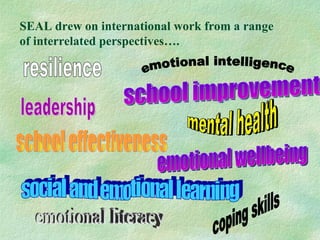

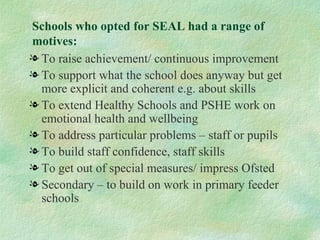
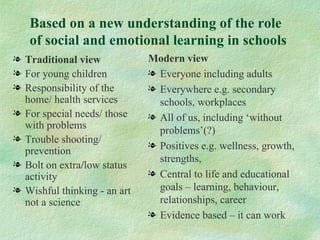

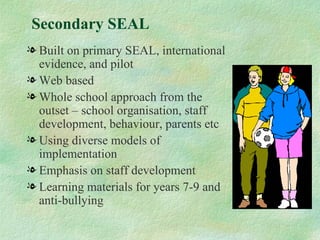

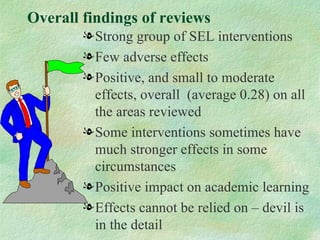
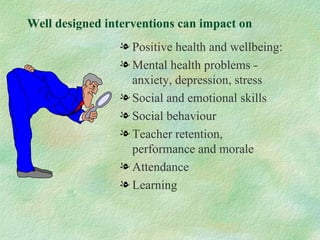
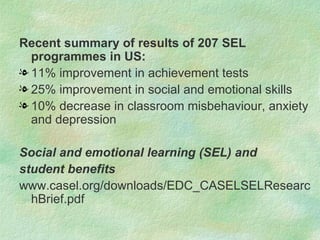
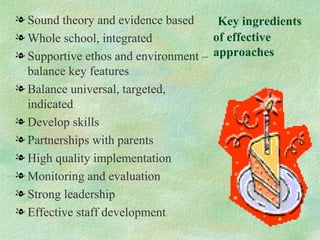

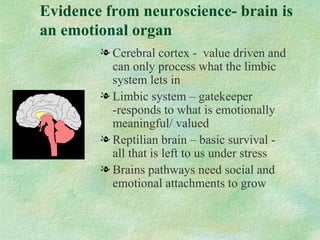
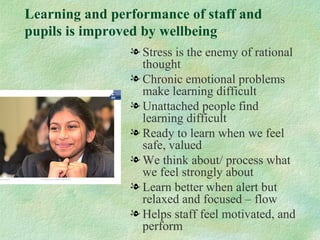
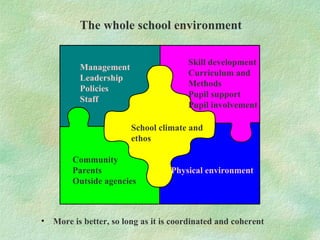





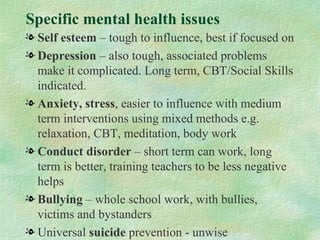
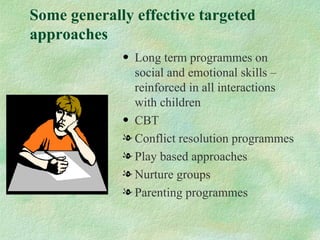

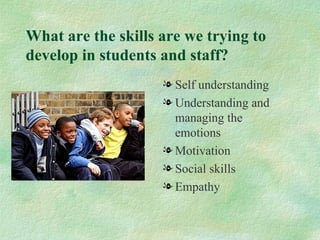
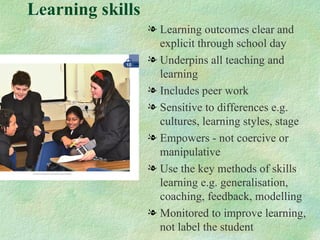
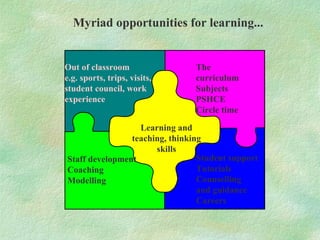
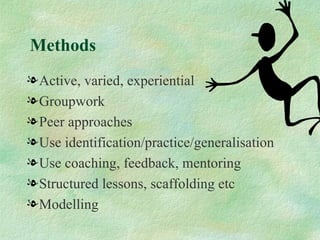

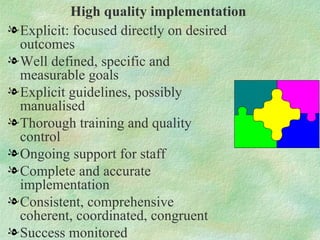
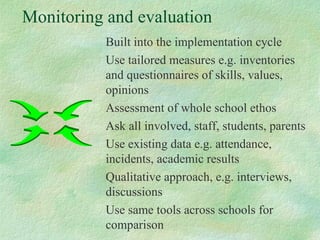
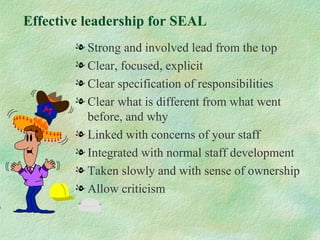


This document discusses the evidence behind social and emotional learning (SEL) programs in schools. It outlines that SEL programs are most effective when they take a whole-school approach, focus on developing relationships and participation, and provide clarity and autonomy. Recent research shows that well-designed SEL interventions can positively impact students' social/emotional skills, behavior, and academic achievement, as well as teacher retention and performance. Key ingredients of successful programs include sound theory, a supportive school environment, skill development, parental partnerships, high-quality implementation, and monitoring/evaluation.


![Solutions%20and%20Interventions%20to%20Improve%20School-Wide%20Behavior[1]](https://cdn.slidesharecdn.com/ss_thumbnails/857fa973-1c55-4a54-af63-d8d88063260a-150727204106-lva1-app6892-thumbnail.jpg?width=640&height=640&fit=bounds)


