Deterministic Simulation 
Testing of Distributed Systems 
For Great Justice 
will.wilson@foundationdb.com 
@FoundationDB
2 
Debugging distributed 
systems is terrible
3 
First of all, distributed systems 
tend to be complicated… 
… but it’s worse than that
4 
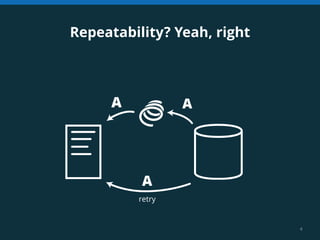
Repeatability? Yeah, right
4 
Repeatability? Yeah, right 
A
4 
Repeatability? Yeah, right 
A 
A 
retry
4 
Repeatability? Yeah, right 
A 
A 
retry 
A
5 
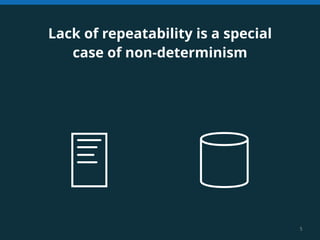
Lack of repeatability is a special 
case of non-determinism
5 
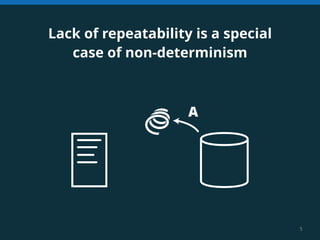
Lack of repeatability is a special 
case of non-determinism 
A
5 
Lack of repeatability is a special 
case of non-determinism 
A 
B
5 
Lack of repeatability is a special 
case of non-determinism 
A A 
B
6 
FoundationDB is a distributed 
stateful system with ridiculously 
strong guarantees 
ACID!
7 
Don’t debug your system, 
debug a simulation instead.
8 
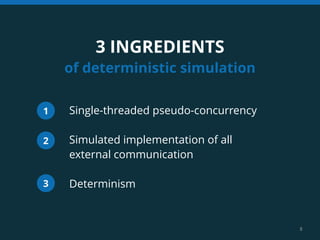
3 INGREDIENTS 
of deterministic simulation 
Single-threaded pseudo-concurrency 
Simulated implementation of all 
external communication 
Determinism 
1 
2 
3
Single-threaded 1 pseudo-concurrency 
9 
Flow 
! 
A syntactic extension to C++ , new keywords 
and actors, “compiled” down to regular C++ w/ 
callbacks
10 
ACTOR Future<float> asyncAdd(Future<float> f, ! 
! ! ! ! ! ! ! ! ! ! ! float offset) {! 
float value = wait( f );! 
return value + offset;! 
} 
Single-threaded 1 pseudo-concurrency
Single-threaded 1 pseudo-concurrency 
11 
class AsyncAddActor : public Actor, public FastAllocated<AsyncAddActor> { 
public: 
AsyncAddActor(Future<float> const& f,float const& offset) : Actor("AsyncAddActor"), 
f(f), 
offset(offset), 
ChooseGroupbody1W1_1(this, &ChooseGroupbody1W1) 
{ } 
Future<float> a_start() { 
actorReturnValue.setActorToCancel(this); 
auto f = actorReturnValue.getFuture(); 
a_body1(); 
return f; 
} 
private: // Implementation 
… 
}; 
! 
Future<float> asyncAdd( Future<float> const& f, float const& offset ) { 
return (new AsyncAddActor(f, offset))->a_start(); 
}
Single-threaded 1 pseudo-concurrency 
12 
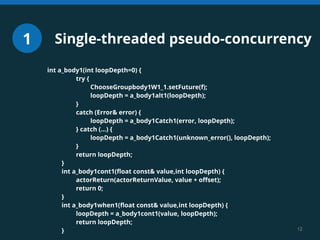
int a_body1(int loopDepth=0) { 
try { 
ChooseGroupbody1W1_1.setFuture(f); 
loopDepth = a_body1alt1(loopDepth); 
} 
catch (Error& error) { 
loopDepth = a_body1Catch1(error, loopDepth); 
} catch (...) { 
loopDepth = a_body1Catch1(unknown_error(), loopDepth); 
} 
return loopDepth; 
} 
int a_body1cont1(float const& value,int loopDepth) { 
actorReturn(actorReturnValue, value + offset); 
return 0; 
} 
int a_body1when1(float const& value,int loopDepth) { 
loopDepth = a_body1cont1(value, loopDepth); 
return loopDepth; 
}
Single-threaded 1 pseudo-concurrency 
13 
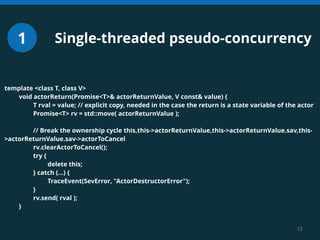
template <class T, class V> 
void actorReturn(Promise<T>& actorReturnValue, V const& value) { 
T rval = value; // explicit copy, needed in the case the return is a state variable of the actor 
Promise<T> rv = std::move( actorReturnValue ); 
! 
// Break the ownership cycle this,this->actorReturnValue,this->actorReturnValue.sav,this- 
>actorReturnValue.sav->actorToCancel 
rv.clearActorToCancel(); 
try { 
delete this; 
} catch (...) { 
TraceEvent(SevError, "ActorDestructorError"); 
} 
rv.send( rval ); 
}
Single-threaded 1 pseudo-concurrency 
14 
Programming language 
Ruby (using threads) 
Ruby (using queues) 
Objective C (using threads) 
Java (using threads) 
Stackless Python 
Erlang 
Go 
Flow 
Time in seconds 
1990 sec 
360 sec 
26 sec 
12 sec 
1.68 sec 
1.09 sec 
0.87 sec 
0.075 sec
15 
Simulated 2 Implementation 
INetwork 
IConnection 
IAsyncFile 
… 
SimNetwork 
SimConnection 
SimFile 
…
16 
void connect( Reference<Sim2Conn> peer, NetworkAddress peerEndpoint ) { 
this->peer = peer; 
this->peerProcess = peer->process; 
this->peerId = peer->dbgid; 
this->peerEndpoint = peerEndpoint; 
! 
// Every one-way connection gets a random permanent latency and a random send buffer 
for the duration of the connection 
auto latency = g_clogging.setPairLatencyIfNotSet( peerProcess->address.ip, process- 
>address.ip, FLOW_KNOBS->MAX_CLOGGING_LATENCY*g_random->random01() ); 
sendBufSize = std::max<double>( g_random->randomInt(0, 5000000), 25e6 * (latency + .002) ); 
TraceEvent("Sim2Connection").detail("SendBufSize", sendBufSize).detail("Latency", latency); 
} 
Simulated 2 Implementation
17 
Simulated 2 Implementation 
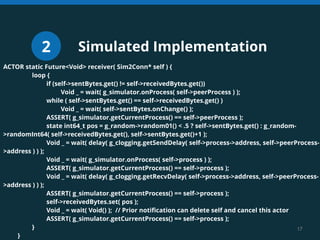
ACTOR static Future<Void> receiver( Sim2Conn* self ) { 
loop { 
if (self->sentBytes.get() != self->receivedBytes.get()) 
Void _ = wait( g_simulator.onProcess( self->peerProcess ) ); 
while ( self->sentBytes.get() == self->receivedBytes.get() ) 
Void _ = wait( self->sentBytes.onChange() ); 
ASSERT( g_simulator.getCurrentProcess() == self->peerProcess ); 
state int64_t pos = g_random->random01() < .5 ? self->sentBytes.get() : g_random- 
>randomInt64( self->receivedBytes.get(), self->sentBytes.get()+1 ); 
Void _ = wait( delay( g_clogging.getSendDelay( self->process->address, self->peerProcess- 
>address ) ) ); 
Void _ = wait( g_simulator.onProcess( self->process ) ); 
ASSERT( g_simulator.getCurrentProcess() == self->process ); 
Void _ = wait( delay( g_clogging.getRecvDelay( self->process->address, self->peerProcess- 
>address ) ) ); 
ASSERT( g_simulator.getCurrentProcess() == self->process ); 
self->receivedBytes.set( pos ); 
Void _ = wait( Void() ); // Prior notification can delete self and cancel this actor 
ASSERT( g_simulator.getCurrentProcess() == self->process ); 
} 
}
18 
Simulated Implementation 
// Reads as many bytes as possible from the read buffer into [begin,end) and returns the number of 
bytes read (might be 0) 
// (or may throw an error if the connection dies) 
virtual int read( uint8_t* begin, uint8_t* end ) { 
rollRandomClose(); 
! 
int64_t avail = receivedBytes.get() - readBytes.get(); // SOMEDAY: random? 
int toRead = std::min<int64_t>( end-begin, avail ); 
ASSERT( toRead >= 0 && toRead <= recvBuf.size() && toRead <= end-begin ); 
for(int i=0; i<toRead; i++) 
begin[i] = recvBuf[i]; 
recvBuf.erase( recvBuf.begin(), recvBuf.begin() + toRead ); 
readBytes.set( readBytes.get() + toRead ); 
return toRead; 
} 
2
19 
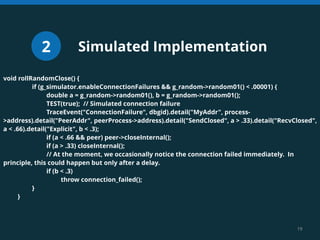
Simulated Implementation 
void rollRandomClose() { 
if (g_simulator.enableConnectionFailures && g_random->random01() < .00001) { 
double a = g_random->random01(), b = g_random->random01(); 
TEST(true); // Simulated connection failure 
TraceEvent("ConnectionFailure", dbgid).detail("MyAddr", process- 
>address).detail("PeerAddr", peerProcess->address).detail("SendClosed", a > .33).detail("RecvClosed", 
a < .66).detail("Explicit", b < .3); 
if (a < .66 && peer) peer->closeInternal(); 
if (a > .33) closeInternal(); 
// At the moment, we occasionally notice the connection failed immediately. In 
principle, this could happen but only after a delay. 
if (b < .3) 
throw connection_failed(); 
} 
} 
2
20 
3 Determinism 
We have (1) and (2), so all we need to add is 
none of the control flow of anything in your 
program depending on anything outside of 
your program + its inputs.
21 
3 Determinism 
Use unseeds to figure out whether what 
happened was deterministic
22 
1 + 2 + 3 
The Simulator
23 
Test files 
testTitle=SwizzledCycleTest 
testName=Cycle 
transactionsPerSecond=1000.0 
testDuration=30.0 
expectedRate=0.01 
! 
testName=RandomClogging 
testDuration=30.0 
swizzle = 1 
! 
testName=Attrition 
machinesToKill=10 
machinesToLeave=3 
reboot=true 
testDuration=30.0 
! 
testName=ChangeConfig 
maxDelayBeforeChange=30.0 
coordinators=auto
24 
Other Simulated disasters 
In parallel with the workloads, we run 
some other things like: 
! 
• broken machine 
• clogging 
• swizzling 
• nukes 
• dumb sysadmin 
• etc.
25 
You are looking for bugs… 
the universe is also 
looking for bugs 
How can you make your 
CPUs more efficient than 
the universe’s?
26 
1. Disasters here happen 
more frequently than in 
the real world
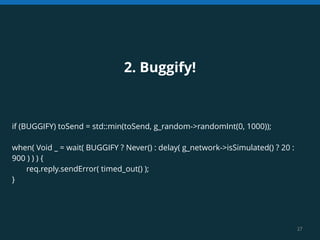
27 
2. Buggify! 
if (BUGGIFY) toSend = std::min(toSend, g_random->randomInt(0, 1000)); 
! 
when( Void _ = wait( BUGGIFY ? Never() : delay( g_network->isSimulated() ? 20 : 
900 ) ) ) { 
req.reply.sendError( timed_out() ); 
}
28 
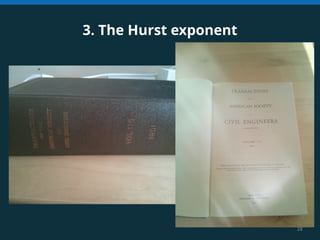
3. The Hurst exponent
29 
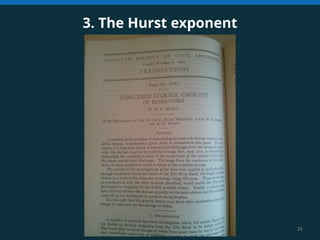
3. The Hurst exponent
30 
3. The Hurst exponent
31 
We estimate we’ve 
run the equivalent of 
trillions of hours 
of “real world” tests
32 
BAD NEWS: 
! 
We broke debugging (but at least it’s 
possible)
33 
Backup: Sinkhole
34 
Two “bugs” found by Sinkhole 
1. Power safety bug in ZK 
2. Linux package managers writing 
conf files don’t sync
35 
Future directions 
1. Dedicated “red team” 
2. More hardware 
3. Try to catch bugs that “evolve” 
4. More real world testing
Questions? 
will.wilson@foundationdb.com 
@willwilsonFDB
Data Partitioning 
Keyspace is partitioned onto different 
machines for scalability
Data Replication 
The same keys are copied onto different 
machines for fault tolerance
FoundationDB 
Partitioning + replication for both scalability and fault 
tolerance
Architecture of FoundationDB
Transaction Processing 
• Decompose the transaction processing pipeline 
into stages 
• Each stage is distributed
Pipeline Stages 
• Accept client transactions 
• Apply conflict checking 
• Write to transaction logs 
• Update persistent data structures 
High Performance!
Performance Results 
• 24 machine cluster 
• 100% cross-node transactions 
• Saturates its SSDs 
890,000 ops/sec
Scalability Results 
Performance by cluster size

Deterministic simulation testing

  • 1.
    Deterministic Simulation Testingof Distributed Systems For Great Justice will.wilson@foundationdb.com @FoundationDB
  • 2.
    2 Debugging distributed systems is terrible
  • 3.
    3 First ofall, distributed systems tend to be complicated… … but it’s worse than that
  • 4.
  • 5.
  • 6.
    4 Repeatability? Yeah,right A A retry
  • 7.
    4 Repeatability? Yeah,right A A retry A
  • 8.
    5 Lack ofrepeatability is a special case of non-determinism
  • 9.
    5 Lack ofrepeatability is a special case of non-determinism A
  • 10.
    5 Lack ofrepeatability is a special case of non-determinism A B
  • 11.
    5 Lack ofrepeatability is a special case of non-determinism A A B
  • 12.
    6 FoundationDB isa distributed stateful system with ridiculously strong guarantees ACID!
  • 13.
    7 Don’t debugyour system, debug a simulation instead.
  • 14.
    8 3 INGREDIENTS of deterministic simulation Single-threaded pseudo-concurrency Simulated implementation of all external communication Determinism 1 2 3
  • 15.
    Single-threaded 1 pseudo-concurrency 9 Flow ! A syntactic extension to C++ , new keywords and actors, “compiled” down to regular C++ w/ callbacks
  • 16.
    10 ACTOR Future<float>asyncAdd(Future<float> f, ! ! ! ! ! ! ! ! ! ! ! ! float offset) {! float value = wait( f );! return value + offset;! } Single-threaded 1 pseudo-concurrency
  • 17.
    Single-threaded 1 pseudo-concurrency 11 class AsyncAddActor : public Actor, public FastAllocated<AsyncAddActor> { public: AsyncAddActor(Future<float> const& f,float const& offset) : Actor("AsyncAddActor"), f(f), offset(offset), ChooseGroupbody1W1_1(this, &ChooseGroupbody1W1) { } Future<float> a_start() { actorReturnValue.setActorToCancel(this); auto f = actorReturnValue.getFuture(); a_body1(); return f; } private: // Implementation … }; ! Future<float> asyncAdd( Future<float> const& f, float const& offset ) { return (new AsyncAddActor(f, offset))->a_start(); }
  • 18.
    Single-threaded 1 pseudo-concurrency 12 int a_body1(int loopDepth=0) { try { ChooseGroupbody1W1_1.setFuture(f); loopDepth = a_body1alt1(loopDepth); } catch (Error& error) { loopDepth = a_body1Catch1(error, loopDepth); } catch (...) { loopDepth = a_body1Catch1(unknown_error(), loopDepth); } return loopDepth; } int a_body1cont1(float const& value,int loopDepth) { actorReturn(actorReturnValue, value + offset); return 0; } int a_body1when1(float const& value,int loopDepth) { loopDepth = a_body1cont1(value, loopDepth); return loopDepth; }
  • 19.
    Single-threaded 1 pseudo-concurrency 13 template <class T, class V> void actorReturn(Promise<T>& actorReturnValue, V const& value) { T rval = value; // explicit copy, needed in the case the return is a state variable of the actor Promise<T> rv = std::move( actorReturnValue ); ! // Break the ownership cycle this,this->actorReturnValue,this->actorReturnValue.sav,this- >actorReturnValue.sav->actorToCancel rv.clearActorToCancel(); try { delete this; } catch (...) { TraceEvent(SevError, "ActorDestructorError"); } rv.send( rval ); }
  • 20.
    Single-threaded 1 pseudo-concurrency 14 Programming language Ruby (using threads) Ruby (using queues) Objective C (using threads) Java (using threads) Stackless Python Erlang Go Flow Time in seconds 1990 sec 360 sec 26 sec 12 sec 1.68 sec 1.09 sec 0.87 sec 0.075 sec
  • 21.
    15 Simulated 2Implementation INetwork IConnection IAsyncFile … SimNetwork SimConnection SimFile …
  • 22.
    16 void connect(Reference<Sim2Conn> peer, NetworkAddress peerEndpoint ) { this->peer = peer; this->peerProcess = peer->process; this->peerId = peer->dbgid; this->peerEndpoint = peerEndpoint; ! // Every one-way connection gets a random permanent latency and a random send buffer for the duration of the connection auto latency = g_clogging.setPairLatencyIfNotSet( peerProcess->address.ip, process- >address.ip, FLOW_KNOBS->MAX_CLOGGING_LATENCY*g_random->random01() ); sendBufSize = std::max<double>( g_random->randomInt(0, 5000000), 25e6 * (latency + .002) ); TraceEvent("Sim2Connection").detail("SendBufSize", sendBufSize).detail("Latency", latency); } Simulated 2 Implementation
  • 23.
    17 Simulated 2Implementation ACTOR static Future<Void> receiver( Sim2Conn* self ) { loop { if (self->sentBytes.get() != self->receivedBytes.get()) Void _ = wait( g_simulator.onProcess( self->peerProcess ) ); while ( self->sentBytes.get() == self->receivedBytes.get() ) Void _ = wait( self->sentBytes.onChange() ); ASSERT( g_simulator.getCurrentProcess() == self->peerProcess ); state int64_t pos = g_random->random01() < .5 ? self->sentBytes.get() : g_random- >randomInt64( self->receivedBytes.get(), self->sentBytes.get()+1 ); Void _ = wait( delay( g_clogging.getSendDelay( self->process->address, self->peerProcess- >address ) ) ); Void _ = wait( g_simulator.onProcess( self->process ) ); ASSERT( g_simulator.getCurrentProcess() == self->process ); Void _ = wait( delay( g_clogging.getRecvDelay( self->process->address, self->peerProcess- >address ) ) ); ASSERT( g_simulator.getCurrentProcess() == self->process ); self->receivedBytes.set( pos ); Void _ = wait( Void() ); // Prior notification can delete self and cancel this actor ASSERT( g_simulator.getCurrentProcess() == self->process ); } }
  • 24.
    18 Simulated Implementation // Reads as many bytes as possible from the read buffer into [begin,end) and returns the number of bytes read (might be 0) // (or may throw an error if the connection dies) virtual int read( uint8_t* begin, uint8_t* end ) { rollRandomClose(); ! int64_t avail = receivedBytes.get() - readBytes.get(); // SOMEDAY: random? int toRead = std::min<int64_t>( end-begin, avail ); ASSERT( toRead >= 0 && toRead <= recvBuf.size() && toRead <= end-begin ); for(int i=0; i<toRead; i++) begin[i] = recvBuf[i]; recvBuf.erase( recvBuf.begin(), recvBuf.begin() + toRead ); readBytes.set( readBytes.get() + toRead ); return toRead; } 2
  • 25.
    19 Simulated Implementation void rollRandomClose() { if (g_simulator.enableConnectionFailures && g_random->random01() < .00001) { double a = g_random->random01(), b = g_random->random01(); TEST(true); // Simulated connection failure TraceEvent("ConnectionFailure", dbgid).detail("MyAddr", process- >address).detail("PeerAddr", peerProcess->address).detail("SendClosed", a > .33).detail("RecvClosed", a < .66).detail("Explicit", b < .3); if (a < .66 && peer) peer->closeInternal(); if (a > .33) closeInternal(); // At the moment, we occasionally notice the connection failed immediately. In principle, this could happen but only after a delay. if (b < .3) throw connection_failed(); } } 2
  • 26.
    20 3 Determinism We have (1) and (2), so all we need to add is none of the control flow of anything in your program depending on anything outside of your program + its inputs.
  • 27.
    21 3 Determinism Use unseeds to figure out whether what happened was deterministic
  • 28.
    22 1 +2 + 3 The Simulator
  • 29.
    23 Test files testTitle=SwizzledCycleTest testName=Cycle transactionsPerSecond=1000.0 testDuration=30.0 expectedRate=0.01 ! testName=RandomClogging testDuration=30.0 swizzle = 1 ! testName=Attrition machinesToKill=10 machinesToLeave=3 reboot=true testDuration=30.0 ! testName=ChangeConfig maxDelayBeforeChange=30.0 coordinators=auto
  • 30.
    24 Other Simulateddisasters In parallel with the workloads, we run some other things like: ! • broken machine • clogging • swizzling • nukes • dumb sysadmin • etc.
  • 31.
    25 You arelooking for bugs… the universe is also looking for bugs How can you make your CPUs more efficient than the universe’s?
  • 32.
    26 1. Disastershere happen more frequently than in the real world
  • 33.
    27 2. Buggify! if (BUGGIFY) toSend = std::min(toSend, g_random->randomInt(0, 1000)); ! when( Void _ = wait( BUGGIFY ? Never() : delay( g_network->isSimulated() ? 20 : 900 ) ) ) { req.reply.sendError( timed_out() ); }
  • 34.
    28 3. TheHurst exponent
  • 35.
    29 3. TheHurst exponent
  • 36.
    30 3. TheHurst exponent
  • 37.
    31 We estimatewe’ve run the equivalent of trillions of hours of “real world” tests
  • 38.
    32 BAD NEWS: ! We broke debugging (but at least it’s possible)
  • 39.
  • 40.
    34 Two “bugs”found by Sinkhole 1. Power safety bug in ZK 2. Linux package managers writing conf files don’t sync
  • 41.
    35 Future directions 1. Dedicated “red team” 2. More hardware 3. Try to catch bugs that “evolve” 4. More real world testing
  • 42.
  • 43.
    Data Partitioning Keyspaceis partitioned onto different machines for scalability
  • 44.
    Data Replication Thesame keys are copied onto different machines for fault tolerance
  • 45.
    FoundationDB Partitioning +replication for both scalability and fault tolerance
  • 46.
  • 47.
    Transaction Processing •Decompose the transaction processing pipeline into stages • Each stage is distributed
  • 48.
    Pipeline Stages •Accept client transactions • Apply conflict checking • Write to transaction logs • Update persistent data structures High Performance!
  • 49.
    Performance Results •24 machine cluster • 100% cross-node transactions • Saturates its SSDs 890,000 ops/sec
  • 50.