Detection and Analysis of Long Non-Coding RNAs
(lncRNAs) in Anopheles funestus
LUKE VANSTONE
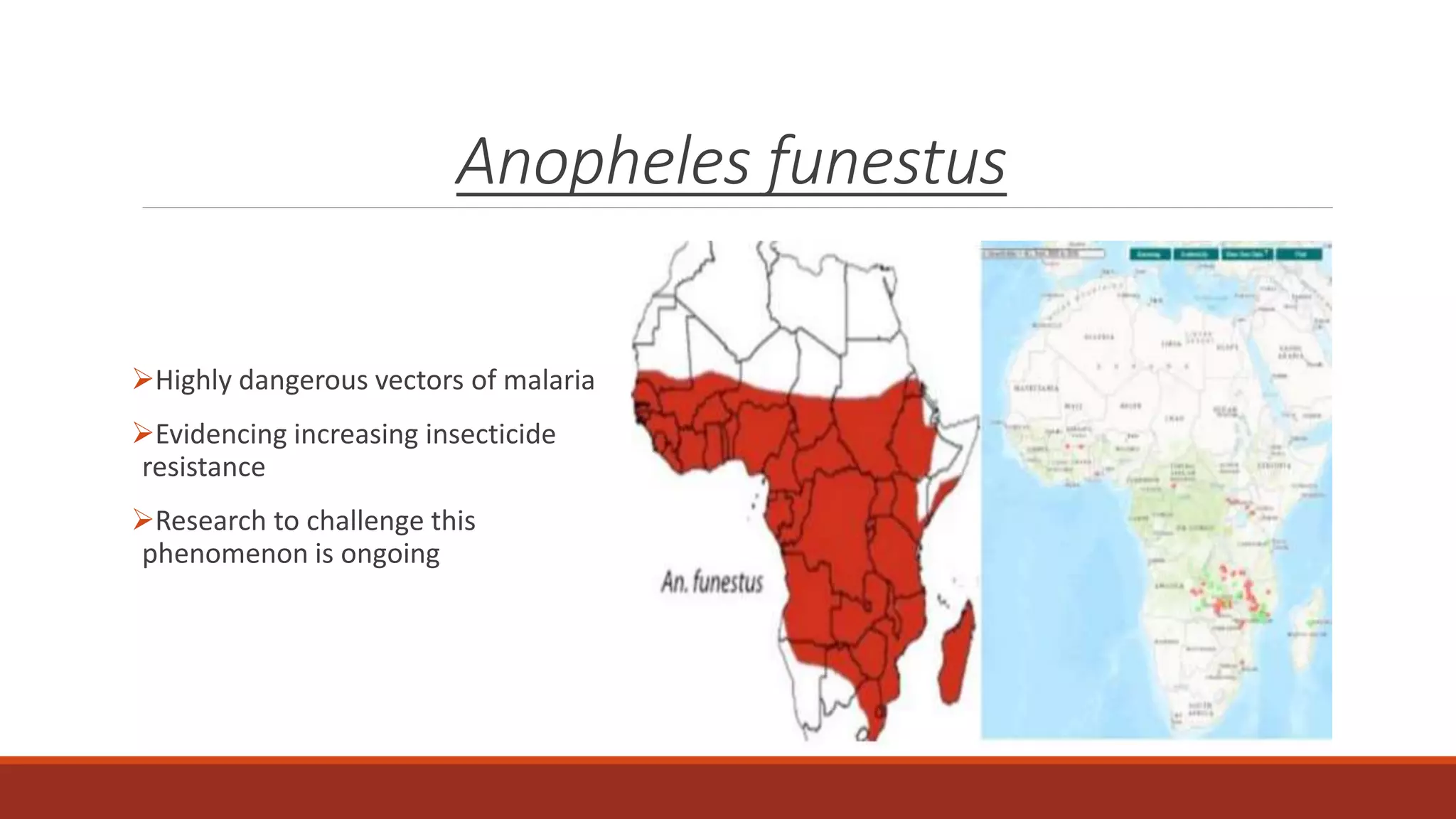
Anopheles funestus
Highly dangerous vectors of malaria
Evidencing increasing insecticide
resistance
Research to challenge this
phenomenon is ongoing
What are lncRNAs?
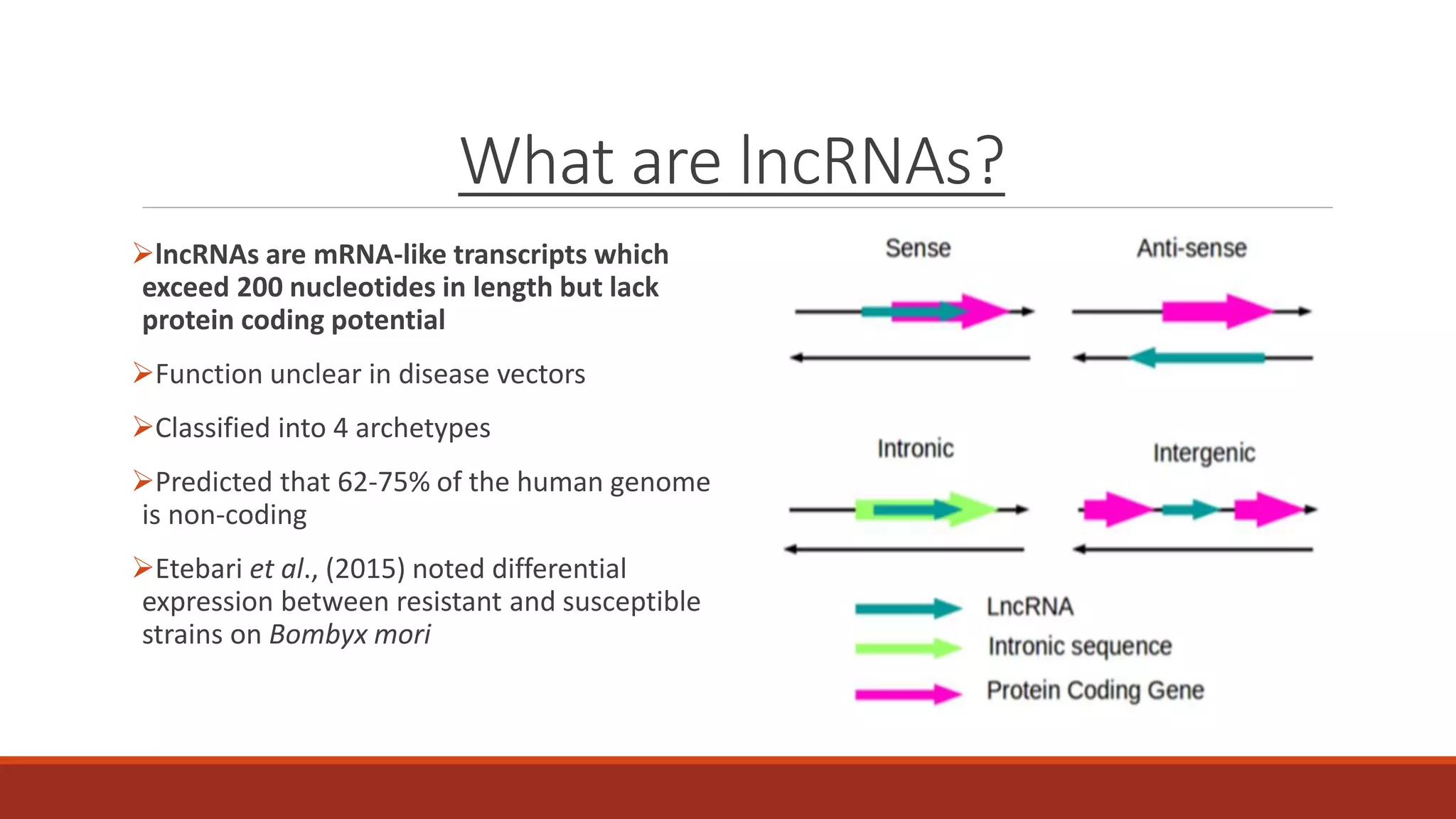
lncRNAs are mRNA-like transcripts which
exceed 200 nucleotides in length but lack
protein coding potential
Function unclear in disease vectors
Classified into 4 archetypes
Predicted that 62-75% of the human genome
is non-coding
Etebari et al., (2015) noted differential
expression between resistant and susceptible
strains on Bombyx mori
Aims and Objectives
Does differential expression of lncRNAs occur between
resistant and susceptible strains of An. funestus and what
role might lncRNAs play in mosquitoes?
• Investigate antisense transcription of lncRNAs in An. funestus using RNAseq data
• Identify lncRNA candidate gene transcripts that are differentially expressed in FUMOZ (multi-
insecticide resistant) and FANG (susceptible)
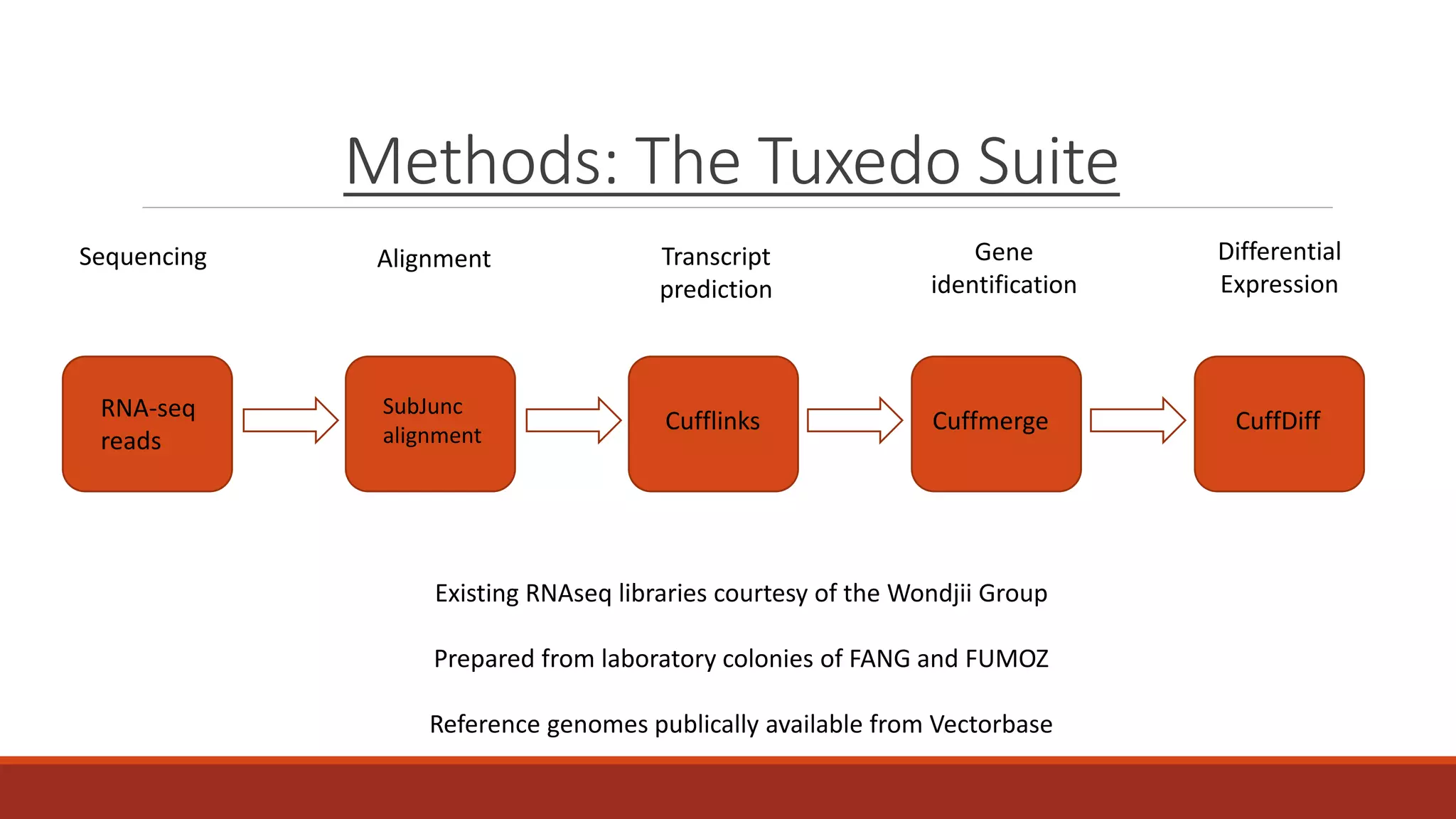
Methods: The Tuxedo Suite
RNA-seq
reads
SubJunc
alignment
Cufflinks Cuffmerge CuffDiff
Sequencing Alignment Transcript
prediction
Gene
identification
Differential
Expression
Existing RNAseq libraries courtesy of the Wondjii Group
Prepared from laboratory colonies of FANG and FUMOZ
Reference genomes publically available from Vectorbase
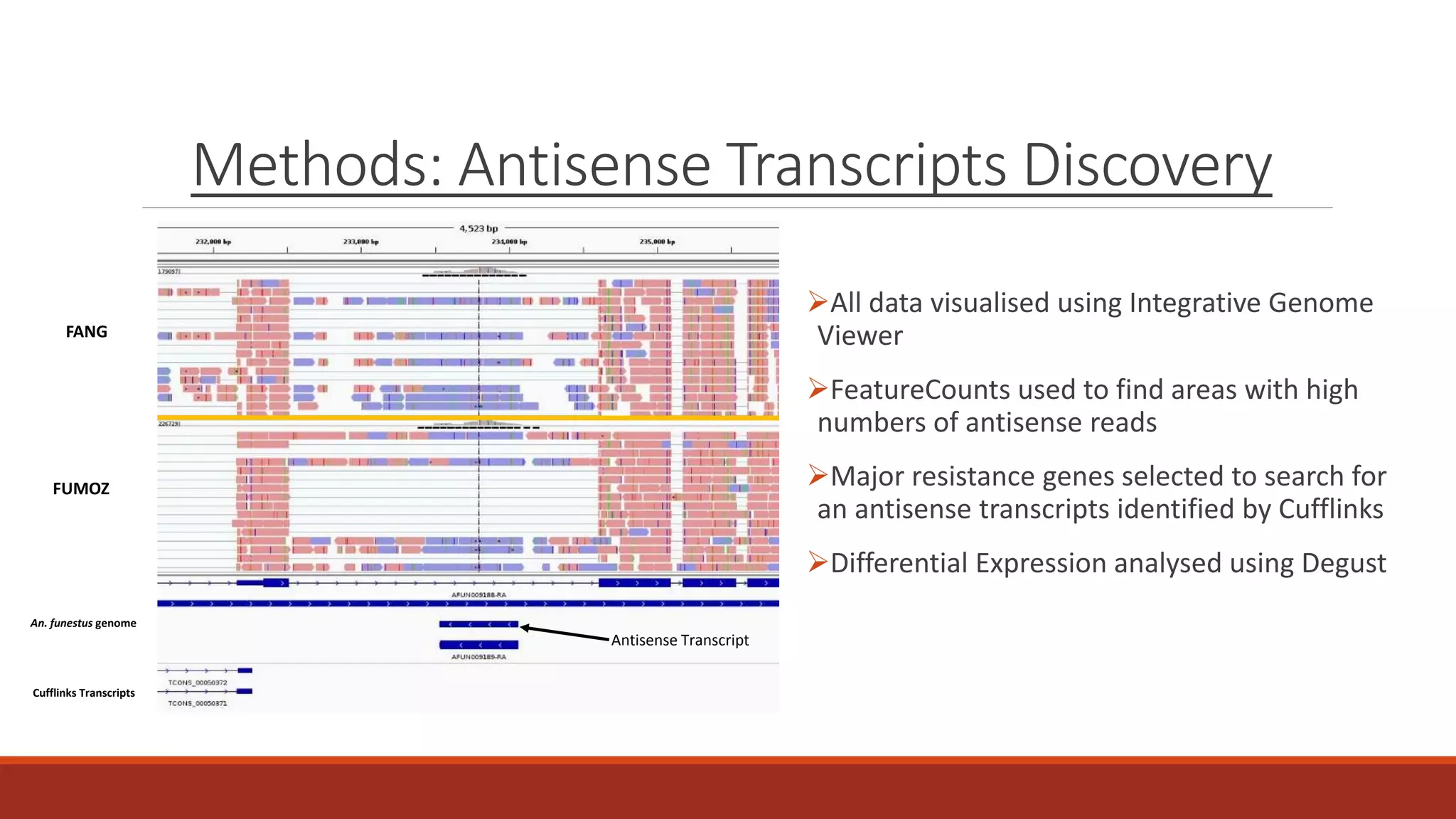
Methods: Antisense Transcripts Discovery
All data visualised using Integrative Genome
Viewer
FeatureCounts used to find areas with high
numbers of antisense reads
Major resistance genes selected to search for
an antisense transcripts identified by Cufflinks
Differential Expression analysed using Degust
FANG
FUMOZ
An. funestus genome
Cufflinks Transcripts
Antisense Transcript
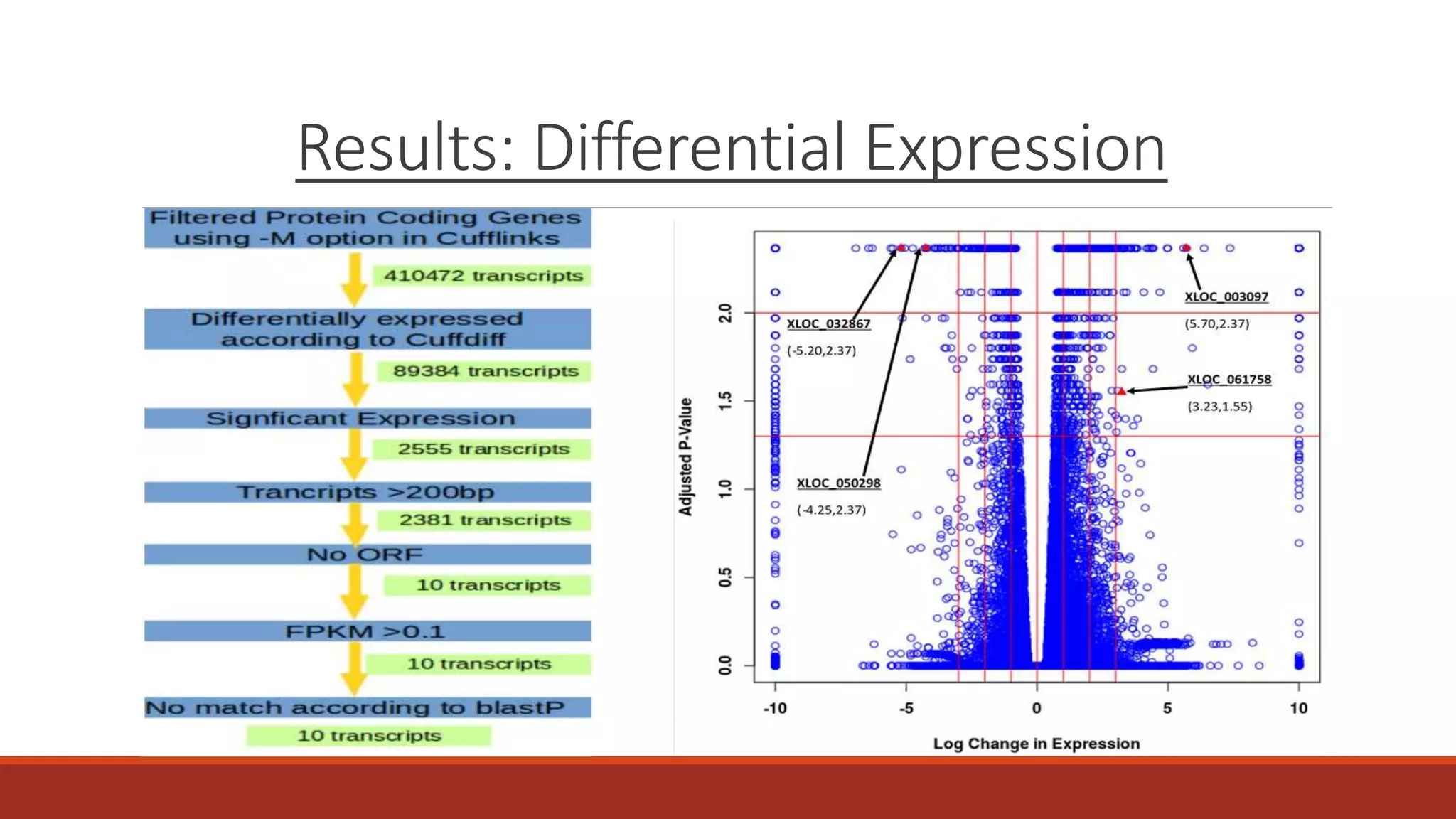
Results: Differential Expression
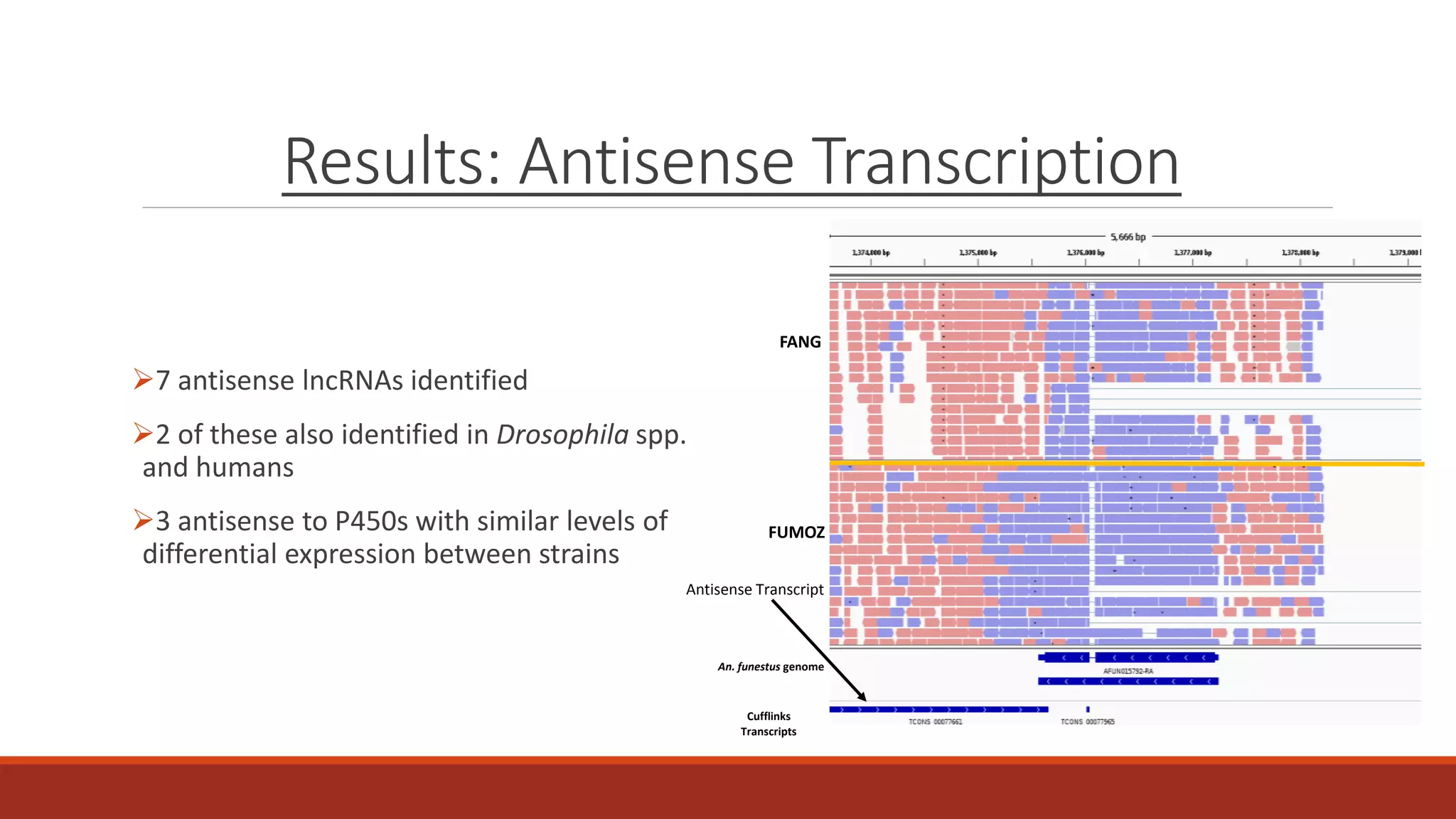
Results: Antisense Transcription
7 antisense lncRNAs identified
2 of these also identified in Drosophila spp.
and humans
3 antisense to P450s with similar levels of
differential expression between strains
FANG
FUMOZ
An. funestus genome
Cufflinks
Transcripts
Antisense Transcript
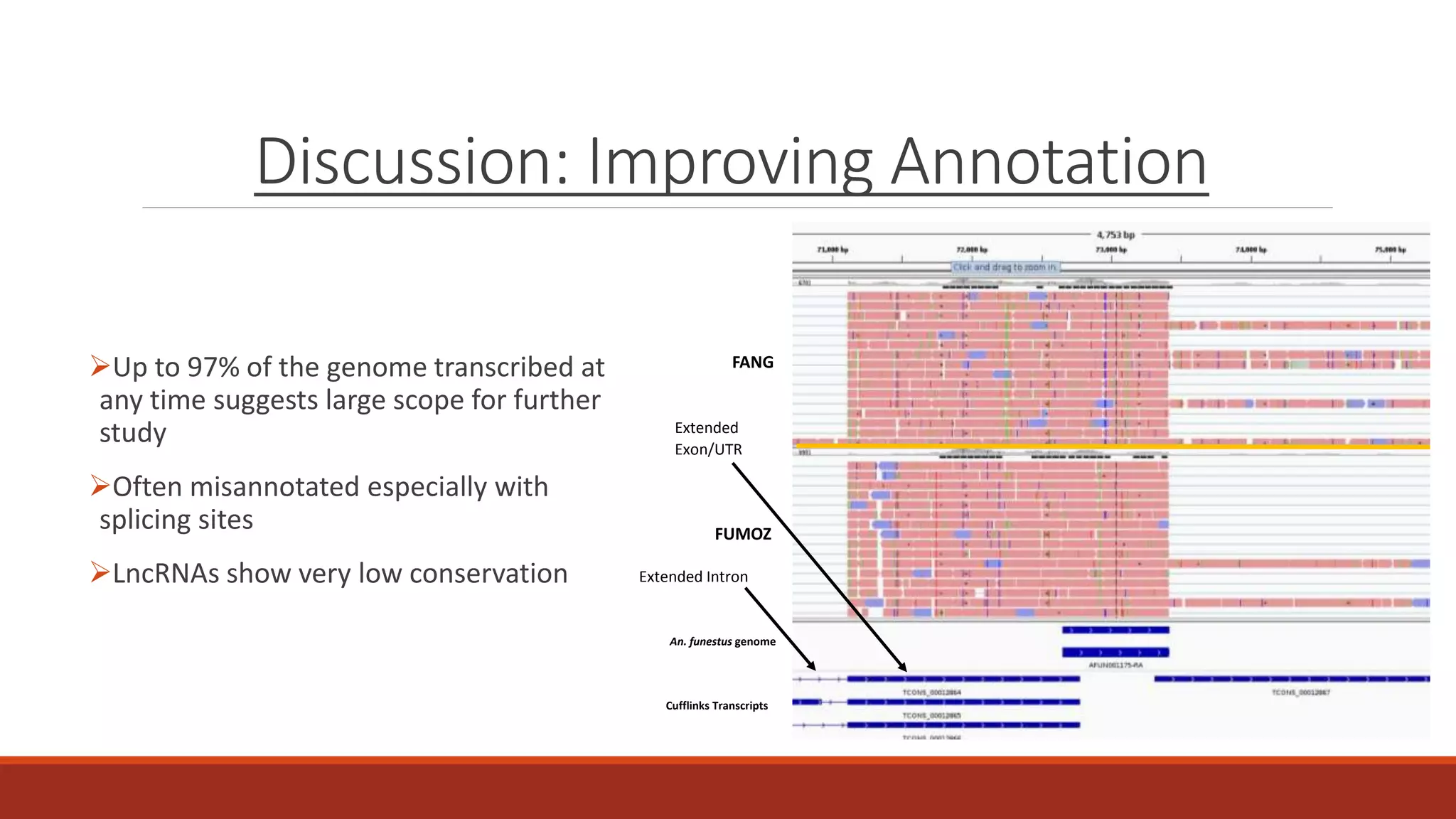
Discussion: Improving Annotation
Up to 97% of the genome transcribed at
any time suggests large scope for further
study
Often misannotated especially with
splicing sites
LncRNAs show very low conservation
FANG
FUMOZ
An. funestus genome
Cufflinks Transcripts
Extended
Exon/UTR
Extended Intron
Discussion: Differential Expression
3 lncRNAs showed differential expression of 5x more in FUMOZ compared to 6x and 3x more
in FANG.
Major resistance genes and antisense transcripts identified that showed similar differential
expression
Suggests functional link as a transcription regulator
Validation and functionality testing should be performed on these candidates
Conclusion: Relevance to Pathology
LncRNAs could be targets for therapeutics affecting gene expression pathways
Potential as biomarkers for disease
Similarly could be diagnostic or prognostic tool
Further work needs to be performed to elucidate function and validate transcripts
Acknowledgements
I would like to thank Dr Gareth Weedall for invaluable support during the project.
Similarly the Wondjii group for access to resources and data
Thanks for your time!
Any questions?

Detection and Analysis of Long Non-Coding RNAs (IncRNAs) in Anopheles funestus by Luke Vanstone

  • 1.
    Detection and Analysisof Long Non-Coding RNAs (lncRNAs) in Anopheles funestus LUKE VANSTONE
  • 2.
    Anopheles funestus Highly dangerousvectors of malaria Evidencing increasing insecticide resistance Research to challenge this phenomenon is ongoing
  • 3.
    What are lncRNAs? lncRNAsare mRNA-like transcripts which exceed 200 nucleotides in length but lack protein coding potential Function unclear in disease vectors Classified into 4 archetypes Predicted that 62-75% of the human genome is non-coding Etebari et al., (2015) noted differential expression between resistant and susceptible strains on Bombyx mori
  • 4.
    Aims and Objectives Doesdifferential expression of lncRNAs occur between resistant and susceptible strains of An. funestus and what role might lncRNAs play in mosquitoes? • Investigate antisense transcription of lncRNAs in An. funestus using RNAseq data • Identify lncRNA candidate gene transcripts that are differentially expressed in FUMOZ (multi- insecticide resistant) and FANG (susceptible)
  • 5.
    Methods: The TuxedoSuite RNA-seq reads SubJunc alignment Cufflinks Cuffmerge CuffDiff Sequencing Alignment Transcript prediction Gene identification Differential Expression Existing RNAseq libraries courtesy of the Wondjii Group Prepared from laboratory colonies of FANG and FUMOZ Reference genomes publically available from Vectorbase
  • 6.
    Methods: Antisense TranscriptsDiscovery All data visualised using Integrative Genome Viewer FeatureCounts used to find areas with high numbers of antisense reads Major resistance genes selected to search for an antisense transcripts identified by Cufflinks Differential Expression analysed using Degust FANG FUMOZ An. funestus genome Cufflinks Transcripts Antisense Transcript
  • 7.
  • 8.
    Results: Antisense Transcription 7antisense lncRNAs identified 2 of these also identified in Drosophila spp. and humans 3 antisense to P450s with similar levels of differential expression between strains FANG FUMOZ An. funestus genome Cufflinks Transcripts Antisense Transcript
  • 9.
    Discussion: Improving Annotation Upto 97% of the genome transcribed at any time suggests large scope for further study Often misannotated especially with splicing sites LncRNAs show very low conservation FANG FUMOZ An. funestus genome Cufflinks Transcripts Extended Exon/UTR Extended Intron
  • 10.
    Discussion: Differential Expression 3lncRNAs showed differential expression of 5x more in FUMOZ compared to 6x and 3x more in FANG. Major resistance genes and antisense transcripts identified that showed similar differential expression Suggests functional link as a transcription regulator Validation and functionality testing should be performed on these candidates
  • 11.
    Conclusion: Relevance toPathology LncRNAs could be targets for therapeutics affecting gene expression pathways Potential as biomarkers for disease Similarly could be diagnostic or prognostic tool Further work needs to be performed to elucidate function and validate transcripts
  • 12.
    Acknowledgements I would liketo thank Dr Gareth Weedall for invaluable support during the project. Similarly the Wondjii group for access to resources and data
  • 13.
    Thanks for yourtime! Any questions?