ELECTRONICS PRESENTATION
Name: Tanima Sultana Seema
ID: 11809022
Session: 2017-18
ELECTRONICS
PERFORMANCE QUANTITIES OF POWER
AMPLIFIERS
• An operational amplifier (OP-Amp) is a circuit that can preform such
mathematical operations as addition, subtract, integration, differentiation.
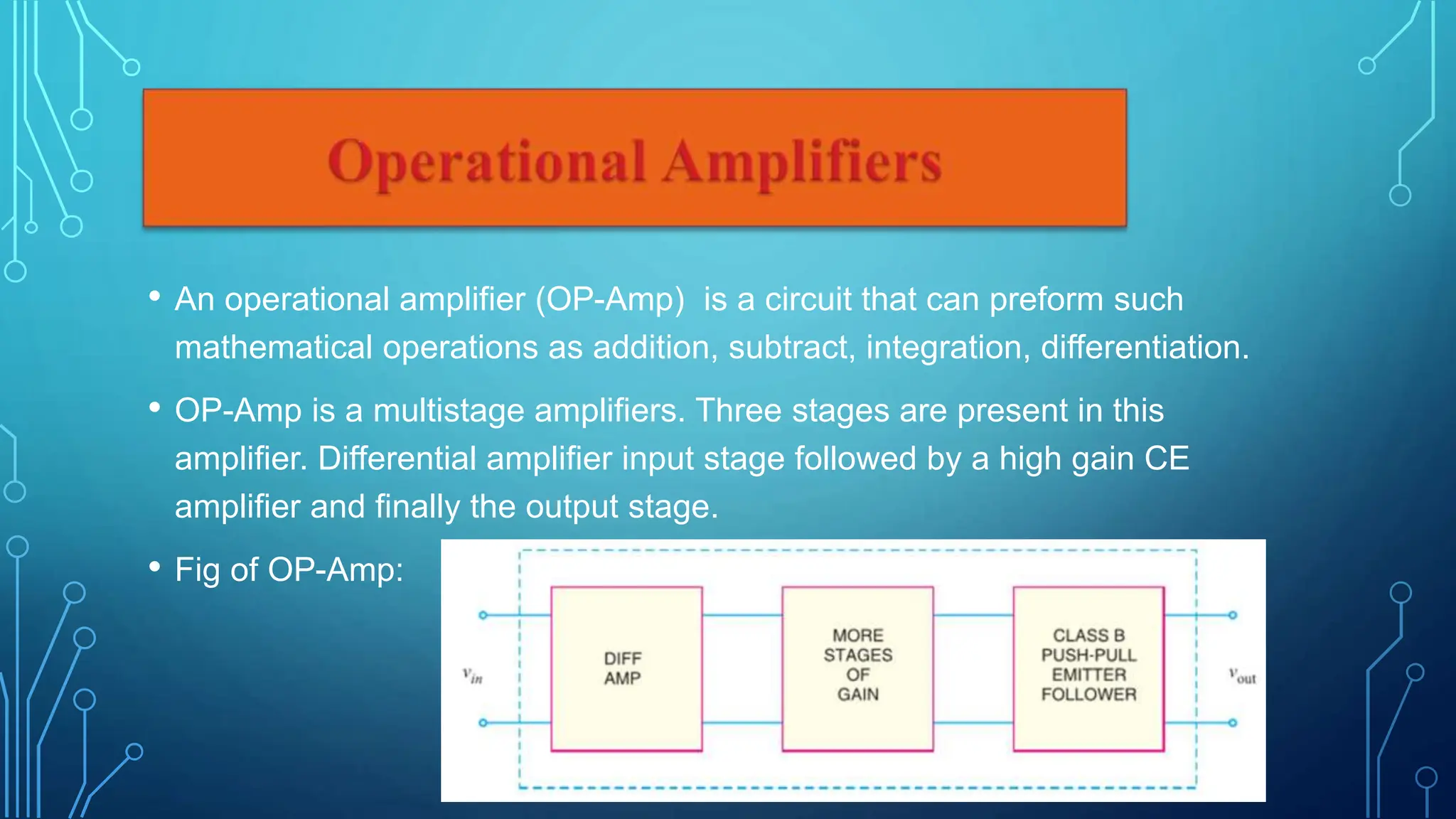
• OP-Amp is a multistage amplifiers. Three stages are present in this
amplifier. Differential amplifier input stage followed by a high gain CE
amplifier and finally the output stage.
• Fig of OP-Amp:
• Some common properties of operational amplifier:
1. An operational amplifier is a multistage amplifier.
2. The input stage of this amplifier is differential amplifier.
3. An inverting input & a noninverting input.
4. A high input impedance at both inputs.
5. A low output impedance.
6. A large open-loop voltage gain.
7. The voltage gain remain constant over the wide frequency range.
A differential amplifier is a circuit that can accept two input signals and amplify
the difference between these two input signals.
Fig 2 shows an ordinary amplifier. In this amplifier input voltage v is amplified
to Av where A is the voltage gain of this amplifier. So we can see that the
output voltage is Vo=Av.
Fig 3 shows the differential amplifier. There are two input voltages v1 & v2.
The amplifier amplifies the difference between the two input voltages.
Therefore the output voltage is
Vo=A(v1-v2) where A is the voltage gain of this amplifier.
The operational amplifier have many practical applications. Operational
amplifier is used to connected the number of circuit to provide the various
characteristic. Now we discuss about some important application of
operational amplifier.
(i) Inverting Amplifier.
(ii) Noninverting Amplifier.
(iii) Voltage Follower.
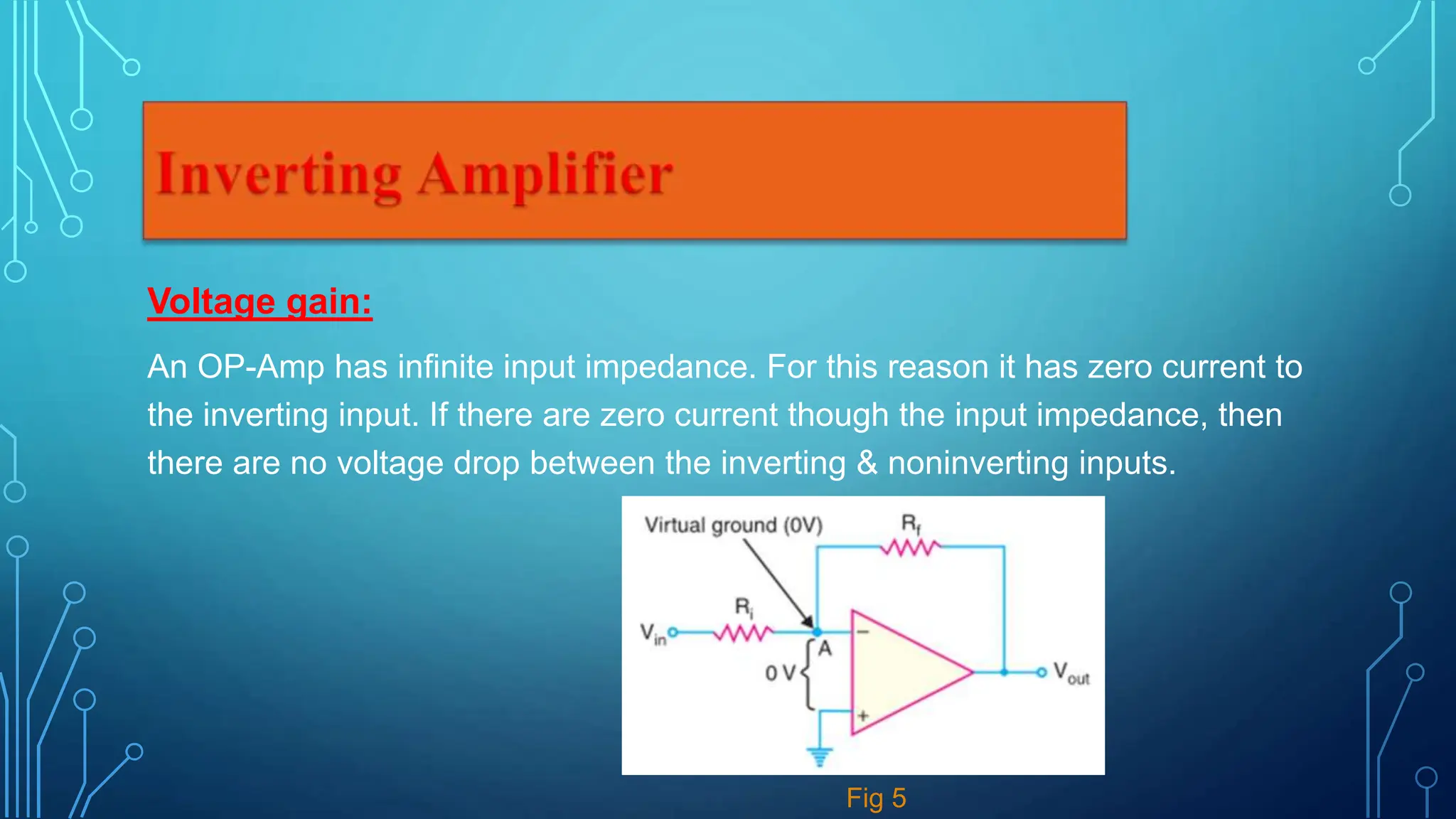
An inverting amplifier is shown in fig 4. A input voltage Vin is applied though
the input resistor Ri to the minus input. The output is fed back to the same
minus input though the feedback resistor Rf. The plus input is grounded. Rf
provide the negative feedback. Since the input signal is applied to the inverting
input, the output signal will be inverted as compared to the input.
Fig 4
Voltage gain:
An OP-Amp has infinite input impedance. For this reason it has zero current to
the inverting input. If there are zero current though the input impedance, then
there are no voltage drop between the inverting & noninverting inputs.
Fig 5
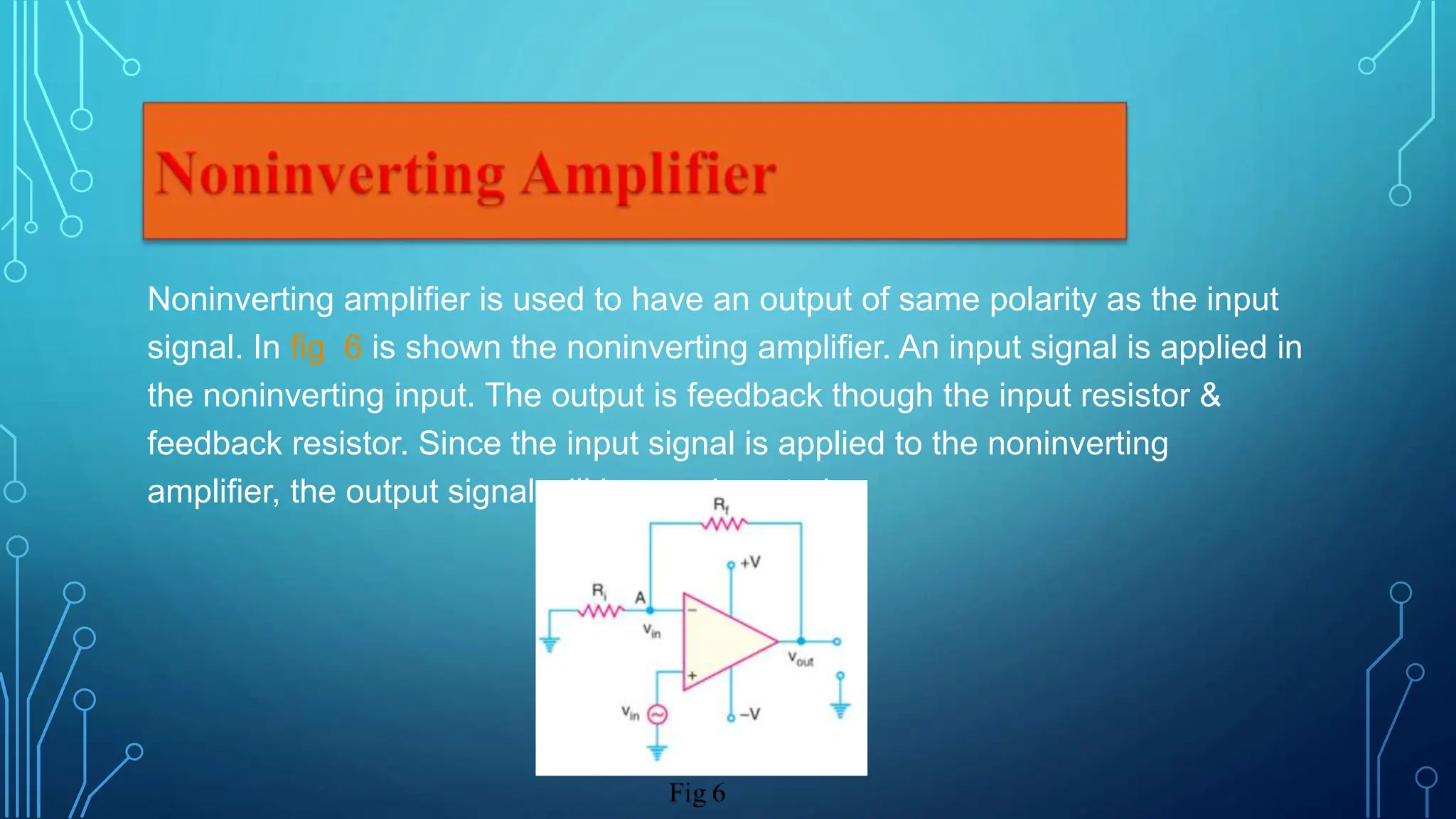
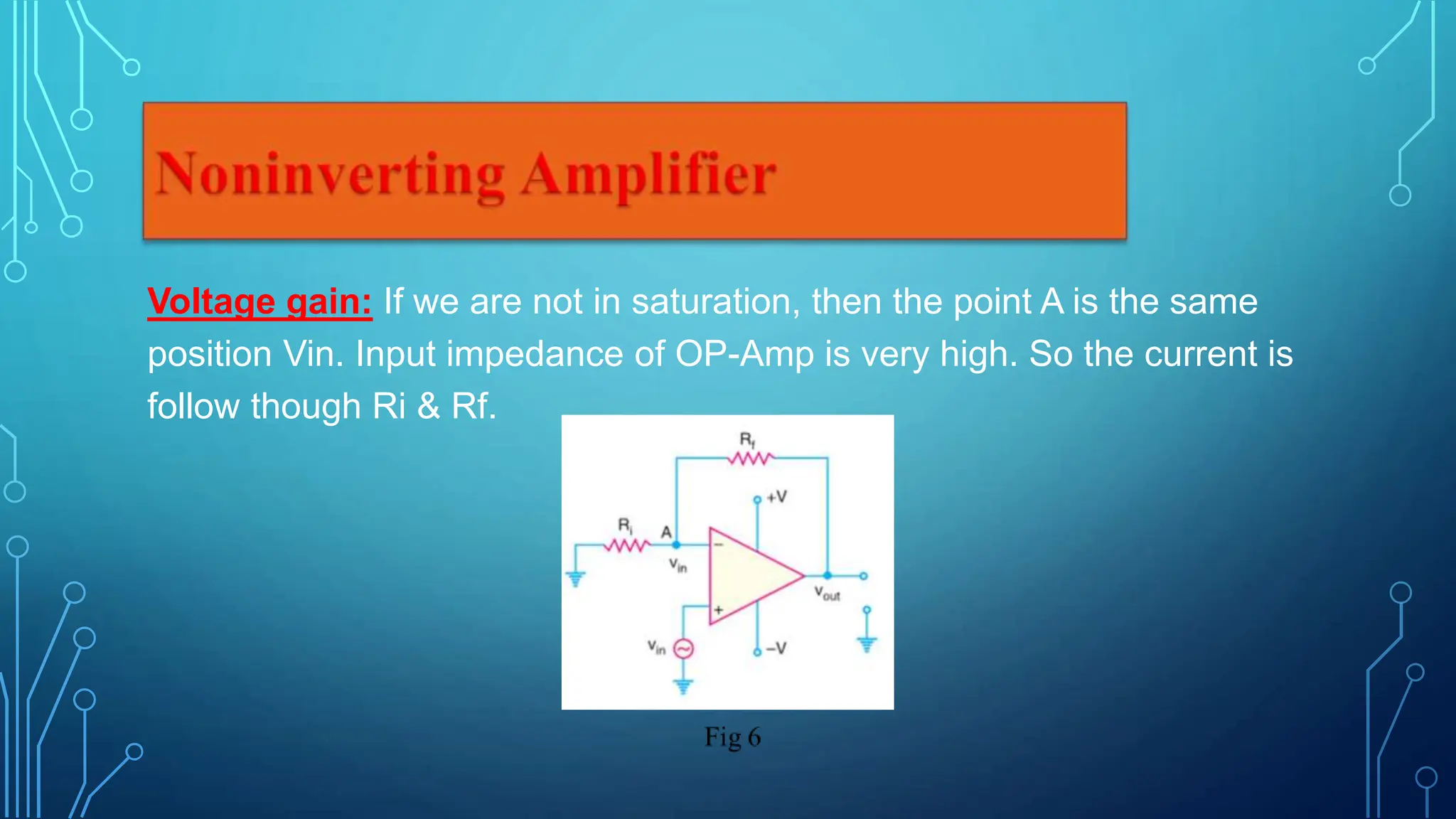
Noninverting amplifier is used to have an output of same polarity as the input
signal. In fig 6 is shown the noninverting amplifier. An input signal is applied in
the noninverting input. The output is feedback though the input resistor &
feedback resistor. Since the input signal is applied to the noninverting
amplifier, the output signal will be noninverted.
Voltage gain: If we are not in saturation, then the point A is the same
position Vin. Input impedance of OP-Amp is very high. So the current is
follow though Ri & Rf.
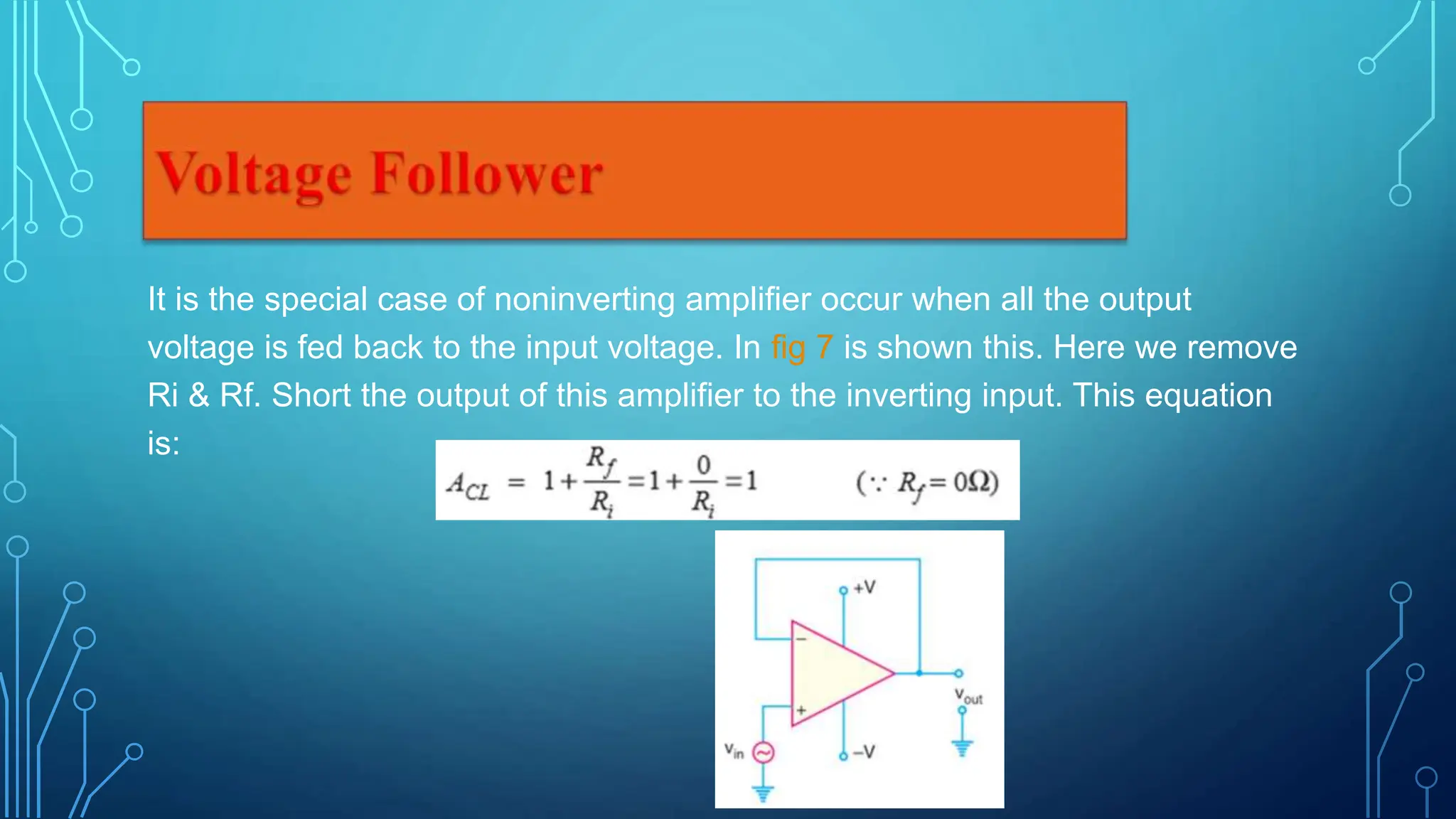
It is the special case of noninverting amplifier occur when all the output
voltage is fed back to the input voltage. In fig 7 is shown this. Here we remove
Ri & Rf. Short the output of this amplifier to the inverting input. This equation
is:
The most important features of the voltage follower is it has very high
input impedance and it has very low output impedance.
THANK YOU ALL

DETAILS ELECTRONICS DESCRIPTION PRESENTATION

  • 1.
    ELECTRONICS PRESENTATION Name: TanimaSultana Seema ID: 11809022 Session: 2017-18
  • 2.
  • 3.
    • An operationalamplifier (OP-Amp) is a circuit that can preform such mathematical operations as addition, subtract, integration, differentiation. • OP-Amp is a multistage amplifiers. Three stages are present in this amplifier. Differential amplifier input stage followed by a high gain CE amplifier and finally the output stage. • Fig of OP-Amp:
  • 4.
    • Some commonproperties of operational amplifier: 1. An operational amplifier is a multistage amplifier. 2. The input stage of this amplifier is differential amplifier. 3. An inverting input & a noninverting input. 4. A high input impedance at both inputs. 5. A low output impedance. 6. A large open-loop voltage gain. 7. The voltage gain remain constant over the wide frequency range.
  • 5.
    A differential amplifieris a circuit that can accept two input signals and amplify the difference between these two input signals. Fig 2 shows an ordinary amplifier. In this amplifier input voltage v is amplified to Av where A is the voltage gain of this amplifier. So we can see that the output voltage is Vo=Av.
  • 6.
    Fig 3 showsthe differential amplifier. There are two input voltages v1 & v2. The amplifier amplifies the difference between the two input voltages. Therefore the output voltage is Vo=A(v1-v2) where A is the voltage gain of this amplifier.
  • 7.
    The operational amplifierhave many practical applications. Operational amplifier is used to connected the number of circuit to provide the various characteristic. Now we discuss about some important application of operational amplifier. (i) Inverting Amplifier. (ii) Noninverting Amplifier. (iii) Voltage Follower.
  • 8.
    An inverting amplifieris shown in fig 4. A input voltage Vin is applied though the input resistor Ri to the minus input. The output is fed back to the same minus input though the feedback resistor Rf. The plus input is grounded. Rf provide the negative feedback. Since the input signal is applied to the inverting input, the output signal will be inverted as compared to the input. Fig 4
  • 9.
    Voltage gain: An OP-Amphas infinite input impedance. For this reason it has zero current to the inverting input. If there are zero current though the input impedance, then there are no voltage drop between the inverting & noninverting inputs. Fig 5
  • 10.
    Noninverting amplifier isused to have an output of same polarity as the input signal. In fig 6 is shown the noninverting amplifier. An input signal is applied in the noninverting input. The output is feedback though the input resistor & feedback resistor. Since the input signal is applied to the noninverting amplifier, the output signal will be noninverted.
  • 11.
    Voltage gain: Ifwe are not in saturation, then the point A is the same position Vin. Input impedance of OP-Amp is very high. So the current is follow though Ri & Rf.
  • 12.
    It is thespecial case of noninverting amplifier occur when all the output voltage is fed back to the input voltage. In fig 7 is shown this. Here we remove Ri & Rf. Short the output of this amplifier to the inverting input. This equation is:
  • 13.
    The most importantfeatures of the voltage follower is it has very high input impedance and it has very low output impedance. THANK YOU ALL