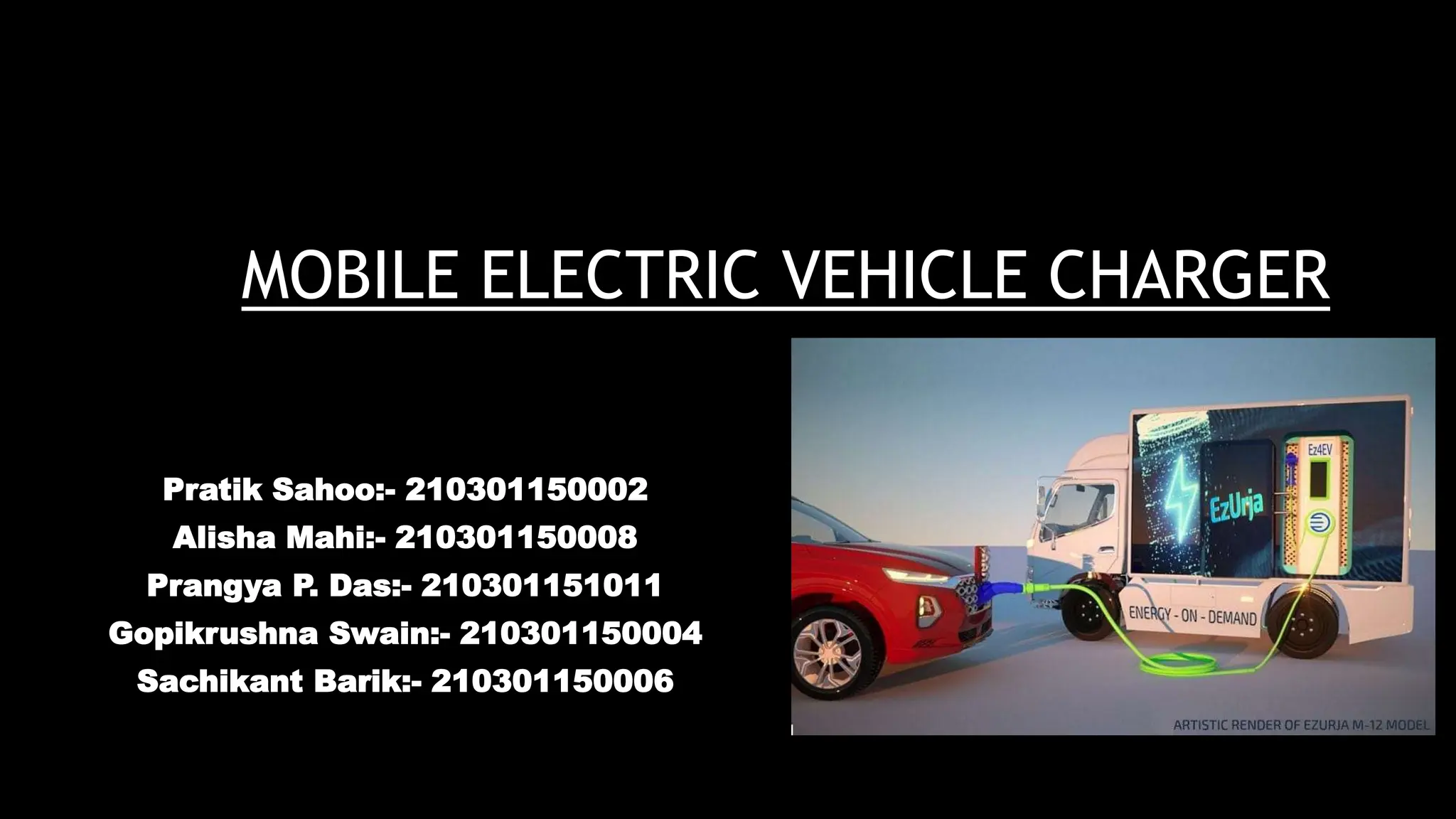
MOBILE ELECTRIC VEHICLE CHARGER
Pratik Sahoo:- 210301150002
Alisha Mahi:- 210301150008
Prangya P. Das:- 210301151011
Gopikrushna Swain:- 210301150004
Sachikant Barik:- 210301150006
CONTENTS :-
• INTRODUCTION
• LEVEL OF CHARGING
• NECESSITY
• WORKING
• ADVANTAGES
• DISADVANTAGES
• SAFETY FEATURES
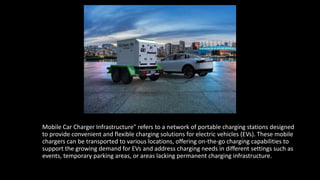
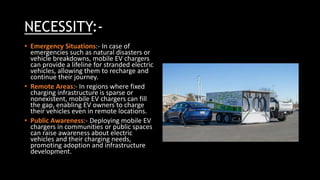
Mobile Car Charger Infrastructure" refers to a network of portable charging stations designed
to provide convenient and flexible charging solutions for electric vehicles (EVs). These mobile
chargers can be transported to various locations, offering on-the-go charging capabilities to
support the growing demand for EVs and address charging needs in different settings such as
events, temporary parking areas, or areas lacking permanent charging infrastructure.
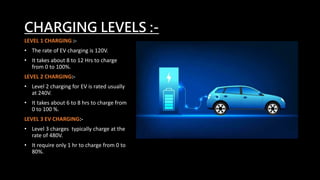
CHARGING LEVELS :-
LEVEL 1 CHARGING :-
• The rate of EV charging is 120V.
• It takes about 8 to 12 Hrs to charge
from 0 to 100%.
LEVEL 2 CHARGING:-
• Level 2 charging for EV is rated usually
at 240V.
• It takes about 6 to 8 hrs to charge from
0 to 100 %.
LEVEL 3 EV CHARGING:-
• Level 3 charges typically charge at the
rate of 480V.
• It require only 1 hr to charge from 0 to
80%.
NECESSITY:-
• Emergency Situations:- In case of
emergencies such as natural disasters or
vehicle breakdowns, mobile EV chargers
can provide a lifeline for stranded electric
vehicles, allowing them to recharge and
continue their journey.
• Remote Areas:- In regions where fixed
charging infrastructure is sparse or
nonexistent, mobile EV chargers can fill
the gap, enabling EV owners to charge
their vehicles even in remote locations.
• Public Awareness:- Deploying mobile EV
chargers in communities or public spaces
can raise awareness about electric
vehicles and their charging needs,
promoting adoption and infrastructure
development.
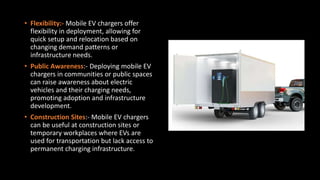
• Flexibility:- Mobile EV chargers offer
flexibility in deployment, allowing for
quick setup and relocation based on
changing demand patterns or
infrastructure needs.
• Public Awareness:- Deploying mobile EV
chargers in communities or public spaces
can raise awareness about electric
vehicles and their charging needs,
promoting adoption and infrastructure
development.
• Construction Sites:- Mobile EV chargers
can be useful at construction sites or
temporary workplaces where EVs are
used for transportation but lack access to
permanent charging infrastructure.
Working:-
• Mobile car charger infrastructure typically
involves the deployment of charging stations
that are either mounted on vehicles or are
portable units capable of being transported to
different locations.
• Charging Stations: These stations can vary in
size and capacity. They typically consist of
power electronics, communication modules,
and a physical interface for connecting to the
vehicle.
• Power Source: The charging stations need a
power source to operate. This could be the
grid, renewable energy sources like solar
panels, or generators for off-grid locations.
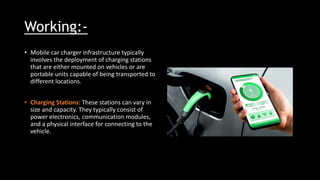
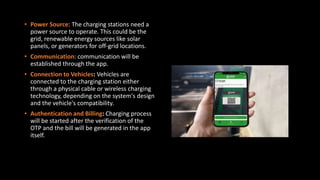
• Communication: communication will be
established through the app.
• Connection to Vehicles: Vehicles are
connected to the charging station either
through a physical cable or wireless charging
technology, depending on the system's design
and the vehicle's compatibility.
• Authentication and Billing: Charging process
will be started after the verification of the
OTP and the bill will be generated in the app
itself.
ADVANTAGES :-
• Flexibility- They provide flexibility in charging locations allowing EV
owners to charge there vehicles wherever they are.
• Convenience- Mobile EV charger eliminate the need to find dedicated
charging stations especially in areas with limited infrastructure.
• Emergency Charging- They can serve as a backup solution in case of
power outages or when traditional charging stations are unavailable.
• Innovation- They encourage innovation in the EV charging industry by
exploring new technologies.
• Cost Effective- They can be cost effective for businesses or event
organizers compared to installing permanent charging stations.
DISADVANTAGES:-
• Limited charging speed:- Mobile EV chargers typically have slower
charging speeds compared to stationary charging stations, especially
high-power DC fast chargers.
• Limited range:- Mobile EV chargers have limited mobility and range
compared to traditional vehicles.
• Dependency on power source:- Mobile EV chargers require a stable
power source, whether it's grid electricity, a generator, or renewable
energy systems.
SAFETY FEATURES :-
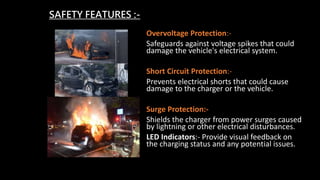
Overvoltage Protection:-
Safeguards against voltage spikes that could
damage the vehicle's electrical system.
Short Circuit Protection:-
Prevents electrical shorts that could cause
damage to the charger or the vehicle.
Surge Protection:-
Shields the charger from power surges caused
by lightning or other electrical disturbances.
LED Indicators:- Provide visual feedback on
the charging status and any potential issues.
Thank You !

Design Thinking ppt for emergency electric vehicles

  • 1.
    MOBILE ELECTRIC VEHICLECHARGER Pratik Sahoo:- 210301150002 Alisha Mahi:- 210301150008 Prangya P. Das:- 210301151011 Gopikrushna Swain:- 210301150004 Sachikant Barik:- 210301150006
  • 2.
    CONTENTS :- • INTRODUCTION •LEVEL OF CHARGING • NECESSITY • WORKING • ADVANTAGES • DISADVANTAGES • SAFETY FEATURES
  • 3.
    Mobile Car ChargerInfrastructure" refers to a network of portable charging stations designed to provide convenient and flexible charging solutions for electric vehicles (EVs). These mobile chargers can be transported to various locations, offering on-the-go charging capabilities to support the growing demand for EVs and address charging needs in different settings such as events, temporary parking areas, or areas lacking permanent charging infrastructure.
  • 4.
    CHARGING LEVELS :- LEVEL1 CHARGING :- • The rate of EV charging is 120V. • It takes about 8 to 12 Hrs to charge from 0 to 100%. LEVEL 2 CHARGING:- • Level 2 charging for EV is rated usually at 240V. • It takes about 6 to 8 hrs to charge from 0 to 100 %. LEVEL 3 EV CHARGING:- • Level 3 charges typically charge at the rate of 480V. • It require only 1 hr to charge from 0 to 80%.
  • 5.
    NECESSITY:- • Emergency Situations:-In case of emergencies such as natural disasters or vehicle breakdowns, mobile EV chargers can provide a lifeline for stranded electric vehicles, allowing them to recharge and continue their journey. • Remote Areas:- In regions where fixed charging infrastructure is sparse or nonexistent, mobile EV chargers can fill the gap, enabling EV owners to charge their vehicles even in remote locations. • Public Awareness:- Deploying mobile EV chargers in communities or public spaces can raise awareness about electric vehicles and their charging needs, promoting adoption and infrastructure development.
  • 6.
    • Flexibility:- MobileEV chargers offer flexibility in deployment, allowing for quick setup and relocation based on changing demand patterns or infrastructure needs. • Public Awareness:- Deploying mobile EV chargers in communities or public spaces can raise awareness about electric vehicles and their charging needs, promoting adoption and infrastructure development. • Construction Sites:- Mobile EV chargers can be useful at construction sites or temporary workplaces where EVs are used for transportation but lack access to permanent charging infrastructure.
  • 7.
    Working:- • Mobile carcharger infrastructure typically involves the deployment of charging stations that are either mounted on vehicles or are portable units capable of being transported to different locations. • Charging Stations: These stations can vary in size and capacity. They typically consist of power electronics, communication modules, and a physical interface for connecting to the vehicle.
  • 8.
    • Power Source:The charging stations need a power source to operate. This could be the grid, renewable energy sources like solar panels, or generators for off-grid locations. • Communication: communication will be established through the app. • Connection to Vehicles: Vehicles are connected to the charging station either through a physical cable or wireless charging technology, depending on the system's design and the vehicle's compatibility. • Authentication and Billing: Charging process will be started after the verification of the OTP and the bill will be generated in the app itself.
  • 9.
    ADVANTAGES :- • Flexibility-They provide flexibility in charging locations allowing EV owners to charge there vehicles wherever they are. • Convenience- Mobile EV charger eliminate the need to find dedicated charging stations especially in areas with limited infrastructure. • Emergency Charging- They can serve as a backup solution in case of power outages or when traditional charging stations are unavailable. • Innovation- They encourage innovation in the EV charging industry by exploring new technologies. • Cost Effective- They can be cost effective for businesses or event organizers compared to installing permanent charging stations.
  • 10.
    DISADVANTAGES:- • Limited chargingspeed:- Mobile EV chargers typically have slower charging speeds compared to stationary charging stations, especially high-power DC fast chargers. • Limited range:- Mobile EV chargers have limited mobility and range compared to traditional vehicles. • Dependency on power source:- Mobile EV chargers require a stable power source, whether it's grid electricity, a generator, or renewable energy systems.
  • 11.
    SAFETY FEATURES :- OvervoltageProtection:- Safeguards against voltage spikes that could damage the vehicle's electrical system. Short Circuit Protection:- Prevents electrical shorts that could cause damage to the charger or the vehicle. Surge Protection:- Shields the charger from power surges caused by lightning or other electrical disturbances. LED Indicators:- Provide visual feedback on the charging status and any potential issues.
  • 12.