Desiccation Resistance
Mechanisms in the Desert Locust
and Desert Beetle
April Irums and Alexa Mogle
What is Desiccation?
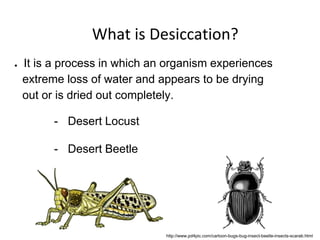
● It is a process in which an organism experiences
extreme loss of water and appears to be drying
out or is dried out completely.
- Desert Locust
- Desert Beetle
http://www.pd4pic.com/cartoon-bugs-bug-insect-beetle-insects-scarab.html
Desiccation Resistance
Mechanisms of the Schistocerca
gregaria
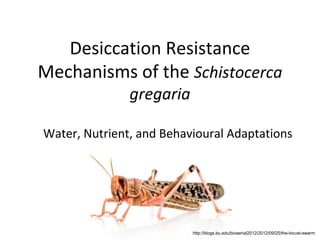
Water, Nutrient, and Behavioural Adaptations
http://blogs.bu.edu/bioaerial2012/2012/09/25/the-locust-swarm
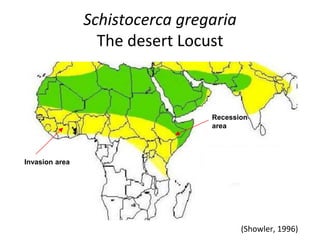
Schistocerca gregaria
The desert Locust
(Showler, 1996)
Recession
area
Invasion area
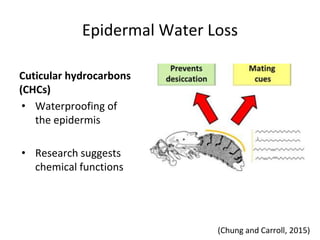
Epidermal Water Loss
Cuticular hydrocarbons
(CHCs)
• Waterproofing of
the epidermis
• Research suggests
chemical functions
(Chung and Carroll, 2015)
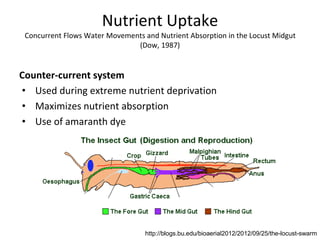
Nutrient Uptake
Concurrent Flows Water Movements and Nutrient Absorption in the Locust Midgut
(Dow, 1987)
Counter-current system
• Used during extreme nutrient deprivation
• Maximizes nutrient absorption
• Use of amaranth dye
http://blogs.bu.edu/bioaerial2012/2012/09/25/the-locust-swarm
Nutrient Uptake
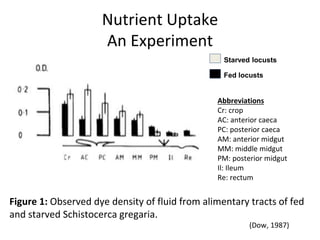
An Experiment
Abbreviations
Cr: crop
AC: anterior caeca
PC: posterior caeca
AM: anterior midgut
MM: middle midgut
PM: posterior midgut
Il: Ileum
Re: rectum
(Dow, 1987)
Figure 1: Observed dye density of fluid from alimentary tracts of fed
and starved Schistocerca gregaria.
Starved locusts
Fed locusts
Nutrient Uptake
An Experiment
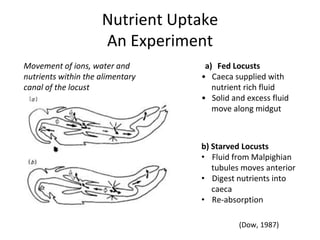
Movement of ions, water and
nutrients within the alimentary
canal of the locust
a) Fed Locusts
• Caeca supplied with
nutrient rich fluid
• Solid and excess fluid
move along midgut
b) Starved Locusts
• Fluid from Malpighian
tubules moves anterior
• Digest nutrients into
caeca
• Re-absorption
(Dow, 1987)
Behavioural Changes
Life Phases
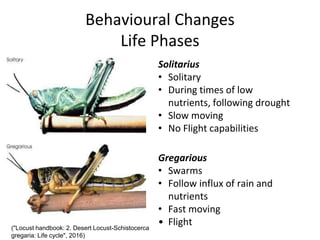
Solitarius
• Solitary
• During times of low
nutrients, following drought
• Slow moving
• No Flight capabilities
Gregarious
• Swarms
• Follow influx of rain and
nutrients
• Fast moving
• Flight("Locust handbook: 2. Desert Locust-Schistocerca
gregaria: Life cycle", 2016)
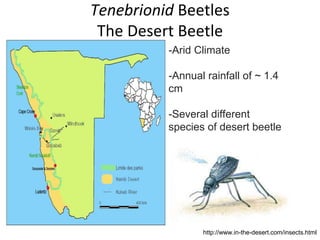
Tenebrionid Beetles
The Desert Beetle
-Arid Climate
-Annual rainfall of ~ 1.4
cm
-Several different
species of desert beetle
http://www.in-the-desert.com/insects.html
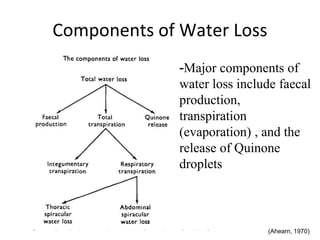
Components of Water Loss
(Ahearn, 1970)
-Major components of
water loss include faecal
production,
transpiration
(evaporation) , and the
release of Quinone
droplets
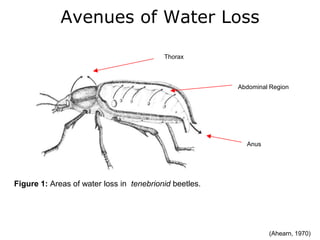
Avenues of Water Loss
Thorax
Figure 1: Areas of water loss in tenebrionid beetles.
Abdominal Region
Anus
(Ahearn, 1970)
Dehydration and Rehydration
Experiment
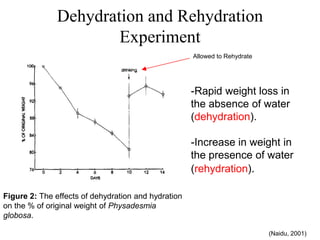
Figure 2: The effects of dehydration and hydration
on the % of original weight of Physadesmia
globosa.
Allowed to Rehydrate
-Rapid weight loss in
the absence of water
(dehydration).
-Increase in weight in
the presence of water
(rehydration).
(Naidu, 2001)
Dehydration and Rehydration
Experiment
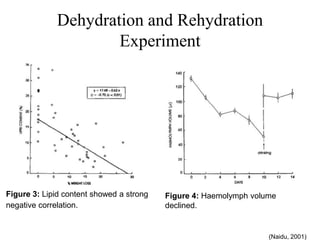
Figure 3: Lipid content showed a strong
negative correlation.
Figure 4: Haemolymph volume
declined.
(Naidu, 2001)
Desiccation Resistance
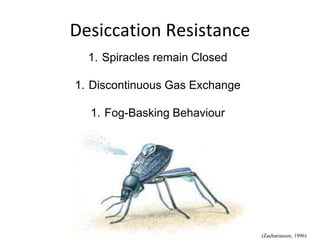
1. Spiracles remain Closed
1. Discontinuous Gas Exchange
1. Fog-Basking Behaviour
(Zachariassen, 1996)
Desiccation Resistance Mechanisms of
Tenebrionid Beetles
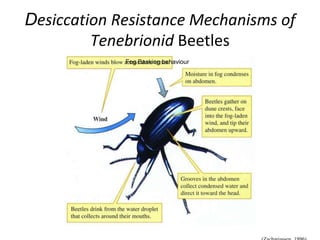
Fog Basking behaviour
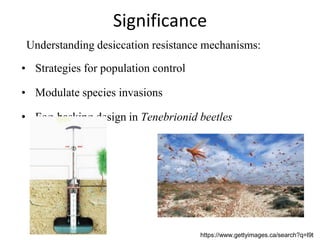
Significance
Understanding desiccation resistance mechanisms:
• Strategies for population control
• Modulate species invasions
• Fog-basking design in Tenebrionid beetles
https://www.gettyimages.ca/search?q=l9t
Thanks For Listening!

Desiccation locusts and beetles presentation

  • 1.
    Desiccation Resistance Mechanisms inthe Desert Locust and Desert Beetle April Irums and Alexa Mogle
  • 2.
    What is Desiccation? ●It is a process in which an organism experiences extreme loss of water and appears to be drying out or is dried out completely. - Desert Locust - Desert Beetle http://www.pd4pic.com/cartoon-bugs-bug-insect-beetle-insects-scarab.html
  • 3.
    Desiccation Resistance Mechanisms ofthe Schistocerca gregaria Water, Nutrient, and Behavioural Adaptations http://blogs.bu.edu/bioaerial2012/2012/09/25/the-locust-swarm
  • 4.
    Schistocerca gregaria The desertLocust (Showler, 1996) Recession area Invasion area
  • 5.
    Epidermal Water Loss Cuticularhydrocarbons (CHCs) • Waterproofing of the epidermis • Research suggests chemical functions (Chung and Carroll, 2015)
  • 6.
    Nutrient Uptake Concurrent FlowsWater Movements and Nutrient Absorption in the Locust Midgut (Dow, 1987) Counter-current system • Used during extreme nutrient deprivation • Maximizes nutrient absorption • Use of amaranth dye http://blogs.bu.edu/bioaerial2012/2012/09/25/the-locust-swarm
  • 7.
    Nutrient Uptake An Experiment Abbreviations Cr:crop AC: anterior caeca PC: posterior caeca AM: anterior midgut MM: middle midgut PM: posterior midgut Il: Ileum Re: rectum (Dow, 1987) Figure 1: Observed dye density of fluid from alimentary tracts of fed and starved Schistocerca gregaria. Starved locusts Fed locusts
  • 8.
    Nutrient Uptake An Experiment Movementof ions, water and nutrients within the alimentary canal of the locust a) Fed Locusts • Caeca supplied with nutrient rich fluid • Solid and excess fluid move along midgut b) Starved Locusts • Fluid from Malpighian tubules moves anterior • Digest nutrients into caeca • Re-absorption (Dow, 1987)
  • 9.
    Behavioural Changes Life Phases Solitarius •Solitary • During times of low nutrients, following drought • Slow moving • No Flight capabilities Gregarious • Swarms • Follow influx of rain and nutrients • Fast moving • Flight("Locust handbook: 2. Desert Locust-Schistocerca gregaria: Life cycle", 2016)
  • 10.
    Tenebrionid Beetles The DesertBeetle -Arid Climate -Annual rainfall of ~ 1.4 cm -Several different species of desert beetle http://www.in-the-desert.com/insects.html
  • 11.
    Components of WaterLoss (Ahearn, 1970) -Major components of water loss include faecal production, transpiration (evaporation) , and the release of Quinone droplets
  • 12.
    Avenues of WaterLoss Thorax Figure 1: Areas of water loss in tenebrionid beetles. Abdominal Region Anus (Ahearn, 1970)
  • 13.
    Dehydration and Rehydration Experiment Figure2: The effects of dehydration and hydration on the % of original weight of Physadesmia globosa. Allowed to Rehydrate -Rapid weight loss in the absence of water (dehydration). -Increase in weight in the presence of water (rehydration). (Naidu, 2001)
  • 14.
    Dehydration and Rehydration Experiment Figure3: Lipid content showed a strong negative correlation. Figure 4: Haemolymph volume declined. (Naidu, 2001)
  • 15.
    Desiccation Resistance 1. Spiraclesremain Closed 1. Discontinuous Gas Exchange 1. Fog-Basking Behaviour (Zachariassen, 1996)
  • 16.
    Desiccation Resistance Mechanismsof Tenebrionid Beetles Fog Basking behaviour
  • 17.
    Significance Understanding desiccation resistancemechanisms: • Strategies for population control • Modulate species invasions • Fog-basking design in Tenebrionid beetles https://www.gettyimages.ca/search?q=l9t
  • 18.