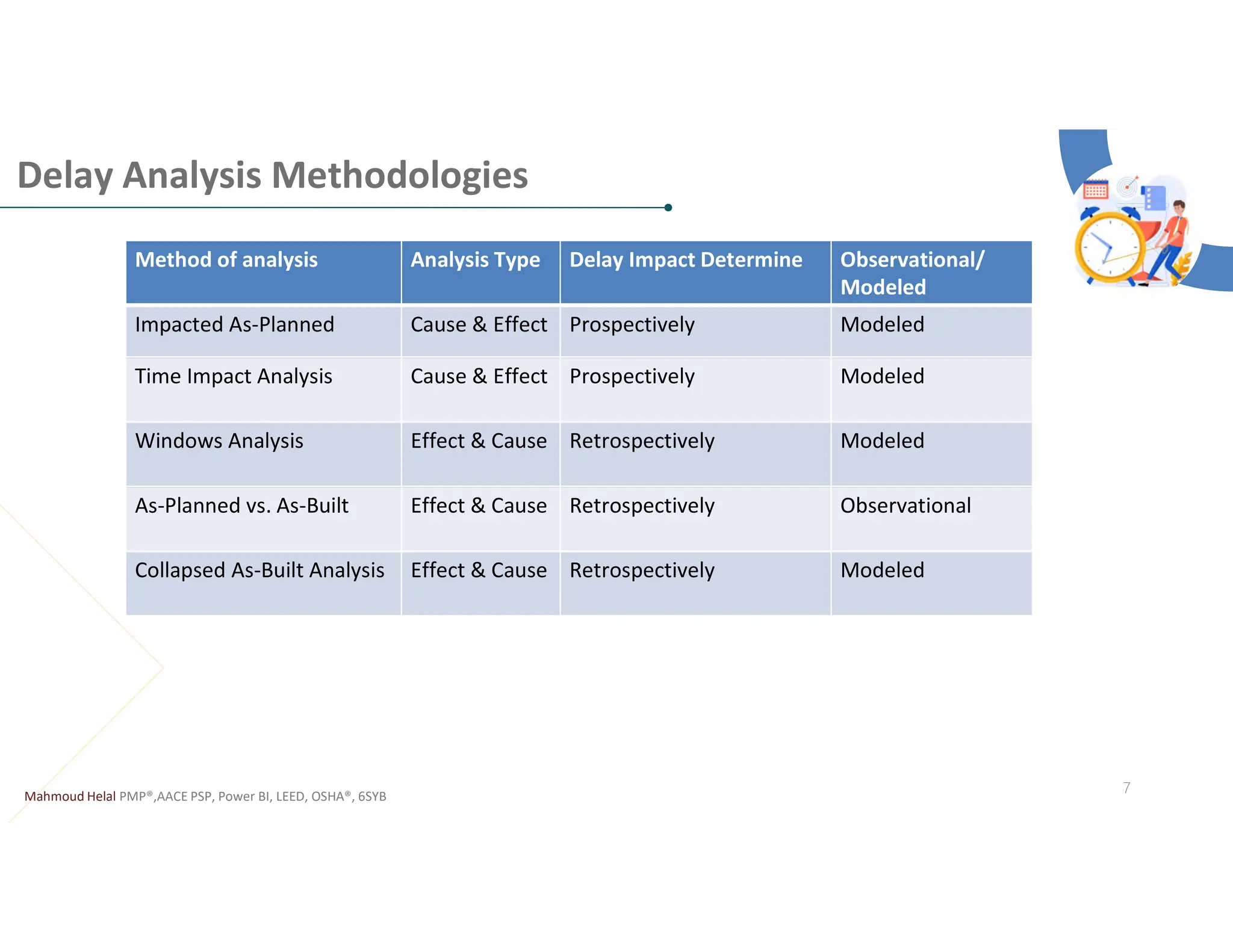
Delay Analysis Methodologies
MahmoudHelal PMP®,AACE PSP, Power BI, LEED, OSHA®, 6SYB
4
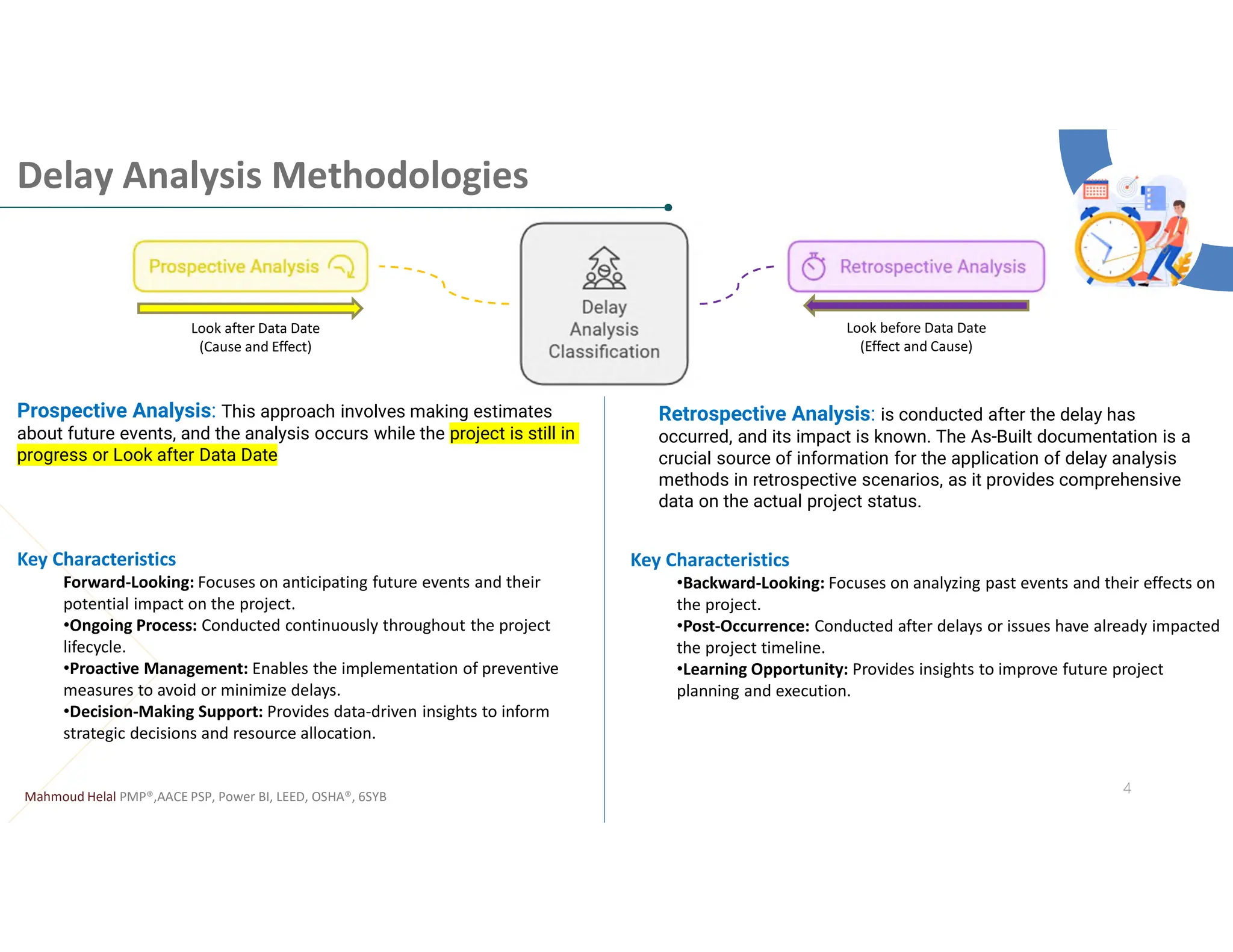
Prospective Analysis: This approach involves making estimates
about future events, and the analysis occurs while the project is still in
progress or Look after Data Date
Retrospective Analysis: is conducted after the delay has
occurred, and its impact is known. The As-Built documentation is a
crucial source of information for the application of delay analysis
methods in retrospective scenarios, as it provides comprehensive
data on the actual project status.
Key Characteristics
Forward-Looking: Focuses on anticipating future events and their
potential impact on the project.
•Ongoing Process: Conducted continuously throughout the project
lifecycle.
•Proactive Management: Enables the implementation of preventive
measures to avoid or minimize delays.
•Decision-Making Support: Provides data-driven insights to inform
strategic decisions and resource allocation.
Key Characteristics
•Backward-Looking: Focuses on analyzing past events and their effects on
the project.
•Post-Occurrence: Conducted after delays or issues have already impacted
the project timeline.
•Learning Opportunity: Provides insights to improve future project
planning and execution.
Look after Data Date
(Cause and Effect)
Look before Data Date
(Effect and Cause)
5.
Delay Analysis Methodologies
MahmoudHelal PMP®,AACE PSP, Power BI, LEED, OSHA®, 6SYB
5
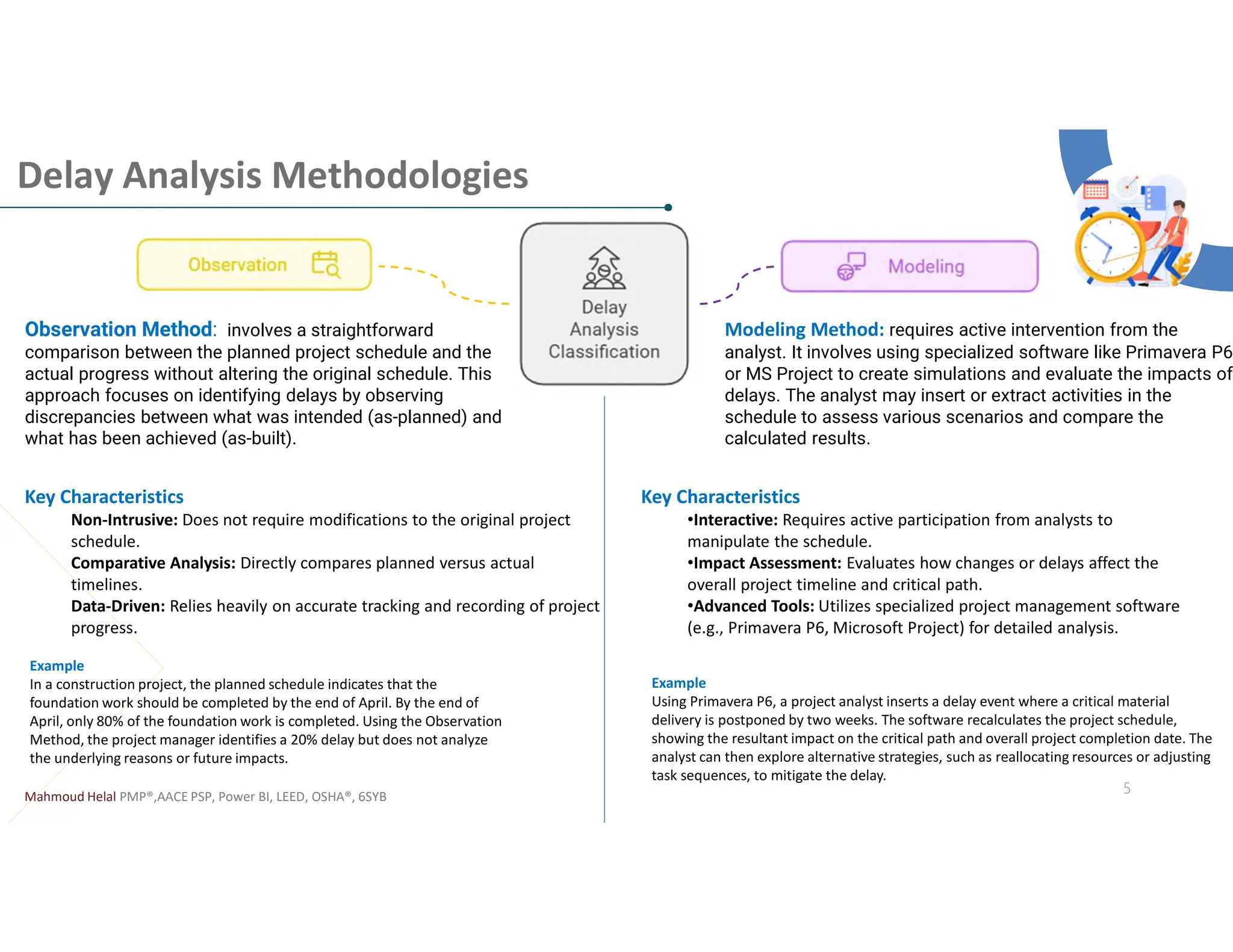
Observation Method: involves a straightforward
comparison between the planned project schedule and the
actual progress without altering the original schedule. This
approach focuses on identifying delays by observing
discrepancies between what was intended (as-planned) and
what has been achieved (as-built).
Modeling Method: requires active intervention from the
analyst. It involves using specialized software like Primavera P6
or MS Project to create simulations and evaluate the impacts of
delays. The analyst may insert or extract activities in the
schedule to assess various scenarios and compare the
calculated results.
Key Characteristics
Non-Intrusive: Does not require modifications to the original project
schedule.
Comparative Analysis: Directly compares planned versus actual
timelines.
Data-Driven: Relies heavily on accurate tracking and recording of project
progress.
Key Characteristics
•Interactive: Requires active participation from analysts to
manipulate the schedule.
•Impact Assessment: Evaluates how changes or delays affect the
overall project timeline and critical path.
•Advanced Tools: Utilizes specialized project management software
(e.g., Primavera P6, Microsoft Project) for detailed analysis.
Example
In a construction project, the planned schedule indicates that the
foundation work should be completed by the end of April. By the end of
April, only 80% of the foundation work is completed. Using the Observation
Method, the project manager identifies a 20% delay but does not analyze
the underlying reasons or future impacts.
Example
Using Primavera P6, a project analyst inserts a delay event where a critical material
delivery is postponed by two weeks. The software recalculates the project schedule,
showing the resultant impact on the critical path and overall project completion date. The
analyst can then explore alternative strategies, such as reallocating resources or adjusting
task sequences, to mitigate the delay.