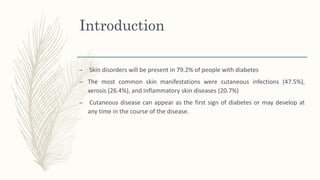
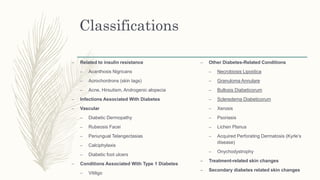
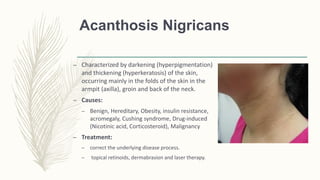
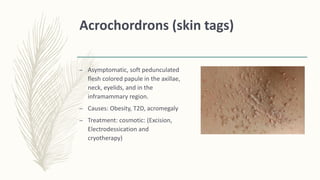
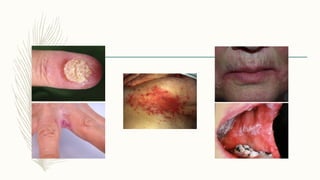
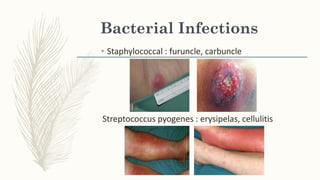
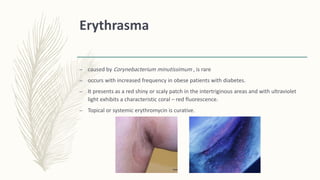
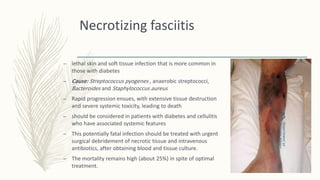
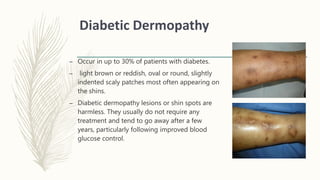
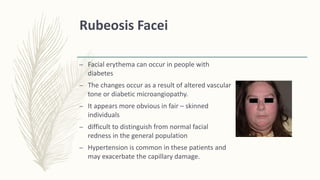
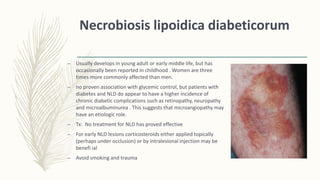
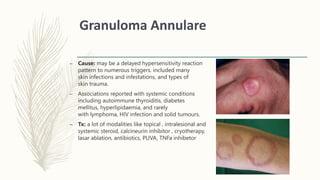
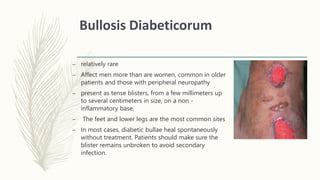
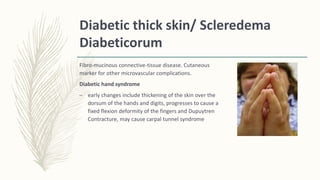
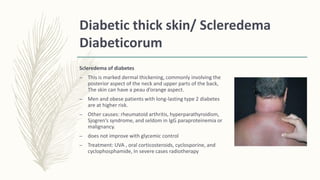
Skin changes are common in patients with diabetes and can be the first sign of the disease or develop at any time. The most common manifestations are cutaneous infections, xerosis, and inflammatory skin diseases. Skin changes are classified as related to insulin resistance, infections, vascular changes, and conditions associated specifically with type 1 or type 2 diabetes. Infections like candidiasis and bacterial infections are more common in poorly controlled diabetes. Vascular changes include diabetic dermopathy, rubeosis faciei, and periungual telangectasias. Treatment-related changes can occur from insulin, oral medications, and secondary to other diabetes complications. Managing underlying conditions and blood glucose is key to treating many diabetes-related skin













![ONFH[AVN HIP] -TRIPLE REGIME -A NOVAL SURGICAL CONCEPT .pptx](https://cdn.slidesharecdn.com/ss_thumbnails/onfhavnhip2026koaconcalicutdrgokuldevdrmashraf-260210064517-213ec005-thumbnail.jpg?width=640&height=640&fit=bounds)


