Cognitive PrincipleTherapy
Treating depression
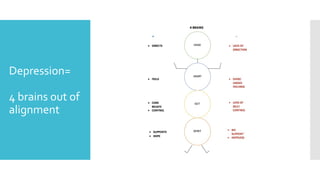
Depression=
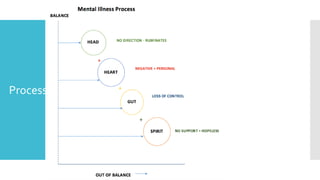
4 brains out of
alignment
DEPRESSION
Head Brain
WHAT’S HAPPENING IN THE FOUR BRAINS?
Head Brain:
Negative rumination, resulting in a negative comparative
The negative thinking is made personal and not about behavior
Depression says “Don’t end your life- end
your negative thinking.”
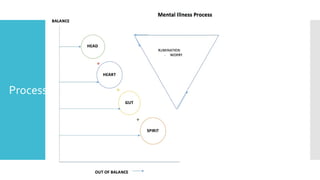
Process
Process
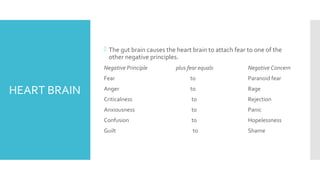
HEART BRAIN
 The gut brain causes the heart brain to attach fear to one of the
other negative principles.
Negative Principle plus fear equals Negative Concern
Fear to Paranoid fear
Anger to Rage
Criticalness to Rejection
Anxiousness to Panic
Confusion to Hopelessness
Guilt to Shame
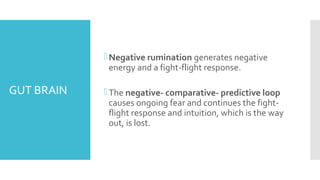
GUT BRAIN
Negative rumination generates negative
energy and a fight-flight response.
The negative- comparative- predictive loop
causes ongoing fear and continues the fight-
flight response and intuition, which is the way
out, is lost.
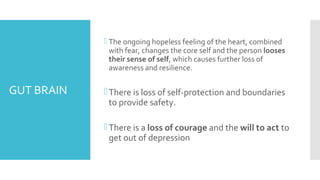
GUT BRAIN
 The ongoing hopeless feeling of the heart, combined
with fear, changes the core self and the person looses
their sense of self, which causes further loss of
awareness and resilience.
There is loss of self-protection and boundaries
to provide safety.
There is a loss of courage and the will to act to
get out of depression
SPIRITUAL
BRAIN
The constant rumination of the head-brain
turned hope into thinking that things were
hopeless
The heart brain feeling of hopelessness caused
a further loss of control in the gut brain
SPIRITUAL
BRAIN
Eventually, the depressed person was broken
and their soul felt lost, unable to be recovered.
The attack on the person, rather than the
behavior created resentment or contempt with
the inability to forgive self and restore the
soul
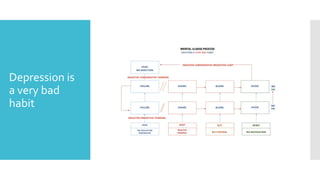
Depression is
a very bad
habit
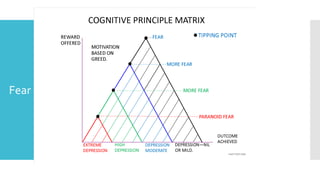
Fear
DEPRESSION-
WHAT NOT
TO DO
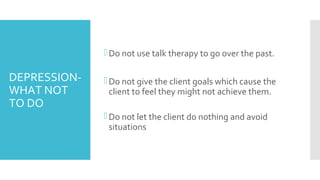
Do not use talk therapy to go over the past.
Do not give the client goals which cause the
client to feel they might not achieve them.
Do not let the client do nothing and avoid
situations
CPT
DEPRESSION-
WHAT TO DO
Spiritual brain
Give the client hope, through awareness [ education that
depression occurs through process, which can be reversed]
Model hope to the depressed client
Head brain
Explain the process that leads to depression
Explain how fear works when taken as a physical threat
Gut brain
Give the exercise of emotional threat- physical threat [requires no
decision making]
DEPRESSION-
WHAT TO DO
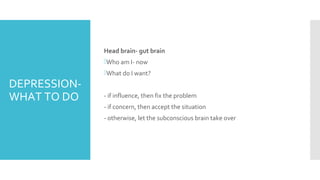
Head brain- gut brain
Who am I- now
What do I want?
- if influence, then fix the problem
- if concern, then accept the situation
- otherwise, let the subconscious brain take over
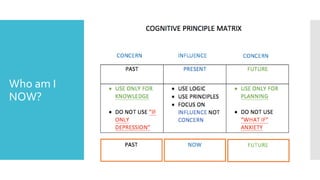
Who am I
NOW?
Stop Thinking
STOP THINKING
 Your subconscious mind works one million times faster than the conscious
mind.
 It can access all of your files, not only with ones you can remember.
 It has a predictive mind, which can solve your problem, but not if you ruminate
over the problem.
 If you don’t have a pathway out of your depression then, pass it over to the
subconscious to find the pathway.
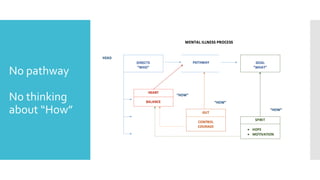
No pathway
No thinking
about “How”

Depression-A new treatment using cognitive principle therapy.

  • 1.
  • 2.
  • 3.
    DEPRESSION Head Brain WHAT’S HAPPENINGIN THE FOUR BRAINS? Head Brain: Negative rumination, resulting in a negative comparative The negative thinking is made personal and not about behavior Depression says “Don’t end your life- end your negative thinking.”
  • 4.
  • 5.
  • 6.
    HEART BRAIN  Thegut brain causes the heart brain to attach fear to one of the other negative principles. Negative Principle plus fear equals Negative Concern Fear to Paranoid fear Anger to Rage Criticalness to Rejection Anxiousness to Panic Confusion to Hopelessness Guilt to Shame
  • 7.
    GUT BRAIN Negative ruminationgenerates negative energy and a fight-flight response. The negative- comparative- predictive loop causes ongoing fear and continues the fight- flight response and intuition, which is the way out, is lost.
  • 8.
    GUT BRAIN  Theongoing hopeless feeling of the heart, combined with fear, changes the core self and the person looses their sense of self, which causes further loss of awareness and resilience. There is loss of self-protection and boundaries to provide safety. There is a loss of courage and the will to act to get out of depression
  • 9.
    SPIRITUAL BRAIN The constant ruminationof the head-brain turned hope into thinking that things were hopeless The heart brain feeling of hopelessness caused a further loss of control in the gut brain
  • 10.
    SPIRITUAL BRAIN Eventually, the depressedperson was broken and their soul felt lost, unable to be recovered. The attack on the person, rather than the behavior created resentment or contempt with the inability to forgive self and restore the soul
  • 11.
  • 12.
  • 13.
    DEPRESSION- WHAT NOT TO DO Donot use talk therapy to go over the past. Do not give the client goals which cause the client to feel they might not achieve them. Do not let the client do nothing and avoid situations
  • 14.
  • 15.
    DEPRESSION- WHAT TO DO Spiritualbrain Give the client hope, through awareness [ education that depression occurs through process, which can be reversed] Model hope to the depressed client Head brain Explain the process that leads to depression Explain how fear works when taken as a physical threat Gut brain Give the exercise of emotional threat- physical threat [requires no decision making]
  • 16.
    DEPRESSION- WHAT TO DO Headbrain- gut brain Who am I- now What do I want? - if influence, then fix the problem - if concern, then accept the situation - otherwise, let the subconscious brain take over
  • 17.
  • 18.
    Stop Thinking STOP THINKING Your subconscious mind works one million times faster than the conscious mind.  It can access all of your files, not only with ones you can remember.  It has a predictive mind, which can solve your problem, but not if you ruminate over the problem.  If you don’t have a pathway out of your depression then, pass it over to the subconscious to find the pathway.
  • 19.