Organizational Structure,
Delivery Programs and
Services
Reporter: Sittie Aniyah H Usman
A bill transforming the name of the Department of
Education, Culture and Sports (DECS) to the
Department of Education (DepEd) and redefining
the role of field offices (regional offices, division
offices, district offices and schools).
GOVERNANCE OF BASIC EDUCATION
ACT OF 2001
Implementing Rules and Regulations
Mandate
The Department of Education shall protect and promote the right of all
citizens to qualify basic education and shall take appropriate steps to make
such education accessible to all
It shall establish, maintain, and support a complete, adequate, and
integrated system of basic education relevant to the needs of the people
and society.
It shall establish and maintain a system of free and compulsory public
education in the elementary level and free public education in high school
level.
DepEd MANAGEMENT STRUCTURE
To carry out its mandates and objectives, the Department is organized into two
major structural components:
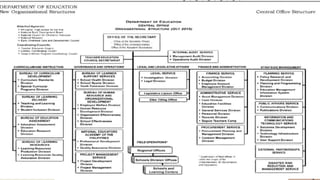
The Central Office
→ maintains the overall administration of basic education at the national level.
The Field Offices
→are responsible for the regional and local coordination and administration of
the Department's mandate.
Implementing Rules and Regulation
Powers, Duties and Functions of the Secretary
The Secretary of the Department of Education
shall exercise overall authority and supervision
over the operations of the Department.
RA 9155 provides that the Department should have no more than four
Undersecretaries and four Assistant Secretaries with at least one Undersecretary
and one Assistant Secretary who are career service officers chosen among the
staff of the Department.
At present, the Department operates with four Undersecretaries in the areas of:
(1) Programs and Projects;
(2) Regional Operations;
(3) Finance and Administration; and
(4) Legal Affairs;
At the sub-national level, the Field Offices consist of the
following:
Sixteen (16) Regional Offices, including the Bangsamoro Autonomous
Region in Muslim Mindanao (BARMM), each headed by a Regional
Director
One hundred fifty-seven (157) Provincial and City Schools Divisions,
each headed by a Schools Division Superintendent.
Assisting the Schools Division Offices are 2,227 School Districts, each
headed by a District Supervisor;
The Regional Director
There shall be as many regional offices as many be
provided by law. Each regional office shall have a
director, an assistant director and office staff for
programs promotion and support, planning,
administrative, legal and fiscal services
The Schools Division Superintendent
A division shall consist of a province or city which
shall have a schools division superintendent. There
shall be at least one assistant schools division
superintendent and office staff for programs
promotion, planning, administrative, fiscal, legal,
ancillary and other support services.
Schools District Supervisor
A school district shall have a school district
supervisor and office staff for program promotion.
The schools district supervisor shall primarily
perform staff functions and shall not exercise
administrative supervision over school principals,
unless specifically authorized by the proper
authorities.
The School Head
There shall be a school head for all public
elementary schools and public high schools or a
cluster thereof. The establishment of integrated
school from existing public elementary and public
high school shall be encouraged, subject to the
guidelines that will be issued for the purposed by
the Secretary of Education.
Authority, Accountability and Responsibility of the School Head
• Setting the mission, vision, goals and objectives of the school;
• Creating an environment within the school that is conducive to
teaching and learning;
Implementing, monitoring and assessing the school curriculum and
being accountable for higher learning outcomes;
Developing the school education program and school improvement
plan
Offering educational programs, projects and services which provide
equitable opportunities for all learners in the community;
• Accepting donations, gifts, bequests and grants in
accordance with existing laws and policy of the department
for the purpose of upgrading teachers/learning facilitators'
competencies, improving and expanding school facilities
and providing instructional materials and equipment. Such
donations or grants must be reported to the division
superintendents; and performing such other functions as
may be assigned by the Secretary, Regional Director and
Schools Division Superintendents where they belong.
Provide a broad general education that will assist each individual in society to
attain his/her potential as a human being, and enhance the range and quality of
the individual and the group;
Help the individual participate in the basic functions of society and acquire the
essential educational foundation for his/her development into a productive and
versatile citizen;
Train the nation's manpower in the middle-level skills required for national
development;
In the Philippines the education system aims to:
Develop the high-level professions that will provide
leadership for the nation, advance knowledge through
research, and apply new knowledge for improving the
quality of human life;
Respond effectively to changing needs and conditions
through a system of educational planning and
evaluation.
DepEd organizational Structure and deliveryprogram EM203

DepEd organizational Structure and deliveryprogram EM203

  • 1.
    Organizational Structure, Delivery Programsand Services Reporter: Sittie Aniyah H Usman
  • 2.
    A bill transformingthe name of the Department of Education, Culture and Sports (DECS) to the Department of Education (DepEd) and redefining the role of field offices (regional offices, division offices, district offices and schools). GOVERNANCE OF BASIC EDUCATION ACT OF 2001
  • 3.
    Implementing Rules andRegulations Mandate The Department of Education shall protect and promote the right of all citizens to qualify basic education and shall take appropriate steps to make such education accessible to all It shall establish, maintain, and support a complete, adequate, and integrated system of basic education relevant to the needs of the people and society. It shall establish and maintain a system of free and compulsory public education in the elementary level and free public education in high school level.
  • 4.
    DepEd MANAGEMENT STRUCTURE Tocarry out its mandates and objectives, the Department is organized into two major structural components: The Central Office → maintains the overall administration of basic education at the national level. The Field Offices →are responsible for the regional and local coordination and administration of the Department's mandate.
  • 6.
    Implementing Rules andRegulation Powers, Duties and Functions of the Secretary The Secretary of the Department of Education shall exercise overall authority and supervision over the operations of the Department.
  • 7.
    RA 9155 providesthat the Department should have no more than four Undersecretaries and four Assistant Secretaries with at least one Undersecretary and one Assistant Secretary who are career service officers chosen among the staff of the Department. At present, the Department operates with four Undersecretaries in the areas of: (1) Programs and Projects; (2) Regional Operations; (3) Finance and Administration; and (4) Legal Affairs;
  • 8.
    At the sub-nationallevel, the Field Offices consist of the following: Sixteen (16) Regional Offices, including the Bangsamoro Autonomous Region in Muslim Mindanao (BARMM), each headed by a Regional Director One hundred fifty-seven (157) Provincial and City Schools Divisions, each headed by a Schools Division Superintendent. Assisting the Schools Division Offices are 2,227 School Districts, each headed by a District Supervisor;
  • 9.
    The Regional Director Thereshall be as many regional offices as many be provided by law. Each regional office shall have a director, an assistant director and office staff for programs promotion and support, planning, administrative, legal and fiscal services
  • 10.
    The Schools DivisionSuperintendent A division shall consist of a province or city which shall have a schools division superintendent. There shall be at least one assistant schools division superintendent and office staff for programs promotion, planning, administrative, fiscal, legal, ancillary and other support services.
  • 11.
    Schools District Supervisor Aschool district shall have a school district supervisor and office staff for program promotion. The schools district supervisor shall primarily perform staff functions and shall not exercise administrative supervision over school principals, unless specifically authorized by the proper authorities.
  • 12.
    The School Head Thereshall be a school head for all public elementary schools and public high schools or a cluster thereof. The establishment of integrated school from existing public elementary and public high school shall be encouraged, subject to the guidelines that will be issued for the purposed by the Secretary of Education.
  • 13.
    Authority, Accountability andResponsibility of the School Head • Setting the mission, vision, goals and objectives of the school; • Creating an environment within the school that is conducive to teaching and learning; Implementing, monitoring and assessing the school curriculum and being accountable for higher learning outcomes; Developing the school education program and school improvement plan Offering educational programs, projects and services which provide equitable opportunities for all learners in the community;
  • 14.
    • Accepting donations,gifts, bequests and grants in accordance with existing laws and policy of the department for the purpose of upgrading teachers/learning facilitators' competencies, improving and expanding school facilities and providing instructional materials and equipment. Such donations or grants must be reported to the division superintendents; and performing such other functions as may be assigned by the Secretary, Regional Director and Schools Division Superintendents where they belong.
  • 15.
    Provide a broadgeneral education that will assist each individual in society to attain his/her potential as a human being, and enhance the range and quality of the individual and the group; Help the individual participate in the basic functions of society and acquire the essential educational foundation for his/her development into a productive and versatile citizen; Train the nation's manpower in the middle-level skills required for national development; In the Philippines the education system aims to:
  • 16.
    Develop the high-levelprofessions that will provide leadership for the nation, advance knowledge through research, and apply new knowledge for improving the quality of human life; Respond effectively to changing needs and conditions through a system of educational planning and evaluation.