DENTAL CARIES
WHAT IS DENTAL CARIES?
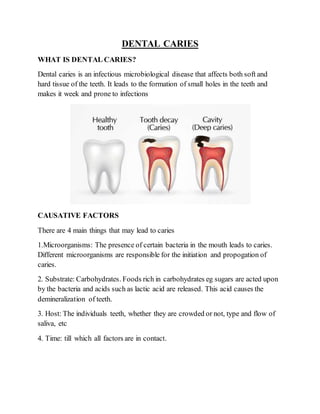
Dental caries is an infectious microbiological disease that affects both soft and
hard tissue of the teeth. It leads to the formation of small holes in the teeth and
makes it week and prone to infections
CAUSATIVE FACTORS
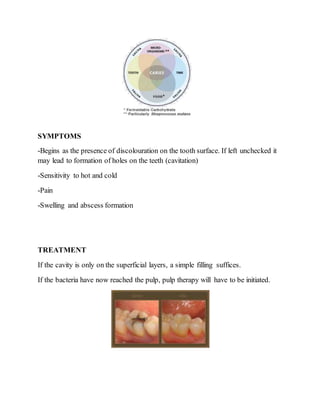
There are 4 main things that may lead to caries
1.Microorganisms: The presence of certain bacteria in the mouth leads to caries.
Different microorganisms are responsible for the initiation and propogation of
caries.
2. Substrate: Carbohydrates. Foods rich in carbohydrates eg sugars are acted upon
by the bacteria and acids such as lactic acid are released. This acid causes the
demineralization of teeth.
3. Host: The individuals teeth, whether they are crowded or not, type and flow of
saliva, etc
4. Time: till which all factors are in contact.
SYMPTOMS
-Begins as the presence of discolouration on the tooth surface. If left unchecked it
may lead to formation of holes on the teeth (cavitation)
-Sensitivity to hot and cold
-Pain
-Swelling and abscess formation
TREATMENT
If the cavity is only on the superficial layers, a simple filling suffices.
If the bacteria have now reached the pulp, pulp therapy will have to be initiated.
PREVENTION
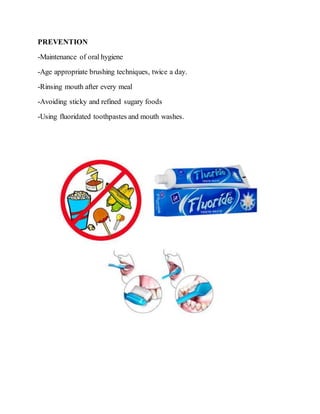
-Maintenance of oral hygiene
-Age appropriate brushing techniques, twice a day.
-Rinsing mouth after every meal
-Avoiding sticky and refined sugary foods
-Using fluoridated toothpastes and mouth washes.

Dental caries

  • 1.
    DENTAL CARIES WHAT ISDENTAL CARIES? Dental caries is an infectious microbiological disease that affects both soft and hard tissue of the teeth. It leads to the formation of small holes in the teeth and makes it week and prone to infections CAUSATIVE FACTORS There are 4 main things that may lead to caries 1.Microorganisms: The presence of certain bacteria in the mouth leads to caries. Different microorganisms are responsible for the initiation and propogation of caries. 2. Substrate: Carbohydrates. Foods rich in carbohydrates eg sugars are acted upon by the bacteria and acids such as lactic acid are released. This acid causes the demineralization of teeth. 3. Host: The individuals teeth, whether they are crowded or not, type and flow of saliva, etc 4. Time: till which all factors are in contact.
  • 2.
    SYMPTOMS -Begins as thepresence of discolouration on the tooth surface. If left unchecked it may lead to formation of holes on the teeth (cavitation) -Sensitivity to hot and cold -Pain -Swelling and abscess formation TREATMENT If the cavity is only on the superficial layers, a simple filling suffices. If the bacteria have now reached the pulp, pulp therapy will have to be initiated.
  • 3.
    PREVENTION -Maintenance of oralhygiene -Age appropriate brushing techniques, twice a day. -Rinsing mouth after every meal -Avoiding sticky and refined sugary foods -Using fluoridated toothpastes and mouth washes.