DEMOCRATIC LEADERSHIP
BY: DELJIE A. MADANLO
EDD 605
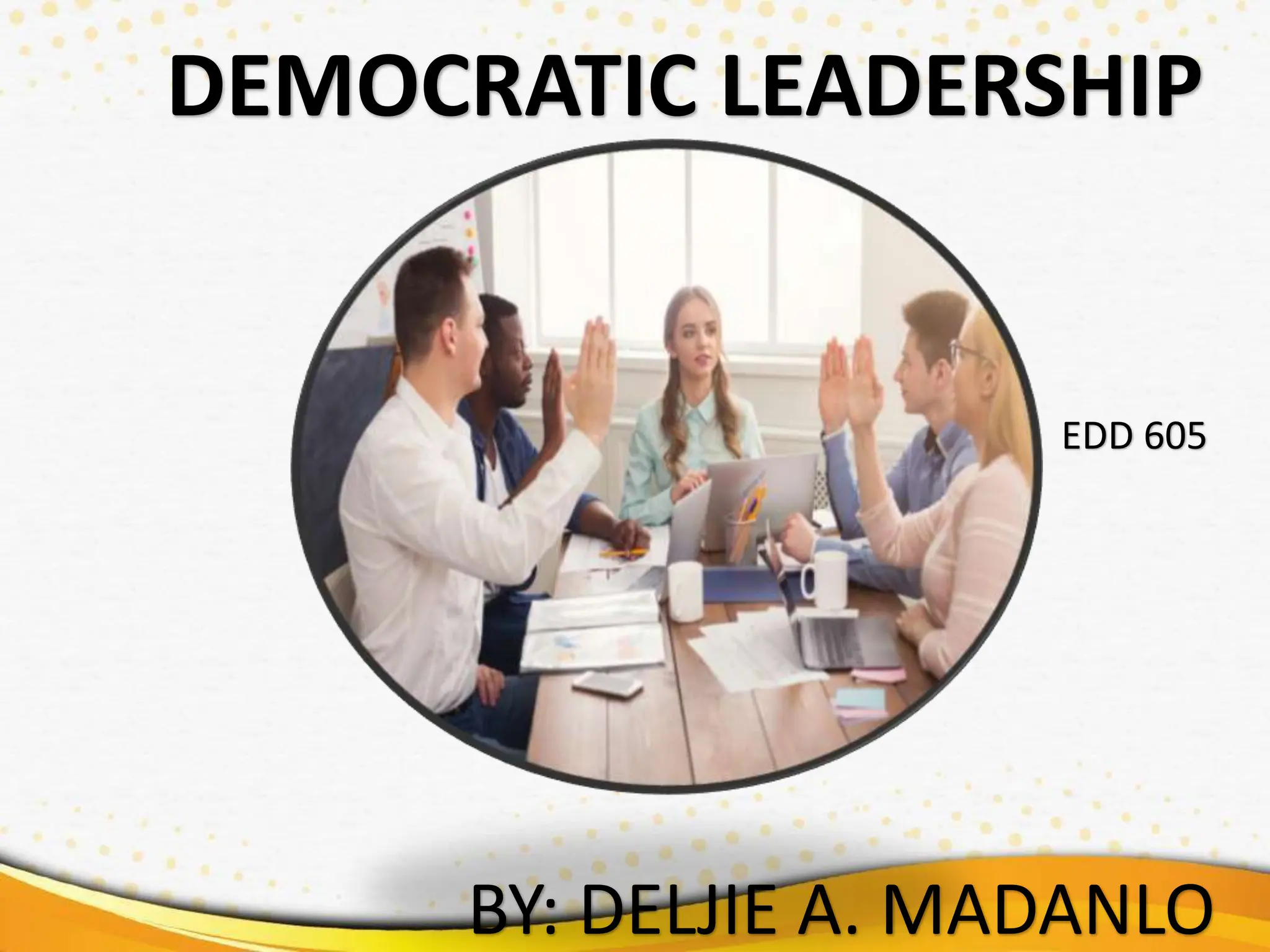
Democratic leadership
also known as participative
leadership or shared leadership, is
a type of leadership style in which
members of the group take a more
participative role in the decision-
making process
THE
QUALITIES
OF A
DEMOCRATI
C LEADER
1.
INCLUSIVENES
S
1. INCLUSIVENESS
• Democratic leaders seek
participation from a wide range
of people.
• Democratic leadership not only
accepts subordinates’ comments,
ideas and suggestions, it also
encourages their input on
decisions and strategies.
2.
INTELLIGENC
E
2. INTELLIGENCE
• the democratic leader is like a
conductor of an orchestra, he or
she needs to have the competency
to keep all the parts together and
moving.
• The leader must provide
enough information for the
subordinates to guarantee they
INTELLIGEN
CE…
• The leader will often be the
person to provide background
information and answer
questions the subordinates
might have on a variety of
topics.
INTELLIGEN
CE…
• The leader also needs plenty of
emotional intelligence to
ensure the team works well
together.
3.
HONESTY
3. HONESTY
• The leader must be able to lay out
the situation to ensure decisions
are made on real information and
the leader has to stay honest
about his or her own opinion.
HONESTY
…
• provide critique of ideas and
negative criticism when it’s
necessary, but you don’t need
to do it in a brutal manner
HONESTY…
• ask yourself three
questions before
voicing the opinion:
1. Is the feedback you want to
provide true?
2. Is the feedback necessary
for reaching an objective
or goal?
4.
CREATIV
E
4. CREATIVE
• Since the leadership framework
requires innovative ideas and
collaboration, the leader must be
able to show the way with ideas.
• The leader must also be able to
help other members of the team
to innovate and this itself can
require innovative thinking from
the leader.
CREATIV
E…
• Creativity is often
considered an innate
trait.
• As a leader, you can improve your
own creativity, but also
subordinate’s creativity by
establishing the right environment
within the organization.
• Creativity is easier when people are
able to speak their mind freely and
5.
FAIRNES
S
5. FAIRNESS
• As a leader, you need to be
able to distance yourself from
the situation emotionally and
to think rationally.
• Fairness in this context also
means transparency.
• One of the key ways to be fairer
is to set clear guidelines.
6.
COMPETENC
E
6.
COMPETENC
E
• Leading the organization:
-managing change
-solving problems and making
decisions
-managing politics and influencing
others
-taking risks and innovating
-setting vision and strategy
-managing the work
-enhancing business skills and
COMPETENC
E…
• Leading the self:
-demonstrating ethics and
integrity
-displaying drive and purpose
-exhibiting leadership stature
-increasing your capacity to
learn
-managing yourself
-increasing self-awareness
COMPETENC
E…
• Leading others:
-communicating effectively
-developing others
-valuing diversity and
difference
-building and
maintaining
relationships
-managing effective teams and
6.
COURAGE
6.
COURAGE
• Courage is the Defining
Characteristic Of Great Leaders
• Courageous leaders take risks
that go against the grain of
their organizations.
Democratic leadership style as one of the fundamental leadership style

Democratic leadership style as one of the fundamental leadership style

  • 1.
  • 2.
    Democratic leadership also knownas participative leadership or shared leadership, is a type of leadership style in which members of the group take a more participative role in the decision- making process
  • 5.
  • 6.
  • 7.
    1. INCLUSIVENESS • Democraticleaders seek participation from a wide range of people. • Democratic leadership not only accepts subordinates’ comments, ideas and suggestions, it also encourages their input on decisions and strategies.
  • 8.
  • 9.
    2. INTELLIGENCE • thedemocratic leader is like a conductor of an orchestra, he or she needs to have the competency to keep all the parts together and moving. • The leader must provide enough information for the subordinates to guarantee they
  • 10.
    INTELLIGEN CE… • The leaderwill often be the person to provide background information and answer questions the subordinates might have on a variety of topics.
  • 11.
    INTELLIGEN CE… • The leaderalso needs plenty of emotional intelligence to ensure the team works well together.
  • 12.
  • 13.
    3. HONESTY • Theleader must be able to lay out the situation to ensure decisions are made on real information and the leader has to stay honest about his or her own opinion.
  • 14.
    HONESTY … • provide critiqueof ideas and negative criticism when it’s necessary, but you don’t need to do it in a brutal manner
  • 15.
    HONESTY… • ask yourselfthree questions before voicing the opinion: 1. Is the feedback you want to provide true? 2. Is the feedback necessary for reaching an objective or goal?
  • 16.
  • 17.
    4. CREATIVE • Sincethe leadership framework requires innovative ideas and collaboration, the leader must be able to show the way with ideas. • The leader must also be able to help other members of the team to innovate and this itself can require innovative thinking from the leader.
  • 18.
    CREATIV E… • Creativity isoften considered an innate trait. • As a leader, you can improve your own creativity, but also subordinate’s creativity by establishing the right environment within the organization. • Creativity is easier when people are able to speak their mind freely and
  • 19.
  • 20.
    5. FAIRNESS • Asa leader, you need to be able to distance yourself from the situation emotionally and to think rationally. • Fairness in this context also means transparency. • One of the key ways to be fairer is to set clear guidelines.
  • 21.
  • 22.
    6. COMPETENC E • Leading theorganization: -managing change -solving problems and making decisions -managing politics and influencing others -taking risks and innovating -setting vision and strategy -managing the work -enhancing business skills and
  • 23.
    COMPETENC E… • Leading theself: -demonstrating ethics and integrity -displaying drive and purpose -exhibiting leadership stature -increasing your capacity to learn -managing yourself -increasing self-awareness
  • 24.
    COMPETENC E… • Leading others: -communicatingeffectively -developing others -valuing diversity and difference -building and maintaining relationships -managing effective teams and
  • 25.
  • 26.
    6. COURAGE • Courage isthe Defining Characteristic Of Great Leaders • Courageous leaders take risks that go against the grain of their organizations.