
Republic of Singapore
Kathleen, Alexander, Tao and Zeeshan
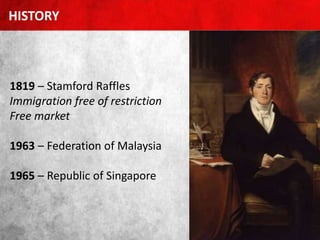
1819 – Stamford Raffles
Immigration free of restriction
Free market
1963 – Federation of Malaysia
1965 – Republic of Singapore
HISTORY
Busiest port in the world
Exports:
Electronics, pharmaceuticals
and financial services
PRESENT DAY
Political party: PAP – Peoples Action Party
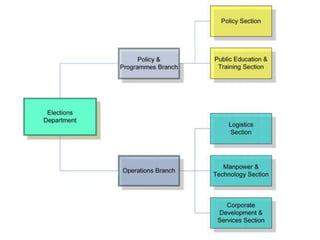
Elections Department of Singapore / Election System
Parliament of Singapore
DEMOCRATIC INSTITUTIONS OF SINGAPORE
Dominate party system vs Single party system
Hierarchy of merit rather than seniority
Various political views and philosophies: pro-Singapore
- democratic through inter-party discrepancy rather than intra-party
competition
High and comfortable salaries to avoid corruption
Universal adult suffrage: Choice to change is up to the people
Reasons the PAP retains so much political power
PAP – PEOPLES ACTION PARTY
Wealth and elitism
Obstacles for opposing parties
Economic prosperity
- in exchange for political dominance
Stability and prosperity
- in exchange for restrictions on individual rights
ADVANTAGES vs DISADVANTAGES
OF DOMINANT PARTY SYSTEM
Vision
Our Vision is to be a dynamic and innovative organization which values
its people, always striving for quality and accountability in delivering
electoral services and in promoting and sustaining our citizens’ trust
and confidence in Singapore’s democratic process.
Mission
We are a professional election administrator committed to preparing
and organizing the public service to efficiently conduct free and fair
elections in Singapore.
ELECTIONS DEPARTMENT OF SINGAPORE
- Two types of elections in Singapore: Parliamentary and Presidential
- Parliamentary elections are held every four years and presidential
elections are held every five years
- The Elections Department of Singapore is responsible for the
planning, preparation and conduct of presidential and parliamentary
elections and of any national referendum in Singapore
- Voting has been compulsory in Singapore since 1959
- The legal voting age is 21
ELECTIONS IN SINGAPORE
- Legislations on Presidential Elections
- The President: Head of state for a term of 6 years
- Conduct of Election: Within 6 months after the office of the
president becomes vacant
- Writ of Election: When and where the nomination of the candidates
is to be taken
- Notice of Election: Date, time and place, nomination paper, and the
payment
- Presidential Elections Committee
- Nomination Day: nomination papers are presented
- Notice of Contested Election: date, place of polling and name of
candidates
- Campaigning: election campaigns
- Polling Day: VOTING IS SECRET AND COMPULSORY
PRESIDENTIAL ELECTIONS
- The Parliament: Elected, Non-Constituency and Nominated MPs
- The Parliamentary Elections Act (CAP 218) : Production of the
registers of electors and conduct of elections
- Registers of Electors: Who can vote, electors, 23 registers
- Conduct of Election: Dissolve Parliament, issue writ
- Writ of Election: When and where the nomination of the candidates
is to be taken
- Notice of Election: Date, time and place, nomination paper, and the
payment
- Nomination Day: nomination papers are presented
- Notice of Contested Election: date, place of polling and name of
candidates
- Campaigning: election campaigns
- Polling Day: VOTING IS SECRET AND COMPULSORY
PARLIAMENTARY ELECTIONS
To vote at any contested election in a constituency, your name must be
on the latest certified register of electors for that constituency.
- You are a citizen of Singapore i.e. holder of a Pink-colored Identity
Card.
- You are at least 21 years old; and
- You are ordinarily resident or deemed to be ordinarily resident in
Singapore at an address that is in that constituency
- Overseas voters
WHO CAN VOTE?
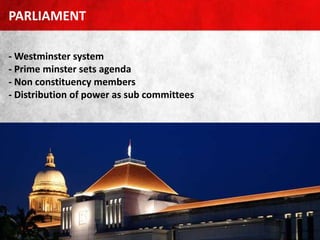
- Westminster system
- Prime minster sets agenda
- Non constituency members
- Distribution of power as sub committees
PARLIAMENT
Liberal Democracy
- Capitalism
- Transfer of power
- Individual freedoms
- Civil liberties/rights
- Speech, property
- Productivity and efficiency
- Choice
- Competing power system*
- Welfare state
- Double system of power
- Legal Equality
- Party Responsibility
- Separation of Power
- Class society
Communism Democracy
- Vanguard elite rule
- Dictatorship of the proletariat
- Socialism
- Single party state*
- Not a proletarian revolution – led by bourgeoisie
Developing Nations Democracy
- Classless to start with (everybody is poor)
- Tribal/Ethnic groups
- Lacking capital
- New Nation: Colonial Revolution
- National Identity
- Single Party*
- Development
- Unify People’s will
TYPE OF DEMOCRACIES
Questions?

Democracy in Singapore

  • 1.
    Republic of Singapore Kathleen,Alexander, Tao and Zeeshan
  • 3.
    1819 – StamfordRaffles Immigration free of restriction Free market 1963 – Federation of Malaysia 1965 – Republic of Singapore HISTORY
  • 4.
    Busiest port inthe world Exports: Electronics, pharmaceuticals and financial services PRESENT DAY
  • 5.
    Political party: PAP– Peoples Action Party Elections Department of Singapore / Election System Parliament of Singapore DEMOCRATIC INSTITUTIONS OF SINGAPORE
  • 6.
    Dominate party systemvs Single party system Hierarchy of merit rather than seniority Various political views and philosophies: pro-Singapore - democratic through inter-party discrepancy rather than intra-party competition High and comfortable salaries to avoid corruption Universal adult suffrage: Choice to change is up to the people Reasons the PAP retains so much political power PAP – PEOPLES ACTION PARTY
  • 7.
    Wealth and elitism Obstaclesfor opposing parties Economic prosperity - in exchange for political dominance Stability and prosperity - in exchange for restrictions on individual rights ADVANTAGES vs DISADVANTAGES OF DOMINANT PARTY SYSTEM
  • 8.
    Vision Our Vision isto be a dynamic and innovative organization which values its people, always striving for quality and accountability in delivering electoral services and in promoting and sustaining our citizens’ trust and confidence in Singapore’s democratic process. Mission We are a professional election administrator committed to preparing and organizing the public service to efficiently conduct free and fair elections in Singapore. ELECTIONS DEPARTMENT OF SINGAPORE
  • 10.
    - Two typesof elections in Singapore: Parliamentary and Presidential - Parliamentary elections are held every four years and presidential elections are held every five years - The Elections Department of Singapore is responsible for the planning, preparation and conduct of presidential and parliamentary elections and of any national referendum in Singapore - Voting has been compulsory in Singapore since 1959 - The legal voting age is 21 ELECTIONS IN SINGAPORE
  • 11.
    - Legislations onPresidential Elections - The President: Head of state for a term of 6 years - Conduct of Election: Within 6 months after the office of the president becomes vacant - Writ of Election: When and where the nomination of the candidates is to be taken - Notice of Election: Date, time and place, nomination paper, and the payment - Presidential Elections Committee - Nomination Day: nomination papers are presented - Notice of Contested Election: date, place of polling and name of candidates - Campaigning: election campaigns - Polling Day: VOTING IS SECRET AND COMPULSORY PRESIDENTIAL ELECTIONS
  • 12.
    - The Parliament:Elected, Non-Constituency and Nominated MPs - The Parliamentary Elections Act (CAP 218) : Production of the registers of electors and conduct of elections - Registers of Electors: Who can vote, electors, 23 registers - Conduct of Election: Dissolve Parliament, issue writ - Writ of Election: When and where the nomination of the candidates is to be taken - Notice of Election: Date, time and place, nomination paper, and the payment - Nomination Day: nomination papers are presented - Notice of Contested Election: date, place of polling and name of candidates - Campaigning: election campaigns - Polling Day: VOTING IS SECRET AND COMPULSORY PARLIAMENTARY ELECTIONS
  • 13.
    To vote atany contested election in a constituency, your name must be on the latest certified register of electors for that constituency. - You are a citizen of Singapore i.e. holder of a Pink-colored Identity Card. - You are at least 21 years old; and - You are ordinarily resident or deemed to be ordinarily resident in Singapore at an address that is in that constituency - Overseas voters WHO CAN VOTE?
  • 14.
    - Westminster system -Prime minster sets agenda - Non constituency members - Distribution of power as sub committees PARLIAMENT
  • 15.
    Liberal Democracy - Capitalism -Transfer of power - Individual freedoms - Civil liberties/rights - Speech, property - Productivity and efficiency - Choice - Competing power system* - Welfare state - Double system of power - Legal Equality - Party Responsibility - Separation of Power - Class society Communism Democracy - Vanguard elite rule - Dictatorship of the proletariat - Socialism - Single party state* - Not a proletarian revolution – led by bourgeoisie Developing Nations Democracy - Classless to start with (everybody is poor) - Tribal/Ethnic groups - Lacking capital - New Nation: Colonial Revolution - National Identity - Single Party* - Development - Unify People’s will TYPE OF DEMOCRACIES
  • 16.